Jules Corrino
second Emperor of the Corrino line
Jules Corrino, born Jules Butler, was the second Padishah Emperor of the Corrino dynasty. His reign broke the Venport monopoly on space travel, saw the rise of the Great Schools, and was scarred by the violent backlash against the Orange Catholic Bible.
Jules Corrino, born Jules Butler, was the second Emperor of the Corrino Empire and an early sovereign of the dynasty that would rule the Known Universe for ten millennia. Son of the first Emperor, Faykan Corrino, he inherited a throne forged in the immediate aftermath of the Butlerian Jihad. His reign reshaped the foundations of interstellar commerce, oversaw the rise of the Great Schools, and was marked by the bitter violence that followed the compilation of the Orange Catholic Bible. He was an ancestor of the House Corrino emperors who came after him. (Dune: The Battle of Corrin; Sisterhood of Dune)
Origins and ascension#
Jules was born the son of General Faykan Butler and his wife Jessica Boro-Ginjo, during the unsteady recovery from the Butlerian Jihad. In that era the thinking machines still held a stronghold on Corrin, and the cymeks remained active on Hessra. Later, after the cymeks were destroyed and Corrin was besieged by the League of Nobles under Faykan as Viceroy, Faykan took the name Corrino and declared himself the first Emperor. Jules became Jules Corrino and heir to the new throne. In his youth he was described as a handsome, aggressive, and charismatic young man. (Dune: The Battle of Corrin; Sisterhood of Dune)
When Faykan died, Jules ascended. One of his first acts was to amend the agreement that had been struck between the League and VenKee Enterprises during the Jihad, opening competition to the new firm Venport Holdings. By breaking the monopoly on instantaneous space travel that had stood since the end of the Jihad, he enraged Directeur Adrien Venport and planted a grudge against the throne that the Venport line carried for generations. (Sisterhood of Dune)
Reign and the Great Schools#
Jules ruled over the period in which the Great Schools rose to replace the capabilities once provided by thinking machines. Raquella Berto-Anirul's Sisterhood expanded on Rossak, the Order of Mentats was established on Lampadas, and Mohandas Suk built a new base for his medical school on Salusa Secundus. A Suk doctor diagnosed Jules with a brain tumour after years of chronic migraines, but the Emperor refused high-technology medical procedures despite the protests of his son Roderick. (Sisterhood of Dune; Mentats of Dune)
Jules fathered three children, each by a different woman, none of whom was his actual wife, the Empress Orenna Corrino. His sons Salvador and Roderick, born two years apart, would become the third and fourth Emperors. His daughter Anna, much younger, was born to a woman named Bridgit. Salvador's mother was emotionally unbalanced and attempted to kill Jules when he ended her service as his concubine, while Roderick's mother was remembered as both lovely and highly intelligent. (Sisterhood of Dune)
The Orange Catholic Bible and its aftermath#
Jules oversaw the controversial compilation of the Orange Catholic Bible. The violent response to its release by the Commission of Ecumenical Translators took him by surprise. Three years into the resulting riots, after several delegates had been murdered, the endangered compilator Toure Bomoko fled to Salusa Secundus with his refugees and begged the Emperor for sanctuary, which Jules granted. When Jules attempted to address a hostile mob in Zimia, the appearance went badly and he was forced to retreat with his guards. Tensions stayed high for more than a month. (Sisterhood of Dune)
Bomoko and the Empress entered into a relationship, and Jules ordered the execution of all thirty-five of the delegates, forcing his children to watch. Bomoko himself escaped and hid on Tupile with the help of Josef Venport, the new Directeur of Venport Holdings, who carried on his line's grudge against the throne. Though innocents continued to be killed by mobs hunting for Bomoko, Jules largely managed to quell the unrest. (Sisterhood of Dune)
Final years and succession#
Toward the end of his rule the Butlerian movement regained prominence under Manford Torondo, including an occupation of Tlulax. Jules publicly supported the movement, a stance tied to his own rejection of advanced medicine and the Suk School. In this period he struggled to hold his government together while contending with unrest in the former Unallied Planets. Jules died and was succeeded on the throne by his son Salvador. (Sisterhood of Dune)
Frequently asked questions
- Who was Jules Corrino?
- Jules Corrino, born Jules Butler, was the second Emperor of the Corrino Empire and an early sovereign of the dynasty that would rule the Known Universe for ten millennia. He was the son of the first Emperor, Faykan Corrino, and inherited a throne forged in the immediate aftermath of the Butlerian Jihad.
- How did Jules Corrino break the Venport monopoly?
- When Faykan died and Jules ascended, one of his first acts was to amend the agreement struck between the League and VenKee Enterprises during the Jihad, opening competition to the new firm Venport Holdings. By breaking the monopoly on instantaneous space travel that had stood since the end of the Jihad, he enraged Directeur Adrien Venport and planted a grudge the Venport line carried for generations.
- What were the Great Schools that rose during Jules Corrino's reign?
- Jules ruled over the period in which the Great Schools rose to replace capabilities once provided by thinking machines. Raquella Berto-Anirul's Sisterhood expanded on Rossak, the Order of Mentats was established on Lampadas, and Mohandas Suk built a new base for his medical school on Salusa Secundus.
- What happened after the compilation of the Orange Catholic Bible under Jules Corrino?
- Jules oversaw the controversial compilation of the Orange Catholic Bible, and its release by the Commission of Ecumenical Translators provoked a violent response that took him by surprise. After delegates were murdered during the riots, Jules ordered the execution of all thirty-five delegates, forcing his children to watch, though he largely managed to quell the unrest.
- How did Jules Corrino die and who succeeded him?
- A Suk doctor diagnosed Jules with a brain tumour after years of chronic migraines, but he refused high-technology medical procedures despite the protests of his son Roderick. Jules died and was succeeded on the throne by his son Salvador.
Sources
- BookDune: The Battle of Corrin, Brian Herbert and Kevin J. Anderson, 2004 (expanded universe)
- BookSisterhood of Dune, Brian Herbert and Kevin J. Anderson, 2012 (expanded universe)
- BookMentats of Dune, Brian Herbert and Kevin J. Anderson, 2014 (expanded universe)
Spotted a factual error or a primary source we missed? Email a correction. Every flagged claim gets reviewed.
Followed from this entry

Faykan Butler
Faykan Butler, later Faykan Corrino, was a military commander of the Butlerian Jihad who rose through politics to become the last Viceroy of the League of Nobles and, after the Battle of Corrin, the first Padishah Emperor.

House Corrino: ten thousand years enthroned
The imperial House ruled from Kaitain and held Salusa Secundus as its fief. Paul Atreides forced Shaddam IV to give up the Golden Lion Throne.
Josef Venport
Josef Venport was the third and final Directeur of VenKee Enterprises, which he renamed Venport Holdings. The great-grandson of Aurelius Venport and Norma Cenva, he commanded the foldspace shipping empire that fought the Butlerian movement in the galactic civil war of the early Imperium.

Raquella Berto-Anirul
Raquella Berto-Anirul was the first Reverend Mother and the founder and first Mother Superior of the order that became the Bene Gesserit. A physician of the Jihad era, she survived a transformative poisoning that unlocked the powers of the Reverend Mothers and reshaped the Sisterhood of Rossak into a new force.

Salusa Secundus: the prison that bred terror
House Corrino's first homeworld became the empire's penal planet once the court moved to Kaitain. Its cruelty was said to breed the Sardaukar.
Butlerian Jihad: the war on thinking machines
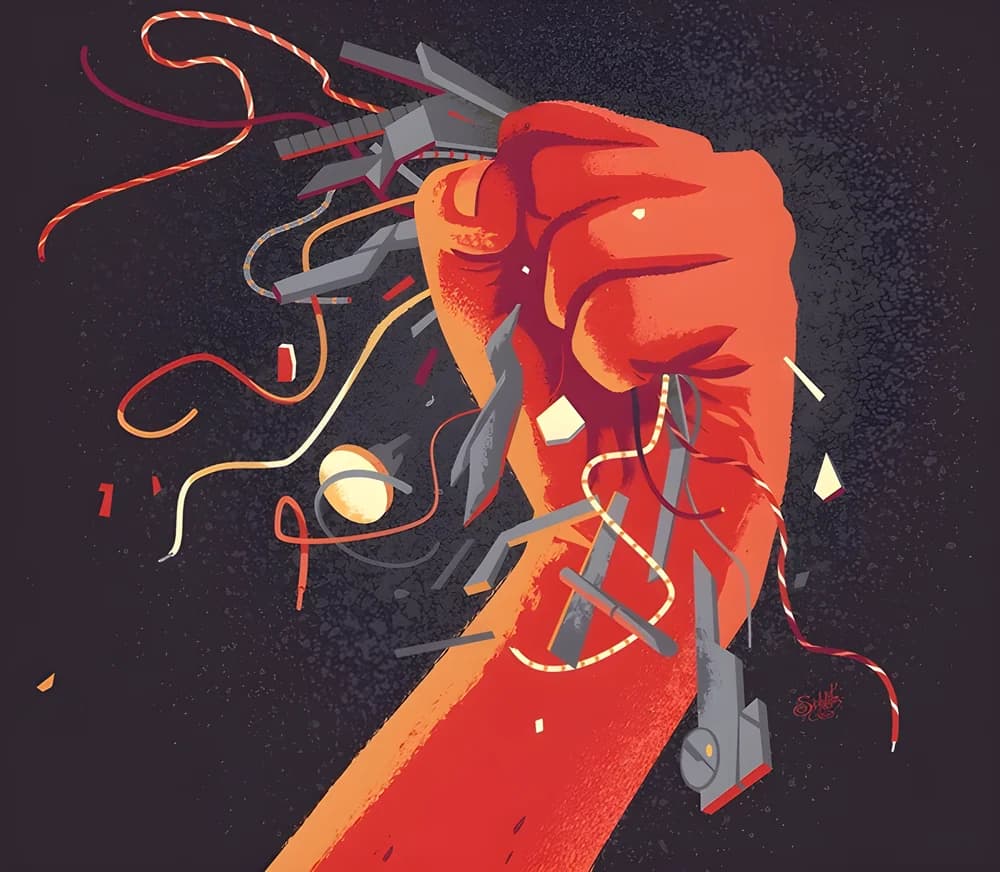
It began with a slave rebellion on Earth in 201 BG and ended at Corrin in 88 BG. Out of it came the ban on machines in the likeness of a mind.
Mentioned in1 entry
Get new articles in your inbox
No spam. New lore drops, canon conflicts, and deep dives only when they’re worth reading.
Some links on Lore Fortress are affiliate links. If you buy through them we earn a small commission at no extra cost to you.