Fallout 1 Story Explained: Plot and Endings
The full story of the original Fallout, from the broken water chip in Vault 13 to the Master's death under the Cathedral and the Vault Dweller's exile, with the ending and what later games treat as canon.
Fallout came out in 1997, made by Interplay Productions. It's set in 2161 in what's left of southern California, 84 years after the Great War, and it started the whole series. A young resident of Vault 13 goes out to find a replacement water chip and ends up stopping an army of super mutants. This page covers the whole plot and the ending, so it has full spoilers. (Fallout)
Before the story begins#
The bombs fell on 23 October 2077. Vault 13 was one of the shelters built by Vault-Tec, and its residents had stayed sealed inside for more than eight decades. By 2161 the people running it were the children and grandchildren of the original dwellers, and few of them had ever seen the sky. (Fallout)
Outside, the wasteland had started to rebuild. Small towns traded water and goods, ghouls lived in the ruins of Los Angeles, and the Brotherhood of Steel held a bunker at Lost Hills. Nobody in the vault knew any of this. The other thing they didn't know was that, decades earlier, a doctor named Richard Grey had led an expedition from the Hub to an old army base called Mariposa. He fell into a vat of the Forced Evolutionary Virus and came out as something else. (Fallout)
The water chip#
The vault's water chip, the part that ran its water purification, failed. The overseer, Jacoren, gave one young dweller a Pip-Boy 2000, a little equipment and the job of finding a replacement. He said there were about 150 days of water left. The vault's records pointed to Vault 15, the nearest other vault, as the best place to look. (Fallout)
The first settlement the Vault Dweller reached was Shady Sands, a farming village behind a wall, led by a man named Aradesh. It was being harassed by radscorpions and by raiders called the Khans, who kidnapped Aradesh's daughter, Tandi. The Vault Dweller could deal with both and bring Tandi home. A villager named Ian joined them on the road. (Fallout)
Vault 15 was a dead end. It had been abandoned, its lower levels were wrecked, and there was no chip to take. The search moved on to the trading towns. In Junktown, the sheriff, Killian Darkwater, was in a feud with a crime boss called Gizmo, and the Vault Dweller could side with either. Further south, the Hub was the biggest town in the region, run by merchants and water sellers. There, an old ghoul named Harold told the story of Richard Grey's expedition to the base in the northwest, and of the mutants that seemed to be coming from it. (Fallout)
Necropolis and the mutant army#
The trail for the chip led to Necropolis, the ruins of Bakersfield, home to ghouls ruled by a ghoul named Set. Underneath it lay Vault 12, a vault whose door had never closed properly, and whose residents had become the ghouls when radiation flooded in. Its water chip still worked. The Vault Dweller took it, though super mutants were already watching the town. (Fallout)
The chip went back to Vault 13, and the overseer had a new problem. The Vault Dweller had seen enough to know the super mutants weren't random. They were organised, they were searching for vaults, and there were more of them every week. Jacoren sent the Vault Dweller back out to find out who was making them and to stop it. (Fallout)
The Brotherhood and the Boneyard#
The Brotherhood of Steel had the weapons and armour to fight an army. They only let the Vault Dweller in after a test: a trip into the Glow, a radioactive crater that had once been a pre-war research site. Inside the Lost Hills bunker, the Vault Dweller met the Brotherhood's leadership, including the paladin Rhombus and the elder John Maxson, and learned what the Brotherhood knew about the mutants. (Fallout)
The search then reached the Boneyard, the ruins of Los Angeles. Different groups held different blocks: the walled settlement of Adytum, the gangs called the Blades and the Regulators, the gunsmiths of the Gun Runners, and the Followers of the Apocalypse, who wanted to spread knowledge and opposed the mutants. The Followers warned about a religious group called the Children of the Cathedral, whose church in the Boneyard was growing fast. (Fallout)
The Master and the Unity#
The Children of the Cathedral were a front. The Master lived underneath their church, in the old Los Angeles Vault. He had been Richard Grey. The FEV had fused him with flesh and machinery into a huge psychic mass, and he spoke in several voices at once. He believed humanity's differences would always end in war, and that turning everyone into super mutants would make one people. He called this the Unity. (Fallout)
His army got its new soldiers from Mariposa Military Base, where a mutant called the Lieutenant ran the dipping vats. The Lieutenant explained why vaults mattered so much: people from the vaults had been sealed away from radiation, so their bodies took FEV far better than ordinary wastelanders. Vault 13 was exactly what the Master was looking for. (Fallout)
The Vault Dweller had two jobs left. One was Mariposa. Inside the base, they found the vats, dealt with the Lieutenant and set the base's self-destruct, destroying the source of the super mutants. The other was the Master himself. Under the Cathedral, the Vault Dweller could fight him, or argue with him. Super mutants, it turned out, were sterile. The Unity could never have children, so it could only ever be a dead end for the human race. With the evidence in front of him, the Master accepted it and set off a nuclear device that destroyed himself and the Cathedral. (Fallout)
The ending explained#
With both the Master and the vats gone, the Vault Dweller walked home to Vault 13. The overseer met them at the door. He said they had done more for the vault and for humanity than anyone, and then told them they couldn't come back in. The Vault Dweller had changed too much out there, and if the others saw them and heard their stories, they would all want to leave. For the good of the vault, the hero who saved it was sent away. The last scene shows the Vault Dweller walking off into the desert. (Fallout)
The ending slides then run through the places the Vault Dweller visited. These depend on choices made along the way: whether Aradesh and Tandi lived, who ran Junktown, whether Necropolis was saved, how the Hub and the Boneyard fared. There is also a darker version of the final scene, where the Vault Dweller shoots the overseer before leaving. (Fallout)
The game's message is in that last walk. The vault was meant to protect people, and it stayed sealed so long that its overseer chose to keep it sealed rather than face the world outside, even after the world had been made safer for it. (Fallout)
What later games treat as canon#
Fallout 2 picks up the story 80 years later and settles most of the open questions. The Vault Dweller killed the Master and destroyed the vats, then was exiled, and the overseer was not shot. The Vault Dweller's memoirs, an item in Fallout 2, say the Cathedral fell before Mariposa. The same game confirms Necropolis was overrun by super mutants, with its ghouls scattered to other towns. (Fallout 2)
Shady Sands' ending is the most important one for the series. In the slide where both Aradesh and Tandi live, Tandi helps her father build a new community, and they are responsible for the New California Republic. Fallout 2 follows that version: by then Tandi is the NCR's president. In Fallout: New Vegas, Caesar looks back on Tandi as the NCR's last strong leader, more queen than elected president. (Fallout; Fallout 2; Fallout: New Vegas)
The TV series reveals that Shady Sands, by then the NCR's capital, was later destroyed by a nuclear strike, and that people from Vault-Tec's vaults were behind it. (Fallout, "The Beginning")
What it sets up#
After the exile, the Vault Dweller and a few companions travelled north and founded the village of Arroyo. Their grandchild, the Chosen One, is the hero of Fallout 2, and their old vault becomes the target of the next game's quest. The rest of the series keeps coming back to the threads this game started: FEV, the super mutants, the Brotherhood and the NCR. For where it sits among the other games, see the Fallout timeline and the Fallout story explained. (Fallout 2)
Frequently asked questions
- What happens at the end of Fallout 1?
- The Vault Dweller kills the Master and destroys the super mutants' vats at Mariposa, then returns to Vault 13. The overseer says the hero has changed too much, and that others would follow them out, so he exiles them into the desert.
- Who is the Master in Fallout?
- He was Richard Grey, a doctor from the Hub who fell into a vat of FEV at Mariposa Military Base. He emerged as a fused, psychic mass of flesh and machinery and started dipping humans in FEV to make super mutants, which he called the Unity.
- Can you convince the Master to stop?
- Yes. With enough evidence or a good enough argument, the Vault Dweller can show him that super mutants are sterile, so the Unity can never replace humanity. He accepts it and kills himself by setting off a nuclear device.
- Which Fallout 1 ending is canon?
- Fallout 2 treats the main ending as canon: the Master and the vats destroyed and the Vault Dweller exiled. It also confirms Tandi led the NCR, the Hub survived, and Necropolis fell to the super mutants. Shooting the overseer is not canon.
- What happened to the Vault Dweller after Fallout 1?
- According to Fallout 2, the Vault Dweller travelled north with a few companions and founded the tribal village of Arroyo. Their grandchild, the Chosen One, is the hero of Fallout 2.
Sources
- GameFallout, Interplay Productions, 1997
- GameFallout 2, Black Isle Studios, 1998
- GameFallout: New Vegas, Obsidian Entertainment, 2010
- VideoThe Beginning, Fallout, season 1 episode 8, 2024
Spotted a factual error or a primary source we missed? Email a correction. Every flagged claim gets reviewed.
Followed from this entry
Fallout 2 Story Explained: Plot and Endings
The full story of Fallout 2, from Arroyo's drought and the search for the GECK to the Enclave's oil rig and its President's plan to wipe out every mutated living thing, with the ending and what later games keep as canon.
Fallout: New Vegas Story Explained: Plot and Endings
The full story of Fallout: New Vegas, from the Courier's bullet in the head to the Second Battle of Hoover Dam, with all four faction endings, the four story add-ons and why no ending has ever been made canon.
The Fallout Story Explained: Every Game in Order
The whole Fallout story in timeline order, from Vault 76 opening in 2102 to the Sole Survivor's war over the Institute in 2287, then on to the TV series in 2296. What happens in each main game, how it ends and how the games connect.
Brotherhood of Steel: Fallout's Techno-Knights Explained
The Brotherhood of Steel began as a mutiny at a US Army base and became the best armed faction in the wasteland. Here is its history in every game, how it splintered into rival chapters, and how the Fallout TV series shows it.
FEV: the Forced Evolutionary Virus in Fallout Explained
The Forced Evolutionary Virus is the pre-war bioweapon behind Fallout's super mutants. Here's who made it, how it works, every major strain from the Master's vats to the Institute's labs, and why it may have started the Great War.
Ghouls: How Fallout's Radiation Survivors Work, and Why Some Go Feral
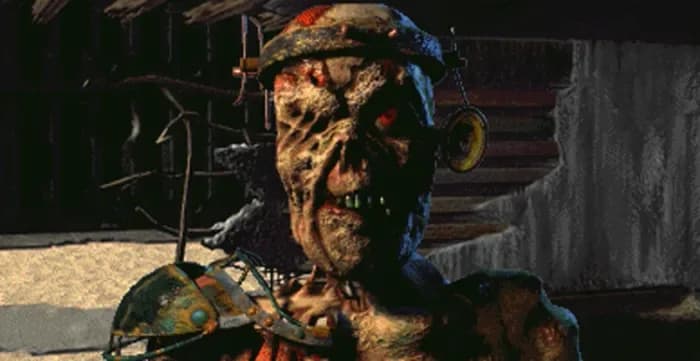
Ghouls are people mutated by radiation instead of killed by it, left scarred, sterile and close to immortal. Here is how ghoulification works in the Fallout games and TV series, what feral ghouls are, and how the wasteland treats them.
Mentioned in17 entries
Brotherhood of Steel: Fallout's Techno-Knights Explained
The Brotherhood of Steel began as a mutiny at a US Army base and became the best armed faction in the wasteland. Here is its history in every game, how it splintered into rival chapters, and how the Fallout TV series shows it.
Every Major Fallout Faction Explained
The Brotherhood of Steel, the Enclave, the NCR, Caesar's Legion, the Institute and the rest of Fallout's big factions. What each one wants, which games and episodes it appears in, and where it stands by the TV series in 2296.
Fallout 2 Story Explained: Plot and Endings
The full story of Fallout 2, from Arroyo's drought and the search for the GECK to the Enclave's oil rig and its President's plan to wipe out every mutated living thing, with the ending and what later games keep as canon.
Fallout 76 Story Explained: Plot and Endings
The story of Fallout 76, from Reclamation Day and the Scorched Plague to the Overseer's return, the Vault 79 heist and the Brotherhood's split, with the major updates through Burning Springs in brief.
Fallout Games in Order: Release and Story Order
Every Fallout game in release order with its date and launch platforms, the same games in story order from Fallout 76 in 2102 to Fallout 4 in 2287, and where the Prime Video series fits. Plus where to start, which spin-offs count, and what Bethesda has announced next.
Fallout Lore Quiz: 15 Questions for Wasteland Veterans
Fifteen questions on the Fallout story, from the Great War and the Master to New Vegas, the Institute and Lucy MacLean's trip out of Vault 33. Every answer comes with a short explanation and a link to the page that covers it.
Fallout: New Vegas Story Explained: Plot and Endings
The full story of Fallout: New Vegas, from the Courier's bullet in the head to the Second Battle of Hoover Dam, with all four faction endings, the four story add-ons and why no ending has ever been made canon.
FEV: the Forced Evolutionary Virus in Fallout Explained
The Forced Evolutionary Virus is the pre-war bioweapon behind Fallout's super mutants. Here's who made it, how it works, every major strain from the Master's vats to the Institute's labs, and why it may have started the Great War.
Mariposa Military Base: Where the Brotherhood and the Super Mutants Began
Mariposa Military Base is the pre-war army facility in California where FEV was tested on people. It gave Fallout both the Brotherhood of Steel and the Master's super mutants. Here is its history from Roger Maxson's mutiny to the Enclave's dig in Fallout 2.
New California Republic: the Rise and Fall of the NCR
The New California Republic grew from one walled farming village into the biggest nation in the wasteland. Here is its story from Fallout 1 to New Vegas, and what the TV series did to it with the bombing of Shady Sands.
Pip-Boy: Fallout's Wrist Computer, Every Model Explained
The Pip-Boy is the RobCo wrist computer every Vault dweller wears in Fallout. Here's what it does, what Pip stands for, how the models change from the Pip-Boy 2000 to the 3000 Mark IV, and the part it plays in the TV series.
Shady Sands: the NCR Capital and Its Destruction Explained
Shady Sands grew from a desert village in the first Fallout into the capital of the New California Republic, and the TV series reveals it was wiped out by a nuke. Here's its whole history, who destroyed it, and when.
+ 5 more
Get new articles in your inbox
No spam. New lore drops, canon conflicts, and deep dives only when they’re worth reading.
Some links on Lore Fortress are affiliate links. If you buy through them we earn a small commission at no extra cost to you.