The Vaults: Every Major Fallout Vault and Its Secret Experiment
Vault-Tec sold its Vaults as shelters from nuclear war, but most were experiments on the people inside. Here's what the Vaults were really for, the most infamous ones in the games, and the truth about Vaults 31, 32 and 33 in the TV series.
The Vaults are the huge underground fallout shelters Vault-Tec built across America before the Great War. They were sold to the public as the way to survive a nuclear war and rebuild afterwards, but most of them were secretly experiments on the people sealed inside. Most Fallout heroes start life in one, and the TV series begins inside Vault 33. (Fallout; Fallout 2; Fallout, "The End")
What the Vaults were really for#
The answer comes from the man at the top. In Fallout 2, Enclave president Dick Richardson tells the Chosen One that the Vaults were never built to save the population. They were a huge pre-war experiment, each one set up to see how its group of people would cope with a particular situation, with the results feeding back to the government. (Fallout 2)
The TV series tells it from Vault-Tec's side. At the summit in "The Beginning," Barb Howard settles an argument among the corporate guests by offering each company its own Vaults to experiment on, out of more than a hundred across the country. In "The Other Player," a Vault-Tec engineer tells her the company's water chips fail 30 percent of the time, and that the failures can be used to decide which Vaults run dry. (Fallout, "The Beginning"; Fallout, "The Other Player")
That's the origin story of the very first game. Vault 13's water chip breaks and the Vault Dweller of the first game is sent into the wasteland to find a replacement. (Fallout)
Life inside a Vault#
Every Vault follows the same template. Residents wear numbered blue jumpsuits, carry a Pip-Boy, and answer to an overseer. Most have a hydroponic farm, a water purifier, a reactor and a big gear-shaped door. Dwellers are told the surface is deadly and wait for the day it's safe to go back up. Fallout 76 calls that day Reclamation Day, and so does Vault 33. (Fallout 3; Fallout 76; Fallout, "The End")
Some Vaults also got a G.E.C.K., the Garden of Eden Creation Kit, to help start a new settlement once the doors opened. In Fallout 2 the Chosen One's whole quest is to find one for Arroyo, the village founded by the Vault Dweller's followers. (Fallout 2)
The most infamous Vaults in the games#
- Vault 12, Bakersfield. It never sealed properly, and its dwellers became the ghouls of Necropolis. (Fallout)
- Vault 15, California. Its dwellers left to found Shady Sands, the town that became the capital of the New California Republic. (Fallout)
- Vault 8, California. A control Vault that opened on schedule and became the wealthy, walled Vault City. (Fallout 2)
- Vault 13, California. The Vault Dweller's home. Generations later the Enclave raids it and takes its people to test their plague on. (Fallout; Fallout 2)
- Vault 101, Washington, D.C. Its overseers keep everyone inside forever: "No one ever enters, and no one ever leaves." (Fallout 3)
- Vault 87. Used for experiments with the Forced Evolutionary Virus, and the source of Fallout 3's Capital Wasteland super mutants. (Fallout 3)
- Vault 106. Psychoactive drugs were pumped into the air ten days after it sealed. (Fallout 3)
- Vault 108. Stocked with cloning gear and one man's DNA, it's now full of clones who all answer to "Gary." (Fallout 3)
- Vault 112. Its dwellers are plugged into Tranquility Lane, a 1950s simulation run by Dr. Stanislaus Braun, who tortures them for fun. (Fallout 3)
- Vault 11, Mojave. The Vault computer told the dwellers to sacrifice one person a year or all would die. When the last survivors refused, it congratulated them. (Fallout: New Vegas)
- Vault 21, Las Vegas. Every dispute was settled by gambling. Mr. House later turned it into a hotel on the Strip. (Fallout: New Vegas)
- Vault 22, Mojave. A science Vault destroyed by its own experimental fungus, which took over its scientists. (Fallout: New Vegas)
- Vault 111, Massachusetts. Its residents were told they'd be decontaminated and were frozen instead. The Sole Survivor wakes up 210 years later. (Fallout 4)
- Vault 81, Massachusetts. Hidden scientists were meant to test diseases on the dwellers. Its first overseer refused to go along with it. (Fallout 4)
- Vault 75, Massachusetts. Built under a school. The adults were executed on arrival, and the children were raised and trained, with the best of them "harvested" for their genes at eighteen. (Fallout 4)
- Vault 76, Appalachia. A control Vault of carefully chosen dwellers, opened 25 years after the war to rebuild. Its overseer also had secret orders to secure the region's nuclear silos. (Fallout 76)
Vaults 31, 32 and 33 in the TV series#
Lucy MacLean grows up in Vault 33 in Los Angeles, one of three Vaults linked by tunnels. The three trade goods and spouses every few years, and season 1 opens with Lucy marrying a man from Vault 32 in exactly that exchange. The bridegroom's party turns out to be surface raiders led by Lee Moldaver, who kidnap her father, overseer Hank MacLean. (Fallout, "The End")
Vault 32 had already died. Lucy's brother Norm and his friend Chet find it full of blood and graffiti reading "Death to management." Its people had found out something, killed their overseer and torn themselves apart. (Fallout, "The Ghouls")
Vault 31 is the secret. Dwellers in 32 and 33 believe it's just a better-equipped neighbour that always seems to produce good overseers. In "The Beginning" Norm gets inside and finds the truth: Vault 31 is full of cryogenic pods holding Vault-Tec junior executives, run by Bud Askins, whose brain now sits in a small robot. Every few decades one is thawed and placed in 32 or 33 to become its overseer and breed a line of loyal "super managers," ready for the day Vault-Tec reclaims the surface. Hank was one of them. (Fallout, "The Radio"; Fallout, "The Beginning")
Season 2 breaks the system open. Trapped inside with Bud's robot taunting him, Norm thaws the frozen executives instead of going into a pod himself. In "The Golden Rule" he persuades them that escaping is a test set by Bud Askins and leads them up a maintenance hatch to the surface. (Fallout, "The Innovator"; Fallout, "The Golden Rule")
Vault 4, the scientists' Vault#
The other Vault the show visits is Vault 4. A pre-war commercial filmed by Cooper Howard sells it as a Vault run entirely by scientists. By 2296 it holds mutated "test subjects" and a population of refugees, many of them from the ruins of Shady Sands, who seem friendly but have plenty to hide. (Fallout, "The Trap")
For the company behind all this, see Vault-Tec, and for how the Vault 33 story plays out, see the TV series explained.
Frequently asked questions
- What were the Vaults really for in Fallout?
- Most were social experiments. Each Vault was given its own test, from too few food supplies to an overseer who never lets anyone leave. Only a few were built to work as real shelters.
- What is the experiment in Vault 33?
- Vaults 31, 32 and 33 are one experiment. Frozen Vault-Tec junior executives in Vault 31 are thawed one at a time to become overseers of 32 and 33 and breed loyal "super managers" for when Vault-Tec takes back the surface.
- What happened to Vault 32?
- Its people found out the truth about Vault 31, killed their overseer and then turned on each other. Raiders led by Lee Moldaver used the empty Vault to get into Vault 33.
- Which Vault is the worst in Fallout?
- Fans usually point to Vault 11, where dwellers had to sacrifice one of their own every year, Vault 106's drugged air, Vault 108's clones, or Vault 112's virtual-reality prison run by Dr. Braun.
- Were any Vaults normal?
- A few were controls meant to work properly. Vault 76 in Appalachia was one, opened 25 years after the war to rebuild. Vault 8 in Fallout 2 opened as planned and founded Vault City.
Sources
- GameFallout, Interplay Productions, 1997
- GameFallout 2, Black Isle Studios, 1998
- GameFallout 3, Bethesda Game Studios, 2008
- GameFallout: New Vegas, Obsidian Entertainment, 2010
- GameFallout 4, Bethesda Game Studios, 2015
- GameFallout 76, Bethesda Game Studios, 2018
- VideoThe End, Fallout, season 1 episode 1, 2024
- VideoThe Ghouls, Fallout, season 1 episode 4, 2024
- VideoThe Trap, Fallout, season 1 episode 6, 2024
- VideoThe Radio, Fallout, season 1 episode 7, 2024
- VideoThe Beginning, Fallout, season 1 episode 8, 2024
- VideoThe Innovator, Fallout, season 2 episode 1, 2025
- VideoThe Golden Rule, Fallout, season 2 episode 2, 2025
- VideoThe Other Player, Fallout, season 2 episode 6, 2026
Spotted a factual error or a primary source we missed? Email a correction. Every flagged claim gets reviewed.
Followed from this entry
FEV: the Forced Evolutionary Virus in Fallout Explained
The Forced Evolutionary Virus is the pre-war bioweapon behind Fallout's super mutants. Here's who made it, how it works, every major strain from the Master's vats to the Institute's labs, and why it may have started the Great War.
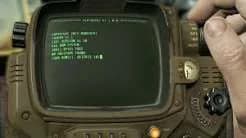
Pip-Boy: Fallout's Wrist Computer, Every Model Explained
The Pip-Boy is the RobCo wrist computer every Vault dweller wears in Fallout. Here's what it does, what Pip stands for, how the models change from the Pip-Boy 2000 to the 3000 Mark IV, and the part it plays in the TV series.
Fallout 1 Story Explained: Plot and Endings
The full story of the original Fallout, from the broken water chip in Vault 13 to the Master's death under the Cathedral and the Vault Dweller's exile, with the ending and what later games treat as canon.
Fallout 2 Story Explained: Plot and Endings
The full story of Fallout 2, from Arroyo's drought and the search for the GECK to the Enclave's oil rig and its President's plan to wipe out every mutated living thing, with the ending and what later games keep as canon.
Fallout 3 Story Explained: Plot and Endings
The full story of Fallout 3, from growing up in Vault 101 to Project Purity, the Enclave and the choice in the irradiated control room, with every ending, Broken Steel's change to it and what Fallout 4 treats as canon.
Fallout TV Series Explained: Seasons, Story and How It Fits the Games
A guide to the Prime Video Fallout series: both seasons and every episode, the story of Lucy, Maximus and the Ghoul from Vault 33 to New Vegas, the Shady Sands timeline debate, how the show fits after the games in 2296, and what is confirmed about season 3.
Mentioned in16 entries
Every Fallout 4 Companion and Their Story
Fallout 4 has 13 companions in the base game and three more named companions in its add-ons. This guide covers who each one is, where they come from, the faction they belong to, their personal quest and how their story can end.
Every Major Fallout Faction Explained
The Brotherhood of Steel, the Enclave, the NCR, Caesar's Legion, the Institute and the rest of Fallout's big factions. What each one wants, which games and episodes it appears in, and where it stands by the TV series in 2296.
Fallout Timeline: From the Divergence to 2296
The Fallout story in date order, from the split with real history after the Second World War, through the Great War of 2077 and two centuries of wasteland, to Lucy MacLean and the Ghoul in 2296. Events are grouped into eras, oldest first, and every entry names the game or episode it comes from, including where the Prime Video series fits.
Fallout TV Series Explained: Seasons, Story and How It Fits the Games
A guide to the Prime Video Fallout series: both seasons and every episode, the story of Lucy, Maximus and the Ghoul from Vault 33 to New Vegas, the Shady Sands timeline debate, how the show fits after the games in 2296, and what is confirmed about season 3.
FEV: the Forced Evolutionary Virus in Fallout Explained
The Forced Evolutionary Virus is the pre-war bioweapon behind Fallout's super mutants. Here's who made it, how it works, every major strain from the Master's vats to the Institute's labs, and why it may have started the Great War.
Lucy MacLean: the Vault 33 Dweller at the Heart of the Fallout Series
Lucy MacLean is the Vault 33 resident who leaves home to rescue her father and finds out what he really did. Here is her story through both seasons of the Fallout TV series, from Filly to the Las Vegas Strip.
New Vegas: the City Mr. House Saved, From the Game to the TV Series
New Vegas is the rebuilt Las Vegas that survived the Great War thanks to Robert House. Here's how it survived, who runs the Strip in Fallout: New Vegas, and what has happened to it by 2296 in season 2 of the TV series.
Pip-Boy: Fallout's Wrist Computer, Every Model Explained
The Pip-Boy is the RobCo wrist computer every Vault dweller wears in Fallout. Here's what it does, what Pip stands for, how the models change from the Pip-Boy 2000 to the 3000 Mark IV, and the part it plays in the TV series.
Shady Sands: the NCR Capital and Its Destruction Explained
Shady Sands grew from a desert village in the first Fallout into the capital of the New California Republic, and the TV series reveals it was wiped out by a nuke. Here's its whole history, who destroyed it, and when.
The Commonwealth: Fallout 4's Boston Wasteland Explained
The Commonwealth is what's left of Boston and Massachusetts after the Great War, the setting of Fallout 4. Here's what happened to it in 2077, the factions fighting over it in 2287, and why the TV series' Brotherhood is so worried about losing it.
The Enclave: Fallout's Shadow Government Explained
The Enclave is what's left of the pre-war United States government, and it still thinks it owns the country. Here is what it did in Fallout 2, Fallout 3 and Fallout 76, and why the TV series puts it behind Vault-Tec.
The Great War: the Day the Bombs Fell in Fallout
The Great War was the two-hour nuclear exchange of 23 October 2077 that ended the old world in Fallout. Here's what led to it, what happened that morning, who the games say fired first, and how the TV series points the finger at Vault-Tec and the Enclave.
+ 4 more
Get new articles in your inbox
No spam. New lore drops, canon conflicts, and deep dives only when they’re worth reading.
Some links on Lore Fortress are affiliate links. If you buy through them we earn a small commission at no extra cost to you.