Praetorian
Collector Husk-Construct
The Praetorian was a slow-moving aerial construct fielded by the Collectors, built from dozens of deformed human husks fused into a single armored body. It was armed with twin particle beams and shielded by a regenerating biotic barrier, and it served as one of the deadliest guardians of the Collectors' operations.
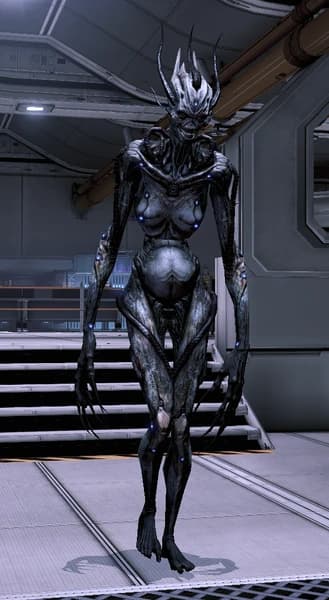
The Praetorian was a large, slow-moving aerial construct created by the Collectors from roughly thirty deformed human husks fused into a single body. Armed with powerful twin particle beams and shielded by both an armored carapace and a regenerating biotic barrier, it was deployed to guard the Collectors' operations and to overwhelm those who interfered with them. Commander Shepard faced Praetorians during the campaign against the Collectors in 2185. (Mass Effect 2)
Origin and composition#
The Praetorian was built by the Collectors from the bodies of their victims, the same source that yielded their lesser husks. Roughly thirty deformed husks were fused together to form each one, producing a bulky construct that hovered a short distance above the ground rather than walking. A cluster of human heads sat within its maw, the remnants of the individuals consumed in its making. (Mass Effect 2)
Capabilities#
A Praetorian was protected by an exceptionally tough armored carapace. It carried a biotic barrier that returned after each of its heavy attacks, and its size made it resistant to most biotic powers. Two small plates flanked its mouth and shielded the vulnerable cluster of heads behind them until they were destroyed. (Mass Effect 2; Mass Effect 3)
Offensively it relied chiefly on its twin particle beams, eye-mounted weapons that swept across a target and dealt continuous, often fatal damage to anyone caught in their path. At close quarters it used a ground strike known as the Death Choir, slamming down to knock back nearby foes before unleashing an area attack that was almost certain to kill, after which its barrier fully recharged. The beams did not track moving targets well, and a Praetorian had to land before it could attack, brief openings that determined and mobile opponents could exploit. (Mass Effect 2; Mass Effect 3)
Encounters#
Shepard engaged Praetorians on more than one occasion during the Collector crisis. One appeared at the close of the action on the colony of Horizon, and another during the escape from the Collector Cruiser. During the abductions on the colony of Fehl Prime, the Collectors loosed a Praetorian to crush local resistance; that specimen was created in part from a captured marine and was distinguished by green energy in place of the usual blue. It was destroyed after its barrier was disabled. (Mass Effect 2; Mass Effect: Paragon Lost)
Examination of Praetorian remains revealed that their bodies did not last. Within hours of death the organic components broke down into a denatured residue and the mechanical parts turned to ash. A specimen autopsied within minutes of its destruction offered a clue to the process, hinting that nanomachines dismantled the construct once it was killed. (Mass Effect 2)
Frequently asked questions
- What is a Praetorian in Mass Effect?
- A Praetorian was a Collector construct assembled from roughly thirty deformed human husks fused into one slow-moving aerial body. It attacked with twin particle beams and was protected by an armored carapace and a biotic barrier that recharged after each of its devastating ground attacks.
- How were Praetorians made?
- Like other husks, Praetorians were created by the Collectors from captured organic victims. Around thirty husks were fused together into a single large form.
- How dangerous was a Praetorian?
- A Praetorian was among the most lethal threats the Collectors fielded. Its particle beams could kill in seconds, and its Death Choir ground strike could be instantly fatal at close range. It was largely immune to the biotic effects that disabled lesser foes.
Sources
- GameMass Effect 2, BioWare, 2010
- GameMass Effect 3, BioWare, 2012
- FilmMass Effect: Paragon Lost, Production I.G, 2012
Spotted a factual error or a primary source we missed? Email a correction. Every flagged claim gets reviewed.
Followed from this entry
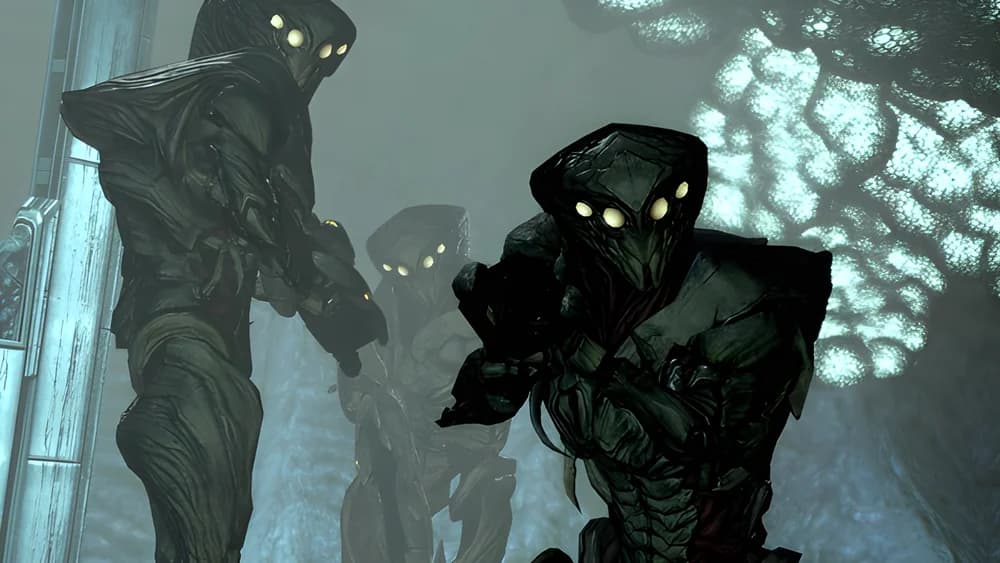
Collectors
The Collectors were an enigmatic insectoid race dwelling beyond the Omega 4 Relay, long dismissed as myth. In truth they were the last of the Protheans, genetically rewritten and cybernetically enslaved by the Reapers, who used them to abduct human colonies and build a Human-Reaper.
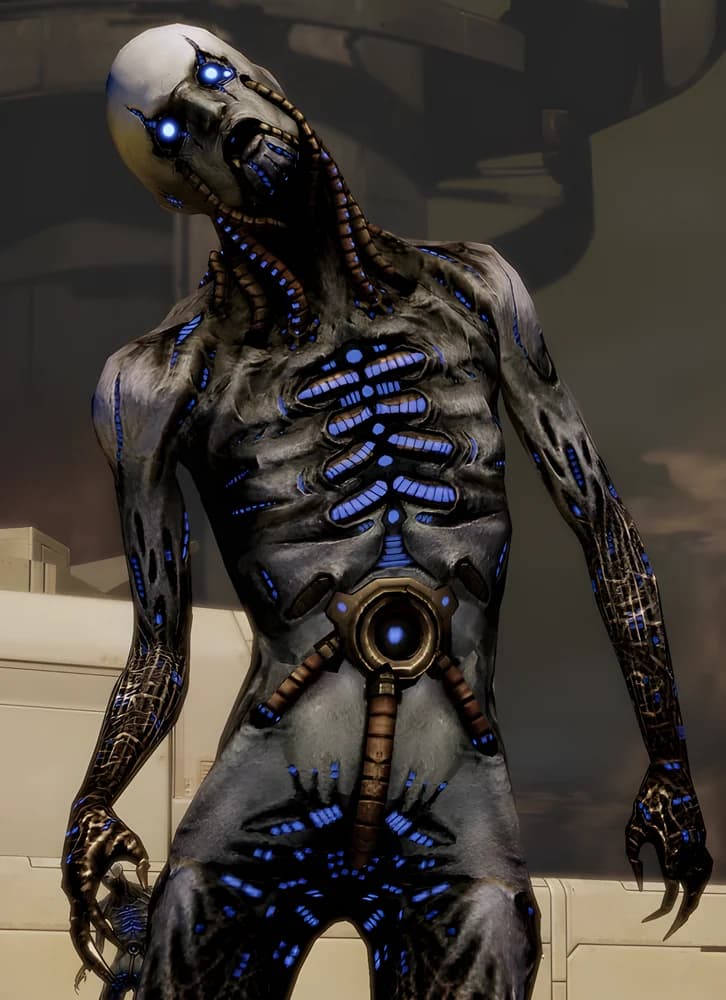
Husk
Husks were synthetic-organic creatures made from the bodies of organic beings, their flesh converted into cybernetic material by Reaper technology. Mindless and aggressive, they served the Reapers and their agents as shock troops and as a weapon of terror against the living.
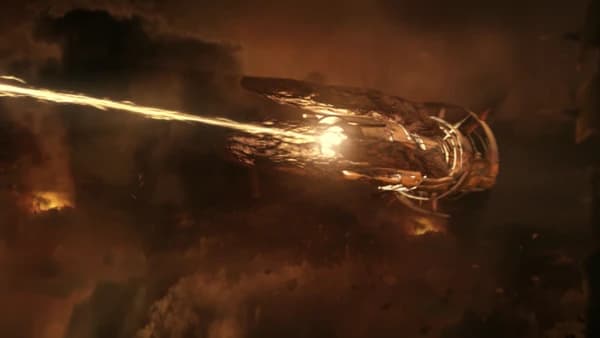
Collector Cruiser
The Collector Cruiser was the only known vessel type used by the Collectors, an immense hybrid of organic growth and metal superstructure. A single cruiser could carry enough troops, creatures, and stasis pods to abduct an entire human colony, and one such ship destroyed the original Normandy in 2183.
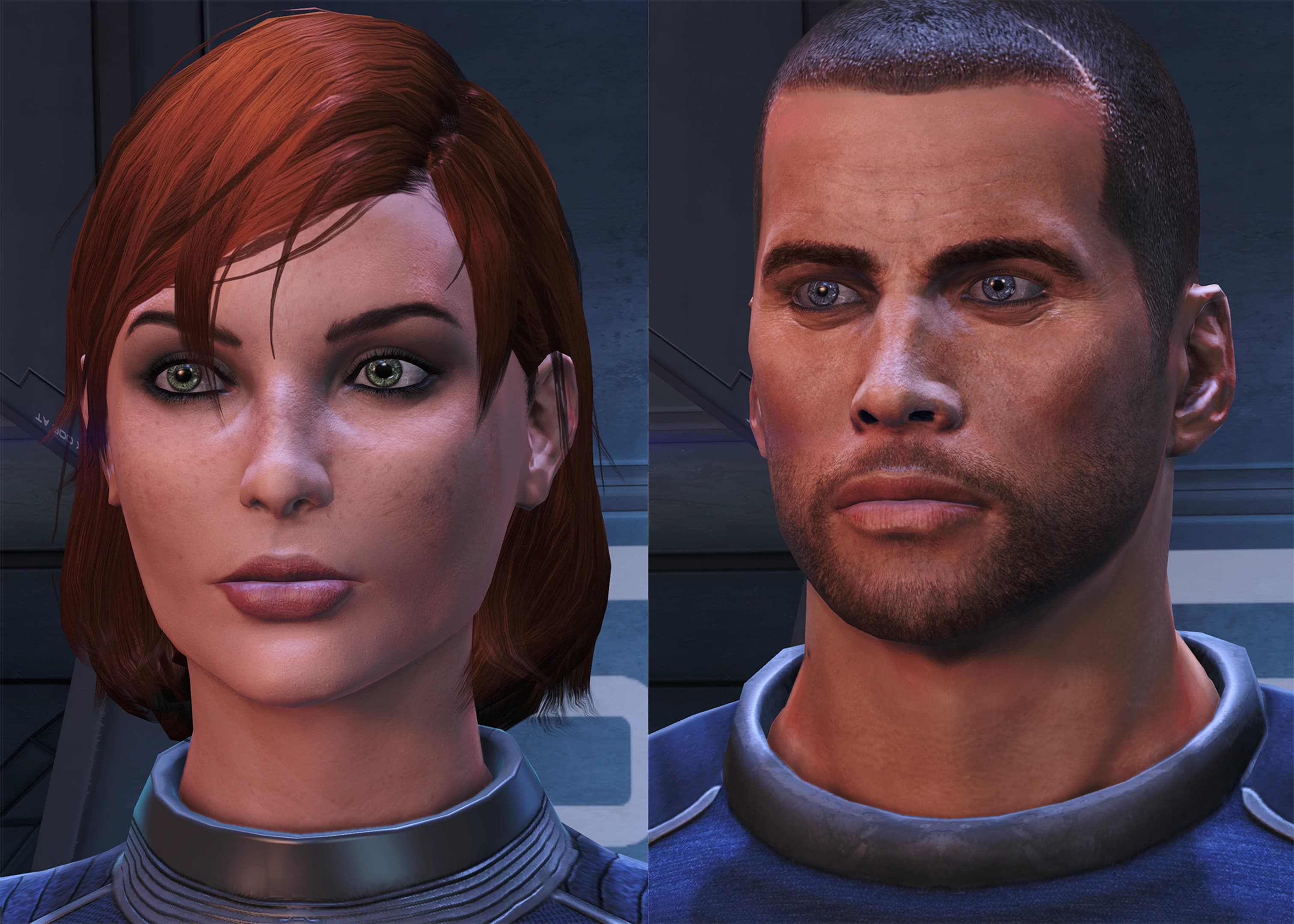
Commander Shepard
Commander Shepard was a Systems Alliance N7 marine who became the first human Spectre, exposed the rogue agent Saren Arterius, and led the galaxy's resistance against the Reapers. Shepard's gender, history, and many of the choices that shaped the war were never fixed, and the final fate of the cycle turned on the Commander's own decisions.

Horizon
Horizon was a temperate human colony on the galactic frontier that suffered a devastating Collector raid in 2185 and later became the site of the secret Cerberus husk facility known as Sanctuary.
Mentioned in3 entries
Essex: Biotic Marine of Delta Squad
Essex was a gifted and brash human biotic of the Systems Alliance, a member of the special forces unit Delta Squad. He fought in the defense of the colony Fehl Prime against the Blood Pack and later the Collectors, and died covering his squad's escape.
Milque
Milque was a human sniper of the Systems Alliance special forces unit Delta Squad, stationed on the colony of Fehl Prime. Cynical and self-deprecating yet fiercely loyal, he fought through both the Blood Pack assault on the colony and the later Collector attack that followed.
Scion: Fused Husk Artillery
Scions were a heavy variant of Husk built from three human Husks fused together and grafted around a single mass effect weapon. Slow and heavily armored, they hung back from the front line and rained ranged fire and shockwaves on their targets while lesser Husks rushed ahead.
Get new articles in your inbox
No spam. New lore drops, canon conflicts, and deep dives only when they’re worth reading.
Some links on Lore Fortress are affiliate links. If you buy through them we earn a small commission at no extra cost to you.