Infestor
subversion strain of the Zerg Swarm
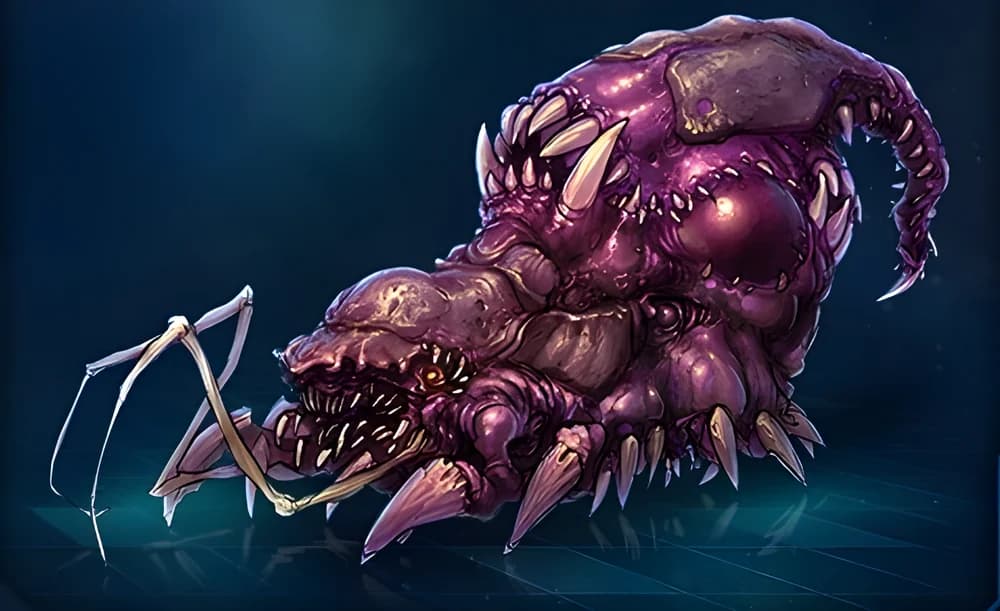
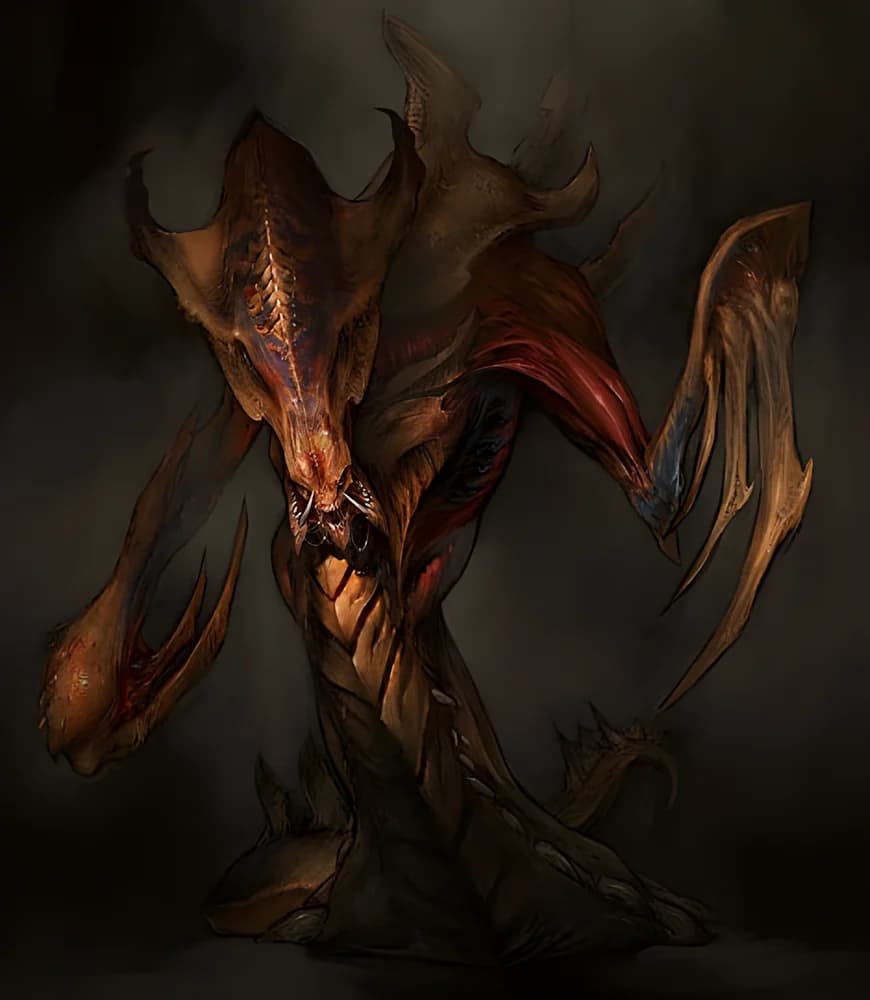
The infestor is a burrowing Zerg support strain evolved from the borbu matriarch, capable of moving while burrowed, seizing control of enemies with a neural parasite, and disgorging infested marines and larvae on the battlefield.
The infestor was one of the more insidious strains of the Zerg Swarm, a burrowing support creature in use by the Zerg by 2503. Where most Zerg strains overwhelm an enemy through force, the infestor worked through subversion, seizing control of hostile minds, regurgitating infested soldiers into the enemy's own ranks, and immobilizing foes beneath a corrosive growth. (StarCraft II: Wings of Liberty; StarCraft: Ghost: Spectres)
Origin and physiology#
The infestor was in use by the Zerg by 2503. Unlike most Zerg strains, it can move while burrowed, and at astonishing speed. (StarCraft: Ghost: Spectres; StarCraft Field Manual)
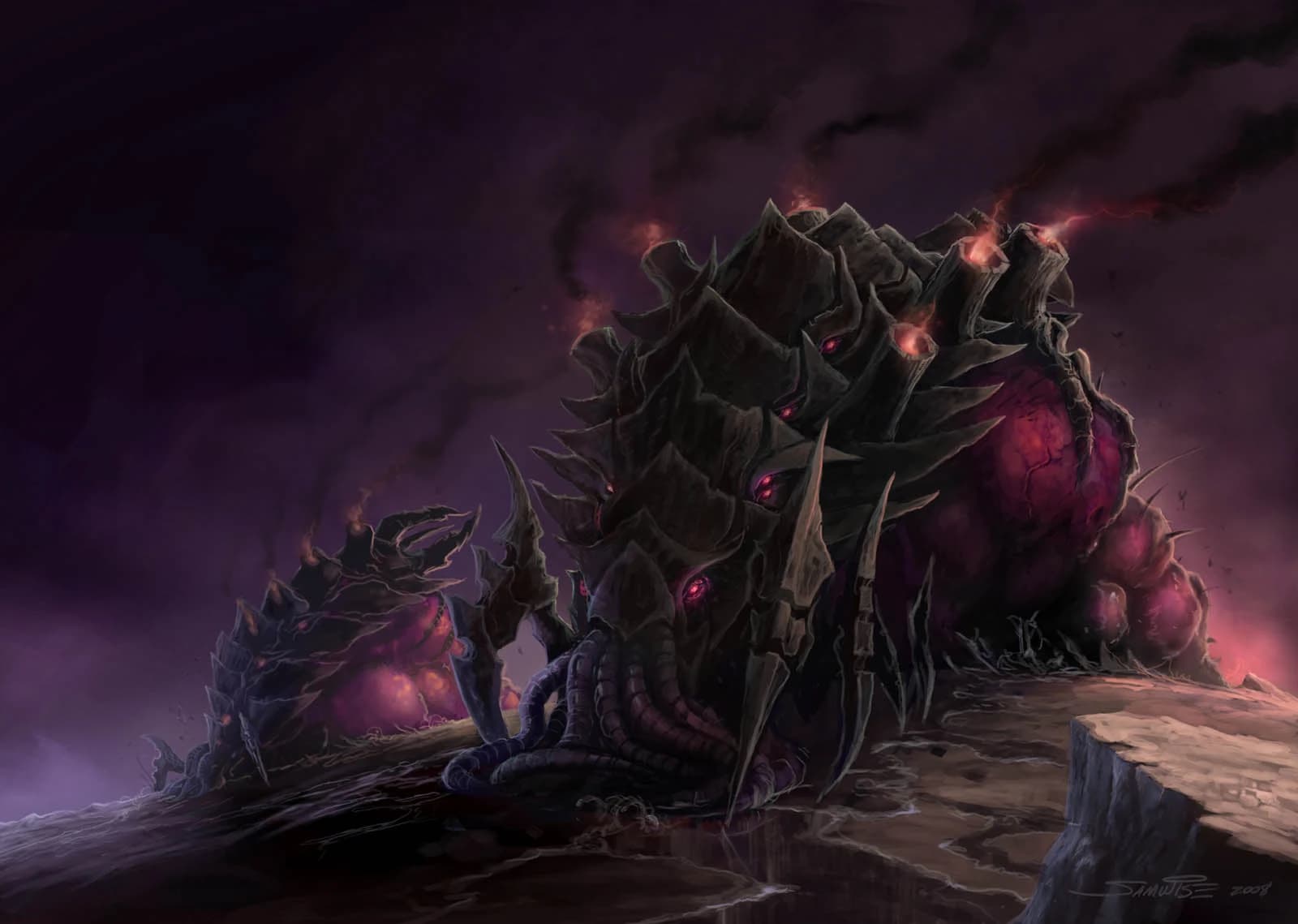
The infestors of the Leviathan Brood show these defensive structures in more pronounced form. The primal Zerg also make use of infestors, though those creatures are frequently preyed upon by the larger members of their own packs and have evolved thickened plating along the back to protect themselves. (StarCraft II: Legacy of the Void)
The neural parasite#
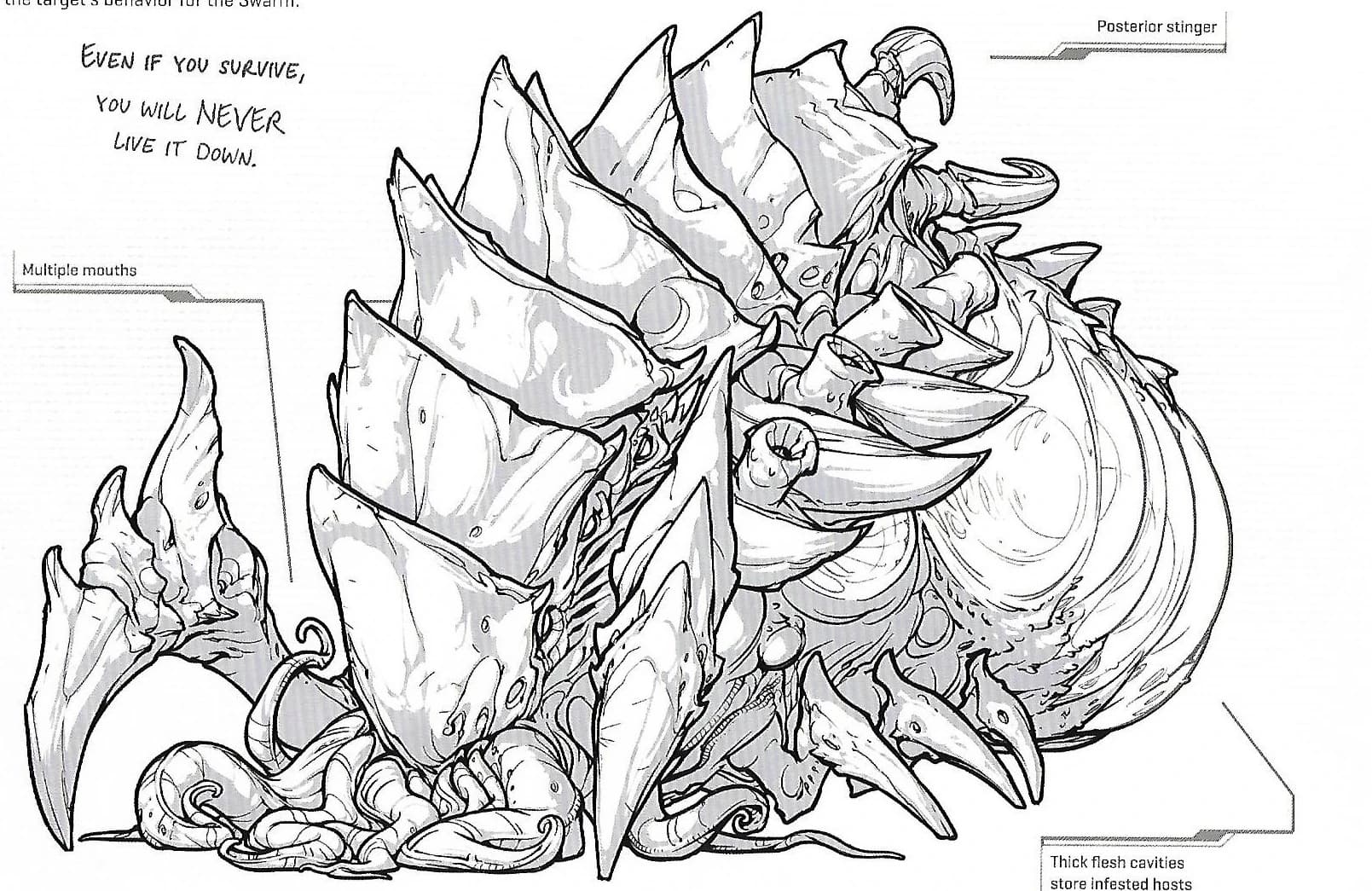
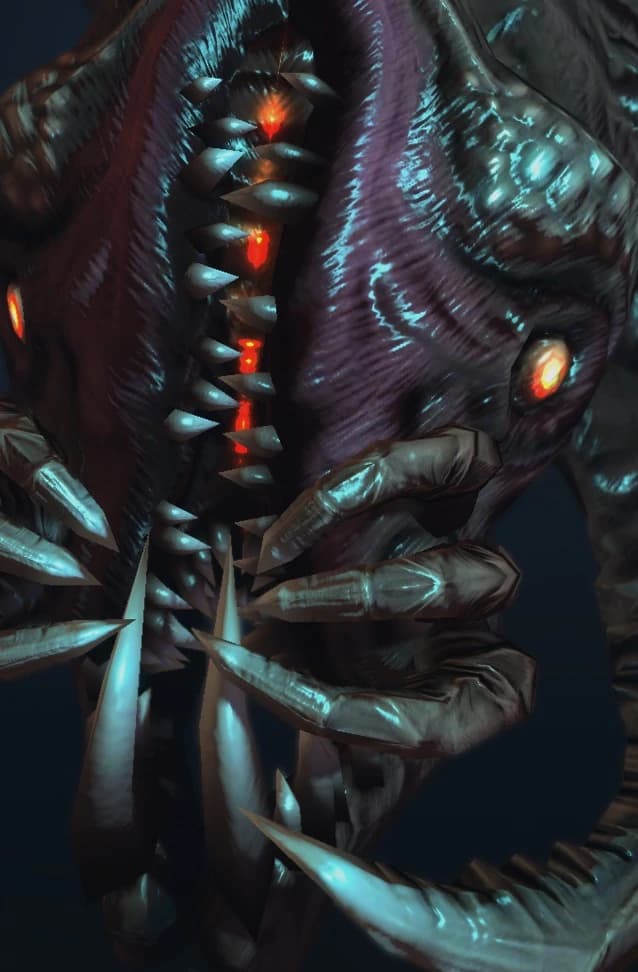
The infestor's most dangerous feature is the neural parasite, a multi-mouthed symbiotic creature that attaches to an enemy and controls its mind for a short period. The parasite embeds itself near the top of the victim's spine, and the host can still communicate through the parasite's native language to its former allies. (StarCraft II: Wings of Liberty; The Exit; StarCraft Field Manual)
Infested terrans and other weapons#
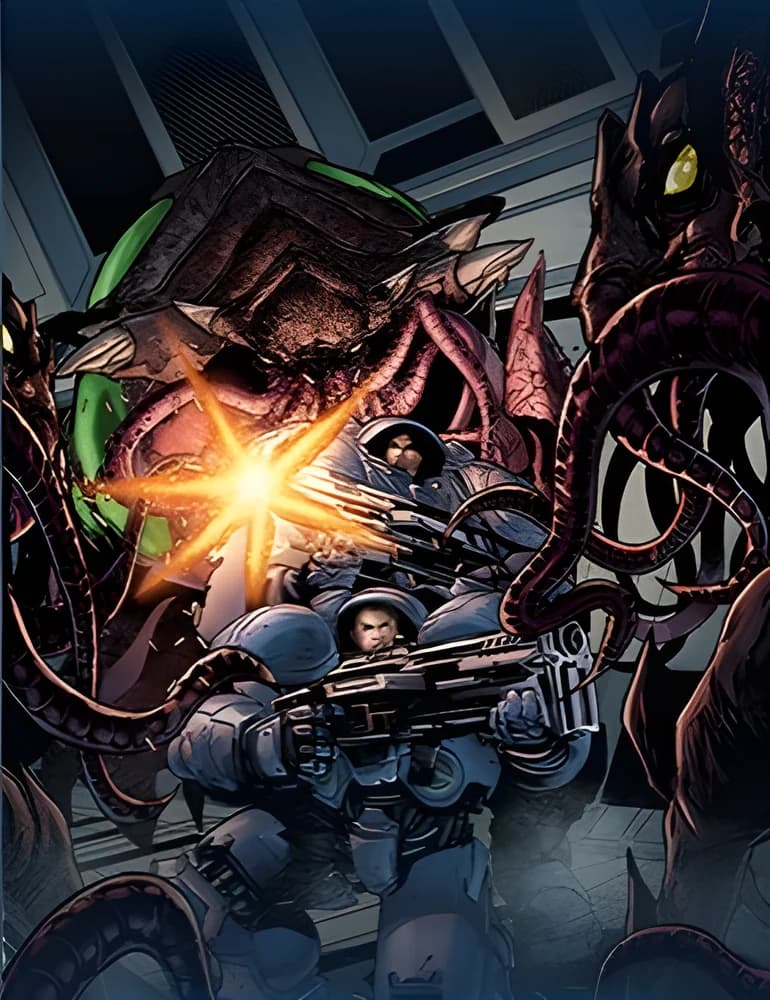
Infestors are used to support hydralisks and roaches on the battlefield, and they plant virophages. They spawn infested marines onto the battlefield to face their former compatriots, and these marines can pop right out of the ground when the infestor is burrowed. The infestor is also capable of harboring larvae and spewing them at enemies. (StarCraft II: Wings of Liberty; StarCraft II: Shadow Wars; StarCraft Field Manual)
Upon developing the fungal growth mutation, the infestor gains a weapon that both harms and holds. Sprayed over an area, the growth damages and roots any enemy it touches, and it reveals cloaked and burrowed foes alike. (StarCraft II: Wings of Liberty; StarCraft Field Manual)
Variant strains#
The infestor strain has produced specialist forms within the Swarm, among them the choker, a number of which spawned on Meinhoff during the Second Great War. Infestors enslaved by the Cerberus Program were implanted with a titanium infrastructure to improve their survivability, and the primal and Leviathan Brood lineages each carry their own adaptations of the base creature. (StarCraft II: Wings of Liberty; StarCraft II: Legacy of the Void)
Frequently asked questions
- What is the Infestor in StarCraft?
- The infestor is a burrowing Zerg support strain that works through subversion rather than brute force. It seizes control of hostile minds, regurgitates infested soldiers into enemy ranks, and immobilizes foes beneath a corrosive growth. It was in use by the Zerg by 2503.
- What makes the Infestor different from other Zerg?
- Unlike most Zerg strains, the infestor can move while burrowed, and at astonishing speed. It supports hydralisks and roaches rather than fighting head-on, and it is used to plant virophages.
- How does the Infestor's neural parasite work?
- The neural parasite is a multi-mouthed symbiotic creature that lives within the infestor and, when spat, attaches to an enemy and controls its mind for a short period. It embeds near the top of the victim's spine, and the host can still speak to former allies through the creature's own language.
- How does the Infestor use infested marines?
- Infestors spawn infested marines onto the battlefield to fight their former compatriots, and these marines can pop right out of the ground when the infestor is burrowed.
- Is the neural parasite's control permanent?
- No. The neural parasite controls its victim's mind only for a short period of time before the host is released.
Gallery
Images via StarCraft Wiki
Sources
- GameStarCraft II: Wings of Liberty, Blizzard Entertainment, 2010
- GameStarCraft II: Legacy of the Void, Blizzard Entertainment, 2015
- BookStarCraft: Ghost: Spectres, Nate Kenyon, Pocket Star, 2011
- BookThe Exit, Dany McAleese, Blizzard Entertainment short story, 2014
- ComicStarCraft II: Shadow Wars, Valerie Watrous (w), Blizzard Entertainment, 2018
- BookStarCraft Field Manual, Rick Barba, Insight Editions, 2017
Spotted a factual error or a primary source we missed? Email a correction. Every flagged claim gets reviewed.
Followed from this entry
Hydralisk
The hydralisk was a versatile zerg combat strain evolved from the peaceful slothien, armored in carapace plates and able to launch volleys of armor-piercing spines from its upper body. Forming the backbone of the Swarm's onslaughts, the hydralisk symbolized zerg power to terrans more than any other strain.

Zerg
The zerg are a ravenous collective of biologically advanced aliens who evolve by assimilating the essence of other species in pursuit of genetic perfection. Created by Amon's xel'naga on Zerus and bound to the Overmind, they grew into one of the three dominant powers of the galaxy.
Every Zerg Unit in StarCraft and StarCraft II, Explained
Every zerg strain from StarCraft, Brood War and the three StarCraft II campaigns, from the zergling to the leviathan. Each entry covers the species it came from, what it does for the Swarm and where it turns up in the story.
Leviathan
The leviathan was a massive airborne zerg breed that served as the Swarm's equivalent of a capital ship. Measured at around eleven kilometers long and capable of deep-space and warp travel, it became Sarah Kerrigan's mobile base of operations after her return to the zerg.
Second Great War: Swarm vs Dominion, 2504
The Second Great War broke out in 2504 and ended on Korhal with Arcturus Mengsk dead at Kerrigan's hand. Deinfesting her mid-war let the xel'naga Amon return.

Cerberus Program
The Cerberus Program was a Terran Confederacy black ops unit formed from the remnants of the Cerberus Recon Squad. Under Tamsen Cauley it defected to the Terran Dominion, and after the death of Arcturus Mengsk it went underground as a renegade outfit devoted to enslaving zerg broods for sale to the highest bidder.
Mentioned in4 entries
Battle of Adena: the ambush that poisoned the peace
The Battle of Adena was a three-way conflict fought after the One-Day War on the abandoned world of Adena, inside the demilitarized zone between the Terran Dominion and the Daelaam. Renegade Dominion forces looting a jorium stockpile sprang a trap laid by Broodmother Niadra, dragging Admiral Urun's protoss into a battle that killed him and wrecked relations between the two powers.
Elms: mercenary marine and hidden psychic
Elms was a terran mercenary marine with a cybernetic arm and a psionic gift she kept hidden from those around her. Hired for a crooked salvage operation on Adena, she fought her way through a zerg ambush, exposed the officers who abandoned her, and killed them all rather than accept a leash from anyone.
Every Zerg Unit in StarCraft and StarCraft II, Explained
Every zerg strain from StarCraft, Brood War and the three StarCraft II campaigns, from the zergling to the leviathan. Each entry covers the species it came from, what it does for the Swarm and where it turns up in the story.
Infested Terran
Infested terrans were a breed of zerg created when the Swarm infected a human with a hyper-evolutionary virus, consuming the victim's mind and remaking the body. Most became disposable suicide bombers, but the zerg eventually perfected sentient infested terrans who served as consorts, generals, and living weapons.
Get new articles in your inbox
No spam. New lore drops, canon conflicts, and deep dives only when they’re worth reading.
Some links on Lore Fortress are affiliate links. If you buy through them we earn a small commission at no extra cost to you.