Hydralisk
Backbone Shock Trooper of the Swarm
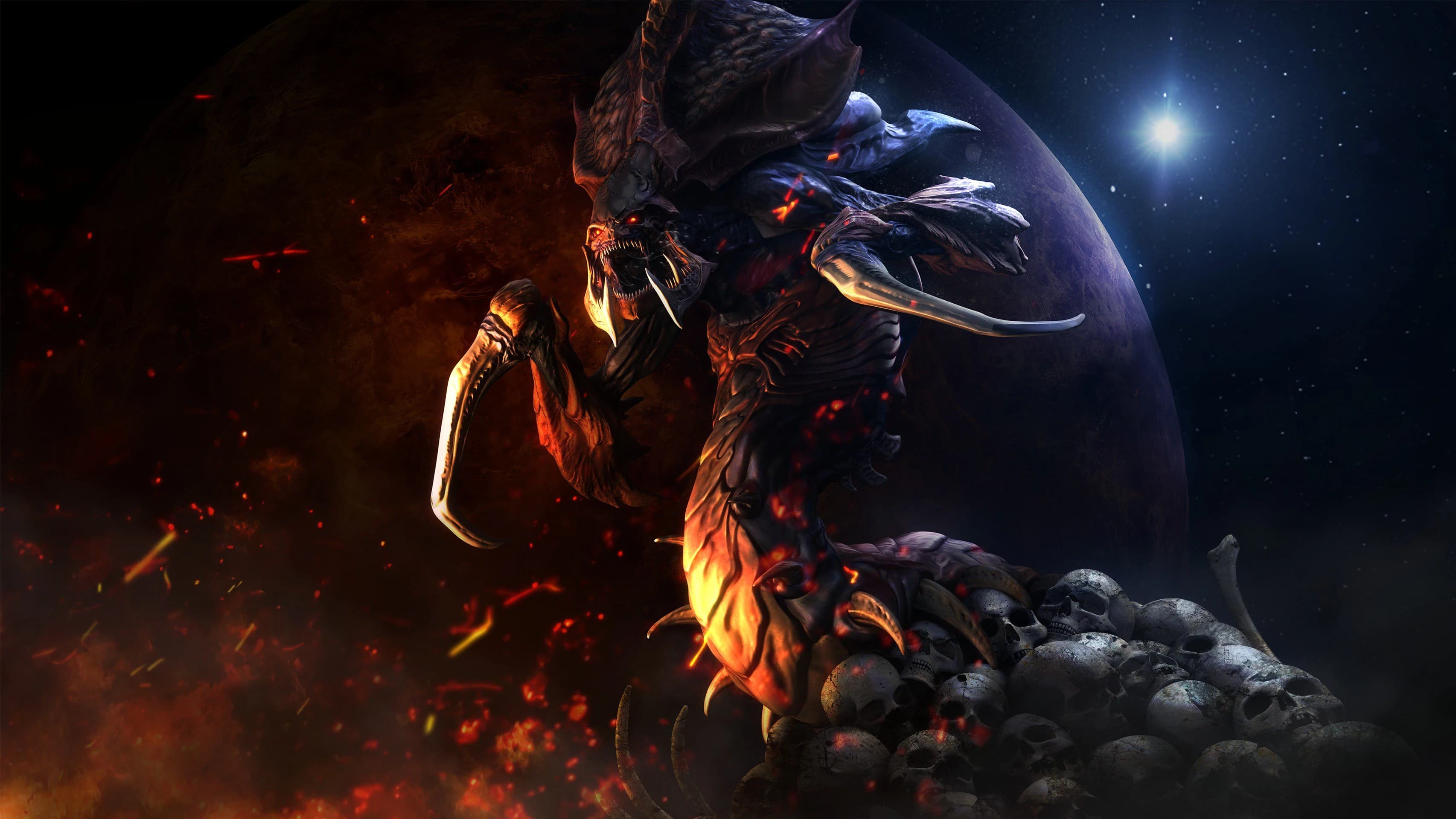
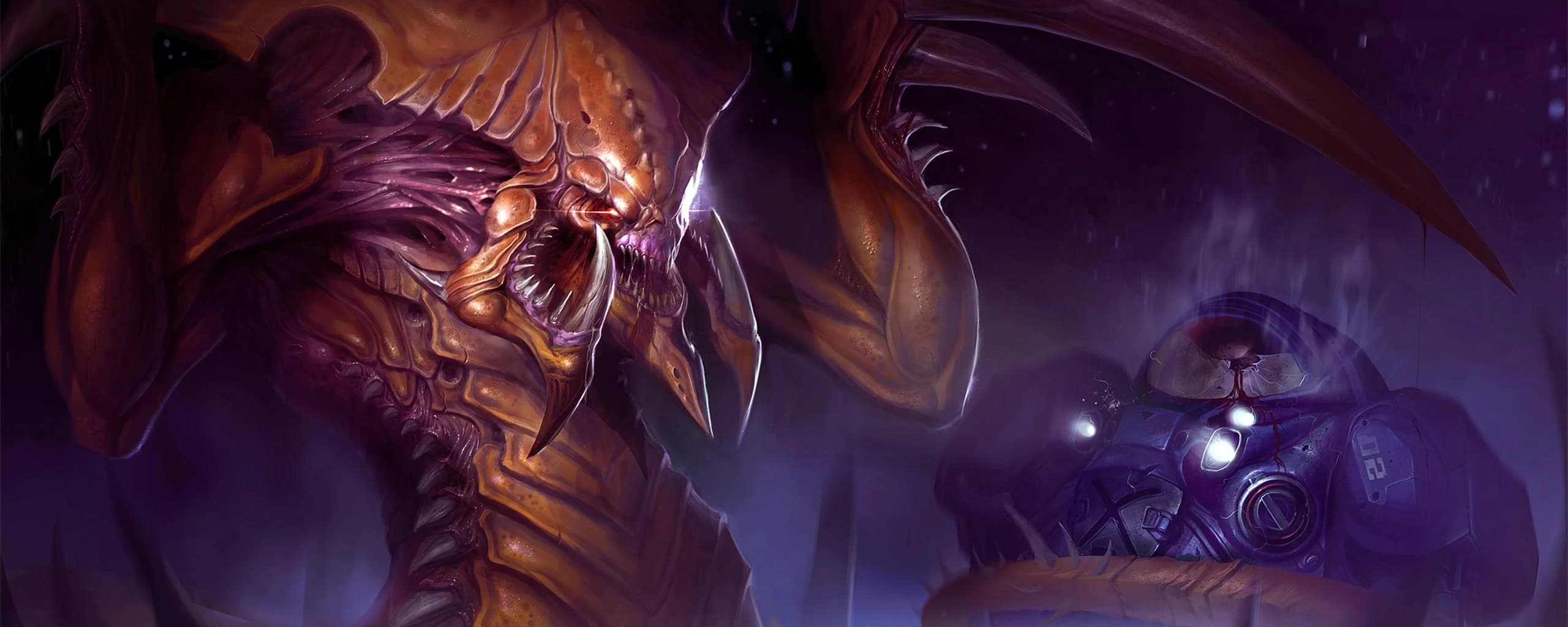
The hydralisk was a versatile zerg combat strain evolved from the peaceful slothien, armored in carapace plates and able to launch volleys of armor-piercing spines from its upper body. Forming the backbone of the Swarm's onslaughts, the hydralisk symbolized zerg power to terrans more than any other strain.
The hydralisk was a versatile front-line combat strain of the zerg, forming the backbone of the Swarm's onslaughts with its resistant carapace and ranged spine attack. Evolved from the peaceful slothien, the hydralisk became one of the most fierce and sadistic of all zerg strains, acting as the Swarm's shock troops. To terrans across the Koprulu Sector, the hydralisk symbolized the power of the zerg more than any other creature. (StarCraft; Project Blackstone; The Teacher; StarCraft Field Manual)
Origin and physiology#
The hydralisk was a zerg evolution of the slothien, combined with seven or eight distinct and diverse organism strains. The slothien had been a peaceful herbivore, but the hydralisk became one of the most fierce and sadistic strains in the Swarm. As part of its evolution, the strain's endocrine and adrenal systems were altered so that chemicals pumped into its bloodstream effectively forced it to live in a perpetual fight response. Some variants could overcharge this specialized endocrine system to substantially increase their aggression and savagery. (Project Blackstone; StarCraft; StarCraft Field Manual)
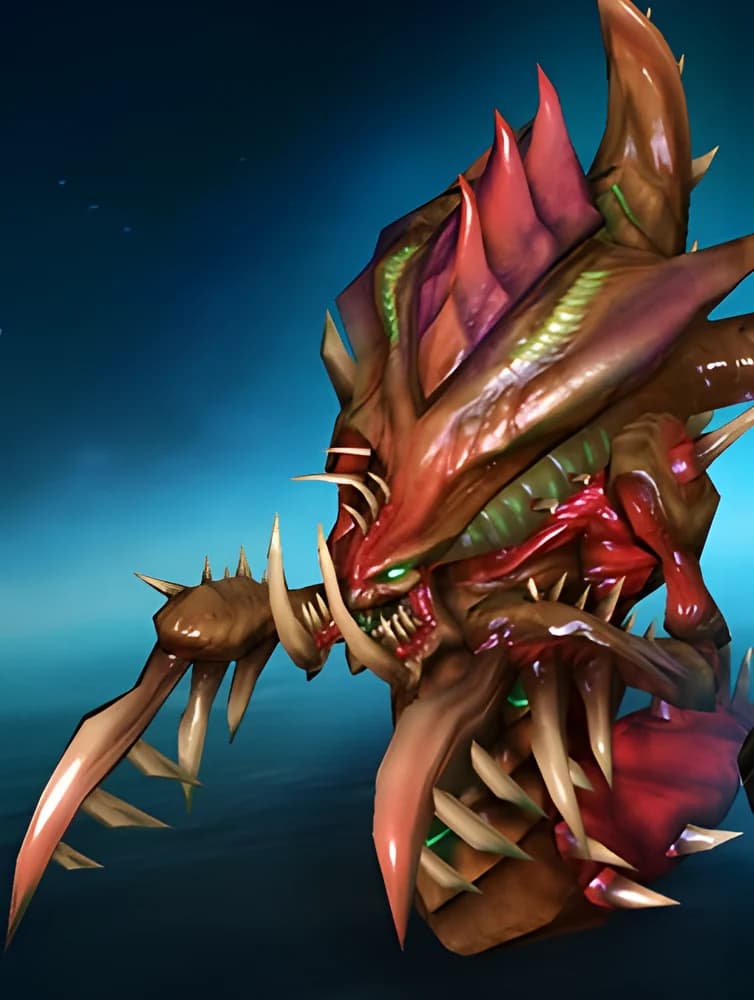
Hydralisks were covered in armored plates. An average hydralisk in 2499 measured about 5.4 meters long. Early hydralisks were smaller and leaner than those that followed, and bore single scythes rather than the tri-bladed scythes of later eras, as well as an imposing, colorful crest. Despite their relatively sluggish nature, hydralisks could climb vertical surfaces, and continued genetic manipulation of their musculature increased their locomotion by up to a quarter, both on and off creep. Their muscles and tendons were strong enough to resist many weapons while retaining the flexibility of leather. (StarCraft; The Teacher; StarCraft: Speed of Darkness; StarCraft Field Manual; Cold Symmetry; StarCraft II: Legacy of the Void)
Weapons#
The hydralisk's deadlier weapon was its volley of armor-piercing spines. Each spine was 30 centimeters long, and hundreds were stored beneath flaps in the strain's upper carapace plates. Before firing, the flaps folded back and the hydralisk dipped its head, signs that gave its foes a few seconds of warning. The creature possessed roughly 4,000 muscles, against a terran's 629, and used a portion of them to launch spines with enough force to penetrate two centimeters of neosteel at a range of over 300 meters, sometimes reaching half a kilometer at velocities greater than a C-20A rifle and approaching hypersonic speed. These spines had evolved from the slothien's defensive urticating hairs, could be grooved for increased range, and were highly poisonous. (StarCraft; StarCraft: Ghost: Spectres; The Teacher; Hydralisk (StarCraft II official site); StarCraft Field Manual)
In close quarters, the hydralisk attacked with tri-bladed scythes grown from the relatively soft ribs of the slothien and hardened through genetic manipulation. Connected to fast-twitching striated muscles, these high-density bone blades struck with great power even in restricted spaces such as tight corridors or trenches. The strain could also use its jaw as a weapon, with an estimated bite force of 5,000 pounds per square inch capable of cutting through flesh, bone, and even neosteel. Hydralisks were further observed spreading a webbing that encased and constricted a target, allowing the victim to be restrained and carried away for infestation. (Hydralisk (StarCraft II official site); StarCraft: The Dark Templar Saga: Shadow Hunters)
Tactics and evolution#
Hydralisks moved relatively slowly over open terrain, and terran tactics against the strain stressed the need for siege tank support, and only trained soldiers were to approach them. Hydralisks were sometimes supported by infestors. (StarCraft Compendium; Hydralisk (StarCraft II official site))
As the backbone of the Swarm, the strain was subject to constant evolutionary refinement. Before the Brood War, hydralisks gained the ability to mutate into lurkers. The strain changed drastically in the transition to the Second Great War, growing more bone claws and a bulkier figure, and during that conflict the ability to become lurkers was temporarily lost everywhere except the Leviathan Brood, where the link between hydralisks and lurkers was inherent. After the End War, some hydralisks were given the essence of the noxious strain of ultralisk, gaining toxic abilities and a changed appearance. By the Battle of Adena, the hydralisks of the Niadra Brood had a different physique from their Swarm counterparts, being longer and slimmer with shorter scythes, and firing their spikes from their hands rather than their upper carapace plates. (StarCraft: Brood War; StarCraft Field Manual; StarCraft II: Heart of the Swarm; StarCraft II: Legacy of the Void; StarCraft II: Shadow Wars)
History among the terrans#
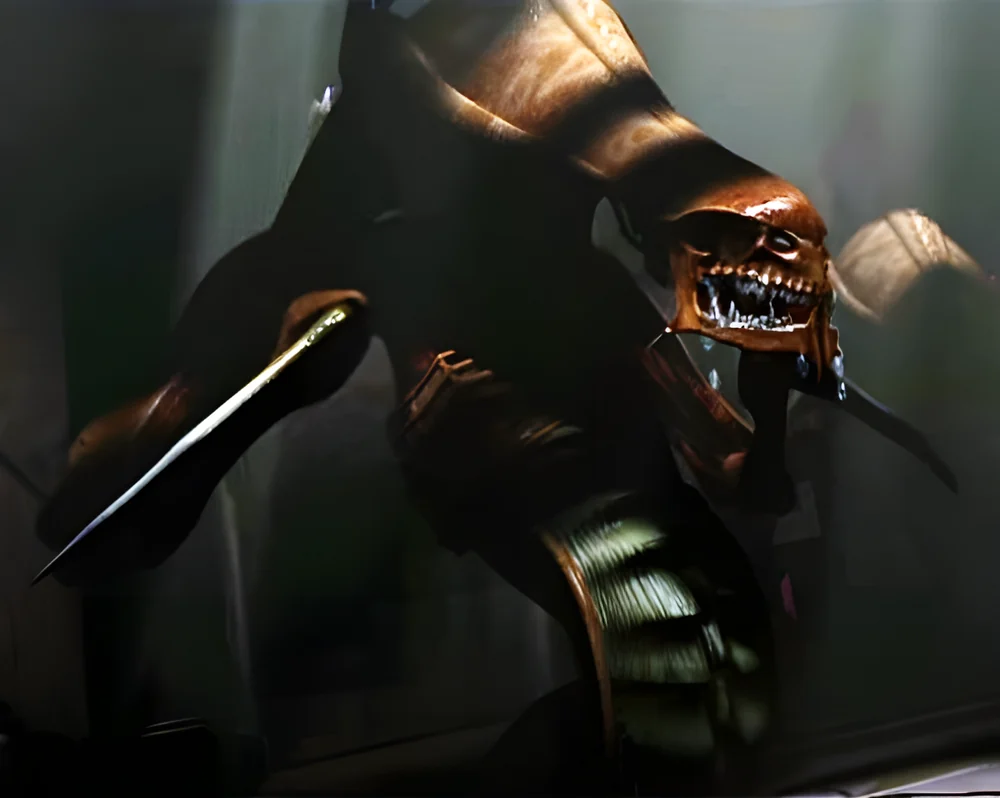
The first recorded encounter between terrans and hydralisks took place aboard a cargo vessel, where the creature was captured by the derelict ship's security cameras. Hydralisks established themselves in terran culture to a notable extent thereafter; sometimes colloquially called "hydras," their skulls could turn up as trophies, as on an ore loader on Sorona. (StarCraft Compendium; StarCraft (comic series); Broken Wide)
Project Tamed was a Terran Dominion attempt to use controlled hydralisks as living weapons, but it backfired. The control proved to be feigned, and the creatures had in fact never been removed from the command of the Queen of Blades. (The Teacher)
Frequently asked questions
- What is a hydralisk?
- The hydralisk was a versatile front-line combat strain of the zerg, forming the backbone of the Swarm's onslaughts with its resistant carapace and ranged spine attack. To terrans across the Koprulu Sector, it symbolized the power of the zerg more than any other creature.
- What did the hydralisk evolve from?
- The hydralisk was a zerg evolution of the slothien, combined with seven or eight distinct organism strains. The slothien had been a peaceful herbivore, but the hydralisk became one of the most fierce and sadistic strains in the Swarm, with its endocrine and adrenal systems altered to keep it in a perpetual fight response.
- What weapons does a hydralisk use?
- Its primary weapon was a volley of armor-piercing spines, each 30 centimeters long and stored in the hundreds beneath flaps in its upper carapace, launched with enough force to penetrate two centimeters of neosteel at over 300 meters. In close quarters it attacked with tri-bladed scythes grown from hardened ribs and a jaw with an estimated bite force of 5,000 pounds per square inch, capable of cutting through neosteel.
- How big is a hydralisk?
- An average hydralisk in 2499 measured about 5.4 meters long. Despite its sluggish nature it could climb vertical surfaces, and continued genetic manipulation increased its locomotion by up to a quarter.
- Can hydralisks evolve into other strains?
- Before the Brood War, hydralisks gained the ability to mutate into lurkers. During the Second Great War that ability was temporarily lost everywhere except the Leviathan Brood, where the link between hydralisks and lurkers was inherent.
Gallery
Images via StarCraft Wiki
Sources
- GameStarCraft, Blizzard Entertainment, 1998
- GameStarCraft: Brood War, Blizzard Entertainment, 1998
- GameStarCraft II: Heart of the Swarm, Blizzard Entertainment, 2013
- GameStarCraft II: Legacy of the Void, Blizzard Entertainment, 2015
- BookStarCraft: Speed of Darkness, Tracy Hickman, 2002
- BookStarCraft: Ghost: Spectres, Nate Kenyon, 2011
- BookStarCraft: The Dark Templar Saga: Shadow Hunters, Christie Golden, 2007
- BookStarCraft Field Manual, Rick Barba, Insight Editions, 2015
- ComicStarCraft II: Shadow Wars, Valerie Watrous, Blizzard Entertainment, 2018
- WebProject Blackstone, Blizzard Entertainment viral campaign, 2013
- WebThe Teacher, Matthew Maxwell, Blizzard Entertainment short story, 2013
- WebCold Symmetry, Cameron Dayton, Blizzard Entertainment short story, 2013
- WebBroken Wide, Cameron Dayton, Blizzard Entertainment short story, 2010
- WebHydralisk (StarCraft II official site), Blizzard Entertainment, 2008 and 2014
- WebStarCraft Compendium, Blizzard Entertainment, classic.battle.net
- ComicStarCraft (comic series), Simon Furman, WildStorm, 2009 to 2010
Spotted a factual error or a primary source we missed? Email a correction. Every flagged claim gets reviewed.
Followed from this entry
Ultralisk
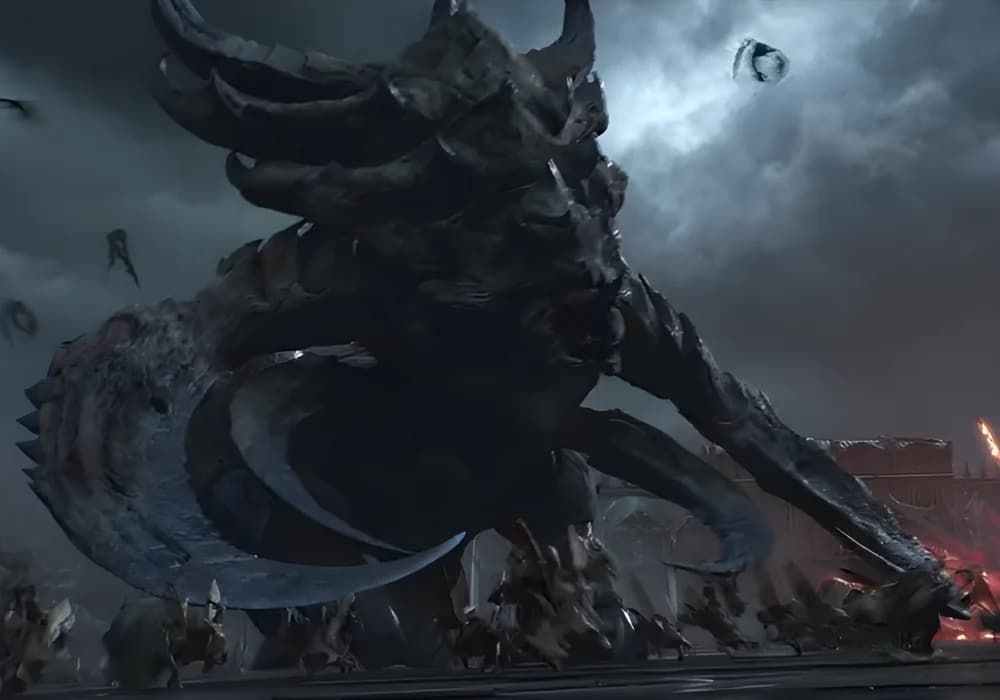
The ultralisk was the most powerful ground strain the zerg possessed, a massive living battering ram evolved from the docile brontolith and armed with near-indestructible kaiser blades. Heavily armored and able to charge through protoss force fields, the ultralisk served as the Swarm's siegebreaker.

Zerg
The zerg are a ravenous collective of biologically advanced aliens who evolve by assimilating the essence of other species in pursuit of genetic perfection. Created by Amon's xel'naga on Zerus and bound to the Overmind, they grew into one of the three dominant powers of the galaxy.
Every Zerg Unit in StarCraft and StarCraft II, Explained
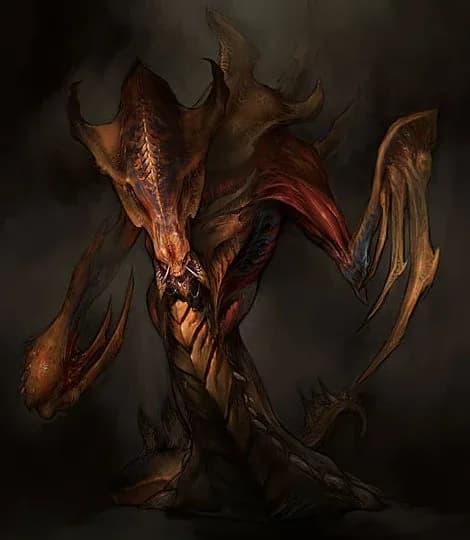
Every zerg strain from StarCraft, Brood War and the three StarCraft II campaigns, from the zergling to the leviathan. Each entry covers the species it came from, what it does for the Swarm and where it turns up in the story.
2499: the year the Great War began
2499 was the final year of peace in the Koprulu Sector and the first year of the Great War. It opened with quiet training rosters and covert cover ups, and it closed with two Confederate colonies burned from orbit, the zerg revealed to terran eyes, and rebellion spreading from Mar Sara to Antiga Prime.

Brood War: Kerrigan's war for the Swarm
The Brood War was a zerg civil war between Kerrigan and the cerebrate Daggoth over who would succeed the Overmind. The UED invaded from Earth at the same time.

End War: Amon's crusade on the galaxy
The resurrected xel'naga Amon corrupted the Khala and cost the protoss both Aiur and Shakuras. Kerrigan, remade as a xel'naga, killed him in the Void.
Mentioned in9 entries
CMC Powered Combat Suit
The CMC Powered Combat Suit was the standard armored exoskeleton of terran infantry across the Koprulu sector, an enclosed hardskin worn by marines and firebats of the Confederacy, the Terran Dominion, and the Kel-Morian Combine. Its successive models defined the appearance and survivability of the human foot soldier from the Guild Wars through the End War.
English: the common tongue of terran humanity
English was a West Germanic language of Earth that the United Powers League designated as the common language of the planet in the twenty-third century. Carried into the Koprulu sector by the exiled colonists, it was sometimes called Terran there, and it grew a vocabulary of frontier slang, military shorthand, and new units of time and measure that no speaker of earlier centuries would have recognized.
Essence
Essence was the genetic information carried by all life and the key to zerg evolution. By consuming or assimilating their prey, the zerg took the essence of other creatures and folded their desired strengths into the Swarm, an ability that first drew the fallen xel'naga Amon to enslave them.
Every Zerg Unit in StarCraft and StarCraft II, Explained
Every zerg strain from StarCraft, Brood War and the three StarCraft II campaigns, from the zergling to the leviathan. Each entry covers the species it came from, what it does for the Swarm and where it turns up in the story.
Feral Zerg
Feral zerg were zerg that had fallen outside the control of any higher entity, reverting to predatory instinct and attacking everything around them. Drawn to psionic emanations and able to survive without creep, they recurred across the Koprulu Sector wherever a cerebrate, broodmother, or the will of Kerrigan was lost.
Infestor
The infestor is a burrowing Zerg support strain evolved from the borbu matriarch, capable of moving while burrowed, seizing control of enemies with a neural parasite, and disgorging infested marines and larvae on the battlefield.
Lurker
The lurker is an arachnid Zerg strain evolved from the hydralisk that attacks only while burrowed, erupting waves of super-dense spines from beneath the ground to impale anything caught above it.
Project Blackstone: the Dominion's secret xenoscience program
Project Blackstone was a classified Terran Dominion research program ordered by Arcturus Mengsk to unlock the secrets of the zerg and protoss. Conscripted scientists laboured on a hidden asteroid installation until a zergling outbreak nearly killed them all, and Valerian Mengsk rebuilt the project aboard the science vessel Brin.
Zergling
The zergling was the most numerous warrior strain of the zerg, a fast, sickle-clawed creature evolved from the Zz'gashi dune runner and spawned two at a time from a single larva. Zerglings served as the Swarm's frontline assault troops, overwhelming foes through sheer weight of numbers.
Get new articles in your inbox
No spam. New lore drops, canon conflicts, and deep dives only when they’re worth reading.
Some links on Lore Fortress are affiliate links. If you buy through them we earn a small commission at no extra cost to you.