Terran
humanity of the Koprulu Sector
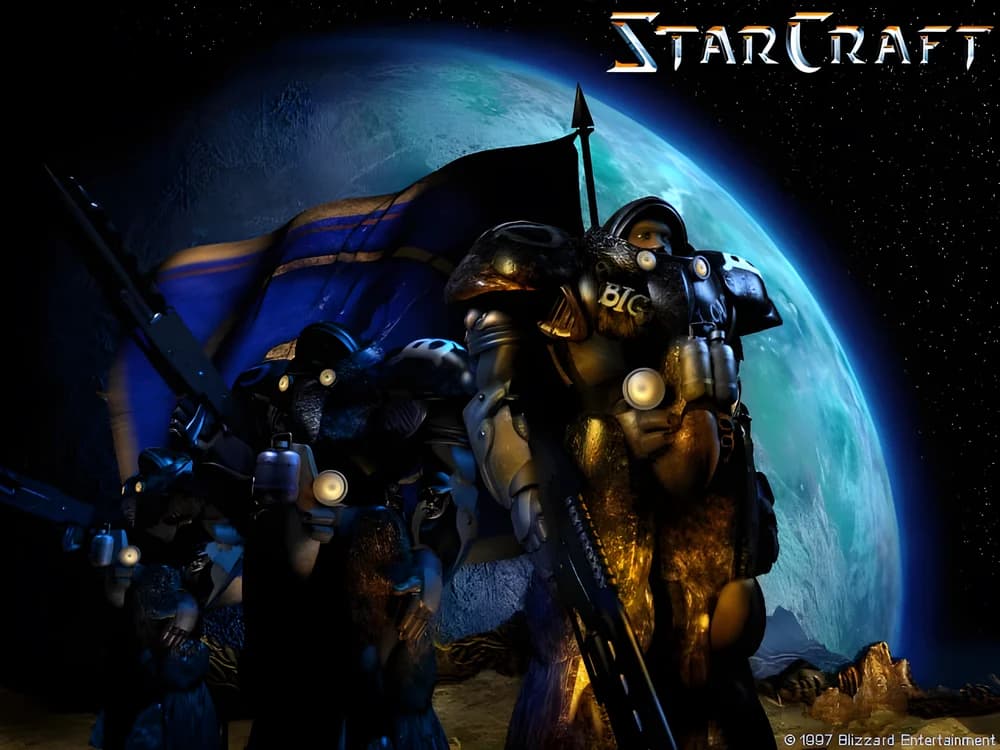
The terrans are the descendants of a failed 23rd century colony mission from Earth, a young and highly factionalized species with latent psionic potential. Despite endless wars among themselves and with their alien neighbors, they stand as one of the three dominant species of the galaxy.
The terrans, or humans, were a young species with psionic potential whose members in the Koprulu sector descended from the survivors of a disastrous 23rd century colonization mission launched from Earth by the scientist Doran Routhe. Compared to the protoss and the zerg, the terrans were highly factionalized and endured frequent wars among themselves on top of their conflicts with their alien neighbors. Despite this, they stood as one of the three dominant species of the galaxy, valued less for raw strength than for tenacity and an unusual capacity to adapt to hardship. (StarCraft; StarCraft: Uprising; StarCraft: Liberty's Crusade)
Arrival in the Koprulu Sector#
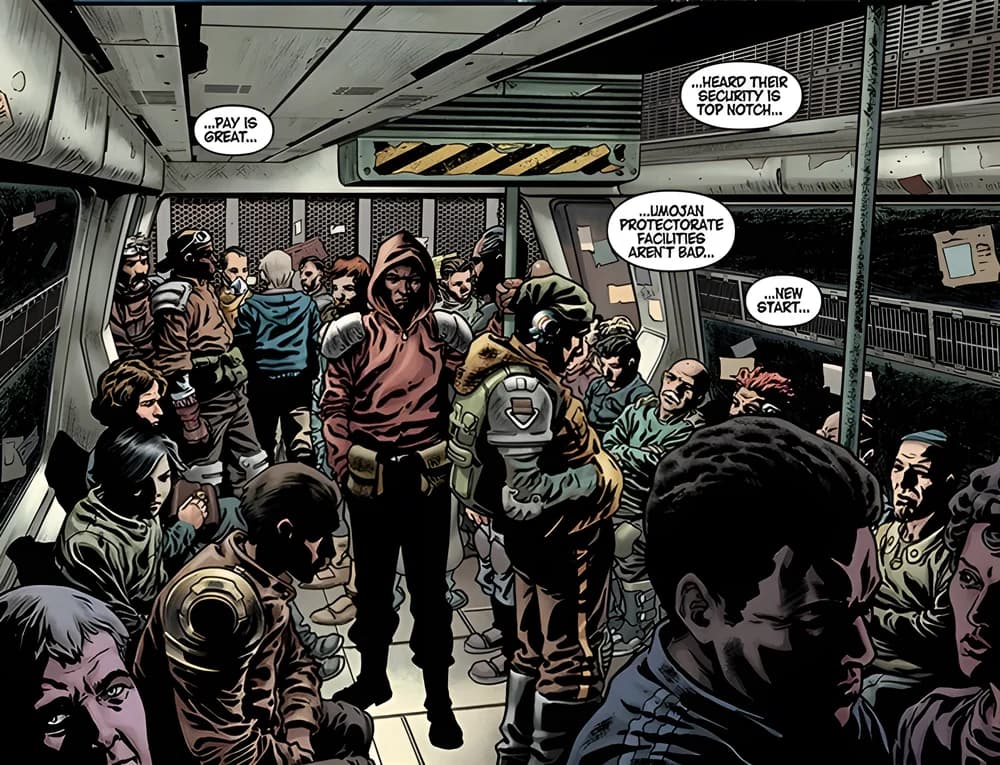
The terrans reached the Koprulu sector aboard supercarriers in 2259, landing on the three separate worlds of Tarsonis, Moria, and Umoja, and finding themselves cut off from Earth. The term "terran" came to refer to these descendants of the Long Sleep and to the human inhabitants of the sector generally, distinct from the Earth-born humans who called themselves humanity or mankind. (StarCraft II: Heaven's Devils; StarCraft; StarCraft: Uprising; StarCraft: Brood War)
By the eve of the Great War, the sector terrans were divided primarily into three powers, each rooted in one of the original settled worlds: the Terran Confederacy, the Kel-Morian Combine, and the Umojan Protectorate. The Confederacy was the strongest of the three. (StarCraft)
War, the Dominion, and the United Earth Directorate#
During the Great War the Terran Confederacy, which had been experimenting with psi emitter technology, bore the brunt of the zerg attacks even as it faced the rebel Sons of Korhal. The rebels destroyed the Confederacy by using stolen psi emitters to lure the zerg to Tarsonis, then founded the Terran Dominion on Korhal to replace it. Unknown to the sector terrans, the humans of Earth had been aware of their existence all along, and the discovery of the alien invaders prompted Earth's new government, the United Earth Directorate, to dispatch an Expeditionary Fleet to seize the sector. The Dominion came under UED attack and, after a brief period of stability, the sector escaped UED control, but the campaign left the Dominion weak and the zerg the dominant power. (StarCraft; StarCraft: Brood War; StarCraft: I, Mengsk; StarCraft: The Dark Templar Saga: Shadow Hunters)
By the Second Great War the Dominion was again the strongest terran force, while Raynor's Raiders resumed their anti-Dominion campaign. The terran polities were engulfed by a massive zerg invasion mounted by Sarah Kerrigan in search of the Keystone, and billions of terrans died. The terrans survived the war, but at great cost to the Dominion and the loss of Emperor Arcturus Mengsk. The Dominion was reformed under Emperor Valerian Mengsk under a fairer rule, which was then tested by the End War and the return of Amon. The terrans pushed back Amon's forces and helped defeat him in the Void, and afterward lived under an uneasy peace strained by internal strife and external tension but still maintained. The terran leaders behind these wars, Mengsk, Raynor and Valerian among them, are profiled with the rest of the StarCraft cast. (StarCraft II: Wings of Liberty; StarCraft II: Heart of the Swarm; StarCraft Field Manual; StarCraft II: Legacy of the Void; StarCraft II: Nova Covert Ops; StarCraft: Evolution)
Physiology#
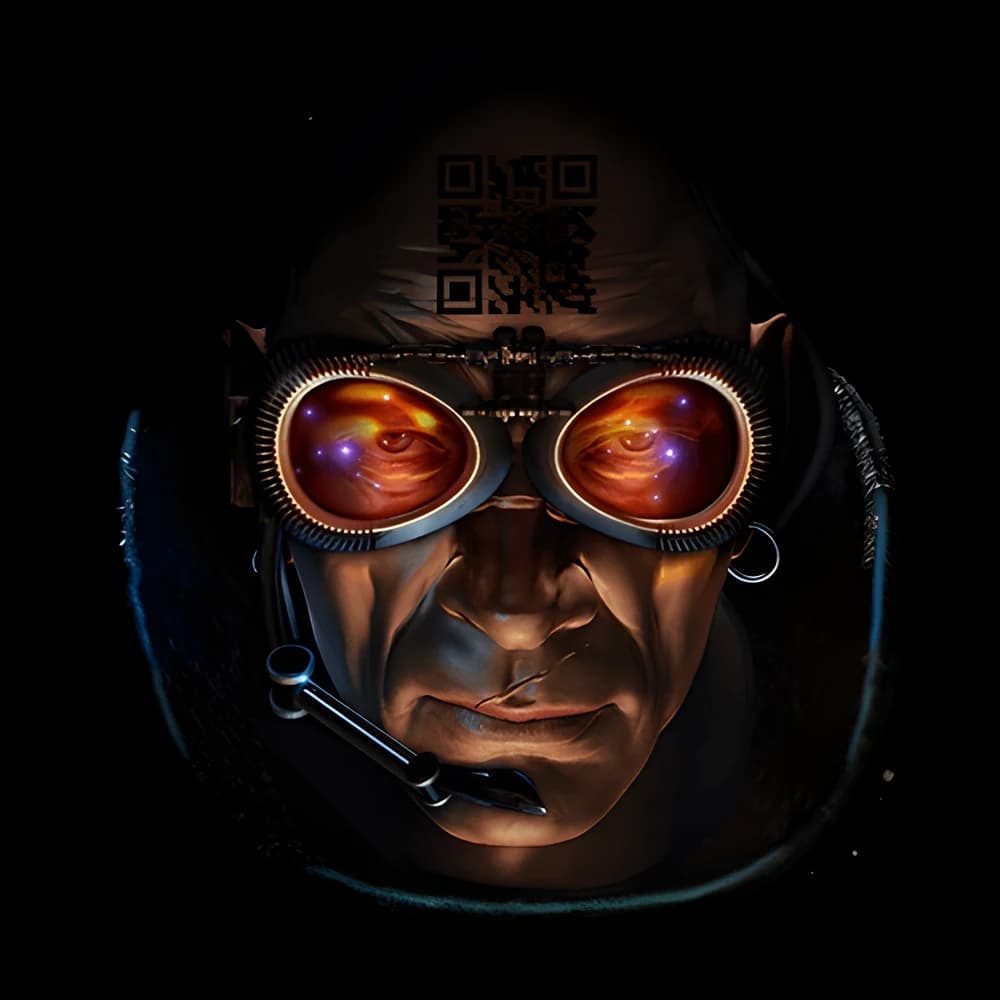
The average terran stood about 1.8 meters tall, with a maximum life expectancy of roughly 150 years and no inevitable mental degradation, though few lived past a century. Natural traits such as blonde hair and blue eyes still occurred, but gene therapy and augmentic surgery could alter appearance freely, producing a certain uniformity among those wealthy enough to afford it. Physically the terrans were inferior to the zerg and protoss, but they were known for their tenacity and their ability to adapt to harsh circumstances, and they stood only a few steps from developing into a formidable psionic power. Advances in medical technology, cybernetic implants, and medical nanomachines had removed many of the ailments that plagued humanity's earlier development, though some cancers remained inoperable. (StarCraft; StarCraft: Ghost: Nova; StarCraft: The Dark Templar Saga: Twilight; StarCraft: The Dark Templar Saga: Firstborn; StarCraft: I, Mengsk)
Culture#
For the terrans, results often counted for more than honor, yet they also showed a powerful need to hold on to those close to them, a trait the Nerazim matriarch Vorazun took to be a holdover from humanity's ancient past. They held a diversity of beliefs that had been repressed under the early United Powers League and tolerated only narrowly under the Confederacy; on some worlds, particularly the Fringe Worlds, old Earth religions such as Christianity were revived alongside new cults. Fragments of ancient mythology, including tales of Hell, Tartarus, and Sheol and elements of Greek myth, persisted in terran memory. To an outside observer, humanity presented a wide and puzzling spectrum of morality, far more attached than the elder species to private thought and personal freedom, and, as both protoss and zerg observers noted, driven heavily by greed. (StarCraft; StarCraft II: Nature of the Beast; StarCraft: Speed of Darkness; StarCraft: Liberty's Crusade; StarCraft: Uprising; StarCraft: Ghost: Nova; StarCraft II: Heaven's Devils; StarCraft: Brood War; StarCraft II: Shadow Wars; StarCraft: Frontline; StarCraft: The Dark Templar Saga: Shadow Hunters; StarCraft: The Dark Templar Saga: Twilight)
Factions and technology#
The terrans were a heavily factionalized species, riddled with rival governments and with still more groups working to overthrow them. The three dominant powers in the Koprulu sector were the Kel-Morian Combine, the Terran Dominion, and the Umojan Protectorate, with the Dominion having supplanted the defunct Terran Confederacy, while Earth and its colonies answered to the United Earth Directorate. Rebel groups sparred constantly with the colonial powers, and hardly a week passed without some military or policing action somewhere in the sector. (StarCraft II: Wings of Liberty; StarCraft; StarCraft: Ghost: Nova; StarCraft Compendium)
Technologically the terrans were a middle-of-the-road species and something of a paradox: far inferior to the protoss, yet more advanced than many other sapients, and improving steadily despite, or because of, their constant conflict. They commanded a vast assortment of weapons and vehicles with FTL transmission and sensor technology among their tools, though they had yet to crack quantum computing. Their armies prized adaptability, resilience, and the maintenance of supply lines, and their engineering improved markedly after the Brood War. (StarCraft; StarCraft: Liberty's Crusade; StarCraft: The Dark Templar Saga: Twilight; StarCraft: Uprising; StarCraft Field Manual; StarCraft II: Legacy of the Void)
Frequently asked questions
- Who are the terrans in StarCraft?
- The terrans, or humans, were a young species with psionic potential whose members in the Koprulu Sector descended from the survivors of a disastrous 23rd century colonization mission launched from Earth by the scientist Doran Routhe. Despite frequent wars among themselves and with their alien neighbors, they stood as one of the three dominant species of the galaxy.
- How did the terrans arrive in the Koprulu Sector?
- The terrans reached the Koprulu Sector aboard supercarriers in 2259, landing on the three separate worlds of Tarsonis, Moria, and Umoja, and finding themselves cut off from Earth.
- What were the main terran factions?
- By the eve of the Great War the sector terrans were divided primarily into three powers rooted in the original settled worlds: the Terran Confederacy, the Kel-Morian Combine, and the Umojan Protectorate, with the Confederacy the strongest of the three. The Sons of Korhal later destroyed the Confederacy and founded the Terran Dominion to replace it.
- How did the Terran Dominion come to power?
- During the Great War the rebel Sons of Korhal destroyed the Terran Confederacy by using stolen psi emitters to lure the zerg to Tarsonis, then founded the Terran Dominion on Korhal. The Dominion was later reformed under Emperor Valerian Mengsk after the death of Arcturus Mengsk in the Second Great War.
- What are the physical traits of the terrans?
- The average terran stood about 1.8 meters tall, with a maximum life expectancy of roughly 150 years, though few lived past a century. Physically they were inferior to the zerg and protoss, but they were known for their tenacity and ability to adapt to harsh circumstances, standing only a few steps from developing into a formidable psionic power.
Gallery
Images via StarCraft Wiki
Sources
- GameStarCraft, Blizzard Entertainment, 1998 (including the manual and the Loomings bonus campaign)
- GameStarCraft: Brood War, Blizzard Entertainment, 1998
- WebStarCraft Compendium, Blizzard Entertainment, Battle.net map descriptions, 1998 to 2001
- BookStarCraft: Uprising, Micky Neilson, Pocket Books, 2000
- BookStarCraft: Liberty's Crusade, Jeff Grubb, Pocket Books, 2001
- BookStarCraft: Speed of Darkness, Tracy Hickman, Pocket Books, 2002
- BookStarCraft: Ghost: Nova, Keith R. A. DeCandido, Pocket Star, 2006
- BookStarCraft: The Dark Templar Saga: Shadow Hunters, Christie Golden, Pocket Star, 2007
- BookStarCraft: The Dark Templar Saga: Firstborn, Christie Golden, Pocket Star, 2007
- BookStarCraft: I, Mengsk, Graham McNeill, Pocket Star, 2008
- ComicStarCraft: Frontline, Tokyopop, 2008 to 2009
- BookStarCraft: The Dark Templar Saga: Twilight, Christie Golden, Pocket Star, 2009
- BookStarCraft II: Heaven's Devils, William C. Dietz, Pocket Star, 2010
- GameStarCraft II: Wings of Liberty, Blizzard Entertainment, 2010
- GameStarCraft II: Heart of the Swarm, Blizzard Entertainment, 2013
- GameStarCraft II: Legacy of the Void, Blizzard Entertainment, 2015
- BookStarCraft Field Manual, Rick Barba, Insight Editions, 2015
- GameStarCraft II: Nova Covert Ops, Blizzard Entertainment, 2016
- BookStarCraft: Evolution, Timothy Zahn, Del Rey, 2016
- ComicStarCraft II: Shadow Wars, Valerie Watrous (w), Blizzard Entertainment, 2017
- ComicStarCraft II: Nature of the Beast, Brian Alexander and Alex Acks (w), Carlos Rodriguez (a), Blizzard Entertainment, 2020
Spotted a factual error or a primary source we missed? Email a correction. Every flagged claim gets reviewed.
Followed from this entry
United Powers League: the police state that exiled humanity
The United Powers League ruled almost all of Earth from 2229 onward, banning religion, imposing a single language and killing more than four hundred million of its own citizens under Project Purification. Its surplus prisoners became the involuntary colonists of the Koprulu sector, and its panic at the discovery of alien life reforged it into the United Earth Directorate.
Kel-Morian Combine: the sector's miners
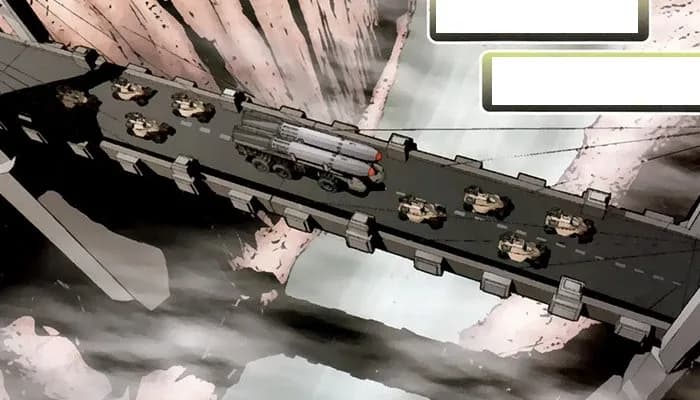
A business conglomerate that governed Moria and ran the mining guilds. It fought the Confederacy in the Guild Wars and outlived it as a corporate power.
Protoss
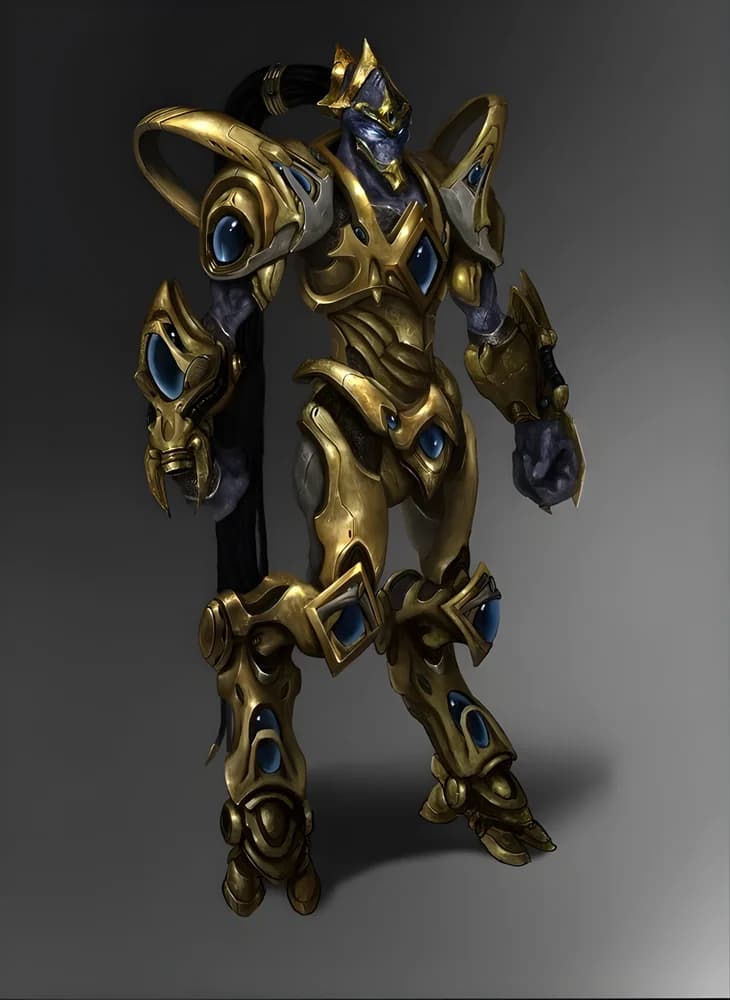
The protoss are an ancient, psionically gifted humanoid species native to Aiur, uplifted by the xel'naga and bound together by the Khala. Among the three dominant species of the galaxy, they are the most technologically advanced, and the most divided by their own history.
Raynor's Raiders: the rebel band of Jim Raynor
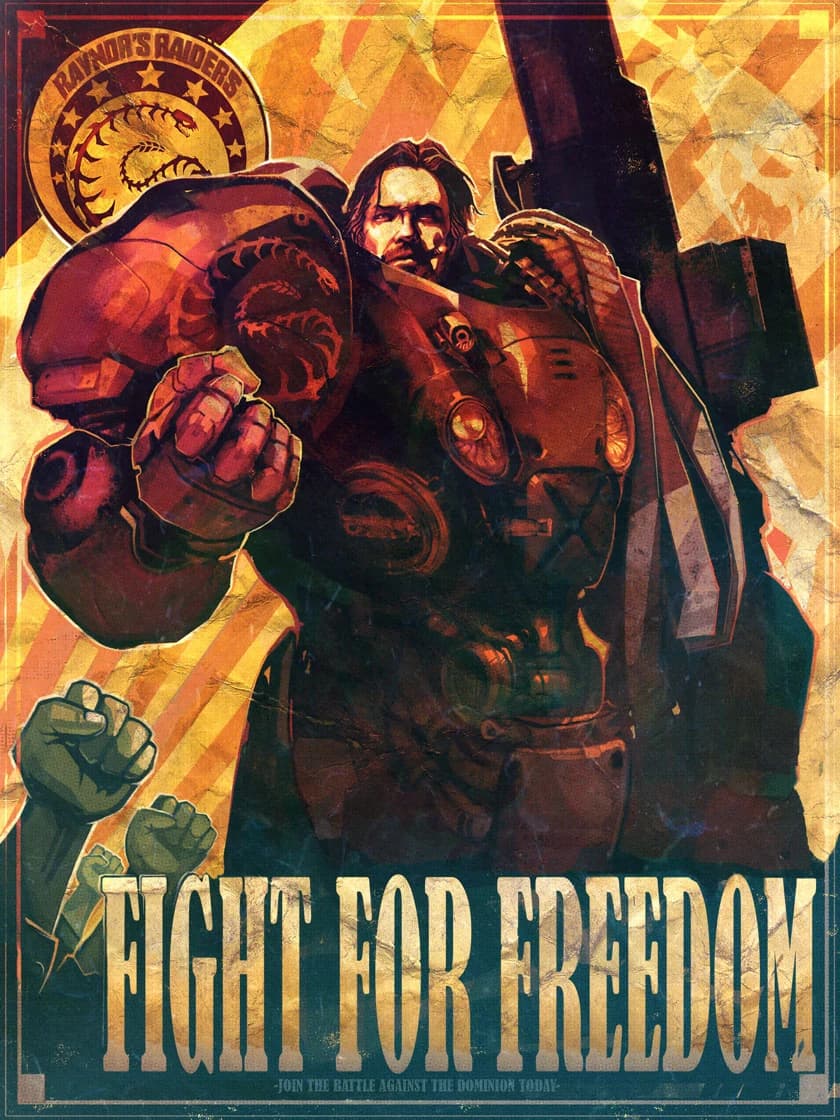
Raynor's Raiders were the terran rebel formation led by Jim Raynor, born from Raynor's Rangers after Arcturus Mengsk abandoned Sarah Kerrigan at New Gettysburg, waging a long insurgency against the Dominion from the battlecruiser Hyperion.
Sons of Korhal: Mengsk's rebel movement
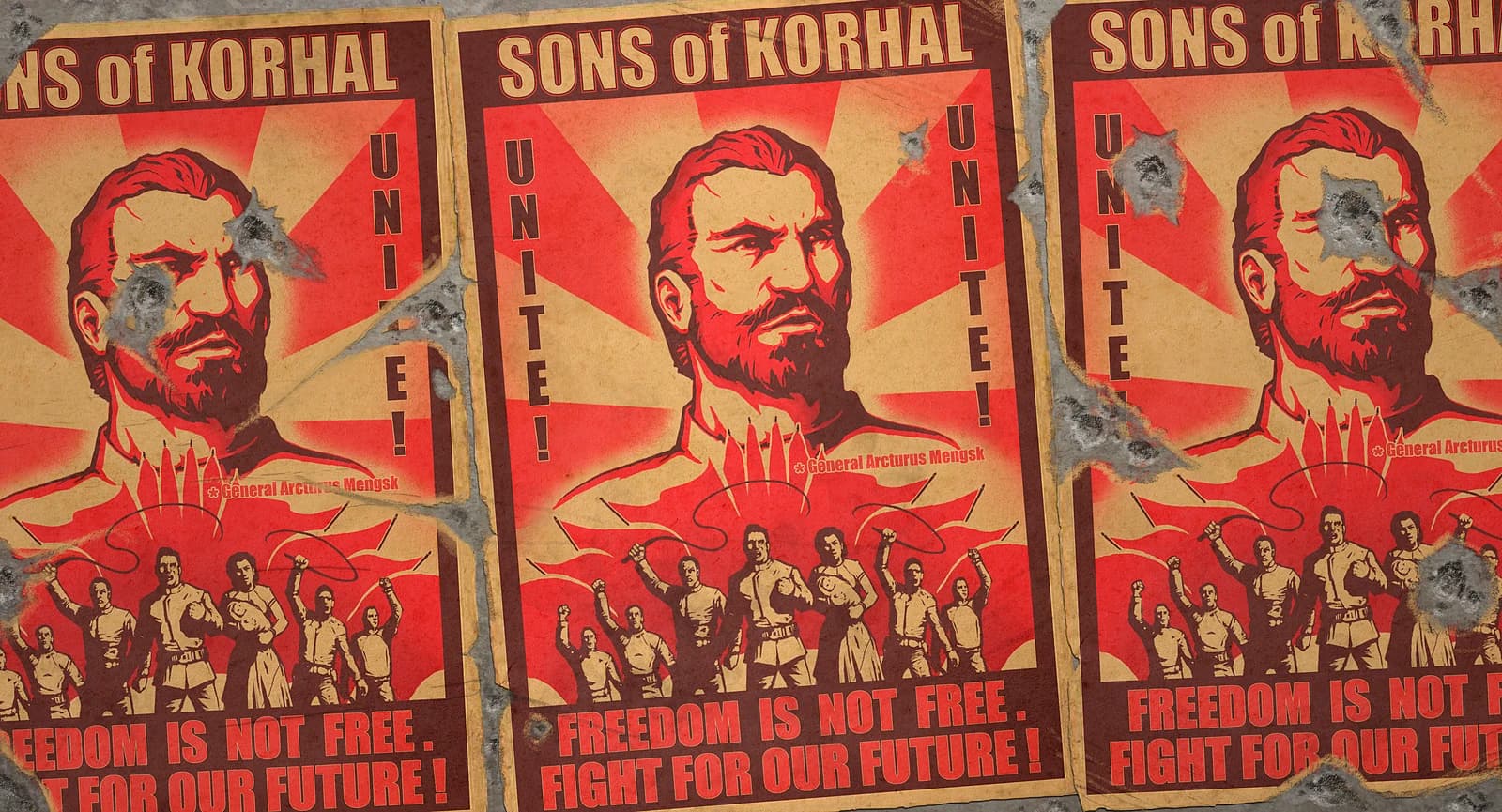
Arcturus Mengsk founded it after the Confederacy destroyed his homeworld. It toppled the Confederacy, then remade itself as the Terran Dominion.
Terran Confederacy
The Terran Confederacy, also called the Confederacy of Man, was the dominant human government of the Koprulu sector before the Great War, ruled by the Old Families of Tarsonis and brought down by the zerg invasion and the Sons of Korhal rebellion.
Mentioned in97 entries
Adjutant
Adjutants were the non-sapient artificial intelligences that served terran commanders across the Koprulu sector as advisers, navigators, and keepers of data. Humanoid in form but bereft of social grace, they descended from the original ATLAS coding and offered commanders an ever-present strategic eye over the field of battle.
Amon's Forces
Amon's Forces, also called the Forces of Amon, were a union of terran, protoss, zerg, hybrid and Void creatures subservient to the fallen xel'naga Amon during the End War. Bound to his will, they sought the eradication of all the xel'naga's creation and an end to the Infinite Cycle.
Armory: research forge of the terran war machine
The armory was a terran research structure where scientists and test groups developed improved materials for the weapons and armor of vehicles and starships. Built around a core of cooling turbines and raised among the first buildings of any Dominion field base, it kept terran armor and airpower ahead of the enemies arrayed against them.
Artificial intelligence: machine minds of the Koprulu sector
Artificial intelligence was simulated intelligence implanted as computer coding, carried in software or in hardware such as robots. Terrans relied on it for everything from navigation to warfare, the protoss built their automatons through psionic manufacture and once created the sentient Purifiers, and even the xel'naga left thinking crystals behind them.
Baneling
The baneling was an explosive zerg strain evolved from the zergling through a brief chrysalis phase, its body remade to carry sacs of highly corrosive acid. A living suicide bomber, the baneling ruptured among enemy formations in a shower of searing acid that devastated both structures and ground forces.
Banshee
The AH/G-24 Banshee was a terran ground-attack aircraft built by Procyon Industries for the Terran Dominion. Designed for counter-insurgency, it became a cloaked raider notorious as a Dominion terror weapon.
Barracks: mustering hall of terran infantry
The barracks housed and trained all terran infantry, a mobile structure that could cross great distances to reach new hot zones. Pitched by the Dominion as a safe and comfortable staging point, it was in truth a sterile warren of bunks, deployment ramps, and resocialization tanks that unnerved many of the recruits who lived inside it.
Battle of Adena: the ambush that poisoned the peace
The Battle of Adena was a three-way conflict fought after the One-Day War on the abandoned world of Adena, inside the demilitarized zone between the Terran Dominion and the Daelaam. Renegade Dominion forces looting a jorium stockpile sprang a trap laid by Broodmother Niadra, dragging Admiral Urun's protoss into a battle that killed him and wrecked relations between the two powers.
Battlecruiser
The battlecruiser was the terran sector's capital ship, a heavily armed and armored warship dating back to the early Confederacy that served as both a general-purpose combatant and a fleet command vessel.
Behemoth-class battlecruiser
The Behemoth-class was the most common terran battlecruiser of the Great War, an improvement over the Leviathan-class that could travel through warp space, operate in atmosphere, and land on planets. It was the class of the famed Hyperion and remained in service well into the Second Great War.
Bunker: fortified strongpoint of the terrans
The bunker was a low domed terran defensive structure, plated in paristeel or neosteel and pierced by weapon ports on every side. Soldiers called them battlefield coffins for their ubiquity and lack of amenities, yet the squat shelters anchored terran lines from the Confederacy through the wars of the Dominion.
Colin Phash
Colin Phash was a young terran with powerful psionic gifts, the son of the Dominion senator Corbin Phash. Hunted for his abilities and forced into the Ghost Academy, he was eventually freed and became the youngest known member of the Umojan shadowguard.
+ 85 more
Get new articles in your inbox
No spam. New lore drops, canon conflicts, and deep dives only when they’re worth reading.
Some links on Lore Fortress are affiliate links. If you buy through them we earn a small commission at no extra cost to you.