Behemoth-class battlecruiser
the mainstay of the Great War terran fleet
The Behemoth-class was the most common terran battlecruiser of the Great War, an improvement over the Leviathan-class that could travel through warp space, operate in atmosphere, and land on planets. It was the class of the famed Hyperion and remained in service well into the Second Great War.
The Behemoth-class battlecruiser was a class of terran capital ship and the most common type of battlecruiser in service during the Great War. A noticeable improvement over the older Leviathan-class, it became the mainstay of the terran fleet and remained a recognizable workhorse of the Koprulu sector into the Second Great War. Its most famous example was the Hyperion. (StarCraft: Queen of Blades; StarCraft II: Wings of Liberty; StarCraft II: Flashpoint)
Design and capabilities#
The Behemoth-class was the most common type of battlecruiser during the Great War and represented a noticeable improvement over the Leviathan-class it replaced. It could travel through warp space, operate within atmospheres, and land on planetary surfaces. First Great War-era Behemoths generally carried crews in the range of 500 to 1,000, while by the Second Great War the figure had risen to around 6,000. The class was protected by standard neosteel armor and energy shields, and was less vulnerable to enemy boarding actions than the Leviathan, whose auxiliary craft ports had sat dangerously close to the bridge. (StarCraft: Queen of Blades; StarCraft: Shadow of the Xel'Naga; StarCraft: Liberty's Crusade; StarCraft II: Flashpoint; StarCraft; StarCraft: Uprising; StarCraft: The Dark Templar Saga: Firstborn)
Behemoths were powered by fusion reactors, which were regarded as outdated when compared with the cleaner fusion technology of the later Minotaur-class. Efforts were made to retrofit older vessels, but many ships of the old ex-Confederate guard continued to run antiquated reactors, poorly maintained or jury-rigged for higher output and prone to leaking. The bridges of earlier Behemoths had a low profile, with port and starboard view decks to ensure maximum visibility against ambush, a precaution against attacks such as a sudden Zerg strike. (StarCraft II unit profile: Battlecruiser; StarCraft II: Legacy of the Void)
Armament#
The Behemoth-class was armed with burst laser batteries and nuclear warheads. Older ships lacked side firing arcs for their laser batteries, and the batteries themselves were vulnerable to interceptors. Some warheads were reserved for orbital bombardment rather than ship-to-ship combat, while certain Behemoths carried ten-kiloton tactical warheads designed to serve in both roles. (StarCraft II: Wings of Liberty; StarCraft: Uprising; StarCraft: Shadow of the Xel'Naga; StarCraft: Evolution)
The Yamato cannon entered service aboard the Behemoth just before the Great War, and to meet its enormous energy requirements the class received the Colossus reactor. A single hit from a Yamato cannon could cripple a Behemoth. Terran Dominion Behemoths of one era required access to physics labs to power up their weapon systems, and the loss of those labs could cripple a fleet. A Behemoth could carry hundreds to thousands of troops and their equipment, deployed by dropships, alongside up to two dozen starfighters such as Wraiths and scoutships carried in its docking bays. (StarCraft Field Manual; StarCraft; StarCraft II: Flashpoint; StarCraft: Brood War; StarCraft: Uprising; StarCraft: Queen of Blades; StarCraft II: Wings of Liberty)
Service history and legacy#
The Behemoth proved an enduring design and continued to serve into the Second Great War, receiving periodic upgrades along the way. Its hammerhead profile inspired succeeding types, and planetary defense forces such as the Knights of Tyrador went on using Behemoths well into the reign of Valerian Mengsk. The class also gave the terran fleet its most storied individual ship in the Hyperion, a souped-up Behemoth able to make warp jumps from within a planetary atmosphere, a feat beyond the standard vessel of the class. (StarCraft: The Dark Templar Saga: Firstborn; StarCraft II: Flashpoint; StarCraft II unit profile: Battlecruiser; StarCraft II: Legacy of the Void; StarCraft II: Wings of Liberty)
Known Behemoth-class ships included the Hyperion and the Norad-series vessels Norad II and Norad III. As successor classes such as the Minotaur-class and the Gorgon-class entered service, the Behemoth's fusion reactors were increasingly seen as outdated, yet the design stayed in active use. (StarCraft; StarCraft: Brood War; StarCraft II: Wings of Liberty)
Frequently asked questions
- What is the Behemoth-class battlecruiser?
- The Behemoth-class battlecruiser was a class of terran capital ship and the most common type of battlecruiser in service during the Great War. It became the mainstay of the terran fleet and remained a recognizable workhorse of the Koprulu sector into the Second Great War.
- How was the Behemoth-class an improvement over the Leviathan-class?
- The Behemoth-class could travel through warp space, operate within atmospheres, and land on planetary surfaces. It was also less vulnerable to enemy boarding actions than the Leviathan, whose auxiliary craft ports had sat dangerously close to the bridge.
- What weapons did the Behemoth-class battlecruiser carry?
- The Behemoth-class was armed with burst laser batteries and nuclear warheads, with some warheads reserved for orbital bombardment and certain ships carrying ten-kiloton tactical warheads for both roles. The Yamato cannon entered service aboard the Behemoth just before the Great War, and the class received the Colossus reactor to meet its enormous energy requirements.
- What was the most famous Behemoth-class ship?
- The Hyperion was the class's most storied individual ship, a souped-up Behemoth able to make warp jumps from within a planetary atmosphere, a feat beyond the standard vessel of the class.
- Why were the Behemoth-class reactors considered outdated?
- Behemoths were powered by fusion reactors that were regarded as outdated compared with the cleaner fusion technology of the later Minotaur-class. Many ships of the old ex-Confederate guard continued to run antiquated reactors, poorly maintained or jury-rigged for higher output and prone to leaking.
Sources
- GameStarCraft, Blizzard Entertainment, 1998
- GameStarCraft: Brood War, Blizzard Entertainment, 1998
- GameStarCraft II: Wings of Liberty, Blizzard Entertainment, 2010
- GameStarCraft II: Legacy of the Void, Blizzard Entertainment, 2015
- BookStarCraft: Uprising, Micky Neilson, 2000
- BookStarCraft: Liberty's Crusade, Jeff Grubb, 2001
- BookStarCraft: Shadow of the Xel'Naga, Gabriel Mesta, 2001
- BookStarCraft: Queen of Blades, Aaron Rosenberg, 2006
- BookStarCraft: The Dark Templar Saga: Firstborn, Christie Golden, 2007
- BookStarCraft II: Flashpoint, Christie Golden, 2012
- BookStarCraft: Evolution, Timothy Zahn, 2016
- BookStarCraft Field Manual, Rick Barba, Blizzard Entertainment and Insight Editions, 2015
- WebStarCraft II unit profile: Battlecruiser, Blizzard Entertainment, StarCraft II website, 2008 to 2014
Spotted a factual error or a primary source we missed? Email a correction. Every flagged claim gets reviewed.
Followed from this entry
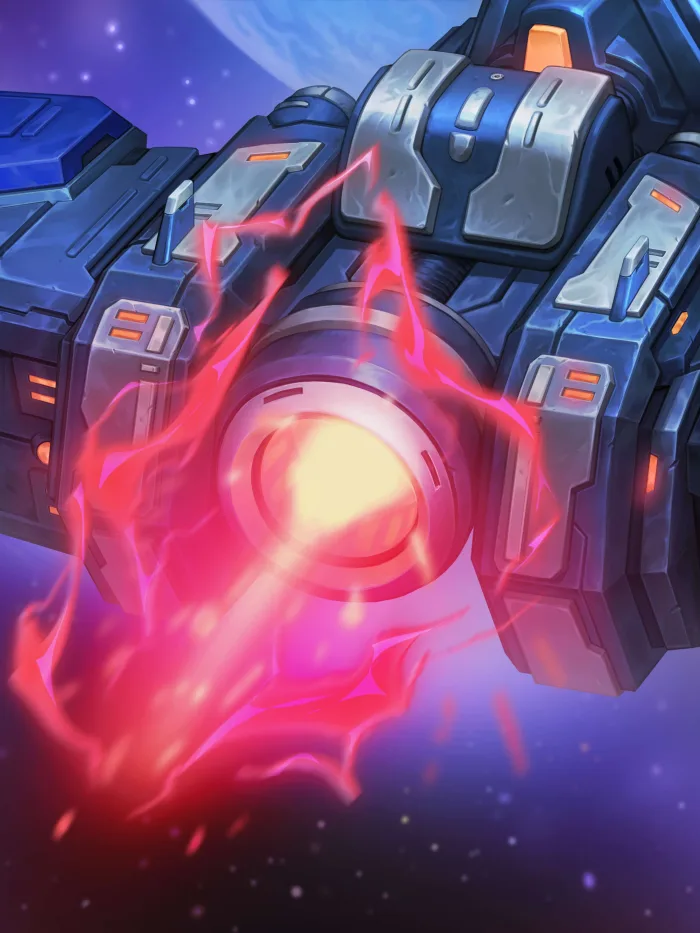
Yamato Cannon: the Battlecruiser Superweapon of StarCraft
The Yamato cannon is the terran battlecruiser's prow-mounted plasma gun, a weapon that focuses a controlled nuclear blast into a single beam. Here is how it works in the lore, which ships carry it, the fights it shaped and what the lore does and doesn't say about the name.
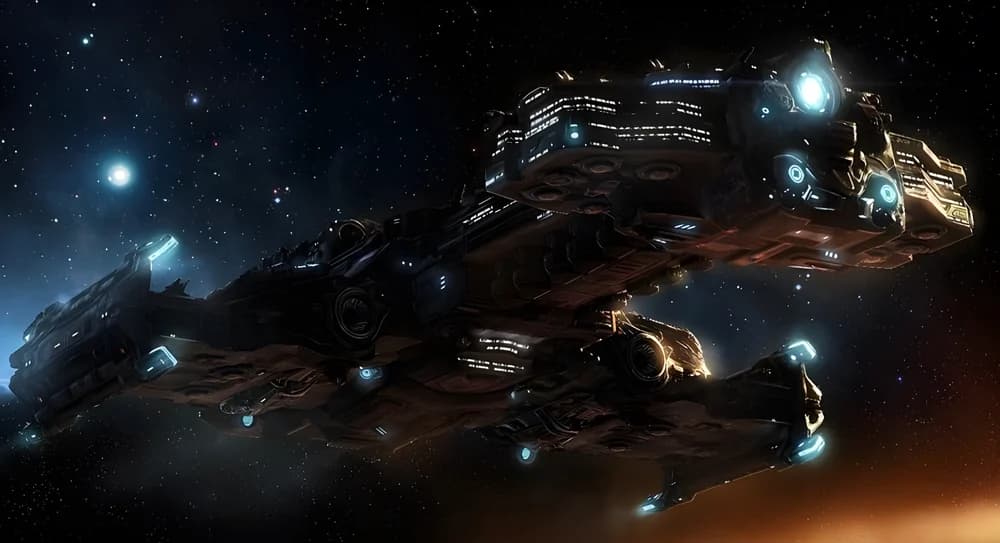
Battlecruiser
The battlecruiser was the terran sector's capital ship, a heavily armed and armored warship dating back to the early Confederacy that served as both a general-purpose combatant and a fleet command vessel.

Gorgon-class battlecruiser
The Gorgon-class was the most powerful battlecruiser ever fielded by the terrans of the Koprulu sector, larger than the Behemoth-class and able to withstand multiple Yamato cannon hits. Its best-known example was the Bucephalus, outfitted as the Terran Dominion flagship.
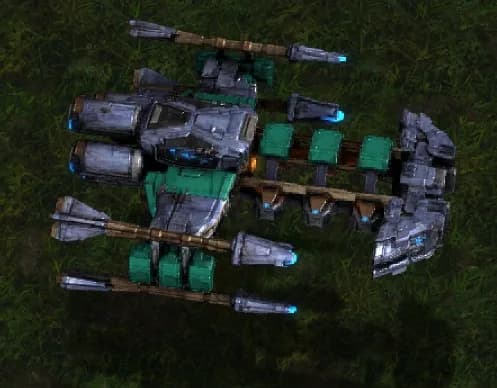
Hyperion
The Hyperion was a Behemoth-class battlecruiser that became the flagship of Jim Raynor and his Raiders, a souped-up warship capable of warp jumps from within a planetary atmosphere.

Neosteel
Neosteel was an exceptionally durable material used by the terrans for everything from battlecruiser hulls and CMC armor to bunkers and personal weapons. Its manufacture required catalytic elements, and to be "like neosteel" was a terran idiom for great strength of will.
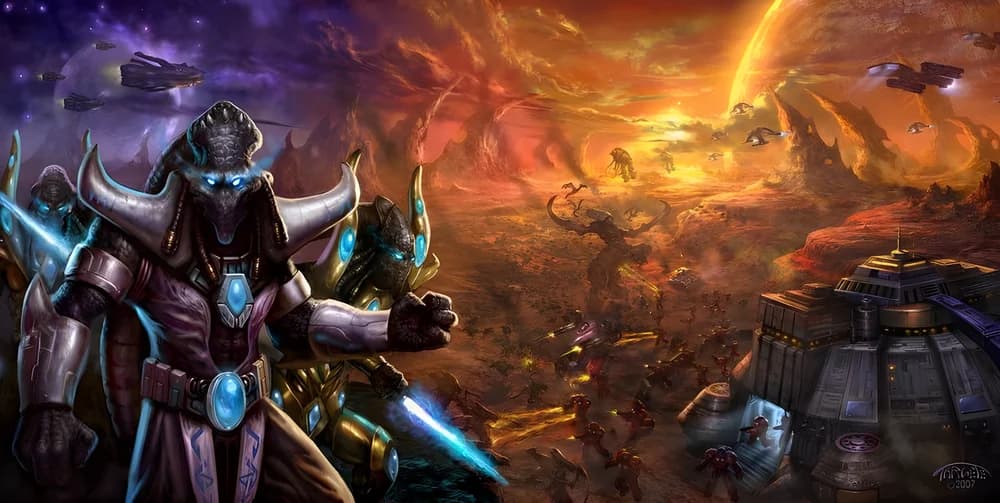
Great War: protoss against zerg over Aiur
The Great War was the first open fight between protoss and zerg, with the terrans caught between them. It ended over Aiur with the Overmind destroyed.
Mentioned in8 entries
Bucephalus
The Bucephalus was a Gorgon-class battlecruiser and Terran Dominion flagship, built at the Ursa Shipyards to replace the stolen Hyperion. It carried Crown Prince Valerian Mengsk through the campaign on Char and the rogue flight that followed Kerrigan's rescue, and later served as Valerian's command ship during the Defenders of Man Insurgency.
Gorgon-class battlecruiser
The Gorgon-class was the most powerful battlecruiser ever fielded by the terrans of the Koprulu sector, larger than the Behemoth-class and able to withstand multiple Yamato cannon hits. Its best-known example was the Bucephalus, outfitted as the Terran Dominion flagship.
Hyperion
The Hyperion was a Behemoth-class battlecruiser that became the flagship of Jim Raynor and his Raiders, a souped-up warship capable of warp jumps from within a planetary atmosphere.
Ihan-rii: the protoss sect that slept for millennia and woke to reclaim Tyrador
The Ihan-rii are a fanatical protoss sect that split from their kindred millennia ago, worship the xel'naga as their ancestors, and returned from deep stasis to reclaim Arakyr, the world terrans call Tyrador IX.
Leviathan-class battlecruiser
The Leviathan-class was an early type of terran battlecruiser that had largely been replaced by the Behemoth-class by the start of the 26th century. It could travel through warp space, but its auxiliary craft ports sat dangerously close to the bridge, leaving the class vulnerable to enemy boarding actions.
Moirai-class battlecruiser: exclusive capital ship of the Dominion Special Forces
The Moirai-class battlecruiser was a terran capital ship developed exclusively for the Dominion Special Forces during the reign of Valerian Mengsk. An upgrade over its predecessors, it emerged from a lengthy research and testing period and demanded a specially engineered fusion core with quadruple the standard power output.
Raynor's Raiders: the rebel band of Jim Raynor
Raynor's Raiders were the terran rebel formation led by Jim Raynor, born from Raynor's Rangers after Arcturus Mengsk abandoned Sarah Kerrigan at New Gettysburg, waging a long insurgency against the Dominion from the battlecruiser Hyperion.
Yamato Cannon: the Battlecruiser Superweapon of StarCraft
The Yamato cannon is the terran battlecruiser's prow-mounted plasma gun, a weapon that focuses a controlled nuclear blast into a single beam. Here is how it works in the lore, which ships carry it, the fights it shaped and what the lore does and doesn't say about the name.
Get new articles in your inbox
No spam. New lore drops, canon conflicts, and deep dives only when they’re worth reading.
Some links on Lore Fortress are affiliate links. If you buy through them we earn a small commission at no extra cost to you.