Keystone: the artifact that banished Amon
the xel'naga artifact of the Second Great War
The Keystone was a xel'naga relic split into five pieces. It partly de-infested Kerrigan at Char, fed Amon's resurrection, then banished him from the Khala.
The Keystone, also called the xel'naga artifact, was an ancient xel'naga relic and one of the major catalysts of the Second Great War. It could channel and redistribute energy, matter, essence, and consciousness in a multitude of ways, giving it many uses as the terran, zerg, and protoss studied it to their own ends. Sought by the Terran Dominion, the Swarm, and the Tal'darim alike, it de-infested Sarah Kerrigan, was secretly twisted toward the resurrection of Amon, and was ultimately used to banish him from the Khala. (StarCraft II: Wings of Liberty; StarCraft II: Heart of the Swarm; StarCraft II: Legacy of the Void)
Nature and design#
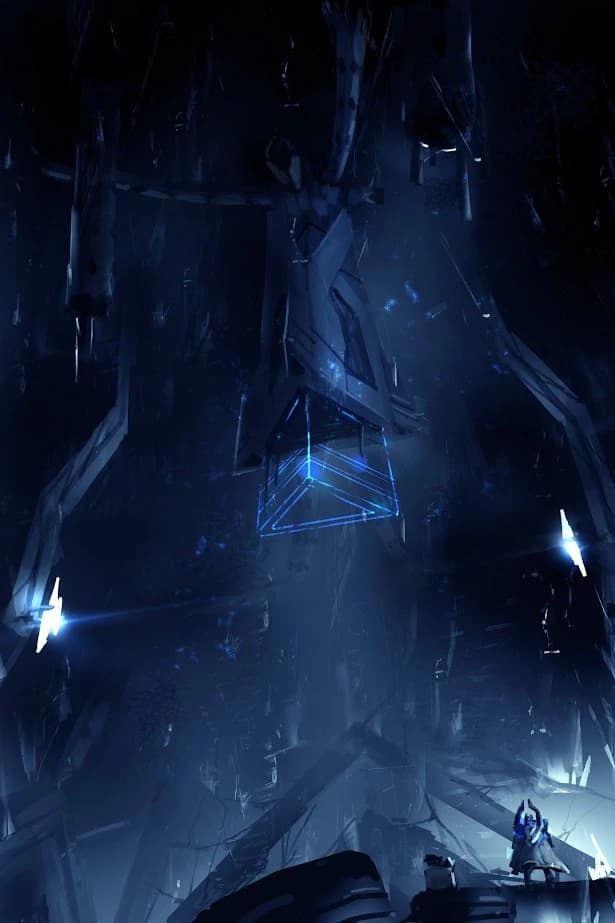
The Keystone was designed by the xel'naga to store the origin point of their primary temple at Ulnar, expressed in a unifying language any culture could interpret. It would store Void energy to reawaken the xel'naga when the chosen races, those that contained purity of essence and purity of form, arrived at the temple. Essence, matter, information, and consciousness could all be siphoned and redistributed within the relic and converted into energy, and the Keystone acted as a focal point between the material universe and the Void, converting the energies of one into those of the other. (StarCraft II: Legacy of the Void)
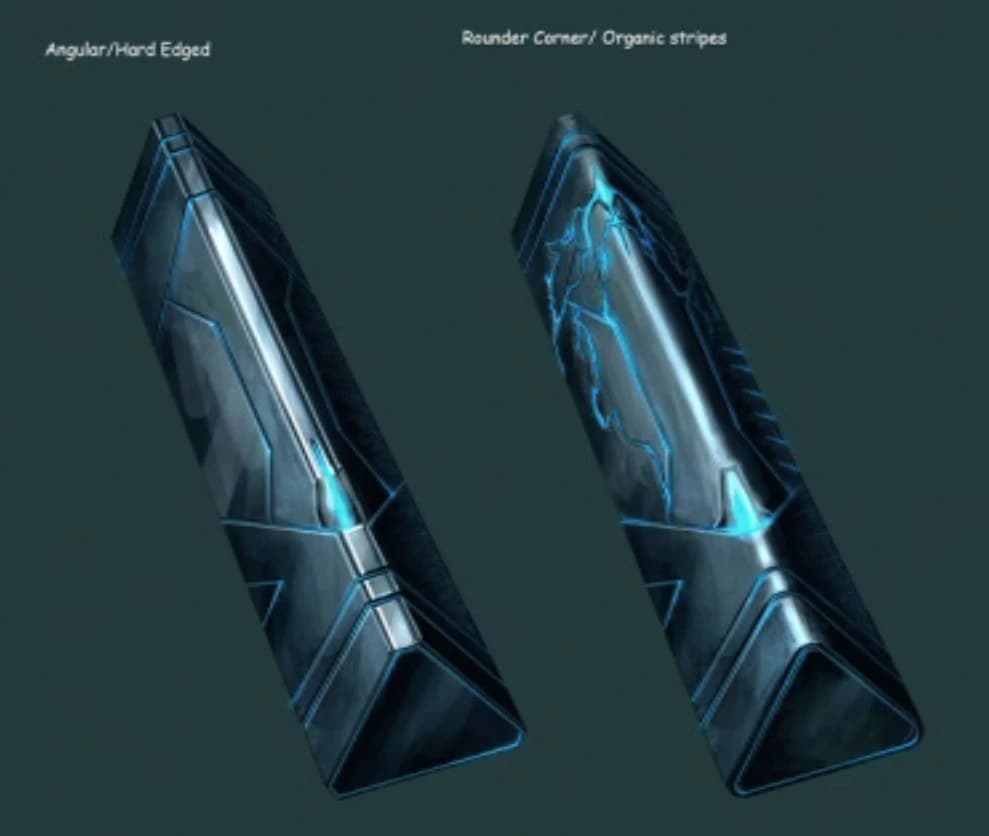
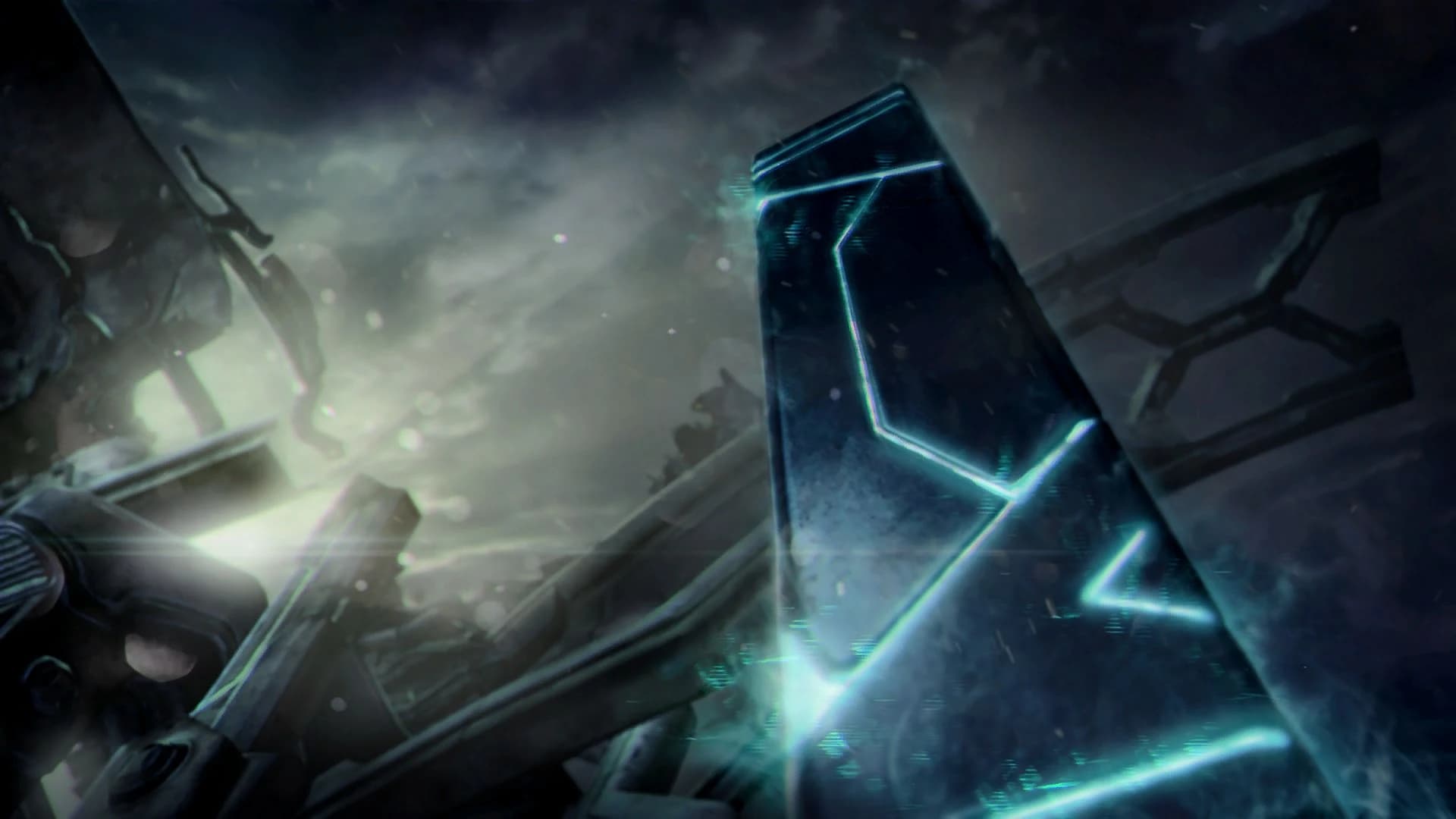
The physical shape of the Keystone was a deception that allowed it to be realigned, and it had a decay rate higher than any normal construction material. Its construction resembled that of the temple of Ulnar, leading Phase-smith Karax to speculate that the two complemented one another. The relic was not inert even when separated, and its individual components could be located by their radiation emissions. It drew energy like a dry sponge, reacting that way with devices such as an ihan crystal, and it was capable of generating a powerful energy nova lethal to the zerg yet harmless to terrans, who heard only a subsonic pulse. (StarCraft II: Wings of Liberty; StarCraft II: Legacy of the Void)
Though most relics were millions of years old, the first recovered component appeared to be only a few thousand years old, while pieces sealed in temples elsewhere were millions of years old. This was traced to the Keystone's self-repairing nature, and it was found that the relic actually predated most xel'naga artifacts by billions of years. Karax speculated it might have been the first object the xel'naga created upon entering the universe. Assembled, the entire device was slightly longer than a man is tall. (StarCraft II: Wings of Liberty; StarCraft II: Legacy of the Void; StarCraft II: Flashpoint)
The scattered components#
Per the Infinite Cycle, it was intended that the chosen races would find and assemble the Keystone, which would guide them to Ulnar, the resting place of the xel'naga. The relic was divided into five components and stored separately in and around the Koprulu sector. By the Second Great War one was buried on Mar Sara, one lay in a Tal'darim-guarded shrine on Monlyth, another in a shrine on Typhon XI, and another was sealed in a xel'naga temple on Xil. The final piece was stored in a vault aboard an abandoned xel'naga worldship stranded in the Sigma Quadrant. (StarCraft II: Wings of Liberty; StarCraft II: Legacy of the Void)
The race for the artifact#
During the Second Great War the terrans, zerg, and protoss all took an interest in the device. Crown Prince Valerian Mengsk covertly sought it through the Moebius Foundation, intending to de-infest the Queen of Blades and strike a decisive victory against the zerg, expecting the feat to settle any question of his fitness to succeed his father, Emperor Arcturus Mengsk. Sarah Kerrigan was likewise interested, driven by a growing understanding of the coming of Amon and his hybrid, and the Swarm prepared a sector-wide invasion to recover the relic. The Tal'darim, familiar with the locations of most components, viewed them as holy relics and appointed themselves their guardians. Emil Narud, aware of the Keystone, planned to use it to revive Amon without informing the Tal'darim. (StarCraft II: Wings of Liberty; StarCraft II: Legacy of the Void)
A sanctioned Dominion expedition had finished excavating the Mar Saran component just before the war, and the Moebius Foundation hired Raynor's Raiders, through Tychus Findlay, to obtain it, in contravention of a Dominion ban on the trade of alien artifacts. The Raiders retrieved the piece just ahead of the Swarm's attack on the dig site and escaped aboard the battlecruiser Hyperion. The Foundation then directed them to Monlyth, to a xel'naga temple on Xil, and to Typhon XI, where the imminent supernova of the local star complicated the operation, each time pitting them against the Tal'darim and the zerg. Kerrigan, recognizing the Moebius Foundation as the source of the Raiders' success, attacked its headquarters on Tyrador VIII, and the final component was recovered from the derelict xel'naga worldship in the Sigma Quadrant. (StarCraft II: Wings of Liberty)
The Battle of Char#
Bringing the assembled device into range of Sarah Kerrigan required the terrans to invade Char. Valerian Mengsk assembled half the Dominion fleet under General Horace Warfield, and the Raiders joined the battle group. Though the terrans suffered heavy casualties, they established a foothold and crippled part of the zerg defenses, bringing the Keystone to the base of the main hive and digging in around it. The Queen of Blades personally led the attack, but the terran defenses held and the fully charged device eliminated the nearby zerg and partially de-infested Kerrigan, altering her DNA by extracting the energy the Overmind had used to remake her years earlier. Unknown to the terrans, that energy was not dissipated but stored within the Keystone as part of Narud's plan to resurrect Amon, and Kerrigan suspected the energy had been gathered by nearby hybrid. (StarCraft II: Wings of Liberty; StarCraft II: Heart of the Swarm; StarCraft II: Legacy of the Void)
Narud's betrayal and the death of Mengsk#
Jim Raynor brought Kerrigan onto Valerian Mengsk's flagship Bucephalus, and in fleeing Dominion justice the two became rebels. Emil Narud joined them, proclaiming the device a weapon and insisting its de-infestation of Kerrigan had not been an intended function. Both Kerrigan and the device were brought to the secret Moebius Foundation station Prometheus, but Narud betrayed the rebels to Arcturus Mengsk and escaped with the relic aboard a warp-capable transport. (StarCraft II: Flashpoint)
The device was later installed as a security measure in the emperor's office on Korhal, its remote control disguised as a lighter. When Kerrigan, by then remade once more, attacked the palace and confronted Arcturus Mengsk, he used the Keystone to subdue her, until Raynor intervened and destroyed the remote. Kerrigan then killed the emperor. (StarCraft II: Heart of the Swarm)
The banishment of Amon#
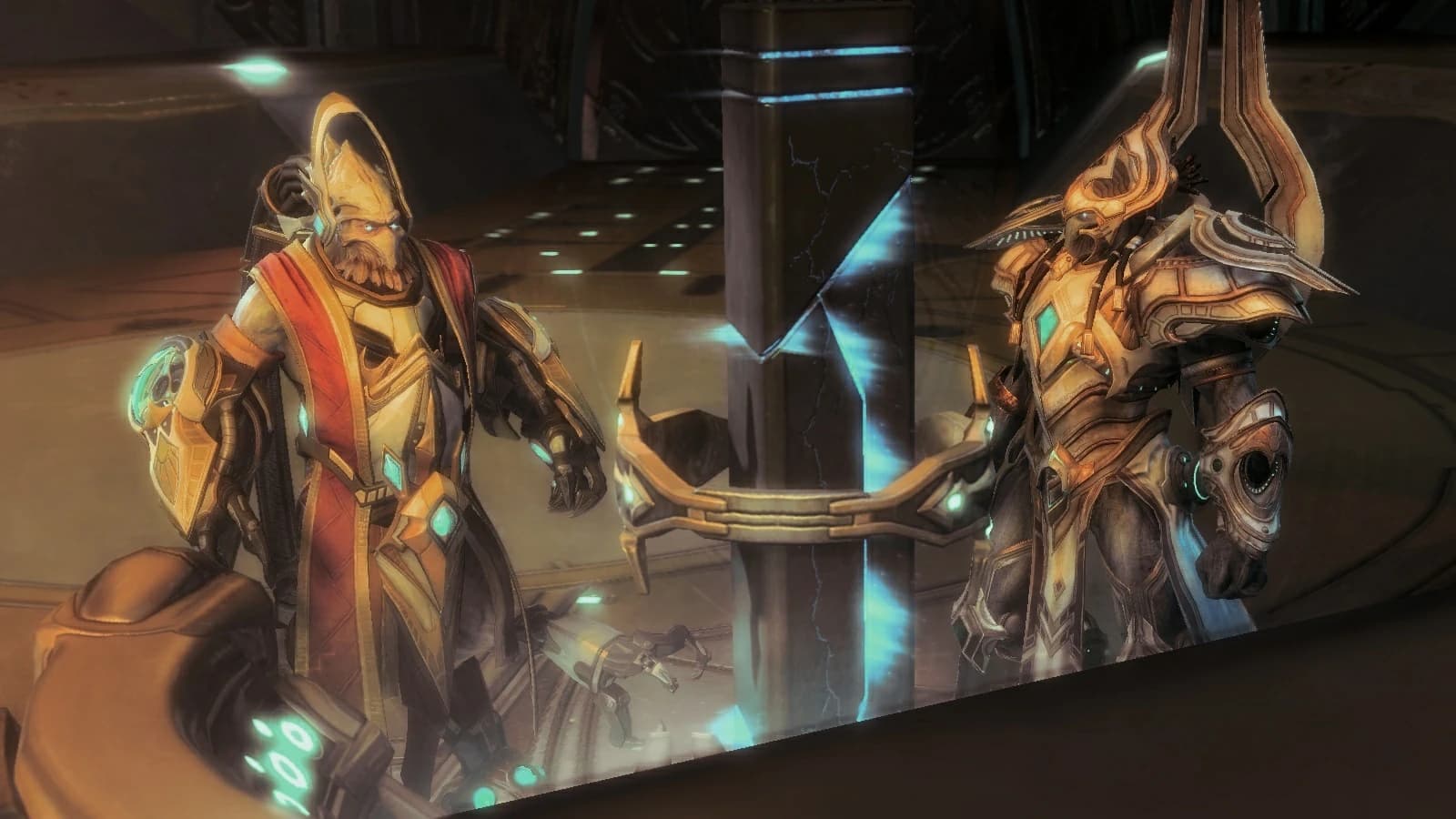
Guided by Zeratul's advice, Hierarch Artanis and his forces went to Korhal to retrieve the device for the war against Amon, fighting through Moebius Corps forces and enduring the devastating mental pulses the Keystone unleashed when charged with Void energy. Once it was recovered, Phase-smith Karax studied it and discovered the location of Ulnar within the Altarian Rift, learning that the relic redistributed essence, matter, consciousness, and energy and had been modified from its original purpose. He theorized it could extract Amon from the Khala and so save the afflicted protoss from his corruption. (StarCraft II: Legacy of the Void)
On the Tal'darim homeworld of Slayn, the Keystone reacted to the planet's Void energies, and Karax used terrazine drawn from the world to test its capacity for Void energy. Artanis then brought the relic to Aiur, where it radiated a red glow in reaction to Amon's presence, and Karax warned that he did not know how long it could hold the essence of a xel'naga. It was deployed on the surface after the destruction of Amon's host body. Amon sent all his forces, zerg, hybrid, and the delayed Golden Armada, to destroy the device, but the unified protoss held a defense around it long enough for it to gather the energy needed to pull Amon from the Khala. As the artifact activated, Artanis convinced Executor Selendis and the remaining Khalai to sever their nerve cords, leaving Amon no place to flee. He was forced back into the Void, and the Keystone was destroyed in the process. (StarCraft II: Legacy of the Void)
Frequently asked questions
- What is the Keystone in StarCraft?
- The Keystone, also called the xel'naga artifact, was an ancient xel'naga relic and one of the major catalysts of the Second Great War. It could channel and redistribute energy, matter, essence, and consciousness, and acted as a focal point between the material universe and the Void.
- How many components made up the Keystone and where were they?
- The relic was divided into five components scattered across the Koprulu sector. By the Second Great War one was buried on Mar Sara, one lay in a Tal'darim-guarded shrine on Monlyth, another on Typhon XI, another sealed in a xel'naga temple on Xil, and the final piece aboard an abandoned xel'naga worldship in the Sigma Quadrant.
- What did the Keystone do to Sarah Kerrigan?
- At the Battle of Char the fully charged device partially de-infested Kerrigan, altering her DNA by extracting the energy the Overmind had used to remake her years earlier. Unknown to the terrans, that energy was not dissipated but stored within the Keystone as part of Emil Narud's plan to resurrect Amon.
- How was the Keystone used against Amon?
- Hierarch Artanis brought the relic to Aiur, where Phase-smith Karax had theorized it could extract Amon from the Khala. The unified protoss held a defense around it long enough for it to gather the energy needed to pull Amon from the Khala and force him back into the Void.
- What happened to the Keystone?
- The Keystone was destroyed in the act of banishing Amon. As it activated on Aiur and pulled Amon from the Khala, the relic was consumed in the process.
Gallery
Images via StarCraft Wiki
Sources
- GameStarCraft II: Wings of Liberty, Blizzard Entertainment, 2010
- GameStarCraft II: Heart of the Swarm, Blizzard Entertainment, 2013
- GameStarCraft II: Legacy of the Void, Blizzard Entertainment, 2015
- BookStarCraft II: Flashpoint, Christie Golden, Gallery Books, 2012
Spotted a factual error or a primary source we missed? Email a correction. Every flagged claim gets reviewed.
Followed from this entry
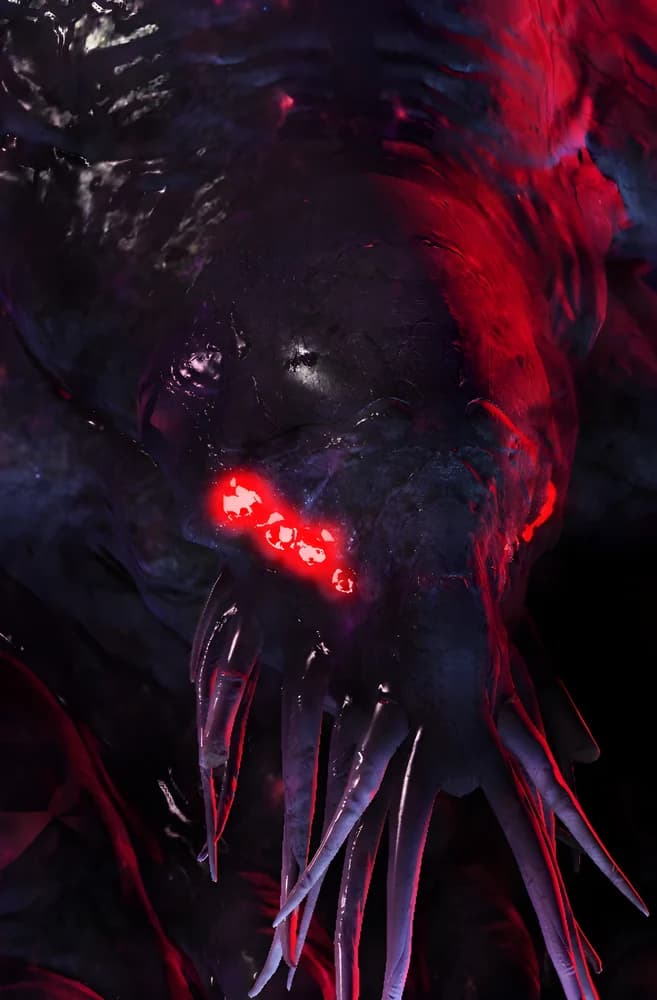
Amon
Amon was a malevolent xel'naga who turned against the Infinite Cycle of his kind and sought to end all life and remake it in his image. He created the Overmind and the Zerg Swarm, enslaved the Tal'darim, and was finally destroyed in the Void by an ascended Sarah Kerrigan during the End War.
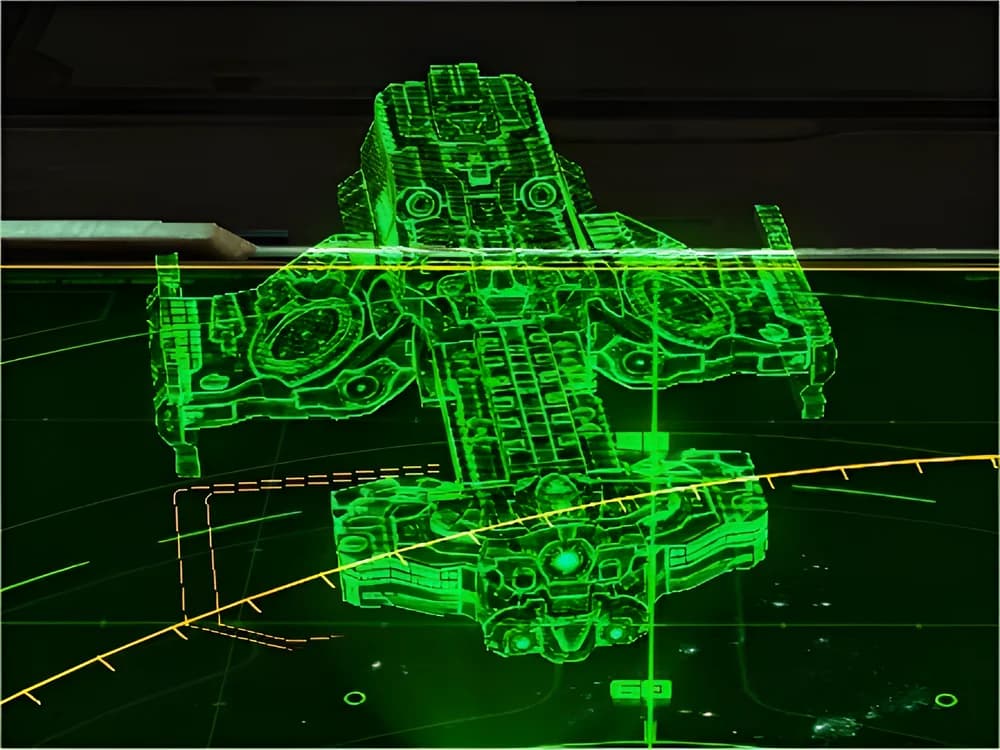
Bucephalus
The Bucephalus was a Gorgon-class battlecruiser and Terran Dominion flagship, built at the Ursa Shipyards to replace the stolen Hyperion. It carried Crown Prince Valerian Mengsk through the campaign on Char and the rogue flight that followed Kerrigan's rescue, and later served as Valerian's command ship during the Defenders of Man Insurgency.

Emil Narud
Emil Narud and Samir Duran were two of the many names worn across the millennia by a xel'naga in service to Amon. Posing as a Confederate warrior, a UED advisor, and a Dominion scientist, he manipulated the wars of the Koprulu sector to engineer the hybrid and resurrect his master.

Essence
Essence was the genetic information carried by all life and the key to zerg evolution. By consuming or assimilating their prey, the zerg took the essence of other creatures and folded their desired strengths into the Swarm, an ability that first drew the fallen xel'naga Amon to enslave them.
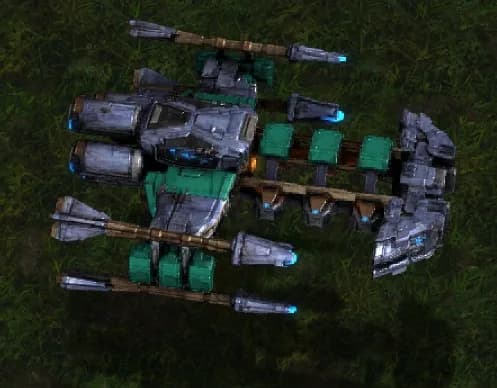
Hyperion
The Hyperion was a Behemoth-class battlecruiser that became the flagship of Jim Raynor and his Raiders, a souped-up warship capable of warp jumps from within a planetary atmosphere.
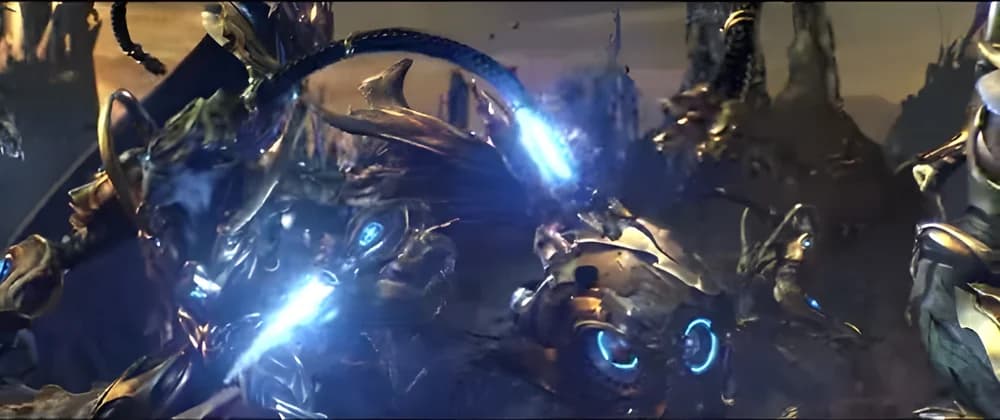
Khala
The Khala was the communal psionic link and guiding philosophy of the Khalai protoss, founded by the mystic Khas to end the Aeon of Strife. It bound its adherents in shared emotion for over a thousand years until Amon corrupted it, forcing the protoss to sever it forever.
Mentioned in69 entries
Aiur
Aiur was the homeworld of the protoss, a verdant world on the galactic fringe engineered by the Xel'Naga and seat of the Protoss Empire. It was overrun by the zerg in 2500 and reclaimed by the Daelaam after the defeat of Amon.
Alarak: the highlord who turned on Amon
Alarak won the Rak'Shir against Highlord Ma'lash and took the Tal'darim for himself. When Amon cast his people aside, he turned the death fleet on him.
Amon
Amon was a malevolent xel'naga who turned against the Infinite Cycle of his kind and sought to end all life and remake it in his image. He created the Overmind and the Zerg Swarm, enslaved the Tal'darim, and was finally destroyed in the Void by an ascended Sarah Kerrigan during the End War.
Amon's Forces
Amon's Forces, also called the Forces of Amon, were a union of terran, protoss, zerg, hybrid and Void creatures subservient to the fallen xel'naga Amon during the End War. Bound to his will, they sought the eradication of all the xel'naga's creation and an end to the Infinite Cycle.
Arcturus Mengsk
Arcturus Mengsk led the Sons of Korhal to bring down the Terran Confederacy and crowned himself Emperor of the Terran Dominion, ruling through cunning, propaganda, and brute force until his death during the Second Great War.
Artanis
Artanis was the Hierarch of the Daelaam, a renowned warrior who rose from executor during the zerg invasion of Aiur to lead the reunited protoss. He forged the Khalai and Nerazim into one people, reclaimed Aiur, and led the alliance that banished Amon from the Khala.
Augustgrad
Augustgrad was the capital city of Korhal and seat of the Terran Dominion, rebuilt from Confederate ruins and named for Augustus Mengsk. The most heavily fortified city in the Dominion, it was the site of Arcturus Mengsk's death at the hands of the zerg.
Battle of Char
The Battle of Char was fought during the Second Great War between a joint Terran Dominion and Raynor's Raiders force and the Zerg Swarm. Instigated by Prince Valerian Mengsk and led by Jim Raynor, it ended with the de-infestation of Sarah Kerrigan by a xel'naga device.
Bucephalus
The Bucephalus was a Gorgon-class battlecruiser and Terran Dominion flagship, built at the Ursa Shipyards to replace the stolen Hyperion. It carried Crown Prince Valerian Mengsk through the campaign on Char and the rogue flight that followed Kerrigan's rescue, and later served as Valerian's command ship during the Defenders of Man Insurgency.
Bunker: fortified strongpoint of the terrans
The bunker was a low domed terran defensive structure, plated in paristeel or neosteel and pierced by weapon ports on every side. Soldiers called them battlefield coffins for their ubiquity and lack of amenities, yet the squat shelters anchored terran lines from the Confederacy through the wars of the Dominion.
Char
Char was an inhospitable volcanic planet in the Koprulu sector that became the primary hive world of the zerg. It was the site of Sarah Kerrigan's rebirth as the Queen of Blades and, years later, of her restoration to human form.
Daelaam
The Daelaam was the unified protoss government that bound the Khalai, Nerazim, Purifiers, and some Tal'darim together after the fall of Aiur, led by Hierarch Artanis through the End War against Amon and the reclamation of their homeworld.
+ 57 more
Get new articles in your inbox
No spam. New lore drops, canon conflicts, and deep dives only when they’re worth reading.
Some links on Lore Fortress are affiliate links. If you buy through them we earn a small commission at no extra cost to you.