Queen
hive-master strain of the Zerg Swarm
The queen is a Zerg support strain derived from the Arachnis brood-keeper, bred to administrate hive clusters, oversee maturing broods, and serve as an infestation specialist. Two distinct forms exist across the history of the Swarm, the flying Great War queen and the ground-bound hive-master engineered after the Brood War.
The queen was a support strain of the Zerg Swarm, derived from the Arachnis brood-keeper and bred to administrate hive clusters rather than to fight on the front line. Queens oversaw maturing Zerg and drone activity around the hives, coordinated lesser strains, and served the Swarm as infestation specialists. Two distinct forms carried the name across the history of the Swarm. The first flew and acted under the direction of the cerebrates during the Great War and Brood War. The second, engineered after the Brood War at the behest of the Queen of Blades, abandoned flight in favor of nurturing colony sites from the ground. (StarCraft (manual); Queen (StarCraft II official site); StarCraft Field Manual)
Origin and lineage#
The queen strain was derived from the Arachnis brood-keeper, a creature capable of laying clutches of eggs. According to the StarCraft manual, queens were already in use by the Zerg before the Swarm departed Zerus, though the record is ambiguous as to whether those early creatures were the same strain or a related one. In the queen's adaptation, the brood-keeper's egg-laying ability was originally judged unnecessary, since the queen's purpose within the Swarm was tied to administration and infestation rather than to reproduction. Later, when the strain was reworked, that same egg-laying capacity was revived and turned to new functions in the hive. (StarCraft (manual); Queen (StarCraft II official site))
The Great War queen#
During the Great War and the Brood War, queens were subordinated to the cerebrates in the same manner as overlords, helping to administer the Swarm. They possessed numerous tentacles, a sinuous head, and a stretched skin membrane, and were able to operate both in the air and on the ground. Most stayed near the hives, where they oversaw maturing Zerg and the activity of drones. (StarCraft (manual); StarCraft: Shadow of the Xel'Naga; StarCraft; StarCraft: Frontline Volume 3)
Their primary battlefield function was infestation. A queen could launch a small remora-like parasite from a distance that attached to a target and bonded with it if the target was organic, allowing higher Zerg strains to see whatever the host saw. At the time of its first use in the Koprulu sector, the parasite could not be removed without killing the host, and it could also serve as a channel for the Zerg to communicate with the host or as a vector for the hyperevolutionary virus. The arrival of the United Earth Directorate, with its nano-conveyed anesthetic and attenuated laser technology, made it possible to remove detected parasites safely, though by 2503 at least some parasites could no longer be detected by terran instruments. (StarCraft (manual); StarCraft: Brood War (manual); StarCraft II: Heaven's Devils; StarCraft: Frontline Volume 3)
Queens could also infest other creatures, causing them to expire so that broodlings emerged from the remains, and could coat victims in a thick mucus that slowed them drastically before dissolving them. Most feared was the queen's production of parasitic bio-toxins, which could be released onto a structure that had fallen into disrepair to swiftly infest the facility and bring it and those inside under Zerg control. (StarCraft (manual); StarCraft: Shadow of the Xel'Naga)
The reworked hive-master#
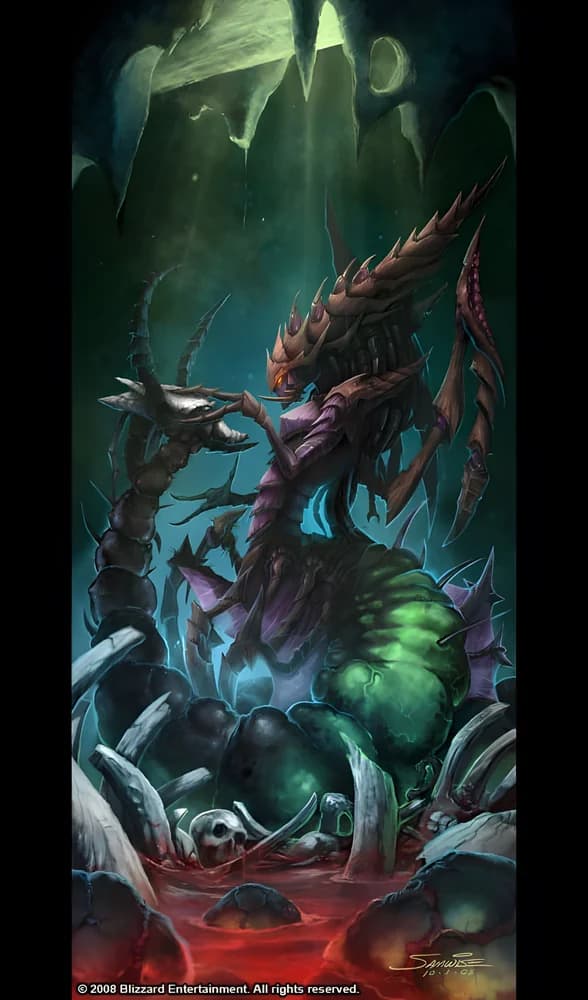
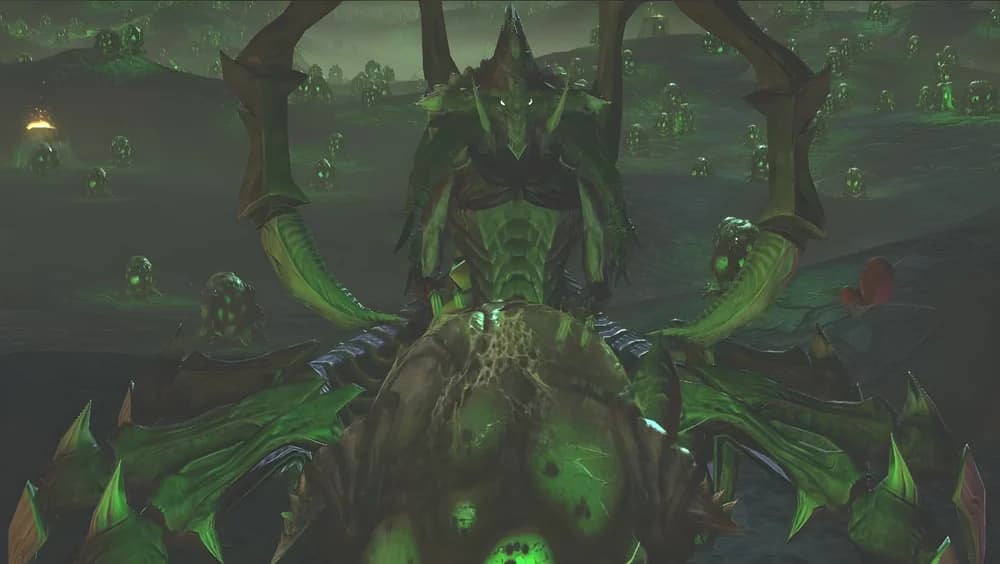
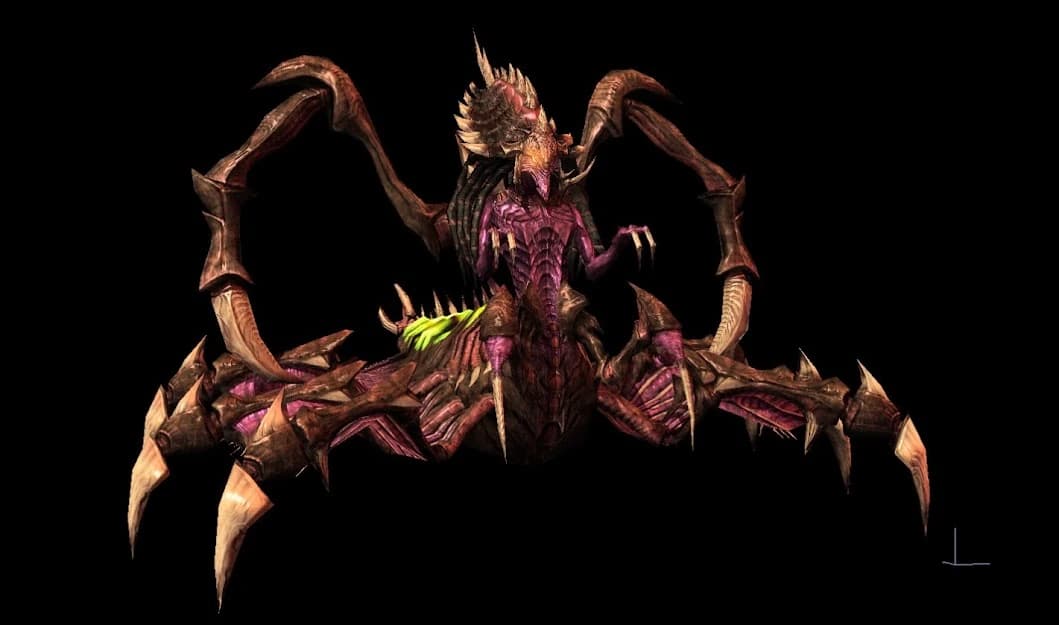
Following the Brood War, the role and biology of the queen were re-purposed into a new form, more physically resilient and focused on nurturing colony sites. The creation of this breed was carried out at the behest of the Queen of Blades to safeguard the future of the Swarm and to act as its hive-masters, and the strain was in use as early as 2501. The new strain no longer flew. When terrans first encountered it, the common reaction was that someone had taken a centaur, replaced the upper body with a section of centipede, and replaced the lower body with a giant crab. (Queen (StarCraft II official site); StarCraft Field Manual; StarCraft II: Legacy of the Void; StarCraft: Evolution)
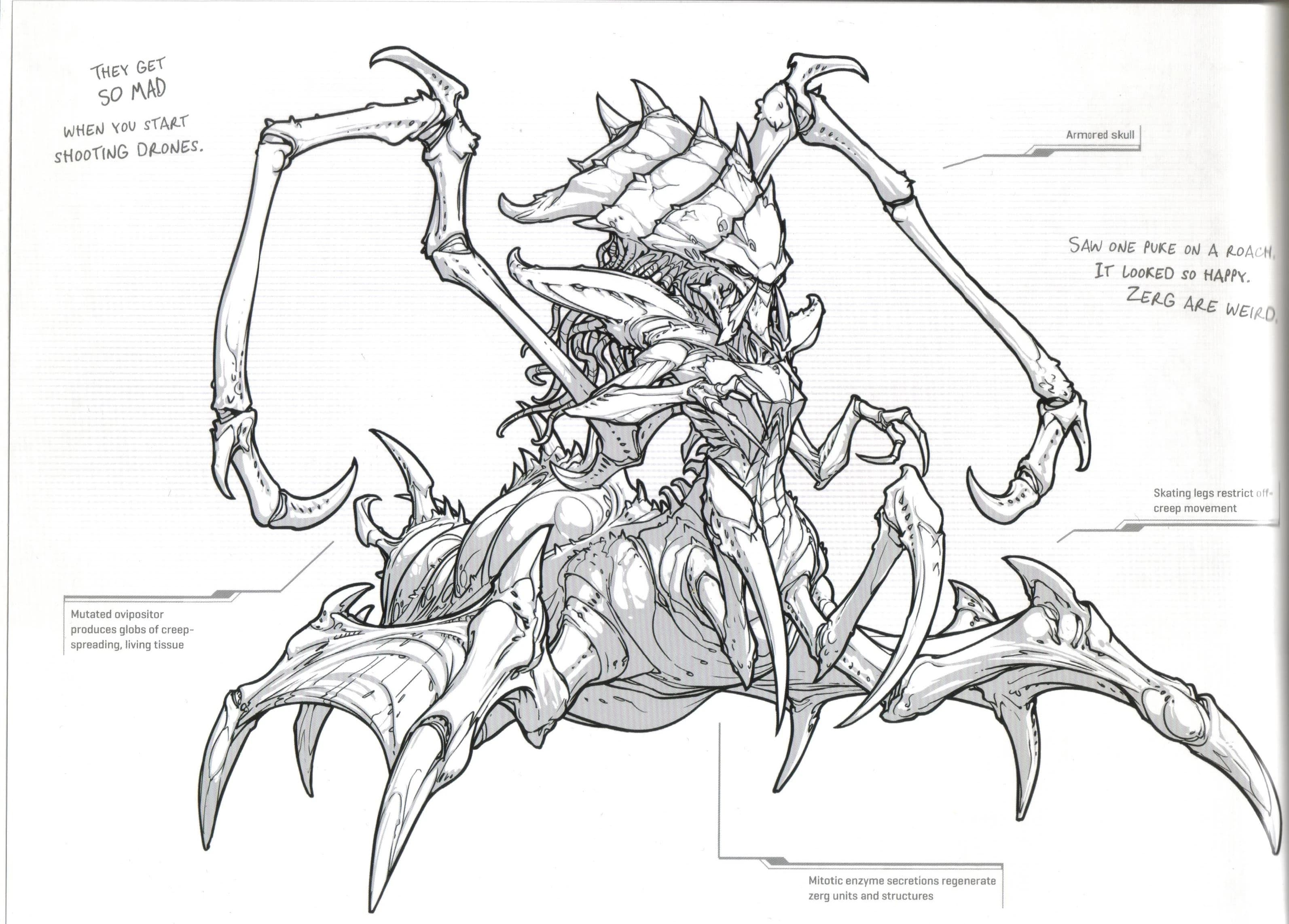
These queens are tougher than their predecessors, with an armored skull encasing the brain and a set of nerve cords resembling those of the protoss. The altered morphology hinted at the incorporation of terran or protoss material, or even the Zerg-altered genes of the Queen of Blades herself, which implied a broad redistribution of power within the Zerg hierarchy. They stand roughly one and a half times the height of a terran in CMC armor. (Queen (StarCraft II official site); StarCraft Field Manual)
Sapience and instinct#
The reworked queens are sapient beings whose armored brains grant great mental capability, but they have severe limits to their mental flexibility and possess only limited independent thought and analysis. They play a limited command role in nurturing nest sites, overseeing hives and coordinating lesser strains, and can analyze and relay tactical data fed to them by overlords. Queens generally cannot speak verbally, but are able to hear, process, and understand terran speech. Above all, they carry an ingrained matronly instinct toward the brood that even deep neurological restructuring cannot eliminate. (Queen (StarCraft II official site); StarCraft Field Manual; StarCraft: Evolution; StarCraft II: Legacy of the Void)
Hive functions#
The brood-keeper's egg-laying ability was revised to let these queens produce living globs of tissue that adhere to and accelerate the growth of creep, deposited through a mutated ovipositor. They also secrete a thick, protein-based fluid driven by mitotic enzymes that, when spread over the wounds of a Zerg organism, regenerates the damaged tissue within seconds. Combined with a catalyst from a gland on the queen's neck and injected into a hatchery, that same fluid causes larvae to incubate more rapidly. (Queen (StarCraft II official site); StarCraft Field Manual)
Like all ground Zerg, queens move faster over creep than over open ground, but their legs are built so that crossing terrain without creep impairs them severely, which Dominion scientists have speculated is meant to keep the more intelligent queens near a hive rather than wandering off. They are capable of manipulating their offspring directly, having by 2503 engineered the zergling into the baneling and being tasked with the spawning of numerous cocoons. For defense, they are equipped with acid spines and claws and can hurl spores, though this weaponry is used chiefly to protect hive clusters rather than to press an attack. (Queen (StarCraft II official site); StarCraft Field Manual; StarCraft: Ghost: Spectres; StarCraft II: Wings of Liberty; StarCraft: Frontline Volume 1)
Variants and notable queens#
The Swarm also fielded the broodmothers, sapient brood leaders who stood well above ordinary queens. One individual queen of note was Mukav, whom Abathur modified and brought to his side after the End War. (StarCraft II: Heart of the Swarm; StarCraft: Evolution)
Frequently asked questions
- What is the queen in StarCraft?
- The queen was a support strain of the Zerg Swarm, derived from the Arachnis brood-keeper and bred to administrate hive clusters rather than fight on the front line. Queens oversaw maturing Zerg and drone activity around the hives, coordinated lesser strains, and served the Swarm as infestation specialists.
- What did the Great War queen do in battle?
- The Great War queen was airborne and subordinated to the cerebrates, with infestation as its primary battlefield function. It could launch a remora-like parasite that bonded with organic targets, infest creatures so that broodlings emerged from the remains, and release parasitic bio-toxins onto a structure in disrepair to swiftly bring it and those inside under Zerg control.
- How did the queen change after the Brood War?
- Following the Brood War, the strain was re-purposed at the behest of the Queen of Blades into a sturdier, ground-bound hive-master. The reworked queen spreads and accelerates creep, heals damaged Zerg tissue with a regenerative fluid, and causes larvae to incubate more rapidly.
- Are the reworked queens intelligent?
- The reworked queens are sapient beings whose armored brains grant great mental capability, but they have severe limits to their mental flexibility and possess only limited independent thought. They generally cannot speak verbally but can hear and understand terran speech, and they carry an ingrained matronly instinct toward the brood they tend.
- What were the queens descended from?
- The queen strain was derived from the Arachnis brood-keeper, a creature capable of laying clutches of eggs. The brood-keeper's egg-laying ability was originally judged unnecessary for the queen's administrative and infestation role, but when the strain was later reworked, that egg-laying capacity was revived and turned to new functions in the hive.
Gallery
Images via StarCraft Wiki
Sources
- GameStarCraft, Blizzard Entertainment, 1998
- GameStarCraft II: Wings of Liberty, Blizzard Entertainment, 2010
- GameStarCraft II: Heart of the Swarm, Blizzard Entertainment, 2013
- GameStarCraft II: Legacy of the Void, Blizzard Entertainment, 2015
- BookStarCraft (manual), Peter Underwood, Bill Roper, Chris Metzen and Jeffrey Vaughn, Blizzard Entertainment, 1998
- BookStarCraft: Brood War (manual), Blizzard Entertainment, 1998
- BookStarCraft Field Manual, Rick Barba, Insight Editions, 2015
- BookStarCraft: Shadow of the Xel'Naga, Gabriel Mesta, Pocket Books, 2001
- BookStarCraft: Ghost: Spectres, Nate Kenyon, Pocket Star, 2011
- BookStarCraft II: Heaven's Devils, William C. Dietz, Gallery Books, 2010
- BookStarCraft: Evolution, Timothy Zahn, Del Rey, 2016
- WebQueen (StarCraft II official site), Blizzard Entertainment, 2010 and 2014
- ComicStarCraft: Frontline Volume 1, "Why We Fight", Josh Elder (w), Ramanda Kamarga (a), Tokyopop, 2008
- ComicStarCraft: Frontline Volume 3, "Last Call", Grace Randolph (w), Seung-hui Kye (a), Tokyopop, 2009
Spotted a factual error or a primary source we missed? Email a correction. Every flagged claim gets reviewed.
Followed from this entry
Baneling
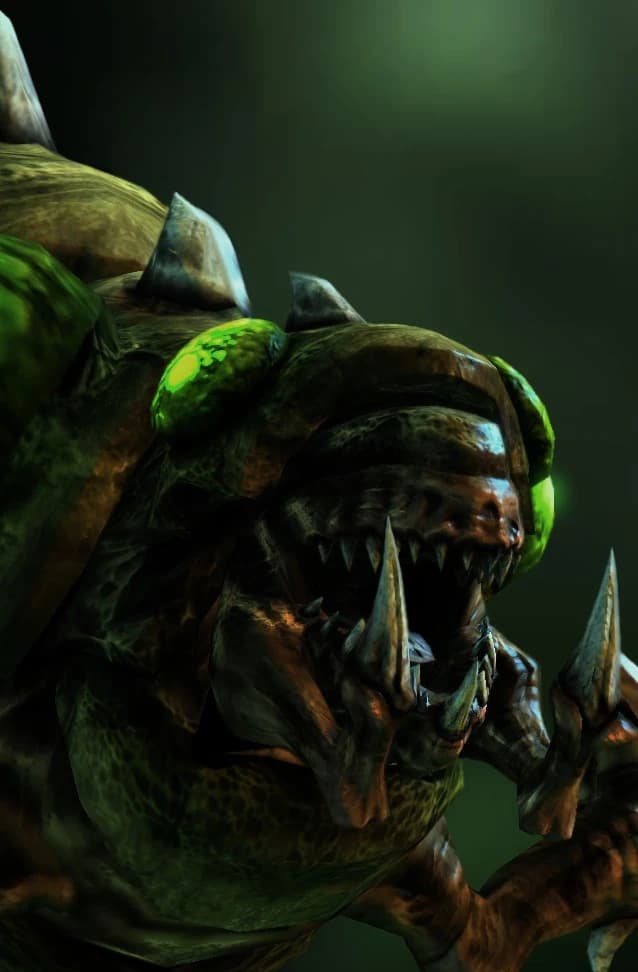
The baneling was an explosive zerg strain evolved from the zergling through a brief chrysalis phase, its body remade to carry sacs of highly corrosive acid. A living suicide bomber, the baneling ruptured among enemy formations in a shower of searing acid that devastated both structures and ground forces.
Broodmother
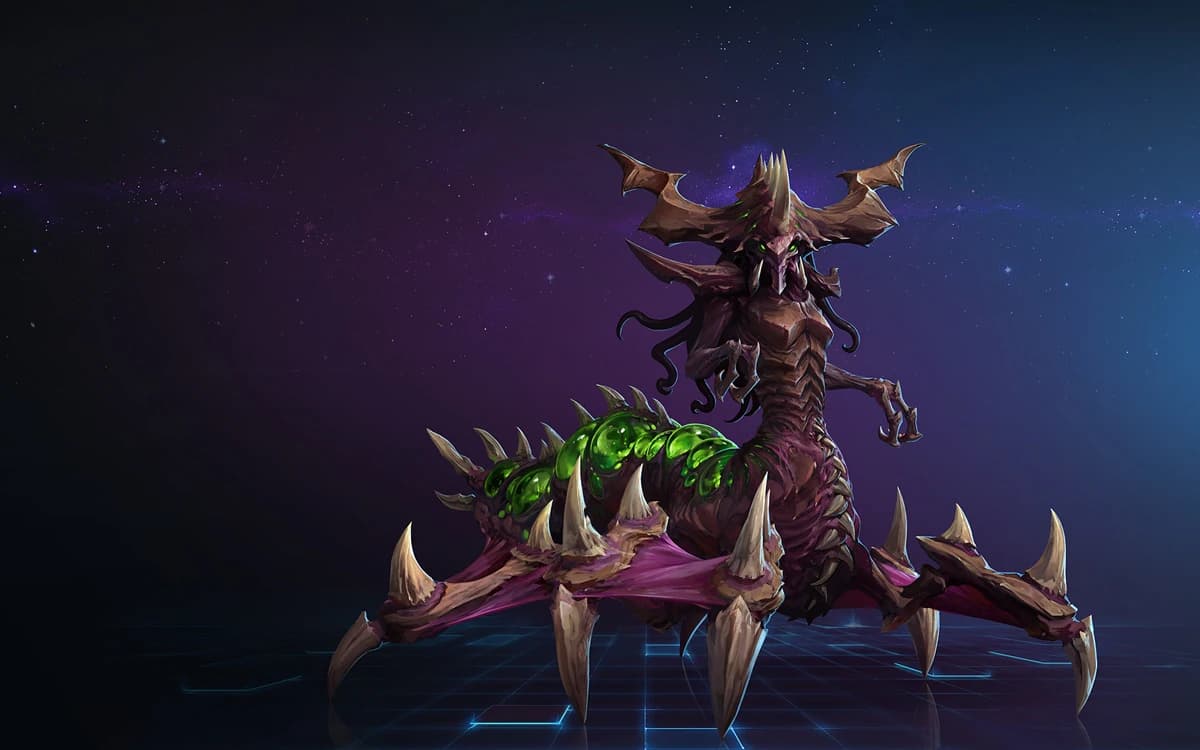
Broodmothers were powerful, intelligent queens created by the Queen of Blades to replace the cerebrates, tasked with guarding and leading the broods of the Zerg Swarm. Independent enough to survive their creator's fall, they fragmented the Swarm when Kerrigan was deinfested and warred among themselves for control.
Cerebrate
Cerebrates were the intermediate commanders of the zerg, created by the Overmind to lead individual broods and oversee the Swarm's evolution. Bound to the Overmind for their reincarnation, they vanished from the Swarm after the Brood War, replaced by Sarah Kerrigan's broodmothers.
Creep
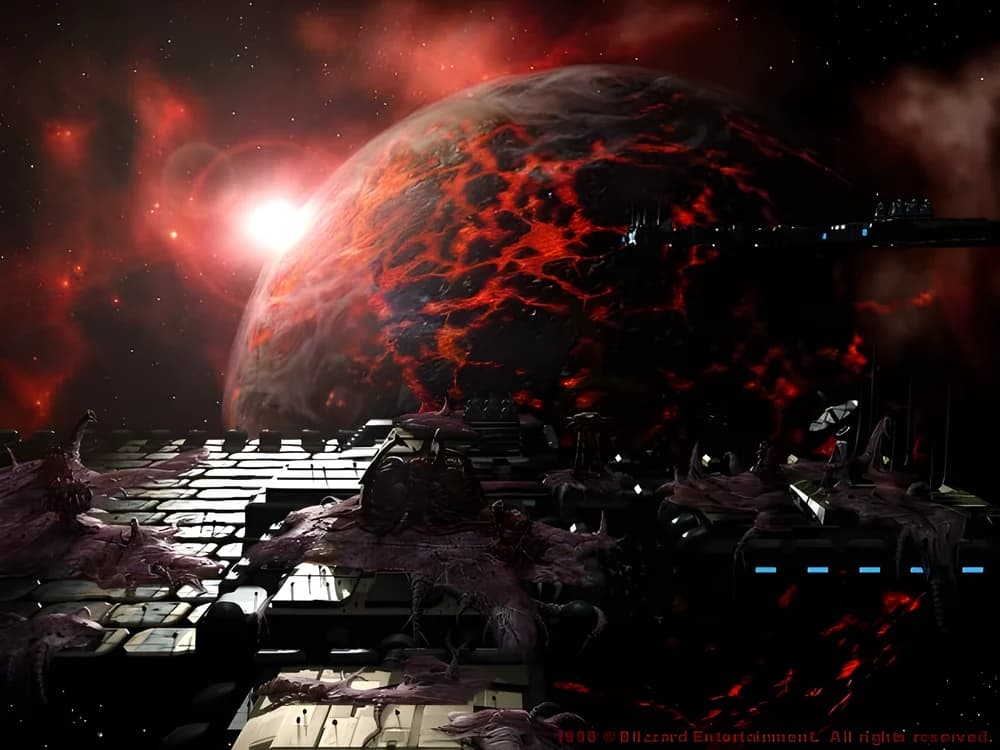
Creep was a living zerg superorganism, a viscous purple substance that nourished zerg structures and strains, bound entire colonies into a single organism, and could consume a whole planet within days if left unchecked.

Overlord
The overlord is a Zerg flyer evolved from the assimilated Gargantis proximae, serving the Swarm as a coordinator of lesser strains, a long-range sensory scout, an unmatched psionic transmitter, and a deep-space transport.

Zerg
The zerg are a ravenous collective of biologically advanced aliens who evolve by assimilating the essence of other species in pursuit of genetic perfection. Created by Amon's xel'naga on Zerus and bound to the Overmind, they grew into one of the three dominant powers of the galaxy.
Mentioned in47 entries
Abathur: the Swarm's living DNA library
Spun from many species by the Overmind, Abathur designed the Queen of Blades. He later betrayed Zagara to restart the wars he thought zerg needed.
Aldaris: the judicator who saw the truth
A strict Khala believer who acted as the Conclave's hand against Tassadar. He died on Shakuras exposing Kerrigan's hold over Matriarch Raszagal.
Alexei Stukov: murdered, then infested
DuGalle's oldest friend and second in command was killed on his own admiral's orders, after Samir Duran worked on the fleet. The zerg brought him back.
Amon
Amon was a malevolent xel'naga who turned against the Infinite Cycle of his kind and sought to end all life and remake it in his image. He created the Overmind and the Zerg Swarm, enslaved the Tal'darim, and was finally destroyed in the Void by an ascended Sarah Kerrigan during the End War.
Arcturus Mengsk
Arcturus Mengsk led the Sons of Korhal to bring down the Terran Confederacy and crowned himself Emperor of the Terran Dominion, ruling through cunning, propaganda, and brute force until his death during the Second Great War.
Battle of Char
The Battle of Char was fought during the Second Great War between a joint Terran Dominion and Raynor's Raiders force and the Zerg Swarm. Instigated by Prince Valerian Mengsk and led by Jim Raynor, it ended with the de-infestation of Sarah Kerrigan by a xel'naga device.
Brood War: Kerrigan's war for the Swarm
The Brood War was a zerg civil war between Kerrigan and the cerebrate Daggoth over who would succeed the Overmind. The UED invaded from Earth at the same time.
Broodmother
Broodmothers were powerful, intelligent queens created by the Queen of Blades to replace the cerebrates, tasked with guarding and leading the broods of the Zerg Swarm. Independent enough to survive their creator's fall, they fragmented the Swarm when Kerrigan was deinfested and warred among themselves for control.
Char
Char was an inhospitable volcanic planet in the Koprulu sector that became the primary hive world of the zerg. It was the site of Sarah Kerrigan's rebirth as the Queen of Blades and, years later, of her restoration to human form.
Command Center: mobile heart of every terran outpost
The command center was the core structure of every terran outpost, a mobile resource processor that manufactured SCVs and anchored new colonies wherever minerals and vespene gas were plentiful. Heavily armored and able to fly on jump jets, it evolved from a Confederate prospecting platform into a fortified military headquarters.
Daelaam
The Daelaam was the unified protoss government that bound the Khalai, Nerazim, Purifiers, and some Tal'darim together after the fall of Aiur, led by Hierarch Artanis through the End War against Amon and the reclamation of their homeworld.
Daggoth
Daggoth was one of the Overmind's greatest cerebrates and master of the Tiamat Brood, the largest and most powerful brood in the Swarm. After the Overmind fell, he took command of the surviving cerebrates and built a Second Overmind, perishing when Kerrigan destroyed them.
+ 35 more
Get new articles in your inbox
No spam. New lore drops, canon conflicts, and deep dives only when they’re worth reading.
Some links on Lore Fortress are affiliate links. If you buy through them we earn a small commission at no extra cost to you.