Overlord
command-and-control flyer of the Zerg Swarm
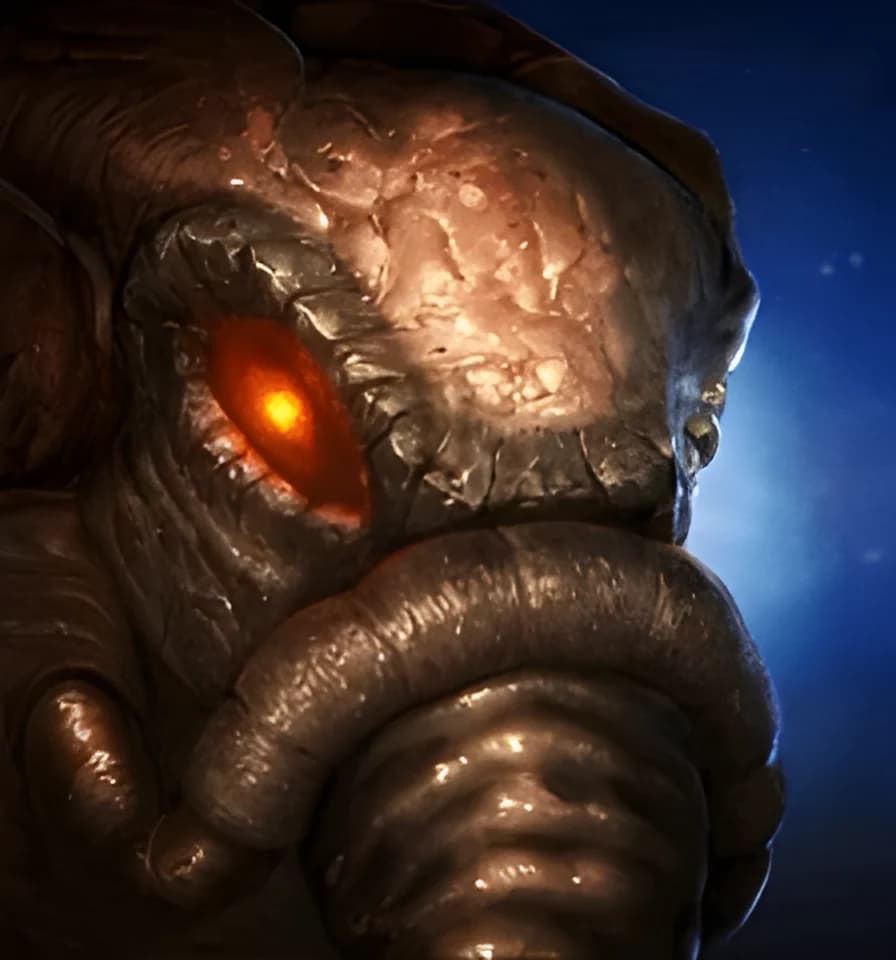
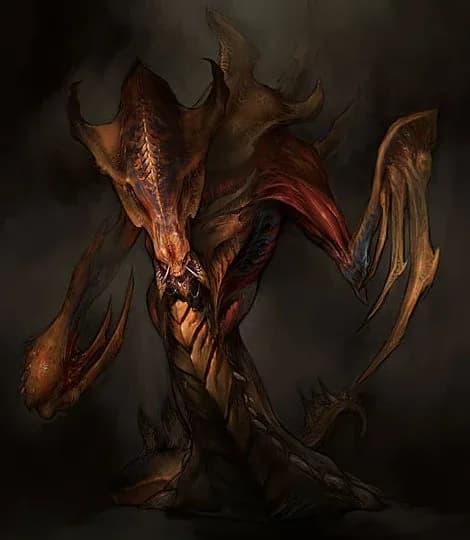
The overlord is a Zerg flyer evolved from the assimilated Gargantis proximae, serving the Swarm as a coordinator of lesser strains, a long-range sensory scout, an unmatched psionic transmitter, and a deep-space transport.
The overlord was a Zerg flyer that provided control for the Swarm's lesser minions. Evolved from the Gargantis proximae, a species of giant, semi-intelligent, space-faring creatures, the overlord coordinated broods on behalf of the cerebrates, scouted with enhanced senses, and broadcast the psionic commands that bound the Swarm together. Of all Zerg breeds it was among the least altered from its source genus, a deliberate restraint that preserved both its extraordinary psionic capacity and, in some cases, the buried memories of the creatures it had once been. (StarCraft; Overlord (StarCraft II official site); Just an Overlord)
Origin#
Overlords were evolved from the Gargantis proximae, a species of giant, space-faring, and semi-intelligent creatures that volunteered to be assimilated in order to avoid extinction. According to the StarCraft manual, overlords were utilized by the Zerg before the Swarm left Zerus and were derived from this same genus. Once assimilated, they were put to work helping the cerebrates control and coordinate their broods and scouting with their enhanced senses. (StarCraft; Overlord (StarCraft II official site); Just an Overlord)
The Zerg altered the Gargantis far less than they did most assimilated species. Dr. Talen Ayers proposed two explanations. One was that the Gargantis already possessed the properties the Zerg desired, so little modification of their genetic code was needed. The other was that the Zerg were unwilling to meddle deeply with the structural makeup of a species that possessed great psionic ability, knowing that even the slightest change could destroy it. Ayers favored the second. As a result, the overlord's core genetic matrix is atypically homogeneous, over ninety percent unchanged, and the minimal alterations preserved the original creatures' memories. The most ancient overlords, essentially assimilated Gargantis, could regain their individuality upon becoming feral. (Project Blackstone; Overlord (StarCraft II official site))
Senses and psionic relay#
The elongated appendages that once hung from the underbellies of the Gargantis evolved into an array of microscopic filaments that gather sensory and spatial information through intermittent pulses, feeding that data into the overlord's central nervous system. Because the information is processed as fast as it arrives, an overlord can navigate any environment and relay tactical data to the Swarm in real time. (Overlord (StarCraft II official site))
The overlord possesses a large, bulbous brain protected by a heavily armored weave of bone and cartilage, an organ of millions of nerves and synaptic contacts. Its cerebral structure is complex, with neural pathways woven throughout the body but concentrated in the lower section and legs, and it is through this system that the overlord relays commands to the Swarm. That nervous system makes the overlord a powerful psionic transmitter whose ability to broadcast psychic energy is unmatched. To preserve this capacity, the Zerg altered only the neurologically impotent parts of the Gargantis, such as the carapace and pulmonary chambers. (Overlord (StarCraft II official site); Project Blackstone)
Judgment and behavior#
Overlords, unlike most other Zerg breeds, typically only relay orders. They are technically capable of directly controlling lesser Zerg, but only with extreme difficulty. They can communicate thoughts and concepts to higher command breeds, including complete sentences. Overlords are fairly docile, and among their additional duties are tending young larvae and monitoring the progress of drones through a kind of instinctive telepathy. (Just an Overlord; StarCraft: The Dark Templar Saga: Shadow Hunters; StarCraft Compendium; StarCraft II: Wings of Liberty)
After the Queen of Blades was defeated at Char, some overlords tried to form pockets of organized Zerg in the manner of broodmothers. Some, particularly those Gargantis proximae originally assimilated into the Swarm, regained their free will upon going feral and were able to gather small broods of their own. (Just an Overlord)
Flight and physiology#
Overlords retain the thick outer shell of the Gargantis, which changed little during assimilation and is strong enough to resist a lightning strike. As space-faring creatures, an overlord's carapace pressurizes and seals whenever it flies through vacuum, a function regulated by two species of unidentified symbiotic organisms that die within seconds of being removed from their host, which has frustrated Dominion efforts to obtain living samples. (Overlord (StarCraft II official site); StarCraft: Shadow of the Xel'Naga)
For lift and motive power, overlords use helium-filled gas sacs. The helium is generated through an efficient respiratory system distributed across the carapace, with the excess stored in thick sacs that contract and expand to let the creature regulate altitude and propulsion at will. They move quite slowly. Because they must support many different strains of Zerg at once, overlords can sometimes exhibit spontaneous adaptive mutations that improve their own efficiency. (Overlord (StarCraft II official site); StarCraft II War Chest)
Transport and later capabilities#
With the correct growth stimuli, an overlord can carry other Zerg within hollows in its hide, becoming a deep-space transport. The importance of this role is reflected in the sheer number of overlords found accompanying Zerg forces. By the Second Great War, overlords could disgorge creep to prepare the ground for conquest, producing it by liquefying their internal organs and storing it in glands near the head, then regrowing those organs at will and modifying them to draw substance from inhospitable environments. By the same era, overlords could also metamorphose into overseers. On average during the Second Great War an overlord measured roughly eighteen meters in length, twelve in height, and ten in width. (StarCraft; StarCraft Compendium; Overlord (StarCraft II official site); StarCraft II: Wings of Liberty; StarCraft Field Manual)
Variants and feral overlords#
The overlord strain produced several notable forms. The Mastermind Overlord and the named individual Yggdrasill are recorded among its variant strains, and individuals such as the overlords known as Green Eyes and Purple Eyes are remembered by name. While most primal Zerg, such as those of Dehaka's pack, have evolved beyond the need for overlords, small numbers of primal overlords persist among the various packs. Overlords of the Leviathan Brood reflect the genetic mutations of the creatures beneath them, owing to their constant connection within the Swarm's hive mind. (Just an Overlord; StarCraft II: Heart of the Swarm; StarCraft II War Chest)
Frequently asked questions
- What is the overlord in StarCraft?
- The overlord was a Zerg flyer that provided control for the Swarm's lesser minions. It coordinated broods on behalf of the cerebrates, scouted with enhanced senses, and broadcast the psionic commands that bound the Swarm together.
- What did the overlord evolve from?
- Overlords were evolved from the Gargantis proximae, a species of giant, space-faring, semi-intelligent creatures that volunteered to be assimilated in order to avoid extinction. The Zerg altered the Gargantis far less than they did most assimilated species, leaving the overlord's core genetic matrix over ninety percent unchanged.
- Why is the overlord such a powerful psionic transmitter?
- The overlord possesses a large, bulbous brain protected by a heavily armored weave of bone and cartilage, an organ of millions of nerves and synaptic contacts. It relays commands to the Swarm through this system, and its nervous system makes it a psionic transmitter whose ability to broadcast psychic energy is unmatched.
- How do overlords fly?
- For lift and motive power, overlords use helium-filled gas sacs. The helium is generated through an efficient respiratory system distributed across the carapace, with the excess stored in thick sacs that contract and expand to regulate altitude and propulsion, though they move quite slowly.
- What additional abilities did overlords gain by the Second Great War?
- By the Second Great War, overlords could carry other Zerg as deep-space transports, disgorge creep to prepare the ground for conquest, and metamorphose into overseers. Some overlords, particularly Gargantis proximae originally assimilated into the Swarm, regained their free will upon going feral and gathered small broods of their own.
Gallery
Images via StarCraft Wiki
Sources
- GameStarCraft, Blizzard Entertainment, 1998
- GameStarCraft II: Wings of Liberty, Blizzard Entertainment, 2010
- GameStarCraft II: Heart of the Swarm, Blizzard Entertainment, 2013
- GameStarCraft II War Chest, Blizzard Entertainment, Collections skin descriptions, 2017
- WebOverlord (StarCraft II official site), Blizzard Entertainment, unit page and Overlord Science, 2010 to 2014
- WebStarCraft Compendium, Blizzard Entertainment, classic.battle.net
- WebProject Blackstone, Blizzard Entertainment viral campaign (Overlord Dissection), 2013
- WebJust an Overlord, Gavin Jurgens-Fyhrie, Blizzard Entertainment short story, 2013
- BookStarCraft: Shadow of the Xel'Naga, Gabriel Mesta, Pocket Star, 2001
- BookStarCraft: The Dark Templar Saga: Shadow Hunters, Christie Golden, Pocket Star, 2007
- BookStarCraft Field Manual, Rick Barba, Insight Editions, 2015
Spotted a factual error or a primary source we missed? Email a correction. Every flagged claim gets reviewed.
Followed from this entry
Broodmother
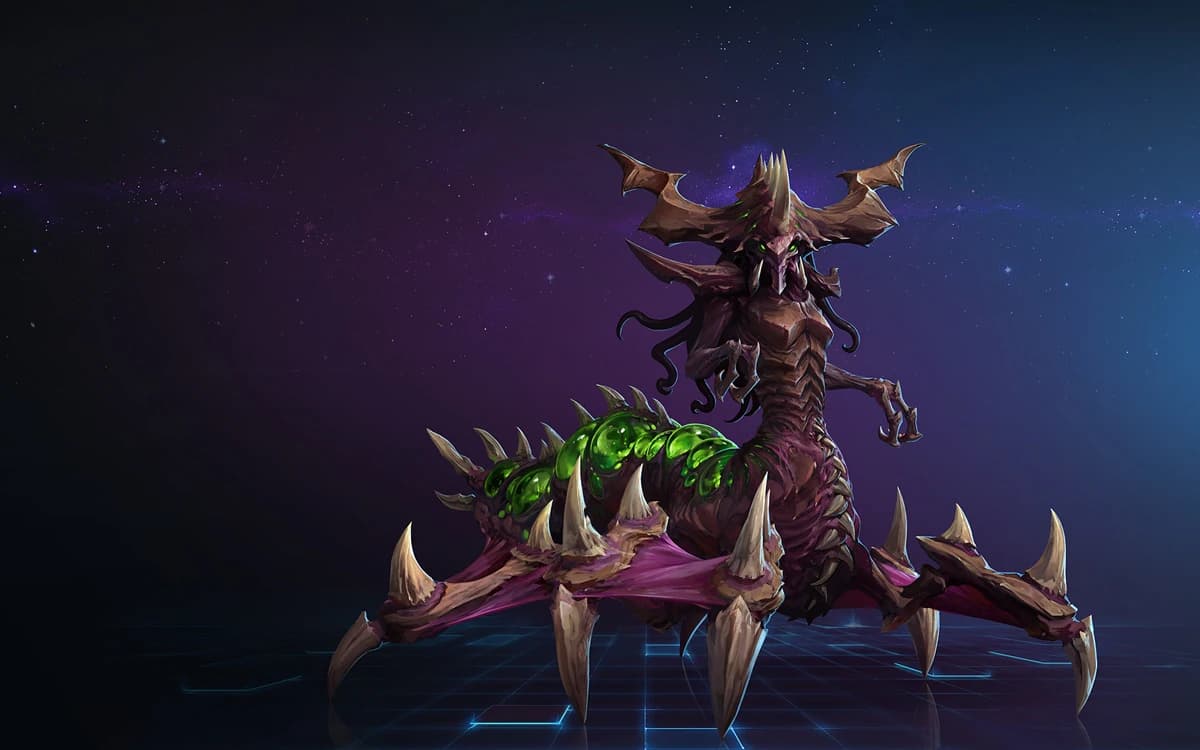
Broodmothers were powerful, intelligent queens created by the Queen of Blades to replace the cerebrates, tasked with guarding and leading the broods of the Zerg Swarm. Independent enough to survive their creator's fall, they fragmented the Swarm when Kerrigan was deinfested and warred among themselves for control.
Cerebrate
Cerebrates were the intermediate commanders of the zerg, created by the Overmind to lead individual broods and oversee the Swarm's evolution. Bound to the Overmind for their reincarnation, they vanished from the Swarm after the Brood War, replaced by Sarah Kerrigan's broodmothers.
Creep
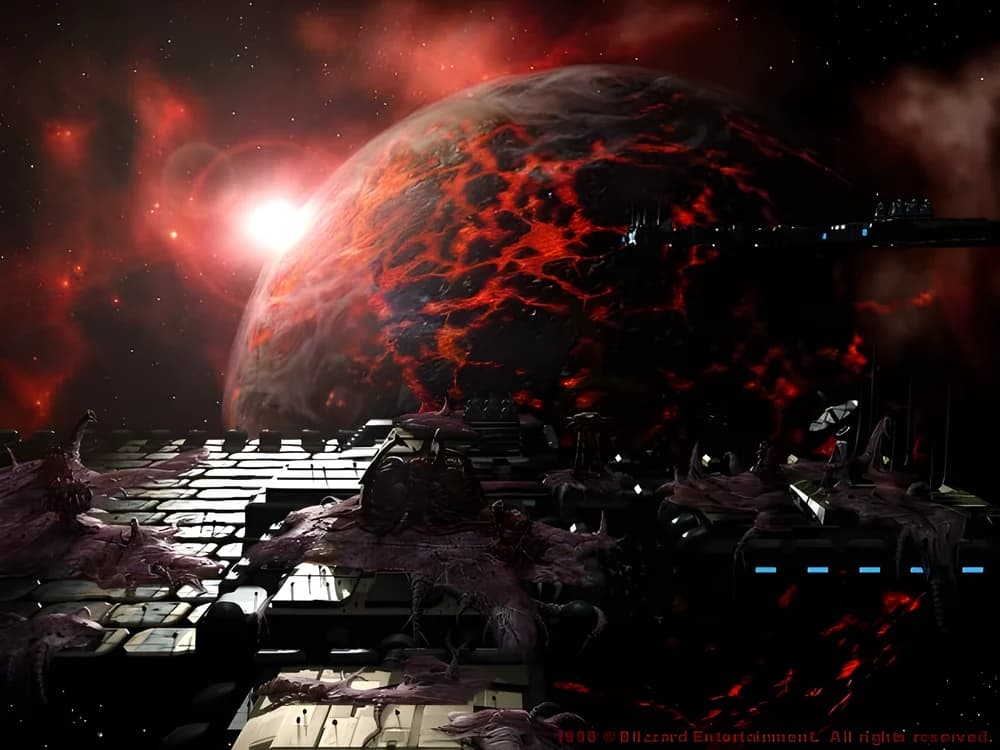
Creep was a living zerg superorganism, a viscous purple substance that nourished zerg structures and strains, bound entire colonies into a single organism, and could consume a whole planet within days if left unchecked.

Zerg
The zerg are a ravenous collective of biologically advanced aliens who evolve by assimilating the essence of other species in pursuit of genetic perfection. Created by Amon's xel'naga on Zerus and bound to the Overmind, they grew into one of the three dominant powers of the galaxy.
Every Zerg Unit in StarCraft and StarCraft II, Explained
Every zerg strain from StarCraft, Brood War and the three StarCraft II campaigns, from the zergling to the leviathan. Each entry covers the species it came from, what it does for the Swarm and where it turns up in the story.
Char
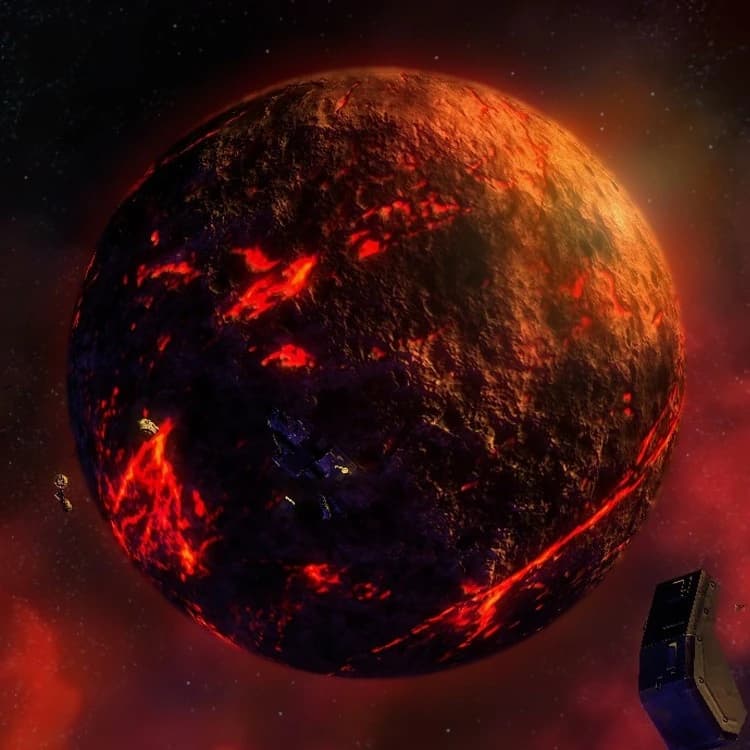
Char was an inhospitable volcanic planet in the Koprulu sector that became the primary hive world of the zerg. It was the site of Sarah Kerrigan's rebirth as the Queen of Blades and, years later, of her restoration to human form.
Mentioned in9 entries
2505: the year the Second Great War ended
2505 was the year in which the second phase of the Second Great War was fought across the Koprulu sector. It saw Sarah Kerrigan rebuild the Zerg Swarm, the death of Emperor Arcturus Mengsk at the Battle of Korhal, and the zergling outbreak that destroyed the Blackstone facility.
Essence
Essence was the genetic information carried by all life and the key to zerg evolution. By consuming or assimilating their prey, the zerg took the essence of other creatures and folded their desired strengths into the Swarm, an ability that first drew the fallen xel'naga Amon to enslave them.
Every Zerg Unit in StarCraft and StarCraft II, Explained
Every zerg strain from StarCraft, Brood War and the three StarCraft II campaigns, from the zergling to the leviathan. Each entry covers the species it came from, what it does for the Swarm and where it turns up in the story.
Feral Zerg
Feral zerg were zerg that had fallen outside the control of any higher entity, reverting to predatory instinct and attacking everything around them. Drawn to psionic emanations and able to survive without creep, they recurred across the Koprulu Sector wherever a cerebrate, broodmother, or the will of Kerrigan was lost.
Hatchery: foundational structure of every zerg colony
The hatchery was the living heart of every zerg colony, spreading creep, birthing larvae, and digesting minerals and vespene gas into nutrients for the Swarm. Grown from a single metamorphosed drone, it could mature into a lair and finally a hive, and the zerg defended it with fanatical zeal.
Overseer
The overseer was a zerg strain evolved from the overlord, covered in highly evolved optical receptors that let it detect hidden and burrowed enemies. Through incorporated terran DNA it could also spawn changelings to infiltrate enemy forces.
Project Blackstone: the Dominion's secret xenoscience program
Project Blackstone was a classified Terran Dominion research program ordered by Arcturus Mengsk to unlock the secrets of the zerg and protoss. Conscripted scientists laboured on a hidden asteroid installation until a zergling outbreak nearly killed them all, and Valerian Mengsk rebuilt the project aboard the science vessel Brin.
Queen
The queen is a Zerg support strain derived from the Arachnis brood-keeper, bred to administrate hive clusters, oversee maturing broods, and serve as an infestation specialist. Two distinct forms exist across the history of the Swarm, the flying Great War queen and the ground-bound hive-master engineered after the Brood War.
Scourge
The scourge is a blind, suicidal aerial strain of the zerg that detonates itself against enemy starships in both atmosphere and the vacuum of space. A single scourge can destroy a fighter, and a handful can breach a starship hull.
Get new articles in your inbox
No spam. New lore drops, canon conflicts, and deep dives only when they’re worth reading.
Some links on Lore Fortress are affiliate links. If you buy through them we earn a small commission at no extra cost to you.