Zergling
Basic Warrior Strain of the Swarm
The zergling was the most numerous warrior strain of the zerg, a fast, sickle-clawed creature evolved from the Zz'gashi dune runner and spawned two at a time from a single larva. Zerglings served as the Swarm's frontline assault troops, overwhelming foes through sheer weight of numbers.
The zergling was the basic warrior strain of the zerg, serving as the Swarm's frontline assault troops. The most numerous of all zerg mutations, zerglings attacked in large groups under the direction of larger warriors, embodying what the word "swarm" meant to terrans across the Koprulu Sector. Individually little more than feral animals roughly the size of a large dog, they overwhelmed their enemies through expendable numbers and raw speed. (StarCraft Field Manual; StarCraft (manual); Alternity: StarCraft Edition)
Origin and physiology#
Zerglings were evolved from the Zz'gashi dune runner after that species was assimilated into the zerg Swarm. Though the dune runner supplied the strain's core genetic code, the zergling was hybridized from over fifteen other organism strains, with the dune runner DNA distilled down to its simplest possible form. That simplicity was the strain's defining trait. The reduced DNA allowed two zerglings to be spawned from a single larva, which drew its genetic information from the primordial ooze of the spawning pools, and made the strain so efficient to reproduce that it thrived even under mortality rates greater than almost all other zerg strains. (StarCraft (manual); Zergling (StarCraft II official site); StarCraft II: Legacy of the Void; Project Blackstone)
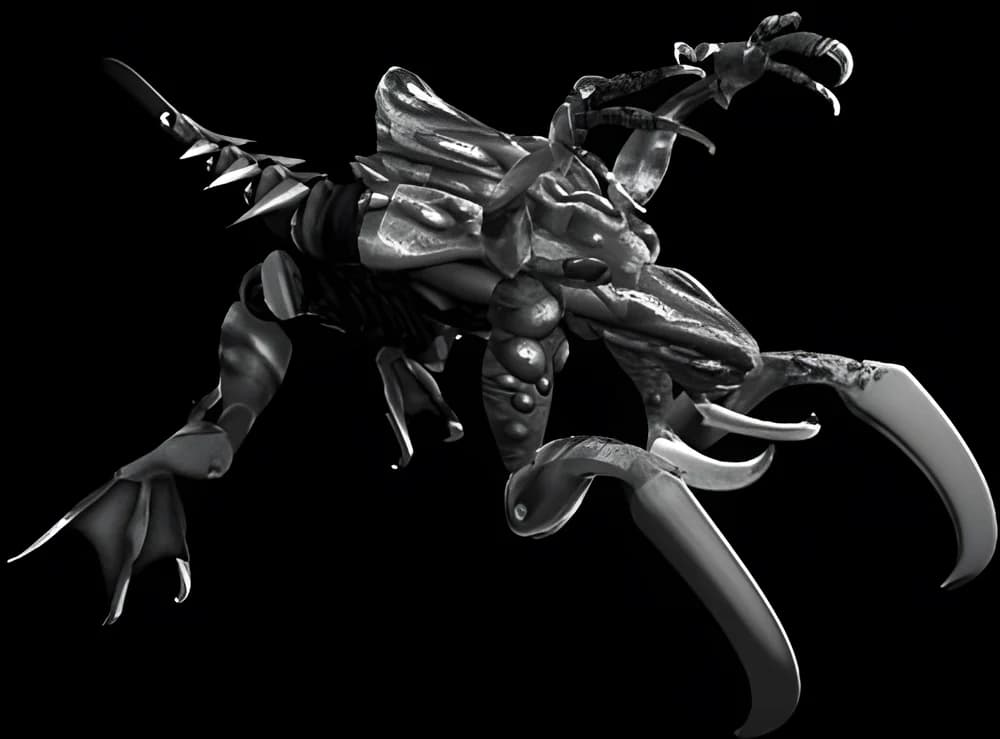
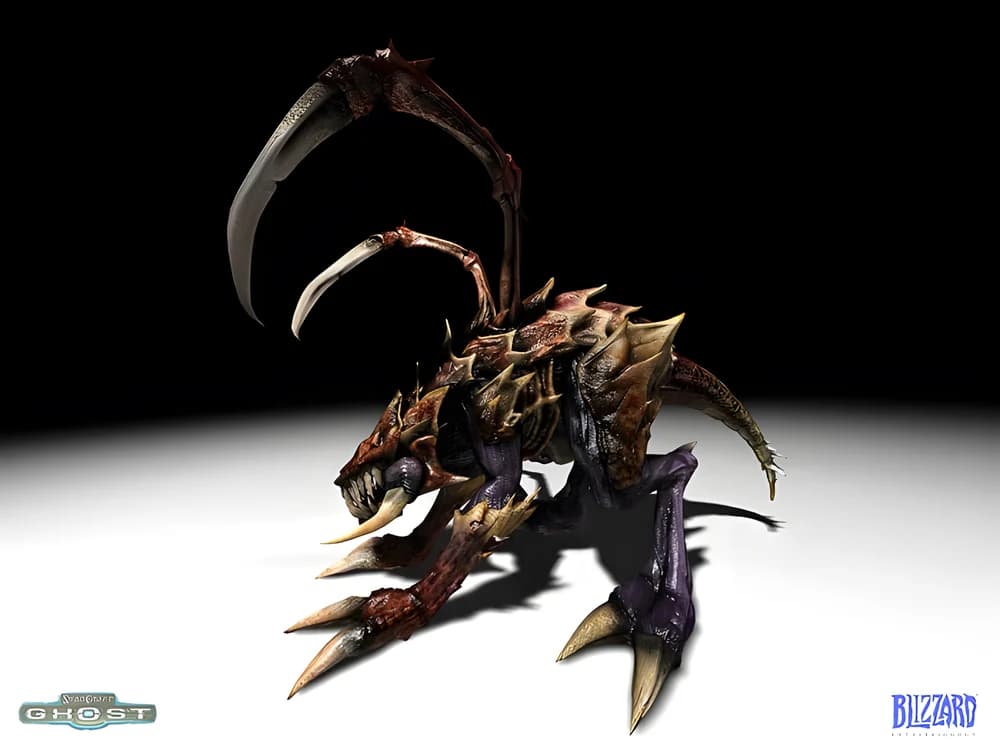
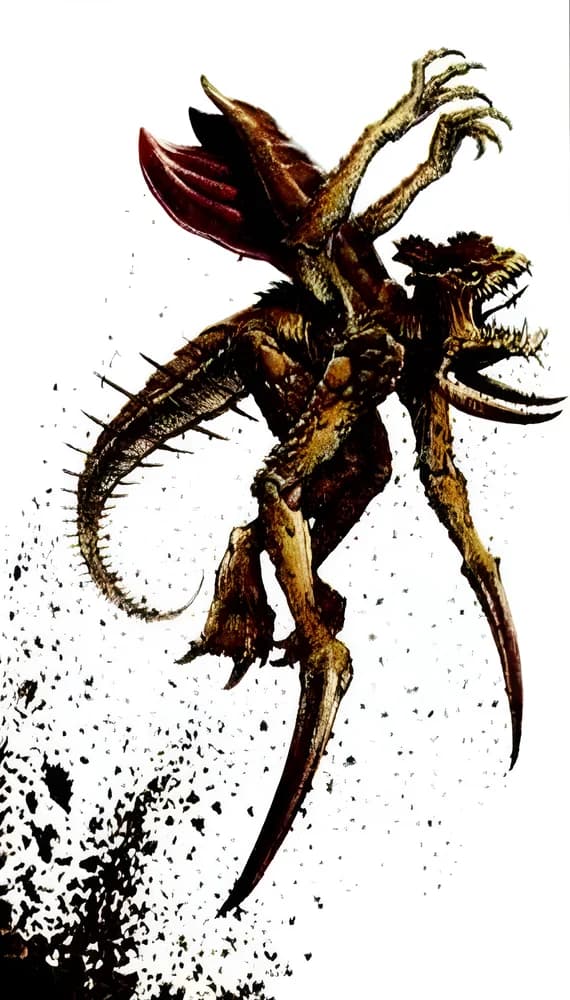
The zergling was the smallest mainline strain apart from the larvae and the chitha. Standing about one meter tall and equivalent in size to a large dog, it possessed webbed feet, sickle-shaped limbs, and sharp incisor teeth used primarily to tear into flesh. Its skin was tough and leathery, preventing moisture loss while still allowing circulation to regulate body temperature, and its nutrient storage system let it derive the compounds necessary for life, including water, from almost anything it ate. This efficiency allowed a zergling to operate away from a hive cluster for extended periods. (StarCraft: Speed of Darkness; StarCraft: Evolution; StarCraft Field Manual; Alternity: StarCraft Edition; Zergling (StarCraft II official site))
A zergling's eyes had a complex optical structure with an aperture that allowed it to see in the dark, an ability enhanced by a reflective tissue layer and a substance that made the eyes glow orange or red as its vision adapted to low light. Its spiked tail served to maintain balance while it ran at high speed, though the spikes themselves had no clear purpose and Dominion scientists believed them vestigial from the dune runner. The strain was physically adaptable, able to climb near-vertical surfaces and move at extraordinary speed, but individual zerglings were fragile and easily exterminated. (Zergling (StarCraft II official site); Baneling (StarCraft II official site); StarCraft: Shadow of the Xel'Naga; StarCraft)
Mutations and refinement#
The Swarm continually refined the zergling. A metabolic boost altered the creature to increase its reflexes and rate of movement, while a mutation of its adrenal glands changed its glandular balance to induce a battle frenzy. These adrenal glands were unusually large for a creature of the zergling's size, and the genetic manipulation behind them also heightened the strain's aggression, driving it into a frenzied state in which it could bring down armored vehicles and structures with ease. Terran Dominion marines referred to such enhanced zerglings as "speedlings." (StarCraft (manual); Zergling (StarCraft II official site); StarCraft Field Manual)
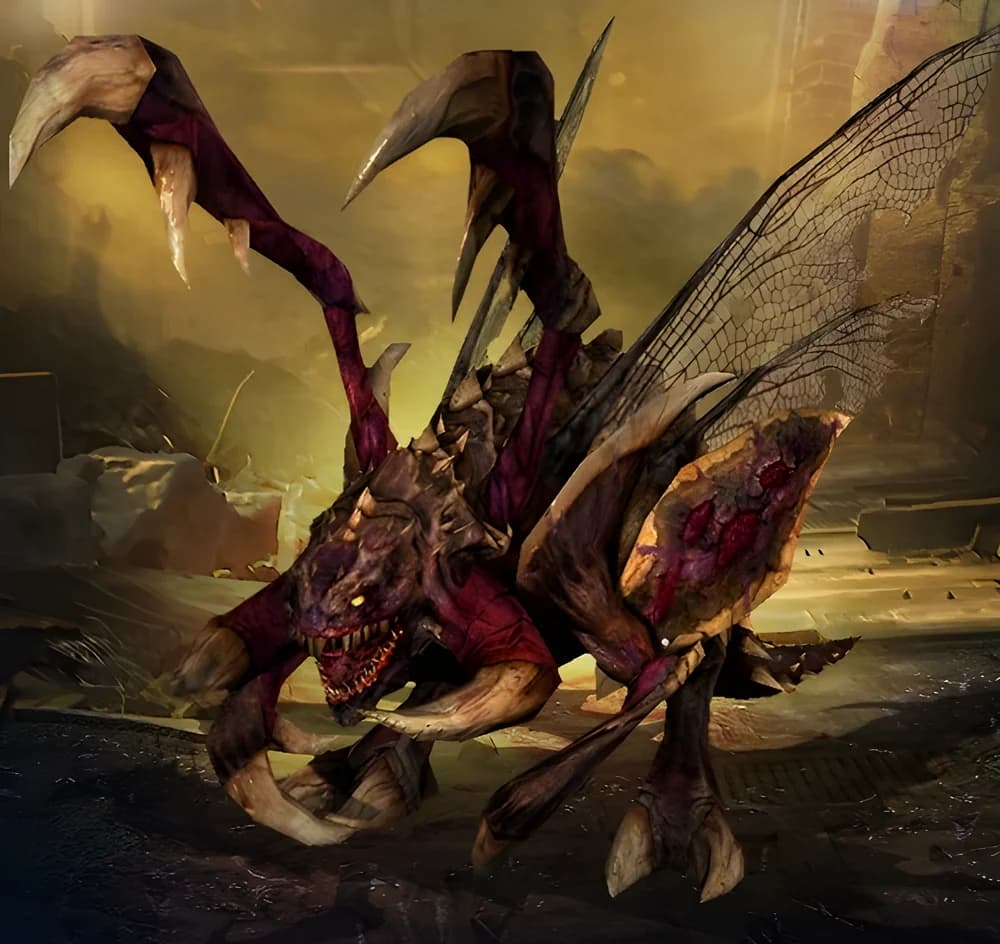
The zergling's nervous system was hyperactive to such a degree that those enslaved by the Cerberus Program required two antennas each to control their movement. By the Second Great War, some zerglings were observed to possess venational wings used to increase ground acceleration. Zerglings of the Leviathan Brood grew spikes from their bodies as a byproduct of their extremely simplified DNA, and these spikes were retained even when such zerglings metamorphosed into banelings. (StarCraft II: Legacy of the Void; StarCraft Field Manual)
Role in the Swarm#
Zerglings truly embodied what the word "swarm" meant to the zerg. They moved and attacked in large groups ranging from a dozen to a hundred, serving as living shields for more powerful strains while also overwhelming their foes through sheer weight of numbers. Individually they were feral animals, but under the command of larger warriors they moved as one mind, ripping enemies apart with their sickles and fangs. When paired with roaches, they could prove nearly unstoppable against terran infantry lacking siege tank or bunker support. Zerglings generally hunted and patrolled in pairs. (StarCraft Field Manual; Alternity: StarCraft Edition; StarCraft (manual); StarCraft: Ghost: Spectres; Project Blackstone)
Outside of direct combat, the strain's raw speed and expendability suited it for reconnaissance. Lone zerglings served as scouts and lookouts, sometimes accompanied by a retinue of hydralisks when scouting far from a hive cluster. (Alternity: StarCraft Edition; Zergling (StarCraft II official site); StarCraft Field Manual; StarCraft)
Evolution into the baneling#
Zerglings continued to evolve after the Brood War, gaining the ability to metamorphose into the baneling. This evolution arose from an experiment the zerg conducted at the Dominion colony of Sorona, where the Swarm incorporated a native acidic mold into the zergling's body structure to produce a creature filled with corrosive payload. The new queen breed directed this development, and the baneling thereafter remained the zergling's principal evolved form. (Broken Wide; Baneling (StarCraft II official site))
Frequently asked questions
- What is a zergling in StarCraft?
- The zergling was the basic warrior strain of the zerg and the most numerous of all zerg mutations, serving as the Swarm's frontline assault troops. Roughly the size of a large dog, zerglings overwhelmed their enemies through expendable numbers and raw speed.
- What did zerglings evolve from?
- Zerglings were evolved from the Zz'gashi dune runner after that species was assimilated into the zerg Swarm. The strain was hybridized from over fifteen other organism strains, with the dune runner DNA distilled down to its simplest possible form.
- Why can two zerglings spawn from one larva?
- The zergling's reduced, simplified DNA allowed two of them to be spawned from a single larva. This made the strain so efficient to reproduce that it thrived even under mortality rates greater than almost all other zerg strains.
- What is a speedling?
- A metabolic boost increased a zergling's reflexes and rate of movement, while an adrenal gland mutation drove it into a battle frenzy in which it could bring down armored vehicles and structures with ease. Terran Dominion marines referred to such enhanced zerglings as speedlings.
- How does a zergling turn into a baneling?
- Zerglings gained the ability to metamorphose into the baneling after an experiment the zerg conducted at the Dominion colony of Sorona, where the Swarm incorporated a native acidic mold into the zergling's body structure to produce a creature filled with corrosive payload. The baneling thereafter remained the zergling's principal evolved form.
Gallery
Images via StarCraft Wiki
Sources
- GameStarCraft, Blizzard Entertainment, 1998
- BookStarCraft (manual), Peter Underwood, Bill Roper, Chris Metzen and Jeffrey Vaughn, Blizzard Entertainment, 1998
- GameStarCraft II: Legacy of the Void, Blizzard Entertainment, 2015
- BookStarCraft Field Manual, Rick Barba, Insight Editions, 2015
- BookStarCraft: Speed of Darkness, Tracy Hickman, 2002
- BookStarCraft: Shadow of the Xel'Naga, Gabriel Mesta, 2001
- BookStarCraft: Ghost: Spectres, Nate Kenyon, 2011
- BookStarCraft: Evolution, Timothy Zahn, 2016
- BookAlternity: StarCraft Edition, Bill Slavicsek, David Eckelberry and Shawn F. Carnes, Wizards of the Coast, 2000
- WebZergling (StarCraft II official site), Blizzard Entertainment, unit pages, 2008 to 2010
- WebBaneling (StarCraft II official site), Blizzard Entertainment, 2008
- WebProject Blackstone, Blizzard Entertainment viral campaign, 2013
- WebBroken Wide, Cameron Dayton, Blizzard Entertainment short story, 2010
Spotted a factual error or a primary source we missed? Email a correction. Every flagged claim gets reviewed.
Followed from this entry
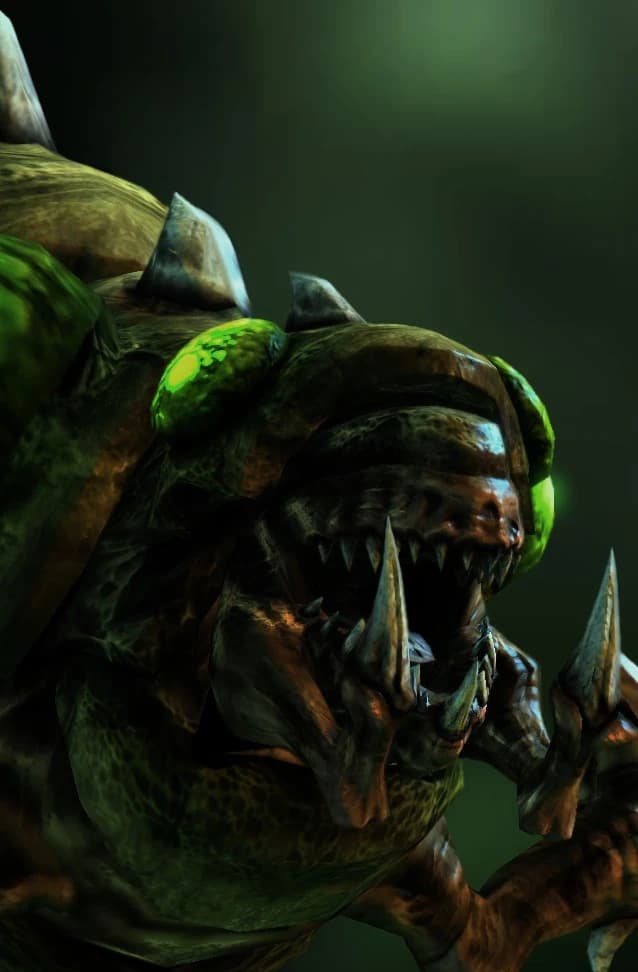
Baneling
The baneling was an explosive zerg strain evolved from the zergling through a brief chrysalis phase, its body remade to carry sacs of highly corrosive acid. A living suicide bomber, the baneling ruptured among enemy formations in a shower of searing acid that devastated both structures and ground forces.
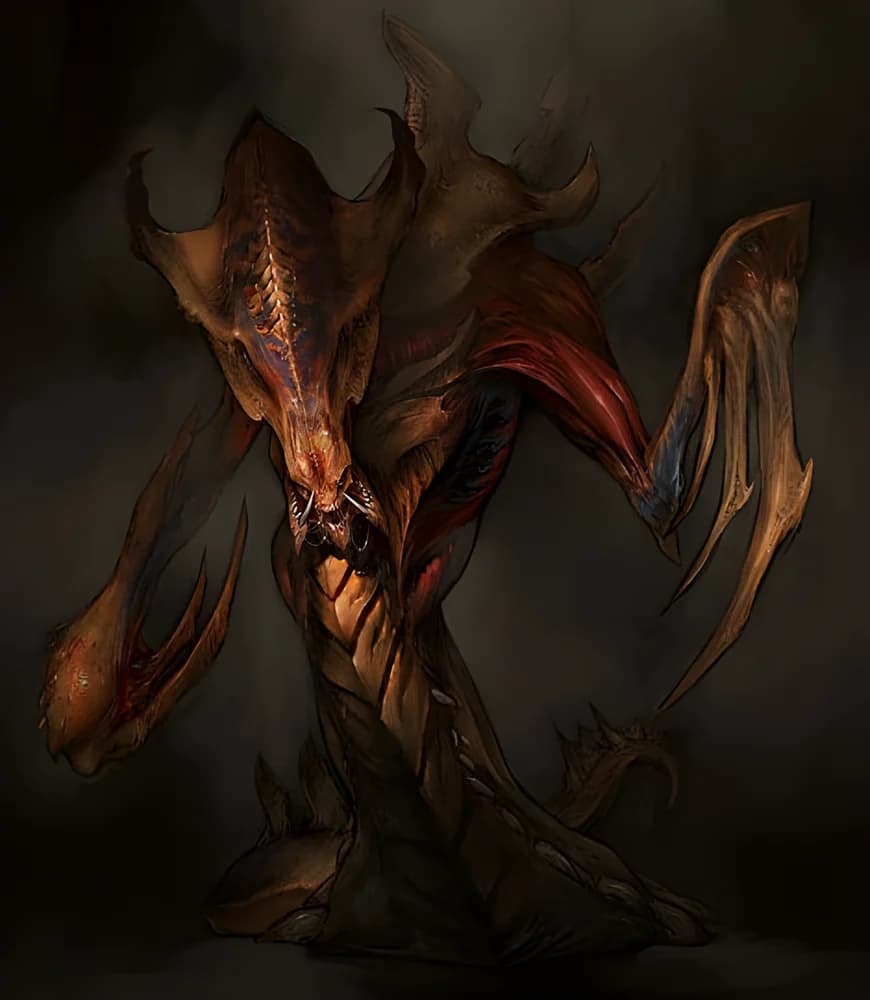
Hydralisk
The hydralisk was a versatile zerg combat strain evolved from the peaceful slothien, armored in carapace plates and able to launch volleys of armor-piercing spines from its upper body. Forming the backbone of the Swarm's onslaughts, the hydralisk symbolized zerg power to terrans more than any other strain.
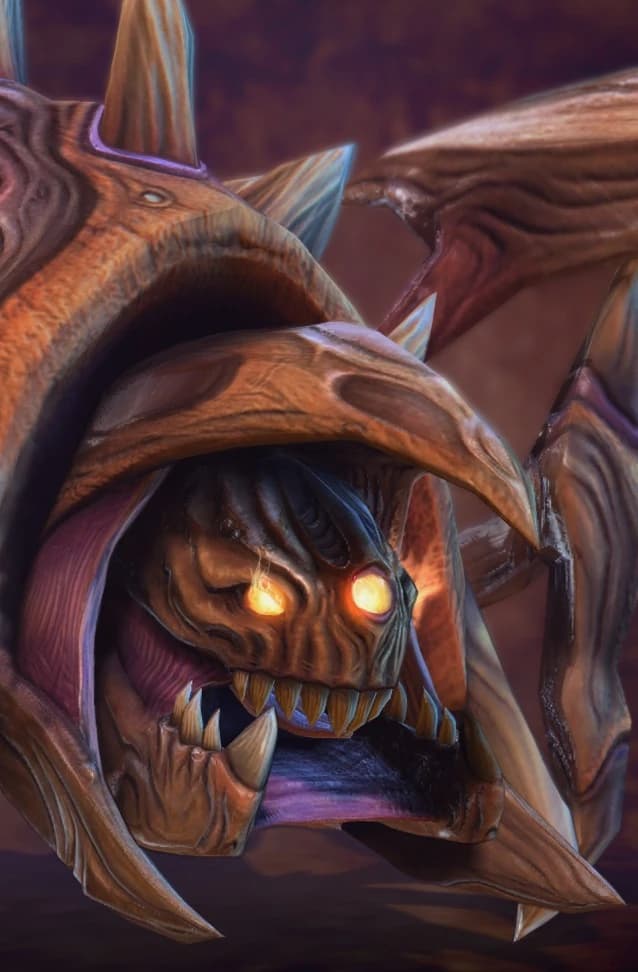
Roach
The roach was a heavily armored zerg ground strain evolved from the fast-healing zantar slug, able to spit corrosive acid and regenerate grievous wounds at high speed while burrowed. Tough and nearly impervious to small-arms fire, the roach anchored the Swarm's ground assaults alongside the zergling.

Zerg
The zerg are a ravenous collective of biologically advanced aliens who evolve by assimilating the essence of other species in pursuit of genetic perfection. Created by Amon's xel'naga on Zerus and bound to the Overmind, they grew into one of the three dominant powers of the galaxy.
Every Zerg Unit in StarCraft and StarCraft II, Explained
Every zerg strain from StarCraft, Brood War and the three StarCraft II campaigns, from the zergling to the leviathan. Each entry covers the species it came from, what it does for the Swarm and where it turns up in the story.

Brood War: Kerrigan's war for the Swarm
The Brood War was a zerg civil war between Kerrigan and the cerebrate Daggoth over who would succeed the Overmind. The UED invaded from Earth at the same time.
Mentioned in14 entries
2505: the year the Second Great War ended
2505 was the year in which the second phase of the Second Great War was fought across the Koprulu sector. It saw Sarah Kerrigan rebuild the Zerg Swarm, the death of Emperor Arcturus Mengsk at the Battle of Korhal, and the zergling outbreak that destroyed the Blackstone facility.
Baneling
The baneling was an explosive zerg strain evolved from the zergling through a brief chrysalis phase, its body remade to carry sacs of highly corrosive acid. A living suicide bomber, the baneling ruptured among enemy formations in a shower of searing acid that devastated both structures and ground forces.
Defiler
The defiler is a rare, silverfish-like Zerg breed that synthesizes virus-like biochemicals from the leftover genetic material of other strains, shrouding allies in living swarms and corroding enemies beneath toxic plague clouds.
Elms: mercenary marine and hidden psychic
Elms was a terran mercenary marine with a cybernetic arm and a psionic gift she kept hidden from those around her. Hired for a crooked salvage operation on Adena, she fought her way through a zerg ambush, exposed the officers who abandoned her, and killed them all rather than accept a leash from anyone.
English: the common tongue of terran humanity
English was a West Germanic language of Earth that the United Powers League designated as the common language of the planet in the twenty-third century. Carried into the Koprulu sector by the exiled colonists, it was sometimes called Terran there, and it grew a vocabulary of frontier slang, military shorthand, and new units of time and measure that no speaker of earlier centuries would have recognized.
Every Zerg Unit in StarCraft and StarCraft II, Explained
Every zerg strain from StarCraft, Brood War and the three StarCraft II campaigns, from the zergling to the leviathan. Each entry covers the species it came from, what it does for the Swarm and where it turns up in the story.
Feral Zerg
Feral zerg were zerg that had fallen outside the control of any higher entity, reverting to predatory instinct and attacking everything around them. Drawn to psionic emanations and able to survive without creep, they recurred across the Koprulu Sector wherever a cerebrate, broodmother, or the will of Kerrigan was lost.
Hatchery: foundational structure of every zerg colony
The hatchery was the living heart of every zerg colony, spreading creep, birthing larvae, and digesting minerals and vespene gas into nutrients for the Swarm. Grown from a single metamorphosed drone, it could mature into a lair and finally a hive, and the zerg defended it with fanatical zeal.
Hive: apex structure of the Zerg Swarm
The hive was the primary structure of the zerg and the final evolution of the hatchery, unlocking the last stages of the Swarm's development. Shielded by a dense exoskeleton and joined to the Overmind's full pool of knowledge, it gave the being that commanded it the power to loose the full fury of the zerg.
Project Blackstone: the Dominion's secret xenoscience program
Project Blackstone was a classified Terran Dominion research program ordered by Arcturus Mengsk to unlock the secrets of the zerg and protoss. Conscripted scientists laboured on a hidden asteroid installation until a zergling outbreak nearly killed them all, and Valerian Mengsk rebuilt the project aboard the science vessel Brin.
Queen
The queen is a Zerg support strain derived from the Arachnis brood-keeper, bred to administrate hive clusters, oversee maturing broods, and serve as an infestation specialist. Two distinct forms exist across the history of the Swarm, the flying Great War queen and the ground-bound hive-master engineered after the Brood War.
Roach
The roach was a heavily armored zerg ground strain evolved from the fast-healing zantar slug, able to spit corrosive acid and regenerate grievous wounds at high speed while burrowed. Tough and nearly impervious to small-arms fire, the roach anchored the Swarm's ground assaults alongside the zergling.
+ 2 more
Get new articles in your inbox
No spam. New lore drops, canon conflicts, and deep dives only when they’re worth reading.
Some links on Lore Fortress are affiliate links. If you buy through them we earn a small commission at no extra cost to you.