Roach
Armored Regenerating Strain of the Swarm
The roach was a heavily armored zerg ground strain evolved from the fast-healing zantar slug, able to spit corrosive acid and regenerate grievous wounds at high speed while burrowed. Tough and nearly impervious to small-arms fire, the roach anchored the Swarm's ground assaults alongside the zergling.
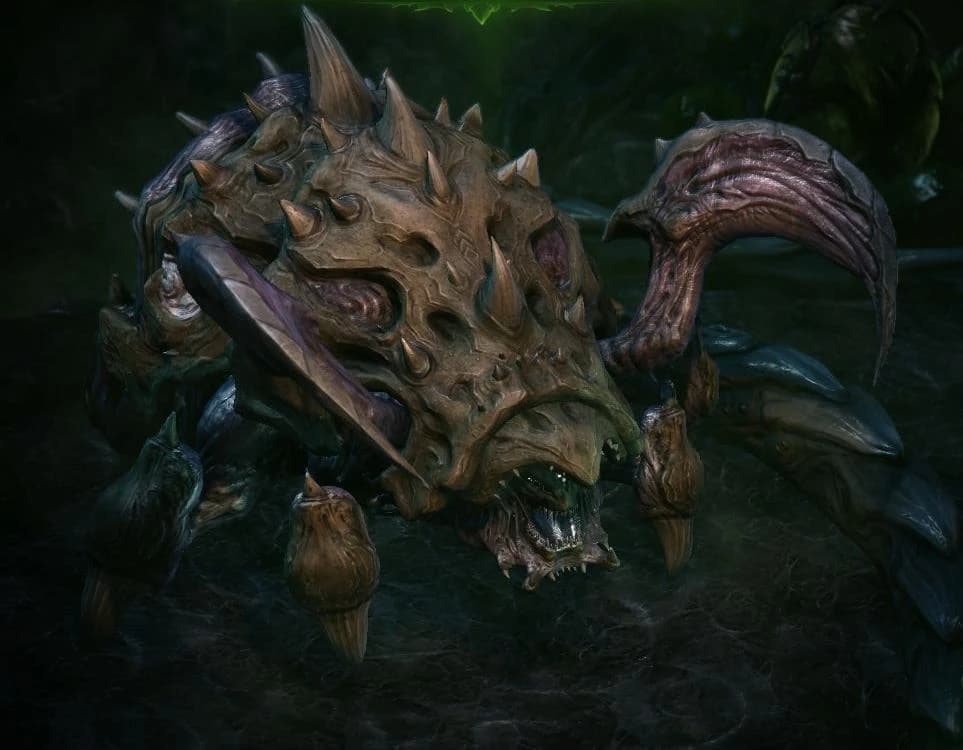
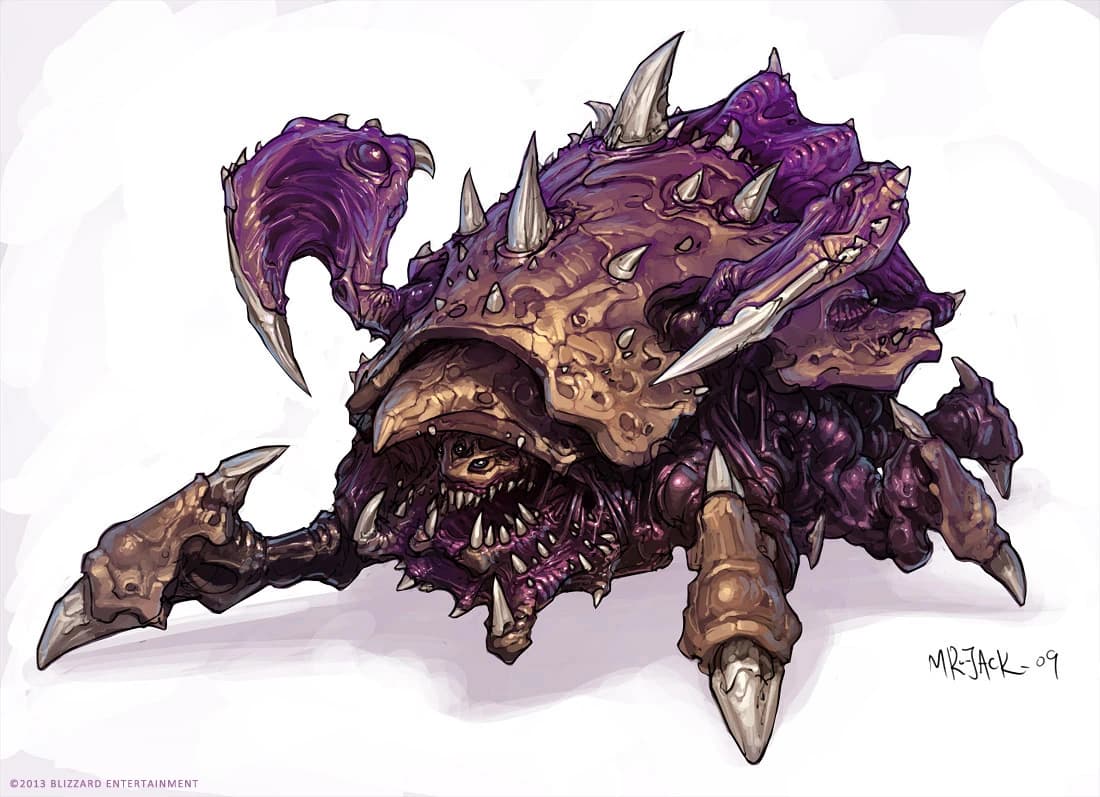
The roach was a heavily armored ground strain of the zerg, notable for its thick carapace, its corrosive acid attack, and its ability to regenerate grievous wounds at high speed while burrowed. Evolved from the fast-healing zantar slug of Garrxax, the roach was nearly impervious to small-arms fire and nigh immune to flame-based weapons, making explosives and artillery a necessity for terran forces in the Koprulu Sector when these creatures were deployed. (Units: Roach; StarCraft: Ghost Academy, Volume 3)
Origin and physiology#
The roach evolved from the fast-healing zantar slug of Garrxax and was in use by 2501, taking part in a battle on Shi. A particularly tough, armored breed, it required dark, humid conditions to properly form, such as those found in a roach warren. Its metabolism was ten times greater than that of the zantar slug, increased through assimilation, and it had gained the ability to quickly regenerate even the most grievous wounds while burrowed. This regeneration worked through a process known as osmotic epithelium, and was driven in part by the constant breakdown of the roach's own modified pharynx, a natural byproduct of the zerg's acid production that the Swarm turned to its advantage to speed regrowth. (Units: Roach; StarCraft: Ghost Academy, Volume 3; StarCraft II: Legacy of the Void; StarCraft Field Manual; Project Blackstone)
The absorption of soil compounds, especially rare earths and metals, allowed roaches to develop extremely thick carapaces. Some Dominion scientists theorized that the roach was not immune to the ravages of its own acidic body fluids, and that its potent regeneration ensured tissue integrity in spite of constant corrosion. The roach's thoracic acid bladder, similar to organelles found in mutalisks, was triggered to erupt when penetrated. (Units: Roach; Project Blackstone)
Attacks#
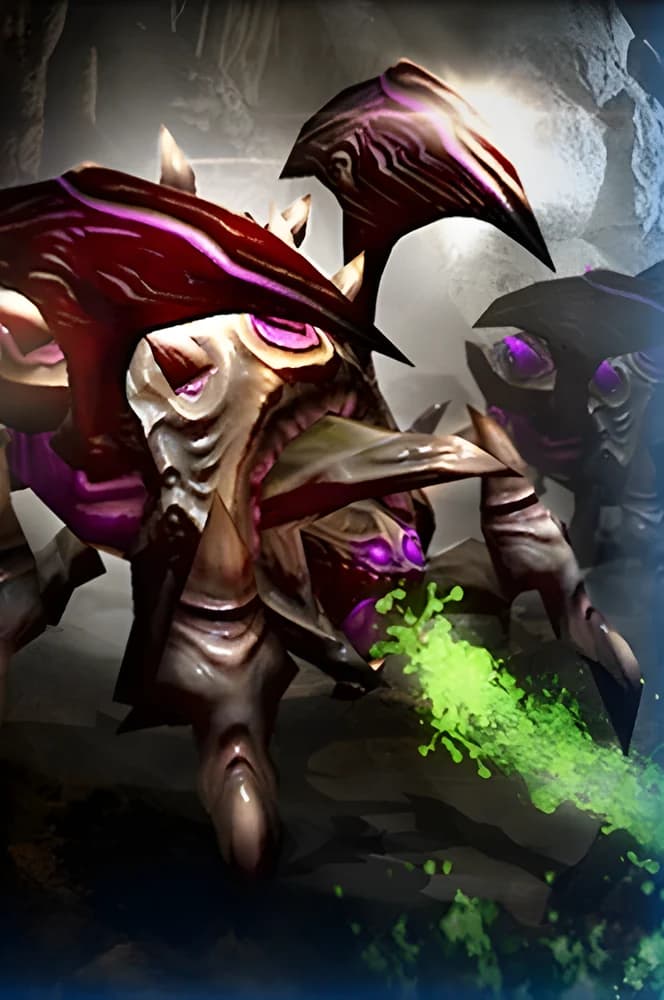
The roach's ranged attack was a corrosive acid saliva, derived from the zantar slug and capable of penetrating neosteel and armor while violently dissolving flesh at multiple entry points. The saliva was expelled with considerable force through the muscles surrounding the roach's salivary glands, highly specialized striated ducts that produced a unique enzyme to weaponize the creature's already corrosive saliva. This acid contained viroids that propagated through a victim's nervous system, which could be addressed only through heavy bacteriophage treatments or by removal of the affected limb. Owing to their heavy armor, roaches could not aim their acid at aerial targets. (StarCraft Field Manual; Acid Burns)
If pressed into close quarters, the roach used scythe-like blades on its back to dispatch the enemy, their hardness allowing them to cut through neosteel and armor with ease. (Units: Roach; StarCraft Field Manual)
Tactics and refinement#
One on one, few opponents were capable of taking on a roach and winning. Roaches were deployed when zerglings began to be thinned out and were sometimes supported by infestors. When paired with zerglings they could prove nearly unstoppable against terran infantry lacking siege tank or bunker support, and because they were nearly impervious to small-arms fire and nigh immune to flame-based weapons, explosives and artillery were a must for terran forces facing them. That staying power gave it a distinct job among the Swarm's other combat strains. (Units: Roach; Overview: Zerg; StarCraft: Ghost: Spectres)
Roaches enslaved by the Cerberus Program had their carapaces enhanced with a carbon fiber nanoweave and their offensive capabilities improved with forged titanium blades. After the ascension of Zagara to supreme ruler of the Swarm, Abathur was ordered to continue experimenting with the roach genome in a continuing pursuit of perfection, resulting in further variant strains. Sometime after the Second Great War, roaches gained the ability to evolve into ravagers, a fierce artillery strain that lobbed corrosive bile at long range. (StarCraft II: Legacy of the Void)
Frequently asked questions
- What is a roach in StarCraft?
- The roach was a heavily armored ground strain of the zerg, notable for its thick carapace, its corrosive acid attack, and its ability to regenerate grievous wounds at high speed while burrowed. It was nearly impervious to small-arms fire and nigh immune to flame-based weapons.
- What did the roach evolve from?
- The roach evolved from the fast-healing zantar slug of Garrxax and was in use by 2501. Its metabolism was ten times greater than that of the zantar slug, increased through assimilation.
- How does a roach regenerate so quickly?
- Its regeneration worked through a process known as osmotic epithelium, combined with a metabolism ten times that of the zantar slug, letting it quickly heal even the most grievous wounds while burrowed. The absorption of soil compounds, especially rare earths and metals, also gave it an extremely thick carapace.
- How does a roach attack?
- Its ranged attack was a corrosive acid saliva derived from the zantar slug, capable of penetrating neosteel and armor and carrying viroids that propagated through a victim's nervous system. In close quarters it used scythe-like blades on its back, hard enough to cut through neosteel and armor with ease.
- What can a roach evolve into?
- Sometime after the Second Great War, roaches gained the ability to evolve into ravagers, a fierce artillery strain that lobbed corrosive bile at long range. After Zagara's ascension, Abathur was ordered to continue experimenting with the roach genome, resulting in further variant strains.
Gallery
Images via StarCraft Wiki
Sources
- GameStarCraft II: Legacy of the Void, Blizzard Entertainment, 2015
- BookStarCraft Field Manual, Rick Barba, Insight Editions, 2015
- BookStarCraft: Ghost: Spectres, Nate Kenyon, Pocket Star, 2011
- WebUnits: Roach, Blizzard Entertainment, StarCraft II website, 2010
- WebProject Blackstone, Blizzard Entertainment, StarCraft II website, 2013
- WebAcid Burns, Antony Johnston, Blizzard Entertainment short story, 2013
- ComicStarCraft: Ghost Academy, Volume 3, David Gerrold (w), Fernando Heinz Furukawa (a), Tokyopop, 2011
- WebOverview: Zerg, Blizzard Entertainment, StarCraft II website, 2010
Spotted a factual error or a primary source we missed? Email a correction. Every flagged claim gets reviewed.
Followed from this entry
Mutalisk
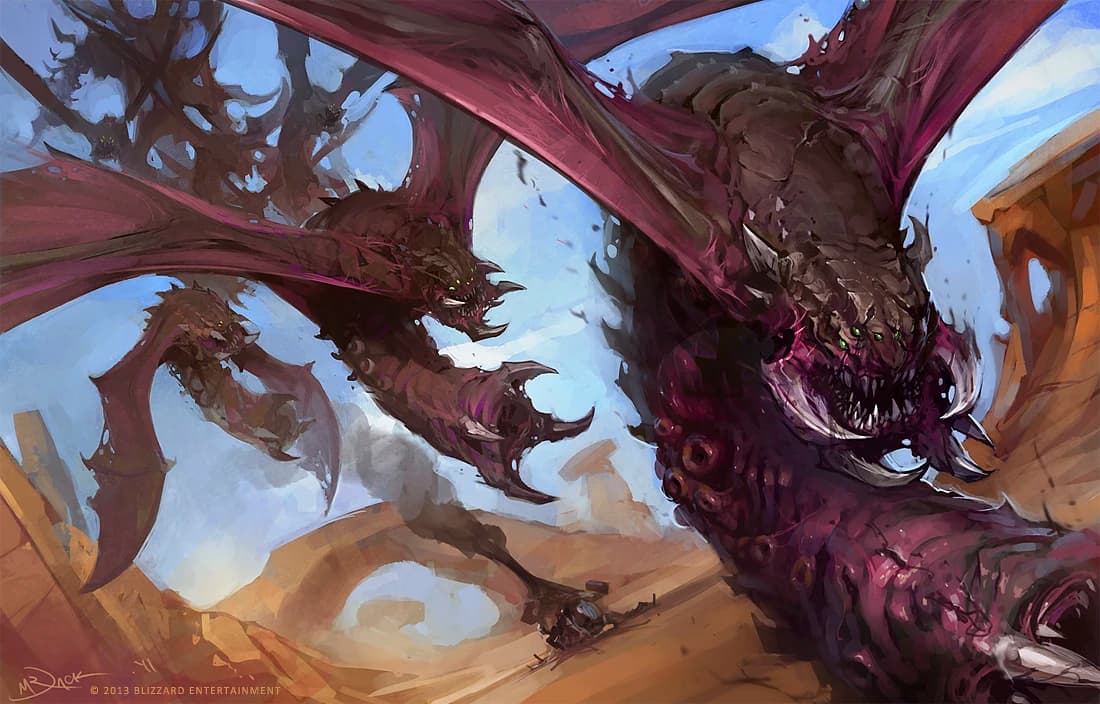
The mutalisk was the primary airborne strain of the zerg, evolved from the mantis screamer and able to travel through atmosphere and deep space alike. Communicating by scent and attacking with parasitic glaive wurms, mutalisks wheeled across the skies in vast numbers over zerg nests and forces.

Zerg
The zerg are a ravenous collective of biologically advanced aliens who evolve by assimilating the essence of other species in pursuit of genetic perfection. Created by Amon's xel'naga on Zerus and bound to the Overmind, they grew into one of the three dominant powers of the galaxy.
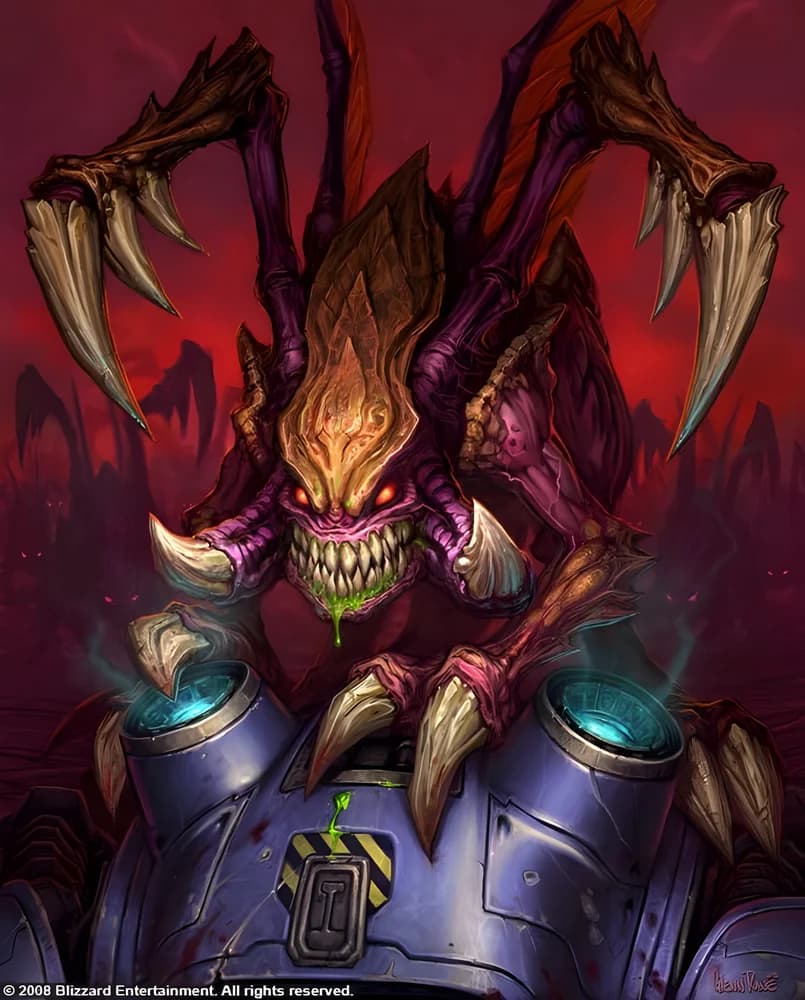
Zergling
The zergling was the most numerous warrior strain of the zerg, a fast, sickle-clawed creature evolved from the Zz'gashi dune runner and spawned two at a time from a single larva. Zerglings served as the Swarm's frontline assault troops, overwhelming foes through sheer weight of numbers.
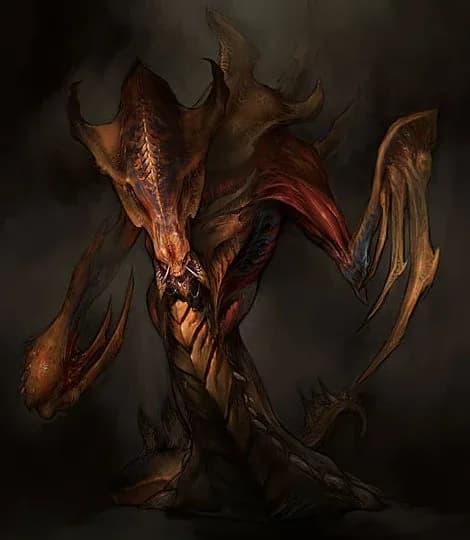
Every Zerg Unit in StarCraft and StarCraft II, Explained
Every zerg strain from StarCraft, Brood War and the three StarCraft II campaigns, from the zergling to the leviathan. Each entry covers the species it came from, what it does for the Swarm and where it turns up in the story.
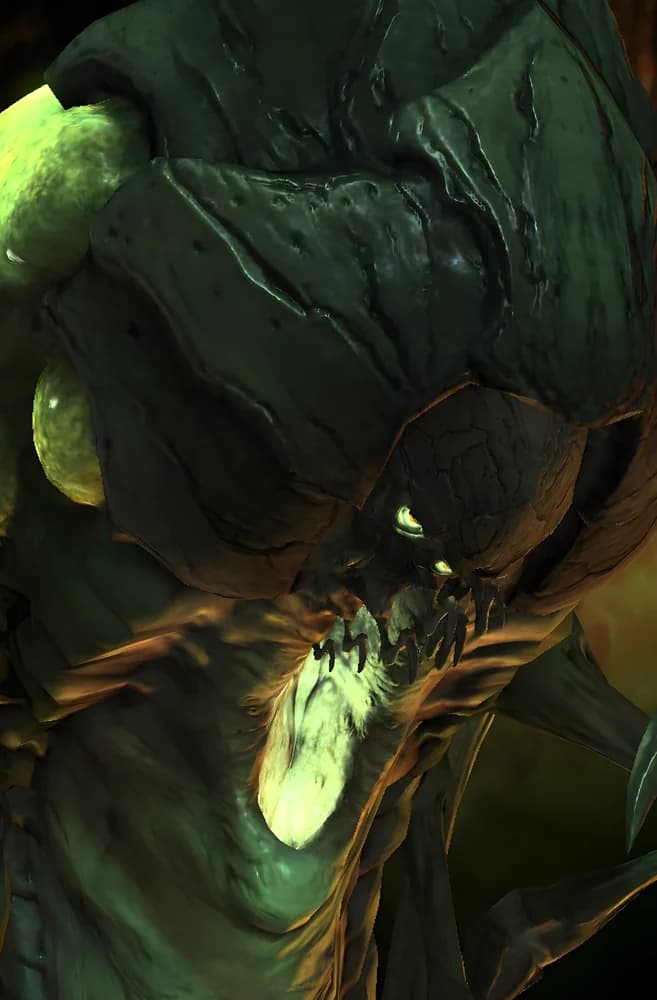
Abathur: the Swarm's living DNA library
Spun from many species by the Overmind, Abathur designed the Queen of Blades. He later betrayed Zagara to restart the wars he thought zerg needed.

Second Great War: Swarm vs Dominion, 2504
The Second Great War broke out in 2504 and ended on Korhal with Arcturus Mengsk dead at Kerrigan's hand. Deinfesting her mid-war let the xel'naga Amon return.
Mentioned in3 entries
Every Zerg Unit in StarCraft and StarCraft II, Explained
Every zerg strain from StarCraft, Brood War and the three StarCraft II campaigns, from the zergling to the leviathan. Each entry covers the species it came from, what it does for the Swarm and where it turns up in the story.
Vespene gas
Vespene gas was a hydrocarbon compound and the most plentiful high-performance fuel in the galaxy, one of the foundational resources of the Koprulu sector. Prized by terrans for its energy rating, consumed raw by the zerg, and used by the protoss to power their psi-driven machines, it fueled the wars and economies of three races.
Zergling
The zergling was the most numerous warrior strain of the zerg, a fast, sickle-clawed creature evolved from the Zz'gashi dune runner and spawned two at a time from a single larva. Zerglings served as the Swarm's frontline assault troops, overwhelming foes through sheer weight of numbers.
Get new articles in your inbox
No spam. New lore drops, canon conflicts, and deep dives only when they’re worth reading.
Some links on Lore Fortress are affiliate links. If you buy through them we earn a small commission at no extra cost to you.