Mutalisk
Airborne Strain of the Swarm
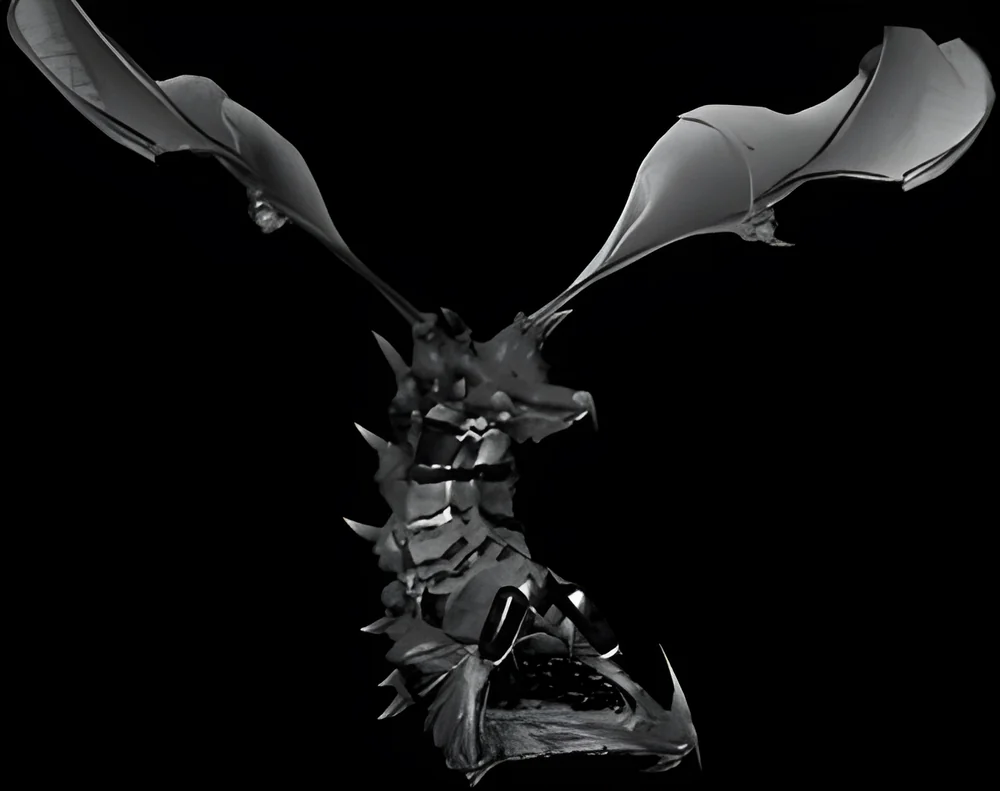
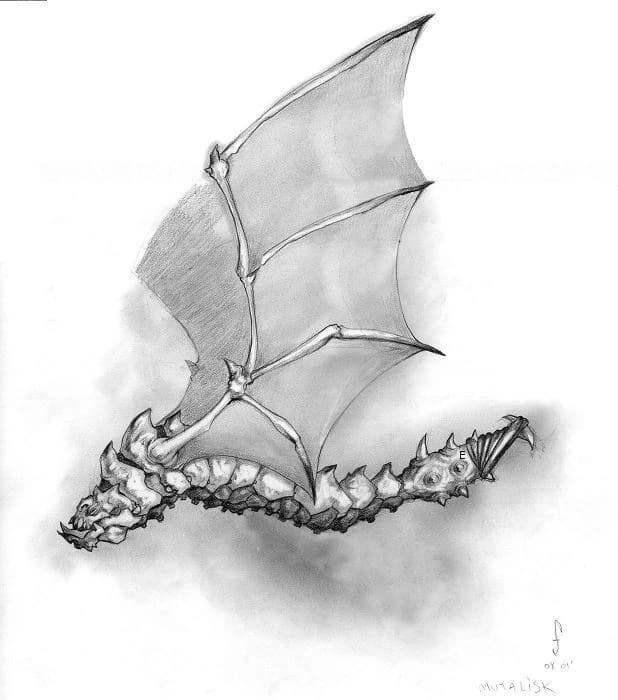
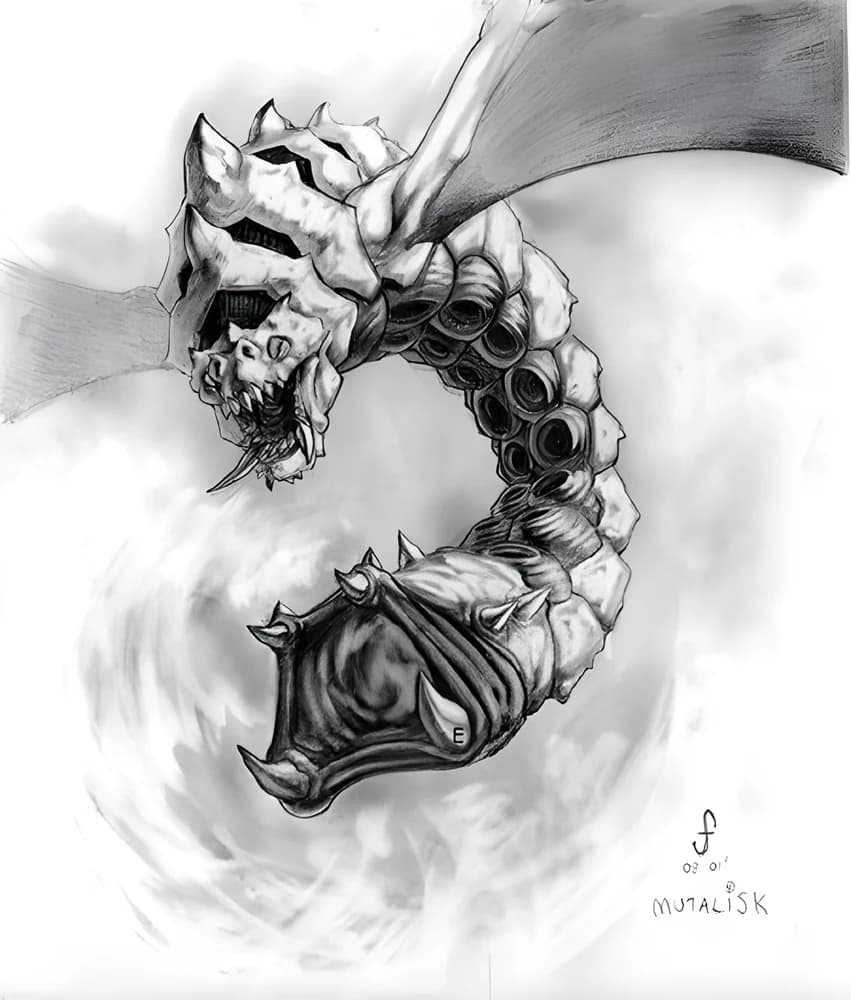
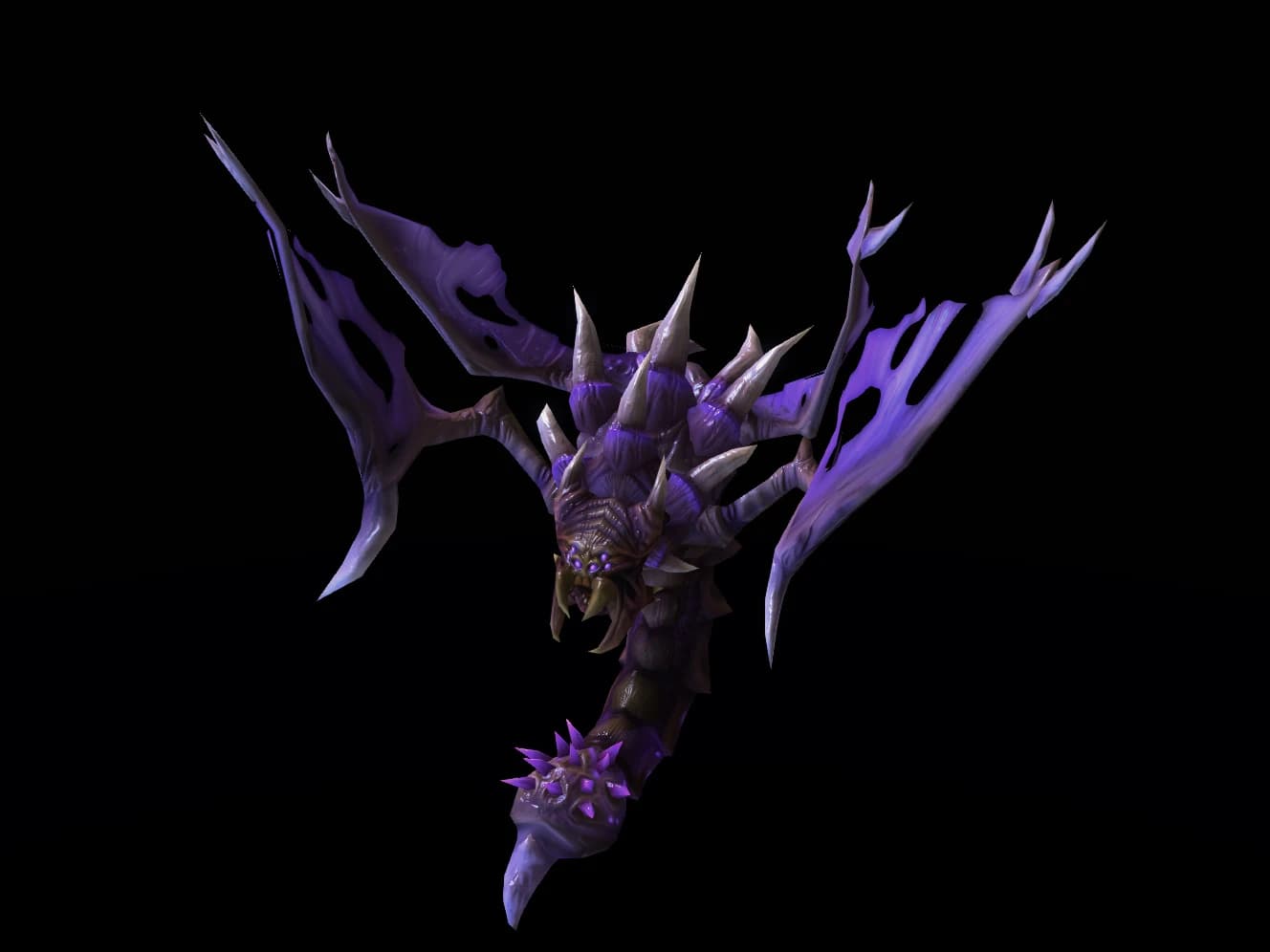
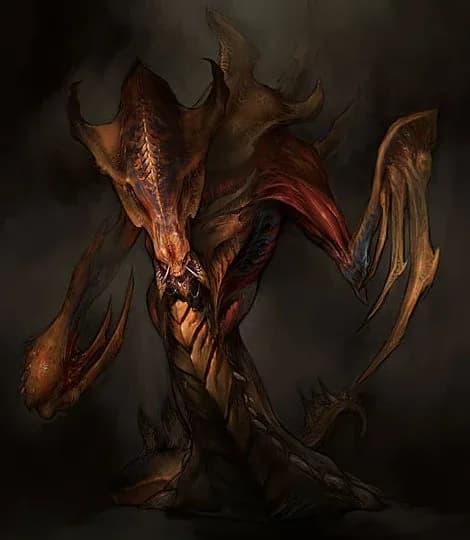
The mutalisk was the primary airborne strain of the zerg, evolved from the mantis screamer and able to travel through atmosphere and deep space alike. Communicating by scent and attacking with parasitic glaive wurms, mutalisks wheeled across the skies in vast numbers over zerg nests and forces.
The mutalisk was the primary airborne strain of the zerg, an annelid-like flying creature evolved from the mantis screamer and capable of travel through both atmosphere and the vacuum of deep space. Terrans across the Koprulu Sector occasionally called them "mutas." Forming the main flying forces of the Swarm, mutalisks made hit-and-run attacks against vulnerable installations and wheeled across the skies in prodigious numbers above zerg nests and land-based forces. (StarCraft; StarCraft II: Wings of Liberty; StarCraft #1; Mutalisk (StarCraft II official site))
Origin and physiology#
The mutalisk was evolved from the mantis screamer of the desolate Dinares sector. An average mutalisk of the Second Great War measured roughly seven meters long, 1.25 meters tall, and 2.5 meters wide, and possessed a total of eight eyes. It communicated in part through scent, producing different musks from its biological processes, and stored the gaseous byproducts of those processes in special sacs throughout its body. Its sense of smell let it remain keenly aware of other organisms, detecting blood from over two kilometers away. (StarCraft; Mutalisk (StarCraft II official site); Carrier; StarCraft Field Manual; Frenzy)
Mutalisks had little instinct for self-preservation and lived only a few years, their drive even in a feral state being to preserve the life of their spire. They could be whipped into a frenzied state that Terran Dominion scientists called the Higgs-Davis paroxysm behavioral model, in which a swarm acted as a single collective spire and rushed its prey with single-minded fury. The strain was not especially intelligent and exercised little initiative, preferring to drift lazily through the air until engaged, at which point it demonstrated a blind bloodlust dangerous even to itself. When feral, mutalisks attacked in hunting parties of five or more, ranging over a hundred kilometers from their spire in search of nourishment, a pattern that made feral spires possible to locate. (Frenzy; Alternity: StarCraft Edition)
Flight and deep space travel#
Mutalisks were carried aloft by leathery wings that afforded them astonishing speed and maneuverability in atmospheric flight, with the motion of the wings also generating energy that served as a catalyst for the creature's internal biological functions. Like the mantis screamer, mutalisks could travel through space, and the rigors of deep space were a natural part of the strain's life. For such travel the skin of its annelid-like body took on a gelatinous consistency, compacting its organs and circulatory system to prevent damage from external pressure. The mutalisk propelled itself through the vacuum by excreting a gas. Even within a vacuum it never stopped flapping its wings, which Dominion scientists determined to be a leftover instinct unrelated to its actual locomotion. (Mutalisk (StarCraft II official site))
To survive in deep space the mutalisk became wholly self-sufficient. Every cell in its body hosted countless bacteria that produced or assimilated chemicals to generate compounds for sustenance, and new strains presented genetic alterations to this cellular flora that allowed more efficient bio-processes, in some cases extending to tissue-regenerating capabilities. (Mutalisk (StarCraft II official site))
Attacks#
In battle, mutalisks formed the primary flying forces of the zerg, making hit-and-run attacks against vulnerable installations and gathering in prodigious numbers above zerg nests and forces. Many engagements collapsed under the rapid arrival of large numbers of mutalisks before any meaningful air defense could be mustered, after which the total loss of the forces involved was virtually guaranteed. Powerful air defenses could keep them at a distance, for the creatures were limited in vitality, but in large numbers or against weak defenses they could ravage entire armies. Mutalisks made up a vast number of the Leviathan Brood's forces, said to function as one mind in battle, a singular mass that blacked out the sky. (StarCraft; Mutalisk (StarCraft II official site); StarCraft II War Chest)
The mutalisk's primary weapon was the glaive wurm, a small, voracious creature it spawned and projected at its targets. Glaive wurms flew between multiple targets as they degraded explosively, and the mutalisk's reproductive system, its ovipositor, had been adapted into this weapon delivery system. The mutalisk's fangs were also deadly, and its blood was acidic when exposed to atmosphere, able to melt through even CMC armor as it broke down into a fluoroantimonic compound when the carapace was compromised. This same blood was injurious to the mutalisk itself, and its wings were exceptionally fragile, able to be shredded even by glass, making the wings a viable target for terrans seeking to bring one down. Most mutalisks could develop a tolerance to their spire-mates' corrosive blood but could not gain immunity to their own. (StarCraft; Frenzy; StarCraft: Speed of Darkness; StarCraft #5)
Evolutions and refinement#
Mutalisks were among the most adaptable zerg subspecies. Since before the Great War the strain could evolve into guardians, based on the nesting form of the mantis screamer, and during the Brood War it gained the ability to evolve into the devourer, allowing it to engage capital ships. Both evolutions were retained until the Second Great War before disappearing from the mutalisk genome, though many guardians and devourers remained in the sector. In the later stages of that conflict Abathur created strains of mutalisk that could mutate into brood lords and vipers. After the Battle of Tyrador IX, mutalisks of the Cerberus Program assimilated traits of the Tyrador gigabat, gaining echolocative hunting behavior. (StarCraft; StarCraft: Brood War; StarCraft II: Heart of the Swarm; StarCraft II War Chest)
On rare occasions, fewer than one in a million, a mutalisk known as a "Big Fish" or "Canny Mutalisk" would develop a true immunity to its own acidic blood. The Terran Dominion Special Research Ops sought such a specimen so that a mutalisk could finally be dissected, the acidic blood having long frustrated their attempts. One was eventually captured on Choss and transported in a coldbox to Project Blackstone. (Frenzy; Project Blackstone)
Frequently asked questions
- What is a mutalisk?
- The mutalisk was the primary airborne strain of the zerg, an annelid-like flying creature evolved from the mantis screamer and capable of travel through both atmosphere and the vacuum of deep space. Terrans across the Koprulu Sector occasionally called them "mutas."
- How does a mutalisk attack?
- The mutalisk's primary weapon was the glaive wurm, a small voracious creature spawned from its adapted ovipositor that flew between multiple targets as it degraded explosively. Its fangs were also deadly, and its acidic blood could melt through even CMC armor when its carapace was compromised, though that same blood was injurious to itself.
- How does a mutalisk survive in deep space?
- To survive in deep space the mutalisk became wholly self-sufficient, with every cell in its body hosting bacteria that produced or assimilated chemicals to generate compounds for sustenance. It propelled itself through the vacuum by excreting an odorless gas, while its leathery wings carried it through atmosphere at great speed.
- What can a mutalisk evolve into?
- Since before the Great War the strain could evolve into guardians, and during the Brood War it gained the ability to evolve into the devourer to engage capital ships. In the later stages of the Second Great War Abathur created strains of mutalisk that could mutate into brood lords and vipers.
- What is a "Big Fish" or "Canny Mutalisk"?
- On rare occasions, fewer than one in a million, a mutalisk known as a "Big Fish" or "Canny Mutalisk" would develop a true immunity to its own acidic blood. The Terran Dominion Special Research Ops sought such a specimen so a mutalisk could finally be dissected, and one was eventually captured on Choss and transported to Project Blackstone.
Gallery
Images via StarCraft Wiki
Sources
- GameStarCraft, Blizzard Entertainment, 1998
- GameStarCraft: Brood War, Blizzard Entertainment, 1998
- GameStarCraft II: Wings of Liberty, Blizzard Entertainment, 2010
- GameStarCraft II: Heart of the Swarm, Blizzard Entertainment, 2013
- GameStarCraft II War Chest, Blizzard Entertainment, Collections skin descriptions, 2017
- WebMutalisk (StarCraft II official site), Blizzard Entertainment, 2008 to 2014
- WebFrenzy, Kal-El Bogdanove, Blizzard Entertainment short story, 2013
- WebCarrier, Michael Kogge, Blizzard Entertainment short story, 2013
- WebProject Blackstone, Blizzard Entertainment viral campaign, 2013
- BookStarCraft: Speed of Darkness, Tracy Hickman, Pocket Star, 2002
- BookStarCraft Field Manual, Rick Barba, Insight Editions, 2015
- BookAlternity: StarCraft Edition, Bill Slavicsek, David Eckelberry and Shawn F. Carnes, Wizards of the Coast, 2000
- ComicStarCraft #1, Keith Giffen and Simon Furman (w), Federico Dallocchio (a), DC Comics (Wildstorm), 2009
- ComicStarCraft #5, Simon Furman (w), Federico Dallocchio and Carlos D'Anda (a), DC Comics (Wildstorm), 2009
Spotted a factual error or a primary source we missed? Email a correction. Every flagged claim gets reviewed.
Followed from this entry

Zerg
The zerg are a ravenous collective of biologically advanced aliens who evolve by assimilating the essence of other species in pursuit of genetic perfection. Created by Amon's xel'naga on Zerus and bound to the Overmind, they grew into one of the three dominant powers of the galaxy.
Every Zerg Unit in StarCraft and StarCraft II, Explained
Every zerg strain from StarCraft, Brood War and the three StarCraft II campaigns, from the zergling to the leviathan. Each entry covers the species it came from, what it does for the Swarm and where it turns up in the story.
Abathur: the Swarm's living DNA library
Spun from many species by the Overmind, Abathur designed the Queen of Blades. He later betrayed Zagara to restart the wars he thought zerg needed.

Brood War: Kerrigan's war for the Swarm
The Brood War was a zerg civil war between Kerrigan and the cerebrate Daggoth over who would succeed the Overmind. The UED invaded from Earth at the same time.

Great War: protoss against zerg over Aiur
The Great War was the first open fight between protoss and zerg, with the terrans caught between them. It ended over Aiur with the Overmind destroyed.
Leviathan
The leviathan was a massive airborne zerg breed that served as the Swarm's equivalent of a capital ship. Measured at around eleven kilometers long and capable of deep-space and warp travel, it became Sarah Kerrigan's mobile base of operations after her return to the zerg.
Mentioned in14 entries
2505: the year the Second Great War ended
2505 was the year in which the second phase of the Second Great War was fought across the Koprulu sector. It saw Sarah Kerrigan rebuild the Zerg Swarm, the death of Emperor Arcturus Mengsk at the Battle of Korhal, and the zergling outbreak that destroyed the Blackstone facility.
Baneling
The baneling was an explosive zerg strain evolved from the zergling through a brief chrysalis phase, its body remade to carry sacs of highly corrosive acid. A living suicide bomber, the baneling ruptured among enemy formations in a shower of searing acid that devastated both structures and ground forces.
Brood Lord
The brood lord is a massive manta-like Zerg flyer morphed from the corruptor, used by the Swarm as an aerial siege creature that rains living broodlings down onto ground targets. It serves only in the largest of conflicts.
Corruptor
The corruptor is a squid-like Zerg flyer bred to destroy enemy aircraft and capital ships, dousing its targets in corrosive parasite spores and capable of morphing into the brood lord once the Swarm wins the skies.
Devourer
The devourer was the anti-air aspect of the zerg mutalisk, slower than its parent strain but more resilient. Its attack flung corrosive acid spores that clung to enemy aircraft, weakening their armor and slowing their fire.
English: the common tongue of terran humanity
English was a West Germanic language of Earth that the United Powers League designated as the common language of the planet in the twenty-third century. Carried into the Koprulu sector by the exiled colonists, it was sometimes called Terran there, and it grew a vocabulary of frontier slang, military shorthand, and new units of time and measure that no speaker of earlier centuries would have recognized.
Every Zerg Unit in StarCraft and StarCraft II, Explained
Every zerg strain from StarCraft, Brood War and the three StarCraft II campaigns, from the zergling to the leviathan. Each entry covers the species it came from, what it does for the Swarm and where it turns up in the story.
Feral Zerg
Feral zerg were zerg that had fallen outside the control of any higher entity, reverting to predatory instinct and attacking everything around them. Drawn to psionic emanations and able to survive without creep, they recurred across the Koprulu Sector wherever a cerebrate, broodmother, or the will of Kerrigan was lost.
Guardian
The guardian was the anti-ground aspect of the zerg mutalisk, a long range artillery flier converted from an existing mutalisk. In numbers it could lay waste to a base and ground force, but it had no defense against enemy aircraft.
Ihan-rii: the protoss sect that slept for millennia and woke to reclaim Tyrador
The Ihan-rii are a fanatical protoss sect that split from their kindred millennia ago, worship the xel'naga as their ancestors, and returned from deep stasis to reclaim Arakyr, the world terrans call Tyrador IX.
Project Blackstone: the Dominion's secret xenoscience program
Project Blackstone was a classified Terran Dominion research program ordered by Arcturus Mengsk to unlock the secrets of the zerg and protoss. Conscripted scientists laboured on a hidden asteroid installation until a zergling outbreak nearly killed them all, and Valerian Mengsk rebuilt the project aboard the science vessel Brin.
Roach
The roach was a heavily armored zerg ground strain evolved from the fast-healing zantar slug, able to spit corrosive acid and regenerate grievous wounds at high speed while burrowed. Tough and nearly impervious to small-arms fire, the roach anchored the Swarm's ground assaults alongside the zergling.
+ 2 more
Get new articles in your inbox
No spam. New lore drops, canon conflicts, and deep dives only when they’re worth reading.
Some links on Lore Fortress are affiliate links. If you buy through them we earn a small commission at no extra cost to you.