Baneling
Living Explosive of the Swarm
The baneling was an explosive zerg strain evolved from the zergling through a brief chrysalis phase, its body remade to carry sacs of highly corrosive acid. A living suicide bomber, the baneling ruptured among enemy formations in a shower of searing acid that devastated both structures and ground forces.
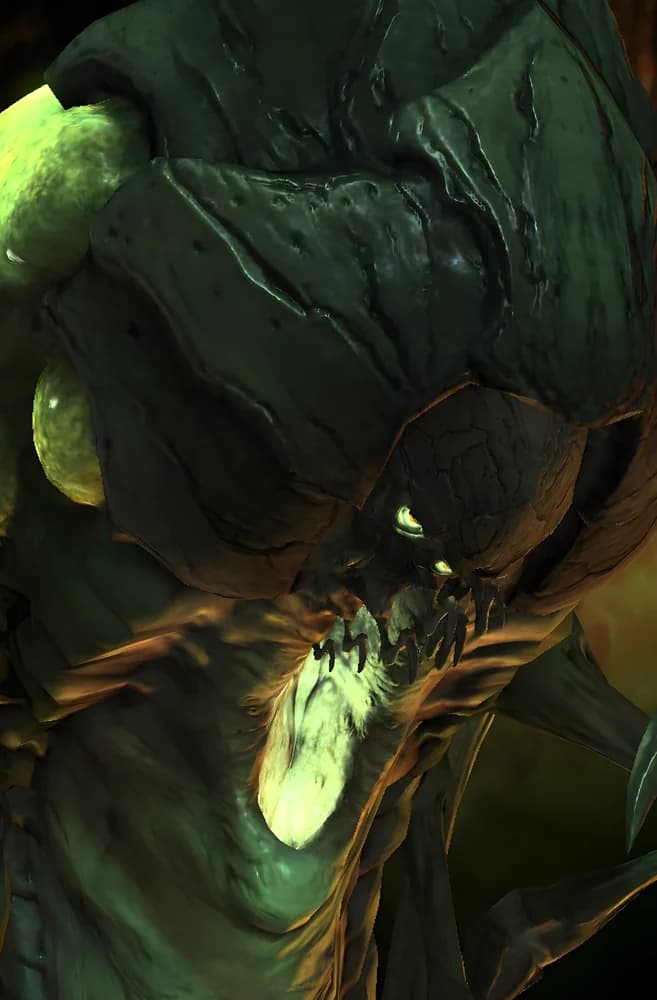
The baneling was an explosive strain of the zerg, a living suicide bomber evolved from the zergling through a brief chrysalis phase. Its body was remade to carry sacs of highly corrosive acid, and when it reached an enemy it triggered a reaction within that volatile payload, rupturing in a shower of searing acid that devastated structures and ground forces alike. First encountered during the zerg campaigns on Sorona in the Koprulu Sector, the baneling became a feared and instantly recognizable threat. (StarCraft II unit profile: Baneling; StarCraft: Ghost: Spectres)
Transformation from the zergling#
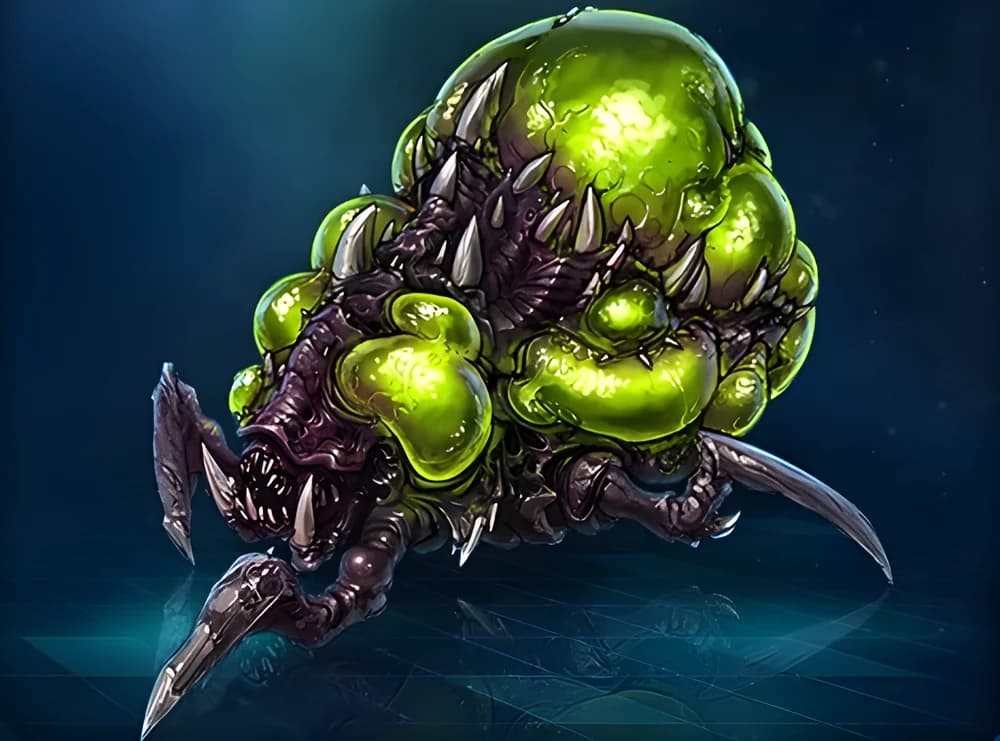
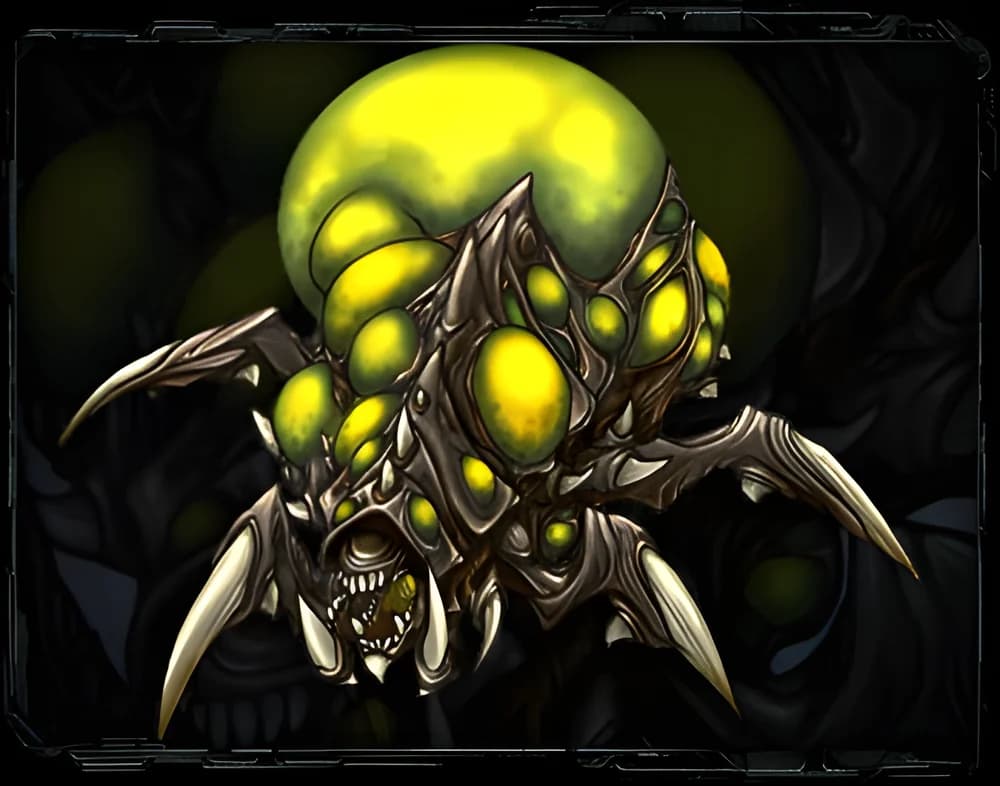
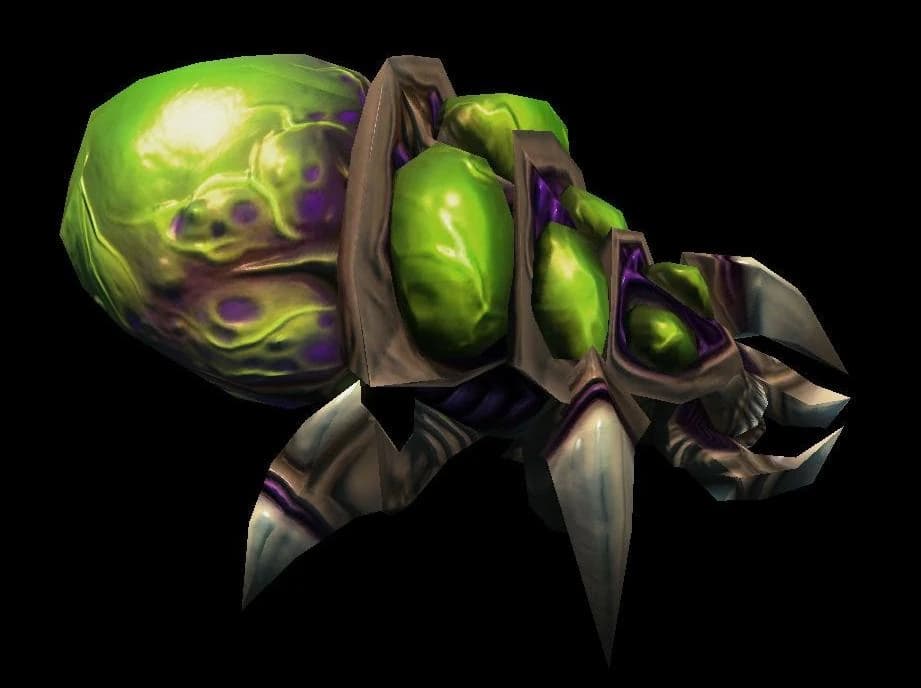
Banelings were created from zerglings following a brief chrysalis phase. In the new form, the zergling's claws shriveled and became withered, while a swollen sac filled with volatile chemicals grew out of its back. The zergling's skin was repurposed, stretching over newly formed growths, and its bone plates softened to hold bulbous, pulsating acid sacs in place. The remains of the carapace offered no real protection, but allowed for unhindered delivery of the baneling's payload. The creature's digestive and reproductive tracts were assimilated as nutrients to accelerate the process and make room for fleshy, mutated adrenal glands, which were re-purposed to produce and store large quantities of highly corrosive acid that few materials could withstand. (StarCraft II unit profile: Baneling; StarCraft II: Legacy of the Void)
Because of its added mass, the baneling's legs were thicker than the zergling's in order to stabilize the body, and its feet were replaced by sharp spikes that let it cross rough terrain, albeit at a slower pace. Yet due to their bloated nature, banelings were barely able to walk, and were observed tucking into a ball and rolling instead. The strain possessed a rudimentary sonar system, which Dominion scientists theorized was a degeneration of the zergling's complex optical structure. A transmitter at the center of the baneling's skull emitted pulses that mapped its surroundings, echoing back to two evenly spaced receivers and feeding the creature a continuous stream of spatial information. Baneling anatomy also contained lungs and a heart. Because all of the Soronan mold proteins existed within them, banelings could survive on minimal oxygen and moisture. Banelings of the Leviathan Brood retained the spine-like growths of the zerglings that had metamorphosed into them. (StarCraft II unit profile: Baneling; StarCraft: Evolution; StarCraft II: Legacy of the Void)
Detonation and tactics#
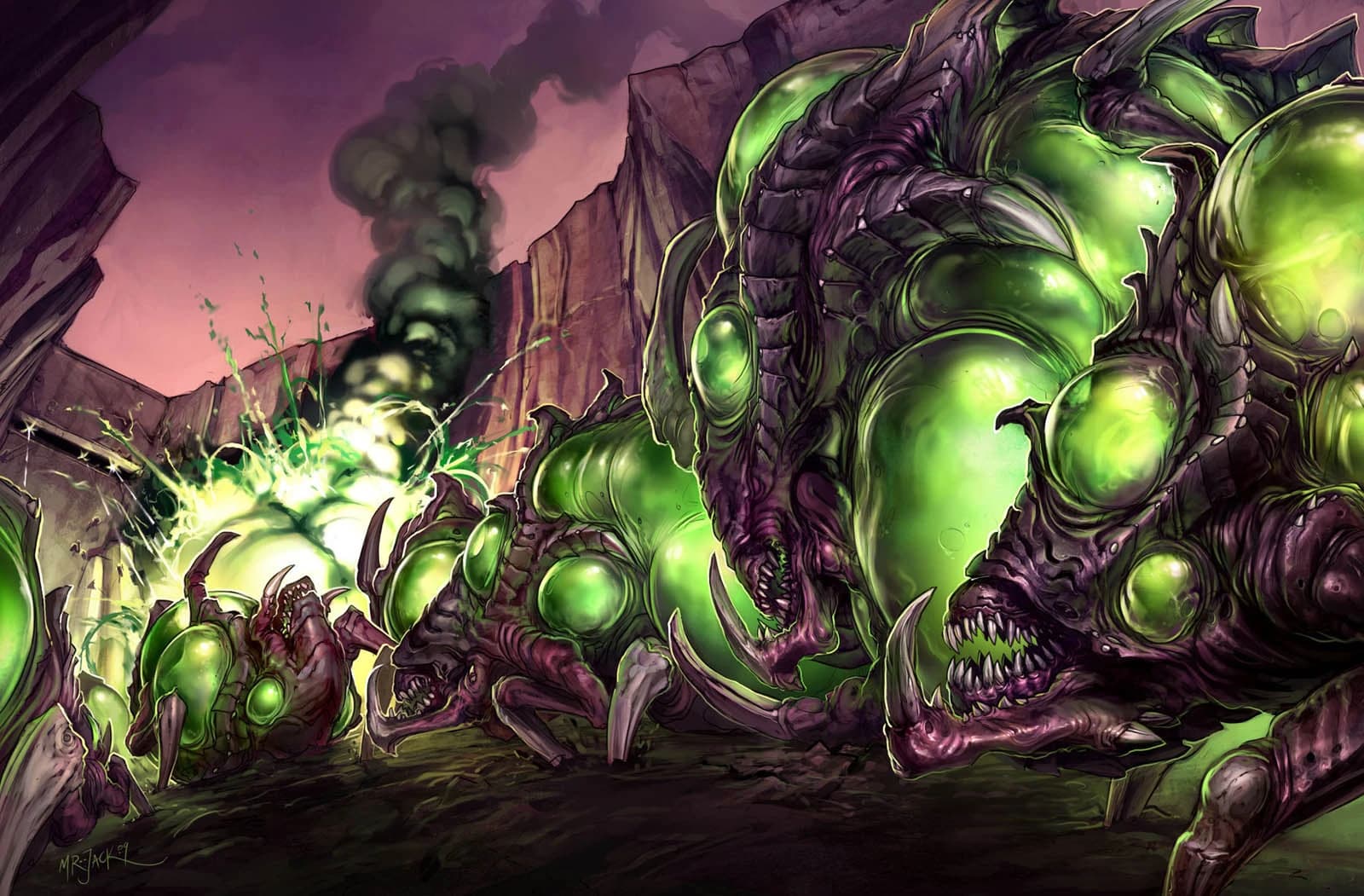
When a baneling drew close enough to an enemy, it triggered a reaction within its volatile chemical payload that caused the creature to explode in a shower of searing acid. The explosion destroyed the baneling but inflicted terrible damage on its enemies, proving highly effective against both structures and ground forces; a clutch of them could wipe out a group of vehicles and infantry in the blink of an eye. The strain's lethality was heightened by the zerg predilection for burrowing. An apparently safe area could become a deathtrap as banelings erupted beneath their foes, giving enemies virtually no time to react. By 2511, the Terran Dominion had developed a neutralizing spray for its vehicles that could halt the corrosion from baneling acid. Terran scientists theorized that the triggering enzyme for the baneling's detonation had been adapted from those of early infested terrans. (StarCraft II unit profile: Baneling; StarCraft: Evolution; Project Blackstone)
History#
Banelings were first observed during the Siege of Cask on Sorona in 2503. The defenders of Cask held out against the zerg long enough that the Swarm came to spawn only minor breeds such as zerglings to send into battle. The pressure of the siege drove the development of a new strain, with zerglings incorporating an acidic native mold into themselves, and these new banelings were sent against Cask, their spray of acid destroying its defenses and eradicating the terrans present. Later that same year, when other terrans first encountered the baneling, they assumed it to be a mutation of a previously unknown genus rather than a morph of the zergling; the strain was added to the list of zerg threats, and scientists began an effort to develop chemical rounds that could detonate banelings prematurely. (StarCraft: Ghost: Spectres; Broken Wide; StarCraft II unit profile: Baneling)
In 2505, Abathur used the baneling strain as a base for a mutation that upgraded the mutalisk, allowing its glaive wurms to explode on impact. Baneling acid sacs were later harvested for Project Simulant in an attempt to recreate the baneling in robotic form, an effort hampered by the sacs constantly melting through the surrounding plate infrastructure before the engineers made it work. Controlled banelings with replaced nervous systems were also fielded by the Cerberus Program, in spite of the significant cost of doing so for a creature destined to destroy itself. (StarCraft II: Heart of the Swarm; StarCraft II: Legacy of the Void)
Frequently asked questions
- What is a baneling in StarCraft?
- The baneling was an explosive strain of the zerg, a living suicide bomber evolved from the zergling through a brief chrysalis phase. Its body was remade to carry sacs of highly corrosive acid that ruptured in a shower of searing acid when it reached an enemy.
- How is a baneling created from a zergling?
- Banelings were created from zerglings following a brief chrysalis phase. The zergling's claws shriveled, its digestive and reproductive tracts were assimilated as nutrients, and its adrenal glands were repurposed to produce and store large quantities of highly corrosive acid in bulbous sacs growing from its back.
- How does a baneling move and find its way?
- Barely able to walk under its added mass, the baneling often tucked into a ball and rolled. It found its way by a rudimentary sonar system, in which a transmitter at the center of its skull emitted pulses that mapped its surroundings and echoed back to two evenly spaced receivers.
- When were banelings first encountered?
- Banelings were first observed during the Siege of Cask on Sorona in 2503. The pressure of the siege drove zerglings to incorporate an acidic native mold into their bodies, and these new banelings were sent against Cask, destroying its defenses.
- What other zerg strains came from the baneling?
- In 2505, Abathur used the baneling strain as a base for a mutation that upgraded the mutalisk, letting its glaive wurms explode on impact.
Gallery
Images via StarCraft Wiki
Sources
- GameStarCraft II: Heart of the Swarm, Blizzard Entertainment, 2013
- GameStarCraft II: Legacy of the Void, Blizzard Entertainment, 2015
- BookStarCraft: Ghost: Spectres, Nate Kenyon, 2011
- BookStarCraft: Evolution, Timothy Zahn, 2016
- BookBroken Wide, Cameron Dayton, short story, Blizzard Entertainment, 2010
- WebStarCraft II unit profile: Baneling, Blizzard Entertainment, StarCraft II website, 2008 and 2014
- WebProject Blackstone, Blizzard Entertainment, StarCraft II website, 2012
Spotted a factual error or a primary source we missed? Email a correction. Every flagged claim gets reviewed.
Followed from this entry
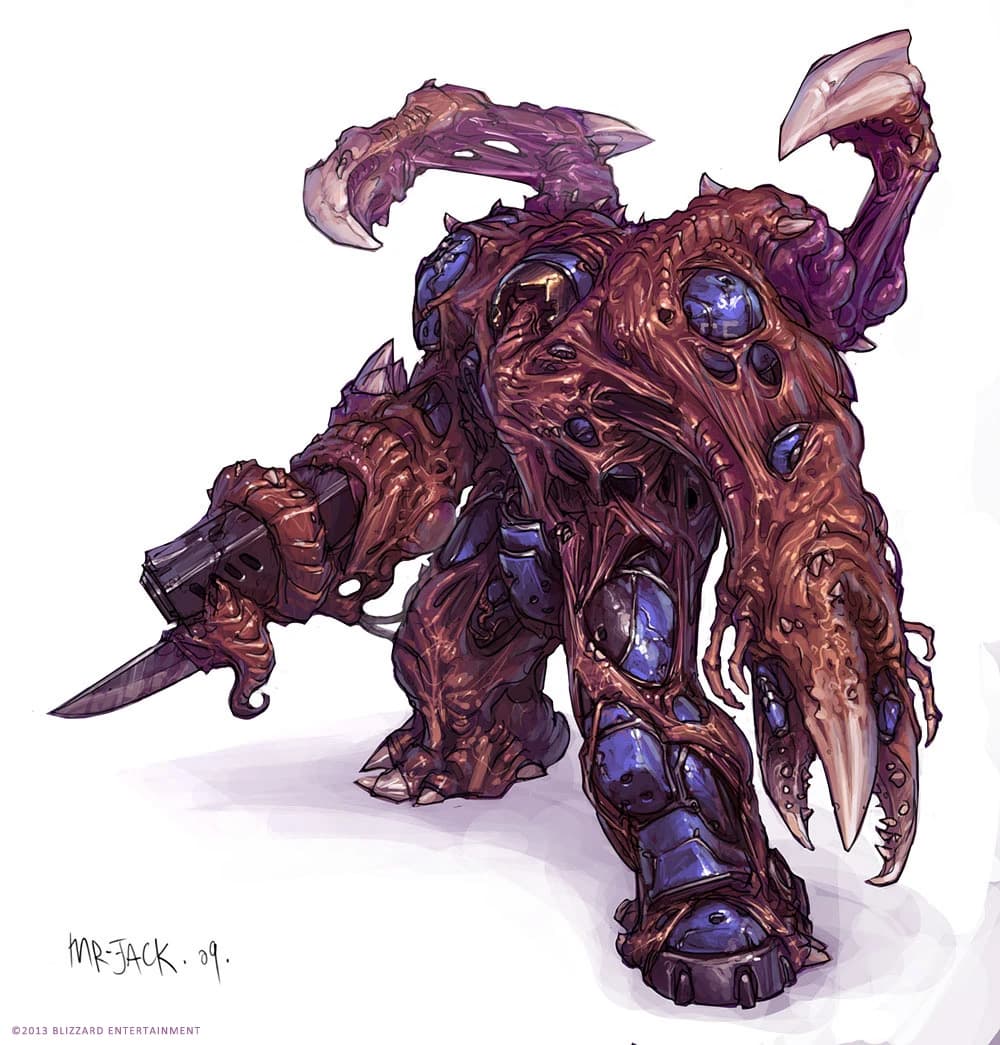
Infested Terran
Infested terrans were a breed of zerg created when the Swarm infected a human with a hyper-evolutionary virus, consuming the victim's mind and remaking the body. Most became disposable suicide bombers, but the zerg eventually perfected sentient infested terrans who served as consorts, generals, and living weapons.
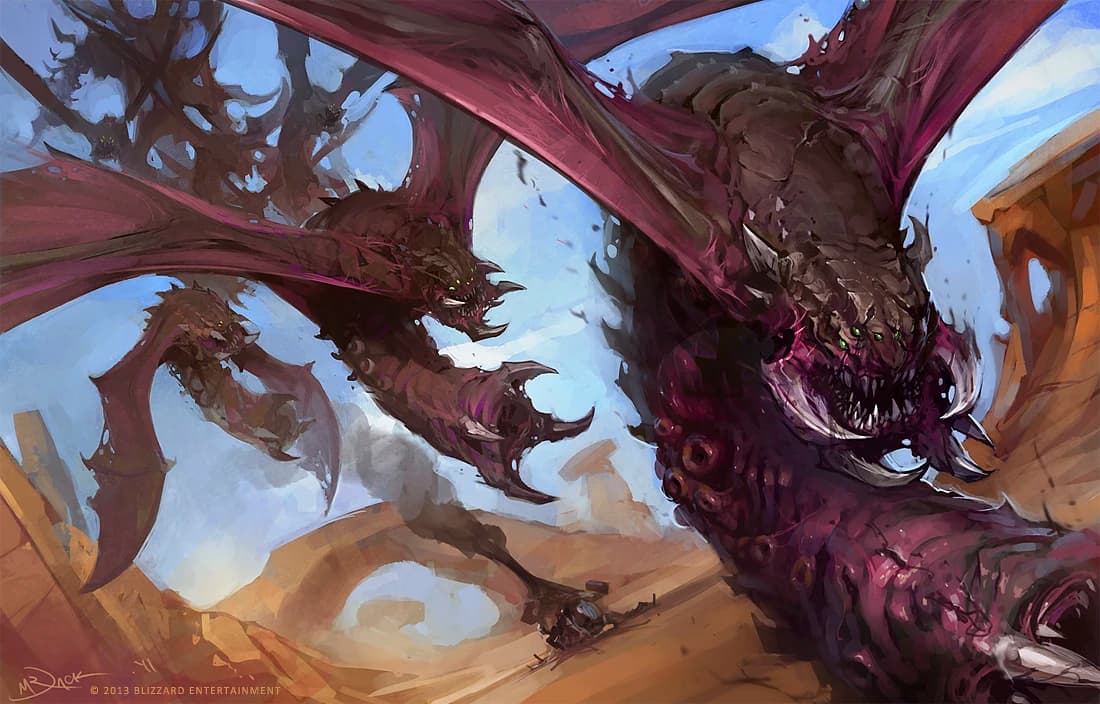
Mutalisk
The mutalisk was the primary airborne strain of the zerg, evolved from the mantis screamer and able to travel through atmosphere and deep space alike. Communicating by scent and attacking with parasitic glaive wurms, mutalisks wheeled across the skies in vast numbers over zerg nests and forces.

Zerg
The zerg are a ravenous collective of biologically advanced aliens who evolve by assimilating the essence of other species in pursuit of genetic perfection. Created by Amon's xel'naga on Zerus and bound to the Overmind, they grew into one of the three dominant powers of the galaxy.
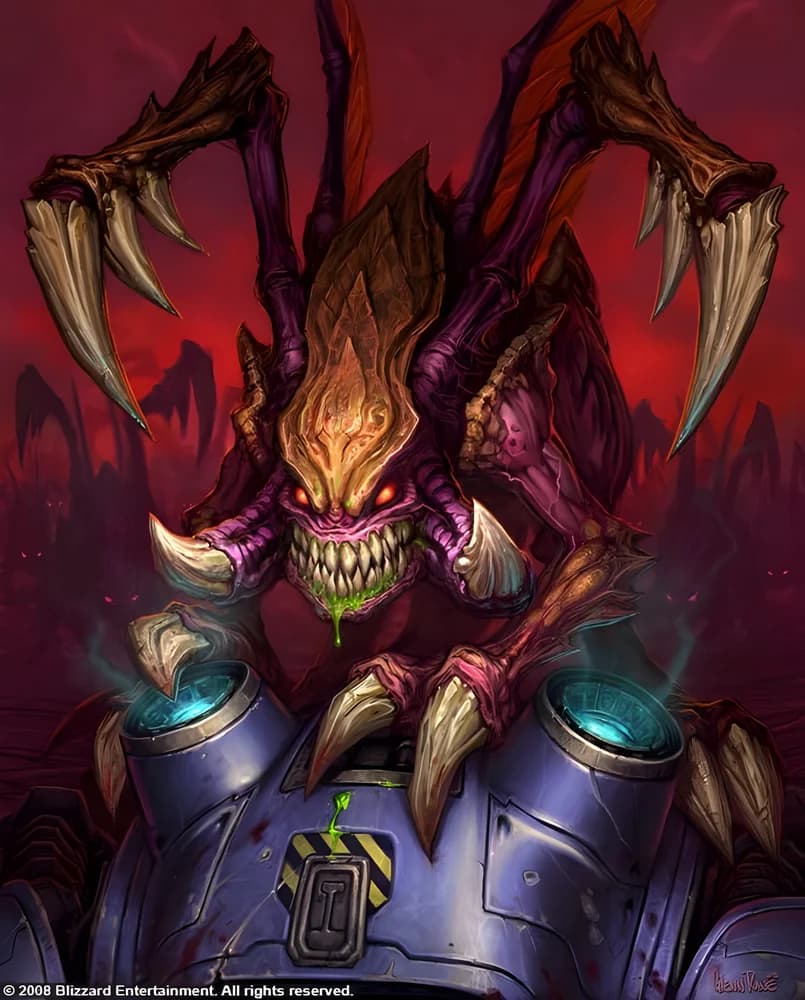
Zergling
The zergling was the most numerous warrior strain of the zerg, a fast, sickle-clawed creature evolved from the Zz'gashi dune runner and spawned two at a time from a single larva. Zerglings served as the Swarm's frontline assault troops, overwhelming foes through sheer weight of numbers.
Every Zerg Unit in StarCraft and StarCraft II, Explained
Every zerg strain from StarCraft, Brood War and the three StarCraft II campaigns, from the zergling to the leviathan. Each entry covers the species it came from, what it does for the Swarm and where it turns up in the story.
Abathur: the Swarm's living DNA library
Spun from many species by the Overmind, Abathur designed the Queen of Blades. He later betrayed Zagara to restart the wars he thought zerg needed.
Mentioned in8 entries
2505: the year the Second Great War ended
2505 was the year in which the second phase of the Second Great War was fought across the Koprulu sector. It saw Sarah Kerrigan rebuild the Zerg Swarm, the death of Emperor Arcturus Mengsk at the Battle of Korhal, and the zergling outbreak that destroyed the Blackstone facility.
Battle of Adena: the ambush that poisoned the peace
The Battle of Adena was a three-way conflict fought after the One-Day War on the abandoned world of Adena, inside the demilitarized zone between the Terran Dominion and the Daelaam. Renegade Dominion forces looting a jorium stockpile sprang a trap laid by Broodmother Niadra, dragging Admiral Urun's protoss into a battle that killed him and wrecked relations between the two powers.
Cerberus Program
The Cerberus Program was a Terran Confederacy black ops unit formed from the remnants of the Cerberus Recon Squad. Under Tamsen Cauley it defected to the Terran Dominion, and after the death of Arcturus Mengsk it went underground as a renegade outfit devoted to enslaving zerg broods for sale to the highest bidder.
Every Zerg Unit in StarCraft and StarCraft II, Explained
Every zerg strain from StarCraft, Brood War and the three StarCraft II campaigns, from the zergling to the leviathan. Each entry covers the species it came from, what it does for the Swarm and where it turns up in the story.
Feral Zerg
Feral zerg were zerg that had fallen outside the control of any higher entity, reverting to predatory instinct and attacking everything around them. Drawn to psionic emanations and able to survive without creep, they recurred across the Koprulu Sector wherever a cerebrate, broodmother, or the will of Kerrigan was lost.
Project Blackstone: the Dominion's secret xenoscience program
Project Blackstone was a classified Terran Dominion research program ordered by Arcturus Mengsk to unlock the secrets of the zerg and protoss. Conscripted scientists laboured on a hidden asteroid installation until a zergling outbreak nearly killed them all, and Valerian Mengsk rebuilt the project aboard the science vessel Brin.
Queen
The queen is a Zerg support strain derived from the Arachnis brood-keeper, bred to administrate hive clusters, oversee maturing broods, and serve as an infestation specialist. Two distinct forms exist across the history of the Swarm, the flying Great War queen and the ground-bound hive-master engineered after the Brood War.
Zergling
The zergling was the most numerous warrior strain of the zerg, a fast, sickle-clawed creature evolved from the Zz'gashi dune runner and spawned two at a time from a single larva. Zerglings served as the Swarm's frontline assault troops, overwhelming foes through sheer weight of numbers.
Get new articles in your inbox
No spam. New lore drops, canon conflicts, and deep dives only when they’re worth reading.
Some links on Lore Fortress are affiliate links. If you buy through them we earn a small commission at no extra cost to you.