Infested Terran
Humans Remade by the Swarm
Infested terrans were a breed of zerg created when the Swarm infected a human with a hyper-evolutionary virus, consuming the victim's mind and remaking the body. Most became disposable suicide bombers, but the zerg eventually perfected sentient infested terrans who served as consorts, generals, and living weapons.
Infested terrans, also known as infested humans, were a breed of zerg created when the Swarm infected a terran with a hyper-evolutionary virus. The infection consumed the victim's mind and remade the body, granting it zerg traits while usually stripping away the human's intelligence. Many infested terrans were used as powerful suicide bombers, but as the zerg perfected their means of infestation, the breed took on other roles, turning captured human technology to the service of the Swarm across the Koprulu Sector. (StarCraft; StarCraft: Hybrid; StarCraft II: Wings of Liberty)
Purpose of infestation#
The zerg believed they needed the use of psionic powers to defeat the protoss. The terrans were the only species the Swarm had discovered with psionic potential powerful enough to help achieve that victory. Most terrans, however, were not psychic, and even those who were lacked the genetic compatibility to retain their intelligence and psionic powers through infestation. As a result, most infested terrans lost both, and the great majority were used as disposable suicide bombers. (StarCraft; StarCraft: Hybrid)
This changed by 2503, when Sarah Kerrigan solved the problem of infested terrans losing their sentience and could reliably create sentient ones. She used some as her consorts and generals, and by the Second Great War powerful zerg called broodmothers led broods on her behalf. (StarCraft: The Dark Templar Saga: Shadow Hunters; StarCraft II: Heaven's Devils; StarCraft II: Heart of the Swarm)
Effects of infestation#
An infested terran was created when a human was infected with the zerg hyper-evolutionary virus. The victim usually lost most of their intelligence. Most became physically stronger, faster, and tougher, developing the ability to burrow along with other typical zerg traits such as rapid healing and the capacity to receive orders psionically. Many infested terrans could explode, sacrificing themselves in a splash of toxic fluid; the blast produced a large shockwave and could destroy small structures. (StarCraft; StarCraft: Brood War; StarCraft: Hybrid; StarCraft: Shadow of the Xel'Naga)
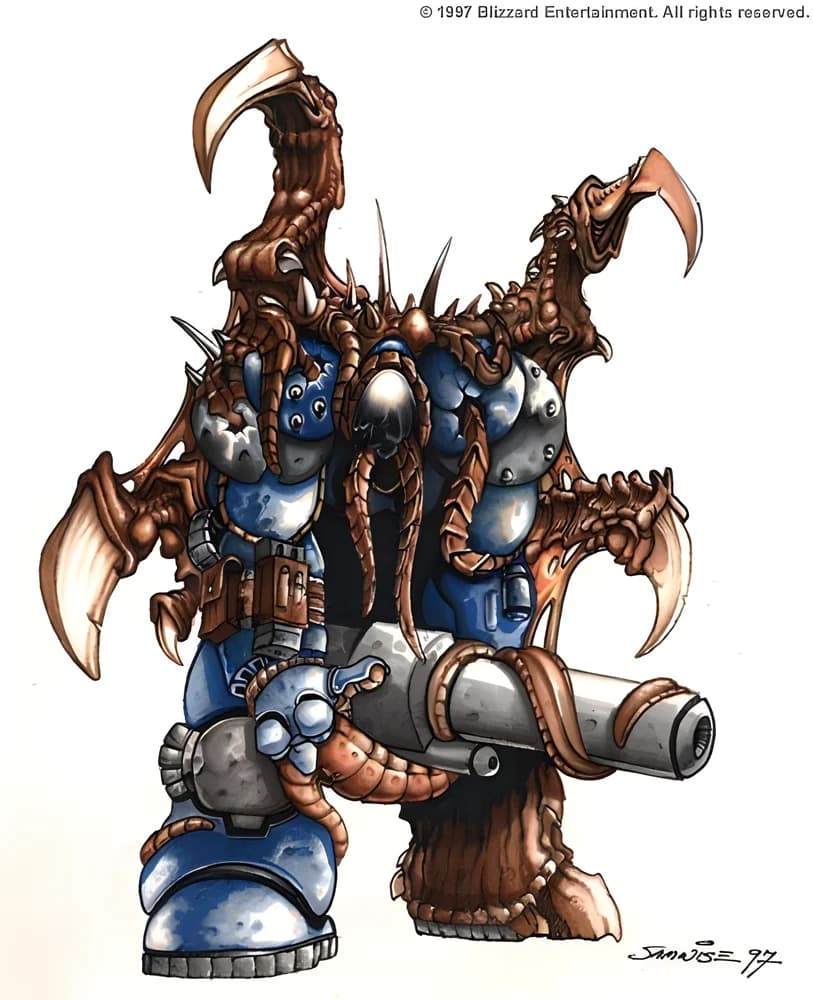
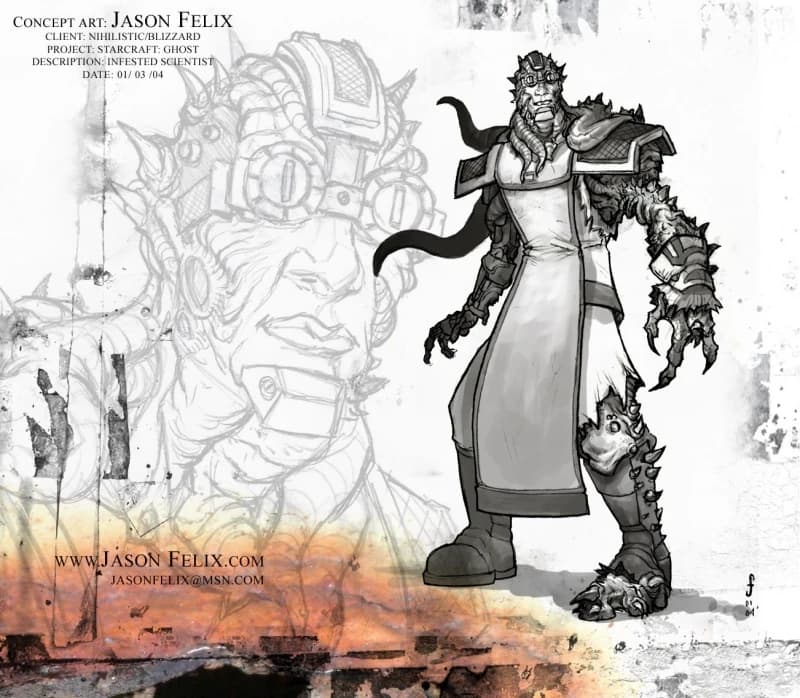
Infestation of resocialized subjects peeled away their false memories in favor of the real ones. Often during infestation, a subject saw a reflection of themselves through which the zerg hive mind spoke, encouraging them to give in to the encroaching will of the Swarm and to join its collective consciousness willingly. If the victim refused, the hive mind could force its consciousness upon them and break them. In appearance, an infested terran was described as looking as if it had been redesigned by a madman with too many spare parts from a variety of species, with growths and tentacles extruding from a body of ruptured features and festering skin covered in carapace. (The Education of PFC Shane; StarCraft: Shadow of the Xel'Naga)
Strains and types#
Before and during the Great War and the conflict that followed, most infested terrans acted as suicide bombers. The majority were created by infesting command centers, which then released the bombers. By the Second Great War, the zerg had developed new strains. One wore a CMC powered combat suit and carried gauss rifles; spawned by the infestor, it had only a short duration. Other strains relied on claws. Various infested colonists were also produced during the conflict, often spawned in large numbers from infested colonist huts or from cocoons popped by a very large queen, along with the heavily mutated aberration. Following the End War, feral zerg infested numerous Umojans on Jarban Minor, and newly developed breeds included the volatile infested, the infested banshee, and the infested siege tank, some of which could spit corrosive acid. (StarCraft; StarCraft: Brood War; StarCraft II: Wings of Liberty; StarCraft II: Nova Covert Ops; StarCraft II: Shadow Wars)
Experiments and notable cases#
Infested terrans were the subject of many experiments by zerg, terrans, protoss, and the xel'naga. The greatest single zerg success was the acquisition of Sarah Kerrigan, a ghost and former member of the Sons of Korhal whom the Overmind left with the majority of her spirit, allowing her to retain her intelligence and even some of her humanity. (StarCraft)
Kerrigan, the Queen of Blades, developed an interest in recreating the experiment that had created her. Though she did not believe she could perfectly duplicate her own change, which she considered perfect, she sought to get close, and specifically pursued psychic terrans even though most of her subjects were non-psionic. Her experiments usually failed, producing defects in intelligence and mobility, until they succeeded with the ex-mercenary and former crime lord Ethan Stewart in 2503, whom she intended to make her consort and who quickly became one of her troop leaders. During the Second Great War she infested refugees on Meinhoff, where the plague spread rapidly and powerful aberrations emerged before falling prey to the planet's harsh sunlight, and the contagion later reached the colony of Haven. If Raynor chose to purge the infected colonists rather than defend the colony from the protoss, Doctor Ariel Hanson was found to have been infested herself. In the war's final months Kerrigan used virophages and infestors to infest Skygeirr Platform in her effort to stop the Hybrid Breeding Program of Emil Narud, after which she ordered Abathur to cease all experimentation on terran subjects. (StarCraft: Hybrid; StarCraft: The Dark Templar Saga: Shadow Hunters; StarCraft II: Heaven's Devils; StarCraft II: Wings of Liberty; StarCraft II: Heart of the Swarm)
The corpse of former United Earth Directorate Vice Admiral Alexei Stukov was reanimated through infestation to create Infested Stukov. Terran factions experimented on the breed as well. The Terran Confederacy stored ardeon crystals tainted with zerg spores in the Jacobs Installation, where mere contact would quickly turn a terran into an infested one, and Confederate remnants created the subject Morik in attempts to restore the mental faculties of the infested. The protoss, more interested in destroying infested terrans or reversing the process, developed a radical nanotech serum, and a task force under Raynor and the protoss Taldarin used it to free Infested Stukov, though the cure later failed and he reverted to his infested state. A five-part xel'naga device ultimately held the power to reverse infestation entirely, and Jim Raynor and Crown Prince Valerian Mengsk led a combined force to Char to activate it and restore Kerrigan's humanity. (StarCraft: Brood War; StarCraft 64; StarCraft: Frontline Volume 1; StarCraft II: Wings of Liberty; StarCraft II: Heart of the Swarm)
Frequently asked questions
- What is an infested terran?
- Infested terrans, also known as infested humans, were a breed of zerg created when the Swarm infected a terran with a hyper-evolutionary virus. The infection consumed the victim's mind and remade the body, granting it zerg traits while usually stripping away the human's intelligence.
- Why did the zerg infest humans?
- The zerg believed they needed psionic powers to defeat the protoss, and terrans were the only species the Swarm had discovered with sufficient psionic potential. Most terrans, however, were not psychic and lacked the genetic compatibility to retain their intelligence and powers through infestation, so most infested terrans lost both and were used as disposable suicide bombers.
- What happens to a person who becomes an infested terran?
- The victim usually lost most of their intelligence, while most became physically stronger, faster, and tougher, gaining the ability to burrow and to receive orders psionically. Many infested terrans could explode in a splash of toxic fluid, producing a shockwave that could destroy small structures.
- How did the zerg create sentient infested terrans?
- By 2503, Sarah Kerrigan solved the problem of infested terrans losing their sentience and could reliably create sentient ones. She used some as her consorts and generals, and by the Second Great War powerful zerg called broodmothers led broods on her behalf.
- Was the infestation process ever reversed?
- The protoss developed a radical nanotech serum that freed Infested Stukov for a time. A five-part xel'naga device ultimately held the power to reverse infestation entirely, and Jim Raynor and Crown Prince Valerian Mengsk led a combined force to Char to activate it and restore Kerrigan's humanity.
Gallery
Images via StarCraft Wiki
Sources
- GameStarCraft, Blizzard Entertainment, 1998
- GameStarCraft: Brood War, Blizzard Entertainment and Saffire, 1998
- GameStarCraft 64, Mass Media and Blizzard Entertainment, 2000
- GameStarCraft II: Wings of Liberty, Blizzard Entertainment, 2010
- GameStarCraft II: Heart of the Swarm, Blizzard Entertainment, 2013
- GameStarCraft II: Nova Covert Ops, Blizzard Entertainment, 2016
- BookStarCraft: Hybrid, Micky Neilson, short story, Amazing Stories, 2000
- BookStarCraft: Shadow of the Xel'Naga, Gabriel Mesta, Pocket Star, 2001
- BookStarCraft: The Dark Templar Saga: Shadow Hunters, Christie Golden, Pocket Star, 2007
- BookStarCraft II: Heaven's Devils, William C. Dietz, 2010 (timeline appendix)
- BookThe Education of PFC Shane, Robert Brooks, Blizzard Entertainment short story, 2013
- ComicStarCraft: Frontline Volume 1, "Thundergod", Richard A. Knaak (w), Naohiro Washio (a), Tokyopop, 2008
- ComicStarCraft II: Shadow Wars, Valerie Watrous (w), Carlos Rodriguez (a), Blizzard Entertainment, 2018
Spotted a factual error or a primary source we missed? Email a correction. Every flagged claim gets reviewed.
Followed from this entry

Alexei Stukov: murdered, then infested
DuGalle's oldest friend and second in command was killed on his own admiral's orders, after Samir Duran worked on the fleet. The zerg brought him back.
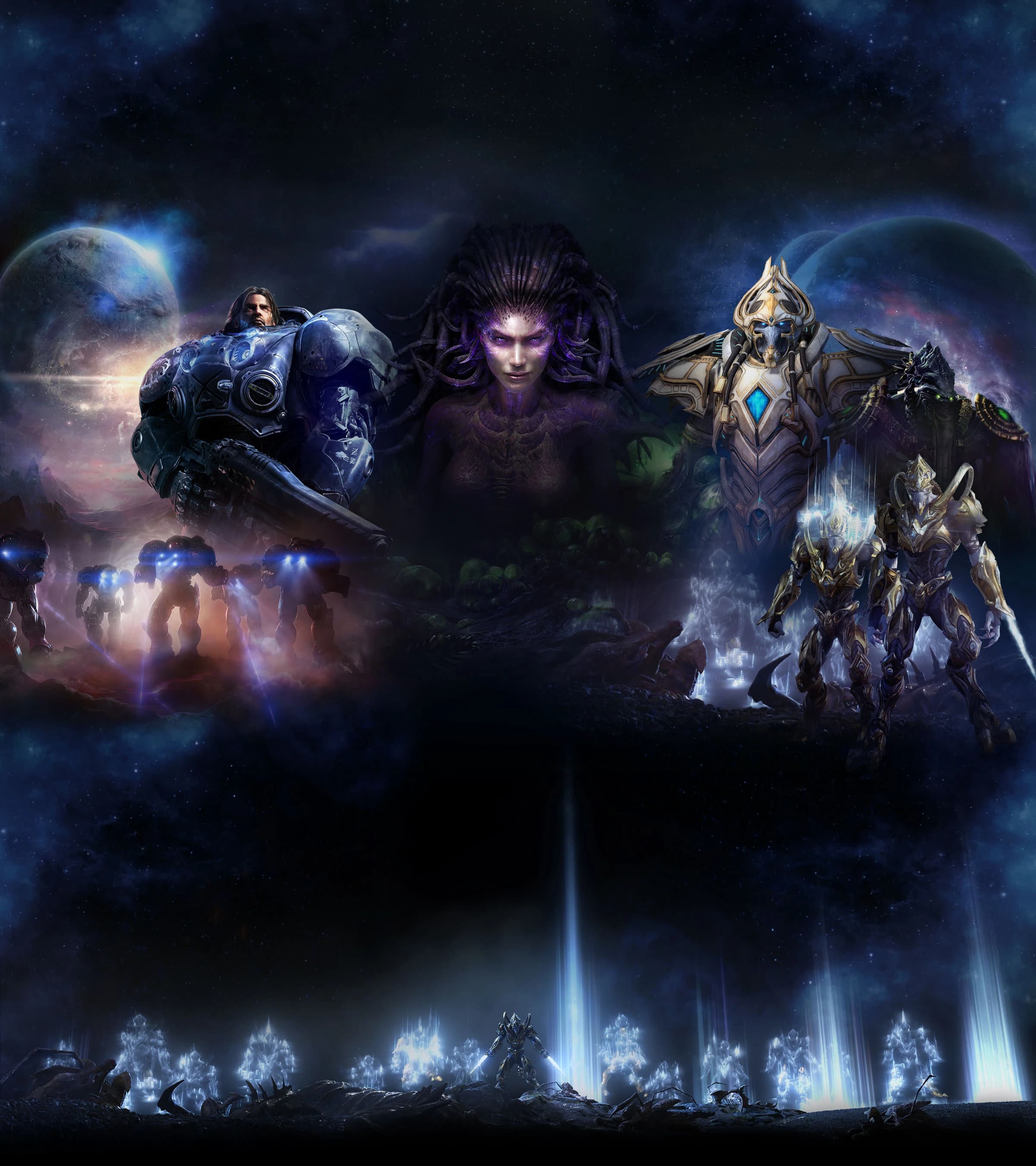
End War: Amon's crusade on the galaxy
The resurrected xel'naga Amon corrupted the Khala and cost the protoss both Aiur and Shakuras. Kerrigan, remade as a xel'naga, killed him in the Void.
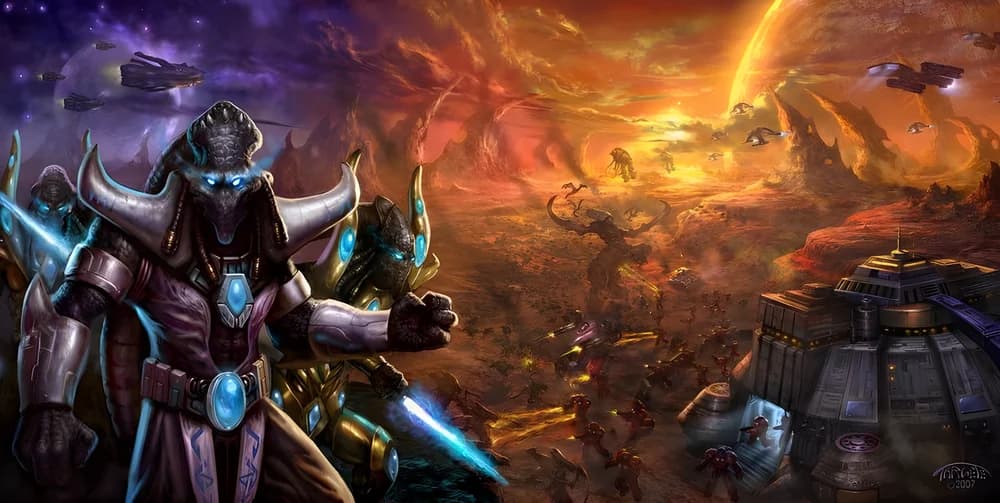
Great War: protoss against zerg over Aiur
The Great War was the first open fight between protoss and zerg, with the terrans caught between them. It ended over Aiur with the Overmind destroyed.
Infestor
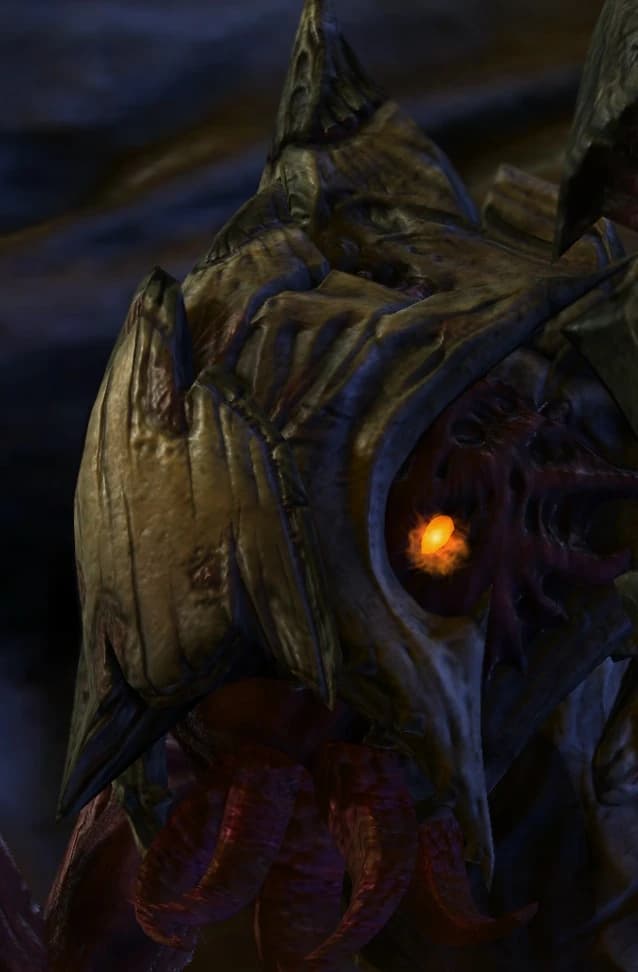
The infestor is a burrowing Zerg support strain evolved from the borbu matriarch, capable of moving while burrowed, seizing control of enemies with a neural parasite, and disgorging infested marines and larvae on the battlefield.
Queen
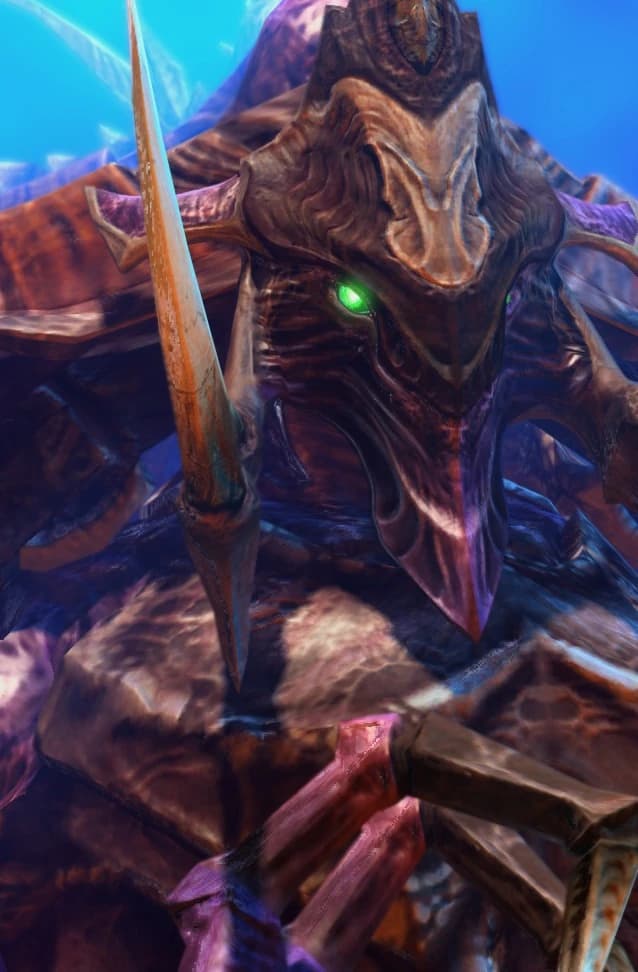
The queen is a Zerg support strain derived from the Arachnis brood-keeper, bred to administrate hive clusters, oversee maturing broods, and serve as an infestation specialist. Two distinct forms exist across the history of the Swarm, the flying Great War queen and the ground-bound hive-master engineered after the Brood War.

Sarah Kerrigan, the Queen of Blades
Sarah Kerrigan was a psychic terran who began as a Confederate ghost, rose to be second-in-command of the Sons of Korhal, and after Arcturus Mengsk abandoned her on Tarsonis was captured and infested by the Zerg Swarm to become the Queen of Blades.
Mentioned in5 entries
Baneling
The baneling was an explosive zerg strain evolved from the zergling through a brief chrysalis phase, its body remade to carry sacs of highly corrosive acid. A living suicide bomber, the baneling ruptured among enemy formations in a shower of searing acid that devastated both structures and ground forces.
Command Center: mobile heart of every terran outpost
The command center was the core structure of every terran outpost, a mobile resource processor that manufactured SCVs and anchored new colonies wherever minerals and vespene gas were plentiful. Heavily armored and able to fly on jump jets, it evolved from a Confederate prospecting platform into a fortified military headquarters.
Every Zerg Unit in StarCraft and StarCraft II, Explained
Every zerg strain from StarCraft, Brood War and the three StarCraft II campaigns, from the zergling to the leviathan. Each entry covers the species it came from, what it does for the Swarm and where it turns up in the story.
Neural resocialization: the manufacture of obedient soldiers
Neural resocialization was the Terran Confederacy process for turning criminals into loyal troops by layering false memories over their own and enforcing obedience. The Terran Dominion inherited it, refined it, and used it on ghosts and spectres, until Emperor Valerian Mengsk announced its abolition.
Psi emitter
The psi emitter was a portable terran device that broadcast the amplified neural imprint of a ghost to draw the zerg across interstellar distances. The Terran Confederacy built it as a containment weapon, and Arcturus Mengsk used it to annihilate the Confederacy at Tarsonis, an atrocity that haunted the Koprulu sector for years afterward.
Get new articles in your inbox
No spam. New lore drops, canon conflicts, and deep dives only when they’re worth reading.
Some links on Lore Fortress are affiliate links. If you buy through them we earn a small commission at no extra cost to you.