CMC Powered Combat Suit
terran armored exoskeleton
The CMC Powered Combat Suit was the standard armored exoskeleton of terran infantry across the Koprulu sector, an enclosed hardskin worn by marines and firebats of the Confederacy, the Terran Dominion, and the Kel-Morian Combine. Its successive models defined the appearance and survivability of the human foot soldier from the Guild Wars through the End War.
The CMC Powered Combat Suit was the armored exoskeleton worn by the infantry of the Terran Confederacy and, after the Confederacy fell, by the forces that succeeded it across the Koprulu sector, including the Terran Dominion and the Kel-Morian Combine. The name preserved the acronym for the Confederate Marine Corps even after the government that created it had collapsed, and the armor was known colloquially as "hardskin." The Umojan Protectorate fielded armor built along similar lines. The suit was the standard kit of the terran marine and the firebat, and its bulky, broad-shouldered silhouette became the defining image of the human soldier in the sector. (StarCraft; StarCraft II: Heaven's Devils; StarCraft: Frontline Volume 1; StarCraft II: Wings of Liberty; StarCraft II: Heart of the Swarm)
Suiting up and design#
The size and bulk of the heavier suits required frequent drilling to put on efficiently. Depending on a suit's condition and the wearer's experience, donning the armor could take anywhere from three to twenty minutes, though constant practice allowed early members of the Sons of Korhal to complete the task in a single minute. Later models simplified the process. One method built the suit from prefabricated parts directly around the wearer, sealing them inside. (StarCraft: Liberty's Crusade; StarCraft: Revelations; StarCraft: Uprising; StarCraft II: Wings of Liberty)
Armor was commonly personalized with suit and visor art. (StarCraft; StarCraft: Liberty's Crusade)
The CMC-200 and CMC-300#
The CMC-200 Powered Combat Suit was used in the twenty-fifth century. By 2478 it was being phased out in favor of its successor, and it was considered obsolete by the time of the Guild Wars, retained only for training. It carried an air conditioning backpack that channeled heat away from the body, a visor system that kept the wearer informed of the suit's integrity, structural support that improved a gunner's aim, and a salvage system that sealed off a breached limb in a tourniquet. It was immune to most small arms fire, though a needle gun could penetrate it, and offered seven days of endurance on internal recycling alone. (StarCraft: I, Mengsk; StarCraft II: Heaven's Devils; StarCraft: Liberty's Crusade)
The CMC-300 Powered Combat Suit was the much improved successor and the standard issue to marines during the Great War. It weighed several hundred pounds and added a foot to the wearer's height. The suit offered advanced NBC shielding, full life support, and a heads-up display built into a plexithene visor, capable of infrared vision, terrain mapping, targeting, and motion detection. Its servos increased the wearer's strength and speed and allowed long, piston-driven jumps. The same servo systems were its weakness, leaving the suit open to immobilization if disrupted, as by a hydralisk scythe driven into the chest, and its power draw was heavy enough that the helmet was usually left off outside combat. Old Confederate-era CMC-300 suits continued to be issued to some Dominion garrisons long after the Confederacy fell. (StarCraft; StarCraft: Liberty's Crusade; StarCraft: Speed of Darkness; Changeling)
The CMC-400 and heavy variants#
The CMC-400 Powered Combat Suit was an upgraded version of the CMC-300, in service by 2491 and still considered new at the outbreak of the Great War. It integrated NBC shielding, life support, and a stimpack system, and carried a communication array that automatically connected to signal boosters aboard vehicles such as dropships. (StarCraft; StarCraft: Uprising; StarCraft: Speed of Darkness)
The heavier CMC-600 and CMC-660 Heavy Combat Suits were worn by firebats, built to resist the plasma and flame their wearers carried, with reinforced plasma tanks mounted on the back and thermal suppression lenses to protect the user's eyes. The 5-4 Armored Infantry Suit was a heavily remodeled CMC-660 issued to marauders, armed with paired grenade launchers and fitted with a shock dispersion weave of kinetic foam that redirected impact force away from the operator, a development that markedly improved survivability across skirmishes throughout the sector. (StarCraft; StarCraft 64; StarCraft II: Wings of Liberty; StarCraft Field Manual)
Frequently asked questions
- What is the CMC Powered Combat Suit?
- The CMC Powered Combat Suit was the armored exoskeleton worn by the infantry of the Terran Confederacy and, after the Confederacy fell, by the forces that succeeded it across the Koprulu sector, including the Terran Dominion and the Kel-Morian Combine. It was the standard kit of the terran marine and the firebat and was known colloquially as hardskin.
- How did the CMC-300 suit work?
- The CMC-300 was the standard issue to marines during the Great War, weighing several hundred pounds and adding a foot to the wearer's height. It offered advanced NBC shielding, full life support, and a heads-up display built into a plexithene visor capable of infrared vision, terrain mapping, targeting, and motion detection.
- What was the weakness of the CMC-300 combat suit?
- The suit's servo systems were its weakness, leaving it open to immobilization if disrupted, as by a hydralisk scythe driven into the chest. Its power draw was also heavy enough that the helmet was usually left off outside combat.
- What were the different models of the CMC combat suit?
- The line progressed from the obsolete CMC-200, used in the twenty-fifth century and phased out by 2478, through the standard-issue CMC-300 and the upgraded CMC-400 in service by 2491, to the heavier CMC-600 and CMC-660 worn by firebats. The 5-4 Armored Infantry Suit was a heavily remodeled CMC-660 issued to marauders.
- What does CMC stand for?
- The name preserved the acronym for the Confederate Marine Corps even after the government that created it had collapsed.
Sources
- GameStarCraft, Blizzard Entertainment, 1998 (including the manual)
- BookStarCraft: Revelations, Chris Metzen and Samuel Moore, short story in Amazing Stories, 1999
- BookStarCraft: Uprising, Micky Neilson, 2000
- GameStarCraft 64, Mass Media and Blizzard Entertainment, 2000 (manual)
- BookStarCraft: Liberty's Crusade, Jeff Grubb, 2001
- BookStarCraft: Speed of Darkness, Tracy Hickman, 2002
- ComicStarCraft: Frontline Volume 1, Tokyopop, 2008
- BookStarCraft: I, Mengsk, Graham McNeill, 2008
- BookChangeling, James Waugh, short story, Blizzard Entertainment, 2009
- BookStarCraft II: Heaven's Devils, William C. Dietz, 2010
- GameStarCraft II: Wings of Liberty, Blizzard Entertainment, 2010
- GameStarCraft II: Heart of the Swarm, Blizzard Entertainment, 2013
- BookStarCraft Field Manual, Rick Barba, Insight Editions, 2015
Spotted a factual error or a primary source we missed? Email a correction. Every flagged claim gets reviewed.
Followed from this entry
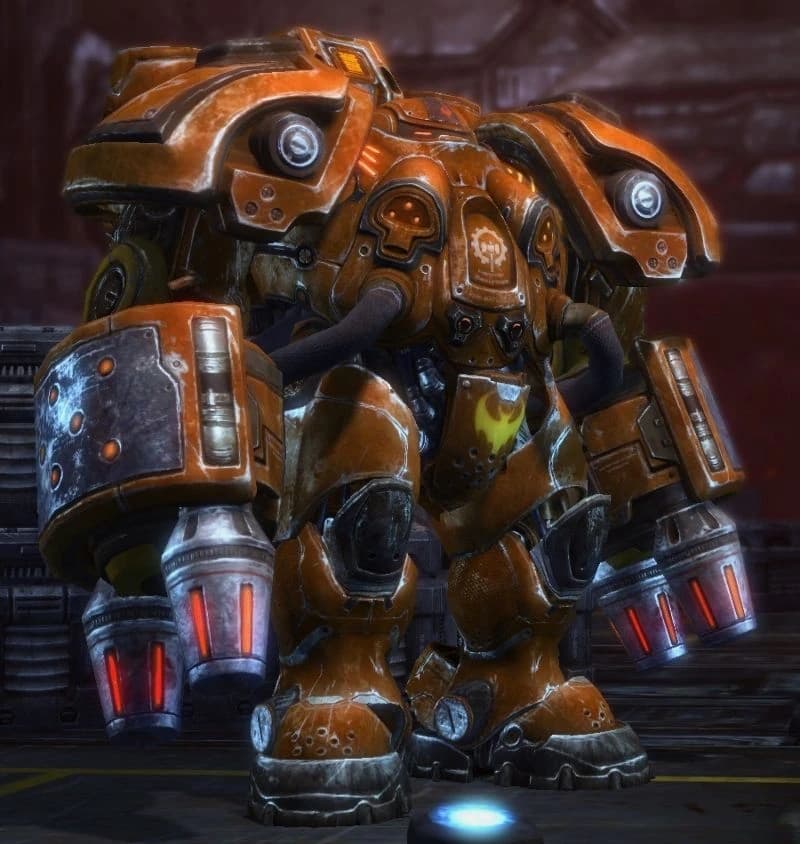
Firebat
The firebat was a terran close-quarters infantry trooper armed with arm-mounted flamethrowers, fielded from the Confederacy through the Dominion and drawn largely from resocialized criminals and pyromaniacs.
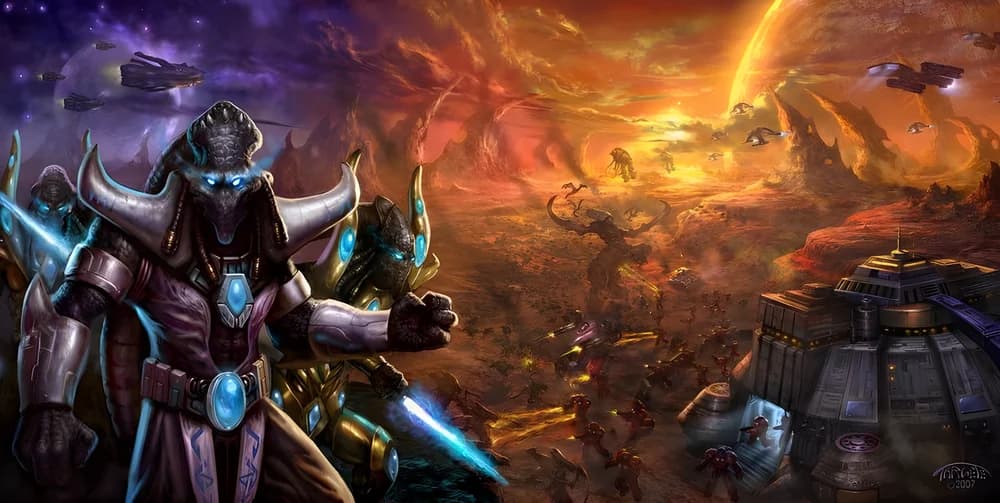
Great War: protoss against zerg over Aiur
The Great War was the first open fight between protoss and zerg, with the terrans caught between them. It ended over Aiur with the Overmind destroyed.

Guild Wars: Confederacy against the Combine
Fought across the late 2480s over the mineral wealth of the Koprulu sector. The Confederacy won, seized the mining guilds and ruled the next decade.
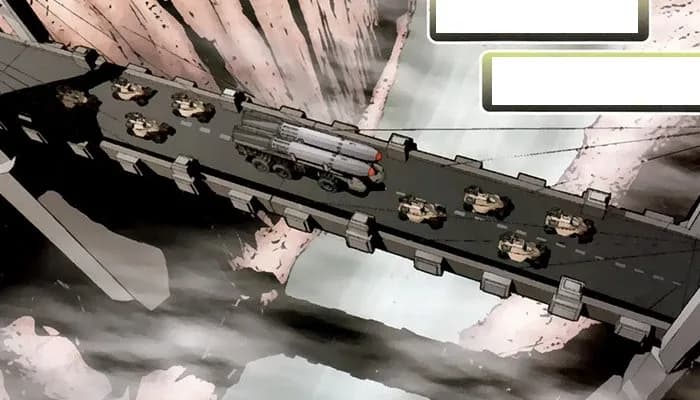
Kel-Morian Combine: the sector's miners
A business conglomerate that governed Moria and ran the mining guilds. It fought the Confederacy in the Guild Wars and outlived it as a corporate power.
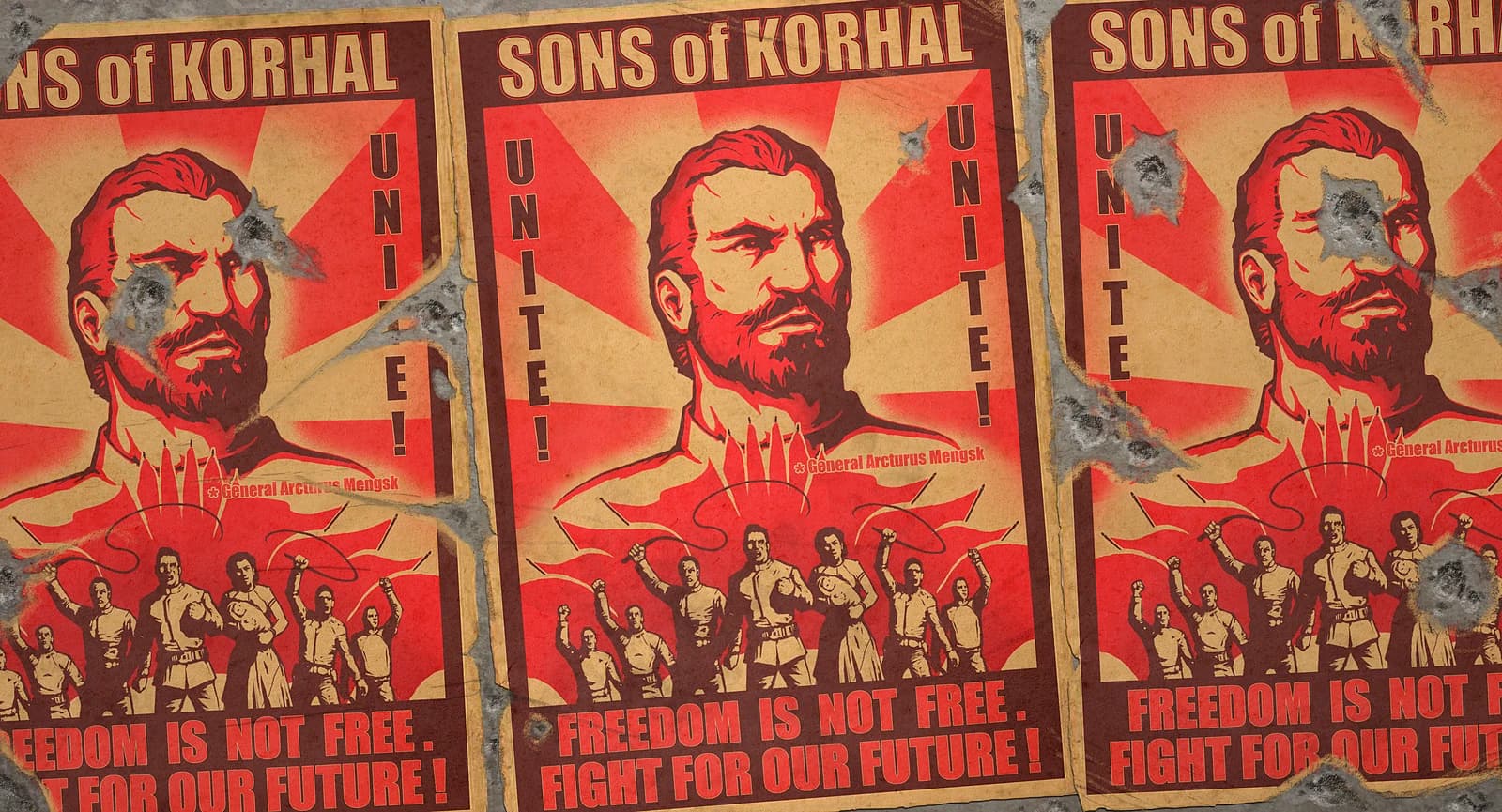
Sons of Korhal: Mengsk's rebel movement
Arcturus Mengsk founded it after the Confederacy destroyed his homeworld. It toppled the Confederacy, then remade itself as the Terran Dominion.

Terran Confederacy
The Terran Confederacy, also called the Confederacy of Man, was the dominant human government of the Koprulu sector before the Great War, ruled by the Old Families of Tarsonis and brought down by the zerg invasion and the Sons of Korhal rebellion.
Mentioned in7 entries
C-14 Impaler: the Marine Corps' standard gauss rifle
The C-14 Impaler fires 8 mm armor-piercing spikes at thirty rounds per second, driven by a magnetic accelerator pack that gives the gauss rifle its name. Standard issue for Confederate and Dominion marines, in service by 2478, it still runs on gunpowder and fails when its ammunition gets wet.
Confederate Marine Corps: infantry backbone of the Terran Confederacy
The Confederate Marine Corps was the best known military arm of the Terran Confederacy, an infantry service older than the Confederacy itself that filled its ranks with resocialized criminals and reluctant volunteers. It fought the Kel-Morian Combine through the Guild Wars and was destroyed alongside its government when the zerg overran Tarsonis.
Elms: mercenary marine and hidden psychic
Elms was a terran mercenary marine with a cybernetic arm and a psionic gift she kept hidden from those around her. Hired for a crooked salvage operation on Adena, she fought her way through a zerg ambush, exposed the officers who abandoned her, and killed them all rather than accept a leash from anyone.
Engineering Bay: infantry research center of the terran military
The engineering bay was a terran research structure devoted to improving the quality of the weapons and armor fielded by infantry. In use by the Terran Confederacy as early as 2488, it remained one of the first two research facilities raised in any Dominion field base, and its work followed terran soldiers to every battlefield in the Koprulu sector.
Every Terran Unit in StarCraft and StarCraft II, Explained
Every terran unit from StarCraft, Brood War and the three StarCraft II campaigns, sorted into infantry, vehicles and starships. Each entry covers who built it, what it was for and which games it appears in.
Hostile environment suit
The hostile environment suit, also called the skinsuit or stealth suit, was the standard combat gear of terran ghosts, a light-refracting nano-fiber suit that augmented its wearer's strength, channeled psionic power, and granted the cloaking ability for which ghosts were feared.
Neosteel
Neosteel was an exceptionally durable material used by the terrans for everything from battlecruiser hulls and CMC armor to bunkers and personal weapons. Its manufacture required catalytic elements, and to be "like neosteel" was a terran idiom for great strength of will.
Get new articles in your inbox
No spam. New lore drops, canon conflicts, and deep dives only when they’re worth reading.
Some links on Lore Fortress are affiliate links. If you buy through them we earn a small commission at no extra cost to you.