Guild Wars: Confederacy against the Combine
Confederacy against the Kel-Morian Combine
Fought across the late 2480s over the mineral wealth of the Koprulu sector. The Confederacy won, seized the mining guilds and ruled the next decade.
The Guild Wars were the economic and military conflict between the Kel-Morian Combine and the Terran Confederacy over control of the mineral wealth of the Koprulu sector. Fought across the late 2480s, the war pitted the Confederacy's superior weapons and equipment against the irregulars, pirates, and mercenaries of the Combine, and it ended in a Confederate victory that secured the Confederacy's dominance over the sector for the following decade. Its consequences reshaped terran politics, hardening resentment in the colonies and giving rise to the Umojan Protectorate. (StarCraft; StarCraft: I, Mengsk)
Background#
The world of Moria possessed the largest resource mining operations in the Koprulu sector. When the Terran Confederacy was founded, the Morian Mining Coalition and the Kelanis Shipping Guild feared the new power might use its military strength to regulate their lucrative operations, and the two merged to form the Kel-Morian Combine, which pledged military aid to any mining guild threatened by Confederate policy. (StarCraft)
Friction grew over the sector's richest deposits. Char was settled to exploit its reserves of heavy metals for the growing Confederate economy and became a source of conflict with the independent guilds of Moria, and disputes broke out over the mineral wealth of Redstone III. Before open war, the Confederacy systematically seized Kel-Morian mining claims, sending intelligence personnel to scout a claim, manufacturing a pretext such as a wanted criminal among the miners, and then attacking to "rectify the situation," after which the claim was handed to one of the Old Families and guarded by marines. (StarCraft II: Wings of Liberty; StarCraft: I, Mengsk)
The war#
Open war was declared in 2485 after a clash at the Noranda Glacier vespene refinery on Onuru Sigma, where Confederate Alpha Squadron under Captain Edmund Duke and the 33rd Ground Assault Division under Captain Arcturus Mengsk advanced on a dilapidated complex only to fall into a Kel-Morian ambush. The vespene stored there had been contaminated with hydrogen sulfide, rendering it explosive, and the whole complex eventually burst into flame as Mengsk's forces escorted Duke's troops to safety. (StarCraft: I, Mengsk)
The Confederacy generally held the advantage in weapons and equipment, while the Combine's forces were composed largely of irregulars, pirates, and mercenaries who often stripped captured Confederates of their armor and arms. Both sides deployed goliaths and the early siege tank, the latter originally conceived as a static defense cannon before mobility proved decisive. Battles were fought on Sonyan, where Horace Warfield led a charge that cleared a Kel-Morian bunker at the cost of three bullets in the shoulder, on Char, where volcanic activity and the unrestrained use of nuclear weapons created lethal radiation, on Dylar IV, and on the bloody focal point of Turaxis II, where a botched mission led Jim Raynor and Tychus Findlay to go AWOL. (StarCraft; StarCraft: I, Mengsk; StarCraft II: Heaven's Devils; Horace Warfield (StarCraft II official site); Koprulu Sector Systems: Char (StarCraft II official site))
Outcome and legacy#
Impending Confederate victory became obvious long before the war formally ended. In April 2489, Confederate representatives agreed to discuss a ceasefire, and the war concluded with a skewed peace treaty in which the Kel-Morian Combine retained its autonomy but lost almost all of its affiliated mining guilds to Confederate appropriation. The Umojan Ruling Council, regarding the settlement as utterly abusive, held an emergency sitting and formed the Umojan Protectorate. (StarCraft; StarCraft: I, Mengsk; StarCraft II: Heaven's Devils)
The Guild Wars assured Confederate supremacy in the sector, a dominance that would go unchallenged for the next decade until war came with the Sons of Korhal, the protoss, and the zerg. The Old Families of Tarsonis made enormous profits selling arms to the war effort, while the colonies bore rationing, raised taxes, and food shortages, and a scandal over uncensored war footage at the Universal News Network forced the resignation of the Confederate president. In time the conflict passed into legend, commemorated by veterans' charities and recorded in works such as the History of the Guild Wars. It also fills a long chapter of the StarCraft timeline, between the Confederacy's founding and the Great War. (StarCraft; StarCraft: Uprising; StarCraft: Liberty's Crusade; StarCraft II: Heaven's Devils; StarCraft II: Devils' Due)
Frequently asked questions
- What were the Guild Wars?
- The Guild Wars were the economic and military conflict between the Terran Confederacy and the Kel-Morian Combine over control of the mineral wealth of the Koprulu sector. Fought across the late 2480s, they ended in a Confederate victory that secured the Confederacy's dominance over the sector for the following decade.
- What caused the Guild Wars?
- When the Terran Confederacy was founded, the Morian Mining Coalition and the Kelanis Shipping Guild feared it might use its military strength to regulate their lucrative operations, and they merged to form the Kel-Morian Combine. Friction grew over the sector's richest deposits, including Char and Redstone III, and the Confederacy systematically seized Kel-Morian mining claims before open war broke out in 2485.
- Where were the Guild Wars fought?
- Open war was declared in 2485 after a clash at the Noranda Glacier vespene refinery on Onuru Sigma. Battles were fought on Sonyan, Char, Dylar IV, and the bloody focal point of Turaxis II, where a botched mission led Jim Raynor and Tychus Findlay to go AWOL.
- How did the Guild Wars end?
- In April 2489, Confederate representatives agreed to discuss a ceasefire, and the war concluded with a skewed peace treaty in which the Kel-Morian Combine retained its autonomy but lost almost all of its affiliated mining guilds to Confederate appropriation. The war assured Confederate supremacy in the sector for the next decade.
- How did the Guild Wars lead to the Umojan Protectorate?
- The Umojan Ruling Council regarded the peace settlement, which stripped the Combine of its guilds, as utterly abusive. It held an emergency sitting and formed the Umojan Protectorate in response.
Sources
- GameStarCraft, Blizzard Entertainment, 1998
- GameStarCraft II: Wings of Liberty, Blizzard Entertainment, 2010
- BookStarCraft: Liberty's Crusade, Jeff Grubb, 2001
- BookStarCraft: Uprising, Micky Neilson, 2000
- BookStarCraft: I, Mengsk, Graham McNeill, 2008
- BookStarCraft II: Heaven's Devils, William C. Dietz, 2010
- BookStarCraft II: Devils' Due, Christie Golden, 2011
- WebKoprulu Sector Systems: Char (StarCraft II official site), Blizzard Entertainment, 2010
- WebHorace Warfield (StarCraft II official site), Blizzard Entertainment, 2010
Spotted a factual error or a primary source we missed? Email a correction. Every flagged claim gets reviewed.
Followed from this entry
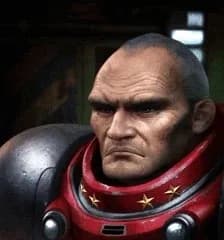
Alpha Squadron
Alpha Squadron, nicknamed the Blood Hawks, was an elite Terran Confederate military formation under General Edmund Duke that defected to the Sons of Korhal during the Great War and went on to serve the Terran Dominion.
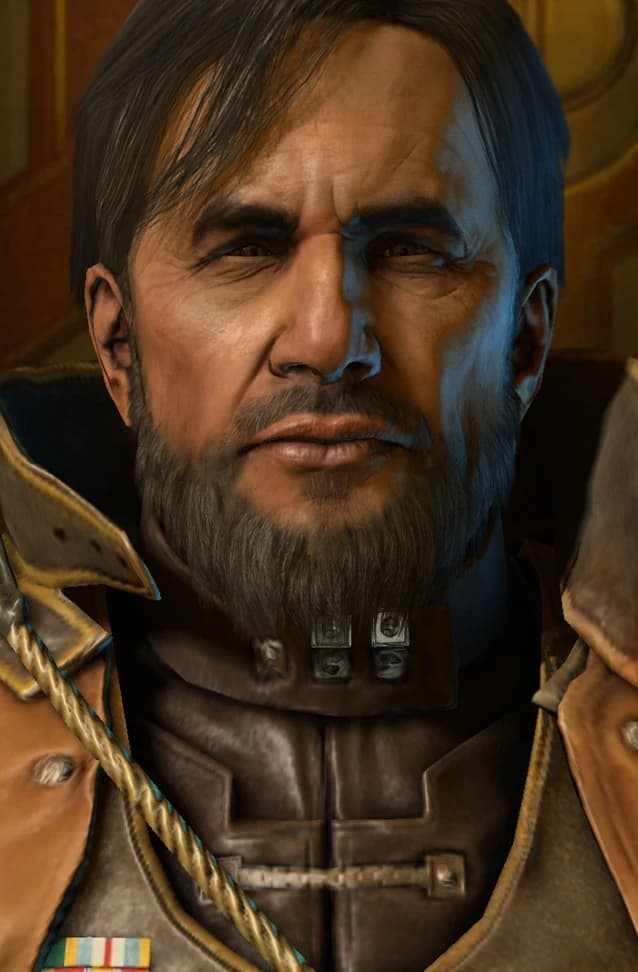
Arcturus Mengsk
Arcturus Mengsk led the Sons of Korhal to bring down the Terran Confederacy and crowned himself Emperor of the Terran Dominion, ruling through cunning, propaganda, and brute force until his death during the Second Great War.
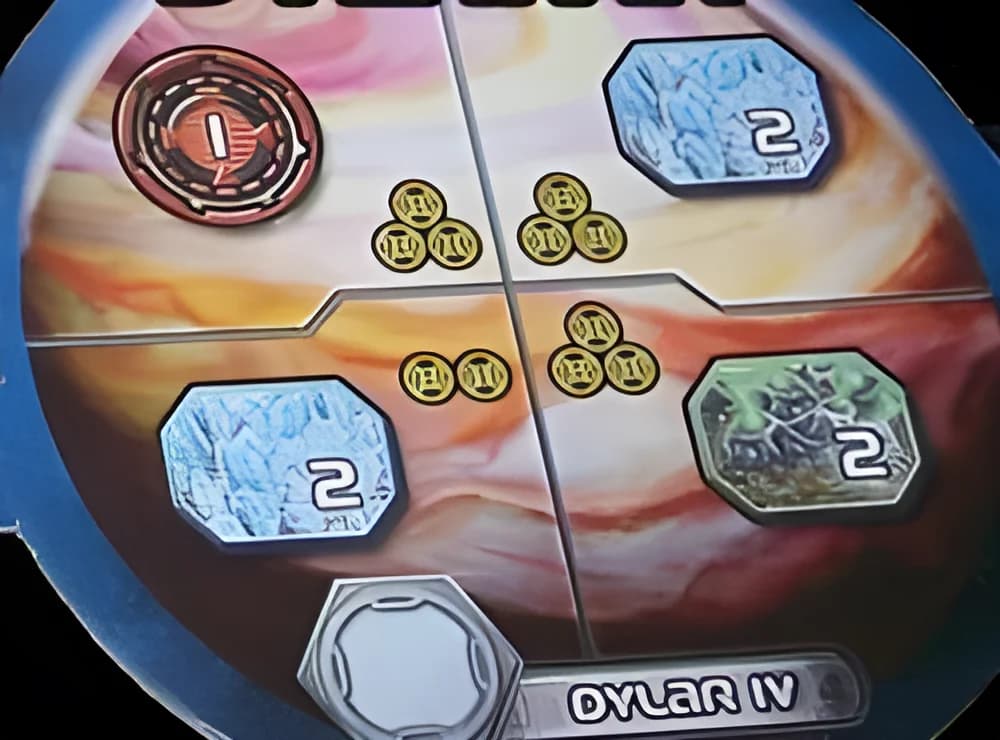
Dylar IV
Dylar IV was a planet in the Koprulu sector that served as a Core World of the Terran Confederacy and the home of the Dylarian Shipyards. Once the site of an ancient protoss mining colony, it passed in turn to the Confederacy, the zerg, and the Terran Dominion.
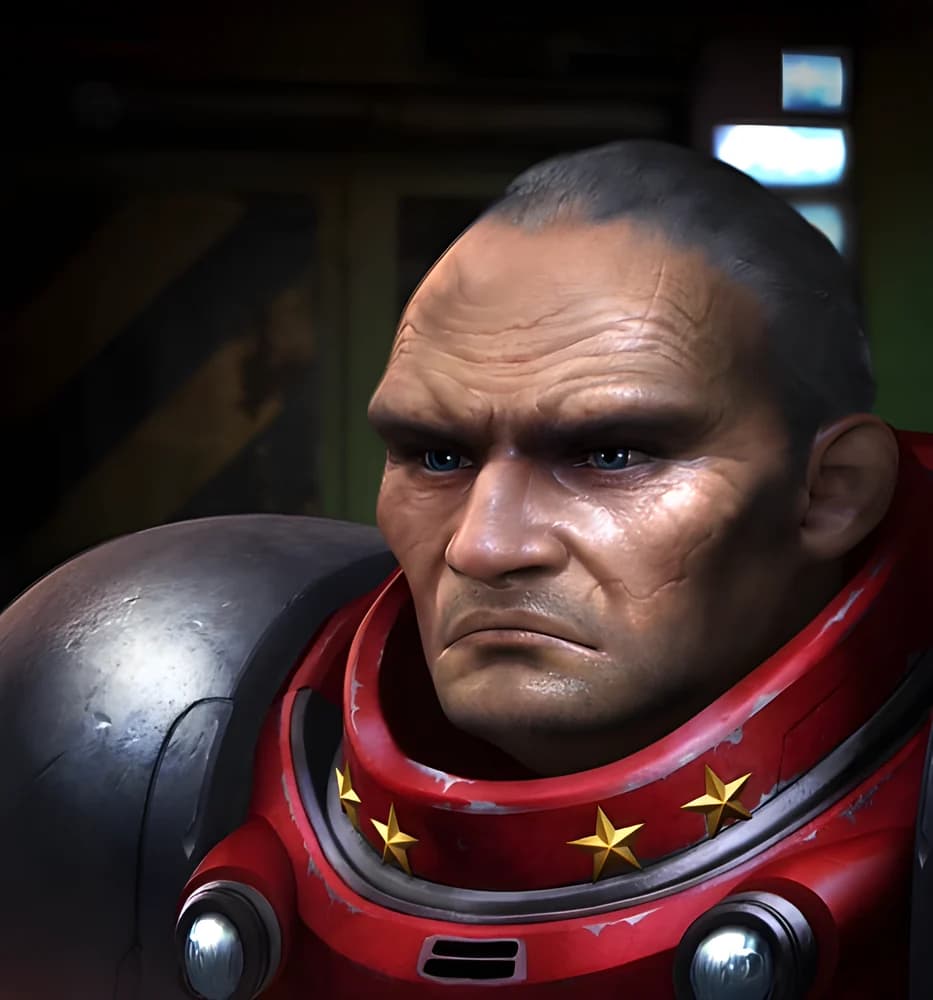
Edmund Duke
Edmund Duke was a Terran Confederacy general in command of Alpha Squadron and a member of one of the Old Families of Tarsonis. After his rescue by the Sons of Korhal he defected to Arcturus Mengsk, becoming the chief military tactician of the Terran Dominion until his death at Sarah Kerrigan's hands.
Horace Warfield
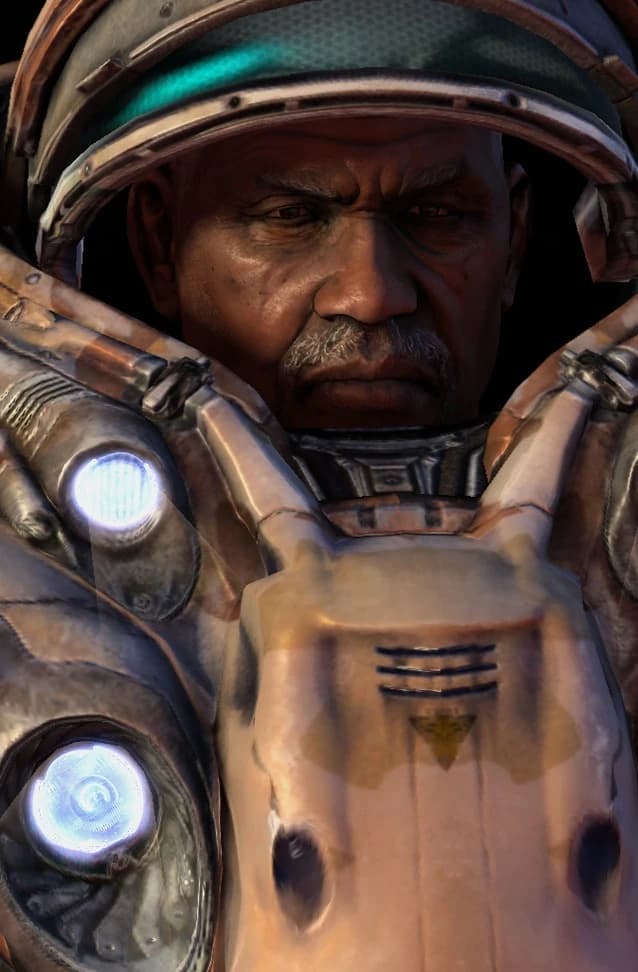
Horace Warfield was a Terran Dominion general and commander-in-chief of the Dominion Armed Forces during the Second Great War. A longtime friend of Arcturus Mengsk, he led the war against the zerg, was saved by Jim Raynor on Char, and was killed by Sarah Kerrigan defending the wounded of his command.

Jim Raynor
James Eugene Raynor was a farm boy turned Confederate marine, marshal, and rebel who helped bring down the Terran Confederacy and later fought its successor, the Terran Dominion, becoming one of the few terrans to ally long-term with the protoss.
Mentioned in47 entries
321st Colonial Rangers Battalion
The 321st Colonial Rangers Battalion was an elite Terran Confederacy unit formed on Turaxis II during the Guild Wars. Under the corrupt Colonel Vanderspool it gave rise to the Special Tactics and Missions Platoon, nicknamed Heaven's Devils, which counted Jim Raynor and Tychus Findlay among its members.
Alpha Squadron
Alpha Squadron, nicknamed the Blood Hawks, was an elite Terran Confederate military formation under General Edmund Duke that defected to the Sons of Korhal during the Great War and went on to serve the Terran Dominion.
Angus Mengsk
Angus Mengsk was a senator of Korhal and a member of the Old Families who turned against the Terran Confederacy, declared Korhal's independence, and was assassinated with his family by Confederate ghosts. His murder set his son Arcturus on the path that would forge the Terran Dominion.
Arcturus Mengsk
Arcturus Mengsk led the Sons of Korhal to bring down the Terran Confederacy and crowned himself Emperor of the Terran Dominion, ruling through cunning, propaganda, and brute force until his death during the Second Great War.
Armory: research forge of the terran war machine
The armory was a terran research structure where scientists and test groups developed improved materials for the weapons and armor of vehicles and starships. Built around a core of cooling turbines and raised among the first buildings of any Dominion field base, it kept terran armor and airpower ahead of the enemies arrayed against them.
Battlecruiser
The battlecruiser was the terran sector's capital ship, a heavily armed and armored warship dating back to the early Confederacy that served as both a general-purpose combatant and a fleet command vessel.
C-14 Impaler: the Marine Corps' standard gauss rifle
The C-14 Impaler fires 8 mm armor-piercing spikes at thirty rounds per second, driven by a magnetic accelerator pack that gives the gauss rifle its name. Standard issue for Confederate and Dominion marines, in service by 2478, it still runs on gunpowder and fails when its ammunition gets wet.
Char
Char was an inhospitable volcanic planet in the Koprulu sector that became the primary hive world of the zerg. It was the site of Sarah Kerrigan's rebirth as the Queen of Blades and, years later, of her restoration to human form.
CMC Powered Combat Suit
The CMC Powered Combat Suit was the standard armored exoskeleton of terran infantry across the Koprulu sector, an enclosed hardskin worn by marines and firebats of the Confederacy, the Terran Dominion, and the Kel-Morian Combine. Its successive models defined the appearance and survivability of the human foot soldier from the Guild Wars through the End War.
Cole Hickson
Cole Hickson was a terran outlaw and soldier scarred on the left side of his face, a sniper and frequent leader of the War Pigs. He once saved Jim Raynor's sanity in a Kel-Morian prison camp, then years later was resocialized by Tamsen Cauley into an unwitting assassin sent against Raynor.
Confederate Armed Forces: military arm of the Terran Confederacy
The Confederate Armed Forces was the military of the Terran Confederacy, headquartered on Tarsonis and organized into squadrons of conscripts and resocialized criminals. It fought the Kel-Morian Combine in the Guild Wars, razed Korhal with nuclear weapons, and collapsed when the zerg overran Tarsonis.
Confederate Marine Corps: infantry backbone of the Terran Confederacy
The Confederate Marine Corps was the best known military arm of the Terran Confederacy, an infantry service older than the Confederacy itself that filled its ranks with resocialized criminals and reluctant volunteers. It fought the Kel-Morian Combine through the Guild Wars and was destroyed alongside its government when the zerg overran Tarsonis.
+ 35 more
Get new articles in your inbox
No spam. New lore drops, canon conflicts, and deep dives only when they’re worth reading.
Some links on Lore Fortress are affiliate links. If you buy through them we earn a small commission at no extra cost to you.