Warp Prism
Protoss transport and mobile power matrix
The warp prism was a flying protoss machine that carried troops across the battlefield by converting them to energy, and could deploy as a mobile focus for the psionic power matrix that sustains protoss structures.
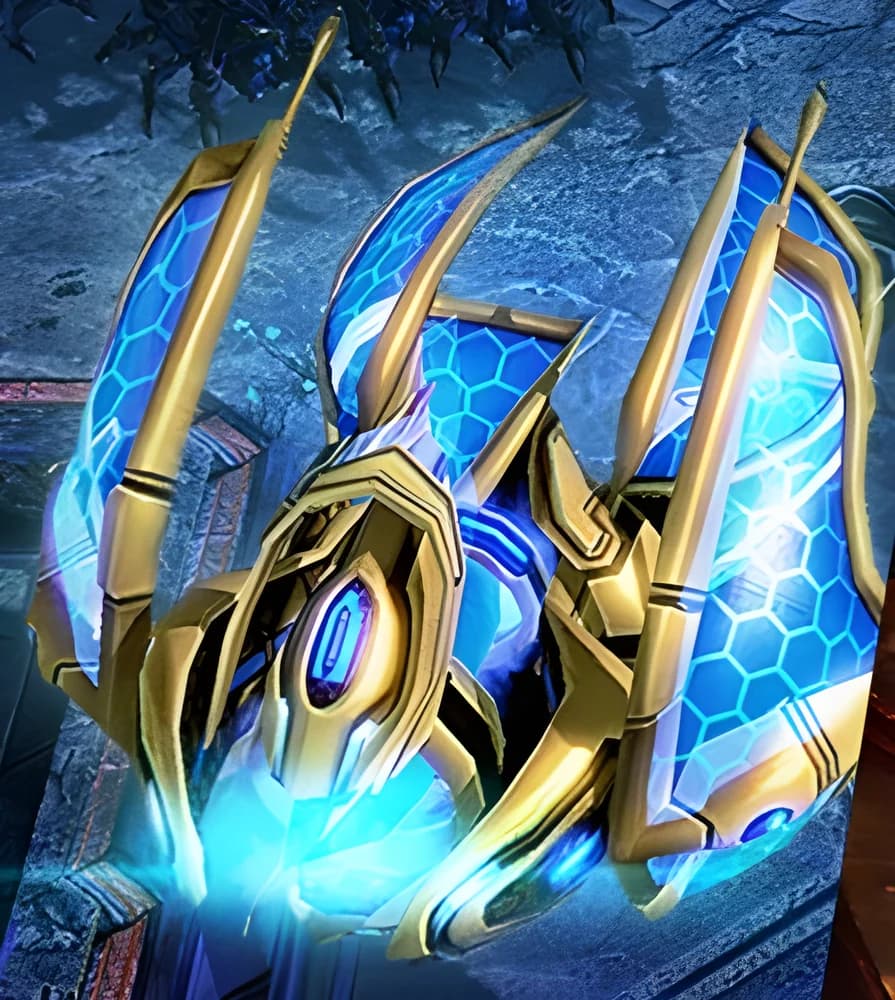
The warp prism was a flying protoss robotic machine built to transport troops and to reinforce the psionic power matrix that sustains protoss structures. A blend of psionics and robotics, it was the successor to the older protoss shuttle and outperformed it in every respect, becoming a fixture of Daelaam fleets in the era of the Second Great War and the conflicts that followed. (StarCraft II: Wings of Liberty; Warp Prism (StarCraft II official site))
Construction and intelligence#
The warp prism married psionic and robotic engineering without a visible join. Its hull was a conductive framework able to absorb most forms of energy by dissipating the force of incoming strikes across its surface. Housed within were thousands of psionic micro-receptors that drew on the power of the vessel's crystal core and projected "wings" laced with psionic energy. These wings were highly resilient and served as the craft's primary navigation sensors. (Warp Prism (StarCraft II official site); StarCraft Field Manual)
The prism was an automated vessel, directed by a robotic mind created through a psionic manufacturing process rather than crewed by a pilot. Its programming was built into the molecules of an advanced crystal lattice, a "crystal computer" described as transcending the constraints of space-time and existing within and beyond itself. This allowed it to manipulate matter and energy with great precision and to process vast amounts of data faster than thought. Warp prisms were capable of travel within a star system. Though fragile, they were considered indispensable, and no protoss fleet was held to be complete without them. They were small enough to be carried inside the hangar of a void ray. (Warp Prism (StarCraft II official site); StarCraft II: Wings of Liberty; StarCraft II: Legacy of the Void; StarCraft II: Nature of the Beast)
Transport and the power matrix#
Protoss forces used the warp prism in two principal ways. Its primary function was transport. Living and inorganic subjects alike were transformed into energy and their unique signatures imprinted into the prism's crystal lattice core. On reaching the destination the process was reversed, and the stored signatures were reconfigured into matter near the vessel. By linking to a warp gate, a prism could rapidly teleport warriors to its position, projecting protoss strength deep into contested ground. (Warp Prism (StarCraft II official site))
Its second and equally vital function was to act as a mobile focus for the psionic matrix. By opening a containment field around its power core after deploying, the warp prism could power protoss structures around it, temporarily replacing destroyed pylons in a colony or enabling a forward base to be raised quickly. Both functions relied on opening the containment field around the vessel's synthetic power source. While deployed in this phased configuration the prism diverted all energy away from its other systems and became completely stationary. During the One-Day War, the chitha demonstrated the ability to disrupt the warp capabilities of warp prisms. (Warp Prism (StarCraft II official site); StarCraft Field Manual; StarCraft: Evolution)
Variants and legacy#
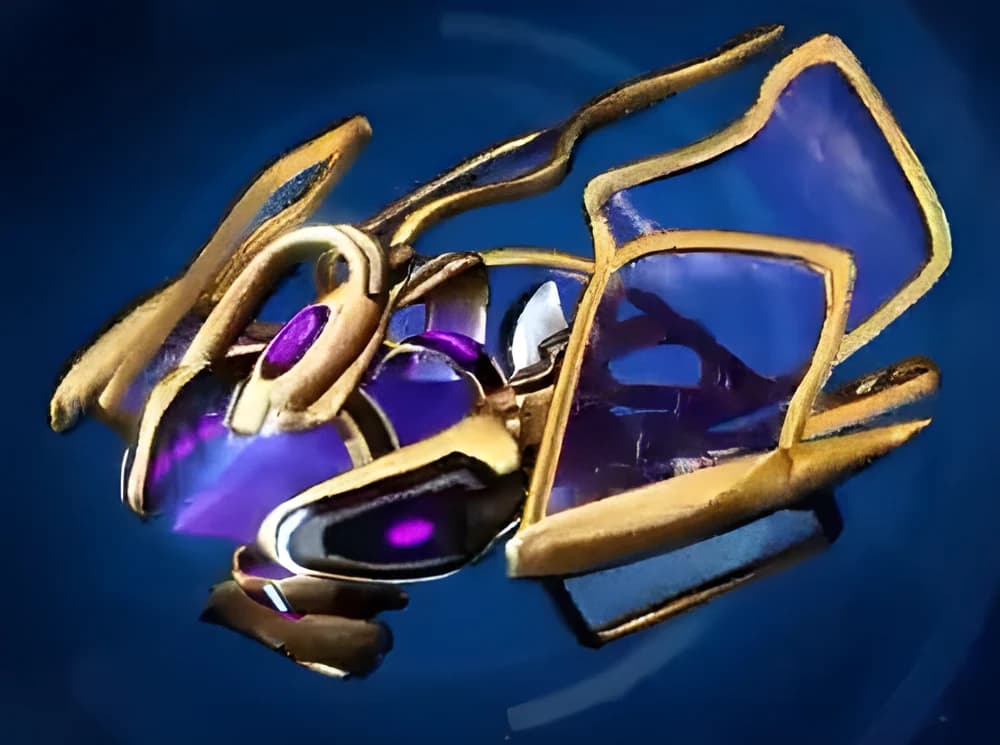
The warp prism's design did not remain solely in Daelaam hands. The Tal'darim obtained the design by 2504 and, by 2506, re-purposed it into a larger variant; whether to arm warp prisms with heavy weaponry or to reserve them purely for deploying warriors remained a point of contention among their fleet lords. After the End War the Daelaam experimented with infusing warp prisms with Void energies to create phase prisms. Purifier warp prisms were built to transfer the artificial personalities of Purifiers between shells anywhere on the battlefield, and warp prisms of ancient design were deployed whose crystal lattices would at times reflect the neural patterns of the templar they carried. The recorded variants included the Tal'darim titanic warp prism and war prism, the Nerazim phase prism, and the Ihan-rii prism, the last patterned after a flower that once grew across the hillsides of their homeworld. (StarCraft II: Wings of Liberty; StarCraft II: Legacy of the Void)
Frequently asked questions
- What is a warp prism?
- The warp prism was a flying protoss robotic machine built to transport troops and to reinforce the psionic power matrix that sustains protoss structures. A blend of psionics and robotics, it was the successor to the older protoss shuttle and outperformed it in every respect.
- How did a warp prism transport protoss forces?
- Living and inorganic subjects alike were transformed into energy and their unique signatures imprinted into the prism's crystal lattice core. On reaching the destination the process was reversed, and the stored signatures were reconfigured into matter near the vessel.
- How did a warp prism power protoss structures?
- By opening a containment field around its power core after deploying, the warp prism could power protoss structures around it, temporarily replacing destroyed pylons in a colony or enabling a forward base to be raised quickly. While deployed in this phased configuration it diverted all energy away from its other systems and became completely stationary.
- Was the warp prism crewed by a pilot?
- No. The prism was an automated vessel, directed by a robotic mind created through a psionic manufacturing process rather than crewed by a pilot. Its programming was built into the molecules of an advanced crystal lattice described as a crystal computer.
- What variants of the warp prism existed?
- The Tal'darim obtained the design by 2504 and re-purposed it into a larger variant. Recorded variants included the Tal'darim titanic warp prism and war prism, the Nerazim phase prism, and the Ihan-rii prism, and the Daelaam later experimented with infusing warp prisms with Void energies to create phase prisms.
Gallery


Images via StarCraft Wiki
Sources
- GameStarCraft II: Wings of Liberty, Blizzard Entertainment, 2010
- GameStarCraft II: Legacy of the Void, Blizzard Entertainment, 2015
- BookStarCraft Field Manual, Rick Barba, Insight Editions, 2015
- BookStarCraft: Evolution, Timothy Zahn, 2016
- WebWarp Prism (StarCraft II official site), Blizzard Entertainment, unit pages and "Warp Prism Science", 2007 to 2014
- ComicStarCraft II: Nature of the Beast, Brian Alexander and Alex Acks (w), Carlos Rodriguez (a), Blizzard Entertainment, 2022
Spotted a factual error or a primary source we missed? Email a correction. Every flagged claim gets reviewed.
Followed from this entry
Khaydarin Crystal
Khaydarin crystals were psi-active psionic artifacts left behind by the xel'naga on many worlds. Used by the protoss to power their technology and strengthen their psionic bond, the crystals restored the Khala at the end of the Aeon of Strife and remained central to protoss civilization.
Void
The Void was a dark, cold manifestation of space separate from the material universe, the wellspring from which the Nerazim drew their psionic power and the realm in which the minds of the xel'naga endured after the death of their bodies. Its energy was unpredictable and lethal in sufficient quantity.
Daelaam
The Daelaam was the unified protoss government that bound the Khalai, Nerazim, Purifiers, and some Tal'darim together after the fall of Aiur, led by Hierarch Artanis through the End War against Amon and the reclamation of their homeworld.
End War: Amon's crusade on the galaxy
The resurrected xel'naga Amon corrupted the Khala and cost the protoss both Aiur and Shakuras. Kerrigan, remade as a xel'naga, killed him in the Void.
Dark Templar (Nerazim)
The Nerazim, known to outsiders as the Dark Templar, are the protoss tribes who shunned the Khala, severed their nerve cords, and drew their power from the Void instead. Banished from Aiur, they became masters of shadow and exile before reuniting with their kin under the Daelaam.
Protoss
The protoss are an ancient, psionically gifted humanoid species native to Aiur, uplifted by the xel'naga and bound together by the Khala. Among the three dominant species of the galaxy, they are the most technologically advanced, and the most divided by their own history.
Mentioned in4 entries
Artificial intelligence: machine minds of the Koprulu sector
Artificial intelligence was simulated intelligence implanted as computer coding, carried in software or in hardware such as robots. Terrans relied on it for everything from navigation to warfare, the protoss built their automatons through psionic manufacture and once created the sentient Purifiers, and even the xel'naga left thinking crystals behind them.
Every Protoss Unit in StarCraft and StarCraft II, Explained
Every protoss warrior, war machine and starship from StarCraft, Brood War and the three StarCraft II games. Each entry covers who fights in it or builds it, how it fights, what it did in the story and which games it appears in, plus the Nerazim, Tal'darim and Purifier versions from Legacy of the Void.
Ihan-rii: the protoss sect that slept for millennia and woke to reclaim Tyrador
The Ihan-rii are a fanatical protoss sect that split from their kindred millennia ago, worship the xel'naga as their ancestors, and returned from deep stasis to reclaim Arakyr, the world terrans call Tyrador IX.
Psionic matrix
The psionic matrix, also called the psi-matrix, was a field of energy emanating from Aiur that powered protoss structures and units. Tapped through pylons and nexus links, it was first sparked in 500 B.C.E. and later dismantled to deny Amon the Golden Armada.
Get new articles in your inbox
No spam. New lore drops, canon conflicts, and deep dives only when they’re worth reading.
Some links on Lore Fortress are affiliate links. If you buy through them we earn a small commission at no extra cost to you.