Widow Mine
Terran Burrowing Sentinel Weapon
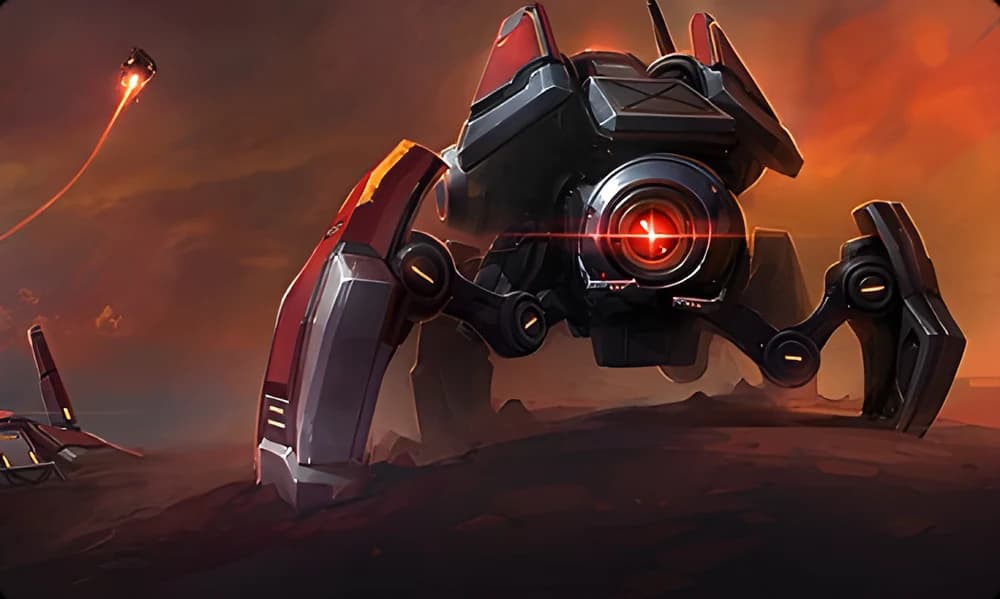
The widow mine was a remotely controlled terran support weapon, a quadrupedal device that burrowed into the ground and launched a sentinel missile at any enemy that drew near. It was introduced into Dominion service as the next step in automated weaponry.
The widow mine was a terran support weapon, a quadrupedal device that represented the next step in Dominion automated weaponry. Controlled remotely, it was piloted into a contested area and set to activate when enemy units drew near, at which point it launched a missile that exploded in a firestorm of shrapnel to eliminate its target and any foes nearby. It was built on the lineage of the earlier terran spider mine and saw use in roles ranging from perimeter defense to political assassination. (StarCraft II: Heart of the Swarm; Widow Mine (StarCraft II official site))
Design and operation#
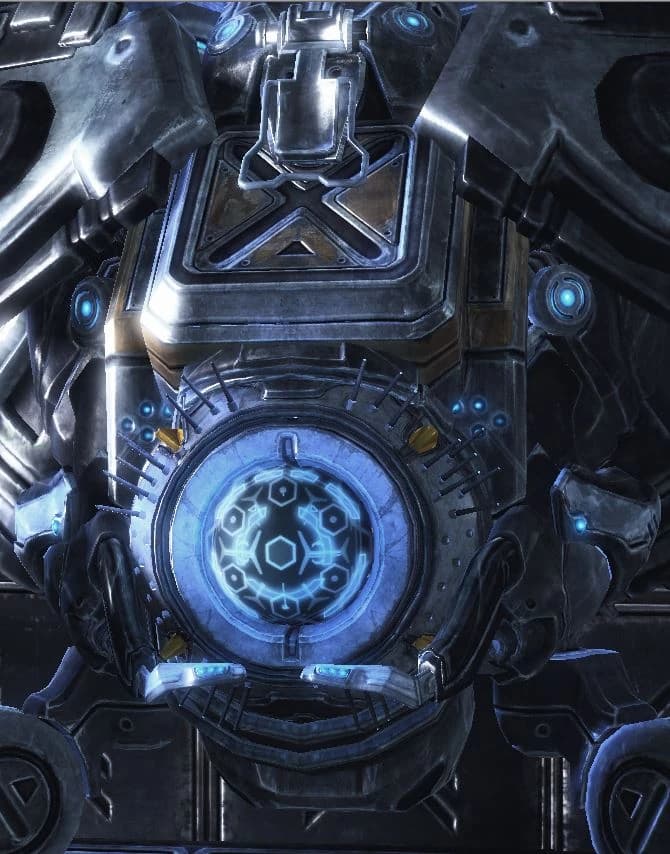
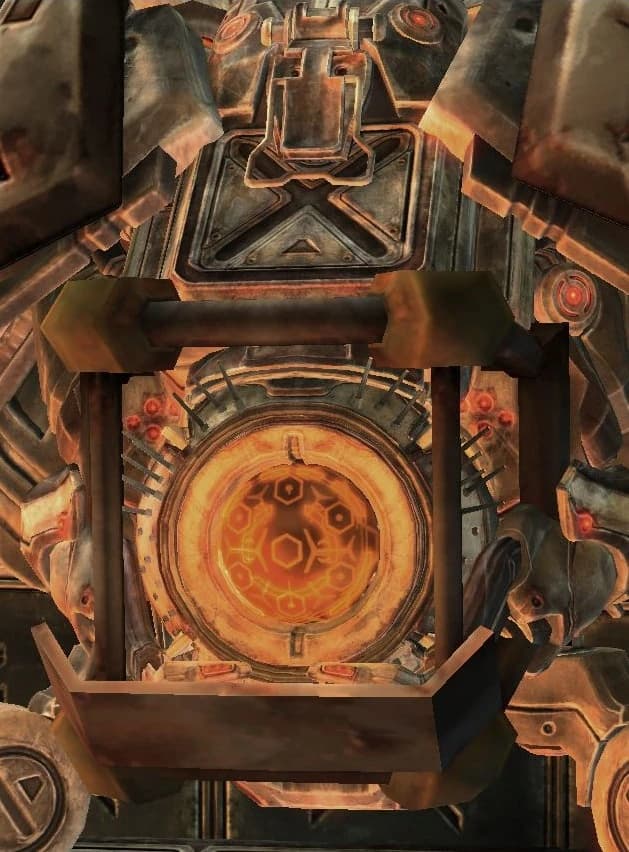
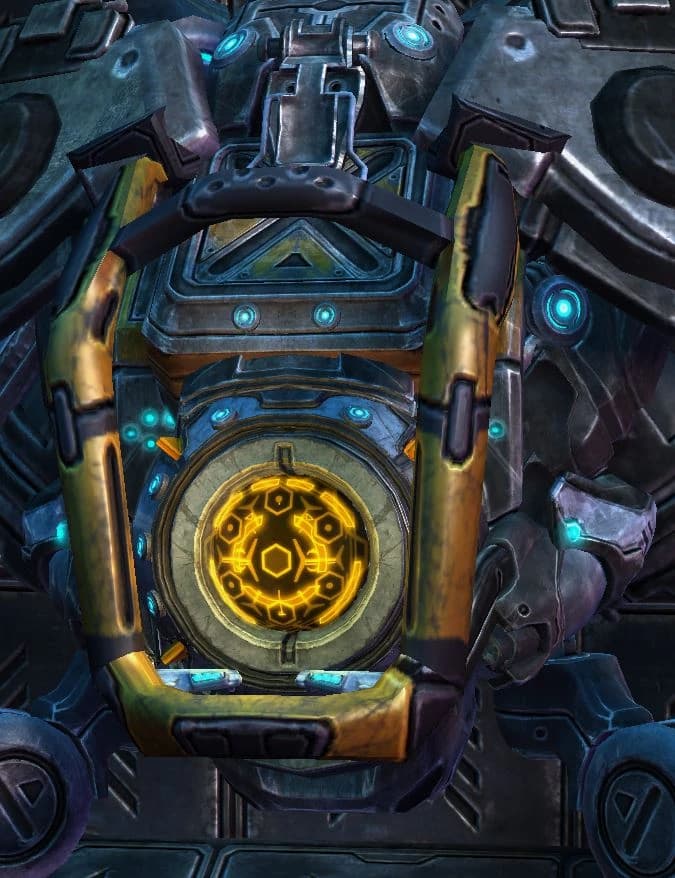
A support unit, the widow mine was a quadrupedal device standing just under half as tall as a terran wearing CMC armor. It was controlled remotely, piloted into a contested area and then set to activate when enemy units approached. Once triggered, it launched a missile designed to explode in a firestorm of shrapnel, eliminating its primary target along with any foes that happened to be nearby. These sentinel missiles were of short range and carried a fragmentation warhead that delivered superheated shrapnel to the target and the adjacent area on detonation. The missiles were assembled in an automated manufacturing plant located in the thorax of the unit. (Widow Mine (StarCraft II official site); StarCraft Field Manual)
After numerous friendly-fire incidents, widow mines were outfitted with a powerful friend-or-foe identification system loosely based on the operative algorithms present in all Crucio smart shells. The system initially worked as intended, but it did not take long for casualty rates to rise once again. The widow mine also carried a simple onboard AI for self-preservation: if it sustained crippling damage to any of its systems, an advanced heuristics recovery algorithm would run multiple simulated scenarios, reroute power from affected systems, and reprogram the unit's behavior to either complete its mission or return home for repairs. (Widow Mine (StarCraft II official site))
History and development#
The widow mine was inspired by zerg burrowers and constructed around a modified version of the spider mine pioneered by Victor Kachinsky. Field tests revealed that the weapon's burrowing capabilities could be improved at nominal cost. The addition of neosteel carbide tips and sonic oscillators, which allowed each leg to vibrate independently at high speed, significantly reduced burrow times, eventually cutting them by two-thirds. The enhanced claws also saw much use in "Mine Fighting," a popular and illegal sport that pitted two of the robots against each other for credits and glory. The design was further improved through the research and development of Redell Quinton of Project Blackstone. (Widow Mine (StarCraft II official site); StarCraft Field Manual; Project Blackstone)
Widow mines were used in diverse scenarios, including perimeter defense, tactical ambushes, and political assassinations. An apocryphal record even attested to a single widow mine killing a corrupt colonial magistrate and his entourage of like-minded officials by destroying the dining room they were in. Under the reign of Valerian Mengsk, technicians who remained perplexed by the weapon's occasional misfires added more protective plating to better contain accidents and guard against unintended injuries. (Widow Mine (StarCraft II official site); StarCraft II: Legacy of the Void)
Variants and culture#
Several terran factions developed their own widow mines. Mira's Mercs modified theirs to accommodate additional weaponry and explosives after a long period of destructive experimentation. The Umojan Protectorate, always fond of robotics, held an exclusive competition to craft the perfect widow mine and were thrilled to discover that the winner was still a student finishing her degree; that winning design was incorporated into their arsenal. The widow mine also held a curious place in terran culture. The robots were common pets among the upper-class households of Tyrador IX, despite the occasional gory accident that made the news, and Dominion marines were known to pit widow mines against one another in friendly scuffles at the barracks, disabling the drilling-claw upgrade and the missile launcher for the sake of balance. (StarCraft II: Legacy of the Void; StarCraft Field Manual)
Frequently asked questions
- What is a widow mine?
- The widow mine was a terran support weapon, a quadrupedal device that represented the next step in Dominion automated weaponry. Controlled remotely, it was piloted into a contested area and set to activate when enemy units drew near, at which point it launched a missile that exploded in a firestorm of shrapnel.
- How does a widow mine attack?
- When triggered, it launched a short-range sentinel missile carrying a fragmentation warhead that delivered superheated shrapnel to the target and the adjacent area on detonation. These missiles were assembled in an automated manufacturing plant located in the thorax of the unit.
- What was the widow mine derived from?
- The widow mine was inspired by zerg burrowers and constructed around a modified version of the spider mine pioneered by Victor Kachinsky. Its design was further improved through the research and development of Redell Quinton of Project Blackstone.
- Why were widow mines fitted with a friend-or-foe identification system?
- After numerous friendly-fire incidents, widow mines were outfitted with a powerful friend-or-foe identification system loosely based on the operative algorithms present in all Crucio smart shells. The system initially worked as intended, but it did not take long for casualty rates to rise once again.
- How were widow mines used outside of combat?
- The robots were common pets among the upper-class households of Tyrador IX, and Dominion marines pitted widow mines against one another in friendly scuffles at the barracks, disabling the drilling-claw upgrade and the missile launcher for balance. The enhanced claws also saw use in Mine Fighting, an illegal sport that pitted two of the robots against each other for credits.
Gallery
Images via StarCraft Wiki
Sources
- GameStarCraft II: Heart of the Swarm, Blizzard Entertainment, 2013
- GameStarCraft II: Legacy of the Void, Blizzard Entertainment, 2015
- BookStarCraft Field Manual, Rick Barba, Insight Editions, 2015
- WebWidow Mine (StarCraft II official site), Blizzard Entertainment, unit page and "Widow Mine Science", 2013 and 2014
- WebProject Blackstone, Blizzard Entertainment viral campaign, 2013
Spotted a factual error or a primary source we missed? Email a correction. Every flagged claim gets reviewed.
Followed from this entry

Terran Dominion
The Terran Dominion was the human empire founded by Arcturus Mengsk on the ruins of the Terran Confederacy, crowned from Korhal and ruled first through oppression and propaganda, then reformed under his son Valerian after the Second Great War.
Terran
The terrans are the descendants of a failed 23rd century colony mission from Earth, a young and highly factionalized species with latent psionic potential. Despite endless wars among themselves and with their alien neighbors, they stand as one of the three dominant species of the galaxy.

Tyrador
Tyrador was a terran system whose co-orbiting outer worlds, Tyrador VIII and Tyrador IX, served as core worlds and luxury resorts. Tyrador IX, ancient homeworld of the Ihan-rii protoss, became jointly owned by the Ihan-rii and the Terran Dominion after a zerg invasion.
Umojan Protectorate: the neutral power
Smaller than the Confederacy or the Dominion, Umoja held both off with advanced technology and espionage, and sheltered the dissidents they wanted.
Valerian Mengsk: the archaeologist emperor
Arcturus' secret heir allied with Jim Raynor to deinfest Kerrigan, broke with his father over her fate, and took the Dominion throne on his death.

Zerg
The zerg are a ravenous collective of biologically advanced aliens who evolve by assimilating the essence of other species in pursuit of genetic perfection. Created by Amon's xel'naga on Zerus and bound to the Overmind, they grew into one of the three dominant powers of the galaxy.
Mentioned in3 entries
Every Terran Unit in StarCraft and StarCraft II, Explained
Every terran unit from StarCraft, Brood War and the three StarCraft II campaigns, sorted into infantry, vehicles and starships. Each entry covers who built it, what it was for and which games it appears in.
Factory: armored heart of terran vehicle production
The factory was the automated terran structure that served as the primary production center for ground vehicles, structures, and ammunition. Behind walls of reinforced neosteel it housed elite vehicle crews in first class quarters, assembled war machines with interior cranes, and could lift off on ventral thrusters to follow the front wherever it moved.
Mira's Marauders: the mercenary company that rules Dead Man's Rock
Mira's Marauders are the terran mercenary company led by Mira Han, based at Deadman's Port on Dead Man's Rock and the primary power on that lawless planet since the death of Ethan Stewart.
Get new articles in your inbox
No spam. New lore drops, canon conflicts, and deep dives only when they’re worth reading.
Some links on Lore Fortress are affiliate links. If you buy through them we earn a small commission at no extra cost to you.