Zerg technology
the biological sciences of the Swarm
The Zerg Swarm did not build machines but evolved them, channeling its mastery of genetics, regeneration, and creep into living weapons and structures that served in place of the manufactured technology of the terrans and protoss.
The technology of the zerg was not built but grown. The Swarm built no machines in the manner of the terrans or protoss, yet it demonstrated a clear understanding of technology and channeled its mastery of genetics, regeneration, and the living substance called creep into biological weapons and structures that filled the same role. In place of engineering, the zerg practiced directed evolution, assimilating the genetic material of other species to refine themselves toward an ideal of perfection. (StarCraft (manual); StarCraft II: Heart of the Swarm)
Biology in place of machinery#
The zerg used no technology in the conventional sense, yet they demonstrated a clear understanding of it, having been known to open airlocks and doorways in the colonies they raided. Their natural armor and weaponry were comparable to modern technology in toughness and armor-piercing capability, with bone armor able to take half a dozen gauss rifle rounds before breaking. Their bodies served where machines served other races: regenerative capabilities allowed even a gravely wounded zerg to return to full health, and unique cellular chemistry let dead cell matter be combined with normal proteins to create new cells, so that a colony remained viable if even one creature or structure survived. (StarCraft (manual); StarCraft: Evolution; StarCraft II: Wings of Liberty)
Directed evolution and assimilation#
In place of engineering, the zerg practiced directed evolution. Upon hatching, a specimen was the product of evolution carried out at the cellular level, built from the strongest mutations that survived an internal contest between cell types that generated and hunted new variations. The zerg assimilated the genetic material of other species to advance themselves, at first selectively, taking only strong species at the top of their food chains, and later, under Sarah Kerrigan, assimilating whatever material they encountered. The zerg gene pool was in constant flux, and the few that survived a given battle evolved during it, growing more powerful by the hour as the Swarm studied its enemies and adapted. This perpetual refinement was directed by Alpha Zerg strains such as cerebrates and queens, and the protoss stood alone as the only species the zerg had failed to assimilate. (StarCraft (manual); StarCraft Field Manual; StarCraft II: Heart of the Swarm; StarCraft)
Creep, hives, and living structures#
Zerg structures were essentially giant organs, drawing sustenance from creep, a thick carpet-like substance that integrated a colony's structures into a single macro-organism. The structures could adapt while under fire, hardening their outer shells with bony plates to ensure survival. Creep also served the Swarm in motion: most ground strains could burrow through virtually any surface and moved faster across creep than over normal ground, skating over microscopic filaments within it. The Swarm's underground rapid-transit system, provided by the nydus canal during the Great War and Brood War and later by nydus worms spawned from the nydus network, let it dig ambush routes faster than any enemy could react. (StarCraft (manual); Lens of the Void; Queen (StarCraft II official site); StarCraft II: Wings of Liberty)
Movement between worlds#
The zerg were able to tear rifts into warp space to transport themselves at faster-than-light speeds, a capability they used many times to cross the distances between worlds. They stormed planets readily, typically dropping a massive payload of hive spores to seed a surface before invasion, and through infestation could convert entire planetary biosystems into extensions of their will. (StarCraft; StarCraft (manual))
The quest for perfection#
Underlying the whole of zerg biology was a drive toward genetic perfection. The Swarm pitted itself deliberately against harsh climates and powerful foes to push its own evolution, treating war itself as survival of the fittest and every conflict as another opportunity to refine the living technology that was the zerg themselves. (StarCraft (manual); StarCraft II: Heart of the Swarm)
Frequently asked questions
- What is zerg technology?
- The technology of the zerg was not built but grown. The Swarm did not use manufactured machines like the terrans or protoss, instead channeling its mastery of genetics, regeneration, and the living substance called creep into biological weapons and structures that filled the same role.
- How did the zerg evolve instead of building machines?
- In place of engineering, the zerg practiced directed evolution, assimilating the genetic material of other species to refine themselves toward perfection. This perpetual refinement was directed by Alpha Zerg strains such as cerebrates and queens.
- What is creep and what does it do?
- Creep is a thick carpet-like substance that integrated a colony's structures into a single macro-organism, with zerg structures essentially being giant organs that drew sustenance from it. Most ground strains moved faster across creep than over normal ground, skating over microscopic filaments within it.
- How did the zerg travel between worlds?
- The zerg tore rifts into warp space to transport themselves at faster-than-light speeds across the distances between worlds. They typically seeded a planet's surface with a massive payload of hive spores before invasion.
- Which species could the zerg not assimilate?
- The protoss stood alone as the only species the zerg had failed to assimilate. Their psionic might made them the prize the Overmind most wanted to absorb.
Sources
- GameStarCraft, Blizzard Entertainment, 1998
- BookStarCraft (manual), Peter Underwood, Bill Roper, Chris Metzen and Jeffrey Vaughn, Blizzard Entertainment, 1998
- GameStarCraft II: Wings of Liberty, Blizzard Entertainment, 2010
- GameStarCraft II: Heart of the Swarm, Blizzard Entertainment, 2013
- BookStarCraft Field Manual, Rick Barba, Insight Editions, 2015
- BookStarCraft: Evolution, Timothy Zahn, 2016
- WebLens of the Void, Hugh Todd, Blizzard Entertainment short story, 2013
- WebQueen (StarCraft II official site), Blizzard Entertainment, 2010
Spotted a factual error or a primary source we missed? Email a correction. Every flagged claim gets reviewed.
Followed from this entry

Brood War: Kerrigan's war for the Swarm
The Brood War was a zerg civil war between Kerrigan and the cerebrate Daggoth over who would succeed the Overmind. The UED invaded from Earth at the same time.
Creep
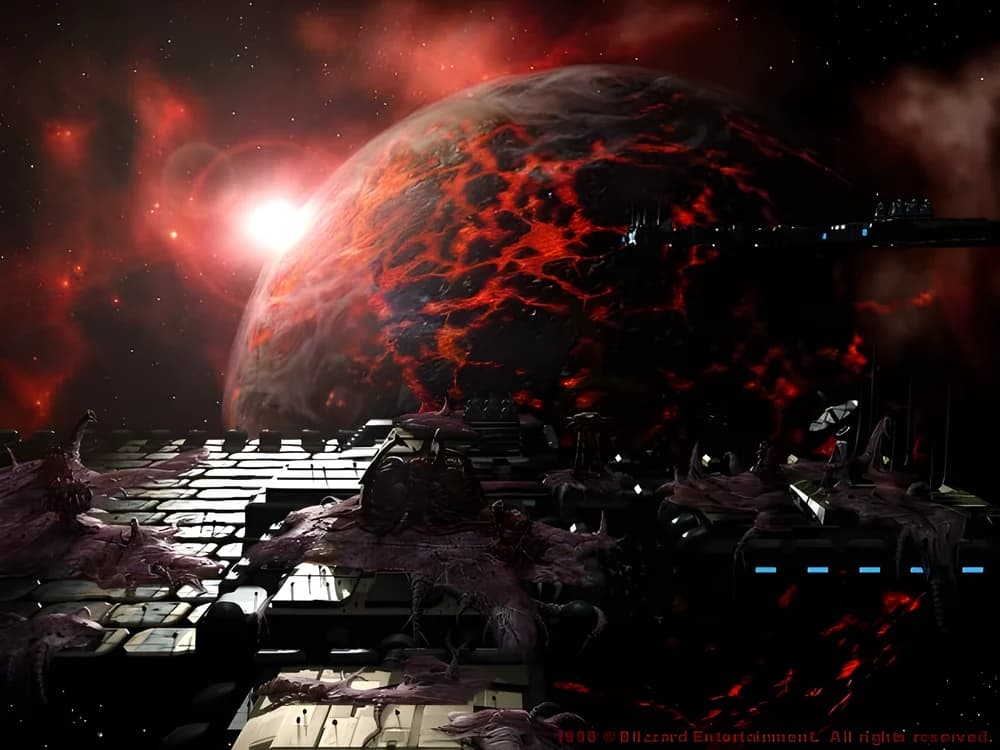
Creep was a living zerg superorganism, a viscous purple substance that nourished zerg structures and strains, bound entire colonies into a single organism, and could consume a whole planet within days if left unchecked.
Great War: protoss against zerg over Aiur
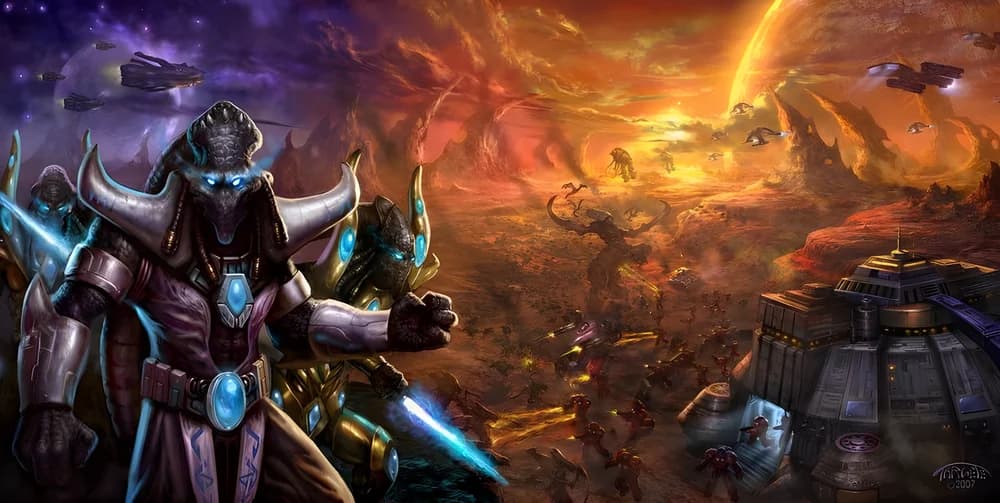
The Great War was the first open fight between protoss and zerg, with the terrans caught between them. It ended over Aiur with the Overmind destroyed.

Sarah Kerrigan, the Queen of Blades
Sarah Kerrigan was a psychic terran who began as a Confederate ghost, rose to be second-in-command of the Sons of Korhal, and after Arcturus Mengsk abandoned her on Tarsonis was captured and infested by the Zerg Swarm to become the Queen of Blades.

Zerg
The zerg are a ravenous collective of biologically advanced aliens who evolve by assimilating the essence of other species in pursuit of genetic perfection. Created by Amon's xel'naga on Zerus and bound to the Overmind, they grew into one of the three dominant powers of the galaxy.
Protoss
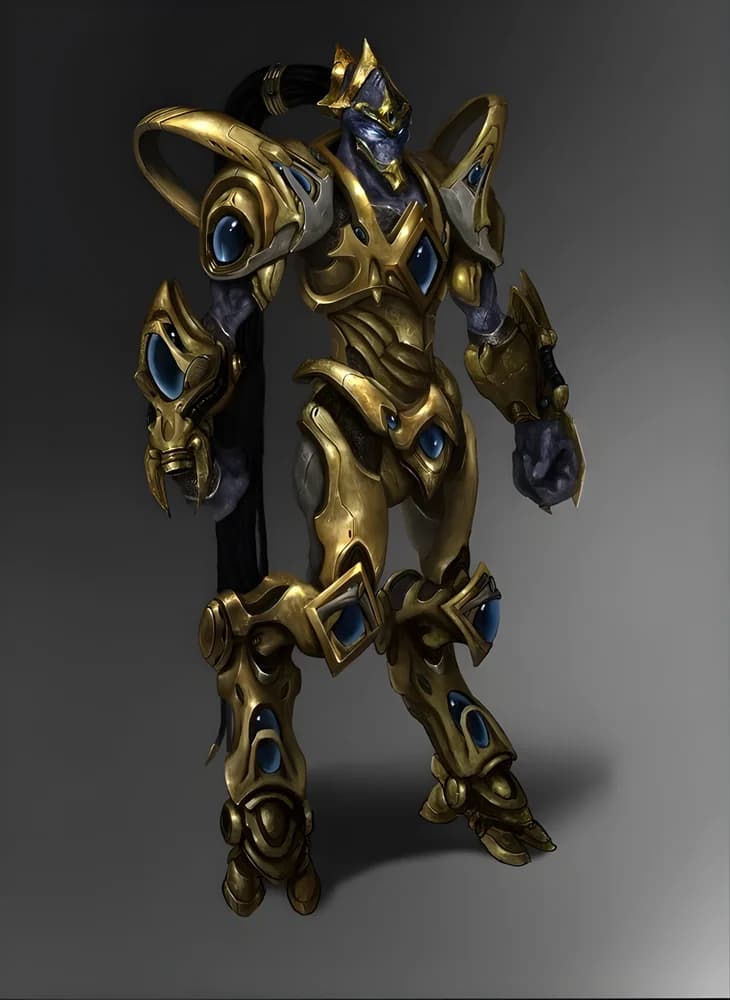
The protoss are an ancient, psionically gifted humanoid species native to Aiur, uplifted by the xel'naga and bound together by the Khala. Among the three dominant species of the galaxy, they are the most technologically advanced, and the most divided by their own history.
Get new articles in your inbox
No spam. New lore drops, canon conflicts, and deep dives only when they’re worth reading.
Some links on Lore Fortress are affiliate links. If you buy through them we earn a small commission at no extra cost to you.