CMS Roanoke
Flagship of the Tau Volantis expedition
The CMS Roanoke was a Sovereign Colonies orbital command platform that served as the flagship of the Galactic Expedition to Tau Volantis. Left adrift in a mine-saturated flotilla after Scenario Five, it was the first wreck Isaac Clarke and John Carver boarded on reaching the frozen world.
The CMS Roanoke was a Sovereign Colonies orbital command platform, the flagship of the Galactic Expedition sent to Tau Volantis in 2311. Less a ship than a headquarters in orbit, it survived the disaster that destroyed the rest of its flotilla and lay derelict for two centuries before Isaac Clarke and John Carver boarded it, the first of the dead vessels they would enter above the frozen world. (Dead Space 3)
A command platform in orbit#
The CMS Roanoke, codenamed "Overlord," was the flagship of the Sovereign Colonies Armed Forces flotilla assigned to investigate Tau Volantis in 2311. It was not a conventional spacecraft but a UD-24 class orbital command platform, built to be the headquarters of the entire expedition. With only limited propulsion and no planetary capability, it was designed for space alone, serving as the operational hub for the ships in orbit. (Dead Space 3)
The platform was built around a large central spindle with two roughly equal modules to either side, one a vast docking and repair bay, the other of less certain function. It held a command center, shuttle maintenance and refueling bays, and quarters for the command staff and visiting researchers, with a saucer-shaped tactical bridge at its center from which the mission was planned and overseen. External carriages let shuttles dock, and it was from the Roanoke that planetside researchers arrived and departed. The opulent officers' quarters, finished in wood and luxury fittings, included the suite of Admiral Marjorie Graves, who commanded the expedition's fleet component. (Dead Space 3)
Scenario Five and the mines#
When the Necromorph outbreak overtook the expedition, the flotilla turned on itself. A battleship built for mine warfare, traveling with the fleet, released its payload of automated mines among the assembled ships. Most were destroyed or heavily damaged, but the Roanoke came through largely intact. The mines did not disperse with time. Two hundred years later the space around the flotilla was still saturated with them, and any approach to the wreck was extraordinarily dangerous. (Dead Space 3)
Arrival of Isaac Clarke#
In 2514, after escaping the destruction of the USM Eudora, Isaac Clarke, Captain Robert Norton, John Carver, and the surviving crewmen Mark Rosen and Locke took refuge aboard the derelict Roanoke. Isaac boarded first and opened the shuttle bay doors to bring the others inside. Norton told him that Ellie Langford's distress signal was coming from somewhere deep within the ship and gave him coordinates to follow. (Dead Space 3)
Searching the interior, Isaac found two-hundred-year-old Necromorphs in deep hibernation, sealed behind a quarantined bulkhead the SCAF troops had covered in memorial graffiti for their dead. In the ship's atomic fusion reactor he briefly encountered a massive Necromorph of an unknown kind. Despite the platform's great size, only a small portion of it could be reached; the vast installations visible across the structure stayed sealed off. After Isaac acquired and launched the CMS Crozier, the Roanoke was left behind as he and his team made their descent to the surface of Tau Volantis. (Dead Space 3)
Frequently asked questions
- What was the CMS Roanoke?
- The CMS Roanoke was a Sovereign Colonies orbital command platform that served as the flagship of the Galactic Expedition sent to Tau Volantis in 2311. Rather than a conventional ship, it was a headquarters in orbit, hosting the command staff and serving as the hub from which researchers traveled to and from the surface.
- How did the Roanoke survive the outbreak?
- When the Necromorph outbreak doomed the expedition, an accompanying mine-warfare battleship released its automated mines among the flotilla. Most ships were destroyed or crippled, but the Roanoke came through largely intact. Two centuries later the surrounding space was still saturated with those mines, making any approach extremely dangerous.
Sources
- GameDead Space 3, Visceral Games, 2013
Spotted a factual error or a primary source we missed? Email a correction. Every flagged claim gets reviewed.
Followed from this entry
CMS Crozier
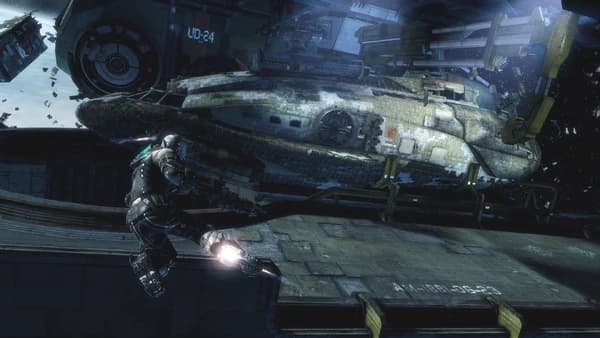
The CMS Crozier was a battered Sovereign Colonies Armed Forces transport shuttle abandoned in the flotilla over Tau Volantis. Repaired by Ellie Langford's team two centuries later, it carried Isaac Clarke down to the planet before breaking apart in the descent.
USM Eudora
The USM Eudora was an Earth Defense Force Special Ops vessel captained by Robert Norton. It pulled Isaac Clarke off the New Horizons Lunar Colony during the Unitologist uprising and carried him to Tau Volantis, where it was torn apart by automated mines in the planet's debris field.
Ellie Langford
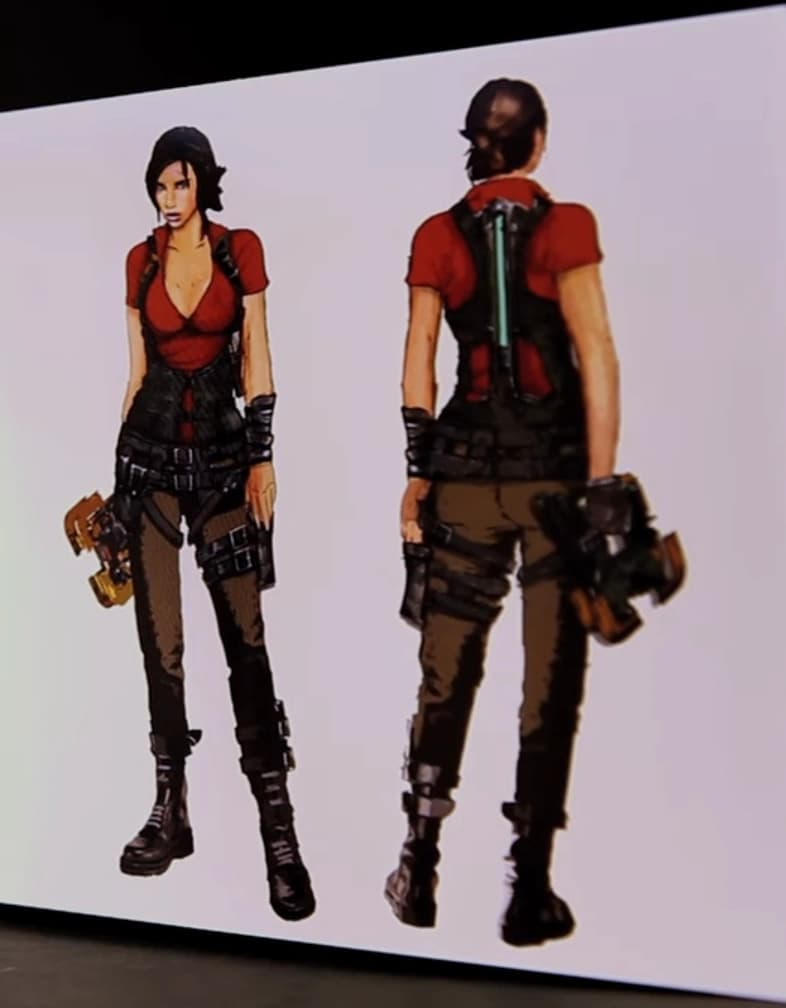
Ellie Langford was a CEC heavy equipment pilot who survived the Necromorph outbreak on Titan Station, fought her way to Tau Volantis to find the source of the Marker signal, and became one of Isaac Clarke's closest companions.
Isaac Clarke
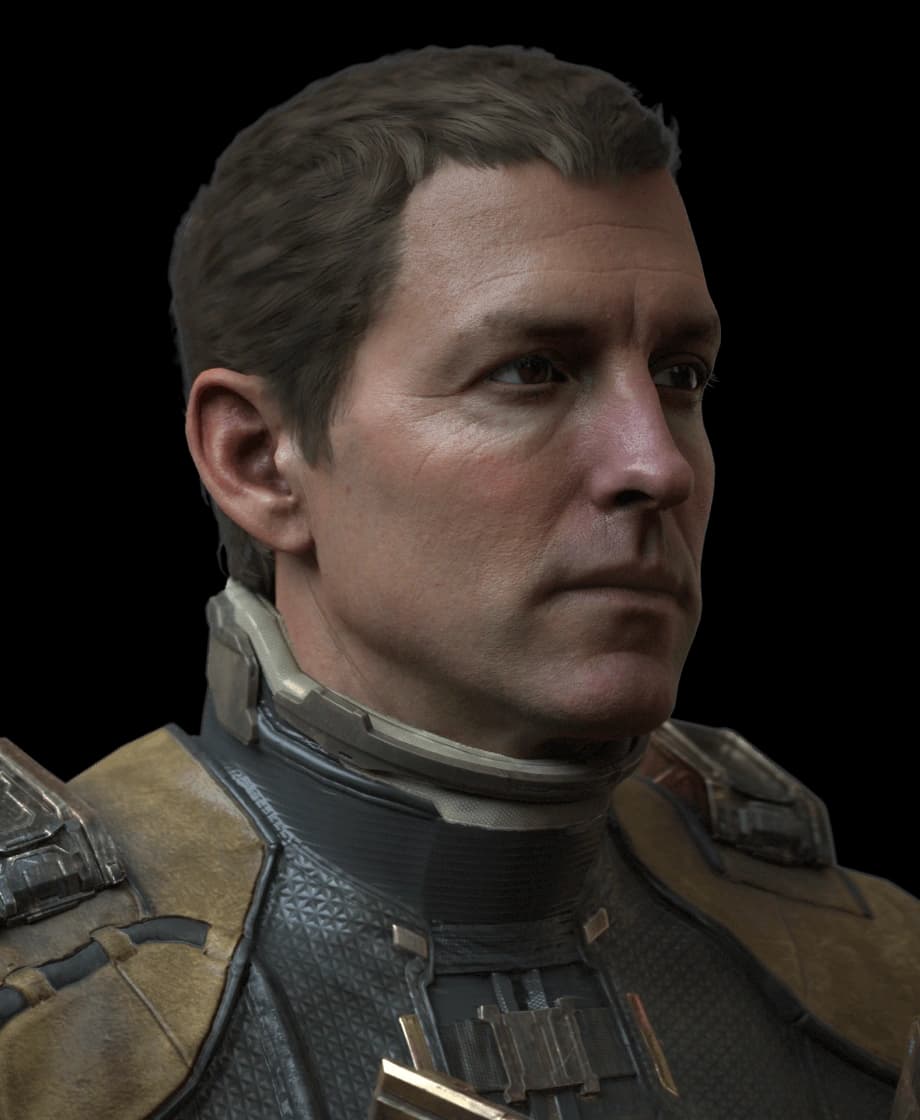
Isaac Clarke was a ship systems engineer for the Concordance Extraction Corporation who survived the Necromorph outbreak aboard the USG Ishimura, became a host for the Markers' replication blueprints, and spent years hunted by EarthGov and the Church of Unitology as he fought to destroy the Markers.
John Carver
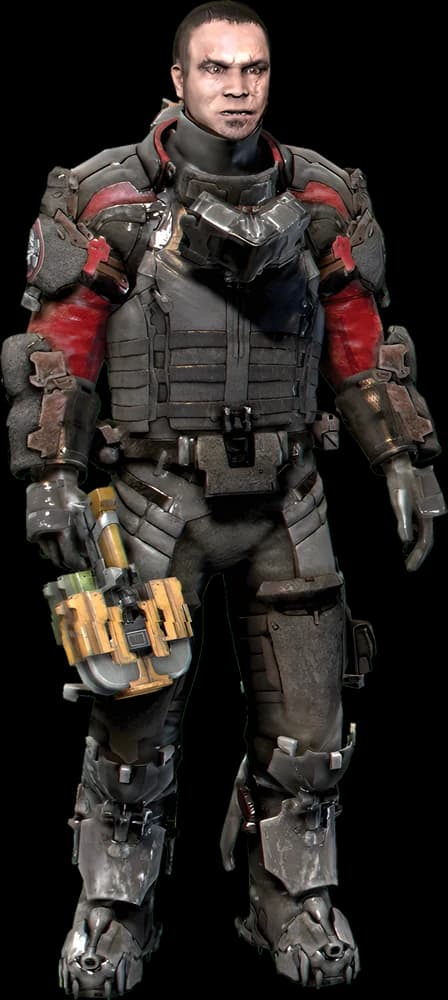
John Carver was an Earth Defense Force sergeant who lost his wife and son to a Necromorph outbreak on Uxor and joined Isaac Clarke on the expedition to Tau Volantis to destroy the apparent source of the Marker signal.
Locke
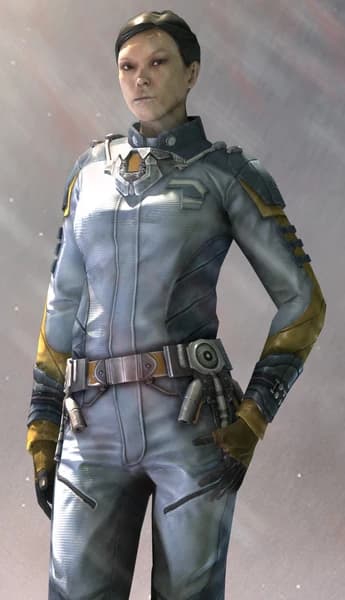
Locke was an Earth Defense Force pilot aboard the USM Eudora who helped recover Isaac Clarke from the New Horizons Lunar Colony. She died during the ship's violent descent to Tau Volantis when her console ruptured the hull and pulled her into the planet's atmosphere.
Mentioned in20 entries
Artifacts: the forty text logs that carry Dead Space 3's backstory
Artifacts are the forty collectible text logs of Dead Space 3, split across four factions and scattered from the New Horizons Lunar Colony to Tau Volantis. Collecting all of them awards the Flight Suit.
Austin Buckell: Marker Ops Scientist
Austin Buckell was a scientist on an EarthGov Marker Ops research team on Keyhole Station, recruited from the EDF Corps of Engineers. He joined Ellie Langford's expedition toward Tau Volantis and died of his wounds at a waystation on the planet.
CMS Crozier
The CMS Crozier was a battered Sovereign Colonies Armed Forces transport shuttle abandoned in the flotilla over Tau Volantis. Repaired by Ellie Langford's team two centuries later, it carried Isaac Clarke down to the planet before breaking apart in the descent.
CMS Shackleton
The CMS Shackleton was a Sovereign Colonies warship sent with the flotilla to Tau Volantis two centuries before the Marker convergence. Reduced to a field of mine-strewn wreckage, it was the first vessel of the lost fleet that Isaac Clarke passed on his arrival at the frozen world.
CMS Terra Nova
The CMS Terra Nova was a Sovereign Colonies mass driver left derelict among the fleet orbiting Tau Volantis after the S.C.A.F. expedition of 2311. Two centuries later it became a waypoint for Isaac Clarke and the home of a Unitologist cult that worshipped the Brethren Moons.
Dead Space 3 Ending Explained, Including Awakened
What happens at the end of Dead Space 3, what the Brethren Moons are, and how the Awakened DLC ends the series with the Moons over Earth. The full plot is here too, in order.
Dead Space Timeline: every major event from the Black Marker to the Brethren Moons
The full Dead Space chronology, from a Convergence frozen on Tau Volantis two million years ago to the Brethren Moons arriving over Earth in 2514. Events are grouped into eras, oldest first, and every entry names the game, film, novel or comic it comes from.
Ellie Langford
Ellie Langford was a CEC heavy equipment pilot who survived the Necromorph outbreak on Titan Station, fought her way to Tau Volantis to find the source of the Marker signal, and became one of Isaac Clarke's closest companions.
Jennifer Santos
Jennifer Santos was an EarthGov technician at Keyhole Station who joined Ellie Langford's expedition to Tau Volantis. She led the effort to locate the alien Machine using the frozen Nexus before she was killed in the fall of a cargo cage on the mountain.
John Carver
John Carver was an Earth Defense Force sergeant who lost his wife and son to a Necromorph outbreak on Uxor and joined Isaac Clarke on the expedition to Tau Volantis to destroy the apparent source of the Marker signal.
Keyhole Station: EarthGov Marker Research Station
Keyhole Station was an EarthGov research space station in the Carina Nebula, a major Marker research facility housing over four hundred military and technical personnel. Overrun by a Necromorph outbreak, it became the final waypoint of Ellie Langford's expedition to Tau Volantis and was destroyed.
Locke
Locke was an Earth Defense Force pilot aboard the USM Eudora who helped recover Isaac Clarke from the New Horizons Lunar Colony. She died during the ship's violent descent to Tau Volantis when her console ruptured the hull and pulled her into the planet's atmosphere.
+ 8 more
Get new articles in your inbox
No spam. New lore drops, canon conflicts, and deep dives only when they’re worth reading.
Some links on Lore Fortress are affiliate links. If you buy through them we earn a small commission at no extra cost to you.