Kinesis Module
Handheld zero-point gravity tool
The Kinesis Module, also called G.R.I.P., was a small plug-in device that let engineers grab and move heavy objects through an artificial gravity field. It was standard equipment for space construction work and became one of the few improvised weapons survivors had against the Necromorphs.
The Kinesis Module, also called G.R.I.P. or simply Kinesis, was a small modular plug-in resembling a thick grille heat sink, designed to work alongside the Stasis Module. It suspended and handled objects through an artificial gravity field, and like the Stasis Module it became standard fitment on the engineering RIG carried by figures such as Isaac Clarke. (Dead Space; Dead Space 2)
Design and function#
Kinesis was the technology that allowed human engineers and construction crews to move large masses easily in almost any environment. (Dead Space; Dead Space 2)
The module worked by projecting a tube of crackling white energy, an artificial gravity field, from an emitter pad built into the palm of the glove-slip. Once an object was caught by the leading edge of the energy tube, its gravity was nullified and it was drawn toward the wielder. Small objects came to rest about a foot from the pad, suspended in midair, while larger movable masses such as rail pallets and shutters came as close as their connections allowed. Releasing the field let the object fall toward the nearest center of mass, while reversing the field's polarity after latch-on hurled the object away with a velocity that grew the closer it had been held to the pad. (Dead Space; Dead Space 2)
The Kinesis Module fitted into the top of the Stasis Module armband, just forward of its rear focus cylinder. Unlike the Stasis Module, it did not run on a finite charge; its energy was drawn directly from the internal power source of the user's RIG and never needed replenishing. The unit could be improved through nanocircuitry upgrades worked at a bench. (Dead Space; Dead Space 2)
Use against the Necromorphs#
Kinesis was an engineering tool first, used to clear obstacles, carry power cells, deploy bridges and walkways, and reach items that lay out of arm's reach. But during the Necromorph outbreaks it became one of the few weapons survivors had that drew on no ammunition at all. Sharp objects thrown with Kinesis could damage the creatures, and in time survivors learned to impale them outright, pinning a Necromorph against the nearest surface or sending a weakened one flying. (Dead Space; Dead Space: Extraction; Dead Space 2)
The severed blades of the Necromorphs themselves made the most reliable projectiles. A blade-bearing limb shot from a creature could be caught with Kinesis the moment it fell and fired straight back, and a Slasher or similar Necromorph could be killed almost instantly this way. Larger blunt objects were used to knock attackers down, explosive canisters were thrown for area damage, and against a Brute the organic projectiles it lobbed could be caught in flight and returned. Kinesis was also a way to test the dead, since a body that did not respond to the field was often a Necromorph waiting to ambush. The module appeared to act only on physical matter and could not grip energy or, in normal use, living things. (Dead Space; Dead Space 2; Dead Space: Extraction)
Frequently asked questions
- What was the Kinesis Module?
- The Kinesis Module, also called G.R.I.P. or simply Kinesis, was a small modular plug-in that resembled a thick grille heat sink. It projected an artificial gravity field that let an engineer suspend and handle objects of almost any size with a wave of the hand.
- How did Kinesis work?
- The module fired a tube of crackling white energy from a palm emitter pad. Once the energy latched onto an object, its weight was nullified and it was drawn toward the wielder. Reversing the field's polarity after latch-on threw the object away with a force that grew the closer it sat to the pad.
- Why was Kinesis used as a weapon?
- Kinesis was built for construction, but survivors of the Necromorph outbreaks used it to hurl sharp debris, severed Necromorph limbs, and explosive canisters at the creatures. Thrown blades could impale and pin Necromorphs, making the tool one of the most ammunition-free means of fighting them.
Sources
- GameDead Space, EA Redwood Shores, 2008
- GameDead Space 2, Visceral Games, 2011
- GameDead Space: Extraction, Visceral Games and Eurocom, 2009
Spotted a factual error or a primary source we missed? Email a correction. Every flagged claim gets reviewed.
Followed from this entry
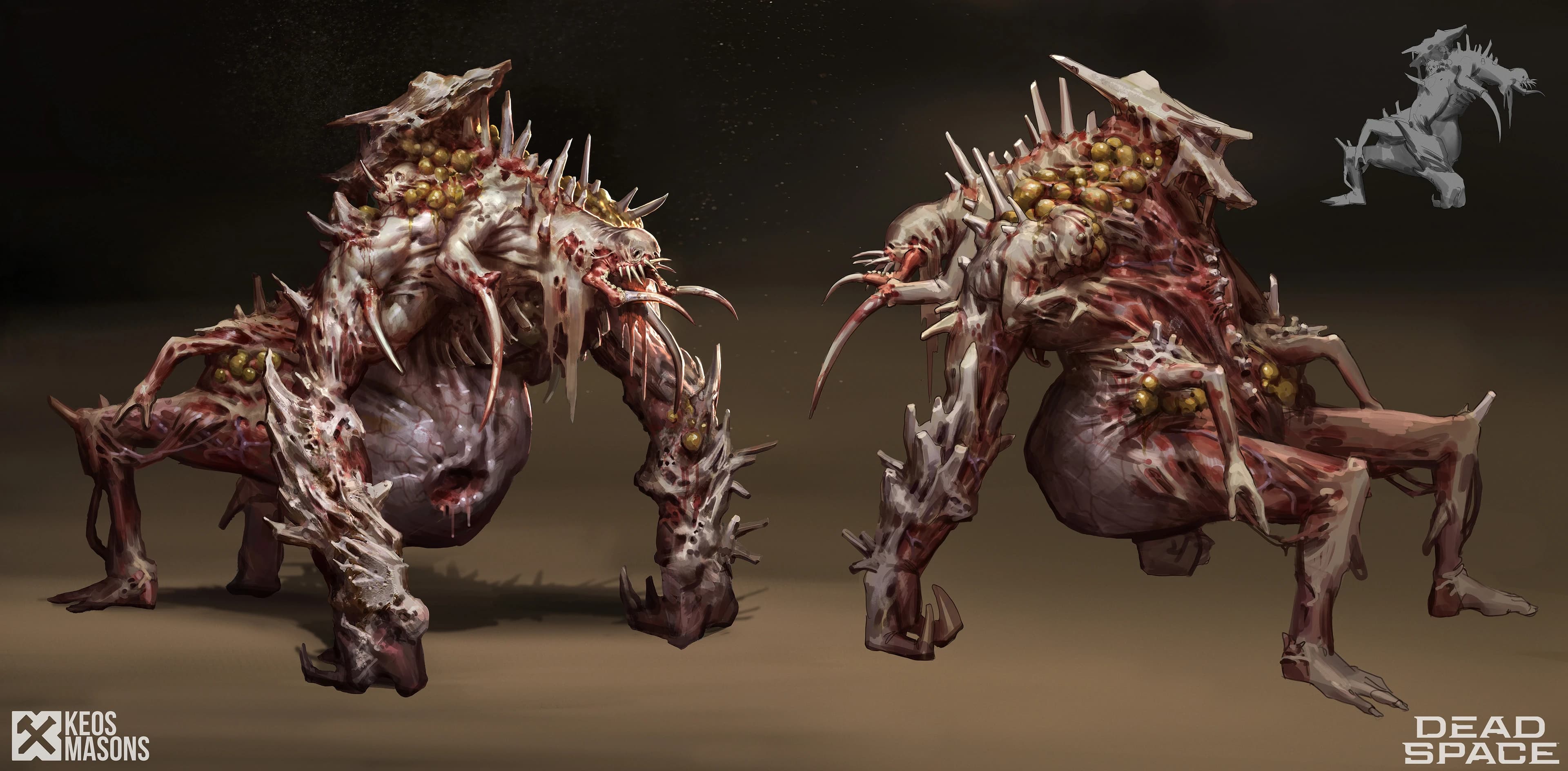
Brute
The Brute was a massive Necromorph assembled from multiple human corpses, encased in a spiked exoskeleton of bone and calcified skin. It charged with crushing force and, when crippled, hurled explosive organic projectiles from within its chest.
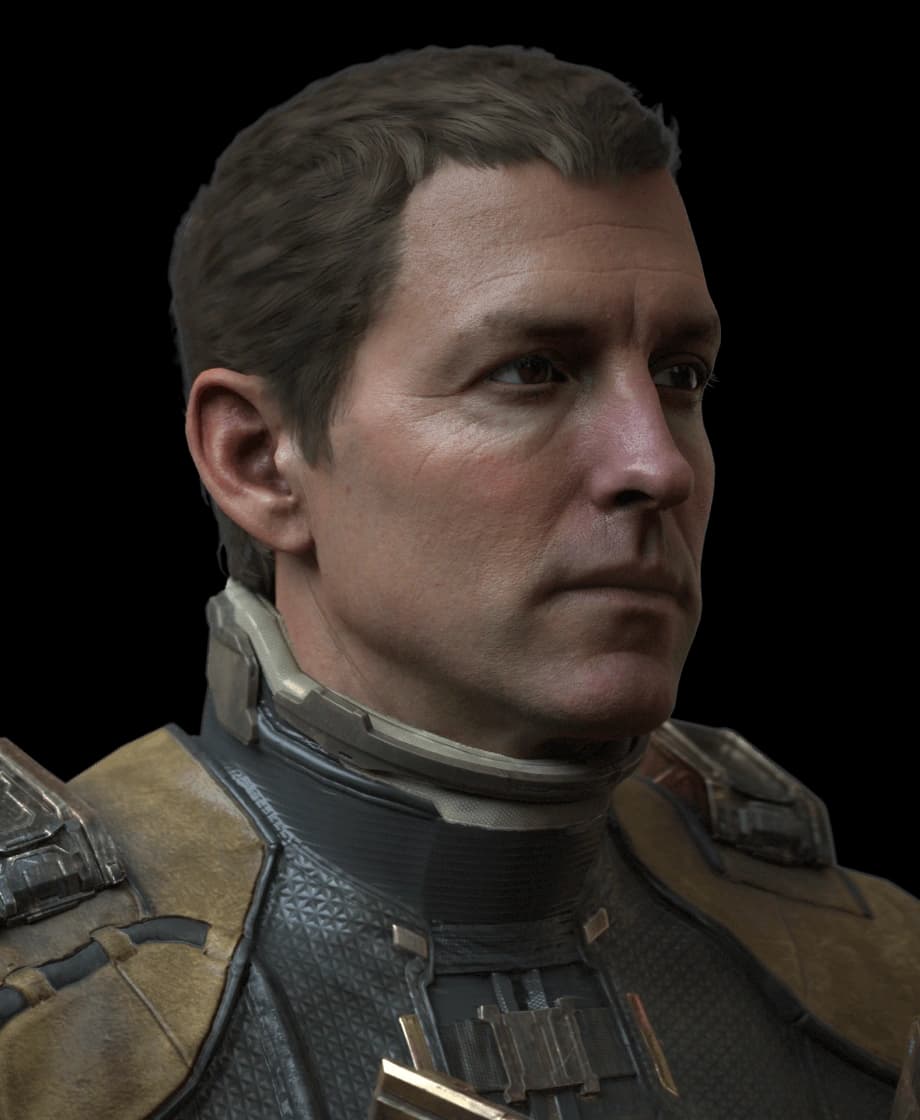
Isaac Clarke
Isaac Clarke was a ship systems engineer for the Concordance Extraction Corporation who survived the Necromorph outbreak aboard the USG Ishimura, became a host for the Markers' replication blueprints, and spent years hunted by EarthGov and the Church of Unitology as he fought to destroy the Markers.
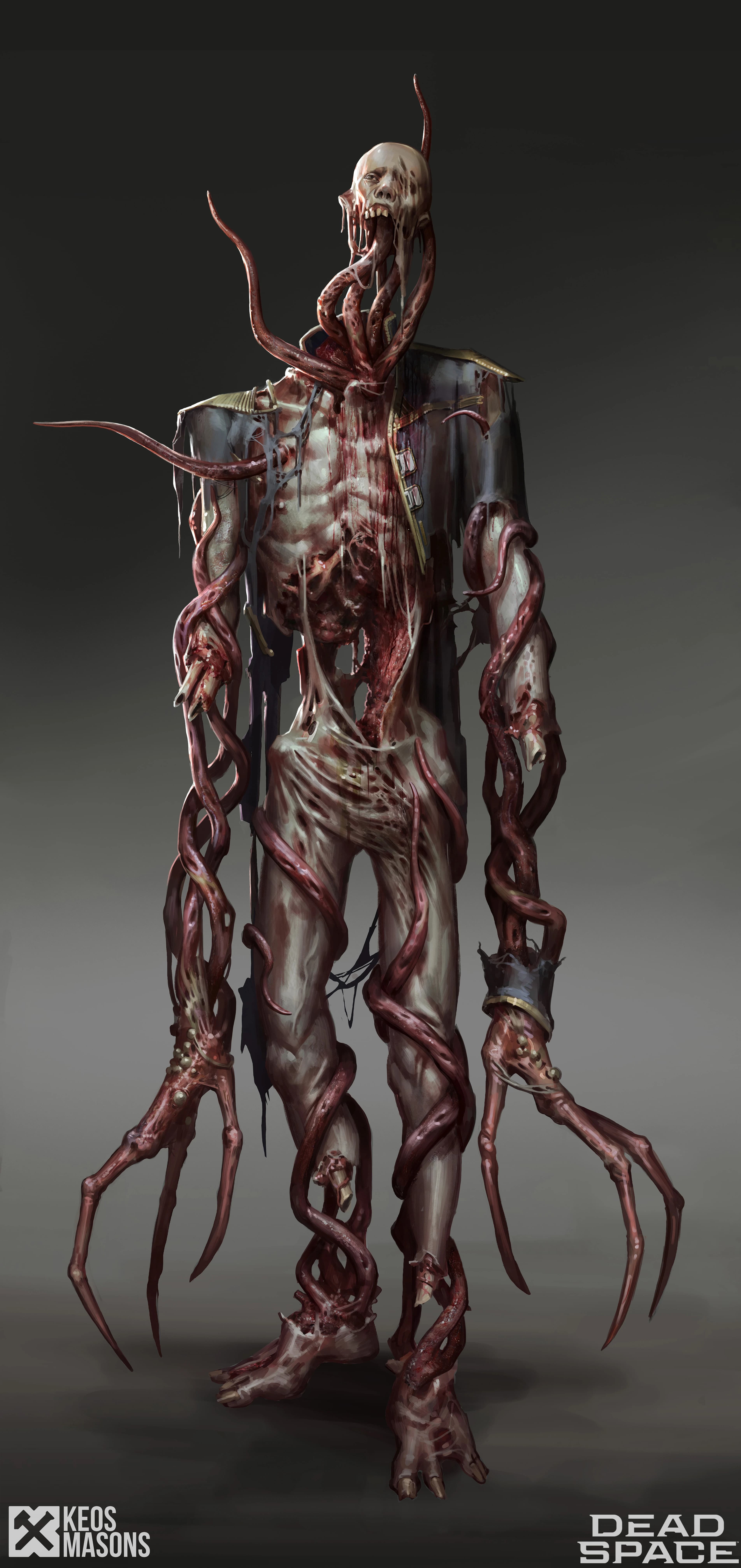
Necromorph
Necromorphs were aggressive creatures formed when the Markers' electromagnetic signal reshaped dead tissue into monstrous new forms. Driven to kill the living and gather corpses for Convergence, they were the recurring plague that destroyed the Aegis VII colony, the USG Ishimura, and Titan Station.
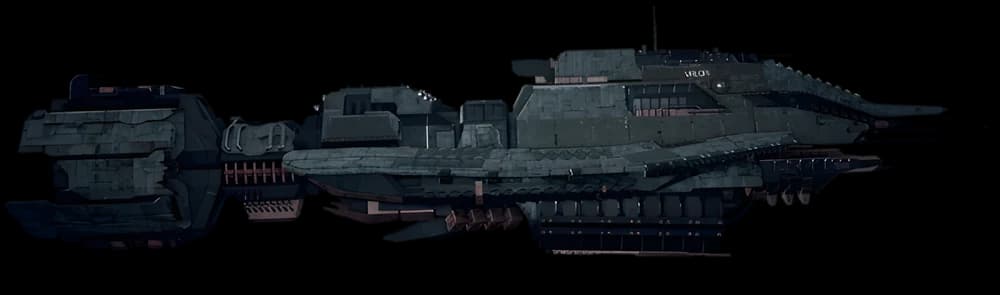
RIG
The RIG, or Resource Integration Gear, was the standard worn equipment of spacefaring workers and soldiers in the 26th century. It sealed its wearer against hostile environments, carried their identity for security access, and linked them to others through the RIGlink communication system.
Slasher
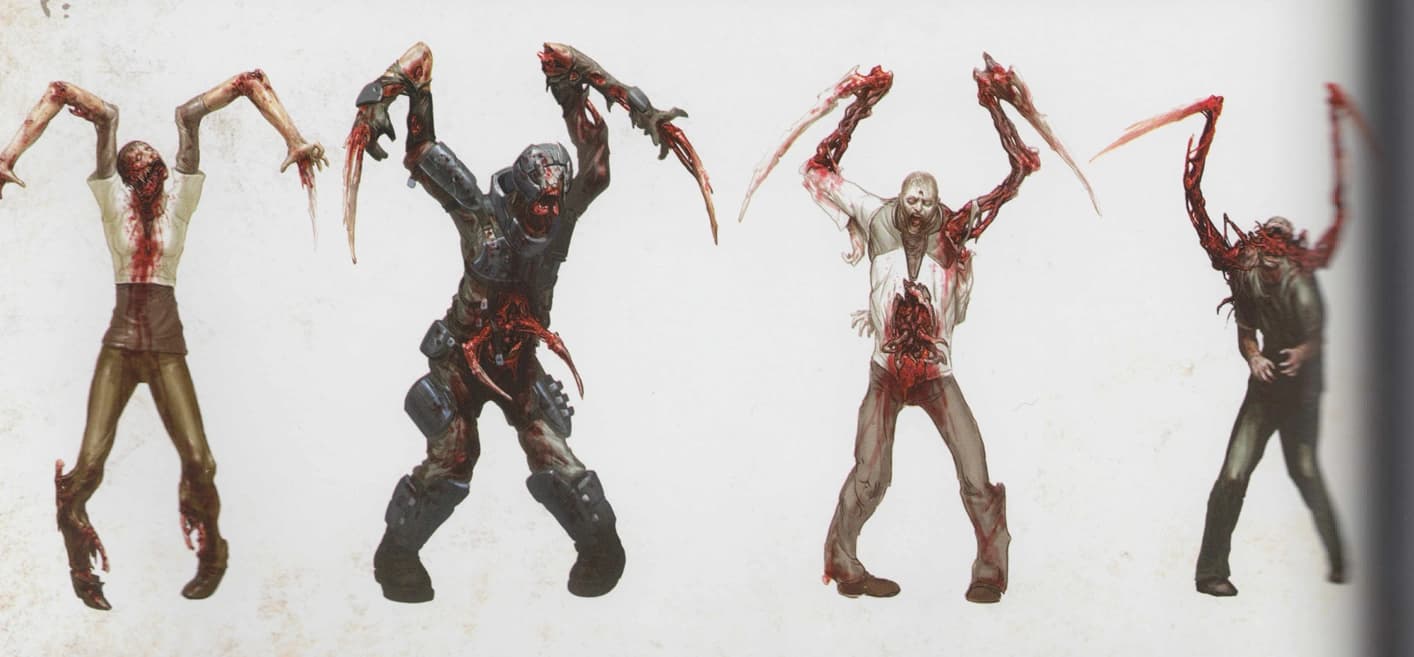
The Slasher was the most common form of Necromorph, reanimated from a single human corpse and named for the blade-like protrusions of bone that grew from its arms. Weak alone but lethal in numbers, it was the form survivors encountered most often in every major outbreak.
Stasis Module
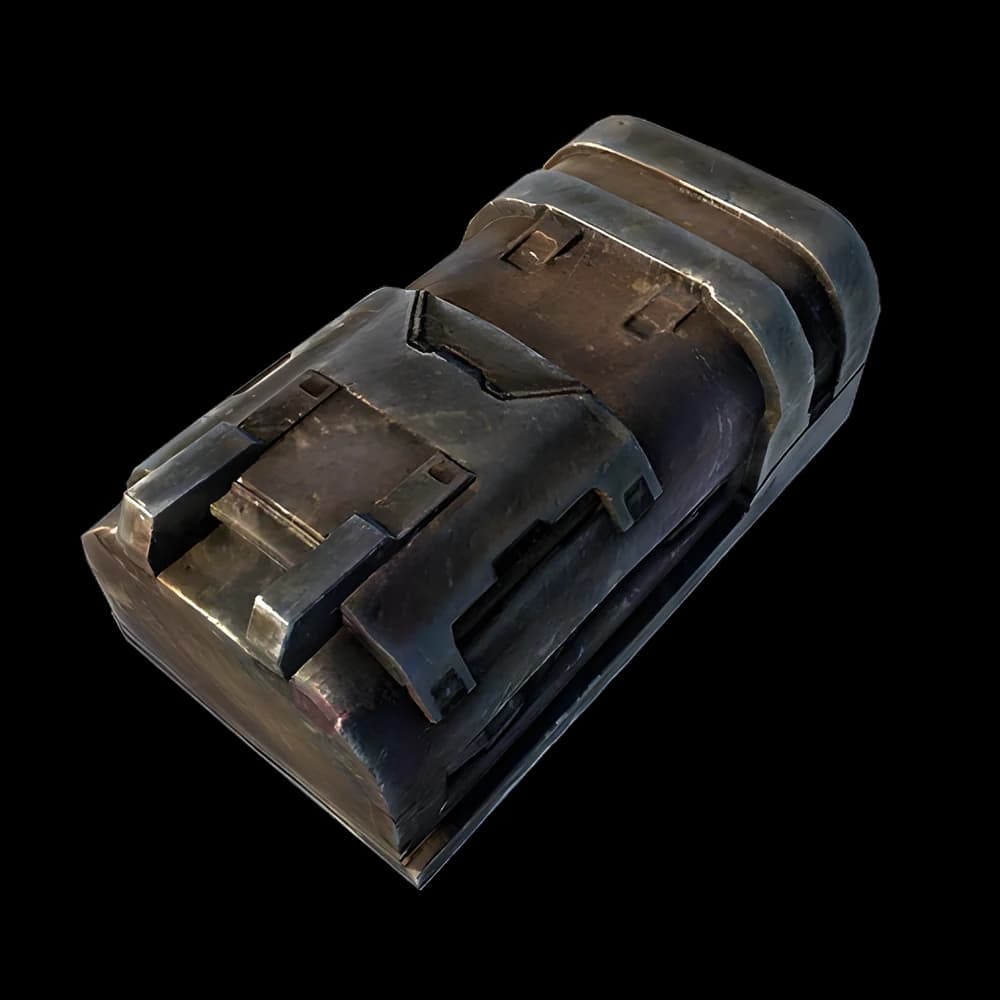
The Stasis Module was a RIG accessory that produced a field of slowed time, suspending whatever it touched in a slower state for a short period. Used to slow dangerous machinery, it became an essential survival tool against the Necromorphs.
Mentioned in5 entries
Dead Space Chapters: the Story of All 12 Chapters
Dead Space has 12 chapters, from New Arrivals to Dead Space, and the 2023 remake keeps the same names and order. This is what happens in each one, with full spoilers and notes on where the remake tells it differently.
Every Dead Space Weapon and Tool, Explained
Isaac Clarke's weapons are mostly mining and engineering tools, and that is the point. This guide goes through every major Dead Space weapon and tool, what it was built for in the story, who made it and which games it appears in, from the Plasma Cutter to the military rifles of Dead Space 3.
Every Isaac Clarke Suit: the RIG and Engineering Suits Explained
Isaac Clarke's suit is a CEC engineering suit built around a RIG, the gear that shows his health as a glowing bar down his spine. This guide explains what a RIG is and goes through every suit Isaac wears, from the Level 3 suit of the first game to the Advanced Suit, the Arctic Survival Suit and the remake.
Nathan McNeill
Nathan McNeill was a P-Sec detective on the Aegis VII Colony and a veteran of the Resource Wars who survived the outbreak on the colony and aboard the USG Ishimura. He escaped toward the Sprawl only to succumb to his wounds and reanimate as a Necromorph.
Tripod's Nest: the Corruption growth that housed the Sprawl's Tripods
The Tripod's Nest was a large formation of the Corruption grown inside the Fuel Mega Storage area of the CEC Facility on Titan Station, shaped to accommodate the station's Tripods. Isaac Clarke destroyed it by pitching explosives into the surrounding fuel tanks, taking the nest, its residents and most of the facility with it.
Get new articles in your inbox
No spam. New lore drops, canon conflicts, and deep dives only when they’re worth reading.
Some links on Lore Fortress are affiliate links. If you buy through them we earn a small commission at no extra cost to you.