RIG
Resource Integration Gear
The RIG, or Resource Integration Gear, was the standard worn equipment of spacefaring workers and soldiers in the 26th century. It sealed its wearer against hostile environments, carried their identity for security access, and linked them to others through the RIGlink communication system.
The RIG, short for Resource Integration Gear, was the worn equipment that kept spacefaring workers and soldiers alive in the harsh conditions of the 26th century. Engineers of the Concordance Extraction Corporation, such as Isaac Clarke, wore an engineer RIG as a matter of routine, and the suit was woven into nearly every aspect of life aboard mining vessels and military ships alike. It sealed its wearer against vacuum and thin atmospheres, served as a personal identity for security systems, and connected its wearer to others through a communication channel known as the RIGlink. (Dead Space; Dead Space 2)
A worker's second skin#
The RIG was standard issue for anyone who worked beyond a breathable atmosphere. CEC engineers wore an engineer RIG as part of their daily routine, and the suit was as much a tool of the trade as the mining equipment they carried. On a world with hostile surface conditions, the RIG was the difference between survival and death. On Aegis VII, where the atmosphere was thin and the surface swept by high winds and dust storms, an engineer RIG was advised before anyone went outside, and prolonged work in the open was considered inadvisable without sufficient protection. The suit sealed its wearer against such conditions and against the vacuum of space itself. (Dead Space; Dead Space: Extraction)
Identity and access#
A RIG was bound to the person who wore it, and that identity was read by the security systems of ships and stations. Scanners at restricted doors checked a wearer's RIG before granting passage, which made the suit a kind of personal credential. This had a grim consequence during the Necromorph outbreaks: a dead crew member's RIG could be recovered and used to pass through doors that had been sealed to everyone else. Aboard the USG Ishimura, the crew of the USG Kellion needed Captain Benjamin Mathius' RIG to access the Bridge's computer, and Isaac Clarke retrieved it from the captain's reanimated corpse. On Titan Station, the watchman Howard Phillips' RIG was needed to pass the security scans guarding the corridors of the Solar Array, where the station intelligence ANTI detected each RIG that approached. (Dead Space; Dead Space 2)
The RIGlink#
The RIG also provided the RIGlink, a personal communication channel that let crews speak to one another across a ship or station. Officers issued orders and survivors coordinated their movements through it, and the USM Valor's commander used a RIGlink message to contact the Ishimura. (Dead Space)
The same channel could carry the influence of the Markers. In the 2023 remake, aboard the Valor, the security officer Zach Hammond began to hear the voice of the dead crewman Aiden Chen over the RIGlink and became convinced the man was still alive, an early sign of the Marker Dementia that claimed so many. (Dead Space (2023)) On the USG O'Bannon, the engineer Alejandro Borges reported the loss of the engine room to his captain over the RIGlink even as the Necromorphs overran it around him. (Dead Space: Extraction)
Soldiers and survivors#
Military personnel wore heavier versions of the gear. The armories of the USM Valor held lockers stocked with Advanced Soldier RIGs alongside the Marines' rifles, and these suits carried built-in Stasis modules. When Marines of the Valor were killed and reanimated, the Stasis modules in their suits gave the resulting Necromorphs unusual speed, and they came to be called Twitchers. (Dead Space) For survivors caught in the outbreaks, the RIG was the one constant that allowed them to keep moving through ruined ships and stations, sealing them against the cold and the vacuum as they fought their way through the wreckage of the Ishimura, the Valor, and the Sprawl. (Dead Space; Dead Space 2)
Sources
- GameDead Space, EA Redwood Shores, 2008
- GameDead Space (2023), Motive Studio, 2023
- GameDead Space: Extraction, Visceral Games and Eurocom, 2009
- GameDead Space 2, Visceral Games, 2011
Spotted a factual error or a primary source we missed? Email a correction. Every flagged claim gets reviewed.
Followed from this entry
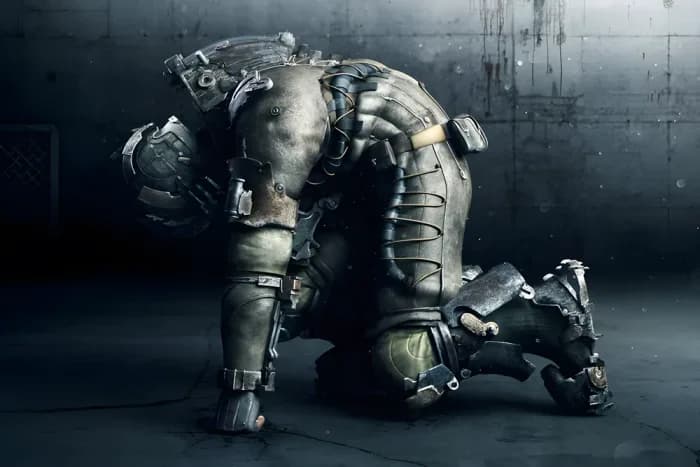
Every Isaac Clarke Suit: the RIG and Engineering Suits Explained
Isaac Clarke's suit is a CEC engineering suit built around a RIG, the gear that shows his health as a glowing bar down his spine. This guide explains what a RIG is and goes through every suit Isaac wears, from the Level 3 suit of the first game to the Advanced Suit, the Arctic Survival Suit and the remake.
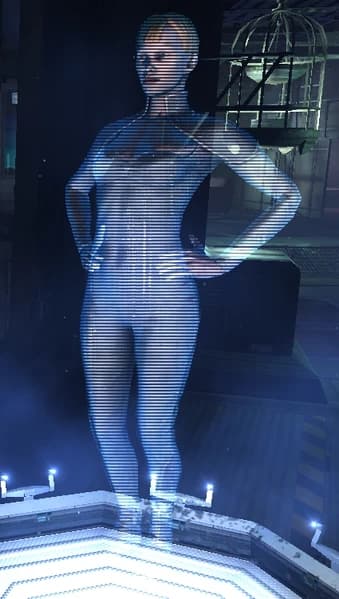
ANTI
ANTI, the Artificial Network Transmitting Intelligence, was the holographic artificial intelligence that governed the systems of Titan Station under the Station Director's orders. During the Necromorph outbreak it worked to block Isaac Clarke from the Solar Array until he destroyed its core.
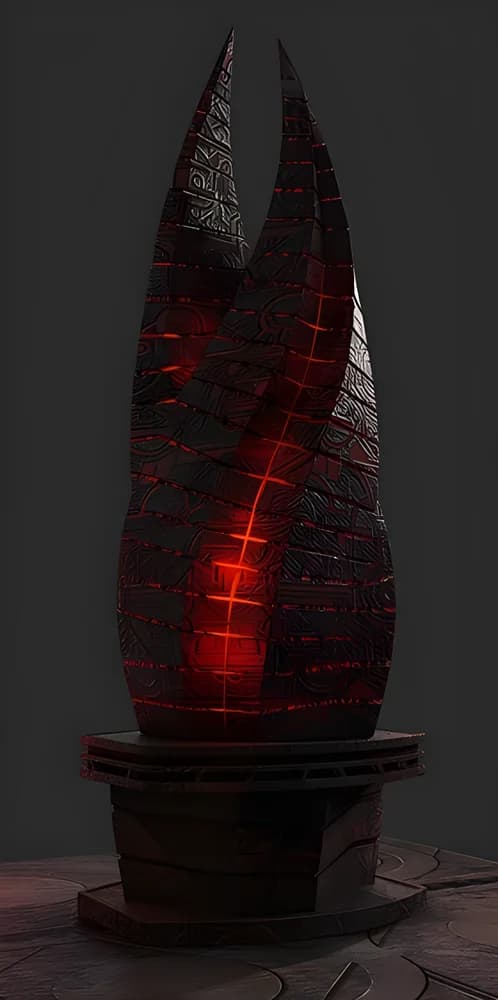
Marker
Markers were enigmatic double-helix obelisks that broadcast a signal capable of reanimating the dead, driving the living to madness, and seeding their own replication. Their purpose was to spread the Necromorph infection across intelligent civilizations until a Convergence Event could form a Brethren Moon.
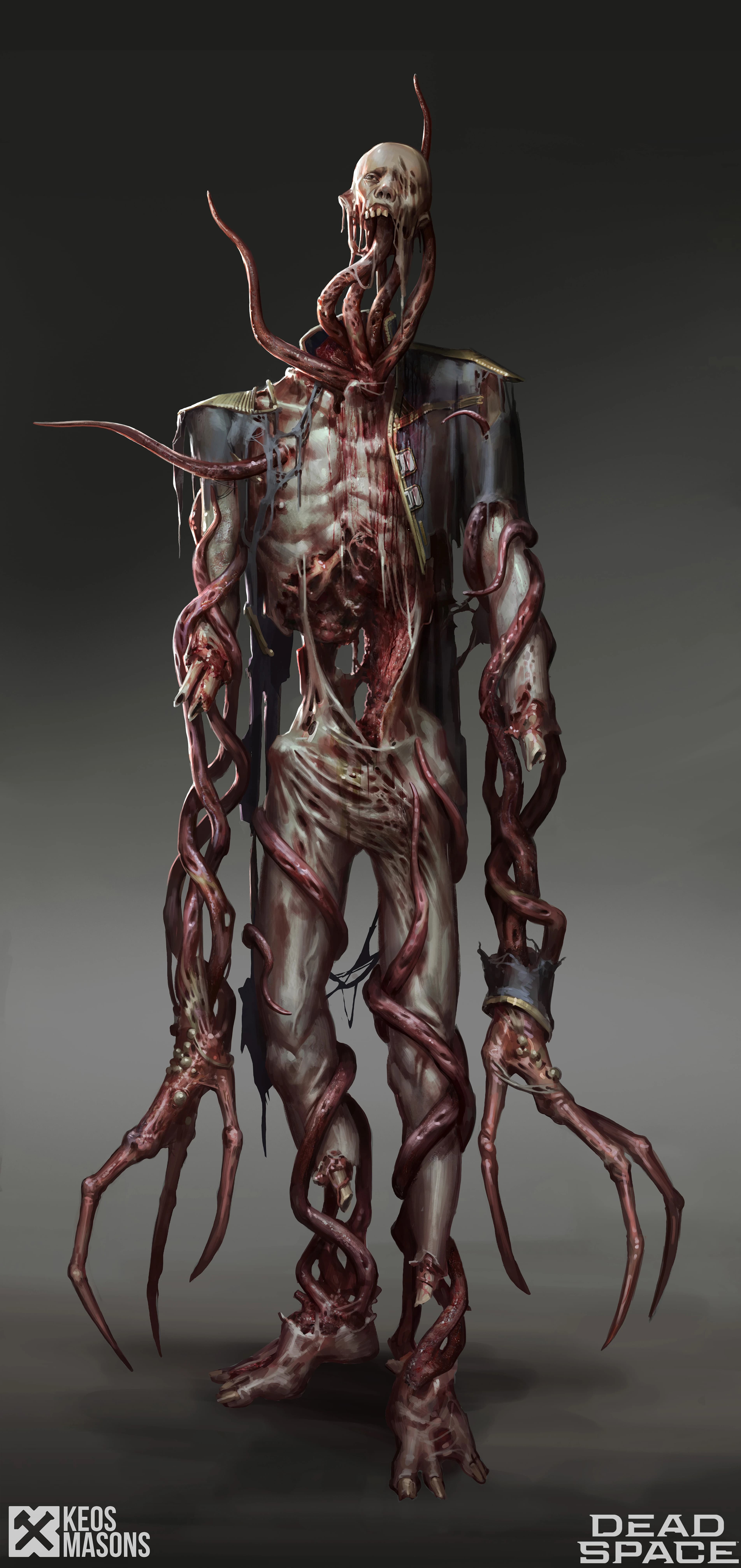
Necromorph
Necromorphs were aggressive creatures formed when the Markers' electromagnetic signal reshaped dead tissue into monstrous new forms. Driven to kill the living and gather corpses for Convergence, they were the recurring plague that destroyed the Aegis VII colony, the USG Ishimura, and Titan Station.
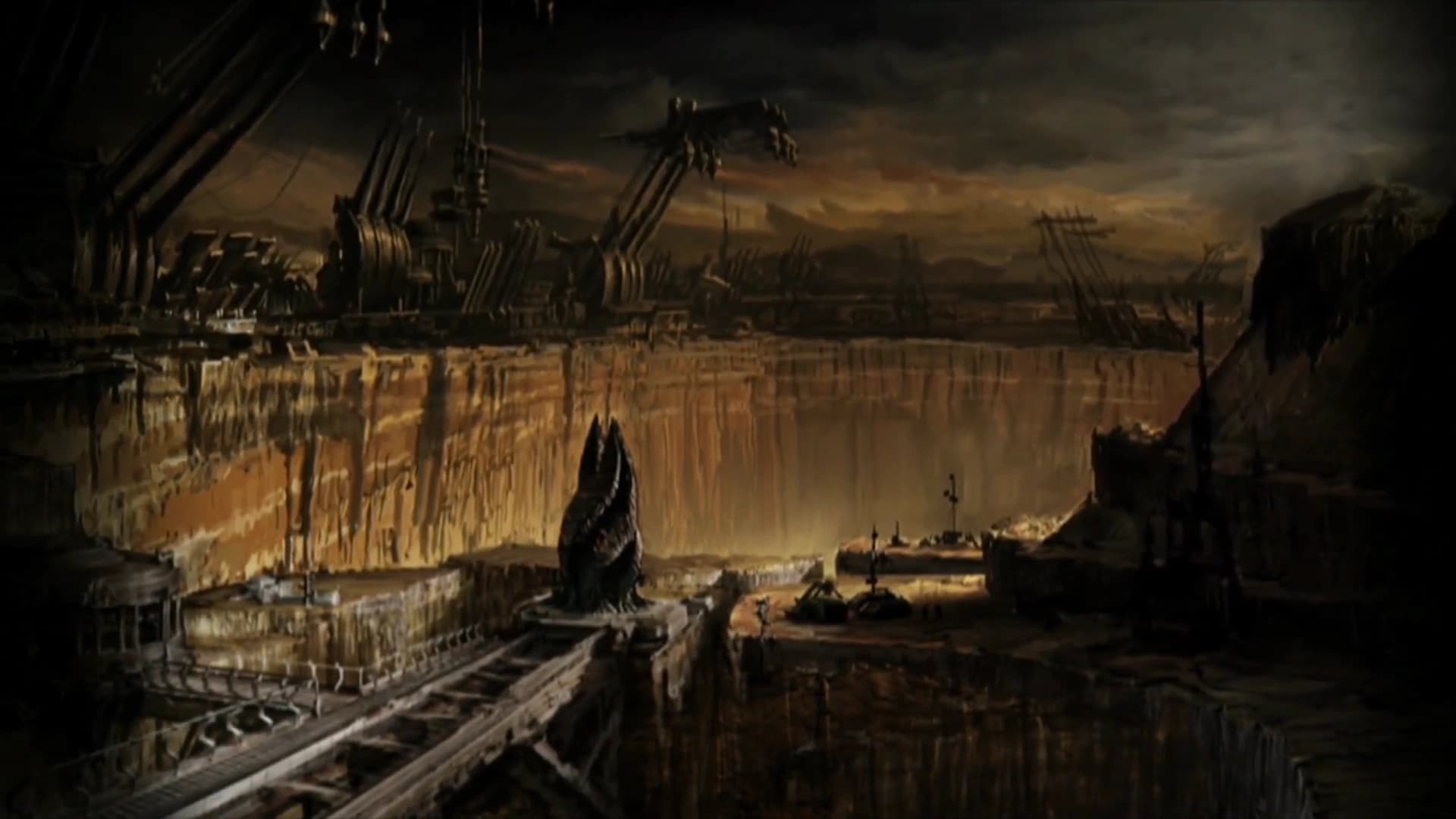
Aegis VII
Aegis VII was a remote, metal-rich planet in the Cygnus system used by the Sovereign Colonies as a secret test site for Marker 3A. Two Necromorph outbreaks scarred the world, and after Isaac Clarke returned the Marker to its pedestal in 2508 the planet broke apart entirely.
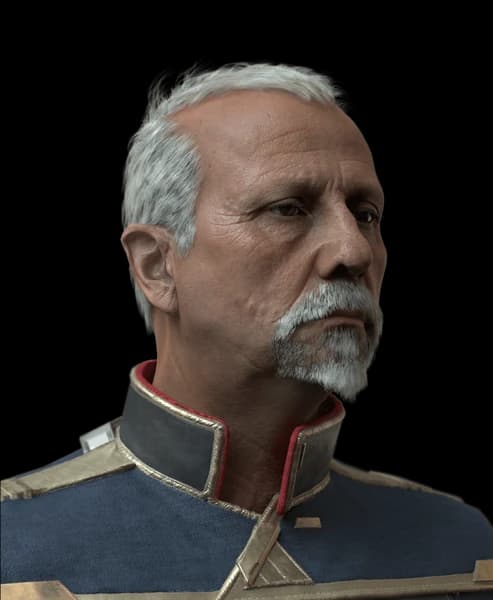
Benjamin Mathius
Benjamin Mathius was the captain of the USG Ishimura and a high ranking Unitologist, placed in command to retrieve Marker 3A from Aegis VII for the Church. His devotion and the Marker's influence drove him to madness, and he died restrained on his own ship as the outbreak began.
Mentioned in10 entries
Aegis VII
Aegis VII was a remote, metal-rich planet in the Cygnus system used by the Sovereign Colonies as a secret test site for Marker 3A. Two Necromorph outbreaks scarred the world, and after Isaac Clarke returned the Marker to its pedestal in 2508 the planet broke apart entirely.
Cameron: Aegis VII Megavent Supervisor
Cameron was the supervisor of the Megavents at the Aegis VII colony and the first person to discover the Corruption, the necrotic growth that preceded the Necromorph outbreak. He fought the spreading organism with a blow-torch until it killed him in the blackout that followed the planet crack.
CEC Facility: Titan Station's Shipyard and Industrial Complex
The CEC Facility was the Concordance Extraction Corporation's base of operations on Titan Station, a sweltering complex of heavy machinery, fuel storage, and the shipyard where the USG Ishimura lay docked. During the Sprawl outbreak it became a Necromorph killing ground and was finally consumed with the rest of the station.
Every Dead Space Weapon and Tool, Explained
Isaac Clarke's weapons are mostly mining and engineering tools, and that is the point. This guide goes through every major Dead Space weapon and tool, what it was built for in the story, who made it and which games it appears in, from the Plasma Cutter to the military rifles of Dead Space 3.
Every Isaac Clarke Suit: the RIG and Engineering Suits Explained
Isaac Clarke's suit is a CEC engineering suit built around a RIG, the gear that shows his health as a glowing bar down his spine. This guide explains what a RIG is and goes through every suit Isaac wears, from the Level 3 suit of the first game to the Advanced Suit, the Arctic Survival Suit and the remake.
Glenn: Aegis VII Dig Team Miner
Glenn was a CEC miner on Colin Barrow's dig team during the extraction of Marker 3A on Aegis VII. He voiced early misgivings about the artifact, began hallucinating after the planet crack, and vanished without a trace when the colony's lights failed.
Kaleb: Xenogeologist of the Sprawl
Kaleb was a CEC Xenogeologist assigned to Shift 1 on Titan Station, working alongside Ellie Langford. When the Necromorph outbreak swept the mining facilities he led the remnants of his crew toward safety, then sacrificed himself with a Line Gun mine so that Ellie could escape.
Kinesis Module
The Kinesis Module, also called G.R.I.P., was a small plug-in device that let engineers grab and move heavy objects through an artificial gravity field. It was standard equipment for space construction work and became one of the few improvised weapons survivors had against the Necromorphs.
Solar Array: Titan Station's Decommissioned Power Plant
The Solar Array was the original power source of Titan Station, a ring of collector dishes left to decay after fusion reactors replaced it. Isaac Clarke reactivated it during the Necromorph outbreak, and Hans Tiedemann then turned its focused beam into a weapon that cut the station in two.
Sterling: The Engineer Who Answered a Cry for Help
Sterling was a Concordance Extraction Corporation engineer on Aegis VII and a member of the Extraction Dig Team that removed Marker 3A from its pedestal. A skeptic who dismissed Unitologist tales of the Black Marker, he broke away from his crew to help a trapped colonist and was shot dead by his own teammate Sam Caldwell, who saw him as a hostile through Marker induced hallucinations.
Get new articles in your inbox
No spam. New lore drops, canon conflicts, and deep dives only when they’re worth reading.
Some links on Lore Fortress are affiliate links. If you buy through them we earn a small commission at no extra cost to you.