Mars: the second hub of the Sol system
Mars was one of the most heavily settled worlds after Earth, a planet of corporations, docks and shipyards centred on the city-state of Mars Capita. Its independence riots in the late twenty fifth century were extremely violent, and they shaped a generation of Martians who left the planet afterward and turned up on colonies across settled space.
Mars was the fourth planet from the Sun and the secondary hub of the Sol system, second only to Earth in population and importance among the inner worlds. It had almost certainly been terraformed to the point where people could move about the surface without difficulty, and it carried a large enough population that Martians turned up in every corner of the settled record, from Concordance Extraction Corporation colony crews to the Earth Government Colonial Alliance security services. Its capital, Mars Capita, held the headquarters of numerous corporations, the government's own offices and the Martian Docks. It was also the site of the independence riots, a wave of violence in the late twenty fifth century so severe that a veteran of it later measured the horrors of Aegis VII against it and found Aegis VII lacking. (Dead Space (comic); Dead Space: No Known Survivors)
The second hub#
Mars occupied a position in human affairs that no other body in the Sol system could claim. Earth remained the homeworld and the centre of everything, but Mars was where the overflow went, and it was populous enough that a Martian birth was unremarkable in almost any crew manifest. Terraforming had gone far enough for people to move around the surface, which set the planet apart from the pressurised habitats and mining stations that made up most off-world settlement. (Dead Space (comic); Dead Space: No Known Survivors)
That did not make it a pleasant place to live. Tyler Radikov, a Martian by birth, thought very little of conditions on the planet, and Karrie Norton, who had been born in space on a colony ship, listed Mars alongside Earth as somewhere she had never managed to visit and was curious about. The planet had scale and industry. It did not have much of a reputation for comfort. (Dead Space (mobile))
Mars Capita#
Mars Capita was the capital of the planet and its largest city-state. It held the headquarters of numerous corporations, the Martian Docks through which the planet's traffic moved, and an EarthGov headquarters building. The rest of it was an ordinary large city: apartment buildings, residences, schools, hospitals, stores, police stations, the Union Square Mall, and a Church of Unitology. (Dead Space (comic))
Policing the place was a serious profession with its own homicide division, and the department was chronically short of resources. Away from Capita the planet supported enough separate settlement to be spoken of in the plural as the Mars colonies, and it maintained orbital shipyards in which subsidiaries of the CEC did a great deal of business. (Dead Space (comic))
The independence riots#
The riots were the defining event in modern Martian history. They were a series of failed but extremely violent struggles, begun in Capita by independence movements demanding that Mars secede from EarthGov, and they ran through the late twenty fifth century. Large numbers of people died. (Dead Space (comic))
The violence was close-quarters and civic rather than military. Deakin Abbott, a second generation Martian working for the Martian police vehicle and engineering division at the time, lost his wife Tina to police fire on a crowded street. Abraham Neumann, then a beat officer following his father into the same force, came out of the streets so shaken by what he had seen people do to one another that he transferred into homicide largely to get away from it. Years later, watching colonists on the Aegis VII colony descend into insomnia, assault, murder and suicide around a recovered Marker, Neumann remarked that even that was nothing next to the riots on Mars. (Dead Space (comic))
The independence movements did not win. What they left behind was a capital city whose infrastructure had been practically torn apart. (Dead Space (comic))
The idealist administration#
The aftermath produced a revolution in the city's administration. The old staff went and a new one came in, committed to what it described as more idealistic politics. For a substantial part of the population this made no difference at all. Abbott, who had turned to Unitology in his grief, carried a distrust of government and its officials that extended to Capita's new idealist administration exactly as it had to the old one, and he stopped accepting state contracts altogether. (Dead Space (comic))
Rebuilding the city took years and imported labour. Natalia Deshyanov, an Earth-born engineer who had spent her childhood applying for anything spacebound, finally got off her homeworld because the fledgling city-state was desperate for good engineers to repair its infrastructure. She was taken on by a general engineering contractor, worked the reconstruction until she could see the job ending, then moved into the Mars orbital shipyards with a CEC subsidiary and from there into the corporation itself. (Dead Space (comic))
That pattern repeated. Marla Janssen, brought to Mars as a child when her father took a job there, became the youngest person on the planet ever arrested for Grade 1 hacking after she was caught altering records in the central government database for anonymous clients. Three years in Martian juvenile detention straightened her out, her record was sealed, and on her sixteenth birthday she went to work in the Mars shipyards as a systems designer. The shipyards absorbed a great many people the planet had otherwise failed. (Dead Space (comic))
The Church on Mars#
Unitology grew through the Mars colonies steadily during this period, and the Church maintained a significant presence on the planet. Its growth was not incidental to the unrest. Abbott came to the Church after the riots killed his wife, and became a lay preacher while continuing to work as an engineer. Neumann's wife Joanna turned to Unitology when her marriage to a permanently absent homicide detective failed, and the religion soon dominated her life. (Dead Space (comic))
The Church's institutional weight on Mars was considerable enough to shape outcomes. When a new commander took over the Capita homicide division, Neumann quickly discovered that the man was a Unitologist too. He punched the commander during an argument over the department's lack of resources and resigned, an exit that put him on the planet's headline news for a day. Later, still legally married to Joanna, he found she had given the Church their entire joint savings including everything he had put aside since taking work with the CEC. The Church maintained that the donation was legal because she remained his wife, and the Mars courts dismissed his complaint. (Dead Space (comic))
What Mars exported#
The planet's most visible product in the wider record was people who wanted to leave it. Neumann took a Planetside Security post with the CEC on the recommendation of a former partner, wanting nothing more than distance from Mars, his wife and Unitology. Abbott, becoming persona non grata at home, was headhunted into the CEC vehicular and transport division and jumped at it. Both ended up on Aegis VII, and neither left it. (Dead Space (comic))
Others went further out. Gavin Becker, a Martian, took a posting on an observation station near the Aegis Cluster, where he was ordered to eliminate the witnesses to an incoming distress beacon and killed his own colleagues before taking his own life. (Dead Space: No Known Survivors)
The Church of Unitology kept its significant presence, the corporations kept their headquarters, and the docks kept moving traffic through the inner system. The people who had lived through the riots simply did not talk about the place as though any of that had made it whole. (Dead Space (comic))
Sources
- ComicDead Space (comic), Antony Johnston and Ben Templesmith, Image Comics, 2008
- GameDead Space (mobile), IronMonkey Studios, 2011
- WebDead Space: No Known Survivors, Official interactive web series, Electronic Arts, 2008
Spotted a factual error or a primary source we missed? Email a correction. Every flagged claim gets reviewed.
Followed from this entry
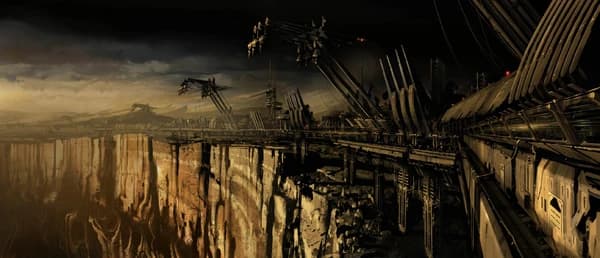
Aegis VII Colony
The Aegis VII Colony was an illegal mining settlement built on Aegis VII by the Concordance Extraction Corporation. After the discovery of Marker 3A in 2508, the colony fell into madness and was overrun by Necromorphs before being destroyed in the planet crack.
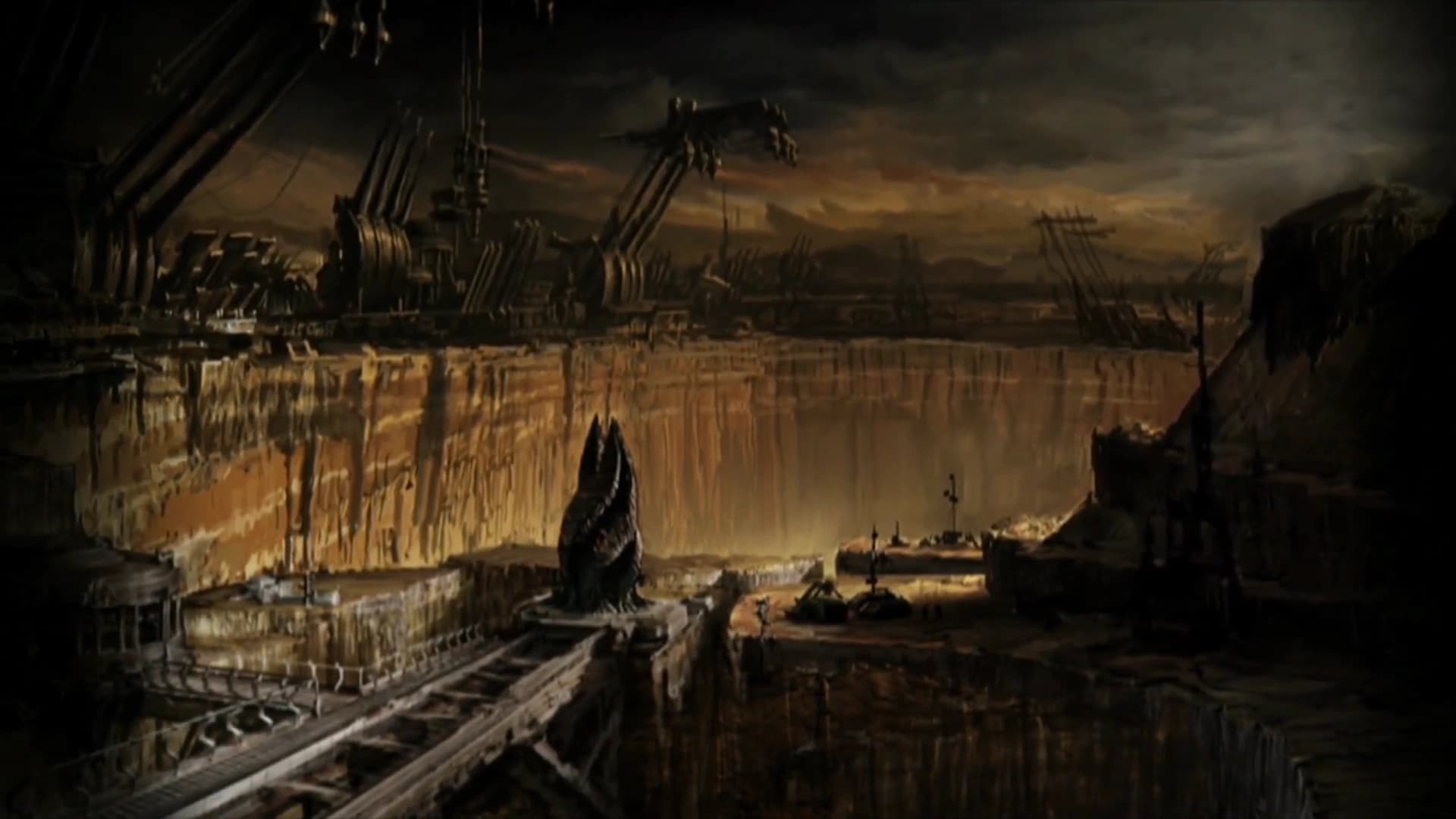
Aegis VII
Aegis VII was a remote, metal-rich planet in the Cygnus system used by the Sovereign Colonies as a secret test site for Marker 3A. Two Necromorph outbreaks scarred the world, and after Isaac Clarke returned the Marker to its pedestal in 2508 the planet broke apart entirely.

Concordance Extraction Corporation: The Planet-Crackers
The Concordance Extraction Corporation was the mining concern that pioneered Planet Cracking and ended the Resource Wars, operating the deep-space fleet led by the USG Ishimura. Its reach made it a vehicle for the Church of Unitology and the retrieval of Marker 3A.

Earth
Earth was the human homeworld and the center of all human activity in colonized space. Strained by an energy crisis, environmental collapse and the Resource Wars, it was the site of the buried Black Marker, the seat of two successive world governments, and the final target of the Brethren Moons.

EarthGov
EarthGov was the centralized regime that replaced the Sovereign Colonies after the Secession War, ruling humanity from an Earth-centric core. Its decision to revive the Marker program and harvest the artifacts' energy spread the Necromorph threat across the colonies.
Church of Unitology
The Church of Unitology was the most influential religion in human space, born from the death of Michael Altman and built on the belief that the Markers promised rebirth and unity in death. Its faith in Convergence ultimately served the very forces that meant to consume humanity.
Mentioned in5 entries
Earth
Earth was the human homeworld and the center of all human activity in colonized space. Strained by an energy crisis, environmental collapse and the Resource Wars, it was the site of the buried Black Marker, the seat of two successive world governments, and the final target of the Brethren Moons.
EarthGov
EarthGov was the centralized regime that replaced the Sovereign Colonies after the Secession War, ruling humanity from an Earth-centric core. Its decision to revive the Marker program and harvest the artifacts' energy spread the Necromorph threat across the colonies.
Karrie Norton
Karrie Norton, known by the code name Vandal, was an engineer and recent convert to the Church of Unitology who was tricked into sabotaging Titan Station. Her acts of sabotage unleashed the Necromorph outbreak on the Sprawl, and she spent her final hours trying to undo the damage she had caused.
Natalia Deshyanov
Natalia Raisa Deshyanov was a Concordance Extraction Corporation engineer on the Aegis VII Colony who helped build the tram to Marker 3A. Drawn into the artifact's influence, she descended into madness and threw herself into the planet crack during the colony's fall.
Tyler Radikov
Tyler Radikov, called the Russian, was a Unitologist who posed as the handler of the inductee Karrie Norton during the sabotage of Titan Station, tricking her into spreading the Necromorph infection while keeping her convinced she was saving the station.
Get new articles in your inbox
No spam. New lore drops, canon conflicts, and deep dives only when they’re worth reading.
Some links on Lore Fortress are affiliate links. If you buy through them we earn a small commission at no extra cost to you.