Citadel Conventions
The galactic accords on weapons of mass destruction
The Citadel Conventions were diplomatic accords drawn up after the Krogan Rebellions to regulate weapons of mass destruction. They forbade their use on habitable garden worlds and graded such weapons into tiers of concern, though many militaries kept stockpiles anyway.
The Citadel Conventions were a set of diplomatic accords negotiated in the wake of the Krogan Rebellions, drawn up as a response to the devastation of that conflict and as an attempt to distance the Citadel Council from the brutal warfare the krogan had waged. Their central purpose was to regulate the use of weapons of mass destruction across Citadel space, and they also defined the terms by which lesser powers participated in galactic governance, binding every species granted an embassy as an associate member subject to the accords. (Mass Effect)
Origins and scope#
The Conventions emerged from diplomatic talks held after the Krogan Rebellions, both as a reaction to the destruction of that war and as a deliberate effort by the Council to set itself apart from the krogan's methods. Their core function was to regulate weapons of mass destruction, which the accords defined not by raw explosive power but by lasting effect: a weapon that caused environmental alteration to a world. A bomb that merely left a large crater was not considered a weapon of mass destruction, whereas one capable of triggering a nuclear winter was. (Mass Effect)
The rules turned on the value of habitable worlds. The use of such weapons was forbidden on garden worlds, those with ecospheres able to readily support a population, on the principle that a destroyed habitable world would not be replaced for millions of years. The Conventions did not, however, forbid their use on hostile worlds or within sealed space-station environments, and in practice many militaries continued to develop and maintain stockpiles regardless. (Mass Effect)
The tiers of concern#
The Conventions graded weapons of mass destruction into four tiers, with Tier I representing the greatest threat to galactic peace. Tier I covered large kinetic impactors, such as dropped asteroids or de-orbited space stations. These were effectively free and available in any system, since planetary accretion left abundant debris behind, which made them the weapon of choice for terrorists and minor powers. (Mass Effect)
Tier II covered uncontrolled self-replicating weapons, including hostile nanotechnology, engineered viral or bacteriological organisms, self-copying Von Neumann devices, and destructive computer viruses, threats that could lie dormant for millennia before a careless visitor carried them to a new world. Tier III covered large energy-burst weapons such as nuclear or antimatter warheads. Tier IV covered alien species deliberately introduced to crowd out the native forms an ecosystem depended on, a slow form of ecological tampering that could take years to bear fruit and was correspondingly difficult to prove. (Mass Effect)
Frequently asked questions
- What were the Citadel Conventions?
- The Citadel Conventions were diplomatic accords negotiated after the Krogan Rebellions to regulate the use of weapons of mass destruction across Citadel space. They also defined the terms by which lesser powers participated in galactic governance, binding every species granted an embassy as an associate member.
- How did the Citadel Conventions define a weapon of mass destruction?
- The accords defined a weapon of mass destruction not by raw explosive power but by lasting effect, meaning a weapon that caused environmental alteration to a world. A bomb that merely left a large crater was not considered a weapon of mass destruction, whereas one capable of triggering a nuclear winter was.
- Where did the Citadel Conventions forbid weapons of mass destruction?
- Their use was forbidden on garden worlds, those with ecospheres able to readily support a population, on the principle that a destroyed habitable world would not be replaced for millions of years. The Conventions did not forbid their use on hostile worlds or within sealed space-station environments, and many militaries continued to develop and stockpile them regardless.
- What were the tiers of concern in the Citadel Conventions?
- The Conventions graded weapons of mass destruction into four tiers, with Tier I representing the greatest threat. Tier I covered large kinetic impactors such as dropped asteroids, Tier II covered uncontrolled self-replicating weapons such as hostile nanotechnology and engineered organisms, Tier III covered large energy-burst weapons such as nuclear or antimatter warheads, and Tier IV covered alien species deliberately introduced to crowd out native forms.
Sources
- GameMass Effect, BioWare, 2007
Spotted a factual error or a primary source we missed? Email a correction. Every flagged claim gets reviewed.
Followed from this entry

Citadel Council
The Citadel Council was the executive committee that governed Citadel space from the Citadel Tower, composed of representatives of the asari, salarians, and turians, and was the ultimate authority over Council law, interspecies disputes, and the covert Spectre agents.
Citadel
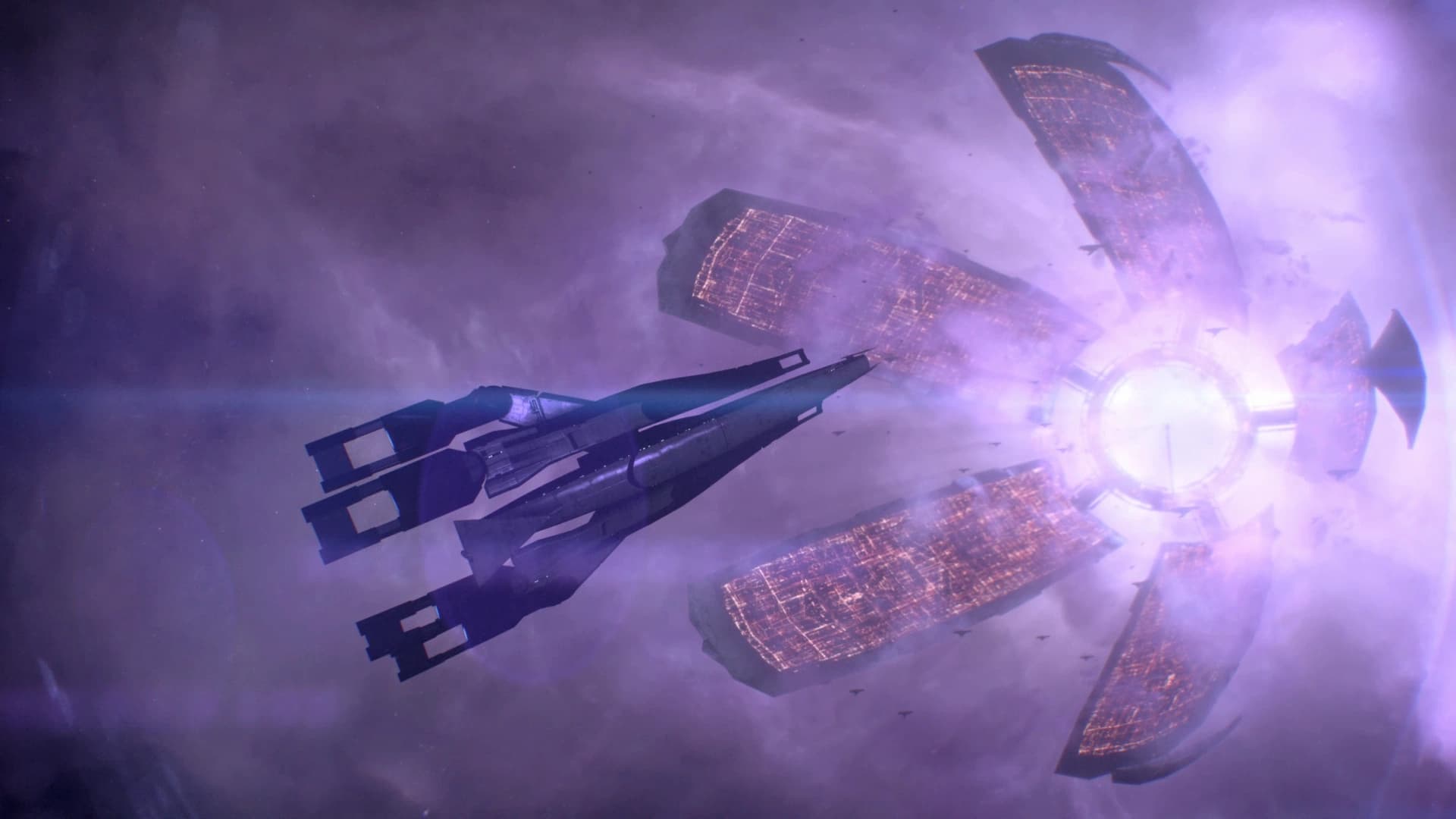
The Citadel was a colossal deep-space station in the Serpent Nebula that served as the political and cultural heart of Citadel space and the seat of the Council. Long believed to be a Prothean relic, it was in truth a Reaper construction and a dormant trap at the center of galactic civilization.

Krogan Rebellions
The Krogan Rebellions were a decades-long war between the krogan and the Citadel Council that began around 700 CE, sparked by unchecked krogan expansion onto worlds claimed by other races. The conflict ended with the deployment of the salarian-engineered genophage, the surrender of the krogan, and a Council seat awarded to the turians.
Elsewhere in this wiki
Entertainment: Culture and amusement across the galaxy
The peoples of the Milky Way produced a vast and varied culture of films, plays, books, magazines, music, sports, and games for their own amusement. From an all-elcor staging of Hamlet to the hanar action hero Blasto and the beloved romance Fleet and Flotilla, entertainment crossed species lines and revealed how each race saw itself and its neighbors.
Justicars: the asari order that answers only to the Code
Justicars were asari who gave up family, property and everything but weapons and armour to wander asari space enforcing a code of more than five thousand sutras. The Code admitted no moral grey and commonly prescribed death, which made justicars both revered and feared by the governments that tolerated them.
Treaty of Farixen: the dreadnought ratio that held Citadel space
The Treaty of Farixen fixed how many dreadnoughts each Citadel power was permitted to build, placing the turian navy at the top of a five to three to one pyramid. Signing it was the price of an embassy on the Citadel, and the species who never signed, or who stopped caring, are the ones who reshaped the balance.
Mentioned in3 entries
Citadel Council
The Citadel Council was the executive committee that governed Citadel space from the Citadel Tower, composed of representatives of the asari, salarians, and turians, and was the ultimate authority over Council law, interspecies disputes, and the covert Spectre agents.
Mass Effect Timeline: every major event from the Leviathans to Andromeda
A dated history of the Mass Effect universe, from the Leviathans and the first Reaper harvests through the fall of the Protheans, the Council's wars, humanity's arrival and the Reaper War of 2186. It ends with the Andromeda Initiative reaching the Heleus Cluster in 2819, and runs oldest first in eras.
Terminus Systems
The Terminus Systems were a vast, ungoverned region beyond Citadel space, home to a loose affiliation of minor species united only in refusing the Council's authority. A haven for piracy, the slave trade, and mercenary gangs, the Terminus centered on the trade hub of Omega.
Get new articles in your inbox
No spam. New lore drops, canon conflicts, and deep dives only when they’re worth reading.
Some links on Lore Fortress are affiliate links. If you buy through them we earn a small commission at no extra cost to you.