Citadel
Capital of the Galactic Community
The Citadel was a colossal deep-space station in the Serpent Nebula that served as the political and cultural heart of Citadel space and the seat of the Council. Long believed to be a Prothean relic, it was in truth a Reaper construction and a dormant trap at the center of galactic civilization.
The Citadel was an enormous space station located in the Widow system of the Serpent Nebula, serving as the capital of the Citadel Council and the unofficial heart of the region known as Citadel space. For thousands of years it was thought to have been built by the long-extinct Protheans, but it was in fact a creation of the Reapers, built as part of their cycle of galactic genocide. It was here that Commander Shepard confronted the schemes that threatened the galaxy, and here that the final battle of the Reaper War was decided. (Mass Effect; Mass Effect 3)
Structure and layout#
The Citadel was a massive construct shaped like a five-armed ring, similar in outline to a pentagram. A central ring some 7.2 kilometers in diameter anchored five arms, each roughly 43.6 kilometers long, and the whole station measured 44.7 kilometers from tip to tip when open. Gravity was simulated through rotation, holding at a comfortable 1.02 standard gravities on the arms and a lighter 0.3 on the central ring. The station could close in on itself, drawing its five arms together into a long, armored cylinder roughly 45 kilometers in length, a configuration reserved for times of emergency. (Mass Effect)
The central ring housed the Presidium, a vast park-like complex containing the offices of the galactic government and the embassies of the represented species, along with shops, restaurants, and recreational facilities for its wealthy residents. The Presidium maintained an artificial twenty-hour day, dimming its holographic sky for part of each cycle, and was monitored by a virtual intelligence named Avina. At its center rose the Citadel Tower, which held the Council Chambers and the main traffic control for the station. The five arms, known as the Wards, formed the densely populated residential and commercial sectors, home to millions of residents drawn from across the galaxy and never resting, with commercial activity that rarely ceased. Below the Wards lay the Citadel Archives, a repository for artifacts and records of importance. (Mass Effect; Mass Effect 3: Citadel)
Discovery and the Council#
The asari were the first to discover the Citadel, in 580 BCE, soon after learning to use the mass relays. They were joined shortly by the salarians and then the volus, and as other species made contact or found the station independently they gained embassies and came under the jurisdiction of the growing Council. In time the Council came to comprise the asari, the salarians, and the turians. Strategically positioned at the junction of numerous mass relays, the Citadel rapidly became a hub of commerce and diplomacy, and was chosen to house the Council. From then on it was the political and cultural centre of Citadel space. (Mass Effect)
Even after thousands of years of occupation, much about the station remained unknown. Its precise age, the resilient material from which it was built, and the location of its core and master control unit all stayed hidden. The most visible of its mysteries were the keepers, mute insectoid creatures that maintained the station's vital systems and could be seen working throughout it, yet whose nature and origins few understood. (Mass Effect)
Defenses#
As one of the most important locations in the galaxy, the Citadel was protected by multiple layers of defense. The Serpent Nebula itself formed the first, its composition making it difficult for an attacking fleet to navigate and mount a concerted assault. The Citadel Fleet, a powerful task force composed largely of turian vessels but drawing ships from all the Council races, constantly patrolled the surrounding space, led by the asari dreadnought Destiny Ascension. Should an aggressor break through, reinforcements could arrive within minutes by way of the nearby mass relays. If an enemy drew close enough, the station could close into its armored cylinder, whose hull was strong enough to withstand days of sustained bombardment from the most advanced weaponry. Internal order was kept by the Citadel Security Services, a force of some two hundred thousand officers handling everything from customs to hostage negotiation, supported by turrets to ward off small craft. (Mass Effect)
The true nature of the station#
The Citadel was not built by the Protheans; they were merely the last race to make use of it before the asari arrived. It, like the mass relays, was a creation of the Reapers, built to run their cycle of galactic genocide. The station was in fact a dormant mass relay leading to dark space, designed as an elaborate trap: when a harvest began, the Reapers could use it to strike at the heart of galactic civilization and leadership in a single devastating blow. The keepers were placed aboard so that the occupying races would never discover the station's key functions. (Mass Effect)
According to the Prothean virtual intelligence Vigil, the last Protheans of the previous cycle reached the Citadel through the Conduit in a desperate effort to break this pattern. They succeeded in sabotaging the trap, though it came too late to save their own people; because the Conduit linked in only one direction, the Prothean scientists are thought to have starved on the station, unable to find food or water. Their intervention forced the Reapers to enter the galaxy by slower faster-than-light travel rather than through the relay network. (Mass Effect)
The Reaper War and the Catalyst#
At the height of the Reaper invasion in 2186, the species of the galaxy united to build the Crucible, a superweapon of ancient design intended to destroy the Reapers. Its final and most important component, the Catalyst, proved to be part of the Citadel itself. When this was discovered, the Reapers seized control of the station and moved it into orbit around Earth to protect it, sealing its arms and trapping most of those still aboard. With the Crucible unable to dock at the closed station, it fell to someone to reach the Citadel and open its arms manually. (Mass Effect 3)
During the battle for Earth, Commander Shepard boarded the Citadel through a transport beam and reached its controls. There Shepard encountered the Catalyst, revealed to be the intelligence that directed the Reapers, and was presented with a final choice over the fate of the galaxy. Depending on Shepard's decision, the Crucible's energy was released through the now-open Citadel and transmitted across the mass relay network. The release damaged the relays, which the Extended Cut showed being repaired in the years after the war; in every case the choice made aboard the Citadel shaped the galaxy that emerged from the war. (Mass Effect 3; Mass Effect 3: Extended Cut)
Frequently asked questions
- What is the Citadel in Mass Effect?
- The Citadel was an enormous deep-space station in the Widow system of the Serpent Nebula that served as the capital of the Citadel Council and the heart of Citadel space. Shaped like a five-armed ring measuring 44.7 kilometers from tip to tip, it housed some 13.2 million inhabitants.
- Who really built the Citadel?
- Although it was thought for thousands of years to be a Prothean relic, the Citadel was in fact a creation of the Reapers, built as part of their cycle of galactic genocide. It was a dormant mass relay leading to dark space, designed as a trap to strike at the heart of galactic leadership when a harvest began.
- Who discovered the Citadel and formed the Council?
- The asari were the first to discover the Citadel, in 580 BCE, soon after learning to use the mass relays, and were joined by the salarians and then the volus. In time the Council came to comprise the asari, the salarians, and the turians, with the station chosen to house the Council.
- What are the keepers on the Citadel?
- The keepers were mute insectoid creatures that maintained the station's vital systems and could be seen working throughout the Citadel. They were placed aboard by the Reapers so that the occupying races would never discover the station's key functions, and their nature and origins were understood by few.
- How was the Citadel involved in the Reaper War?
- During the Reaper invasion of 2186, the Citadel was revealed to be the Catalyst, the final component of the Crucible superweapon, and the Reapers seized it and moved it into Earth's orbit. Commander Shepard reached its controls and encountered the Catalyst, and Shepard's choice there determined the war's outcome and the fate of the relays.
Gallery

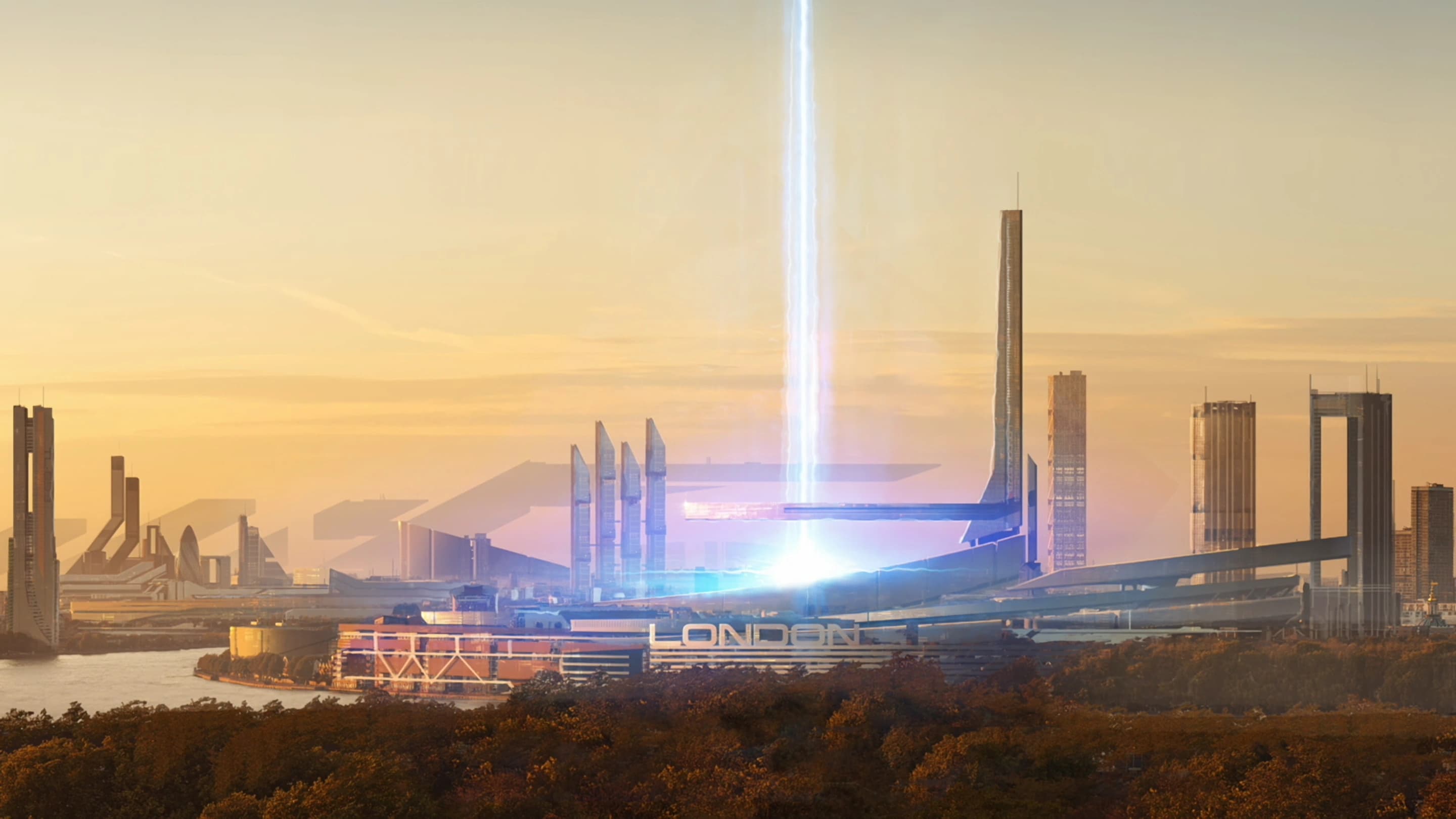
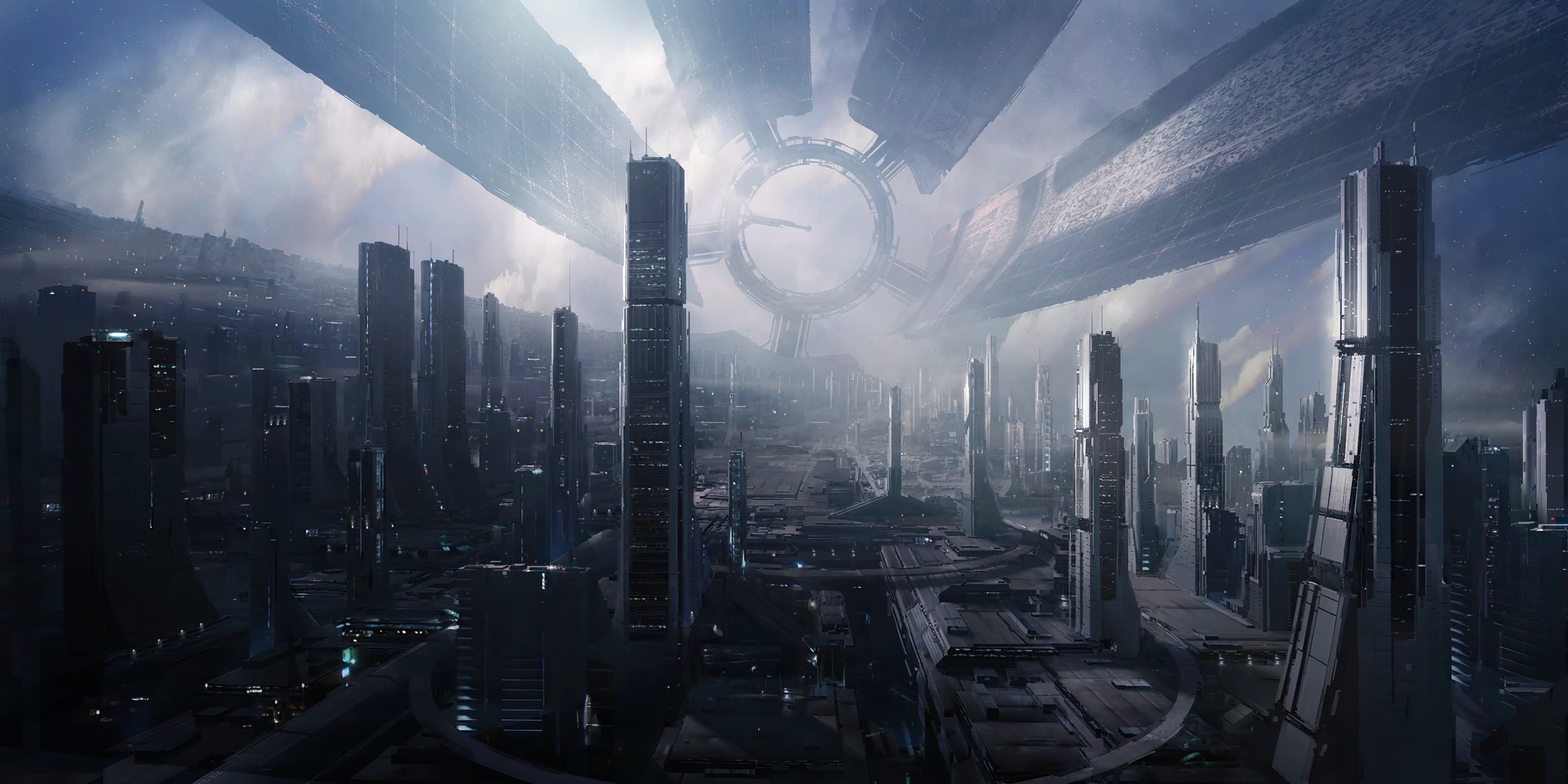
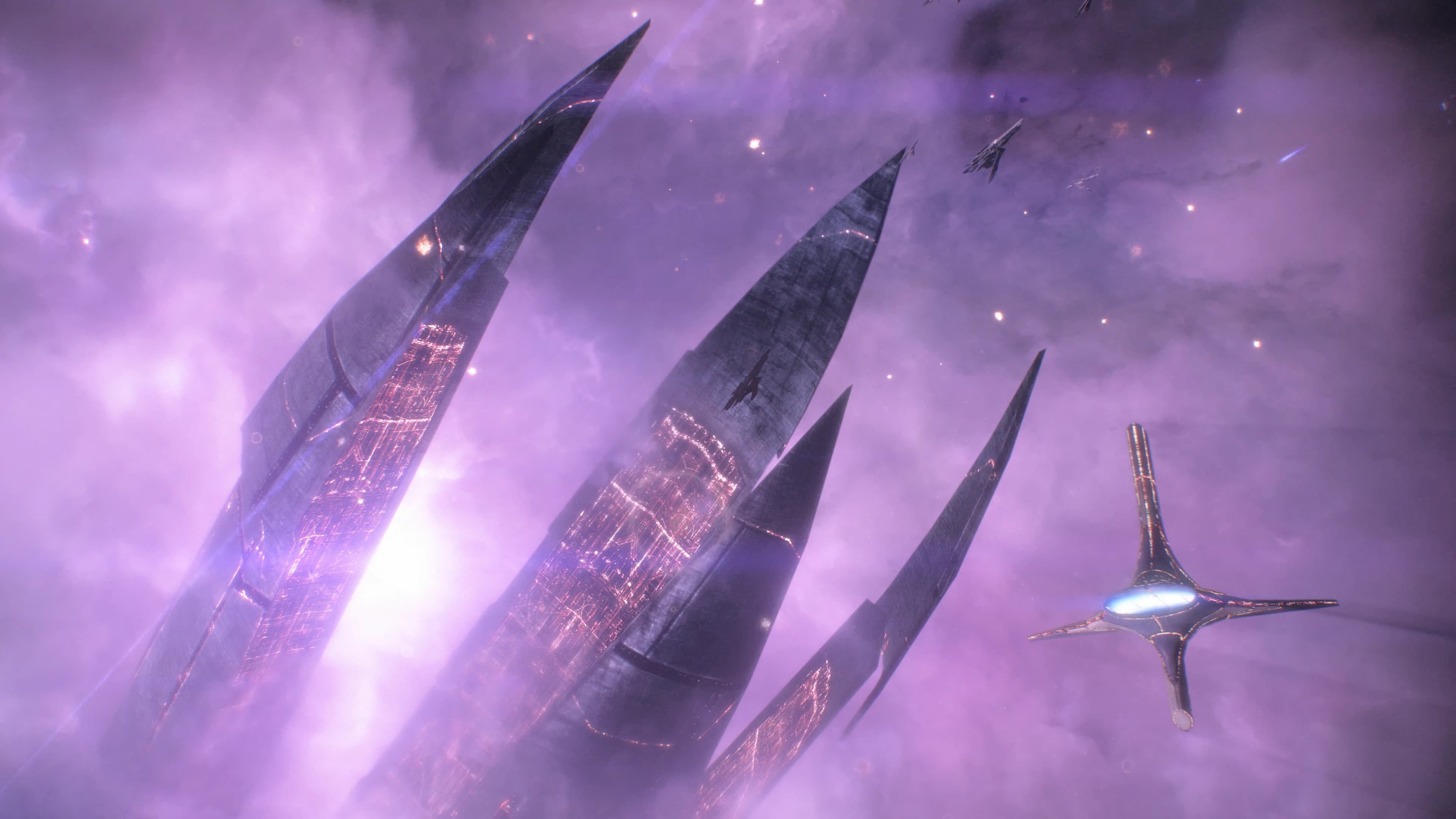
Images via Mass Effect Wiki
Sources
- GameMass Effect, BioWare, 2007
- GameMass Effect 3, BioWare, 2012
- GameMass Effect 3: Extended Cut, BioWare, 2012
- GameMass Effect 3: Citadel, BioWare, 2013
Spotted a factual error or a primary source we missed? Email a correction. Every flagged claim gets reviewed.
Followed from this entry
Wards
The Wards were the five great arms of the Citadel, residential districts each home to millions and dense as the cities of old Earth. Sealed against vacuum and tended by the keepers, they could be closed to fold the station into an impenetrable cylinder.

Citadel Council
The Citadel Council was the executive committee that governed Citadel space from the Citadel Tower, composed of representatives of the asari, salarians, and turians, and was the ultimate authority over Council law, interspecies disputes, and the covert Spectre agents.
Vigil: the Prothean watcher of Ilos
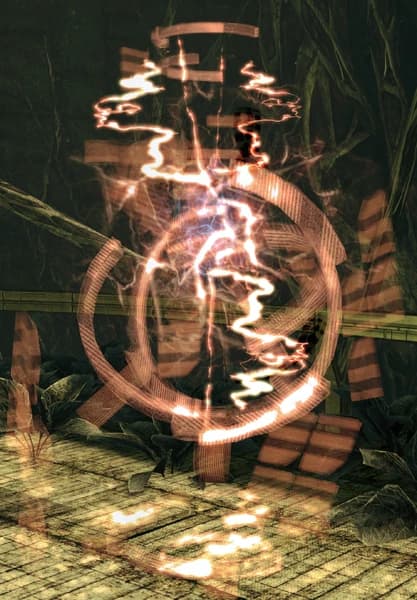
Vigil was a Prothean virtual intelligence left to guard a hidden research facility on Ilos, built around the personality imprints of the Chief Overseer Ksad Ishan. It shut down the cryogenic pods of the people it was made to protect so that twelve might live, and fifty thousand years later it handed Commander Shepard the truth about the Citadel.
Citadel Security Services: C-Sec
Citadel Security Services, known as C-Sec, was the volunteer police force responsible for law enforcement aboard the Citadel. Answering to the Citadel Council and led by an Executor, its constables kept order across the station's vast, crowded wards and the space around it.
Commander Shepard
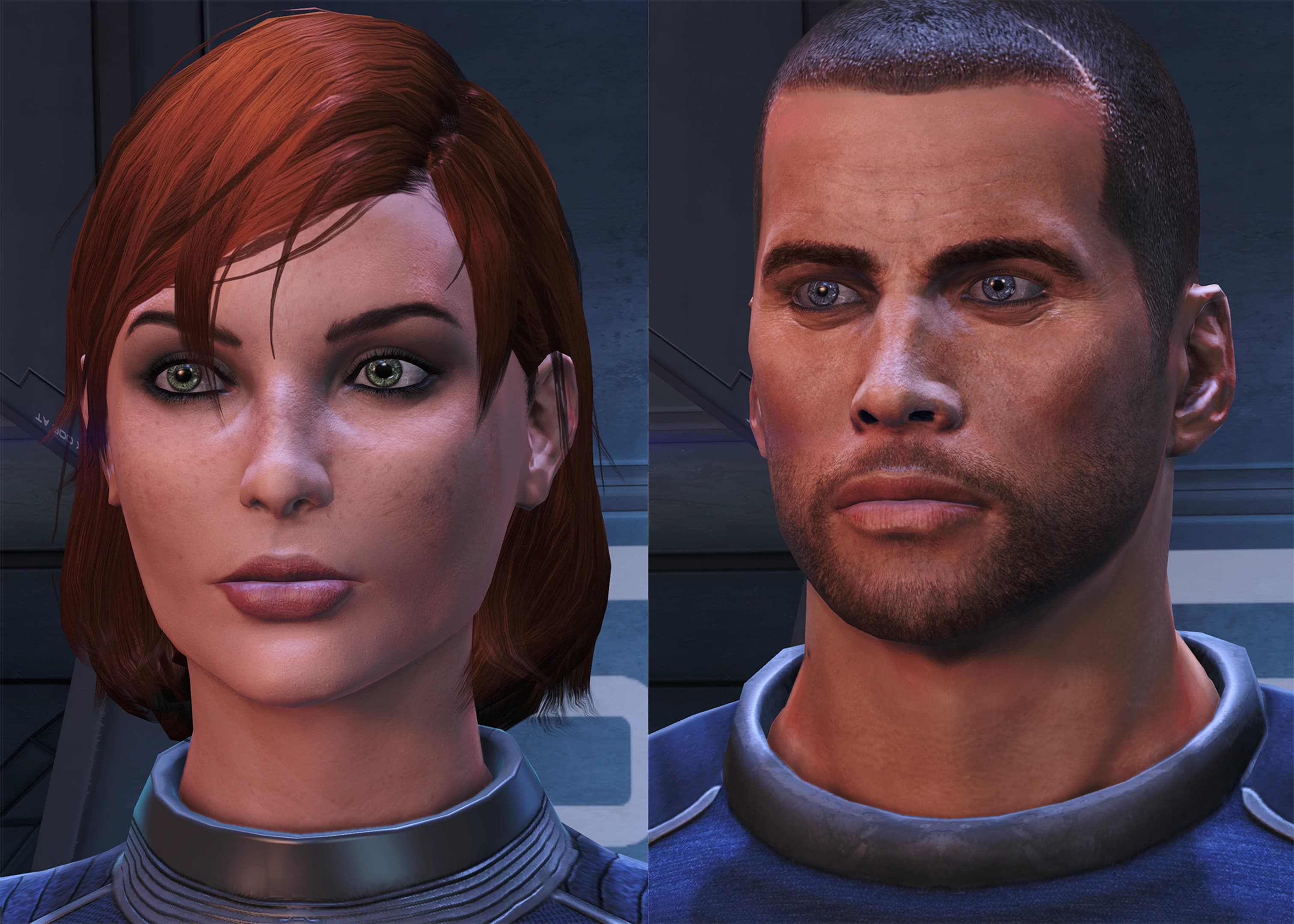
Commander Shepard was a Systems Alliance N7 marine who became the first human Spectre, exposed the rogue agent Saren Arterius, and led the galaxy's resistance against the Reapers. Shepard's gender, history, and many of the choices that shaped the war were never fixed, and the final fate of the cycle turned on the Commander's own decisions.
Prothean
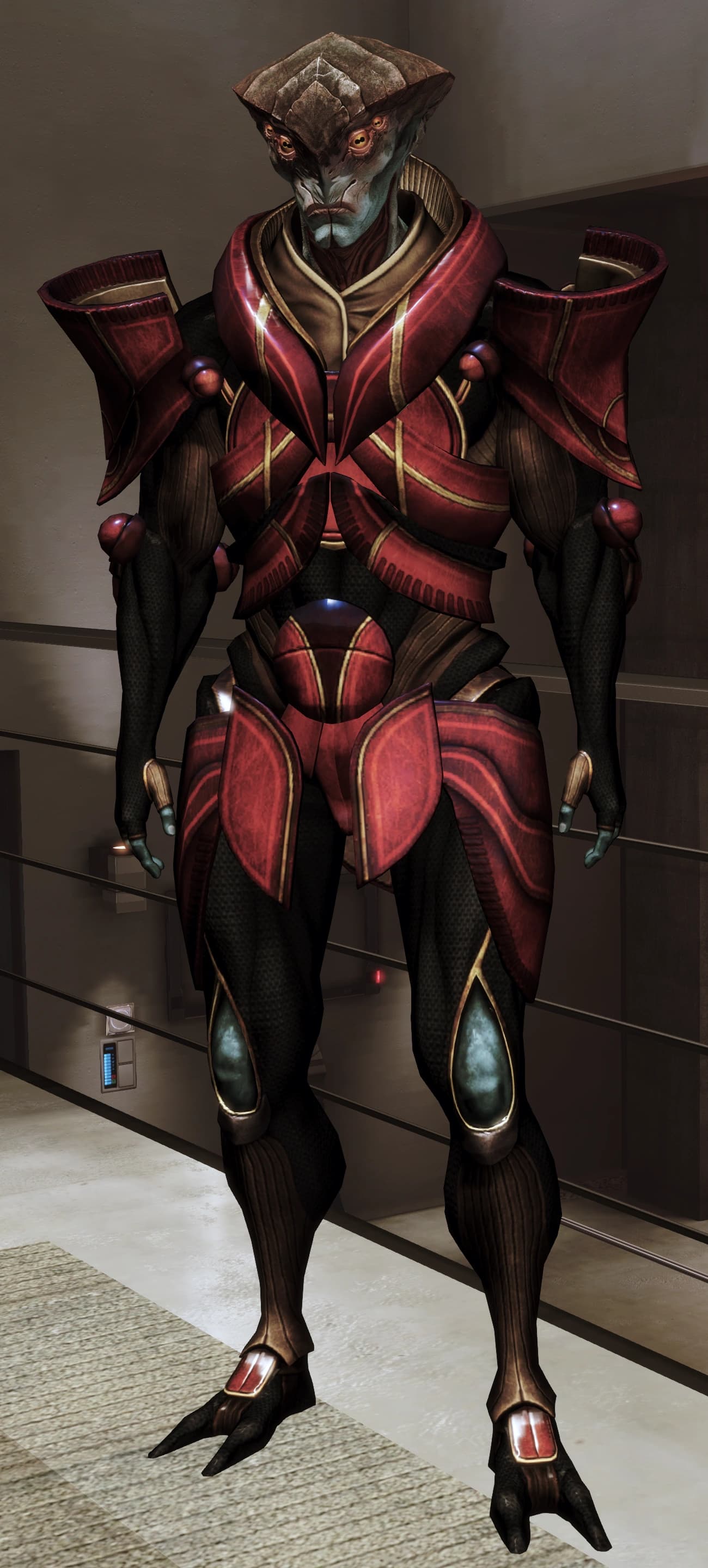
The Protheans were an ancient race who ruled a galaxy-wide empire before mysteriously vanishing some fifty thousand years ago, harvested by the Reapers. Long credited with building the Citadel and mass relays, they secretly nurtured younger species, leaving ruins and technology that shaped the modern galaxy.
Mentioned in131 entries
Acolyte: Asari Heavy Pistol
The Acolyte was an asari heavy pistol designed for the asari resistance, firing charged projectiles akin to impact triggered resonant warp bombs. It collapsed kinetic shields and biotic barriers with a single detonation, trusting the shooter's own biotics to finish whatever armor it could not pierce.
Adrien Victus: the general who became Primarch on a moon of Palaven
Adrien Victus was a turian general fighting on Menae in 2186 when Primarch Fedorian's shuttle was shot down and the succession rules made him Primarch of Palaven. He was out of contact and did not know it yet.
Alec Ryder: the first human Pathfinder in Mass Effect: Andromeda
Alec Ryder was an N7 veteran, AI researcher and the human Pathfinder of the Andromeda Initiative. He built SAM, brought his twins to Andromeda, and died on Habitat 7 in 2819, passing the role to one of them.
Alliance Navy: Humanity's Fleet
The Alliance Navy was the space combat branch of the Systems Alliance military, charged with defending Earth and its colonies. Numbering several thousand ships across multiple fleets, it was one of the greater naval forces in Citadel space and bore the brunt of the fighting during the Reaper War.
Andromeda Initiative: the one-way voyage to the Heleus Cluster
The Andromeda Initiative was a privately funded, multi-species project to settle the Andromeda galaxy. Founded by Jien Garson in 2176, it sent the Nexus and its arks across dark space in 2185, and they reached the Heleus Cluster more than six centuries later to find almost nothing as promised.
Aria T'Loak: The Pirate Queen of Omega
Aria T'Loak was the de facto ruler of the space station Omega, an asari of centuries' experience who governed the lawless heart of the Terminus Systems with an iron grip. Driven from her throne by Cerberus, she fought beside Commander Shepard to retake it during the Reaper War.
Armando-Owen Bailey
Armando-Owen Bailey was a human officer of Citadel Security stationed in the Zakera Ward, a no-nonsense lawman who rose from a neglected beat officer to a Commander overseeing security for the Citadel Embassies during the Reaper War.
Asari
The asari, native to Thessia, were among the most influential species in the galaxy, renowned for their elegance, biotic talent, and millennium-long lifespans. A mono-gender people able to reproduce with a partner of any species, they founded the Citadel Council and stood at the heart of galactic society for two thousand years.
Asari Commandos
Asari commandos, also called huntresses, were powerful asari biotics who formed the elite of their species' military. Fighting in small guerrilla bands during the maiden stage of their long lives, they ranked among the finest individual warriors in the galaxy.
Asari Republics
The Asari Republics were the loose, consensus-driven government of the asari, the most influential species in the galaxy. As the first contemporary race to settle the Citadel, the asari were instrumental in founding the Citadel Council and remained at the heart of galactic society.
Ashley Williams
Ashley Williams was a human Systems Alliance soldier and the sole survivor of her unit on Eden Prime, who went on to serve aboard the Normandy under Commander Shepard and later rose to become one of the first human Spectres.
Batarian
The batarians were a four-eyed species native to Khar'shan whose insular government, the Batarian Hegemony, withdrew from the galactic community and became infamous for slavery, piracy, and hostility toward humanity before the Reapers overran their space.
+ 119 more
Get new articles in your inbox
No spam. New lore drops, canon conflicts, and deep dives only when they’re worth reading.
Some links on Lore Fortress are affiliate links. If you buy through them we earn a small commission at no extra cost to you.