Asari
The Diplomats of Thessia
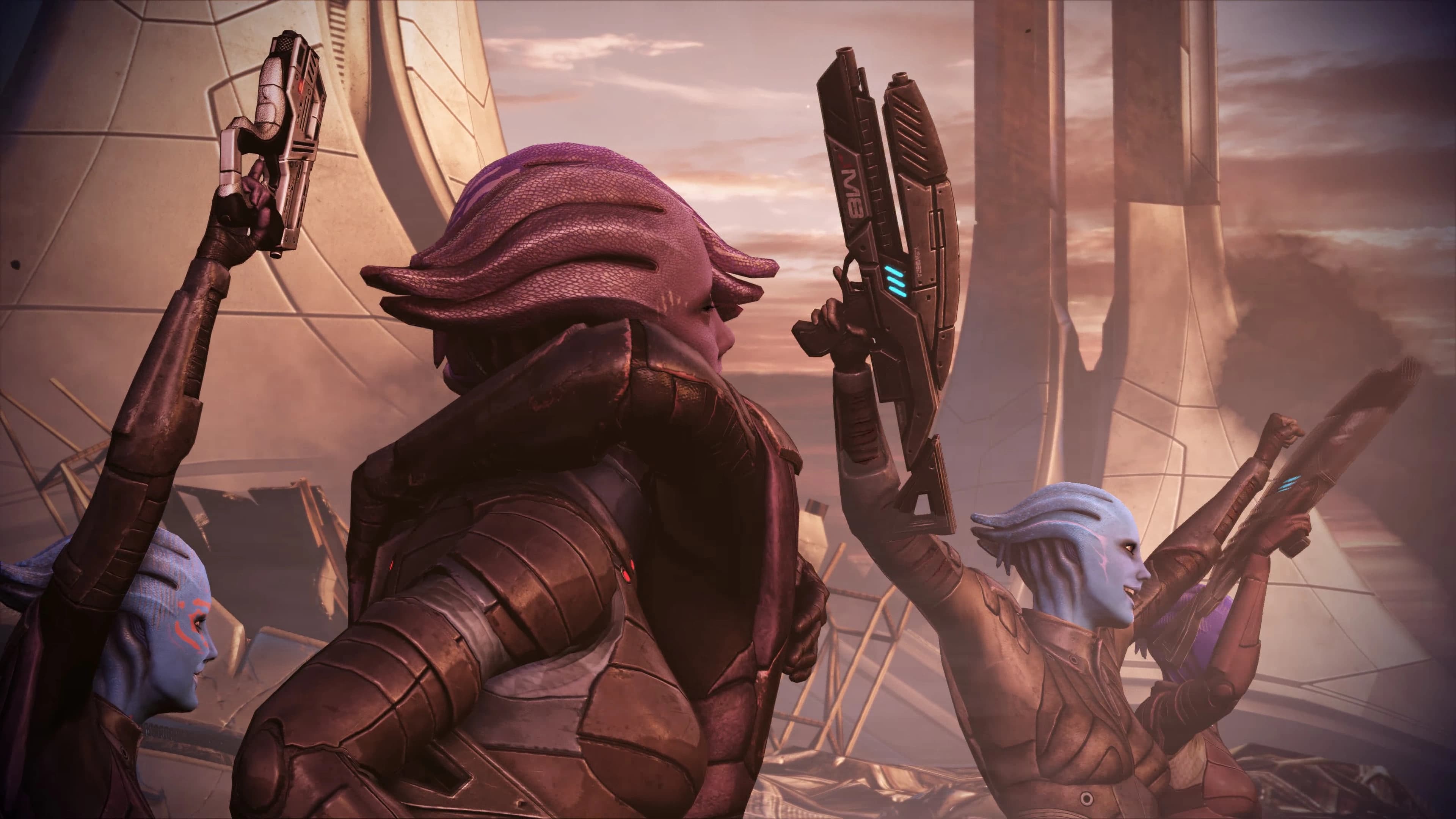
The asari, native to Thessia, were among the most influential species in the galaxy, renowned for their elegance, biotic talent, and millennium-long lifespans. A mono-gender people able to reproduce with a partner of any species, they founded the Citadel Council and stood at the heart of galactic society for two thousand years.
The asari, native to the planet Thessia, were often considered the most influential and respected sentient species in the galaxy, prized for their elegance, diplomacy, and biotic aptitude. They were among the earliest races to achieve interstellar flight after the Protheans, the first to discover and settle the Citadel, and the species most instrumental in proposing and founding the Citadel Council. Favoring compromise over conflict, they remained at the center of galactic affairs for millennia, working alongside the salarians who became their earliest partners. (Mass Effect)
Biology and reproduction#
The asari resembled humans in basic skeletal structure, with five digits on each hand and relatively straight feet, a similarity that allowed them to wear human armor. A typical asari had a blue to purple complexion, and in place of head hair possessed semi-flexible, cartilage-based scalp crests. Some, such as Matriarch Benezia and Liara T'Soni, bore unique colored facial markings. Their blood was purple, and they could perceive ultraviolet light. Their cells regenerated well enough to carry them past a thousand years of age, a lifespan rivaled only by the krogan. (Mass Effect)
The asari were a mono-gender species with no concept of gender difference; one of their number remarked that "male and female have no real meaning for us." To other species they appeared female, and most were referred to with feminine titles such as huntress and matriarch. They reproduced through a form of parthenogenesis: an asari provided two copies of her own genes, the second altered through a process called melding, also known as the joining or the union. During melding she attuned her nervous system to her partner's, briefly becoming one shared consciousness in which memories and feelings passed between them. A common phrase spoken beforehand was "embrace eternity." The offspring was always an asari, regardless of the partner's species, as no DNA was taken from the partner. (Mass Effect)
A rare and dangerous genetic defect, the Ardat-Yakshi, caused an asari to destroy her partner's nervous system during melding. The condition appeared almost exclusively among purebloods, those whose parents were both asari, which contributed to the cultural taboo against asari conceiving together. Melding could also be used solely to transfer thoughts without reproduction, a practice reserved for moments of deep connection. (Mass Effect 2; Mass Effect 3)
The three life stages#
Asari passed through three climacteric stages marked by biochemical and physiological change. The Maiden stage began at puberty and was defined by curiosity and the drive to explore; many young asari spent these years traveling, dancing, or working as mercenaries. The Matron stage began around the age of 350, bringing a desire to settle and raise children. The Matriarch stage began around 700 years of age, when an asari became a sage and councilor, dispensing wisdom drawn from centuries of experience. Though each stage carried strong biological tendencies, individuals could begin a new stage whenever they felt they had reached the appropriate maturity, and some defied the pattern entirely. (Mass Effect)
History and the Citadel#
The asari arose on Thessia, a world rich in element zero that caused much of its life to exhibit biotic tendencies. Their early development was secretly accelerated by the Protheans, who crafted the guise of the goddess Athame and genetically altered the asari to grant them biotic capability. When the Protheans departed they left a single beacon on Thessia, around which the asari later built a temple devoted to Athame. The beacon contained the Prothean virtual intelligence Vendetta and became the hidden source of countless advances, its existence kept a closely guarded state secret so that the asari might appear to have risen on their own merit. (Mass Effect 3)
The asari were the first contemporary race to achieve spaceflight and discover the mass relay network. They found the Citadel in 580 BCE and, with the mute assistance of the keepers, quickly learned to operate its systems. Sixty years later the salarians made first contact, and together the two species founded the Citadel Council in 500 BCE, a governing body that would come to unite dozens of races. As the diplomatic arm of the Council, the asari went on to welcome many other species into the galactic community. (Mass Effect)
The Reaper War#
During the Reaper invasion of 2186 CE, the asari at first refrained from supporting the other races, reluctant to divert resources from the defense of their own worlds. Their hit-and-run tactics slowed the Reaper advance but could not stop it. In desperation, the asari government authorized their Councilor to reveal the existence of the Prothean beacon in the Temple of Athame to Commander Shepard, hoping its data would help complete the Crucible, the galaxy's only means of defeating the Reapers. Thessia was assaulted and swiftly fell, the first time the asari homeworld had been attacked since the Rachni Wars. Out of options, the asari finally joined the Allied effort, committing ships and resources to the fleets and fighting alongside the other races in the final confrontation over Earth. (Mass Effect 3)
Culture and government#
Because of their long lifespans, the asari held a patient "long view" of events, comfortable with extended observation and untroubled that an investment might not pay off for decades or centuries. Traditionally they spread their influence not through conquest but through cultural domination and intellectual superiority, inviting promising new species into the galactic community in the knowledge that asari ideals would inevitably take root. Their religion, siari, held that the universe itself was a single consciousness, and that death returned one's spiritual energy to the greater whole. (Mass Effect)
The asari governed themselves through the Asari Republics, a broad and loose structure that had grown from confederacies of independent city-states resembling the ancient Mediterranean. Apart from their Council representative they had no politicians or elections, instead conducting an all-inclusive electronic democracy in which any citizen could participate at will, with the greatest weight given to the opinions of any Matriarchs present. (Mass Effect)
The huntresses#
The asari military resembled a collection of tribal warrior bands rather than a national force, each community organizing and electing its own units. Its soldiers, the huntresses or commandos, were full-time professionals, most still in their Maiden stage, who devoted decades to mastering the martial arts. A huntress combined a sharp tactical sense with a dancer's grace, and asari units specialized in ambush, infiltration, and assassination rather than conventional warfare. As a turian saying held, "The asari are the finest warriors in the galaxy. Fortunately, there are not many of them." The asari also possessed one of the most powerful navies in the galaxy, including the dreadnought Destiny Ascension, flagship of the Citadel Fleet, though they favored nimble swarms of frigates and fighters over slower formations of capital ships. (Mass Effect; Mass Effect 3)
Frequently asked questions
- Who are the asari in Mass Effect?
- The asari, native to the planet Thessia, were often considered the most influential and respected sentient species in the galaxy, prized for their elegance, diplomacy, and biotic aptitude. They were the first contemporary race to settle the Citadel and the species most instrumental in proposing and founding the Citadel Council.
- How do asari reproduce?
- The asari were a mono-gender species that reproduced through a form of parthenogenesis, providing two copies of their own genes with the second altered through a process called melding. During melding an asari attuned her nervous system to a partner of any gender or species, and the offspring was always an asari since no DNA was taken from the partner.
- What are the three asari life stages?
- The asari passed through three stages: the Maiden stage, which began at puberty and was defined by curiosity and exploration; the Matron stage, which began around age 350 and brought a desire to settle and raise children; and the Matriarch stage, which began around 700 years of age, when an asari became a sage and councilor. Individuals could begin a new stage whenever they felt they had reached the appropriate maturity.
- What is an Ardat-Yakshi?
- The Ardat-Yakshi was a rare and dangerous genetic defect that caused an asari to destroy her partner's nervous system during melding. It appeared almost exclusively among purebloods, those whose parents were both asari, which contributed to the cultural taboo against asari conceiving together.
- How were the asari secretly influenced by the Protheans?
- The asari's early development was secretly accelerated by the Protheans, who crafted the guise of the goddess Athame and genetically altered the asari to grant them biotic capability. The Protheans left a single beacon on Thessia, housed in the Temple of Athame, which contained the virtual intelligence Vendetta and became the hidden source of countless advances, kept a closely guarded state secret.
Gallery



Images via Mass Effect Wiki
Sources
- GameMass Effect, BioWare, 2007
- GameMass Effect 2, BioWare, 2010
- GameMass Effect 3, BioWare, 2012
Spotted a factual error or a primary source we missed? Email a correction. Every flagged claim gets reviewed.
Followed from this entry

Every Mass Effect Species and Race, With Lifespans
A field guide to every sapient species in Mass Effect, from the Council races and their clients to the krogan, the geth, the Protheans and the peoples of the Heleus Cluster. Each entry gives the homeworld, the lifespan where the games actually state one, and where the species stood with the Citadel.

Asari Republics
The Asari Republics were the loose, consensus-driven government of the asari, the most influential species in the galaxy. As the first contemporary race to settle the Citadel, the asari were instrumental in founding the Citadel Council and remained at the heart of galactic society.

Matriarch Benezia
Matriarch Benezia was a powerful asari biotic and revered spiritual leader, mother to the archaeologist Liara T'Soni. When she was found allied with Saren Arterius, those who knew her were stunned, until it emerged that she had been enslaved by the indoctrinating power of the Reaper Sovereign.

Liara T'Soni: Asari Researcher and Shadow Broker
Liara T'Soni was an asari archaeologist and expert on the Protheans who joined Commander Shepard's crew in 2183. Driven by the loss of her mother and the betrayal of a friend, she later seized control of the Shadow Broker's network and turned it against the Reapers.

Prothean
The Protheans were an ancient race who ruled a galaxy-wide empire before mysteriously vanishing some fifty thousand years ago, harvested by the Reapers. Long credited with building the Citadel and mass relays, they secretly nurtured younger species, leaving ruins and technology that shaped the modern galaxy.
Reaper
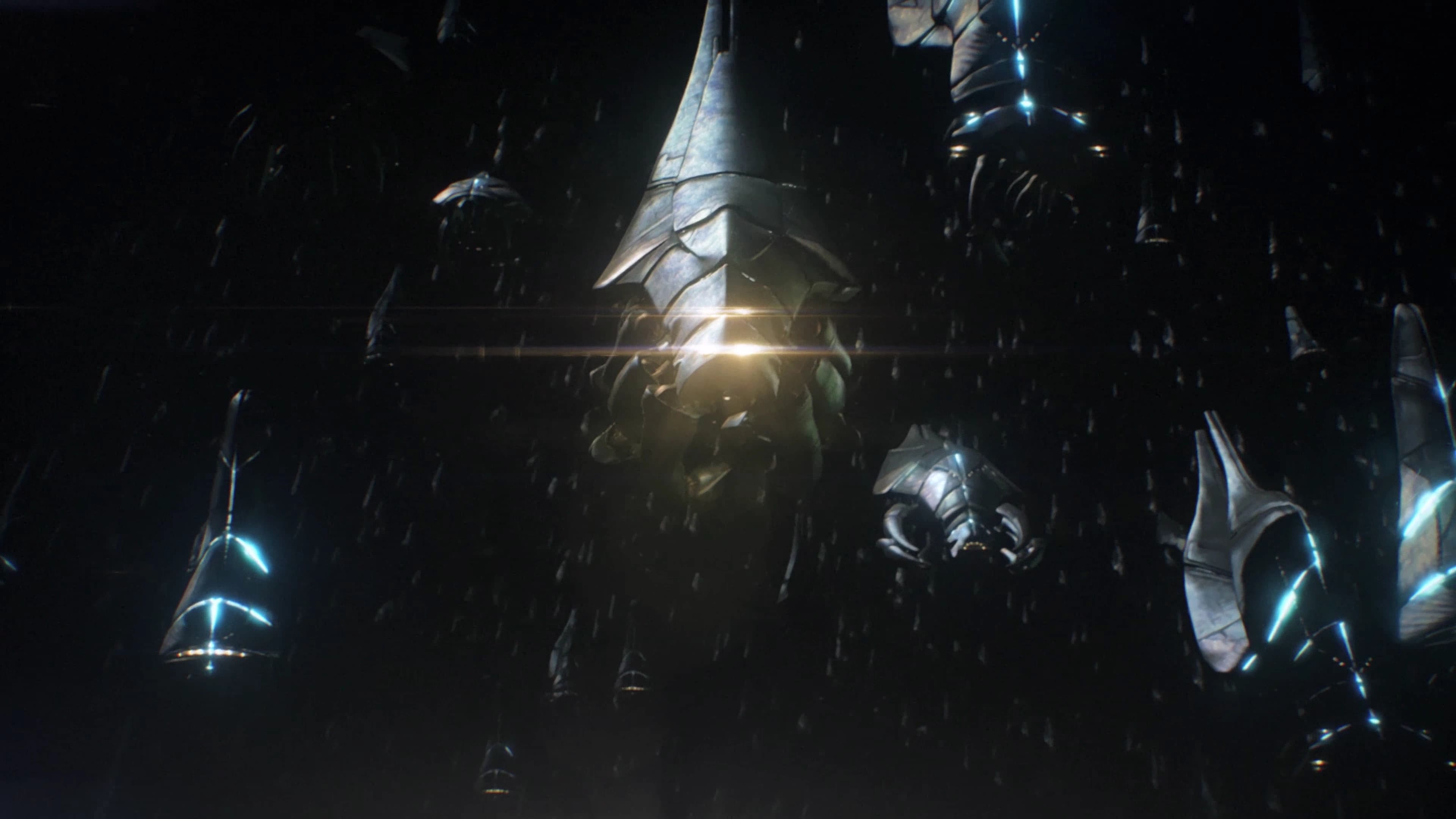
The Reapers were an ancient race of synthetic-organic starships that hibernated in dark space and returned once every fifty thousand years to harvest the galaxy's advanced life. They built the Citadel and the mass relay network to guide civilization down a predictable path, then reaped it to preserve organic life from synthetic destruction.
Mentioned in36 entries
Acolyte: Asari Heavy Pistol
The Acolyte was an asari heavy pistol designed for the asari resistance, firing charged projectiles akin to impact triggered resonant warp bombs. It collapsed kinetic shields and biotic barriers with a single detonation, trusting the shooter's own biotics to finish whatever armor it could not pierce.
Asari Commandos
Asari commandos, also called huntresses, were powerful asari biotics who formed the elite of their species' military. Fighting in small guerrilla bands during the maiden stage of their long lives, they ranked among the finest individual warriors in the galaxy.
Asari Republics
The Asari Republics were the loose, consensus-driven government of the asari, the most influential species in the galaxy. As the first contemporary race to settle the Citadel, the asari were instrumental in founding the Citadel Council and remained at the heart of galactic society.
Background Races: the vanished civilizations known only from ruins
Across billions of years, countless races rose to sentience in the Milky Way and Andromeda, forged civilizations, explored the depths of space, and became extinct. The contemporary galaxy knew most of them only through ruins, wreckage, and artifacts, from the crypt builders of Armeni to the nameless dead entombed in the clouds of Anjea.
Banshee
Banshees were synthetic organic monstrosities created by the Reapers from asari who carried the Ardat-Yakshi gene. Intelligent and grotesquely biotic, they teleported across the battlefield in glowing surges and impaled their prey, and they were most often found leading a Reaper strike force.
Biotics
Biotics was the ability of certain lifeforms to generate mass effect fields using element zero nodules grown through their bodies. Channelled through surgical implants and physical gestures, it let a wielder lift, hurl, and crush objects at a distance or raise protective barriers.
Citadel Fleet: the Council's defence force and what one battle cost it
The Citadel Fleet was the Council's main space defence force, mostly turian ships led by the asari dreadnought Destiny Ascension. Sovereign's attack in 2183 caught it scattered across the relays, and Shepard decides who survives.
Citadel Security Services: C-Sec
Citadel Security Services, known as C-Sec, was the volunteer police force responsible for law enforcement aboard the Citadel. Answering to the Citadel Council and led by an Executor, its constables kept order across the station's vast, crowded wards and the space around it.
Cora Harper: Asari-Trained Vanguard of the Andromeda Initiative
Cora Harper was a human biotic and former asari commando who served as the Pathfinder team's second in command aboard the Tempest. Trained among the asari huntresses of Talein's Daughters, she brought elite biotic skill and rigid discipline to the Andromeda Initiative's expedition into the Heleus Cluster.
Diana Allers: Alliance War Correspondent
Diana Allers was a human war correspondent for the Alliance News Network and a regular presence on its program Battlespace. Originally from the colony of Bekenstein, she sought to report the war against the Reapers from the front lines and could embed aboard the Normandy to chronicle the conflict firsthand.
Drugs: the narcotics and medicines of the galaxy
Drugs were chemical substances that altered the normal bodily functions of an organism, and the galactic market for them was lucrative enough that criminal enterprises produced, sold, and smuggled them despite legal restrictions. They ranged from lifesaving antibiotics to red sand, a narcotic refined from element zero that granted brief biotic power, and to suppressants engineered to strip a biotic of that power entirely.
Eclipse
Eclipse was a mercenary corporation founded by the asari commando Jona Sederis, prized for advanced equipment, heavy use of biotics, and a willingness to take any contract a client could afford. It blended security work with a vast smuggling operation and counted among the three rival syndicates that ruled Omega's underworld.
+ 24 more
Get new articles in your inbox
No spam. New lore drops, canon conflicts, and deep dives only when they’re worth reading.
Some links on Lore Fortress are affiliate links. If you buy through them we earn a small commission at no extra cost to you.