Rachni Wars
The century the galaxy nearly fell
The Rachni Wars were a series of conflicts beginning around 1 CE, after a Citadel expedition opened a dormant mass relay into the territory of the rachni, a hostile hive-minded insect species. The Council races fought a losing war for nearly a century until the salarians uplifted the krogan, whose numbers turned the tide and drove the rachni to extinction.
The Rachni Wars were a series of conflicts that began around 1 CE, when an expedition from the Citadel Council activated a dormant mass relay and opened a route into territory controlled by the rachni, a species of highly intelligent, hive-minded, space-faring insects. Alarmingly powerful and utterly hostile, the rachni could not be reasoned with, and the war that followed nearly overwhelmed the galaxy before the uplift of the krogan turned the tide. (Mass Effect)
Discovering the rachni#
Around 1 CE, salarian explorers opened a mass relay into a previously unknown system and encountered the rachni, who promptly captured them. Using extensive research on element zero, the rachni reverse-engineered the FTL drives of the explorers' starships, built FTL vessels of their own, and rapidly spread into the wider galaxy, beginning the wars. Every attempt by the Citadel races to negotiate failed, for the rachni were guided by hive queens that dwelt in deep nests beneath the inhospitable surfaces of their worlds, where no one could reach them. Concluding that the rachni were irredeemably hostile and could be stopped only by force, the Council races went to war, but the insects' sheer numbers overwhelmed every defense. (Mass Effect)
Uplifting the krogan#
For nearly a century the Citadel races fought a losing war. To find soldiers who could match the rachni, the salarians culturally uplifted a new species, the krogan. The krogan homeworld, Tuchanka, had been left a radioactive ruin by a nuclear winter following a krogan civil war, and the salarians gave the krogan advanced technology and relocated them to a world free of the lethal radiation, toxins, and predators of their home. (Mass Effect)
The true purpose of this generosity soon became clear: the krogan were needed as reinforcements. Unlike most Citadel species, they bred with extraordinary speed, giving them both the numbers to drive the rachni back and the resilience to endure the deadly conditions of the rachni worlds. (Mass Effect)
Extermination#
The krogan struck at the queens in their lairs and swiftly reclaimed the conquered Council worlds. When their fleets pushed the rachni back to the homeworld Suen, the insects refused to surrender. The krogan response was swift and total: they bombarded Suen's cities and detonated powerful bombs within the rachni's underground nests, obliterating them and leaving vast sinkholes across the planet's surface. The Council would ordinarily have objected to such complete destruction, but after a century of relentless war, the eradication of the rachni seemed the only solution. (Mass Effect)
In 300 CE the rachni were declared extinct, though as a precaution the Council left a listening post in their home system to watch for survivors. In the aftermath the Council established new policies forbidding the activation of any dormant mass relay that led to uncharted systems, so as to prevent another disastrous encounter with an undiscovered species. It was the first great conflict of the Council era on the Mass Effect timeline. (Mass Effect)
Disputed origins#
In later years it was postulated that another party, possibly the Reapers, had manipulated the rachni into starting the war. A surviving Rachni Queen recovered during the era of Commander Shepard described having heard, while still in her egg, only the sounds of oily shadows and a tone from space that hushed one voice after another and forced the singers to take up its own sour note, an account reminiscent of Reaper indoctrination. The researcher Dr. Garret Bryson later suggested the mythical Leviathan was responsible instead, perhaps seeking to raise an army against the Reapers, reasoning that the Reapers had been in dark space at the time and the ancient rachni bore no trace of the cybernetic augmentation the Reapers used to convert organics. His theory was never confirmed. (Mass Effect; Mass Effect 3: Leviathan)
Frequently asked questions
- What were the Rachni Wars?
- The Rachni Wars were a series of conflicts that began around 1 CE, when a Citadel expedition activated a dormant mass relay and opened a route into territory controlled by the rachni, a species of hive-minded, space-faring insects. The hostile rachni could not be reasoned with, and the war nearly overwhelmed the galaxy.
- How did the Rachni Wars start?
- Around 1 CE, salarian explorers opened a mass relay into a previously unknown system and were captured by the rachni. Using their element zero research, the rachni reverse-engineered the explorers' FTL drives, built their own fleets, and rapidly spread into the galaxy.
- Why couldn't the Council negotiate peace with the rachni?
- The rachni were guided by hive queens that dwelt in deep nests beneath the inhospitable surfaces of their worlds, where no one could reach them. Concluding that the rachni were irredeemably hostile, the Council races went to war, but the insects' sheer numbers overwhelmed every defense.
- How did the krogan turn the tide of the Rachni Wars?
- After nearly a century of losing, the salarians culturally uplifted the krogan, relocating them from their radioactive homeworld and arming them with advanced technology. The krogan bred with extraordinary speed and could endure the deadly conditions of the rachni worlds, letting them strike at the queens in their lairs and drive the rachni back.
- How did the Rachni Wars end?
- When krogan fleets pushed the rachni back to their homeworld Suen, the insects refused to surrender, so the krogan bombarded the cities and detonated bombs in the underground nests until the species was destroyed. The rachni were declared extinct in 300 CE, and the Council banned the activation of any dormant relay leading to uncharted systems.
Sources
- GameMass Effect, BioWare, 2007
- GameMass Effect 3, BioWare, 2012
- GameMass Effect 3: Leviathan, BioWare, 2012, downloadable content
Spotted a factual error or a primary source we missed? Email a correction. Every flagged claim gets reviewed.
Followed from this entry

Citadel Council
The Citadel Council was the executive committee that governed Citadel space from the Citadel Tower, composed of representatives of the asari, salarians, and turians, and was the ultimate authority over Council law, interspecies disputes, and the covert Spectre agents.
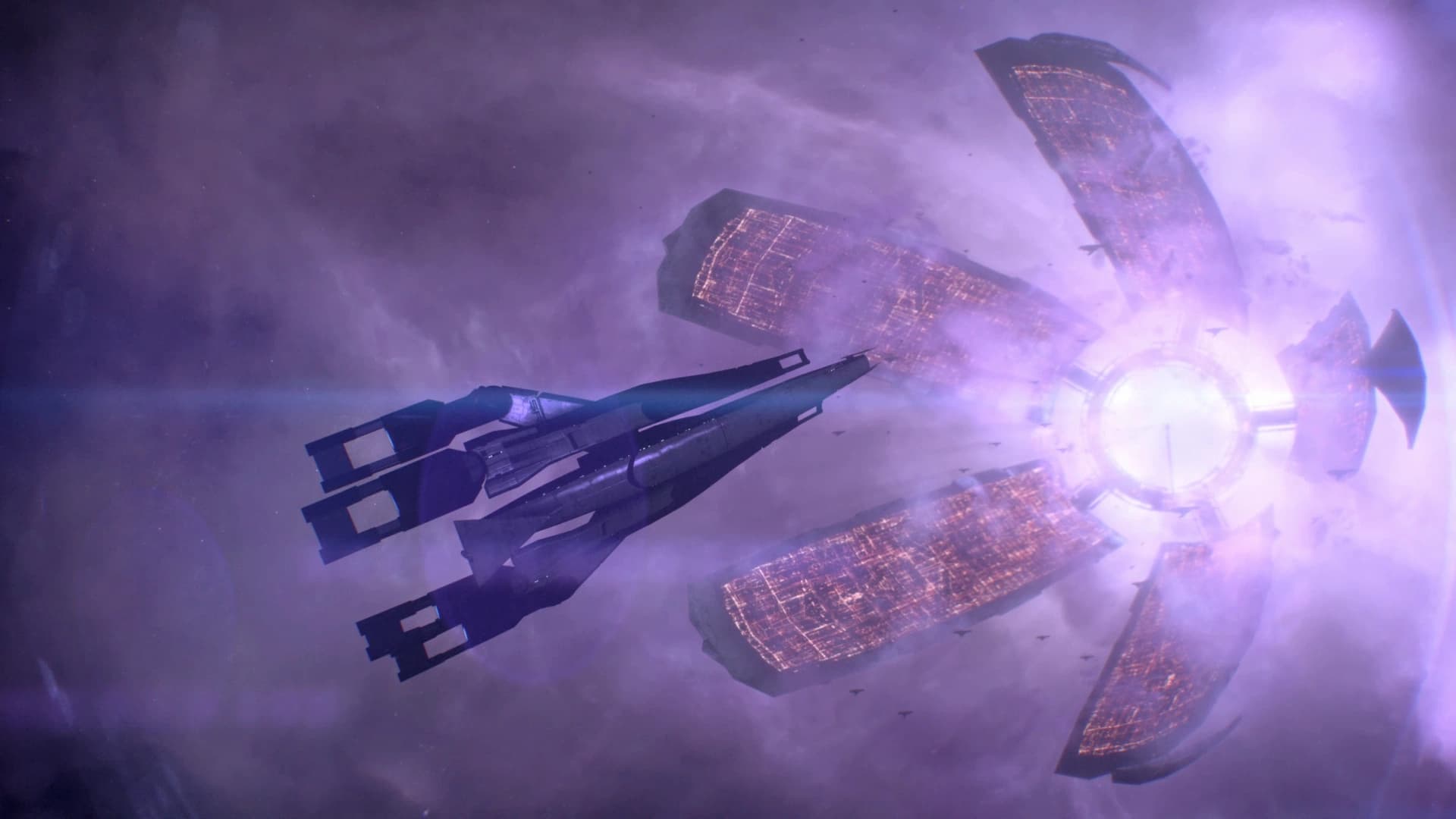
Citadel
The Citadel was a colossal deep-space station in the Serpent Nebula that served as the political and cultural heart of Citadel space and the seat of the Council. Long believed to be a Prothean relic, it was in truth a Reaper construction and a dormant trap at the center of galactic civilization.
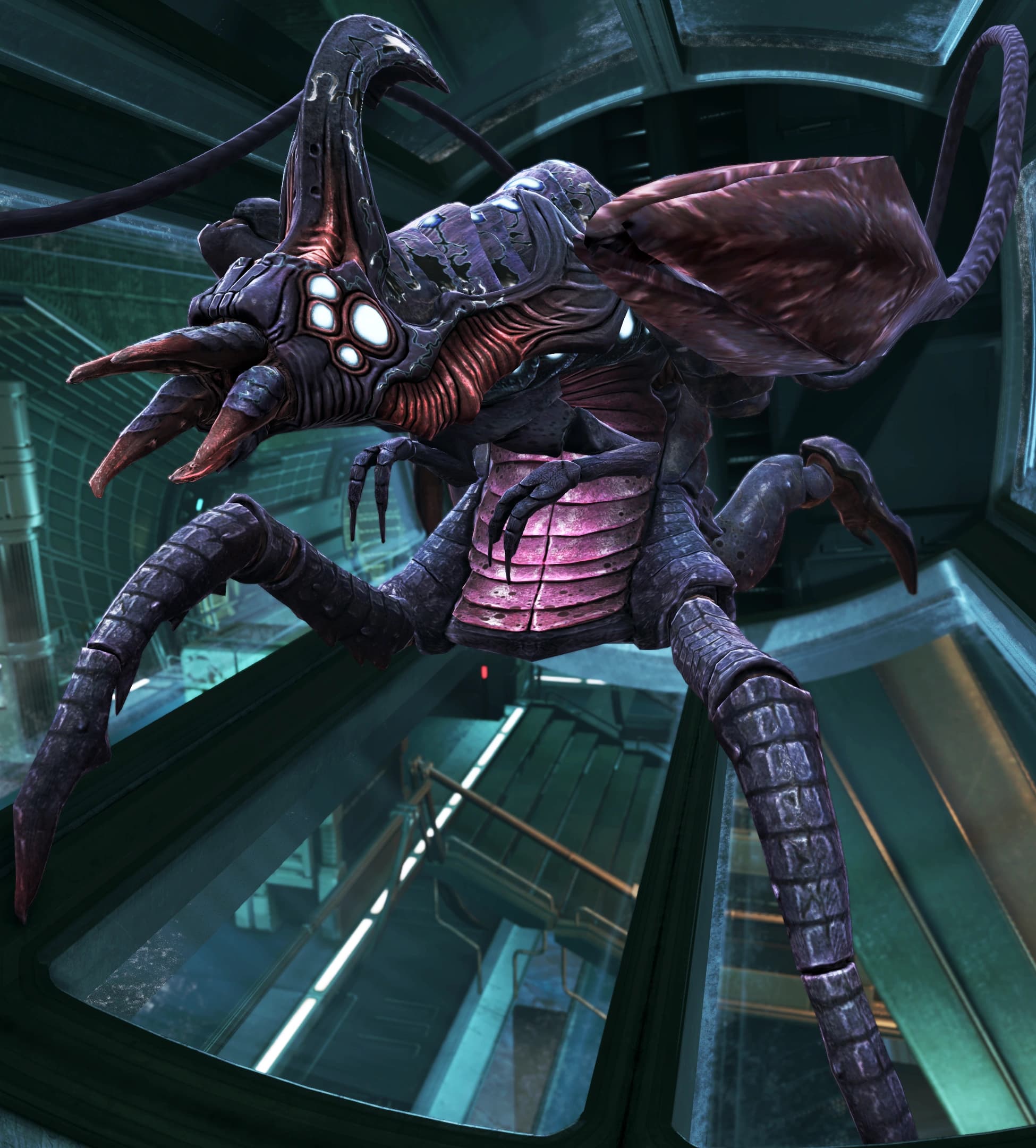
Rachni Queen
The rachni queens are the towering, telepathic matriarchs of the hive-minded rachni species. One such queen, hatched in captivity centuries after her kind was thought extinct, became a pivotal figure in the age of Commander Shepard.
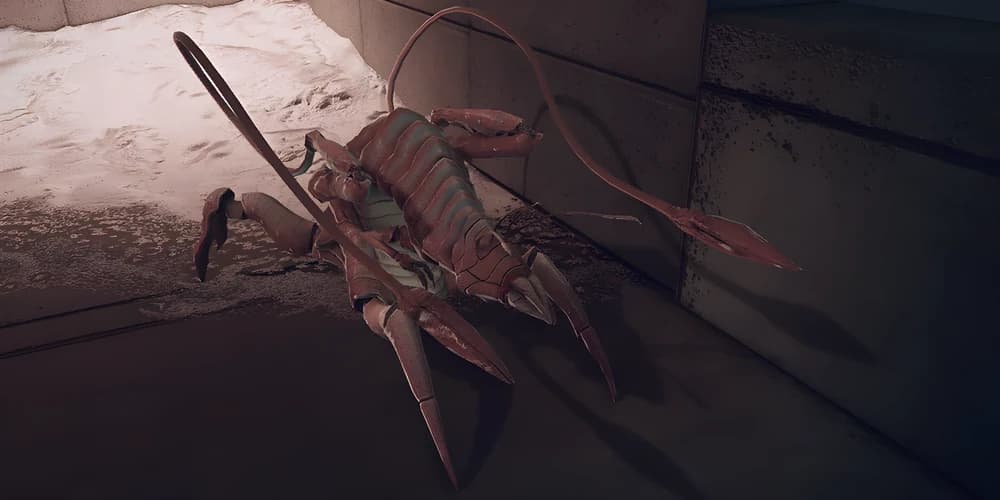
Rachni
The rachni were a spacefaring, hive-minded insectoid species from the planet Suen whose expansion ignited the Rachni Wars roughly two thousand years before Commander Shepard's era. Driven to apparent extinction by the krogan, a single surviving queen would later place the fate of the entire species in Shepard's hands.
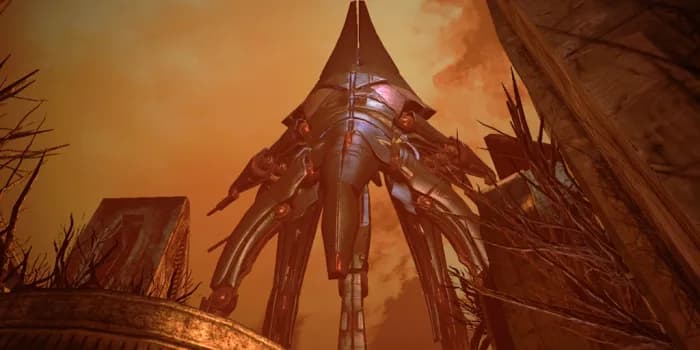
Mass Effect Timeline: every major event from the Leviathans to Andromeda
A dated history of the Mass Effect universe, from the Leviathans and the first Reaper harvests through the fall of the Protheans, the Council's wars, humanity's arrival and the Reaper War of 2186. It ends with the Andromeda Initiative reaching the Heleus Cluster in 2819, and runs oldest first in eras.

Commander Shepard
Commander Shepard was a Systems Alliance N7 marine who became the first human Spectre, exposed the rogue agent Saren Arterius, and led the galaxy's resistance against the Reapers. Shepard's gender, history, and many of the choices that shaped the war were never fixed, and the final fate of the cycle turned on the Commander's own decisions.
Mentioned in14 entries
Asari
The asari, native to Thessia, were among the most influential species in the galaxy, renowned for their elegance, biotic talent, and millennium-long lifespans. A mono-gender people able to reproduce with a partner of any species, they founded the Citadel Council and stood at the heart of galactic society for two thousand years.
Asari Republics
The Asari Republics were the loose, consensus-driven government of the asari, the most influential species in the galaxy. As the first contemporary race to settle the Citadel, the asari were instrumental in founding the Citadel Council and remained at the heart of galactic society.
Every Mass Effect Species and Race, With Lifespans
A field guide to every sapient species in Mass Effect, from the Council races and their clients to the krogan, the geth, the Protheans and the peoples of the Heleus Cluster. Each entry gives the homeworld, the lifespan where the games actually state one, and where the species stood with the Citadel.
First Contact War
The First Contact War, known to the turians as the Relay 314 Incident, was a brief, low-intensity conflict between the human Systems Alliance and the Turian Hierarchy in 2157 CE. It began when turians fired on human ships reactivating a dormant mass relay, escalated into the occupation and liberation of the colony Shanxi, and ended with Council mediation that revealed the wider galaxy to humanity.
Krogan
The krogan were a hardy, long-lived reptilian species from the brutal world of Tuchanka, uplifted by the salarians to win the Rachni Wars before their explosive growth made them a threat in turn. The turian-deployed genophage crippled their fertility and left them a scattered, fatalistic people.
Krogan Rebellions
The Krogan Rebellions were a decades-long war between the krogan and the Citadel Council that began around 700 CE, sparked by unchecked krogan expansion onto worlds claimed by other races. The conflict ended with the deployment of the salarian-engineered genophage, the surrender of the krogan, and a Council seat awarded to the turians.
Mass Effect Timeline: every major event from the Leviathans to Andromeda
A dated history of the Mass Effect universe, from the Leviathans and the first Reaper harvests through the fall of the Protheans, the Council's wars, humanity's arrival and the Reaper War of 2186. It ends with the Andromeda Initiative reaching the Heleus Cluster in 2819, and runs oldest first in eras.
Mass relay
Mass relays were colossal transit devices scattered across the Milky Way that flung starships across thousands of light years in moments. Long credited to the Protheans, they were in truth built by the Reapers as part of a trap meant to shape and harvest galactic civilization.
Matriarch Aethyta
Matriarch Aethyta was an unconventional, free-spirited asari matriarch who tended bar on Illium. Of mixed krogan and asari parentage, she was the absent father of Liara T'Soni and watched over her daughter from a distance.
Noveria
Noveria was a frozen world chartered for research too dangerous to perform elsewhere, where Commander Shepard tracked Matriarch Benezia, uncovered a revived rachni queen, and recovered the lost Mu Relay coordinates.
Rachni
The rachni were a spacefaring, hive-minded insectoid species from the planet Suen whose expansion ignited the Rachni Wars roughly two thousand years before Commander Shepard's era. Driven to apparent extinction by the krogan, a single surviving queen would later place the fate of the entire species in Shepard's hands.
Rachni Queen
The rachni queens are the towering, telepathic matriarchs of the hive-minded rachni species. One such queen, hatched in captivity centuries after her kind was thought extinct, became a pivotal figure in the age of Commander Shepard.
+ 2 more
Get new articles in your inbox
No spam. New lore drops, canon conflicts, and deep dives only when they’re worth reading.
Some links on Lore Fortress are affiliate links. If you buy through them we earn a small commission at no extra cost to you.