Element zero
The foundation of mass effect technology
Element zero, nicknamed eezo, was a rare material that released dark energy when subjected to an electrical current, letting it raise or lower the mass of everything in the resulting field. It underpinned faster-than-light travel, artificial gravity, and the biotic abilities of living beings.
Element zero, commonly known as eezo, was a rare material that, when subjected to an electrical current, released dark energy that could be shaped into a mass effect field, raising or lowering the mass of every object within that field. This single property formed the basis of nearly all advanced technology in the galaxy, from artificial gravity and high-strength construction to the faster-than-light drives that let starships cross the mass relay network. It also lay at the root of biotics, the capacity of some living beings to manipulate mass effect fields with their own bodies. (Mass Effect)
Properties and formation#
When a current passed through element zero, it released dark energy that could be manipulated into a mass effect field. A positive current increased the mass of objects within the field, while a negative current decreased it. This mass effect was put to countless uses, from generating artificial gravity aboard stations and starships to manufacturing high-strength construction materials. Its most prominent application was enabling faster-than-light travel without the time dilation that would otherwise plague such speeds. (Mass Effect)
Eezo was generated when solid matter, such as a planet, was caught in the energy of a star going supernova. As a result it was most common in the asteroid debris orbiting neutron stars and pulsars. These were perilous places to mine, demanding extensive robotics, telepresence, and shielding to endure the intense radiation of the dead star, so only a few major corporations could afford the setup costs of working these primary sources. Some planets held small eezo deposits or had coalesced around a larger one during their formation; these secondary sources were safer to mine but yielded far less. The Nemean Abyss was noted for being rich in it. (Mass Effect; Mass Effect 2)
Element zero and biotics#
Dust-form element zero, frequently released after engine accidents, was toxic to organic life. It was also used by many species to induce or strengthen biotics. When a child was exposed to dust-form eezo in the womb, the material's mutagenic effects gave a small chance that they would develop eezo nodules throughout their nervous system, reacting to electrical stimuli from the brain. Such individuals could wield biotic abilities, but many exposures produced no effect at all, and others resulted in terminal cancer. After the link between eezo and biotics was established, questions lingered over just how accidental some of those early exposures had truly been. (Mass Effect)
Discovery and use by the galaxy#
When humanity discovered the Prothean ruins on Mars, it found refined element zero the Protheans had left behind, which enabled research into faster-than-light ship drives even before the Charon Relay was discovered. Element zero went on to form the basis of many advanced medicines throughout Citadel space. The biotic drug red sand was said to use eezo as its base, and according to urban legend it was created by criminal triads on Mars from the eezo samples recovered there. The cost of eezo could be staggering: the massive Tantalus drive core of the Normandy cost 120 billion credits, owing to the sheer quantity of element zero required to power its stealth system. (Mass Effect)
Frequently asked questions
- What is element zero in Mass Effect?
- Element zero, commonly known as eezo, was a rare material that released dark energy when subjected to an electrical current. That dark energy could be shaped into a mass effect field, raising or lowering the mass of every object within the field.
- How does element zero work?
- When a current passed through element zero it released dark energy that could be manipulated into a mass effect field. A positive current increased the mass of objects within the field, while a negative current decreased it, a property used for everything from artificial gravity to faster-than-light travel without time dilation.
- Where does element zero come from?
- Eezo was generated when solid matter, such as a planet, was caught in the energy of a star going supernova. It was most common in the asteroid debris orbiting neutron stars and pulsars, which were perilous places to mine because of the intense radiation of the dead star.
- How does element zero create biotics?
- When a child was exposed to dust-form eezo in the womb, the material's mutagenic effects gave a small chance that they would develop eezo nodules throughout their nervous system, reacting to electrical stimuli from the brain. Such individuals could wield biotic abilities, but many exposures produced no effect, and others resulted in terminal cancer.
- Why was element zero so expensive?
- Rich deposits formed mainly in the radiation-soaked debris around neutron stars and pulsars, so only a few major corporations could afford to mine them. The Normandy's Tantalus drive core alone cost 120 billion credits because of the eezo its stealth system needed.
Sources
- GameMass Effect, BioWare, 2007
- GameMass Effect 2, BioWare, 2010
Spotted a factual error or a primary source we missed? Email a correction. Every flagged claim gets reviewed.
Followed from this entry
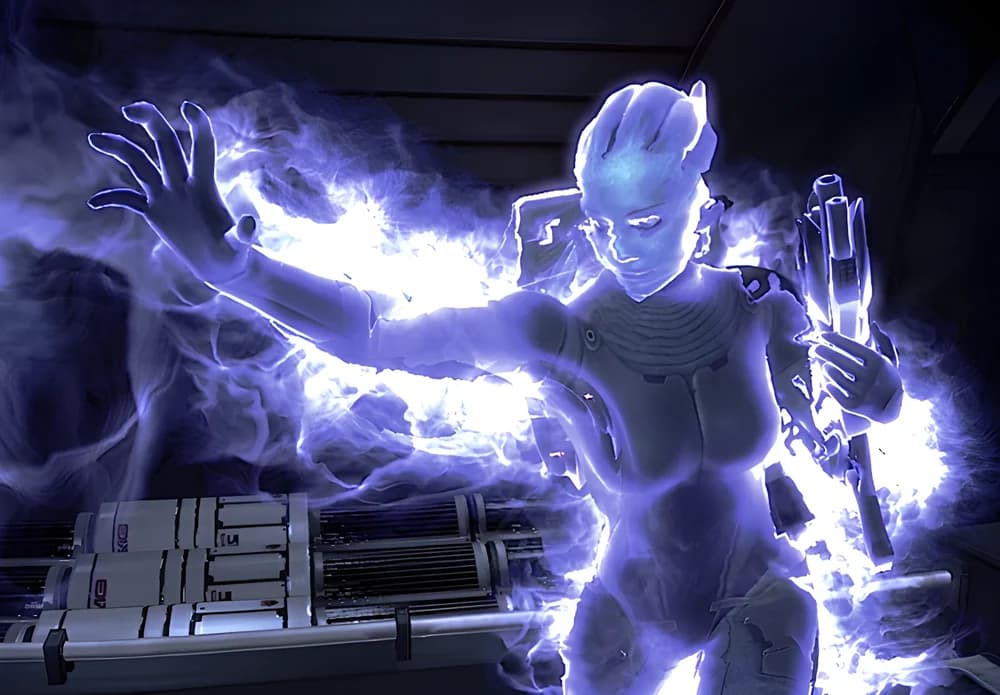
Biotics
Biotics was the ability of certain lifeforms to generate mass effect fields using element zero nodules grown through their bodies. Channelled through surgical implants and physical gestures, it let a wielder lift, hurl, and crush objects at a distance or raise protective barriers.
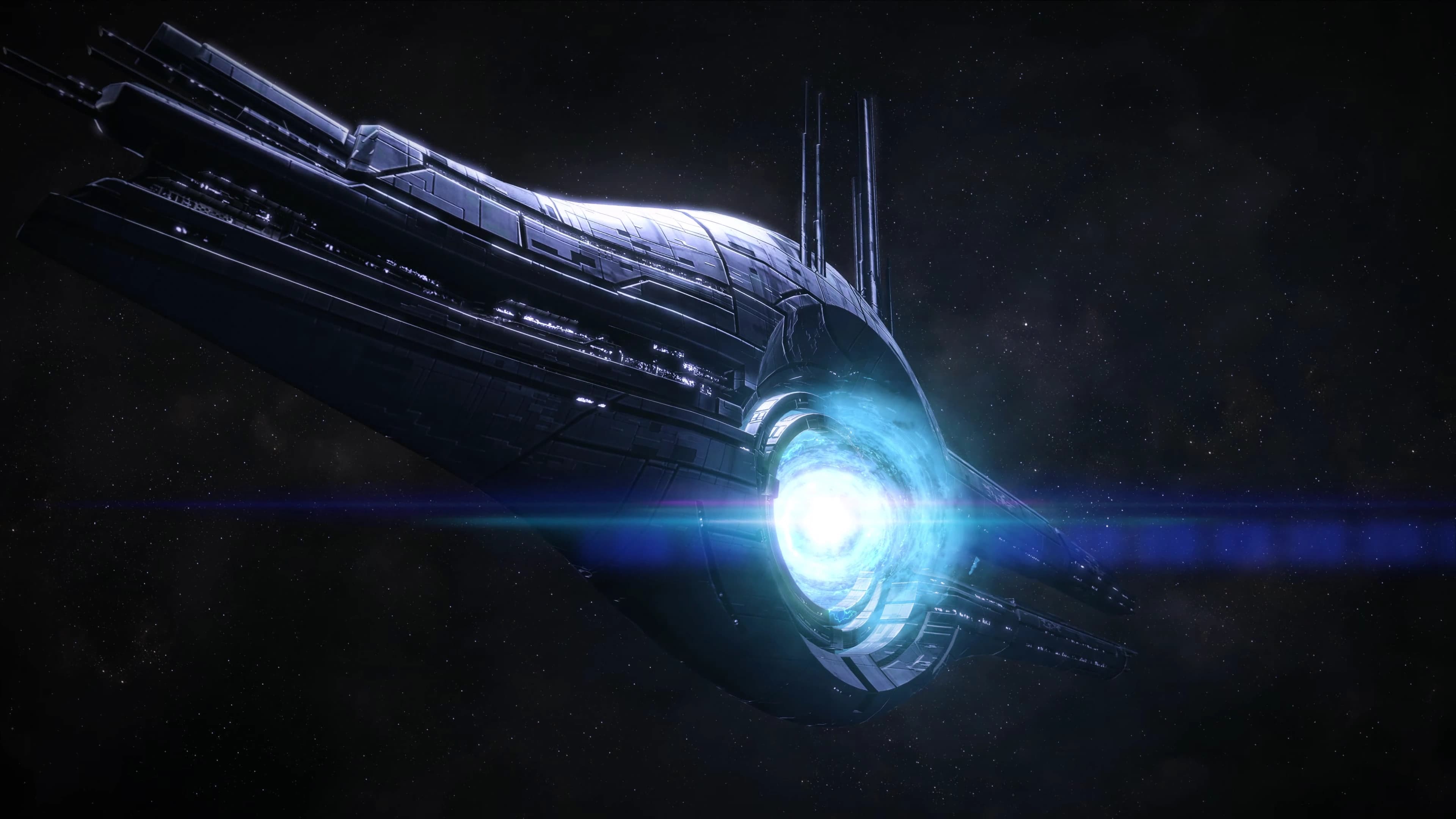
Mass relay
Mass relays were colossal transit devices scattered across the Milky Way that flung starships across thousands of light years in moments. Long credited to the Protheans, they were in truth built by the Reapers as part of a trap meant to shape and harvest galactic civilization.
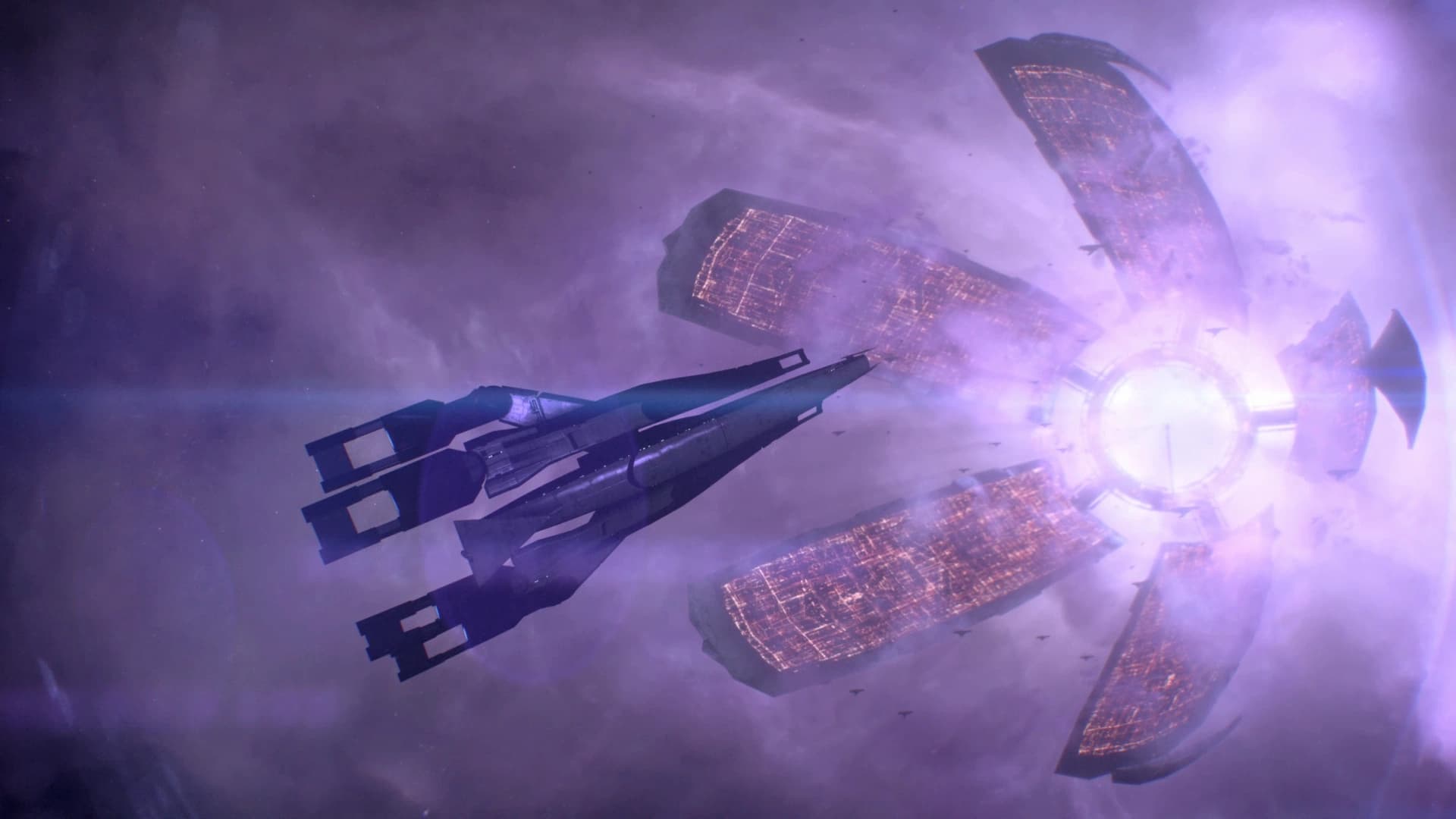
Citadel
The Citadel was a colossal deep-space station in the Serpent Nebula that served as the political and cultural heart of Citadel space and the seat of the Council. Long believed to be a Prothean relic, it was in truth a Reaper construction and a dormant trap at the center of galactic civilization.
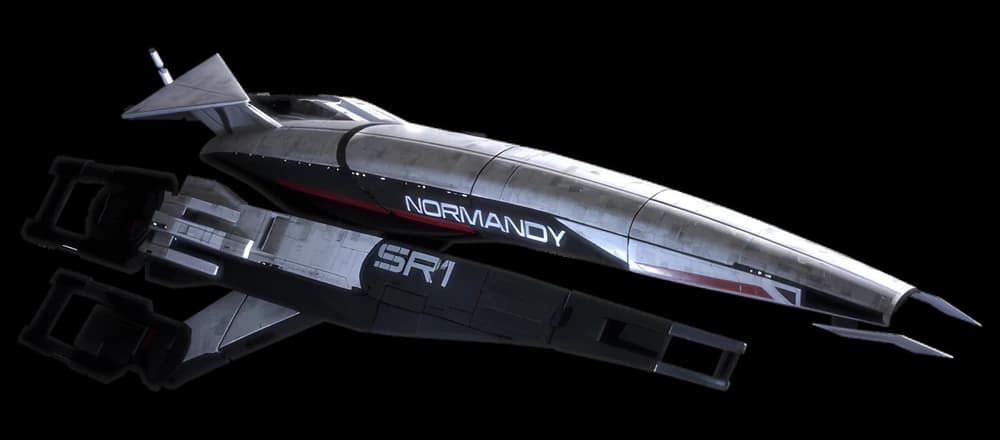
SSV Normandy SR-1
The SSV Normandy SR-1 was a Systems Alliance prototype deep-scout frigate, the first of the Normandy class, co-developed with the Turian Hierarchy under Council sponsorship. She served as Commander Shepard's flagship until her destruction in a surprise attack in 2183.
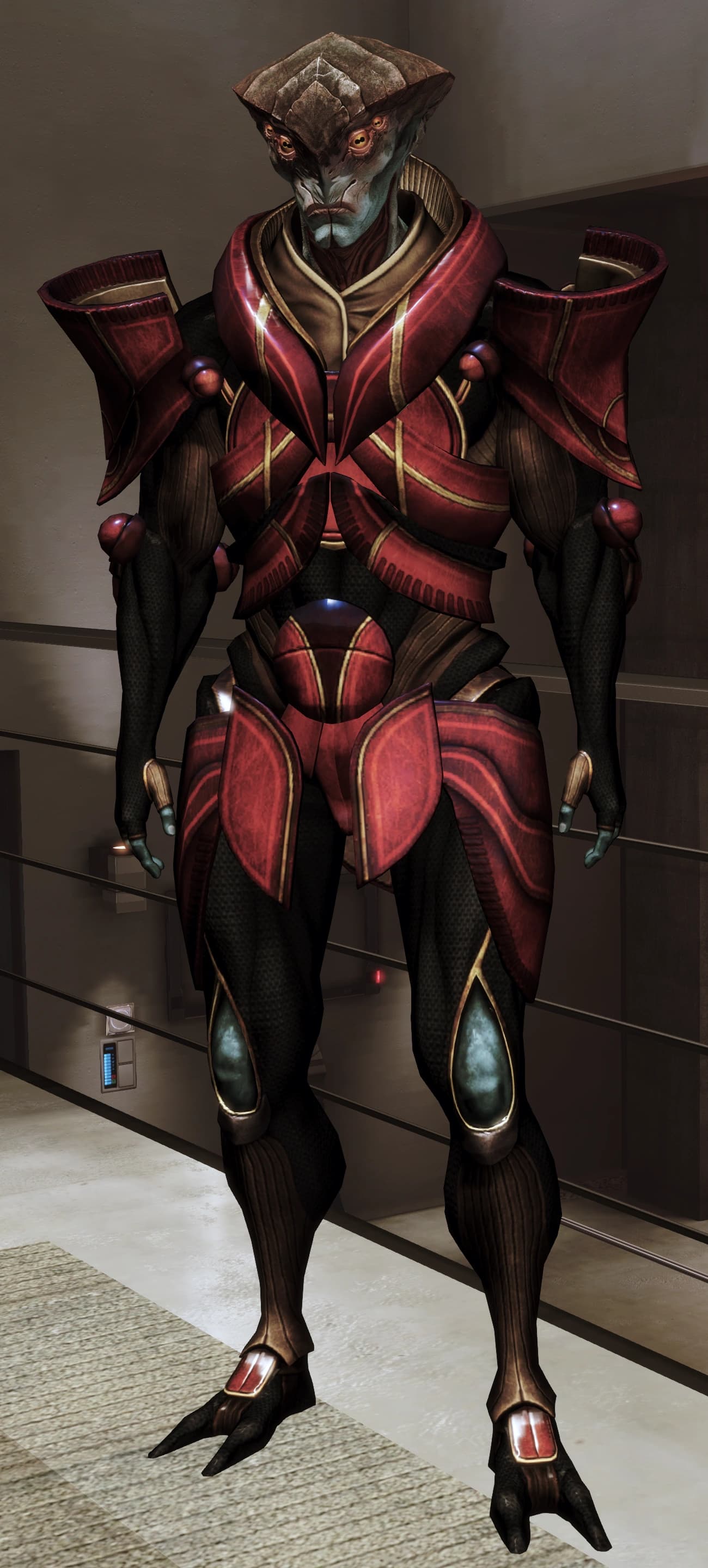
Prothean
The Protheans were an ancient race who ruled a galaxy-wide empire before mysteriously vanishing some fifty thousand years ago, harvested by the Reapers. Long credited with building the Citadel and mass relays, they secretly nurtured younger species, leaving ruins and technology that shaped the modern galaxy.
Mentioned in15 entries
Architect: Colossal Remnant Sentinel of Heleus
Architects were colossal Remnant machines that haunted the golden worlds of the Heleus Cluster, bursting from the ground to hover on element zero cores and raining destruction on anything beneath them. Pathfinder Ryder of the Andromeda Initiative first encountered them in 2819 and learned that, while they could not be destroyed, they could be grounded and reprogrammed.
Biotics
Biotics was the ability of certain lifeforms to generate mass effect fields using element zero nodules grown through their bodies. Channelled through surgical implants and physical gestures, it let a wielder lift, hurl, and crush objects at a distance or raise protective barriers.
Drugs: the narcotics and medicines of the galaxy
Drugs were chemical substances that altered the normal bodily functions of an organism, and the galactic market for them was lucrative enough that criminal enterprises produced, sold, and smuggled them despite legal restrictions. They ranged from lifesaving antibiotics to red sand, a narcotic refined from element zero that granted brief biotic power, and to suppressants engineered to strip a biotic of that power entirely.
FTL travel
FTL travel was faster-than-light movement achieved without a mass relay, using a drive core to lower a starship's mass so it could exceed lightspeed. It let vessels cross local space at high speed but accumulated a dangerous static charge that had to be regularly discharged.
Kinetic barriers
Kinetic barriers, commonly called shields, were repulsive mass effect fields projected from small emitters to deflect fast-moving objects. They protected starships and infantry alike from mass accelerator fire while leaving slow movement and ordinary contact untouched.
Lord Darius: the human warlord Hackett wanted killed on Nonuel
Lord Darius was a human warlord holding an element zero site on Nonuel in the Plutus system, extorting the Systems Alliance that had armed him. Admiral Hackett sent Shepard to negotiate and expected the Commander to shoot him.
M-920 Cain: The Nuke Launcher
The M-920 Cain was a heavy weapon nicknamed the Nuke Launcher, a portable particle accelerator that hurled a high-explosive round capable of raising a mushroom cloud on impact. Despite the spectacle, its detonations produced no fallout.
M35 Mako: the Normandy's air-dropped fighting vehicle
The M35 Mako was a Systems Alliance infantry fighting vehicle designed for rapid deployment from frigates onto any world. Compact, environmentally sealed, and famously rugged, it served as Commander Shepard's groundside transport during the hunt for Saren.
Mass Effect Story Explained: the Trilogy and Andromeda
The whole Mass Effect story in order, one game at a time. Shepard stops Saren, beats the Collectors and leads the galaxy against the Reapers, then Andromeda starts again 600 years later in another galaxy.
Mass relay
Mass relays were colossal transit devices scattered across the Milky Way that flung starships across thousands of light years in moments. Long credited to the Protheans, they were in truth built by the Reapers as part of a trap meant to shape and harvest galactic civilization.
Rachni Wars
The Rachni Wars were a series of conflicts beginning around 1 CE, after a Citadel expedition opened a dormant mass relay into the territory of the rachni, a hostile hive-minded insect species. The Council races fought a losing war for nearly a century until the salarians uplifted the krogan, whose numbers turned the tide and drove the rachni to extinction.
Scion: Fused Husk Artillery
Scions were a heavy variant of Husk built from three human Husks fused together and grafted around a single mass effect weapon. Slow and heavily armored, they hung back from the front line and rained ranged fire and shockwaves on their targets while lesser Husks rushed ahead.
+ 3 more
Get new articles in your inbox
No spam. New lore drops, canon conflicts, and deep dives only when they’re worth reading.
Some links on Lore Fortress are affiliate links. If you buy through them we earn a small commission at no extra cost to you.