FTL travel
Faster-than-light flight by mass effect drive
FTL travel was faster-than-light movement achieved without a mass relay, using a drive core to lower a starship's mass so it could exceed lightspeed. It let vessels cross local space at high speed but accumulated a dangerous static charge that had to be regularly discharged.
FTL, short for faster-than-light, was a method of travelling faster than the speed of light that did not rely on the mass relay network. Once a vessel had made a jump through a relay, conventional FTL let it move around the surrounding space at reasonable speed. The drive that made this possible exposed element zero to electric currents to generate mass effect fields, lowering a ship's mass to the point where it could exceed lightspeed without the time dilation that would otherwise result. Together with the relays, FTL drive underpinned all interstellar travel in Citadel space. (Mass Effect; Mass Effect 2)
How FTL drive worked#
An FTL drive was the device that let a ship travel faster than light through ordinary space. Its core worked by exposing element zero to electric currents, creating mass effect fields that reduced the mass of the vessel to the point where velocities beyond the speed of light became possible. Because the ship's mass was lowered rather than space itself being bent, this avoided the time dilation that would otherwise plague such speeds. With a mass effect drive a ship could traverse roughly a dozen light-years in the course of a single day's cruise. (Mass Effect; Mass Effect 2)
A drive's maximum speed, and how long that acceleration could be sustained, varied with its exact type, and in general a larger drive could run at FTL for longer. Travel across space followed a simple profile of acceleration and deceleration: thrusters fired in one direction for the first half of a journey, then reversed for the second half so the ship could slow to a manageable speed for arrival, a vessel having to shed exactly as much velocity as it had gained. The drive also carried a built-in safety: it refused to fire if a significant object lay in the path of a planned jump, a feature inherent to its warm-up process and very difficult to remove. (Mass Effect 2)
The hazard of drive charge#
Element zero FTL drives accumulated a static electrical charge whenever a vessel spent time in FTL flight, and that charge grew steadily the longer the ship ran. Eventually it had to be discharged. The safe method was to release it into a planet's magnetic field for larger ships incapable of landing, or through direct surface contact for smaller vessels. Space stations and similar structures without a nearby planet were typically fitted with their own discharging facilities, the Citadel maintaining dozens of them. (Mass Effect 2)
If the charge could not be discharged, the consequences were dire. Left to build, it would eventually arc into the ship's own hull, with heat enough to fuse the bulkheads, destroy the electronics, and kill everyone aboard. Managing drive charge was therefore a routine and unavoidable part of any extended voyage under FTL. (Mass Effect 2)
Appearance and detection#
A ship under FTL looked very different to an outside observer. Light moved more slowly through ordinary space than through a high-speed mass effect field, so light entering the field was refracted, changing angle and separating into a spectrum. The greater the difference between the exterior and interior speeds of light, the greater this effect, with objects outside the ship appearing to redshift until they were visible only to radio antennas, while high-energy sources normally hidden to the eye, such as pulsars and the accretion discs of black holes, came into view. To an observer outside, the ship itself appeared blueshifted, its emissions carrying more energy than normal. (Mass Effect 2)
These optical effects had a practical military consequence. A vessel moving at FTL was visible at great distances, though its signature propagated only at lightspeed. Stealth systems that relied on managing a ship's heat emissions failed at FTL speeds, because the blueshift pushed those emissions into frequencies too high for the hull's heat sinks to capture. The speeds themselves were considerable: by the mid-2160s human starships could travel at least fifty times the speed of light, while the Reapers were believed capable of covering nearly thirty light-years in a day, roughly twice the pace of Citadel vessels. (Mass Effect 2; Mass Effect 3; Mass Effect: Revelation)
Frequently asked questions
- What is FTL travel in Mass Effect?
- FTL, short for faster-than-light, was a method of travelling faster than the speed of light that did not rely on the mass relay network. Once a vessel had jumped through a relay, conventional FTL let it move around the surrounding space at reasonable speed.
- How does an FTL drive work?
- An FTL drive core worked by exposing element zero to electric currents, creating mass effect fields that reduced the mass of the vessel to the point where velocities beyond lightspeed became possible. Because the ship's mass was lowered rather than space itself being bent, this avoided time dilation, and such a drive could cover roughly a dozen light-years in a single day's cruise.
- Why do FTL drives need to discharge?
- Element zero FTL drives accumulated a static electrical charge whenever a vessel spent time in FTL flight, and that charge grew the longer the ship ran. If it could not be discharged into a planet's magnetic field, through surface contact, or at a dedicated facility, it would eventually arc into the ship's own hull, fuse the bulkheads, destroy the electronics, and kill everyone aboard.
- Can FTL ships be detected?
- A vessel moving at FTL was visible at great distances because light refracted by the high-speed mass effect field made the ship appear blueshifted to outside observers. Stealth systems that relied on managing a ship's heat emissions failed at FTL speeds, since the blueshift pushed those emissions into frequencies too high for the hull's heat sinks to capture.
- How fast is FTL travel in Mass Effect?
- By the mid-2160s human starships could travel at least fifty times the speed of light. The Reapers were believed capable of covering nearly thirty light-years in a day, roughly twice the pace of Citadel vessels.
Sources
- GameMass Effect, BioWare, 2007
- GameMass Effect 2, BioWare, 2010
- GameMass Effect 3, BioWare, 2012
- BookMass Effect: Revelation, Drew Karpyshyn, 2007
Spotted a factual error or a primary source we missed? Email a correction. Every flagged claim gets reviewed.
Followed from this entry
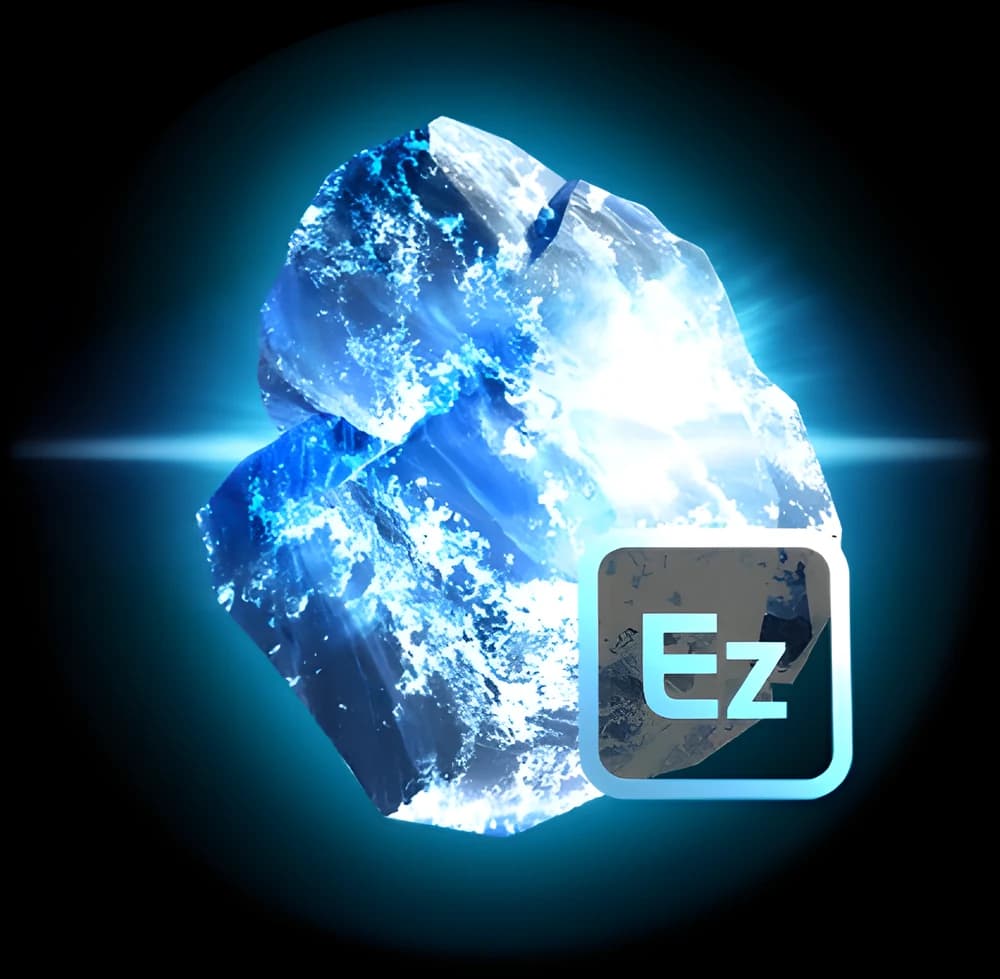
Element zero
Element zero, nicknamed eezo, was a rare material that released dark energy when subjected to an electrical current, letting it raise or lower the mass of everything in the resulting field. It underpinned faster-than-light travel, artificial gravity, and the biotic abilities of living beings.
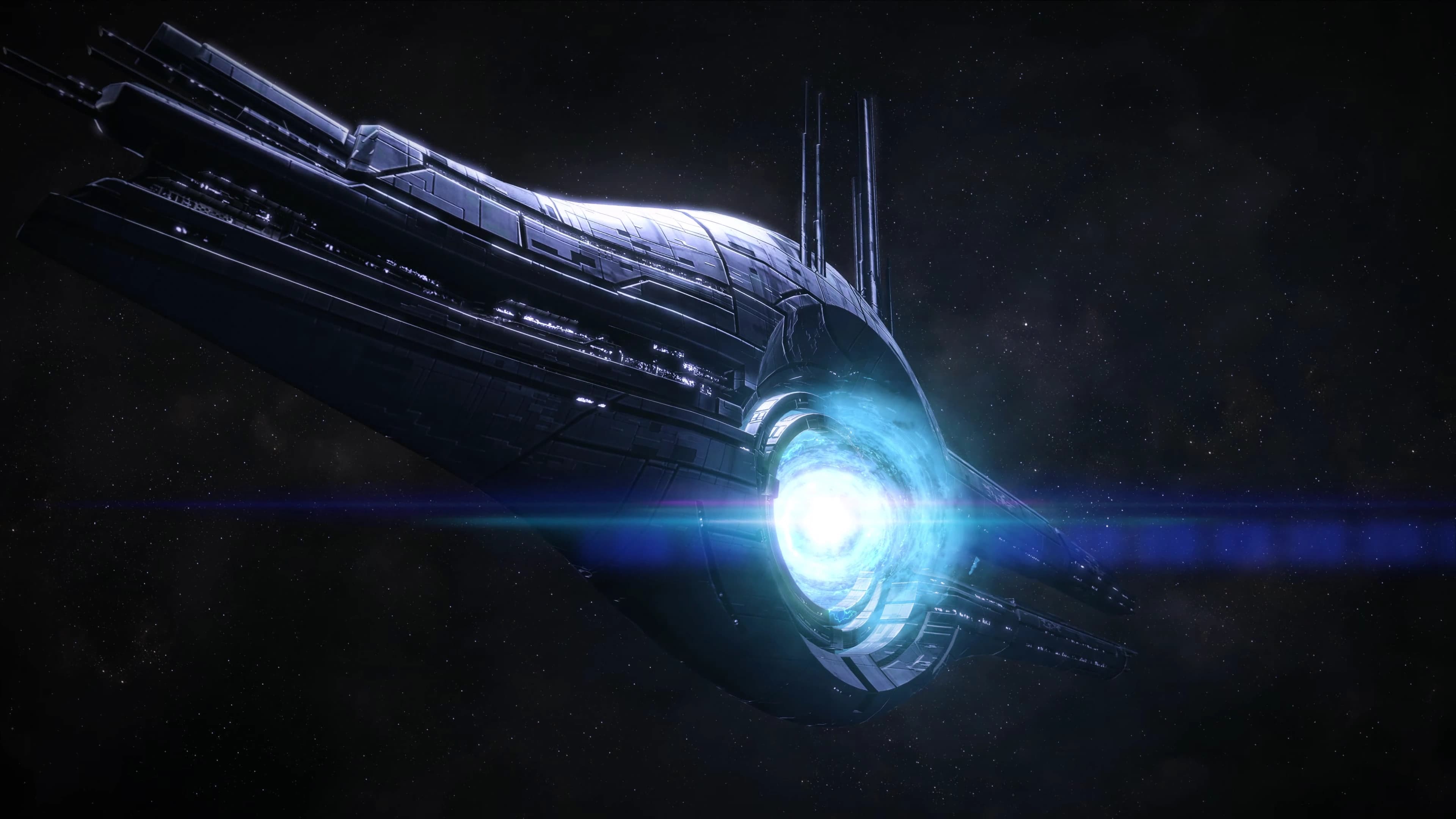
Mass relay
Mass relays were colossal transit devices scattered across the Milky Way that flung starships across thousands of light years in moments. Long credited to the Protheans, they were in truth built by the Reapers as part of a trap meant to shape and harvest galactic civilization.
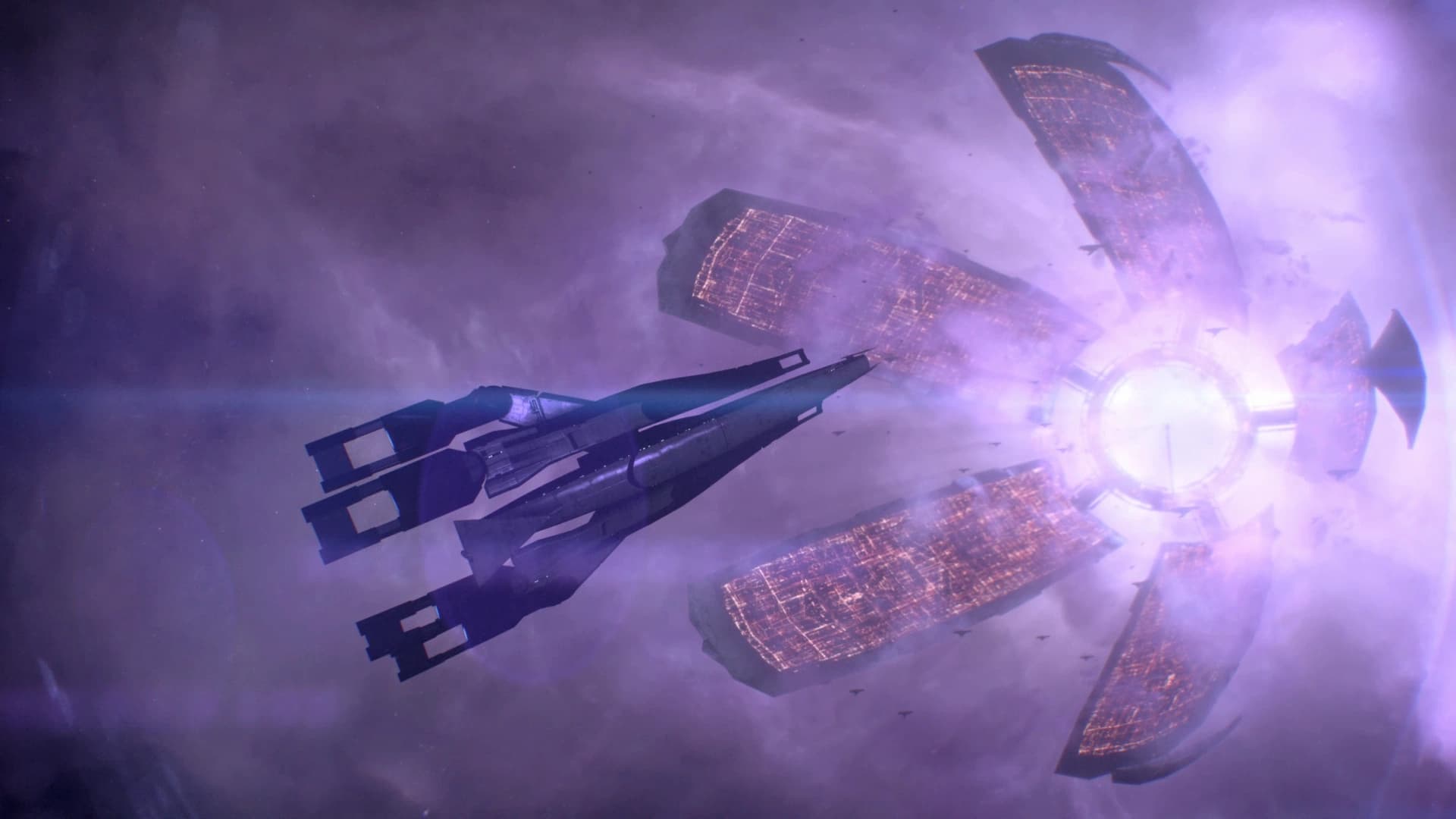
Citadel
The Citadel was a colossal deep-space station in the Serpent Nebula that served as the political and cultural heart of Citadel space and the seat of the Council. Long believed to be a Prothean relic, it was in truth a Reaper construction and a dormant trap at the center of galactic civilization.
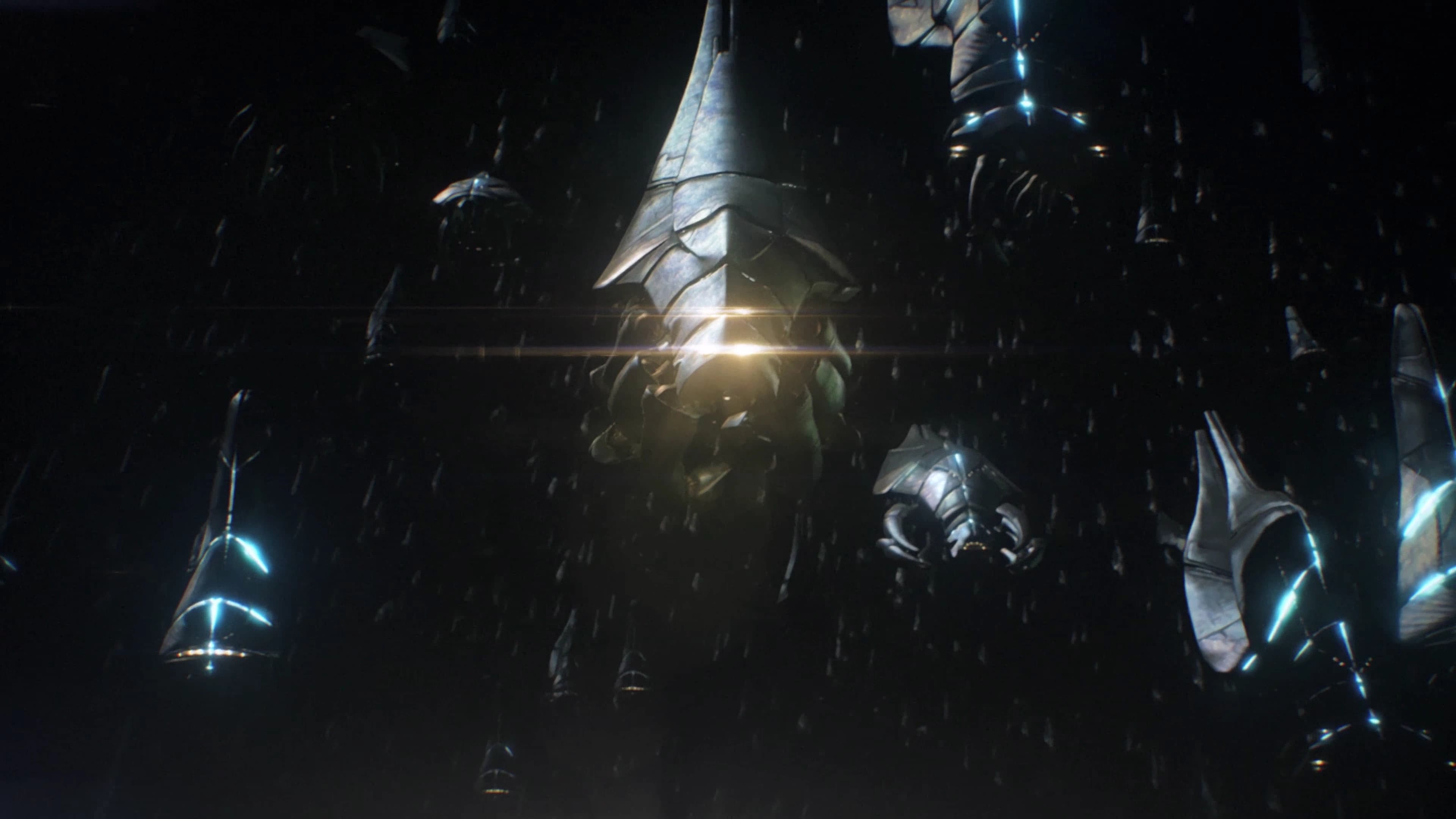
Reaper
The Reapers were an ancient race of synthetic-organic starships that hibernated in dark space and returned once every fifty thousand years to harvest the galaxy's advanced life. They built the Citadel and the mass relay network to guide civilization down a predictable path, then reaped it to preserve organic life from synthetic destruction.
Also in Technology
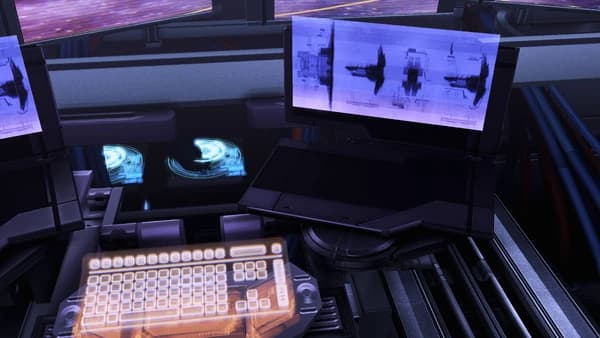
Broker Terminal: the Shadow Broker's window on a galaxy at war
In a cabin aboard the Normandy SR-2, a single message terminal carried the intercepted traffic of the Shadow Broker's network through the darkest months of the Reaper War. Its files ran from progress reports on the war's last superweapon and smuggler manifests to private letters that were never meant to be read.

Drugs: the narcotics and medicines of the galaxy
Drugs were chemical substances that altered the normal bodily functions of an organism, and the galactic market for them was lucrative enough that criminal enterprises produced, sold, and smuggled them despite legal restrictions. They ranged from lifesaving antibiotics to red sand, a narcotic refined from element zero that granted brief biotic power, and to suppressants engineered to strip a biotic of that power entirely.
Mentioned in2 entries
Mass Effect Timeline: every major event from the Leviathans to Andromeda
A dated history of the Mass Effect universe, from the Leviathans and the first Reaper harvests through the fall of the Protheans, the Council's wars, humanity's arrival and the Reaper War of 2186. It ends with the Andromeda Initiative reaching the Heleus Cluster in 2819, and runs oldest first in eras.
Starships: the warships and vessels of galactic civilization
Starships were spacecraft capable of crossing the void between star systems on thrusters and faster-than-light drives. The navies of the galaxy sorted their warships into four weights, from nimble scouting frigates to kilometer-long dreadnoughts, with the count of dreadnoughts any fleet could build fixed by the Treaty of Farixen.
Get new articles in your inbox
No spam. New lore drops, canon conflicts, and deep dives only when they’re worth reading.
Some links on Lore Fortress are affiliate links. If you buy through them we earn a small commission at no extra cost to you.