Kinetic barriers
The shields of starships and soldiers
Kinetic barriers, commonly called shields, were repulsive mass effect fields projected from small emitters to deflect fast-moving objects. They protected starships and infantry alike from mass accelerator fire while leaving slow movement and ordinary contact untouched.
Kinetic barriers, colloquially called shields, were the primary defense against the mass accelerator weapons that dominated galactic warfare. Whether mounted on a starship or built into a soldier's suit of armor, the basic principle was the same: repulsive mass effect fields, generated from element zero and projected by tiny emitters, deflected small objects travelling at high velocity. The same dark-energy technology behind faster-than-light drives and the omni-tool thus shielded combatants from the slugs that small arms and shipboard guns hurled at lethal speed. (Mass Effect; Mass Effect 2)
How kinetic barriers worked#
A kinetic barrier was a repulsive mass effect field projected from tiny emitters. The field safely deflected small objects moving at rapid velocity, affording protection against bullets and other dangerous projectiles. Crucially, the barrier reacted only to objects travelling above a certain speed, so a protected individual could still sit down without knocking the chair away. On a starship the same emitters scaled up to shield the hull against incoming fire. (Mass Effect; Mass Effect 2)
This defense had a sharply defined limit. Kinetic barriers stopped kinetic impacts and nothing else, offering no protection at all against extremes of temperature, toxins, or radiation. Each emitter also drew on a finite power cell. A barrier deflected projectiles only so long as there was enough energy left in that cell, so concentrated or sustained fire could overwhelm and collapse it, a vulnerability that mattered as much for a single soldier as for a warship under bombardment. (Mass Effect; Mass Effect 2)
Kinetic barriers and personal armor#
On an individual, the kinetic barrier was the outermost element of a layered defensive system. A combat hard-suit used a dual-layer base of fabric armor with kinetic padding, reinforced in rigid areas such as the chest and shins with sheets of lightweight ablative ceramic, all sealed against vacuum and hostile atmospheres. Over this the barrier emitters generated the deflecting shield, detecting objects incoming at high speed and turning them aside as long as their power cells held out. (Mass Effect)
The most advanced hard-suits extended this into what was sometimes described as a triple canopy of protection: the kinetic barrier first, then the traditional sealed armor and ceramic plates beneath it, and finally a self-repair system run by microframe computers woven through the fabric. That system sealed tears with sterile medi-gel to plug holes that could prove fatal in vacuum or toxic environments. Some technically minded soldiers added still further measures atop the standard barrier, such as tech armor, which trapped a disruptive warp effect between two low-yield kinetic barriers, or a fortification field that used magnetic currents to immobilize incoming metal. (Mass Effect 2)
Mass accelerators and the arms race#
Kinetic barriers existed in constant tension with the weapons they were built to stop. A mass accelerator propelled a solid metal slug using precisely controlled electromagnetic attraction and repulsion, the slug designed to squash or shatter on impact so it transferred its energy to the target rather than punching cleanly through. Element zero transformed these weapons: a slug lightened by a mass effect field could be accelerated to velocities once thought impossible, to the point that a paint chip at sufficient speed could strike with the force of a nuclear weapon, limited mainly by the recoil such impacts produced. (Mass Effect; Mass Effect 2)
This drove a continuous contest between projectile and shield. In an age of kinetic barriers, the geth concluded after analysing their own combat logs that firefights were most often won by whichever side put the most rounds downrange the fastest, yet weapons had to be fired slower or vented to manage waste heat. Their solution, detachable heat sinks called thermal clips, was soon adopted by organic militaries as well, leaving the battlefields of the galaxy littered with spent clips even as kinetic barriers continued to turn aside the fire they enabled. (Mass Effect 2)
Frequently asked questions
- What are kinetic barriers in Mass Effect?
- Kinetic barriers, commonly called shields, were repulsive mass effect fields projected from small emitters to deflect fast-moving objects such as bullets and other dangerous projectiles. They were the primary defense against the mass accelerator weapons that dominated galactic warfare, protecting both starships and infantry.
- How do kinetic barriers work?
- A kinetic barrier was a repulsive mass effect field generated from element zero and projected by tiny emitters, deflecting small objects moving at high velocity. The barrier reacted only to objects travelling above a certain speed, so a protected person could still sit in a chair or be touched without disturbing the field.
- What can kinetic barriers not protect against?
- Kinetic barriers stopped kinetic impacts and nothing else, offering no protection against extremes of temperature, toxins, or radiation. Each emitter also drew on a finite power cell, so concentrated or sustained fire could overwhelm and collapse the barrier.
- How do kinetic barriers fit into personal armor?
- On an individual, the kinetic barrier formed the outermost layer of a combat hard-suit, ahead of fabric armor with kinetic padding and lightweight ablative ceramic plates. The most advanced suits added a self-repair system run by microframe computers that sealed tears with sterile medi-gel, and some soldiers layered on extras such as tech armor or a magnetic fortification field.
- Why did kinetic barriers lead to thermal clips?
- In an age of kinetic barriers, the geth concluded that firefights were most often won by whichever side put the most rounds downrange fastest, yet weapons had to be fired slower or vented to manage waste heat. Their solution, detachable heat sinks called thermal clips, was soon adopted by organic militaries as well.
Sources
- GameMass Effect, BioWare, 2007
- GameMass Effect 2, BioWare, 2010
Spotted a factual error or a primary source we missed? Email a correction. Every flagged claim gets reviewed.
Followed from this entry

Element zero
Element zero, nicknamed eezo, was a rare material that released dark energy when subjected to an electrical current, letting it raise or lower the mass of everything in the resulting field. It underpinned faster-than-light travel, artificial gravity, and the biotic abilities of living beings.

Omni-tool
The omni-tool was a forearm-mounted multipurpose device combining a computer, diagnostic scanner, and miniature fabricator. Projected as an orange hologram, it handled hacking, repair, medicine, and manufacturing, and could be reshaped into improvised weapons in the field.
Also in Technology
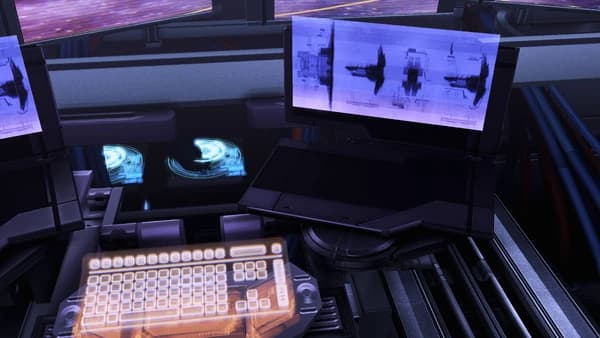
Broker Terminal: the Shadow Broker's window on a galaxy at war
In a cabin aboard the Normandy SR-2, a single message terminal carried the intercepted traffic of the Shadow Broker's network through the darkest months of the Reaper War. Its files ran from progress reports on the war's last superweapon and smuggler manifests to private letters that were never meant to be read.

Drugs: the narcotics and medicines of the galaxy
Drugs were chemical substances that altered the normal bodily functions of an organism, and the galactic market for them was lucrative enough that criminal enterprises produced, sold, and smuggled them despite legal restrictions. They ranged from lifesaving antibiotics to red sand, a narcotic refined from element zero that granted brief biotic power, and to suppressants engineered to strip a biotic of that power entirely.
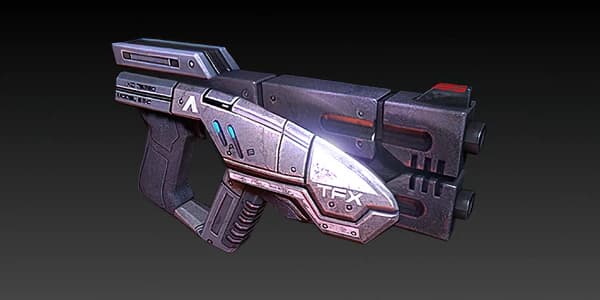
M-3 Predator: Heavy Pistol
The M-3 Predator was a heavy pistol manufactured by Elanus Risk Control, valued as a powerful, deadly, and relatively inexpensive sidearm. Rarely issued by professional militaries, it was very popular in the Terminus Systems, where it armed everyone from Blood Pack troopers to Commander Shepard on the day the Reapers reached Earth.
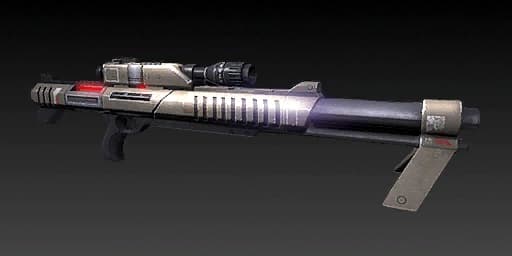
M-98 Widow: Anti-Materiel Sniper Rifle
The M-98 Widow was a 39 kilogram anti-materiel sniper rifle built to destroy armored vehicles and krogan, so violent in its recoil that no ordinary human could fire it without shattering an arm. Long the preserve of synthetics and augmented specialists, it reached the open galactic market only after a ruinously expensive redesign.
Mentioned in12 entries
Acolyte: Asari Heavy Pistol
The Acolyte was an asari heavy pistol designed for the asari resistance, firing charged projectiles akin to impact triggered resonant warp bombs. It collapsed kinetic shields and biotic barriers with a single detonation, trusting the shooter's own biotics to finish whatever armor it could not pierce.
Drugs: the narcotics and medicines of the galaxy
Drugs were chemical substances that altered the normal bodily functions of an organism, and the galactic market for them was lucrative enough that criminal enterprises produced, sold, and smuggled them despite legal restrictions. They ranged from lifesaving antibiotics to red sand, a narcotic refined from element zero that granted brief biotic power, and to suppressants engineered to strip a biotic of that power entirely.
Geth Plasma Shotgun: Arcing Cluster Weapon
The Geth Plasma Shotgun was a three-barreled geth weapon that fired clusters of superconducting projectiles. On impact the rounds fragmented and arced with electricity, flash-converting the surrounding air into conductive plasma to overload shields and barriers and inflict massive trauma on the unarmored.
Javelin: Geth Ferrofluid Sniper Rifle
The Javelin was the name Alliance marines gave to a geth sniper rifle that fired a jet of superheated ferrofluid capable of cutting through nearly anything it struck. The same name belonged to the Alliance Navy's own disruptor torpedo ordnance, from the ship mounted launchers carried by frigates to the Mk.II missiles that batarian radicals turned against the colony on Watson.
M-29 Incisor: Burst-Fire Sniper Rifle
The M-29 Incisor was a burst-fire sniper rifle built to overload active defenses such as kinetic shields. Each pull of the trigger sent three rounds downrange in a burst so rapid that all three struck before the barrel could climb, and its report was no louder than a single shot.
M-3 Predator: Heavy Pistol
The M-3 Predator was a heavy pistol manufactured by Elanus Risk Control, valued as a powerful, deadly, and relatively inexpensive sidearm. Rarely issued by professional militaries, it was very popular in the Terminus Systems, where it armed everyone from Blood Pack troopers to Commander Shepard on the day the Reapers reached Earth.
M-76 Revenant: Warlord's Machine Gun
The M-76 Revenant was a custom-built heavy assault rifle that unleashed a storm of high-velocity slugs from an unusually large magazine. Protected against copying by sophisticated rights-management technology and exorbitantly expensive, it was a weapon only the wealthiest and most powerful warlords could afford.
M-98 Widow: Anti-Materiel Sniper Rifle
The M-98 Widow was a 39 kilogram anti-materiel sniper rifle built to destroy armored vehicles and krogan, so violent in its recoil that no ordinary human could fire it without shattering an arm. Long the preserve of synthetics and augmented specialists, it reached the open galactic market only after a ruinously expensive redesign.
Nemesis: Cerberus's sniper specialist
The Nemesis was a Cerberus sniper specialist fielded across the galaxy during the Reaper War. Augmented with customized implants and a suite of scanning equipment, she could kill with a single round and was usually spotted only after she had already fired.
Omni-tool
The omni-tool was a forearm-mounted multipurpose device combining a computer, diagnostic scanner, and miniature fabricator. Projected as an orange hologram, it handled hacking, repair, medicine, and manufacturing, and could be reshaped into improvised weapons in the field.
Reegar Carbine: Quarian Electrical Shotgun
The Reegar Carbine was a quarian electrical shotgun that projected a sustained high amperage current rather than a stream of slugs. Devastating against kinetic shields and biotic barriers at very short range, it was named in honor of the Reegar family, whose marines fought with distinction against the geth.
Weapons: Mass accelerator firearms of the galaxy
Most personal weapons in the galaxy were micro-scaled mass accelerators that shaved tiny slugs from a metal block and flung them at lethal speed using mass effect fields. For decades waste heat was the only true limit on their fire, until the geth introduced detachable thermal clips that reshaped how every army fought.
Get new articles in your inbox
No spam. New lore drops, canon conflicts, and deep dives only when they’re worth reading.
Some links on Lore Fortress are affiliate links. If you buy through them we earn a small commission at no extra cost to you.