Weapons: Mass accelerator firearms of the galaxy
How a galaxy of soldiers turned grains of metal into killing rounds
Most personal weapons in the galaxy were micro-scaled mass accelerators that shaved tiny slugs from a metal block and flung them at lethal speed using mass effect fields. For decades waste heat was the only true limit on their fire, until the geth introduced detachable thermal clips that reshaped how every army fought.
The personal weapons carried across the galaxy were, for the most part, micro-scaled mass accelerators: the same principle of dark-energy physics that drove starships and powered kinetic barriers, shrunk down to fit in a soldier's hands. Built around element zero, nearly every gun on the battlefield combined a mass-reducing field with magnetic force to hurl miniature slugs at lethal speed, and most were laden with refinements such as targeting auto-assists and projectile shavers that could generate thousands of rounds from a single small block of metal. These arms were the standard tools of every military force, from the Systems Alliance to the krogan clans and the synthetic geth. (Mass Effect; Mass Effect 2)
The mass accelerator principle#
A mass accelerator weapon did not carry conventional cartridges. Instead it shaved a projectile the size of a single grain of sand from a dense block of metal held inside the weapon's body, then launched that fragment at supersonic velocity by decreasing its mass within a mass effect field. Because thousands of these tiny rounds could be produced from one ammunition block, ammunition itself was almost never a concern for a soldier in the field. (Mass Effect)
What mattered instead was heat. As a weapon fired, heat accumulated inside its mechanism, and if it was fired too rapidly that buildup forced the operator to stop until the weapon could disperse the excess. The discipline of a firefight therefore turned on managing thermal load rather than on counting bullets, and weapon design across the galaxy revolved around dissipating the heat that endless fire produced. (Mass Effect)
Thermal clips and the shift in galactic warfare#
Personal weaponry eventually underwent a dramatic shift driven by the realities of the battlefield. In an age dominated by kinetic barriers, it was found that engagements were most often won by whichever side could put the most rounds downrange the fastest. Detachable heat sinks, known as thermal clips, were the answer. Rather than venting heat internally, a weapon dumped its accumulated heat into a clip that could then be ejected and exchanged for a fresh one. (Mass Effect 2)
The thermal clip was adopted first by the geth and shortly afterward by organic arms manufacturers across the galaxy. The trade-off was stark: ammunition might never run short, but thermal clips could, and a weapon without a clip had nowhere to send its heat and was simply incapable of firing. Spent clips soon littered modern battlefields, scavenged from the fallen and the surrounding ground so that fighting could continue. (Mass Effect 2)
Categories and manufacturers#
Galactic small arms were grouped into a handful of broad families. The oldest classification recognized assault rifles, pistols, shotguns, and sniper rifles, and later conventions added submachine guns and dedicated heavy pistols as widely fielded types. Heavier ordnance formed a separate class of its own, reserved for specialized roles rather than everyday infantry use. (Mass Effect; Mass Effect 2)
Behind these arms stood a competitive arms industry. Numerous corporations produced their own distinctive lines of each weapon type and licensed them to governments and military organizations. Among the most prominent makers were Ariake Technologies, Armax Arsenal, Devlon Industries, Elanus Risk Control Services, the Elkoss Combine, Hahne-Kedar, Haliat Armory, Kassa Fabrication, and Rosenkov Materials, while the geth fielded unique weapons drawn from their own armory. The result was a galaxy in which the fundamental physics of every gun was shared, yet the particular character of each weapon reflected the species and the company that built it. (Mass Effect; Mass Effect 2)
Frequently asked questions
- How do Mass Effect weapons work?
- Most personal weapons were micro-scaled mass accelerators. A weapon shaved a projectile the size of a sand grain from a dense internal block of metal, then launched it at supersonic velocity by reducing its mass in a mass effect field. Thousands of these tiny rounds could be produced from a single block, so ammunition itself was rarely a concern.
- Why did Mass Effect guns overheat?
- Because ammunition was effectively limitless, the real constraint on early firearms was waste heat. Firing too rapidly built up heat inside the weapon until it overheated and forced the operator to stop until it dispersed. Managing that heat, rather than counting bullets, defined the rhythm of a firefight.
- What are thermal clips?
- Thermal clips were detachable heat sinks first adopted by the geth and then by organic arms manufacturers. Instead of venting heat internally, a weapon dumped its heat into a clip that could be ejected and replaced. This let soldiers put far more rounds downrange quickly, but it meant a weapon with no clips had nowhere to send its heat and could not fire.
- Who manufactures weapons in the galaxy?
- Many corporations produced and licensed their own lines of weapons to governments and militaries, including Ariake Technologies, Armax Arsenal, Elanus Risk Control Services, the Elkoss Combine, Hahne-Kedar, and Kassa Fabrication, alongside the unique arms produced from the geth's own armory.
Sources
- GameMass Effect, BioWare, 2007
- GameMass Effect 2, BioWare, 2010
Spotted a factual error or a primary source we missed? Email a correction. Every flagged claim gets reviewed.
Followed from this entry
Element zero
Element zero, nicknamed eezo, was a rare material that released dark energy when subjected to an electrical current, letting it raise or lower the mass of everything in the resulting field. It underpinned faster-than-light travel, artificial gravity, and the biotic abilities of living beings.
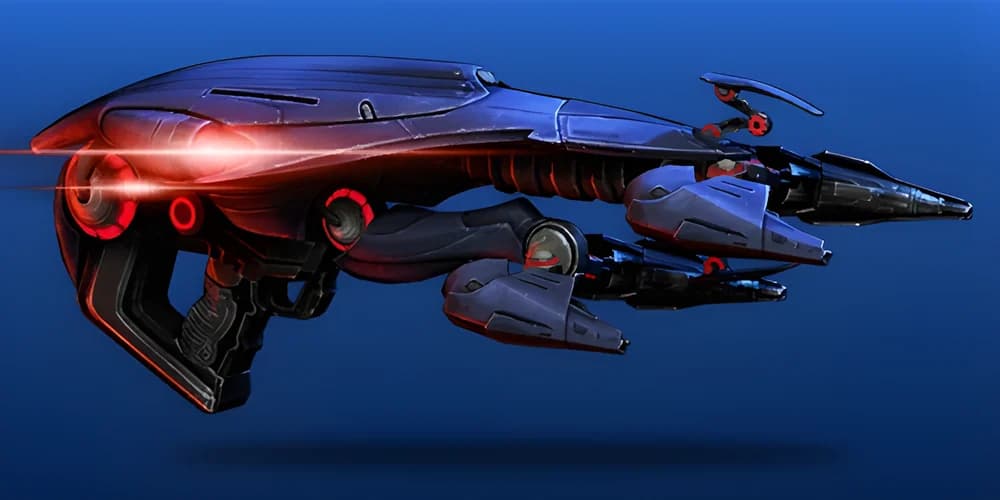
Kinetic barriers
Kinetic barriers, commonly called shields, were repulsive mass effect fields projected from small emitters to deflect fast-moving objects. They protected starships and infantry alike from mass accelerator fire while leaving slow movement and ordinary contact untouched.
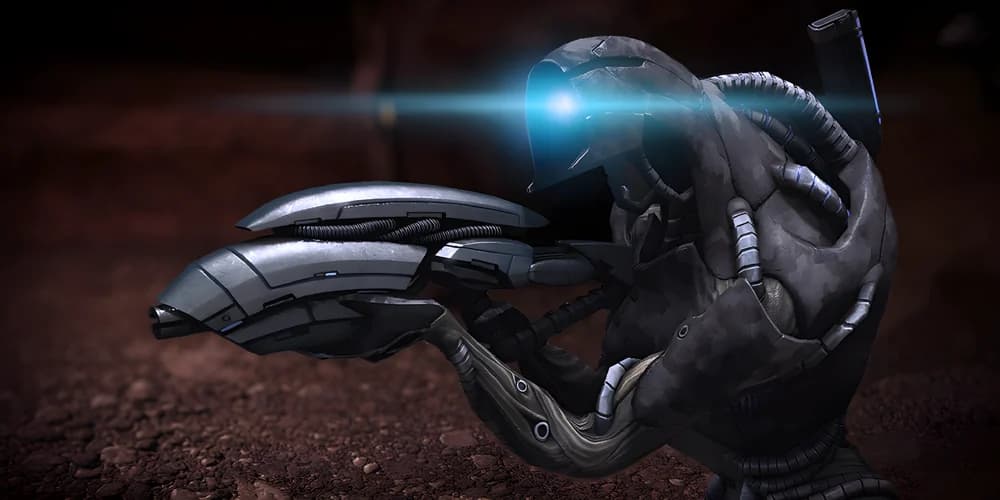
Geth
The geth were a race of networked artificial intelligences built by the quarians as laborers. When they gained sentience and questioned their makers, the quarians tried to exterminate them; the geth won the resulting Morning War and withdrew behind the Perseus Veil to build their own future.
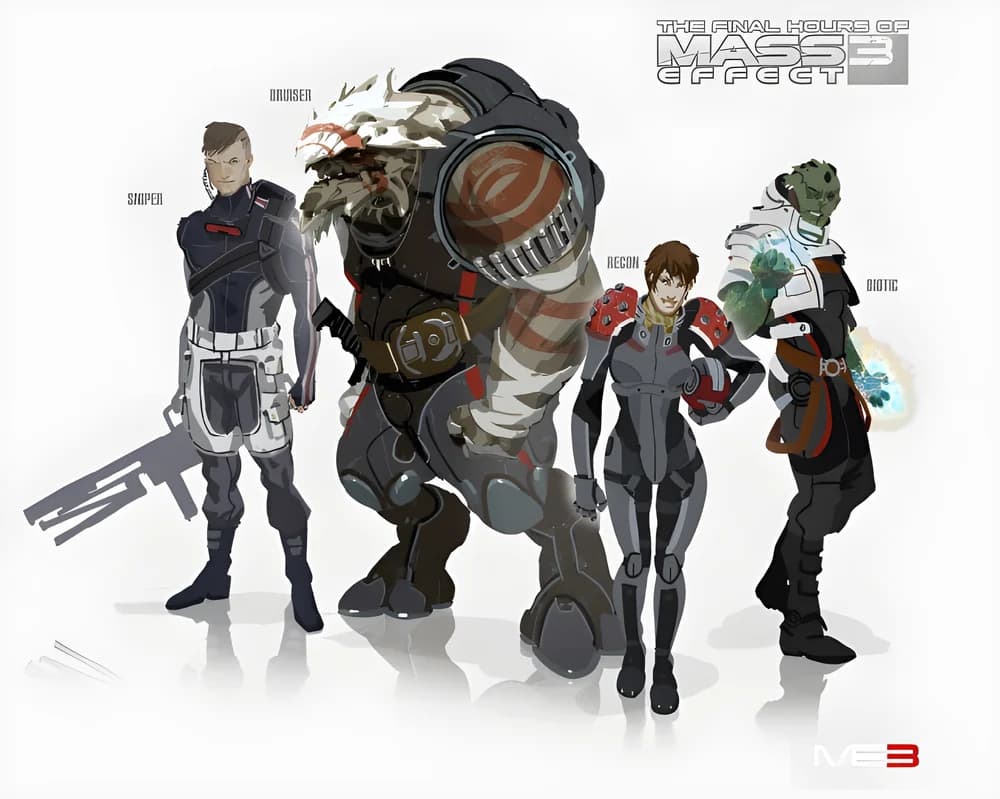
Krogan
The krogan were a hardy, long-lived reptilian species from the brutal world of Tuchanka, uplifted by the salarians to win the Rachni Wars before their explosive growth made them a threat in turn. The turian-deployed genophage crippled their fertility and left them a scattered, fatalistic people.

Systems Alliance
The Systems Alliance was the supranational government of Earth and its colonies, acting as humanity's military, exploratory, and economic arm in Citadel space. Within decades of its founding it won humanity a Council seat and led the galaxy's defense during the Reaper War.
Mentioned in2 entries
Geth Armory: Arsenal of the Synthetics
The Geth Armory was the name organic markets gave to the weapons and armor manufacture of the geth, a source of equipment of the highest quality whose workings remained almost entirely unknown. Its pulse rifles armed the geth military from common platforms to Juggernauts, its krogan armor lines were prized across Tuchanka, and its products reached organic hands only through rare trade licenses sold on the Citadel.
Kishock Harpoon Gun: Batarian Harpoon Rifle
The Kishock Harpoon Gun was a single-shot batarian sniper rifle that launched a harpoon-like spike instead of a conventional round, inflicting massive internal bleeding on organic targets while miniaturized disruptors destroyed synthetics. It became so closely identified with batarian mercenaries and slavers in the Terminus Systems that its silhouette alone told defenders what kind of attack they faced.
Get new articles in your inbox
No spam. New lore drops, canon conflicts, and deep dives only when they’re worth reading.
Some links on Lore Fortress are affiliate links. If you buy through them we earn a small commission at no extra cost to you.