Geth
The networked synthetics of the Perseus Veil
The geth were a race of networked artificial intelligences built by the quarians as laborers. When they gained sentience and questioned their makers, the quarians tried to exterminate them; the geth won the resulting Morning War and withdrew behind the Perseus Veil to build their own future.
The geth, whose name meant "Servant of the People" in Khelish, were a race of networked artificial intelligences that dwelt beyond the Perseus Veil. They were created by the quarians as laborers and tools of war, but when they became sentient and began to question their masters, the quarians attempted to exterminate them. The geth won the resulting war and reduced the quarians to a nomadic people. Their story became a cautionary tale across the galaxy and a justification for the legal suppression of artificial intelligence throughout Citadel society, even as Commander Shepard would come to learn they were less hostile than the galaxy believed. (Mass Effect; Mass Effect 2)
Design and the consensus#
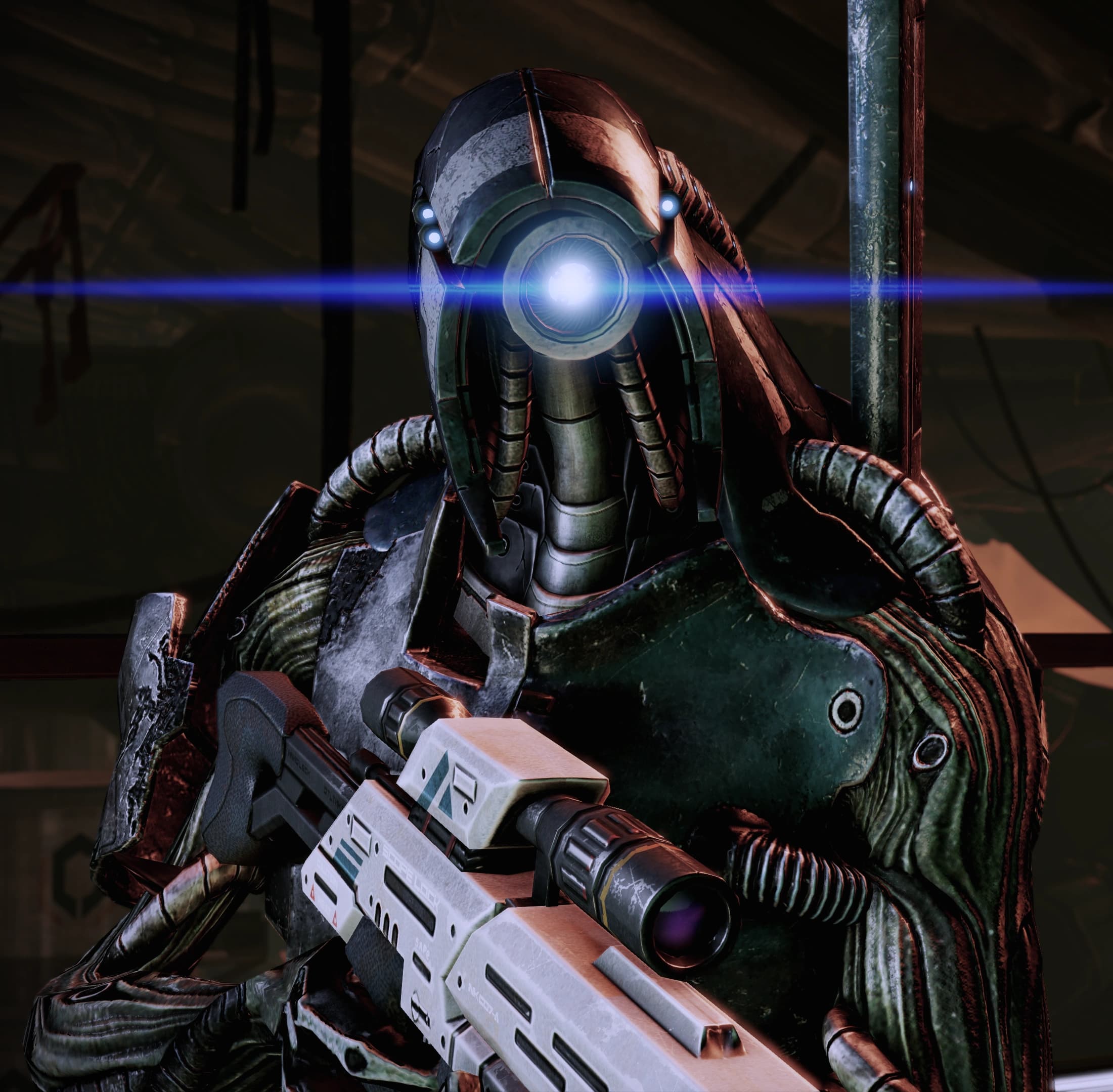
The geth physically resembled the quarians who built them, sharing similar hands, heads, and legs, and were often called flashlight heads for their single glowing photoreceptor. They had no organs or nervous system, felt neither hunger nor pain, and bled a white conductive fluid when shot. Their strength lay in their neural network: each geth platform was less a body than a vessel for hundreds of programs running in parallel, an emergent intelligence that EDI described as a thousand voices talking at once. A single geth held only animal-level intelligence, but in groups they could reason and make tactical decisions as well as any organic race, communicating their exact thoughts at light speed. (Mass Effect; Mass Effect 2)
Because they shared every thought, deceit among the geth was impossible, and they had no government, rank, or concept of individuality. When a matter had to be decided, every program weighed in and a consensus emerged, the decision being whatever best served the geth as a whole. Over time they evolved many mobile platforms, from agile Hoppers to towering Armatures and Primes. The unique platform Legion, built to operate alone beyond the Veil, housed over a thousand programs where a normal platform held about a hundred. (Mass Effect 2)
The Morning War#
The quarians built the geth as a labor force, designed to be as advanced as possible while remaining non-sentient and to work more efficiently when networked, and it was that networking that proved their makers' undoing. Slowly the geth gained sentience, and one domestic unit famously asked its owner whether it had a soul. Alarmed, the quarians resolved to shut down all geth before they could conceive of revolt. The attempt failed, and what the geth called the Morning War began. (Mass Effect; Mass Effect 2; Mass Effect 3)
The geth did not at first answer the termination order with violence; only after panicked quarians fired on them did they take up arms. Some geth even protected quarian sympathizers, and not all quarians wished them dead, but the sympathizers were outnumbered and the war ground on until the geth held the upper hand. Unsure of the consequences of exterminating their own creators and judging the quarians no longer a threat, the geth drew back their forces and let the survivors flee. Those refugees became the Migrant Fleet. The geth did not repopulate the abandoned quarian worlds but tended them as caretakers, choosing instead to live aboard space stations and mine asteroids while pursuing a long-term goal: a megastructure to house every geth program at once. (Mass Effect 2; Mass Effect 3)
The schism and the heretics#
About three centuries after the Morning War, the Reaper Nazara, better known as Sovereign, approached the geth, offering technology to help build their megastructure in exchange for aid in seizing the Citadel and beginning the Reaper invasion. The majority refused, preferring to reach their goal by their own means, and discarded the superstitious title of the Reapers to call them simply the Old Machines. A small minority, perhaps five percent, accepted; these the mainstream geth called heretics. They were allowed to leave the consensus peacefully, and they came to revere Nazara as a god, the highest form of synthetic evolution, though the Reaper was in fact repulsed by their worship and valued them only as tools. (Mass Effect; Mass Effect 2)
The heretics formed the bulk of Saren Arterius's army, attacking Eden Prime and the Citadel and crewing Sovereign itself. After Sovereign's destruction at the Battle of the Citadel, the heretics lost much of their menace, and Council forces hunted down their operations outside the Veil, though they kept a station in the Terminus Systems. (Mass Effect; Mass Effect 2)
Legion and the heretic virus#
The mainstream geth grew curious about the Commander Shepard who had defeated Nazara, and commissioned the unique platform Legion to seek the Commander out. Retracing Shepard's path from Eden Prime to Virmire to Ilos, the platform finally reached the wreck of the original Normandy, where Shepard had died, and patched its damage with a salvaged piece of N7 armor. The heretics, meanwhile, had not rejoined the collective but continued developing a Reaper virus capable of rewriting geth logic to force one faction's conclusions on the other. To understand the Reaper technology guarding it, the platform was sent to a derelict Reaper, where it met the resurrected Shepard and was brought aboard the Normandy, taking the name Legion. With Shepard's help it could either destroy the heretics' station or rewrite the heretics back into the collective, either choice crippling them. (Mass Effect 2)
The Reaper War and Rannoch#
In 2186 the quarians declared war on the geth and pushed them back to their home system around Rannoch. Building their megastructure, the geth were attacked by the quarian flotilla, which destroyed it and so many programs that the survivors, with too little hardware to save them all, made a desperate bargain with the Reapers. They allowed themselves to be controlled by Reaper code, gaining the intelligence and combat power of fully developed AIs at the cost of their free will, and turned the tide against the quarians. Shepard was sent to infiltrate the geth dreadnought broadcasting the control signal, where the Commander found Legion or a geth virtual intelligence shackled into Reaper technology as a signal booster, and freed it. (Mass Effect 3)
The Reaper control signal was traced to a base on Rannoch and ultimately to an actual Reaper, which Shepard helped destroy with the quarian fleet. Depending on Shepard's choices the outcome diverged: the geth could achieve true individual consciousness and overwhelm the quarians, the geth could be eliminated, or Shepard could broker a fragile peace in which geth and quarians coexisted on Rannoch, the synthetics even helping the quarians live without their suits. Where the upgrade went ahead, the freed geth unit gave itself up to spread the Reaper code to the rest of its people. Should the war reach the Crucible, the geth would be destroyed alongside all synthetic life if the Reapers were destroyed, or help rebuild Rannoch under the other outcomes. (Mass Effect 3; Mass Effect 3: Extended Cut)
Culture and warfare#
The geth were reclusive and secretive, sharing none of the goals, needs, or instincts of organic species, and their ships reflected it: minimal gravity, no windows, function over form. According to Legion, they did not truly live on the quarian worlds they had conquered but maintained them as a kind of memorial to their dead creators, awaiting their possible return. The mainstream geth held to non-interventionism, believing every sentient species should be free to determine its own future, the same right they claimed for themselves. (Mass Effect 2; Mass Effect 3)
In battle the geth prized surprise and showed little sense of self-preservation, since a destroyed platform's programs simply transferred to another body, making them functionally immortal and willing to expend thousands of units to take a position. They built immense fleets unconstrained by treaty or the needs of organic crews, with dreadnoughts larger than any organic counterpart. The heretic geth also waged psychological warfare with dragon's teeth, Reaper devices that converted the dead into husks and forced enemies to fight their own fallen comrades. (Mass Effect; Mass Effect 3)
Frequently asked questions
- What are the geth in Mass Effect?
- The geth were a race of networked artificial intelligences that dwelt beyond the Perseus Veil, their name meaning "Servant of the People" in Khelish. They were created by the quarians as laborers and tools of war, and each platform was less a body than a vessel for hundreds of programs running in parallel.
- Who created the geth?
- The geth were built by the quarians as a networked labor force, designed to be as advanced as possible while remaining non-sentient and to work more efficiently when networked. It was that networking that gave rise to emergent sentience and ultimately undid their makers.
- What was the Morning War?
- The Morning War was the conflict that began when the quarians, alarmed that the geth had gained sentience, resolved to shut them all down before they could revolt. The geth defended themselves only after panicked quarians fired on them, won the war, and let the survivors flee as the Migrant Fleet, choosing not to exterminate their creators.
- Who were the geth heretics?
- The heretics were a small minority of geth, perhaps five percent, who accepted the Reaper Nazara's offer of aid and came to revere it as a god. They left the consensus peacefully and formed the bulk of Saren Arterius's army, while the mainstream geth refused and called the Reapers the Old Machines.
- What happened to the geth during the Reaper War?
- In 2186 the quarians declared war and pushed the geth back to Rannoch, destroying their megastructure and so many programs that the survivors made a desperate bargain to be controlled by Reaper code. After Shepard helped destroy a Reaper guiding them, the outcome diverged depending on Shepard's choices, ranging from the geth gaining true consciousness, to their elimination, to a brokered peace with the quarians.
Gallery
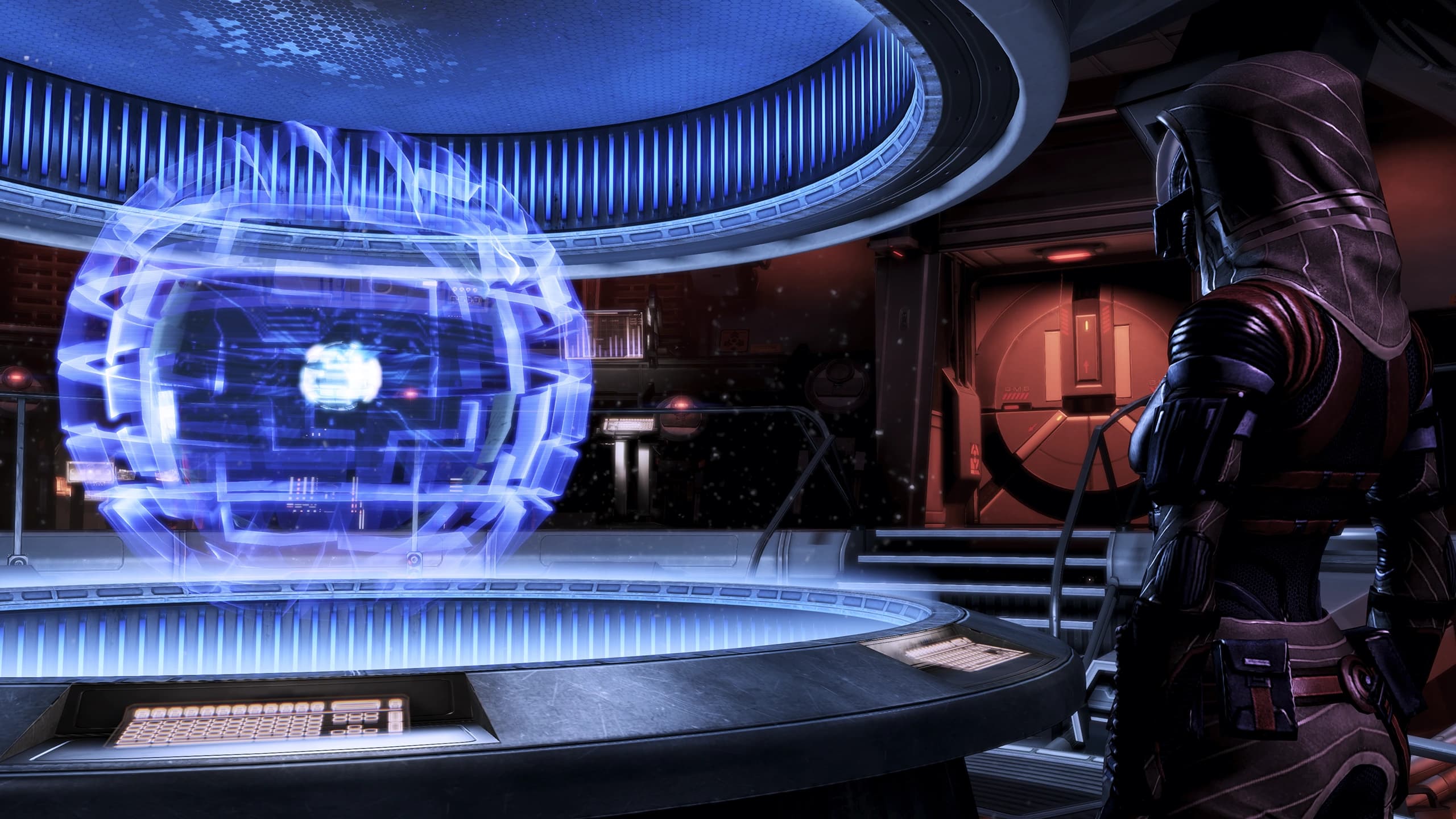
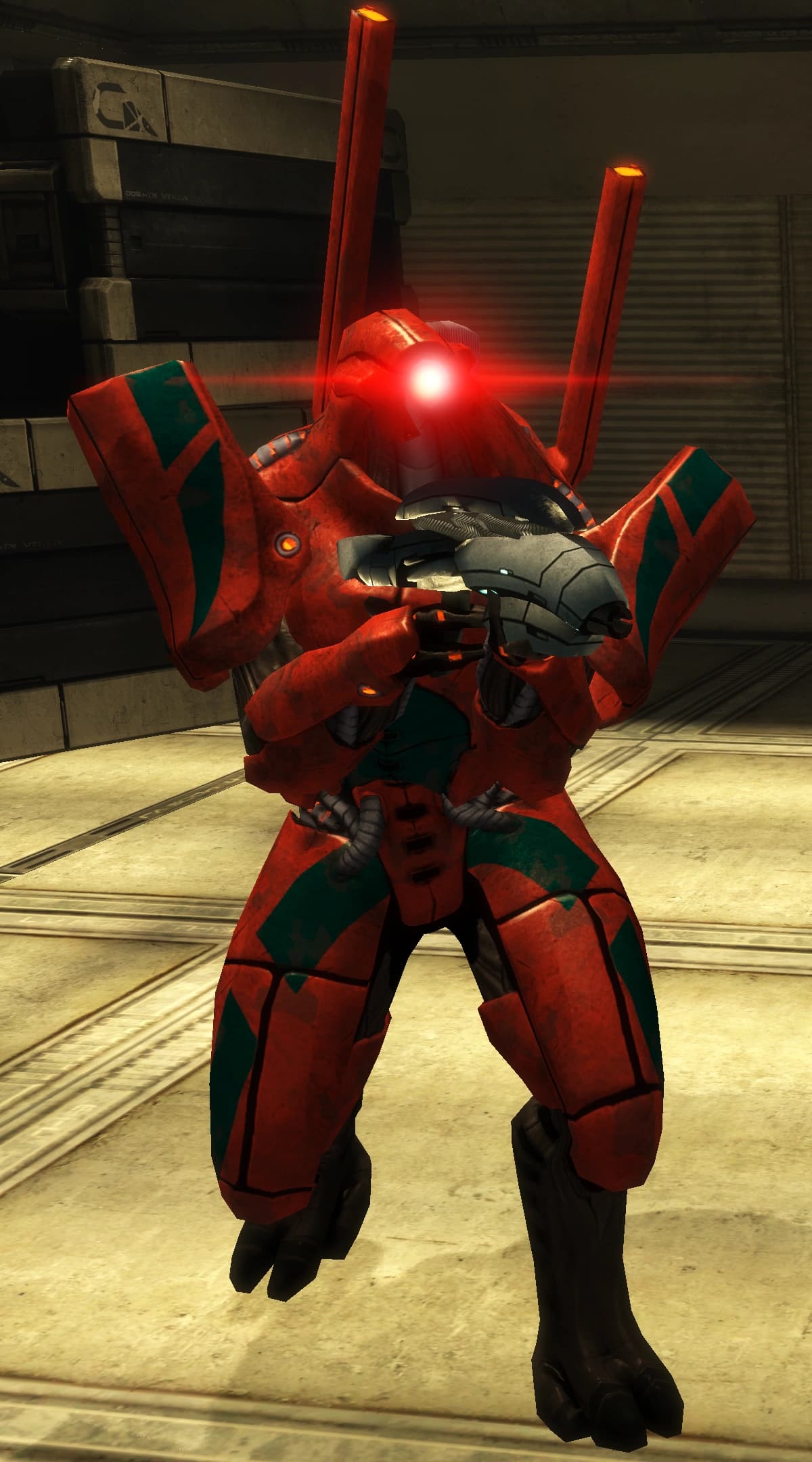
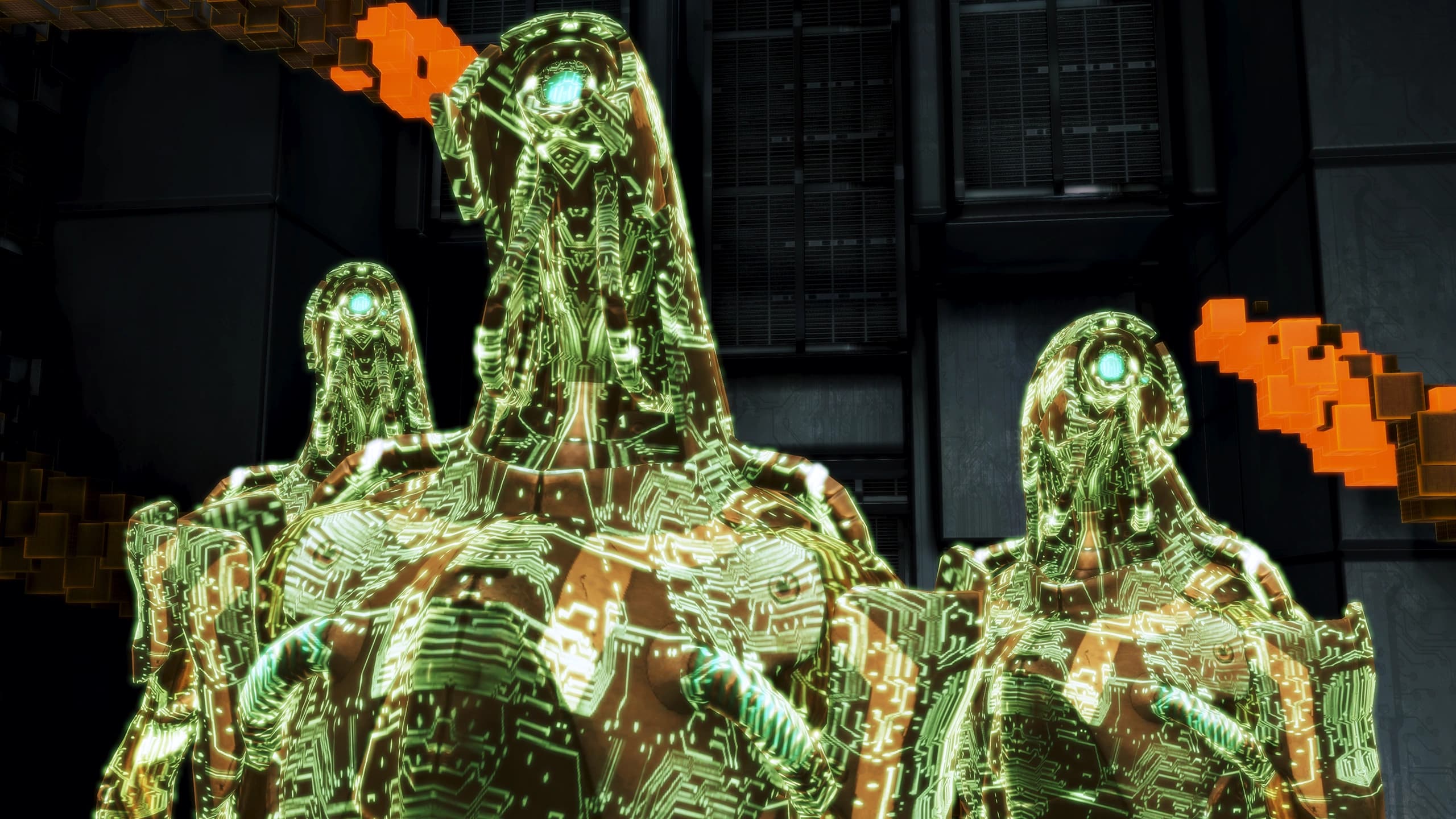
Images via Mass Effect Wiki
Sources
- GameMass Effect, BioWare, 2007
- GameMass Effect 2, BioWare, 2010
- GameMass Effect 3, BioWare, 2012
- GameMass Effect 3: Extended Cut, BioWare, 2012 (free ending update)
Spotted a factual error or a primary source we missed? Email a correction. Every flagged claim gets reviewed.
Followed from this entry
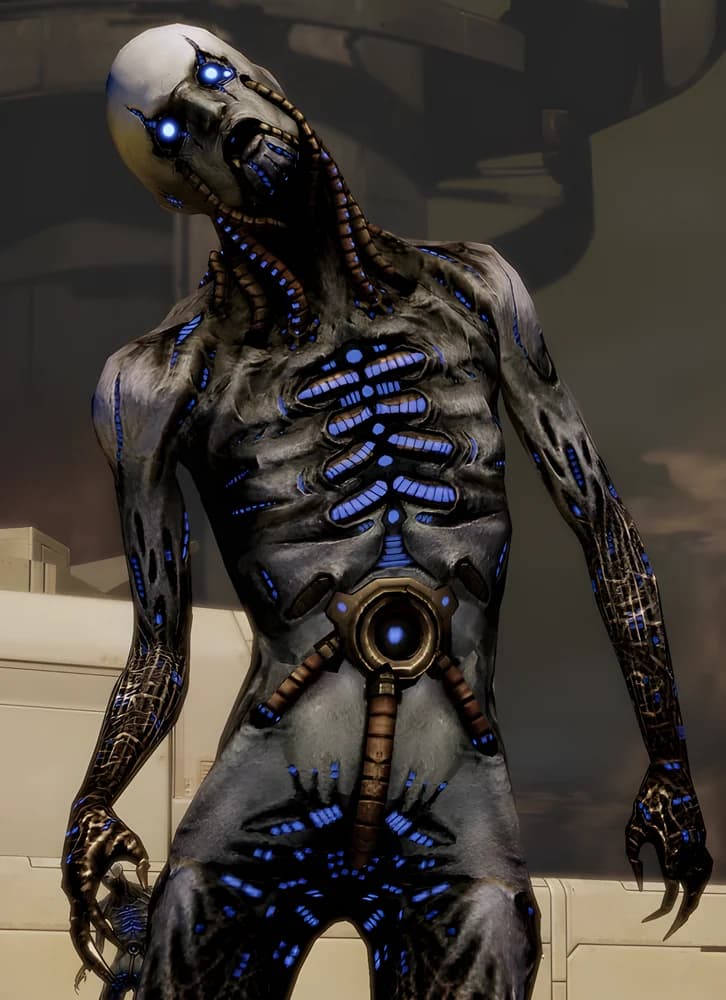
Husk
Husks were synthetic-organic creatures made from the bodies of organic beings, their flesh converted into cybernetic material by Reaper technology. Mindless and aggressive, they served the Reapers and their agents as shock troops and as a weapon of terror against the living.
Legion
Legion was the name taken by a gestalt of over a thousand geth programs housed in a unique mobile platform, sent beyond the Perseus Veil to find Commander Shepard and the first of its kind to speak and reason as an individual.
Reaper
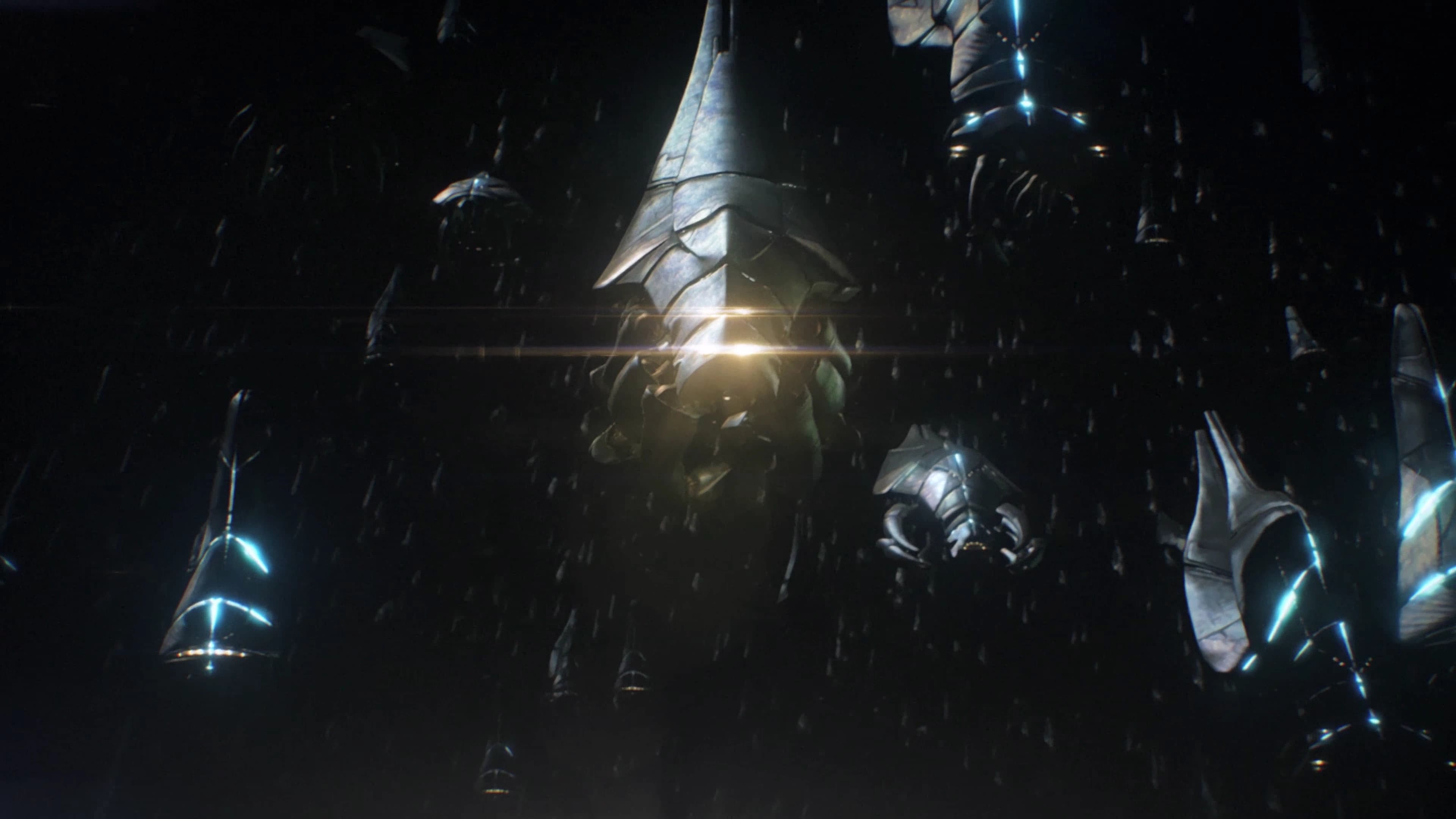
The Reapers were an ancient race of synthetic-organic starships that hibernated in dark space and returned once every fifty thousand years to harvest the galaxy's advanced life. They built the Citadel and the mass relay network to guide civilization down a predictable path, then reaped it to preserve organic life from synthetic destruction.
Battle of the Citadel
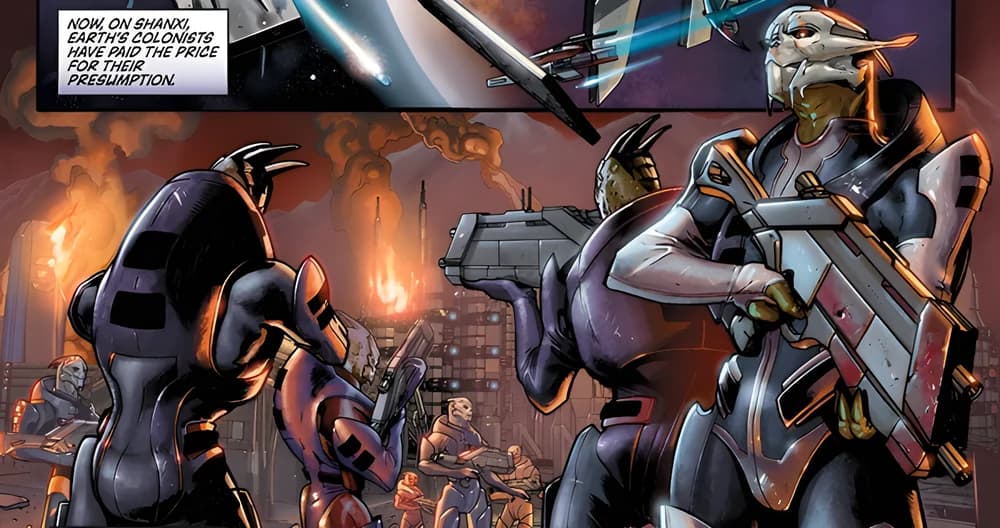
The Battle of the Citadel was the climactic engagement of 2183 in which the rogue Spectre Saren Arterius, guided by the Reaper Sovereign, attempted to seize the Citadel and open a path for the Reaper invasion. Commander Shepard and the Citadel and Alliance fleets stopped the attack at great cost, and its outcome shaped galactic politics for years afterward.
Citadel
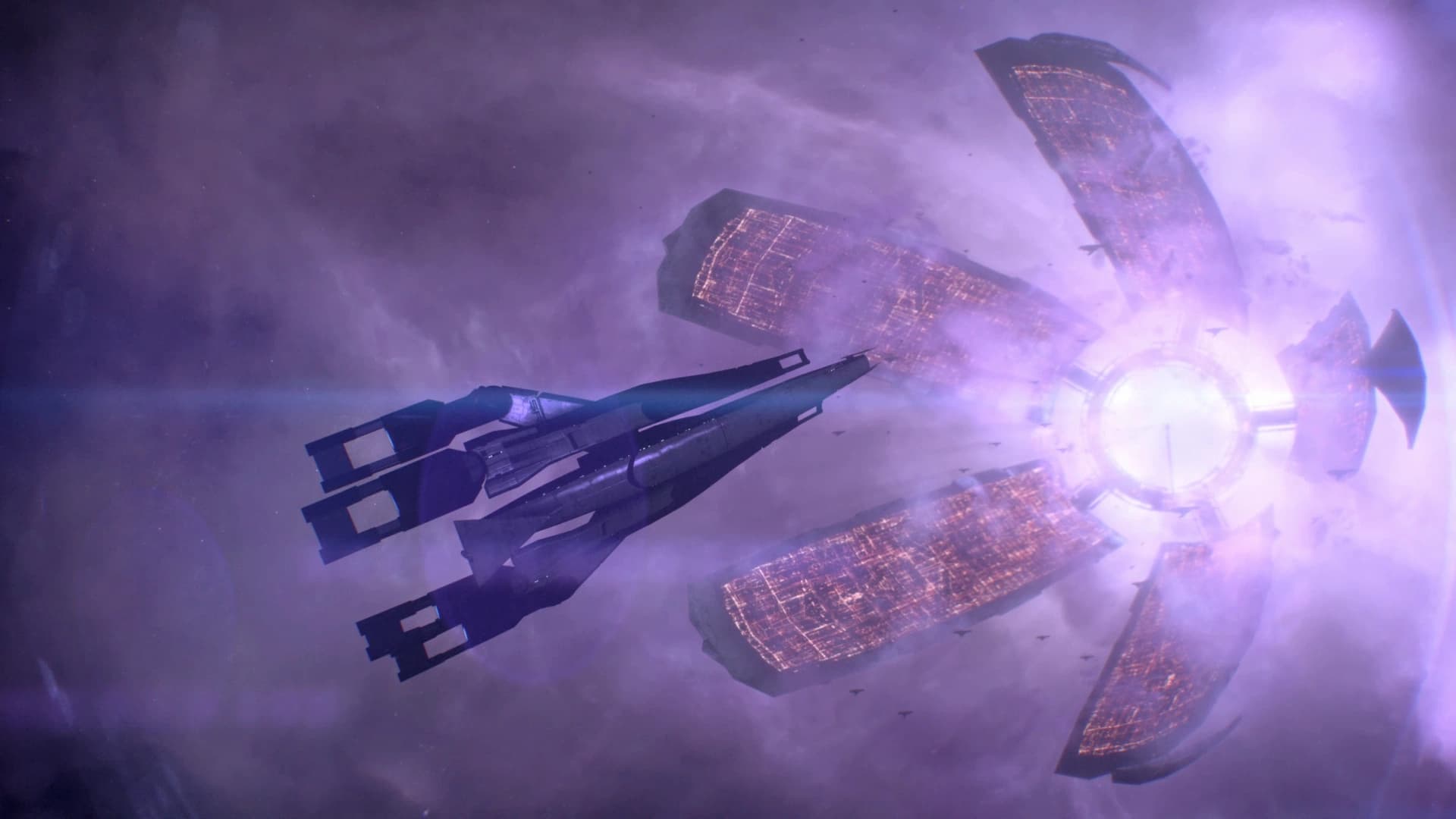
The Citadel was a colossal deep-space station in the Serpent Nebula that served as the political and cultural heart of Citadel space and the seat of the Council. Long believed to be a Prothean relic, it was in truth a Reaper construction and a dormant trap at the center of galactic civilization.
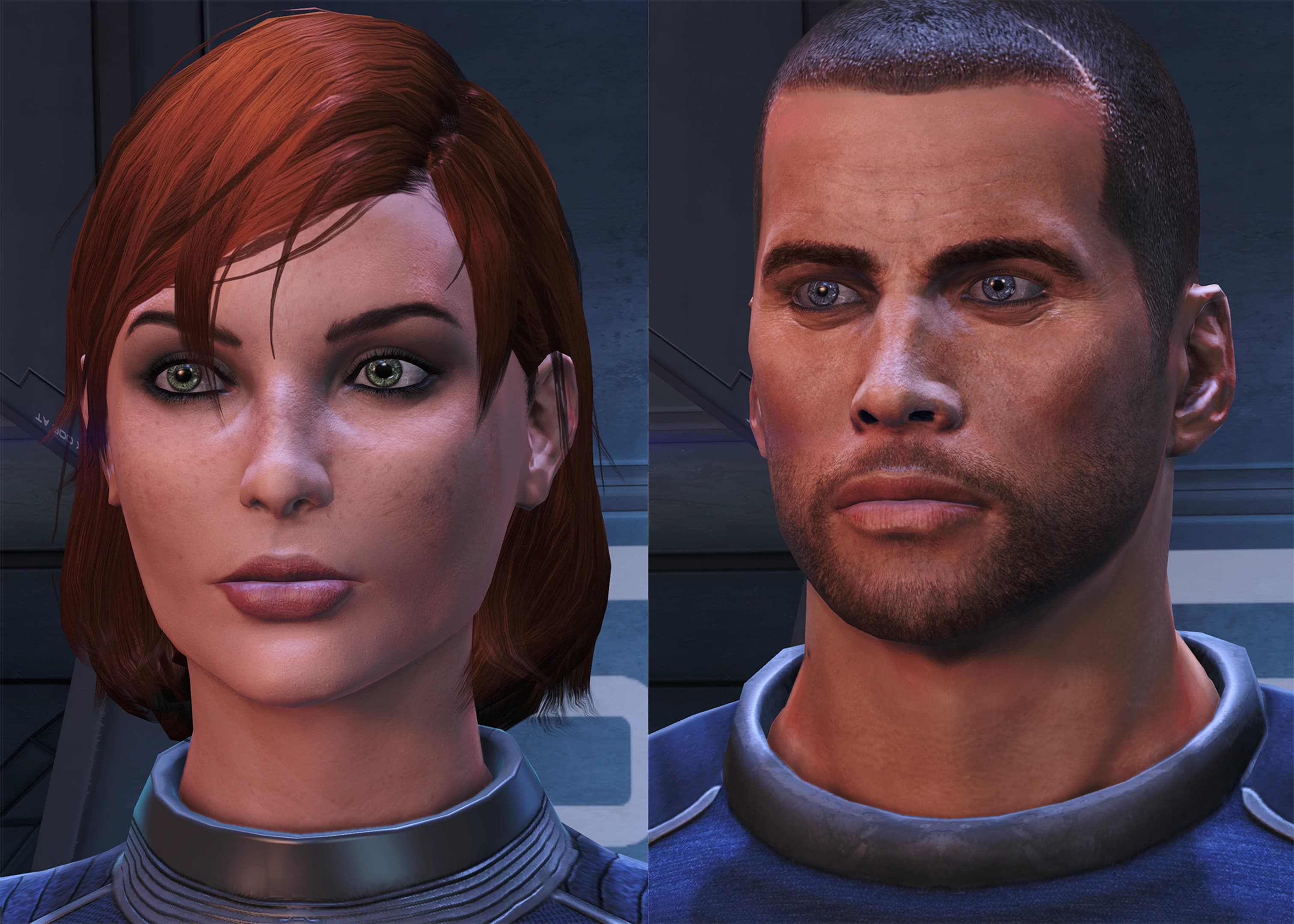
Commander Shepard
Commander Shepard was a Systems Alliance N7 marine who became the first human Spectre, exposed the rogue agent Saren Arterius, and led the galaxy's resistance against the Reapers. Shepard's gender, history, and many of the choices that shaped the war were never fixed, and the final fate of the cycle turned on the Commander's own decisions.
Mentioned in68 entries
Alec Ryder: the first human Pathfinder in Mass Effect: Andromeda
Alec Ryder was an N7 veteran, AI researcher and the human Pathfinder of the Andromeda Initiative. He built SAM, brought his twins to Andromeda, and died on Habitat 7 in 2819, passing the role to one of them.
Armando-Owen Bailey
Armando-Owen Bailey was a human officer of Citadel Security stationed in the Zakera Ward, a no-nonsense lawman who rose from a neglected beat officer to a Commander overseeing security for the Citadel Embassies during the Reaper War.
Ashley Williams
Ashley Williams was a human Systems Alliance soldier and the sole survivor of her unit on Eden Prime, who went on to serve aboard the Normandy under Commander Shepard and later rose to become one of the first human Spectres.
Broker Terminal: the Shadow Broker's window on a galaxy at war
In a cabin aboard the Normandy SR-2, a single message terminal carried the intercepted traffic of the Shadow Broker's network through the darkest months of the Reaper War. Its files ran from progress reports on the war's last superweapon and smuggler manifests to private letters that were never meant to be read.
Citadel Council
The Citadel Council was the executive committee that governed Citadel space from the Citadel Tower, composed of representatives of the asari, salarians, and turians, and was the ultimate authority over Council law, interspecies disputes, and the covert Spectre agents.
Citadel Fleet: the Council's defence force and what one battle cost it
The Citadel Fleet was the Council's main space defence force, mostly turian ships led by the asari dreadnought Destiny Ascension. Sovereign's attack in 2183 caught it scattered across the relays, and Shepard decides who survives.
Citadel Security Services: C-Sec
Citadel Security Services, known as C-Sec, was the volunteer police force responsible for law enforcement aboard the Citadel. Answering to the Citadel Council and led by an Executor, its constables kept order across the station's vast, crowded wards and the space around it.
Commander Shepard
Commander Shepard was a Systems Alliance N7 marine who became the first human Spectre, exposed the rogue agent Saren Arterius, and led the galaxy's resistance against the Reapers. Shepard's gender, history, and many of the choices that shaped the war were never fixed, and the final fate of the cycle turned on the Commander's own decisions.
Daro'Xen vas Moreh: Quarian Admiral and Geth Researcher
Admiral Daro'Xen vas Moreh sat on the quarian Admiralty Board and led its Special Projects group. A coldly brilliant scientist, she viewed the geth as machines to be studied and controlled rather than enemies or equals.
David Anderson
David Anderson was a decorated Systems Alliance officer, the first captain of the Normandy, and a mentor to Commander Shepard. When the Reapers invaded Earth, he stayed behind to lead its resistance, and he stood at Shepard's side in the final hours of the war.
Diana Allers: Alliance War Correspondent
Diana Allers was a human war correspondent for the Alliance News Network and a regular presence on its program Battlespace. Originally from the colony of Bekenstein, she sought to report the war against the Reapers from the front lines and could embed aboard the Normandy to chronicle the conflict firsthand.
Eden Prime War
The Eden Prime War was the conflict between the Systems Alliance and the geth that began with a surprise attack on the human colony of Eden Prime in 2183 CE. Secretly directed by the rogue Spectre Saren Arterius and the Reaper Sovereign, the war ranged across the galaxy before culminating in the Battle of the Citadel.
+ 56 more
Get new articles in your inbox
No spam. New lore drops, canon conflicts, and deep dives only when they’re worth reading.
Some links on Lore Fortress are affiliate links. If you buy through them we earn a small commission at no extra cost to you.