Krogan
The Warriors of Tuchanka
The krogan were a hardy, long-lived reptilian species from the brutal world of Tuchanka, uplifted by the salarians to win the Rachni Wars before their explosive growth made them a threat in turn. The turian-deployed genophage crippled their fertility and left them a scattered, fatalistic people.
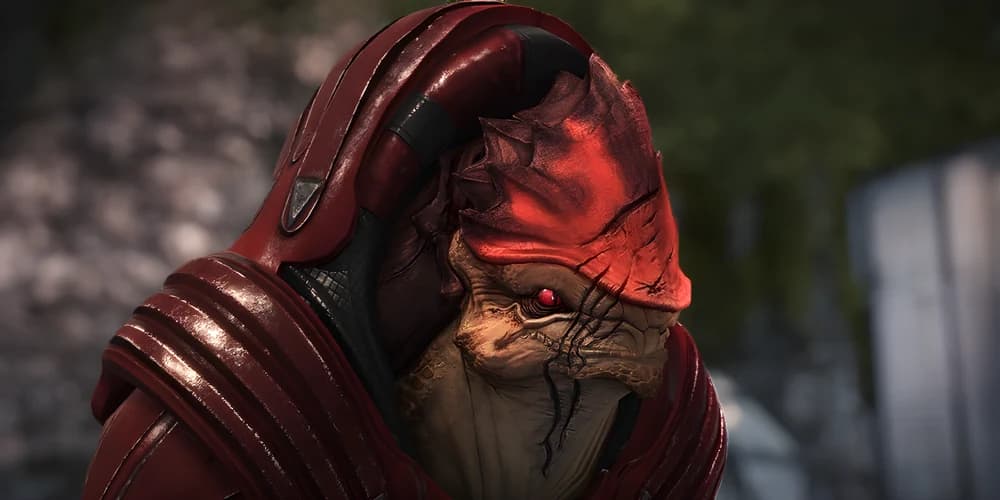
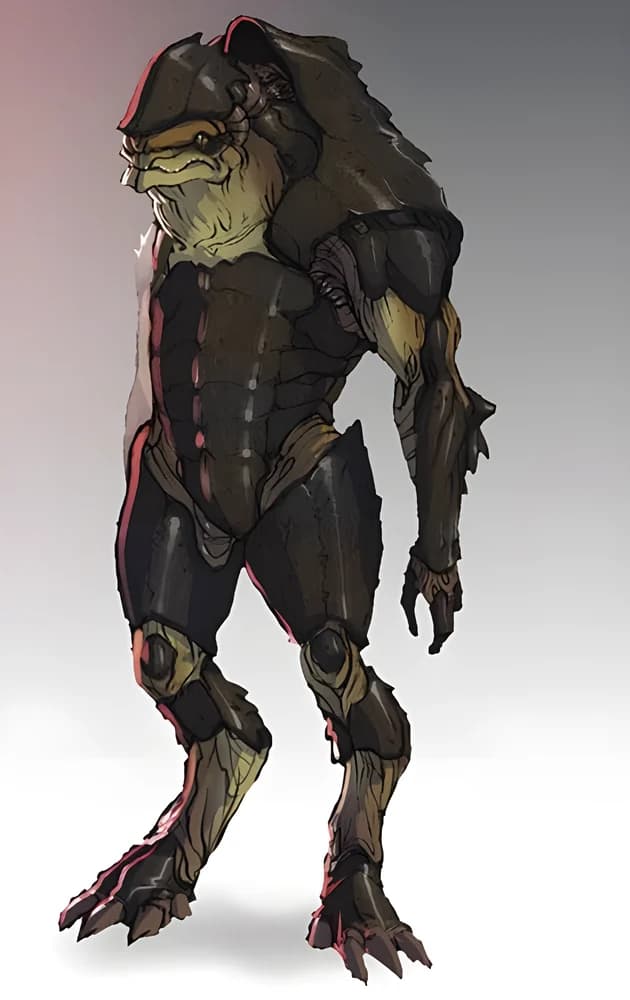
The krogan were a species of large reptilian bipeds native to Tuchanka, a world of harsh environments, scarce resources, and vicious predators that conditioned them for extraordinary toughness. Once technological advancement made survival easy, they turned their weapons on one another and reduced their homeworld to a radioactive wasteland. The salarians later uplifted the krogan into galactic society to fight the Rachni Wars, but after the rachni were destroyed the rapidly breeding krogan became a threat in turn, prompting the turians to loose the salarian-engineered genophage that crippled their fertility. (Mass Effect; Mass Effect 3)
Biology#
Natural selection on Tuchanka shaped the krogan for survival. Their wide-set eyes gave them 240-degree vision, and large shoulder humps stored fluids and nutrients much like an Earth camel, letting them endure long periods without food or water. Their thick hides were nearly impervious to cuts and highly resistant to toxins, radiation, and extreme temperatures. Their real advantage was redundancy: krogan possessed multiple instances of major organs, including two hearts and four lungs, and a second circulatory system of neuroconductive fluid in place of a traditional nervous system, making them almost impossible to paralyze. The legendary "blood rage" rendered them unresponsive to pain and willing to fight to the death regardless of injury. Such hardiness allowed an individual krogan to live for well over a thousand years. Set that against how long each species lives and only the asari come close. (Mass Effect; Mass Effect 2)
Before the genophage, krogan reproduced and matured at an astonishing rate, with females laying clutches of up to a thousand fertilized eggs in a year. Under the genophage, the odds of a successful birth fell to roughly one in a thousand. (Mass Effect)
A ruined homeworld#
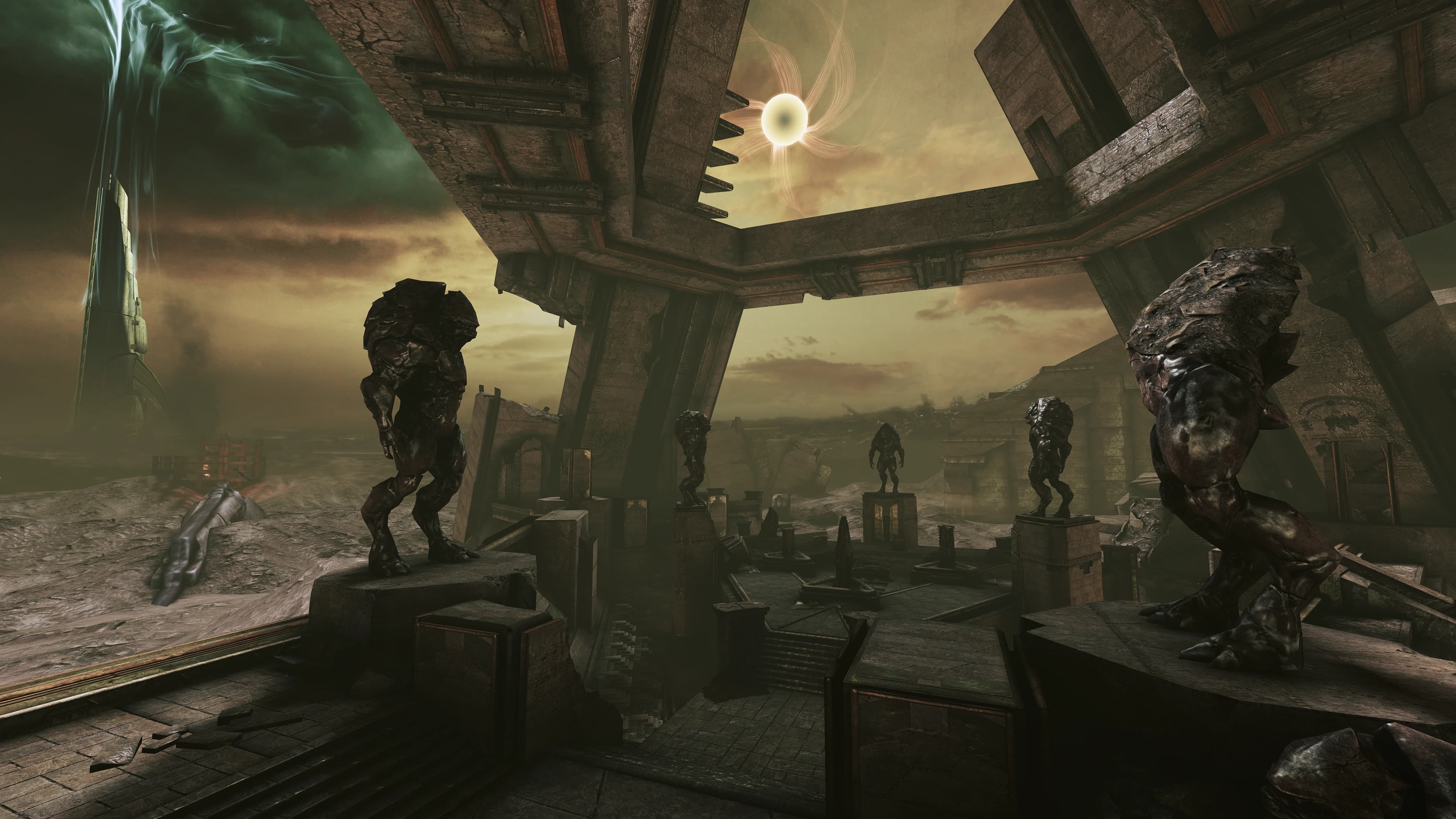
Ancient krogan society had once been rich with cultural, architectural, and artistic achievement, but their birth rate exploded once industrialization made survival easy, and they turned to fighting one another over dwindling resources. Four thousand years ago, at the dawn of their nuclear age, escalating wars culminated in the release of weapons of mass destruction that transformed Tuchanka into a radioactive wasteland. The krogan were reduced to primitive warring clans struggling through a nuclear winter of their own making, a state that endured until the salarians discovered them two thousand years later. (Mass Effect)
Uplift, rebellion, and decline#
The salarians liberated the krogan from their primitive state, providing advanced technology and relocating them to a habitable world, but not without an ulterior motive: the Citadel was then locked in war with the rachni, and the salarians hoped the krogan would serve as soldiers. The plan succeeded. Within two generations the rapidly breeding krogan drove back the rachni, pursued them to their home worlds, and eradicated the species. Hailed as saviors, the krogan were granted conquered and Citadel worlds to colonize, honored with the Krogan Monument on the Presidium. (Mass Effect)
But without Tuchanka's harsh conditions to check their numbers, the krogan population swelled and spilled onto worlds already inhabited by Citadel races. When they began settling the asari colony of Lusia and the Council ordered them to leave, war broke out. The Krogan Rebellions raged for nearly three centuries; the krogan sustained massive casualties but their birth rate kept their numbers climbing, and their victory seemed inevitable. In desperation the Council turned to the newly discovered Turian Hierarchy, which unleashed the salarian-engineered genophage on the krogan home worlds. With near-total infant mortality, the krogan could no longer replenish their numbers and were forced to surrender. The turians were rewarded with a Council seat; the krogan were left a scattered and dying people, many becoming mercenaries while resenting the races that had condemned them. (Mass Effect; Mass Effect 3)
The Reaper War#
In 2186, with the Reapers invading, the turians needed krogan aid to defend Palaven, and the krogan agreed to help, and to assist in the wider war, in exchange for a cure for the genophage. Depending on Commander Shepard's earlier choices, a salarian scientist could develop a cure with the help of Eve, one of the last fertile females. The events at the Shroud on Tuchanka could resolve in several ways: the cure might be dispersed genuinely, sabotaged secretly, or faked, and the krogan's commitment to the war and their long-term fate varied accordingly. In some accounts the genophage was cured and the krogan began to repopulate; in others the sabotage held and the species remained on the brink of extinction. (Mass Effect 3)
Culture and clans#
The harshness of Tuchanka shaped the krogan psyche as surely as the body. They tended to be blunt, self-reliant, and unsentimental, respecting strength and neither surprised nor offended by treachery; their worst insult was to call someone "not worth killing." A deep fatalism, the social legacy of the genophage, led many to see no point in building for a future they believed they would never have. Even peaceful occupations were viewed through a martial lens, for the krogan were without doubt a warrior people. (Mass Effect; Mass Effect 2)
Krogan society was organized into numerous clans, among them Urdnot, Nakmor, and Weyrloc, and clan membership allowed a krogan to own property and serve. Tradition was steeped in ritual, including the Rite of Passage in which a young krogan faced the wild fauna of Tuchanka and, in Clan Urdnot, a thresher maw. Females, scarce and precious, lived in separate clans and focused on bearing the next generation, their survival protected by harsh taboos against harming them. Their dead were honored in ritual burial grounds called the Hollows, where the skulls of ancestors reminded the living "where we all come from, and where we all go." (Mass Effect 2; Mass Effect 3)
Military and demilitarization#
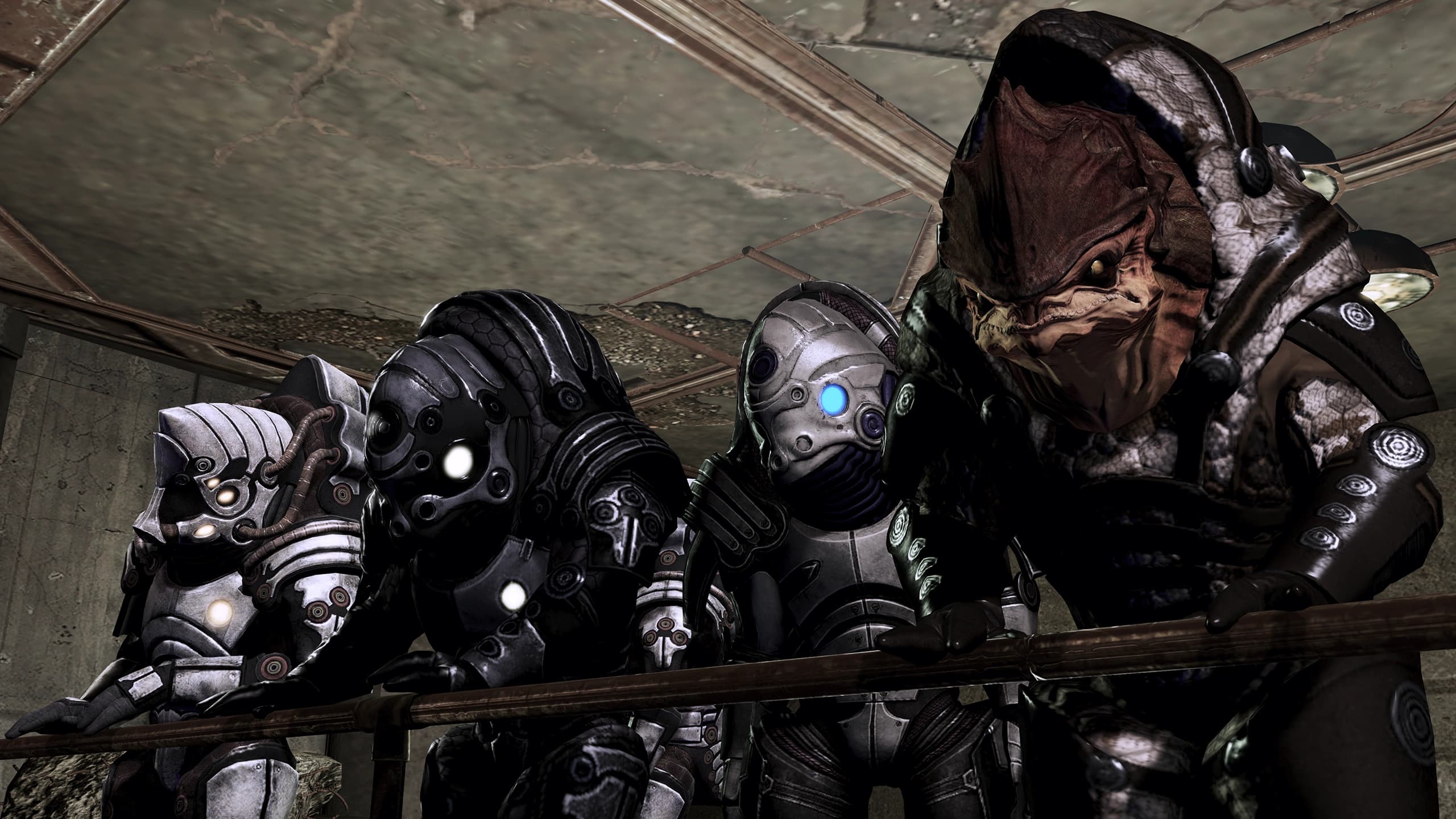
Traditional krogan warfare had relied on attritional mass-unit tactics, but after the genophage the krogan could no longer afford such casualties and shifted to the Battle Masters, individual warriors each a match for ten ordinary soldiers, callous and brutal yet methodical. Since the Krogan Rebellions the krogan had been demilitarized and forbidden from constructing warships, a ban enforced by the Council's Demilitarization Enforcement Mission throughout the Krogan DMZ. Whenever a warlord violated the ban, rival krogan usually ended his ambitions before Citadel forces needed to act. Relics of their former might, such as defunct ground-to-space batteries, still dotted Tuchanka as monuments to a lost age of glory. (Mass Effect; Mass Effect 2)
Frequently asked questions
- Who are the krogan in Mass Effect?
- The krogan were a species of large reptilian bipeds native to Tuchanka, a harsh world whose scarce resources and vicious predators conditioned them for extraordinary toughness. They were a warrior people known for their hardiness, immense longevity, and use as mercenaries and hired muscle across the galaxy.
- Why did the salarians uplift the krogan?
- The salarians discovered the krogan in their primitive state and provided them with advanced technology and a habitable world to relocate to. Their motive was to use the rapidly breeding krogan as soldiers, since the Citadel was then locked in the Rachni Wars, and the plan succeeded when the krogan drove back and eradicated the rachni.
- What is the genophage and why was it deployed against the krogan?
- The genophage was a salarian-engineered bio-weapon that caused near-total infant mortality, reducing the odds of a successful birth to roughly one in a thousand. The Council had the newly discovered Turian Hierarchy deploy it to end the Krogan Rebellions, after the krogan's uncontrolled expansion onto inhabited worlds triggered a war that lasted nearly three centuries.
- What makes krogan biology so resilient?
- Natural selection on Tuchanka gave the krogan thick hides resistant to cuts, toxins, radiation, and extreme temperatures, along with physiological redundancy including two hearts and four lungs and a backup neuroconductive circulatory system that made them nearly impossible to paralyze. Their legendary blood rage left them unresponsive to pain, and individuals could live well over a thousand years.
- Did the krogan get a cure for the genophage during the Reaper War?
- In 2186 the krogan agreed to aid the turians and the wider war effort in exchange for a cure, and a salarian scientist could develop one with the help of Eve, one of the last fertile females. The events at the Shroud on Tuchanka could resolve in several ways, with the cure dispersed genuinely, sabotaged secretly, or faked, so the krogan's long-term fate varied accordingly.
Gallery
Images via Mass Effect Wiki
Sources
- GameMass Effect, BioWare, 2007
- GameMass Effect 3, BioWare, 2012
- GameMass Effect 2, BioWare, 2010
Spotted a factual error or a primary source we missed? Email a correction. Every flagged claim gets reviewed.
Followed from this entry

Every Mass Effect Species and Race, With Lifespans
A field guide to every sapient species in Mass Effect, from the Council races and their clients to the krogan, the geth, the Protheans and the peoples of the Heleus Cluster. Each entry gives the homeworld, the lifespan where the games actually state one, and where the species stood with the Citadel.

Krogan Rebellions
The Krogan Rebellions were a decades-long war between the krogan and the Citadel Council that began around 700 CE, sparked by unchecked krogan expansion onto worlds claimed by other races. The conflict ended with the deployment of the salarian-engineered genophage, the surrender of the krogan, and a Council seat awarded to the turians.
Reaper
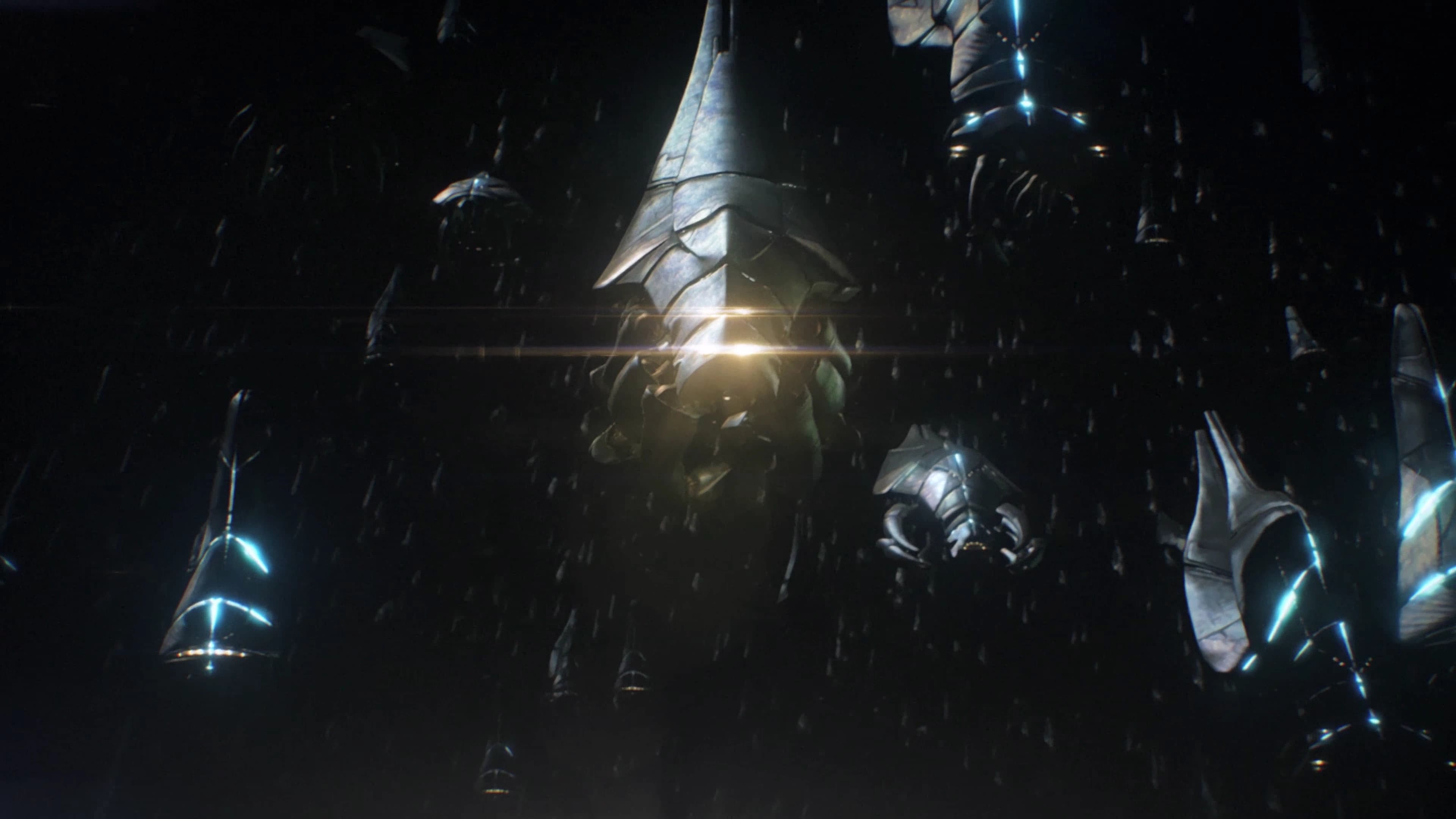
The Reapers were an ancient race of synthetic-organic starships that hibernated in dark space and returned once every fifty thousand years to harvest the galaxy's advanced life. They built the Citadel and the mass relay network to guide civilization down a predictable path, then reaped it to preserve organic life from synthetic destruction.
Salarian
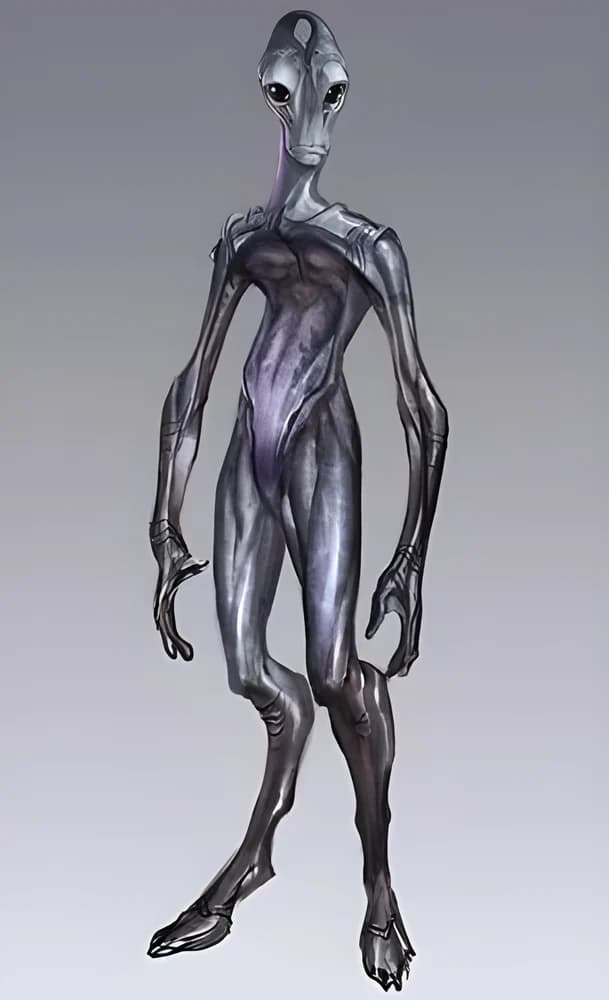
The salarians of Sur'Kesh were warm-blooded amphibians with a hyperactive metabolism, fast-thinking and short-lived, renowned for invention, espionage, and non-linear reasoning. The second species to join the Citadel, they uplifted the krogan and later engineered the genophage.

Tuchanka
Tuchanka was the homeworld of the krogan, a harsh and irradiated world scarred by the nuclear wars its people waged upon themselves. Once a fertile world teeming with fierce life, it became a wasteland of craters, ash, and predatory survivors.
Turian
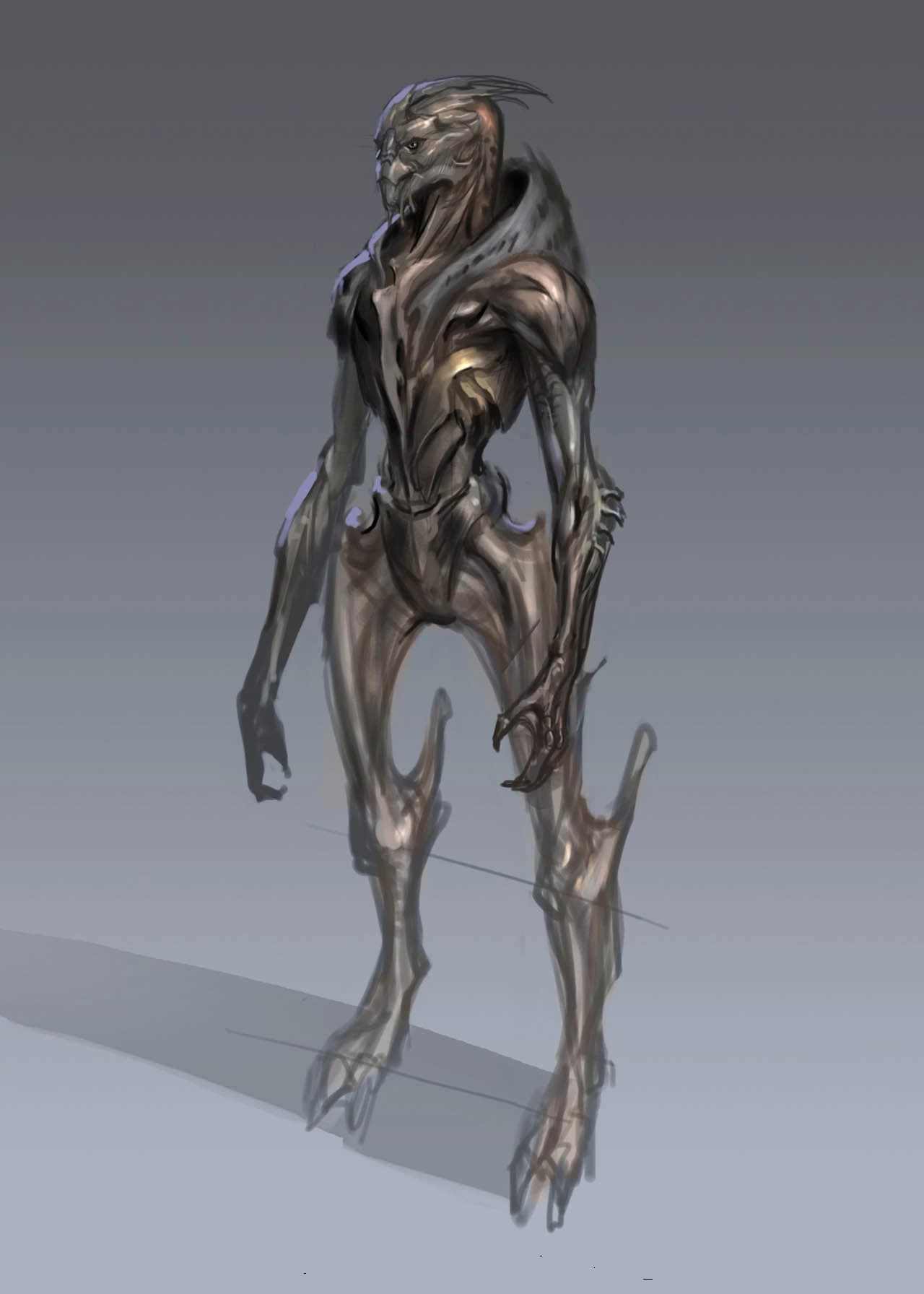
The turians of Palaven were a militaristic, disciplined species who earned a Citadel Council seat by defeating the krogan in the Krogan Rebellions and unleashing the genophage. Famed for their public service ethic and their contributions to the Citadel Fleet, they filled the galaxy's peacekeeping role for centuries.
Mentioned in46 entries
Acolyte: Asari Heavy Pistol
The Acolyte was an asari heavy pistol designed for the asari resistance, firing charged projectiles akin to impact triggered resonant warp bombs. It collapsed kinetic shields and biotic barriers with a single detonation, trusting the shooter's own biotics to finish whatever armor it could not pierce.
Adrien Victus: the general who became Primarch on a moon of Palaven
Adrien Victus was a turian general fighting on Menae in 2186 when Primarch Fedorian's shuttle was shot down and the succession rules made him Primarch of Palaven. He was out of contact and did not know it yet.
Andromeda Initiative: the one-way voyage to the Heleus Cluster
The Andromeda Initiative was a privately funded, multi-species project to settle the Andromeda galaxy. Founded by Jien Garson in 2176, it sent the Nexus and its arks across dark space in 2185, and they reached the Heleus Cluster more than six centuries later to find almost nothing as promised.
Biotics
Biotics was the ability of certain lifeforms to generate mass effect fields using element zero nodules grown through their bodies. Channelled through surgical implants and physical gestures, it let a wielder lift, hurl, and crush objects at a distance or raise protective barriers.
Blood Pack
The Blood Pack was a brutal mercenary group built around krogan muscle and vorcha cannon fodder, founded by the exiled Battlemaster Ganar Wrang and based in the Terminus Systems. Banned from Citadel space, they took the contracts no other gang would touch, favoring overwhelming violence over discretion.
Brute
Brutes were synthetic organic creatures the Reapers fashioned by fusing krogan and turian bodies and remaking them with their technology. Towering and heavily armored, they filled the heavy melee role in Reaper ground assaults, charging into the enemy line to crush smaller troops.
Citadel Council
The Citadel Council was the executive committee that governed Citadel space from the Citadel Tower, composed of representatives of the asari, salarians, and turians, and was the ultimate authority over Council law, interspecies disputes, and the covert Spectre agents.
Diana Allers: Alliance War Correspondent
Diana Allers was a human war correspondent for the Alliance News Network and a regular presence on its program Battlespace. Originally from the colony of Bekenstein, she sought to report the war against the Reapers from the front lines and could embed aboard the Normandy to chronicle the conflict firsthand.
Elaaden: Desert Moon of the Heleus Cluster
Elaaden was a scorching desert moon of a gas giant in the Heleus Cluster of the Andromeda galaxy. Brutally hot and starved of water, it nonetheless became home to the krogan colony of New Tuchanka and to scavengers and exiles living on its sands.
Entertainment: Culture and amusement across the galaxy
The peoples of the Milky Way produced a vast and varied culture of films, plays, books, magazines, music, sports, and games for their own amusement. From an all-elcor staging of Hamlet to the hanar action hero Blasto and the beloved romance Fleet and Flotilla, entertainment crossed species lines and revealed how each race saw itself and its neighbors.
Every Mass Effect Species and Race, With Lifespans
A field guide to every sapient species in Mass Effect, from the Council races and their clients to the krogan, the geth, the Protheans and the peoples of the Heleus Cluster. Each entry gives the homeworld, the lifespan where the games actually state one, and where the species stood with the Citadel.
Every Mass Effect Squadmate and Companion, Game by Game
Every squadmate in Mass Effect, Mass Effect 2, Mass Effect 3 and Andromeda, with their species, how they join, what their story is about and how they can die. Fates that depend on player choices are given as choices, because the series never picks one canon.
+ 34 more
Get new articles in your inbox
No spam. New lore drops, canon conflicts, and deep dives only when they’re worth reading.
Some links on Lore Fortress are affiliate links. If you buy through them we earn a small commission at no extra cost to you.