Salarian
The Spies of Sur'Kesh
The salarians of Sur'Kesh were warm-blooded amphibians with a hyperactive metabolism, fast-thinking and short-lived, renowned for invention, espionage, and non-linear reasoning. The second species to join the Citadel, they uplifted the krogan and later engineered the genophage.
The second species to join the Citadel Council, the salarians were warm-blooded amphibians native to the planet Sur'Kesh. Possessed of a hyperactive metabolism, they thought, spoke, and moved fast, finding other species sluggish by comparison, though that same metabolic speed left them with a short lifespan, salarians over the age of forty being a rarity. Known for keen observation and non-linear thinking, they excelled at research and espionage, and it was generally accepted that they always knew more than they let on. It was the salarians who uplifted the krogan and, later, engineered the genophage deployed by the turians. (Mass Effect)
Biology#
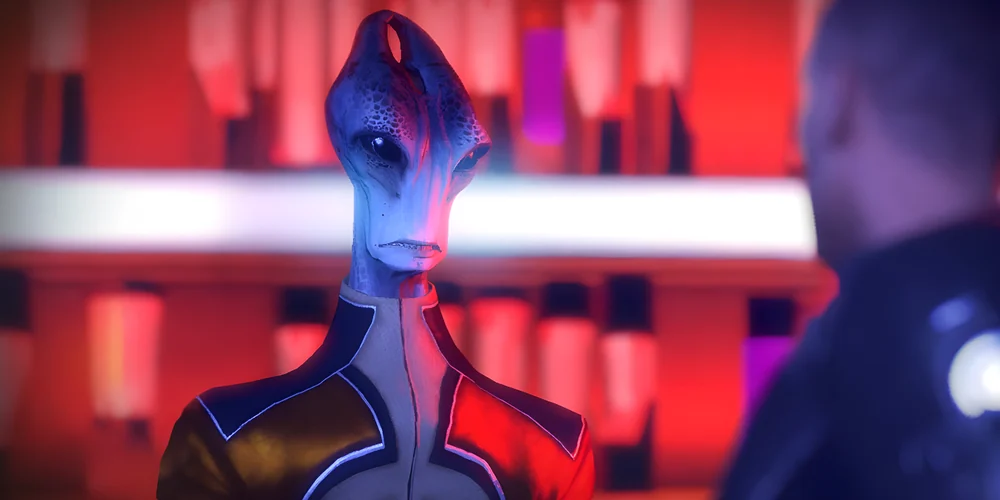
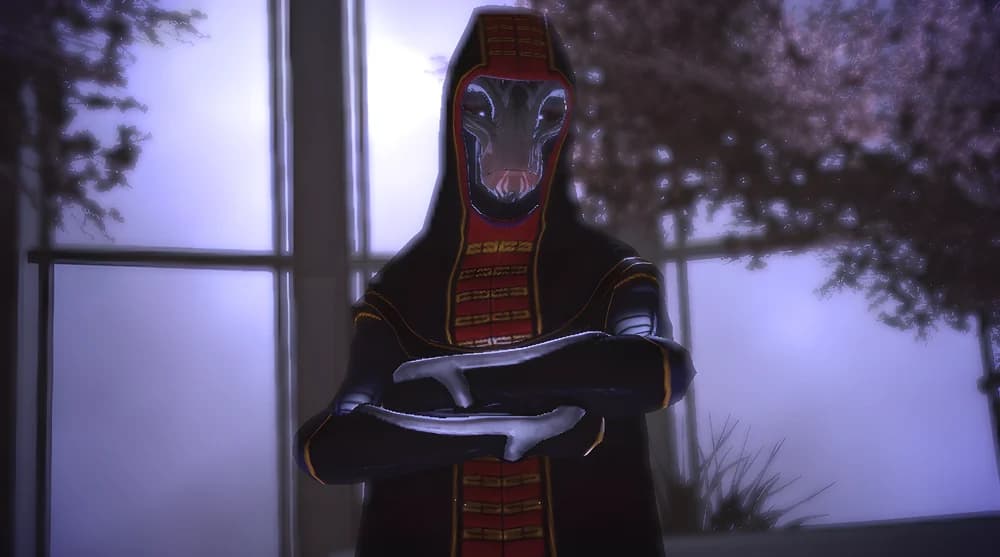
Salarians were tall, elongated bipeds whose skeletons were composed of more cartilage than those of other races. Their long, thin heads bore a pair of horns, and their skin ranged from bright reds and greens to the more common blues and greys; their blood was greenish. They were androgynous, with no major facial difference between males and females, and their large oval eyes had thin membranes in place of eyelids, blinking upward rather than down. Their defining trait was a high-speed metabolism that allowed them to function on a single hour of sleep a day and made them seem restless to other species, but which also limited them to a lifespan of roughly forty human years. (Mass Effect)
The salarians were haplo-diploid egg-layers: unfertilized eggs produced males and fertilized eggs produced females. Social rules permitted only a fraction of each yearly clutch to be fertilized, so about ninety percent of the species was male. They possessed photographic memories and a form of psychological imprinting, tending to defer to those they had known in their youth, a tendency formalized in the solemn hatching ritual overseen by a clan matriarch known as a Dalatrass. (Mass Effect)
History#
The salarians were well established on Sur'Kesh fifty thousand years before the modern age, albeit in a primitive state, and in time progressed to colonizing other worlds. In what became known as the Tecunis Expedition they discovered the Citadel only decades after the asari, making them the second species to do so since the Prothean extinction. They opened relations with the asari at once and became a founding species of the Citadel Council. (Mass Effect; Mass Effect 3)
The salarians played a decisive role in the rise and fall of the krogan. They provided the krogan with advanced technology and a tranquil new homeworld in order to manipulate them into eradicating the rachni for the Council. The easier life and high birth rate that followed allowed the krogan to spread aggressively through Citadel space, and to end the resulting Krogan Rebellions the salarians engineered the genophage, the biological weapon the turians then deployed. Though their military was unremarkable, the salarians came to be seen as the premier intelligence and information-gathering arm of the Council, respected by most though regarded by some as manipulators. (Mass Effect)
Culture#
Salarians prized the newest technology, often favoring high performance over reliability, and treated information-gathering and even spying as a simple matter of course, embracing the dictum that "knowledge is power." Their reproductive method left them with no concept of romantic love or sexual attraction; relationships between the rare males and females resembled human friendship, and fertilization followed months of negotiation between clans for political and dynastic purposes. Salarian names were elaborate, encoding homeworld, nation, city, district, clan, and given name in a single string. The species also included the Lystheni offshoot, unwelcome in Council space for reasons that were never made clear, who could be found among the galaxy's outcasts at Omega. (Mass Effect)
Government and military#
The salarian government, the Salarian Union, was a labyrinthine web of matrilineal bloodlines bound together by political alliance and interbreeding, functioning much like the noble families of medieval Europe, with each region ruled by a single Dalatrass. The rare females were typically cloistered, and the powerful Dalatrasses served as dynasts and political kingpins, while males rose to authority in business, academia, or the military but rarely in politics. (Mass Effect; Mass Effect 3)
In principle the salarian military resembled the Systems Alliance, a small volunteer force focused on maneuver warfare, but what set it apart were its intelligence services and rules of engagement. The salarians believed a war should be won before it began, and in every conflict they struck first and without warning, finding human notions such as declaring war before prosecuting it naive. Their intelligence network was led by the Special Tasks Group, whose effectiveness during the Krogan Rebellions provided the template for the Council's Spectre program. Biotics were considered too valuable to risk in combat and were assigned to the intelligence services, and the salarians cultivated strong alliances, particularly with the turians, to compensate for their small numbers. (Mass Effect)
Frequently asked questions
- Who are the salarians in Mass Effect?
- The salarians were warm-blooded amphibians native to the planet Sur'Kesh and the second species to join the Citadel Council. Possessed of a hyperactive metabolism, they thought, spoke, and moved fast, and were renowned for keen observation, non-linear thinking, invention, and espionage.
- Why do salarians have such short lifespans?
- The salarians' defining trait was a high-speed metabolism that allowed them to function on a single hour of sleep a day, but that same metabolic speed limited them to a lifespan of roughly forty human years, making salarians over the age of forty a rarity.
- How do salarians reproduce?
- The salarians were haplo-diploid egg-layers in which unfertilized eggs produced males and fertilized eggs produced females. Social rules permitted only a fraction of each yearly clutch to be fertilized, so about ninety percent of the species was male, and fertilization followed months of negotiation between clans for political and dynastic purposes.
- What role did the salarians play in the rise and fall of the krogan?
- The salarians uplifted the krogan, providing advanced technology and a tranquil new homeworld to manipulate them into eradicating the rachni for the Council. When the krogan later spread aggressively through Citadel space, the salarians engineered the genophage that the turians deployed to end the Krogan Rebellions.
- What is the Special Tasks Group?
- The Special Tasks Group was the salarians' intelligence network, the elite arm of a service that made them the premier information-gathering power of the Council. Its effectiveness during the Krogan Rebellions provided the template for the Council's Spectre program, reflecting the salarian doctrine that a war should be won before it began.
Gallery
Images via Mass Effect Wiki
Sources
- GameMass Effect, BioWare, 2007
- GameMass Effect 3, BioWare, 2012
Spotted a factual error or a primary source we missed? Email a correction. Every flagged claim gets reviewed.
Followed from this entry
Every Mass Effect Species and Race, With Lifespans
A field guide to every sapient species in Mass Effect, from the Council races and their clients to the krogan, the geth, the Protheans and the peoples of the Heleus Cluster. Each entry gives the homeworld, the lifespan where the games actually state one, and where the species stood with the Citadel.
Krogan
The krogan were a hardy, long-lived reptilian species from the brutal world of Tuchanka, uplifted by the salarians to win the Rachni Wars before their explosive growth made them a threat in turn. The turian-deployed genophage crippled their fertility and left them a scattered, fatalistic people.
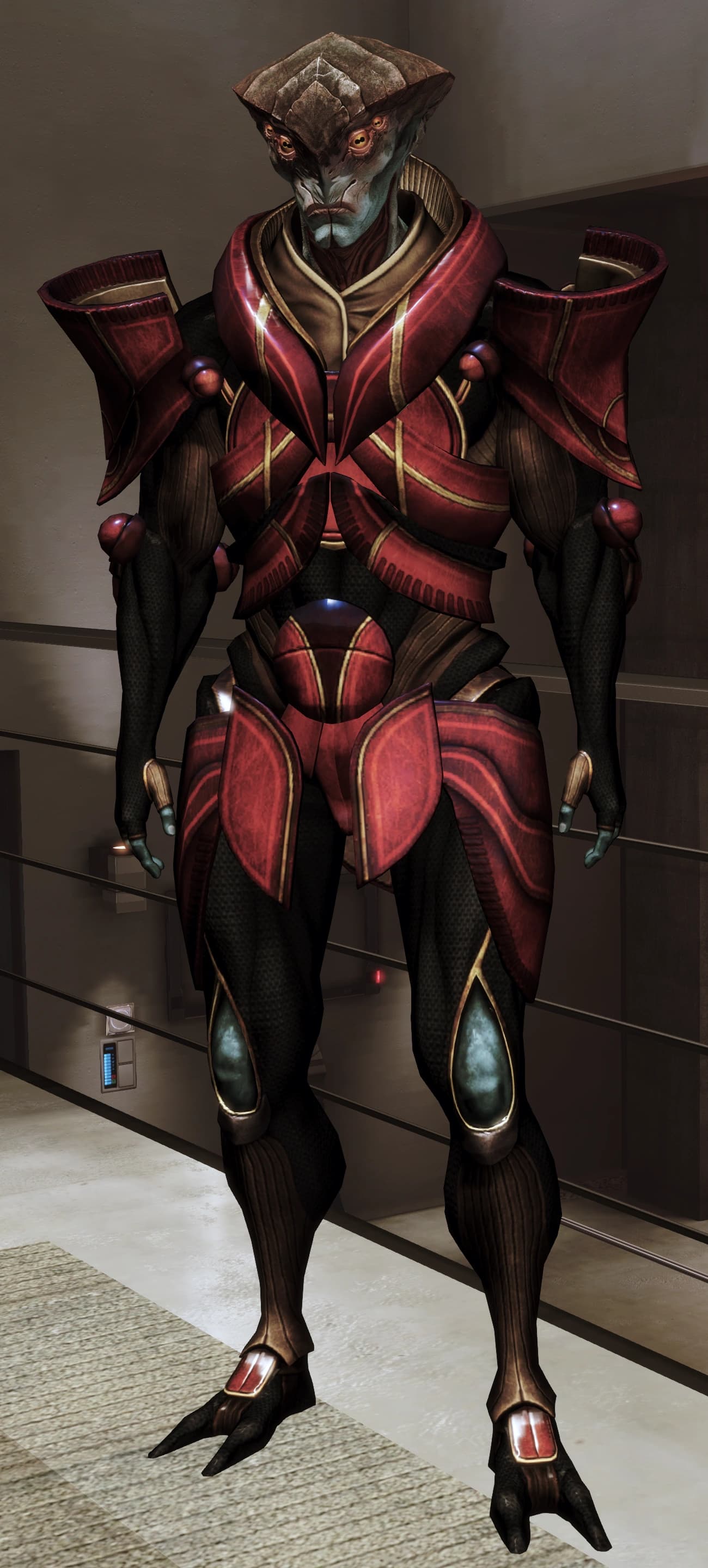
Prothean
The Protheans were an ancient race who ruled a galaxy-wide empire before mysteriously vanishing some fifty thousand years ago, harvested by the Reapers. Long credited with building the Citadel and mass relays, they secretly nurtured younger species, leaving ruins and technology that shaped the modern galaxy.
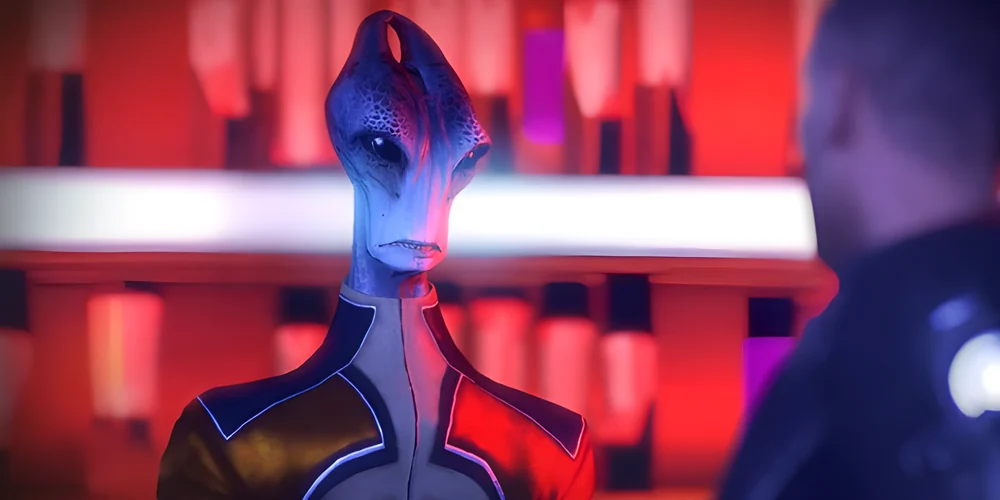
Salarian Union
The Salarian Union was the labyrinthine, matrilineal government of the salarians, the second species to join the Citadel Council. Masters of espionage and bleeding-edge technology, the salarians shaped the krogan, the genophage, and the founding of the Spectres.
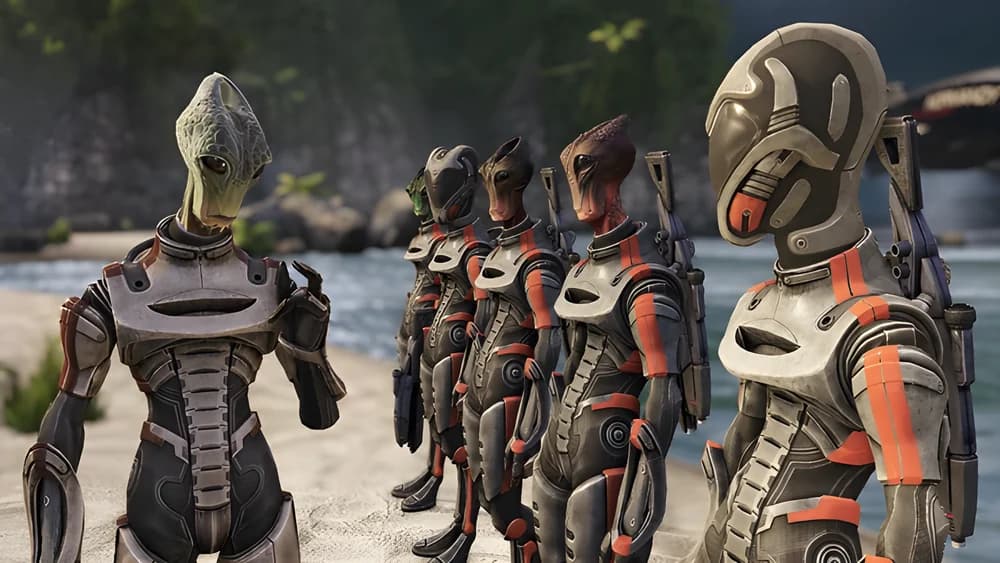
Special Tasks Group
The Special Tasks Group was the salarian espionage organization, deployed by the Citadel Council or the Salarian Union for counterterrorism, infiltration, and assassination. Its wartime effectiveness provided the template for the Council's Spectre program.

Sur'Kesh: The Salarian Homeworld
Sur'Kesh was the lush, jungle-covered homeworld of the salarians, the seat of their breeding rules and government, and the site of a secret STG base raided by Cerberus during the search for a genophage cure.
Mentioned in31 entries
Adrien Victus: the general who became Primarch on a moon of Palaven
Adrien Victus was a turian general fighting on Menae in 2186 when Primarch Fedorian's shuttle was shot down and the succession rules made him Primarch of Palaven. He was out of contact and did not know it yet.
Asari
The asari, native to Thessia, were among the most influential species in the galaxy, renowned for their elegance, biotic talent, and millennium-long lifespans. A mono-gender people able to reproduce with a partner of any species, they founded the Citadel Council and stood at the heart of galactic society for two thousand years.
Biotics
Biotics was the ability of certain lifeforms to generate mass effect fields using element zero nodules grown through their bodies. Channelled through surgical implants and physical gestures, it let a wielder lift, hurl, and crush objects at a distance or raise protective barriers.
Citadel Fleet: the Council's defence force and what one battle cost it
The Citadel Fleet was the Council's main space defence force, mostly turian ships led by the asari dreadnought Destiny Ascension. Sovereign's attack in 2183 caught it scattered across the relays, and Shepard decides who survives.
Citadel Security Services: C-Sec
Citadel Security Services, known as C-Sec, was the volunteer police force responsible for law enforcement aboard the Citadel. Answering to the Citadel Council and led by an Executor, its constables kept order across the station's vast, crowded wards and the space around it.
Doctor Saleon
Doctor Saleon was a salarian geneticist who used the bodies of his own employees as living incubators for cloned organs, growing and harvesting them for the Citadel black market. His crimes drew the attention of C-Sec officer Garrus Vakarian, whose pursuit of the doctor carried over into Commander Shepard's hunt for Saren.
Eclipse
Eclipse was a mercenary corporation founded by the asari commando Jona Sederis, prized for advanced equipment, heavy use of biotics, and a willingness to take any contract a client could afford. It blended security work with a vast smuggling operation and counted among the three rival syndicates that ruled Omega's underworld.
Every Mass Effect Species and Race, With Lifespans
A field guide to every sapient species in Mass Effect, from the Council races and their clients to the krogan, the geth, the Protheans and the peoples of the Heleus Cluster. Each entry gives the homeworld, the lifespan where the games actually state one, and where the species stood with the Citadel.
Every Mass Effect Squadmate and Companion, Game by Game
Every squadmate in Mass Effect, Mass Effect 2, Mass Effect 3 and Andromeda, with their species, how they join, what their story is about and how they can die. Fates that depend on player choices are given as choices, because the series never picks one canon.
Genophage
The genophage was a genetic weapon deployed against the krogan during the Krogan Rebellions, drastically lowering the chance of viable births and consigning the species to a slow decline. Developed by the salarians and unleashed by the turians, it haunted galactic politics for over a thousand years.
Humans
Humans were the newest sentient species of note to enter galactic affairs, and also the most rapidly expanding. After discovering a Prothean data cache on Mars and unlocking the mass relay network, they rose within decades from isolated newcomers to a power whose ambition and military strength unsettled the older Council races.
Ilos
Ilos was a ruined Prothean colony hidden behind the secret Mu Relay, home to the Conduit and the buried truth of the Reaper cycle, reached by Commander Shepard in the race to stop Saren Arterius.
+ 19 more
Get new articles in your inbox
No spam. New lore drops, canon conflicts, and deep dives only when they’re worth reading.
Some links on Lore Fortress are affiliate links. If you buy through them we earn a small commission at no extra cost to you.