Salarian Union
The Matriarchal Intelligence Power of Sur'Kesh
The Salarian Union was the labyrinthine, matrilineal government of the salarians, the second species to join the Citadel Council. Masters of espionage and bleeding-edge technology, the salarians shaped the krogan, the genophage, and the founding of the Spectres.
The Salarian Union was the government of the salarians, a species of warm-blooded amphibians native to Sur'Kesh and the second race to join the Citadel Council. Possessed of a hyperactive metabolism that made them think, talk, and move faster than other species at the cost of a short lifespan, the salarians were renowned for observational skill and non-linear thinking, which manifested as an aptitude for research and espionage. They were widely respected as the premier intelligence-gathering arm of the Council, though some races regarded them as manipulators, and it was generally accepted that the salarians always knew more than they let on. (Mass Effect)
A dynastic government#
The Salarian Union, established no later than the founding of the Council in 500 BCE, was a labyrinthine web of matrilineal bloodlines whose political alliances were forged through carefully negotiated interbreeding. Its structure resembled the noble families of medieval Europe, consisting of nested territories ruled by a single Dalatrass, a matriarchal head of household, with each tier representing greater territory and prestige. Because of the salarian method of reproduction the species was roughly ninety percent male, and the rare females were normally cloistered out of tradition and respect. These powerful Dalatrasses were the dynasts and political kingpins who determined the course of their regions through shrewd negotiation; though salarian males rose to authority in business, academia, and the military, they rarely held political power, with Councilor Valern a notable exception. Salarian loyalty was greatest to the innermost circle of close family and diminished outward through clan circles that could number in the millions. (Mass Effect; Mass Effect 3)
History and galactic role#
Salarians were well established on Sur'Kesh fifty thousand years before the modern age, and in the Tecunis Expedition they discovered the Citadel only a few decades after the asari, making them the second species to do so. They opened diplomatic relations at once and became a founding member of the Citadel Council. In a gesture of trust they exposed the records of one of their intelligence services, the League of One, but this endangered its members; the League responded by slaughtering the entire Union inner cabinet before being hunted down. The salarians also played a decisive role in shaping the krogan, providing them advanced technology and a tranquil homeworld to manipulate them into eradicating the rachni for the Council. That comfortable life and the krogan's high birth rate fueled their explosive expansion and the Krogan Rebellions; to end them, the salarians developed the genophage, the biological weapon that the turians deployed to sterilize the krogan. Salarian wartime intelligence work, led by the Special Tasks Group, later provided the template for the Council to create the Spectres. (Mass Effect; Mass Effect 3)
Culture#
Salarians excelled at invention and preferred the newest technology to anything less, accepting reliability tradeoffs for high performance. They treated information gathering and espionage as a matter of course, embracing the dictum that knowledge is power and regarding it as no dishonor; Alliance counterintelligence struggled to stop salarian agents, who had directed Council espionage for two thousand years. Owing to their reproductive biology, salarians had little concept of romantic love, with sexuality reserved strictly for reproduction and fertilization decided through months of dynastic negotiation between clans. Salarian names were highly complex, encoding homeworld, nation, city, district, clan, and given name. The species also included the Lystheni offshoot, unwelcome in Council space and found among the galactic refuse at Omega. (Mass Effect; Mass Effect: Revelation)
Economy and military#
The salarian economy was the smallest of the three Council races, yet still far larger than that of the Systems Alliance, and was built on bleeding-edge technology in which salarian industries led most fields, compensating for limited quantity with decisive quality. Their military was likewise small and volunteer-based, similar in principle to the Alliance, but distinguished by its intelligence services and ruthless rules of engagement: the salarians believed a war should be won before it began. In every war they fought they struck first and without warning, executing devastating preemptive strikes and never issuing a formal declaration, finding human notions of "do not fire until fired upon" naive. Their field intelligence was led by the Special Tasks Group, responsible for monitoring developing situations and acting without the constraints of ordinary law. Biotics, considered too valuable for combat, were assigned to the intelligence services. Knowing themselves small fish in a dangerous galaxy, the salarians cultivated a strong protective alliance with the Turian Hierarchy. Their navy possessed sixteen dreadnoughts, fewer than the Treaty of Farixen allowed owing to the increasing complexity of their designs, and after covertly studying Normandy stealth technology they achieved stealth-capable dreadnoughts. (Mass Effect; Mass Effect 3)
The Reaper War#
When the Reapers invaded in 2186, the position of the Salarian Union reflected its long history of pragmatic calculation, particularly around the krogan question. An STG facility on Sur'Kesh held the krogan females needed to cure the genophage, and Cerberus forces attacked the base while a survivor was being extracted. Dalatrass Linron, who spoke for the Union at the war summit, pressed to keep the genophage in place and later offered salarian support in exchange for sabotaging the cure, and earlier STG sabotage of the Shroud on Tuchanka threatened the cure's dispersal. Depending on the decisions made during the war, various salarian elements joined the Allied effort against the Reapers, their characteristic intelligence work and technology lending weight to the broader coalition. (Mass Effect 3)
Frequently asked questions
- What is the Salarian Union?
- The Salarian Union was the government of the salarians, a species of warm-blooded amphibians native to Sur'Kesh and the second race to join the Citadel Council. The salarians were renowned for observational skill and non-linear thinking, with an aptitude for research and espionage.
- How is the Salarian Union governed?
- The Union was a labyrinthine web of matrilineal bloodlines whose political alliances were forged through carefully negotiated interbreeding, structured like the noble families of medieval Europe. Each region was ruled by a matriarchal Dalatrass, and the rare females were the political kingpins while males rarely held political power.
- Why did the salarians uplift the krogan?
- The salarians provided the krogan advanced technology and a tranquil homeworld to manipulate them into eradicating the rachni for the Council. That comfortable life and the krogan's high birth rate later fueled the Krogan Rebellions, which the salarians ended by developing the genophage that the turians deployed.
- What is the salarian military like?
- The salarian military was small and volunteer-based but distinguished by its intelligence services and ruthless rules of engagement, believing a war should be won before it began. In every war they fought they struck first and without warning, and their field intelligence was led by the Special Tasks Group.
- What was the Salarian Union's position in the Reaper War?
- When the Reapers invaded in 2186, the salarian leadership pressed to keep the genophage in place as the price of their support, and an STG facility on Sur'Kesh held the krogan females needed to cure it. Depending on the decisions made during the war, various salarian elements joined the Allied effort against the Reapers.
Sources
- GameMass Effect, BioWare, 2007
- GameMass Effect 3, BioWare, 2012
- BookMass Effect: Revelation, Drew Karpyshyn, 2007
Spotted a factual error or a primary source we missed? Email a correction. Every flagged claim gets reviewed.
Followed from this entry
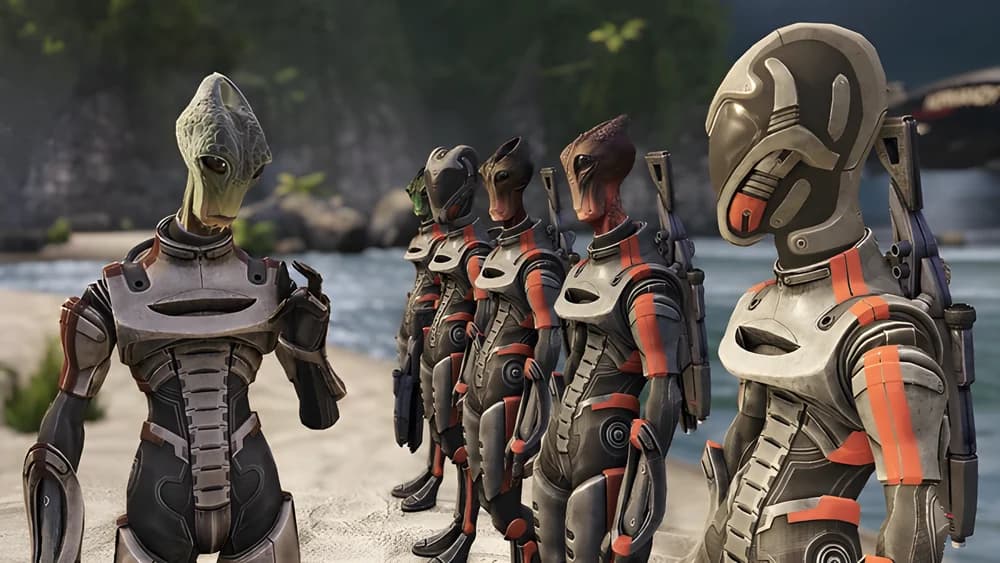
Special Tasks Group
The Special Tasks Group was the salarian espionage organization, deployed by the Citadel Council or the Salarian Union for counterterrorism, infiltration, and assassination. Its wartime effectiveness provided the template for the Council's Spectre program.

Cerberus
Cerberus was a clandestine, human-supremacist paramilitary organization led by the Illusive Man, willing to use any means to advance humanity's place in the galaxy. Branded a terrorist group by both the Systems Alliance and the Citadel Council, it was ultimately destroyed during the Reaper War.

Citadel Council
The Citadel Council was the executive committee that governed Citadel space from the Citadel Tower, composed of representatives of the asari, salarians, and turians, and was the ultimate authority over Council law, interspecies disputes, and the covert Spectre agents.
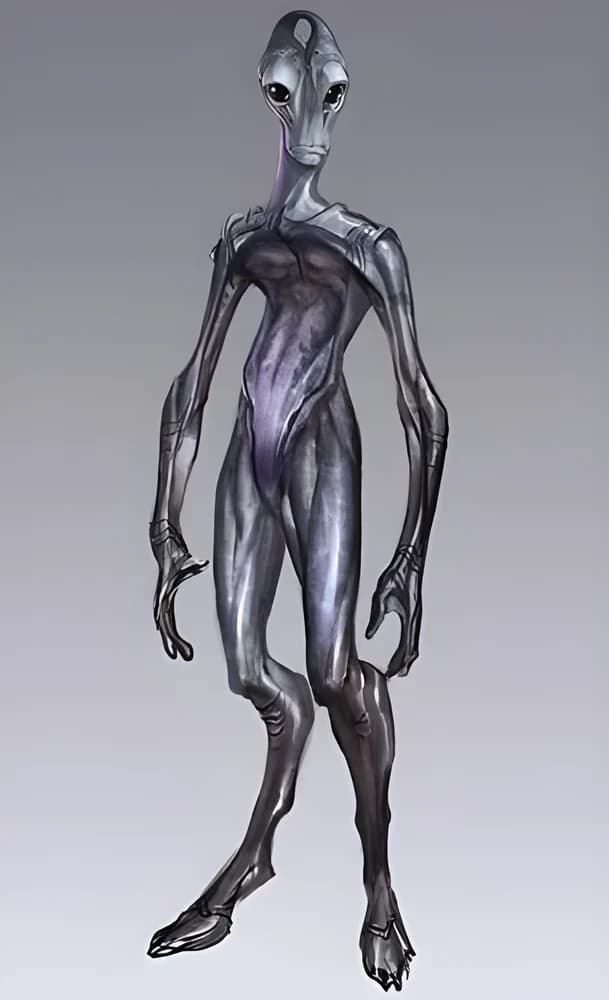
Salarian
The salarians of Sur'Kesh were warm-blooded amphibians with a hyperactive metabolism, fast-thinking and short-lived, renowned for invention, espionage, and non-linear reasoning. The second species to join the Citadel, they uplifted the krogan and later engineered the genophage.

Spectres
The Spectres were an elite corps of agents granted extraordinary authority by the Citadel Council, charged with preserving galactic stability by any means necessary. Officially above the law and answerable to no one but the Council, they were hand-picked for exceptional ability from across the species of the galaxy.

Sur'Kesh: The Salarian Homeworld
Sur'Kesh was the lush, jungle-covered homeworld of the salarians, the seat of their breeding rules and government, and the site of a secret STG base raided by Cerberus during the search for a genophage cure.
Mentioned in6 entries
Mass Effect Story Explained: the Trilogy and Andromeda
The whole Mass Effect story in order, one game at a time. Shepard stops Saren, beats the Collectors and leads the galaxy against the Reapers, then Andromeda starts again 600 years later in another galaxy.
Mass Effect Timeline: every major event from the Leviathans to Andromeda
A dated history of the Mass Effect universe, from the Leviathans and the first Reaper harvests through the fall of the Protheans, the Council's wars, humanity's arrival and the Reaper War of 2186. It ends with the Andromeda Initiative reaching the Heleus Cluster in 2819, and runs oldest first in eras.
Salarian
The salarians of Sur'Kesh were warm-blooded amphibians with a hyperactive metabolism, fast-thinking and short-lived, renowned for invention, espionage, and non-linear reasoning. The second species to join the Citadel, they uplifted the krogan and later engineered the genophage.
Special Tasks Group
The Special Tasks Group was the salarian espionage organization, deployed by the Citadel Council or the Salarian Union for counterterrorism, infiltration, and assassination. Its wartime effectiveness provided the template for the Council's Spectre program.
Systems Alliance
The Systems Alliance was the supranational government of Earth and its colonies, acting as humanity's military, exploratory, and economic arm in Citadel space. Within decades of its founding it won humanity a Council seat and led the galaxy's defense during the Reaper War.
Treaty of Farixen: the dreadnought ratio that held Citadel space
The Treaty of Farixen fixed how many dreadnoughts each Citadel power was permitted to build, placing the turian navy at the top of a five to three to one pyramid. Signing it was the price of an embassy on the Citadel, and the species who never signed, or who stopped caring, are the ones who reshaped the balance.
Get new articles in your inbox
No spam. New lore drops, canon conflicts, and deep dives only when they’re worth reading.
Some links on Lore Fortress are affiliate links. If you buy through them we earn a small commission at no extra cost to you.