Treaty of Farixen: the dreadnought ratio that held Citadel space
The Treaty of Farixen fixed how many dreadnoughts each Citadel power was permitted to build, placing the turian navy at the top of a five to three to one pyramid. Signing it was the price of an embassy on the Citadel, and the species who never signed, or who stopped caring, are the ones who reshaped the balance.
The Treaty of Farixen was the arms limitation agreement that governed capital ship construction among the major species of Citadel space. Signed after the Farixen Naval Conference, it fixed a ratio of dreadnought construction between the Citadel Council races and their associates, seating the Turian Hierarchy at the top of the pyramid on the strength of its peacekeeping role. The Asari Republics and the Salarian Union took the second tier, associate members like the volus and the hanar the third, and species outside the Citadel order, from the Batarian Hegemony to the geth, were bound by nothing at all. (Mass Effect)
The weapon the treaty was written for#
A dreadnought was a kilometre class capital ship built around a single idea, which was the length of its main gun. The hulls ran from eight hundred metres to a full kilometre, and the mass accelerator ran nearly the length of the ship, because barrel length was what determined how hard the slug hit. An eight hundred metre accelerator could throw a twenty kilogram slug at 4,025 kilometres per second, roughly 1.3 percent of light speed, once every two seconds. Each of those slugs carried the kinetic energy of about thirty eight kilotons of TNT, some two and a half times the yield of the fission weapon that destroyed Hiroshima. (Mass Effect)
Ships of that weight were treated as a strategic resource rather than a patrol asset. They were hoarded, committed only to the most vital engagements, and screened in battle by cruiser squadrons guarding their flanks against any enemy manoeuvring for a shot at their vulnerable broadsides. They could not be landed safely on a planet and had to discharge their drive cores into a planetary magnetic field from orbit. It was this destructive potential, plainly stated, that drove the Council races to the negotiating table at Farixen in the first place. (Mass Effect)
The Farixen Naval Conference#
At the Conference the Council races agreed to fix the proportions of dreadnought construction between themselves rather than trust to restraint. The pyramid they drew put the turian navy at the summit. The turians carried the peacekeeping burden of Citadel space and supplied the greater number of hulls in the Citadel Fleet, the mixed turian, salarian and asari force that patrolled the relays and guarded the station itself, so the Hierarchy was allowed the largest dreadnought establishment of any signatory. (Mass Effect)
Below the turians sat the other Council races, the asari and the salarians. Below them again sat the associate races, the client and minor powers with embassies on the Presidium, who were permitted the fewest hulls of all. The ratio set at the Conference was five to three to one. For every five dreadnoughts the turians laid down, the asari and salarians were each permitted three, and an associate species one. (Mass Effect)
The Systems Alliance joined the second tier in 2183, after the Conference and after humanity's elevation to the Council, an admission generally read as entitling humanity to three hulls for every five turian ones. (Mass Effect; Mass Effect 2)
What the fleets actually looked like#
The paper ratios and the real order of battle were never quite the same thing. As of 2183 the turians held thirty seven dreadnoughts, the asari twenty one, the salarians sixteen, and the Alliance six with a seventh under construction. By 2185 the count had moved to thirty nine turian, twenty asari, sixteen salarian and eight human, and by 2186 humanity had completed a ninth and the volus had launched a single dreadnought of their own. (Mass Effect; Mass Effect 2; Mass Effect 3)
The salarian figure was the interesting one, because sixteen was considerably fewer than the Union was entitled to build. The shortfall came not from restraint but from engineering. Salarian designs had grown steadily more complex, and complexity slowed the yards. The elcor took the opposite approach and largely ignored the capital ship race, keeping several cruisers and carriers whose real value lay in troop transport rather than in the battle line. (Mass Effect 3)
The price of an embassy#
Farixen was never only a naval document. Signing it was a requirement for any species that wished to open an embassy on the Citadel and take up associate membership of the Council, which made the Treaty the threshold every rising power had to cross. An embassy on the Presidium marked a species as having made a genuine contribution to Citadel space, and the volus were the first to hold one, with the human Systems Alliance the most recent. (Mass Effect)
That threshold could be revoked. The krogan lost their embassy during the Krogan Rebellions. The quarians were asked to leave after the geth achieved sentience and rebelled. The batarians closed their own in protest at what the Hegemony regarded as the Council's preferential treatment of humans. Each closure quietly removed a signature from the Treaty's political foundation, and one of those removals came back to matter. (Mass Effect)
The powers outside the pact#
The Treaty bound its signatories and nobody else. The batarians, as a non-Citadel race, were free of it entirely, and while their fleet was known to operate at least one dreadnought the true number was never established. The geth were free of it too, and made full use of the freedom. Their dreadnoughts approached the turian total in number, and the one guarding Rannoch in 2186 was thirty percent larger than an Alliance dreadnought, mounting more expensive and energy hungry ultraviolet anti-fighter lasers in place of the cheaper infrared systems most organic navies used. (Mass Effect; Mass Effect 3)
A second gap sat inside the text itself. Carriers were vessels of dreadnought size and dreadnought cost, differing mainly in purpose, since they were built to move fighters, vehicles and troops rather than to trade broadsides. The Treaty said nothing about them, so any race could build as many as it could afford. Humanity, newly graduated from surface warfare to space warfare, was the first to treat carrier borne fighters as a fleet's main armament, and did so without breaching a single clause. (Mass Effect)
Erosion#
The agreement began to come apart in the 2180s. Ahead of the Reaper War, the Migrant Fleet fought a brief action against the Blue Suns on Korlus and came away with the salvage it needed to refit for the campaign to retake Rannoch. The quarians armed every ship in the Civilian Fleet, the liveships included, with Thanix cannons, which converted them into dreadnoughts in all but armour. The Citadel condemned the refit. Admiral Han'Gerrel vas Neema answered that the Council had closed the quarian embassy long ago and that the Fleet was therefore bound by nothing. Admiral Shala'Raan vas Tonbay offered the narrower defence that liveships were built to grow food rather than to fight, and allowed that if it came to it she would apologise formally once the war was over. (Alliance News Network; Mass Effect 3)
The Battle of the Citadel left a second and larger crack, one whose shape depended on how the battle ended. Should the Council have been left to die aboard the Destiny Ascension while Commander Shepard held the relief fleet back, news traffic across Citadel space and the Terminus Systems carried the same report: the turians no longer considered themselves bound by Farixen and were accelerating their shipbuilding, citing the need for greater security. In that outcome the ratio was treated by its principal beneficiary as a document it could set aside, and the Treaty of Farixen entered the Reaper War as a convention rather than a constraint. (Mass Effect 2)
Sources
- GameMass Effect, BioWare, 2007
- GameMass Effect 2, BioWare, 2010
- GameMass Effect 3, BioWare, 2012
- WebAlliance News Network, In-universe news interviews by Diana Allers, published on the BioWare blog, 2012
Spotted a factual error or a primary source we missed? Email a correction. Every flagged claim gets reviewed.
Followed from this entry
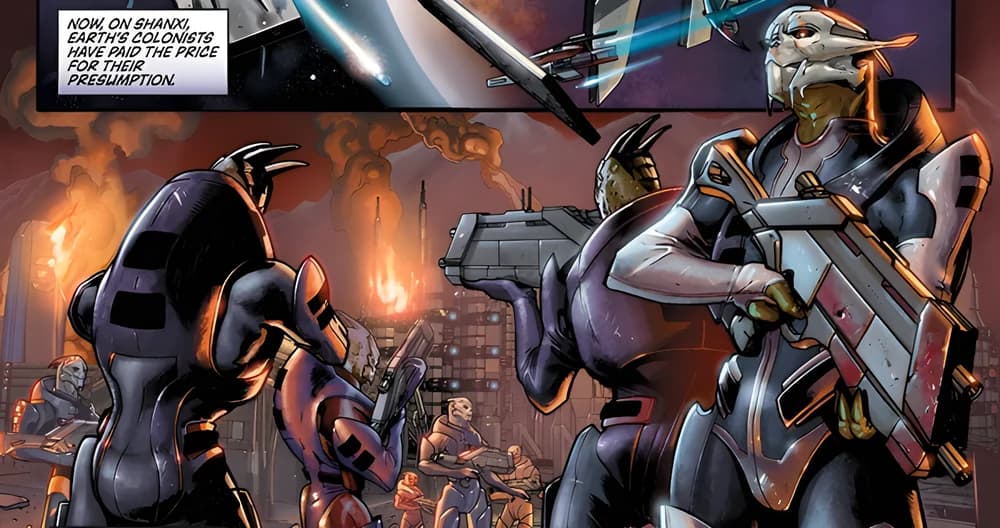
Battle of the Citadel
The Battle of the Citadel was the climactic engagement of 2183 in which the rogue Spectre Saren Arterius, guided by the Reaper Sovereign, attempted to seize the Citadel and open a path for the Reaper invasion. Commander Shepard and the Citadel and Alliance fleets stopped the attack at great cost, and its outcome shaped galactic politics for years afterward.

Krogan Rebellions
The Krogan Rebellions were a decades-long war between the krogan and the Citadel Council that began around 700 CE, sparked by unchecked krogan expansion onto worlds claimed by other races. The conflict ended with the deployment of the salarian-engineered genophage, the surrender of the krogan, and a Council seat awarded to the turians.
Reaper War
The Reaper War was the galaxy-wide conflict that began in 2186 when the Reapers emerged from dark space to harvest all advanced organic life. It saw the fall of Earth, Palaven, and Thessia, the forging of unlikely alliances, and a final battle over Earth that decided the fate of every species.

Asari Republics
The Asari Republics were the loose, consensus-driven government of the asari, the most influential species in the galaxy. As the first contemporary race to settle the Citadel, the asari were instrumental in founding the Citadel Council and remained at the heart of galactic society.
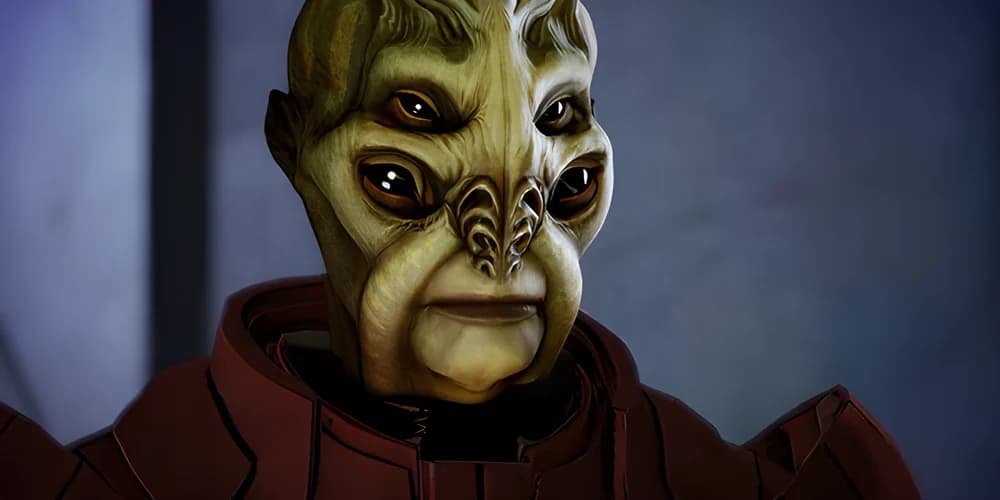
Batarian Hegemony
The Batarian Hegemony was the oppressive, isolationist government of the batarians, native to Khar'shan. A rogue state hostile to the Systems Alliance, it sponsored deniable piracy and slaving across the Terminus Systems before the Reapers overran it.
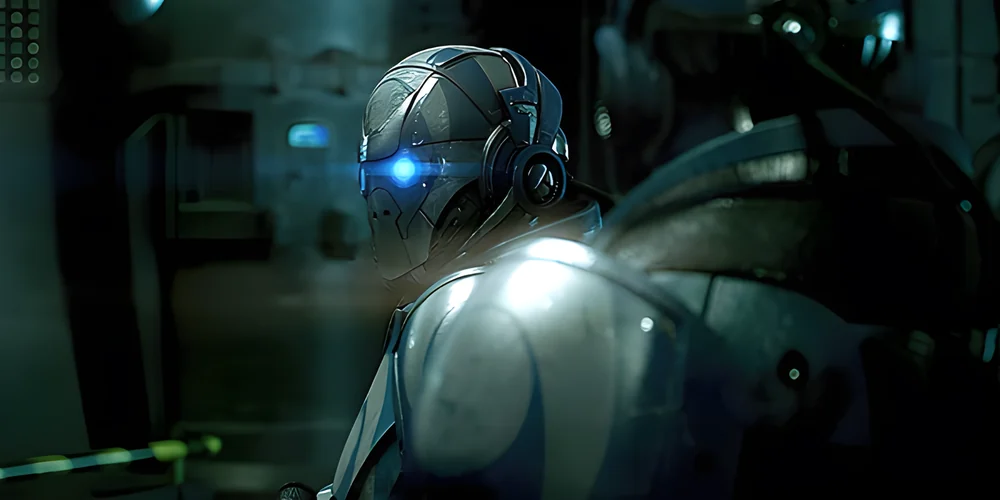
Blue Suns
The Blue Suns were one of the galaxy's largest mercenary organizations, a private security outfit turned criminal empire operating out of the Skyllian Verge and the Terminus Systems. Founded by Zaeed Massani and Vido Santiago, they grew into a fearsome force spanning dozens of systems before crossing paths with Commander Shepard.
Mentioned in8 entries
Batarian
The batarians were a four-eyed species native to Khar'shan whose insular government, the Batarian Hegemony, withdrew from the galactic community and became infamous for slavery, piracy, and hostility toward humanity before the Reapers overran their space.
Batarian Hegemony
The Batarian Hegemony was the oppressive, isolationist government of the batarians, native to Khar'shan. A rogue state hostile to the Systems Alliance, it sponsored deniable piracy and slaving across the Terminus Systems before the Reapers overran it.
Mass Effect Timeline: every major event from the Leviathans to Andromeda
A dated history of the Mass Effect universe, from the Leviathans and the first Reaper harvests through the fall of the Protheans, the Council's wars, humanity's arrival and the Reaper War of 2186. It ends with the Andromeda Initiative reaching the Heleus Cluster in 2819, and runs oldest first in eras.
Salarian Union
The Salarian Union was the labyrinthine, matrilineal government of the salarians, the second species to join the Citadel Council. Masters of espionage and bleeding-edge technology, the salarians shaped the krogan, the genophage, and the founding of the Spectres.
Starships: the warships and vessels of galactic civilization
Starships were spacecraft capable of crossing the void between star systems on thrusters and faster-than-light drives. The navies of the galaxy sorted their warships into four weights, from nimble scouting frigates to kilometer-long dreadnoughts, with the count of dreadnoughts any fleet could build fixed by the Treaty of Farixen.
Systems Alliance
The Systems Alliance was the supranational government of Earth and its colonies, acting as humanity's military, exploratory, and economic arm in Citadel space. Within decades of its founding it won humanity a Council seat and led the galaxy's defense during the Reaper War.
Turian
The turians of Palaven were a militaristic, disciplined species who earned a Citadel Council seat by defeating the krogan in the Krogan Rebellions and unleashing the genophage. Famed for their public service ethic and their contributions to the Citadel Fleet, they filled the galaxy's peacekeeping role for centuries.
Turian Hierarchy
The Turian Hierarchy was the government of the turian people, a regimented meritocracy built around military and public service. It earned a Citadel Council seat for its role in the Krogan Rebellions and contributed the largest share of the Citadel Fleet.
Get new articles in your inbox
No spam. New lore drops, canon conflicts, and deep dives only when they’re worth reading.
Some links on Lore Fortress are affiliate links. If you buy through them we earn a small commission at no extra cost to you.