Turian
The Soldiers of Palaven
The turians of Palaven were a militaristic, disciplined species who earned a Citadel Council seat by defeating the krogan in the Krogan Rebellions and unleashing the genophage. Famed for their public service ethic and their contributions to the Citadel Fleet, they filled the galaxy's peacekeeping role for centuries.
Known for their militaristic and disciplined culture, the turians were the third race to join the Citadel Council, gaining their seat after defeating the krogan on the Council's behalf during the Krogan Rebellions. To end that war they deployed a salarian-created biological weapon called the genophage, then filled the peacekeeping niche the krogan had once occupied. Originally from the planet Palaven, the turians were best known for their military role and their contributions of soldiers and starships to the Citadel Fleet, and they were respected for the public service ethic that led them to first propose the creation of C-Sec. (Mass Effect)
Biology#
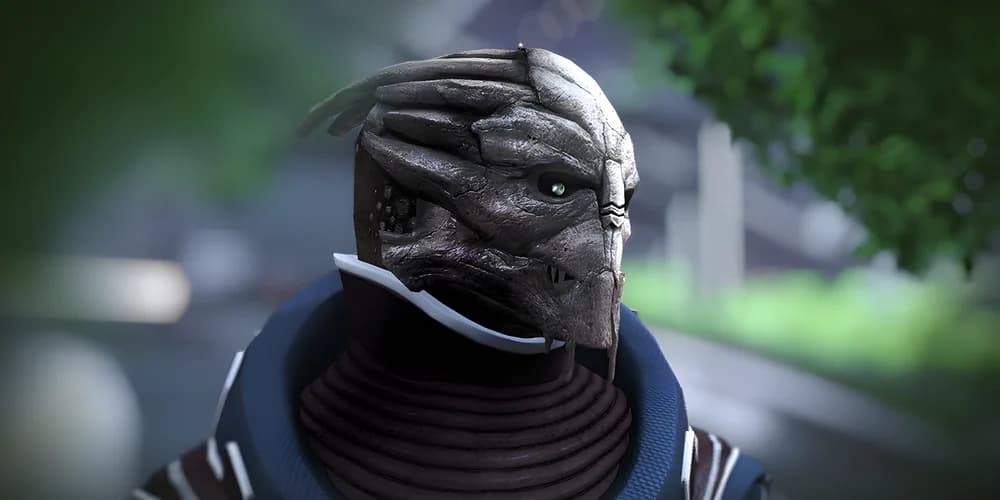
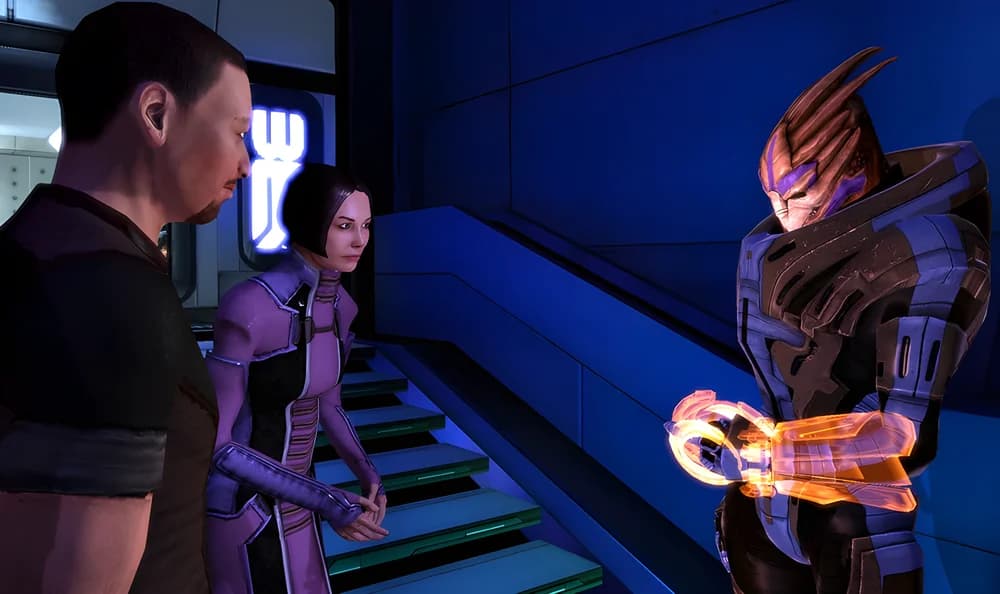
Turians had two thick fingers and an opposable thumb tipped with talons on each hand, and a set of mandibles around the mouth. Their most distinguishing feature was a metallic carapace, evolved as a defense against the heavy solar radiation that penetrated Palaven's weak magnetic field. Females lacked the sweptback cranial crests of the males and had larger, cat-like eyes. Turian blood was a dark blue. (Mass Effect; Mass Effect 2; Mass Effect 3: Omega; Mass Effect: Andromeda)
Although life on Palaven was carbon-based and oxygen-breathing, it was built on dextro-amino acids. This placed the turians in a distinct minority, sharing the trait only with the quarians; the food of levo-amino-acid species such as humans, asari, or salarians passed through turian systems without nourishment at best, and at worst triggered a potentially fatal allergic reaction. (Mass Effect)
The Unification War#
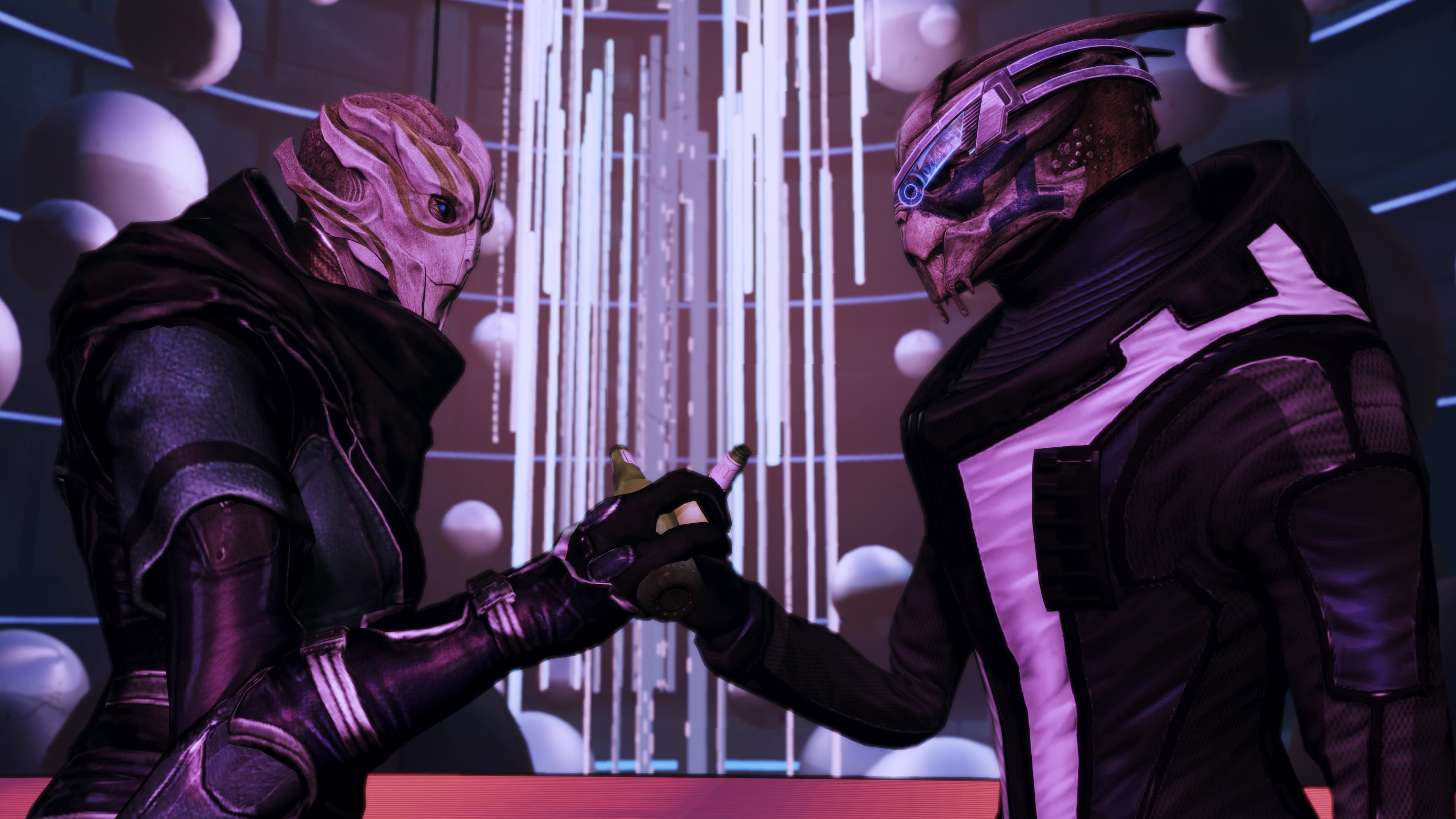
Turian civilization spanned fifteen thousand years. While the asari were forming the Council with the salarians, the turians were embroiled in a civil war next door. The Unification War began with hostilities among the colonies furthest from Palaven, which had distanced themselves from the central government, the Hierarchy. Colonists began wearing emblems and facial markings to distinguish their colonies from one another, and open conflict became common. The Hierarchy maintained strict neutrality until only a handful of factions remained, then intervened to force a renewal of allegiance. To this day most turians still wore the facial markings of their home colonies. (Mass Effect)
The Krogan Rebellions#
In the midst of the Krogan Rebellions, the Citadel Council made first contact with the turians and asked them to bring their war machine against the krogan. The initial turian offensive routed many krogan bands but provoked a massive counterattack: three turian worlds were rendered uninhabitable by asteroids hurled with fusion torches, and the bloodiest battle in turian history was fought at Digeris. Rather than be cowed, the turians fought with greater resolve, and eventually implemented the salarian-developed genophage, subduing the majority of the krogan by 800 CE. By 900 CE the turians were granted full membership on the Citadel Council in gratitude, and their military took up the peacekeeping role the decimated krogan had left behind. (Mass Effect; Mass Effect 3)
The Relay 314 Incident#
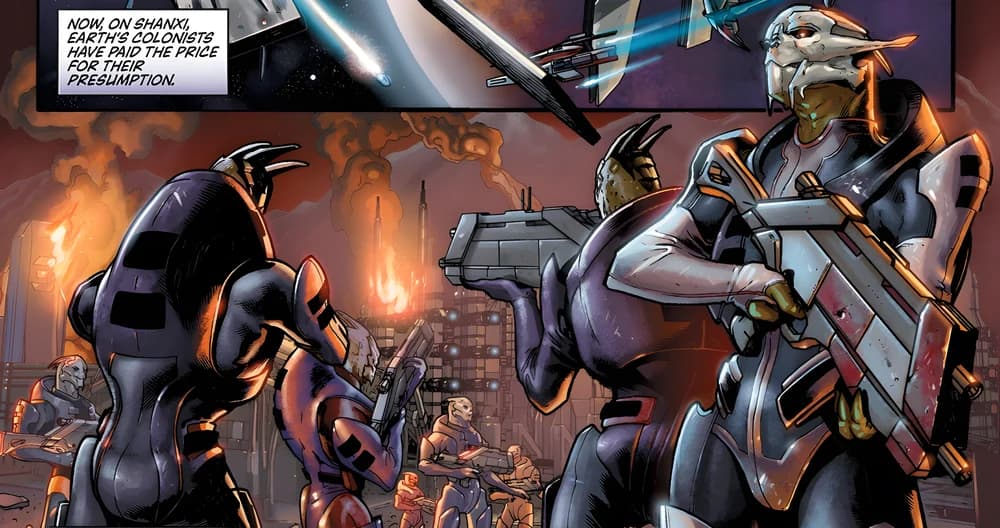
In 2157 CE, following Council laws prohibiting the activation of uncharted mass relays, a turian force opened fire on explorers from an unknown race: humanity. The Systems Alliance retaliated, and the conflict escalated into war. A turian fleet broke through Alliance lines and besieged the human colony of Shanxi, occupying it until the Alliance's Second Fleet evicted them a month later. Before a protracted war could develop, the Citadel Council intervened, revealing the galactic community to humanity and negotiating peace. The turians were ordered to pay heavy reparations for instigating what became known as the Relay 314 Incident, and mistrust between the two races lingered for years. (Mass Effect)
The Reaper War#
During the Reaper invasion of 2186, the turian colony of Taetrus was among the first worlds attacked. The Reapers met heavy resistance at Palaven and its moon Menae, where much of the turian fleet remained operable and a heavily armed citizenry supported the troops, but casualties mounted rapidly. Relief came from an unlikely ally: the krogan, who joined the war once the genophage was addressed. In a coordinated counterattack, krogan reinforcements smuggled warp bombs and fission weapons aboard Reaper ships and detonated them across the globe, retaking large swathes of territory in what became known as the Miracle at Palaven. Recognizing the larger situation, Primarch Victus ordered the surviving warships to withdraw and join the Allied assault on Earth, where turian forces fought in both the space and ground battles while Commander Shepard reached the Citadel to trigger the Crucible. (Mass Effect 3)
Culture and the Hierarchy#
Turians were defined by a strong sense of public service; every citizen from age fifteen to thirty served the state in some capacity, and it was rare to find one who put personal needs ahead of the group. Their society was highly regimented, and they were taught a powerful sense of personal accountability, the "turian honor" other races found hard to credit, in which the worst sin was to lie about one's own actions. When conflict became inevitable they understood only "total war," using overwhelming numbers to so completely devastate an enemy's military that the threat could never recur. (Mass Effect)
The turian government, the Turian Hierarchy, was a meritocracy organized into twenty-seven citizenship tiers, from civilians at the bottom to the Primarchs who each ruled a colonization cluster. Promotion and occasional demotion were based on the assessment of one's superiors and peers, and the stigma of demotion fell on those who had promoted an individual too soon rather than on the individual. Turians enjoyed broad personal freedoms so long as they completed their duties, and they channeled their rare biotics into specialist teams called Cabals. Their navy, divided into at least thirty-two fleets and allotted more dreadnoughts than any other race under the Treaty of Farixen, served as the single largest component of the Citadel Fleet. (Mass Effect; Mass Effect 2; Mass Effect 3: Omega)
Frequently asked questions
- Who are the turians in Mass Effect?
- The turians were a militaristic and disciplined species from the planet Palaven, best known for their military role and their contributions of soldiers and starships to the Citadel Fleet. They were the third race to join the Citadel Council and were respected for the public service ethic that led them to first propose the creation of C-Sec.
- Why do turians have a metallic carapace?
- The turians' most distinguishing feature was a metallic carapace, which evolved as a defense against the heavy solar radiation that penetrated Palaven's weak magnetic field.
- How did the turians gain their Citadel Council seat?
- The Citadel Council made first contact with the turians during the Krogan Rebellions and asked them to bring their war machine against the krogan. After deploying the salarian-developed genophage and subduing the majority of the krogan by 800 CE, the turians were granted full membership on the Council in gratitude around 900 CE.
- What was the Relay 314 Incident?
- In 2157 CE, a turian force opened fire on explorers from an unknown race, humanity, for activating an uncharted mass relay in violation of Council law. The Systems Alliance retaliated and the conflict escalated into a brief war, after which the Council intervened, negotiated peace, and ordered the turians to pay heavy reparations for instigating it.
- What is the Turian Hierarchy?
- The Turian Hierarchy was the turian government, a meritocracy organized into twenty-seven citizenship tiers, from civilians at the bottom to the Primarchs who each ruled a colonization cluster. Promotion and occasional demotion were based on the assessment of one's superiors and peers, and the stigma of demotion fell on those who had promoted an individual too soon.
Gallery
Images via Mass Effect Wiki
Sources
- GameMass Effect, BioWare, 2007
- GameMass Effect 2, BioWare, 2010
- GameMass Effect 3, BioWare, 2012
- GameMass Effect 3: Omega, BioWare, 2012
- GameMass Effect: Andromeda, BioWare, 2017
Spotted a factual error or a primary source we missed? Email a correction. Every flagged claim gets reviewed.
Followed from this entry
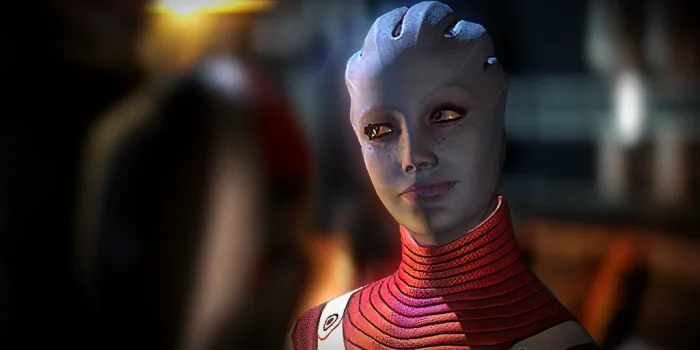
Every Mass Effect Species and Race, With Lifespans
A field guide to every sapient species in Mass Effect, from the Council races and their clients to the krogan, the geth, the Protheans and the peoples of the Heleus Cluster. Each entry gives the homeworld, the lifespan where the games actually state one, and where the species stood with the Citadel.
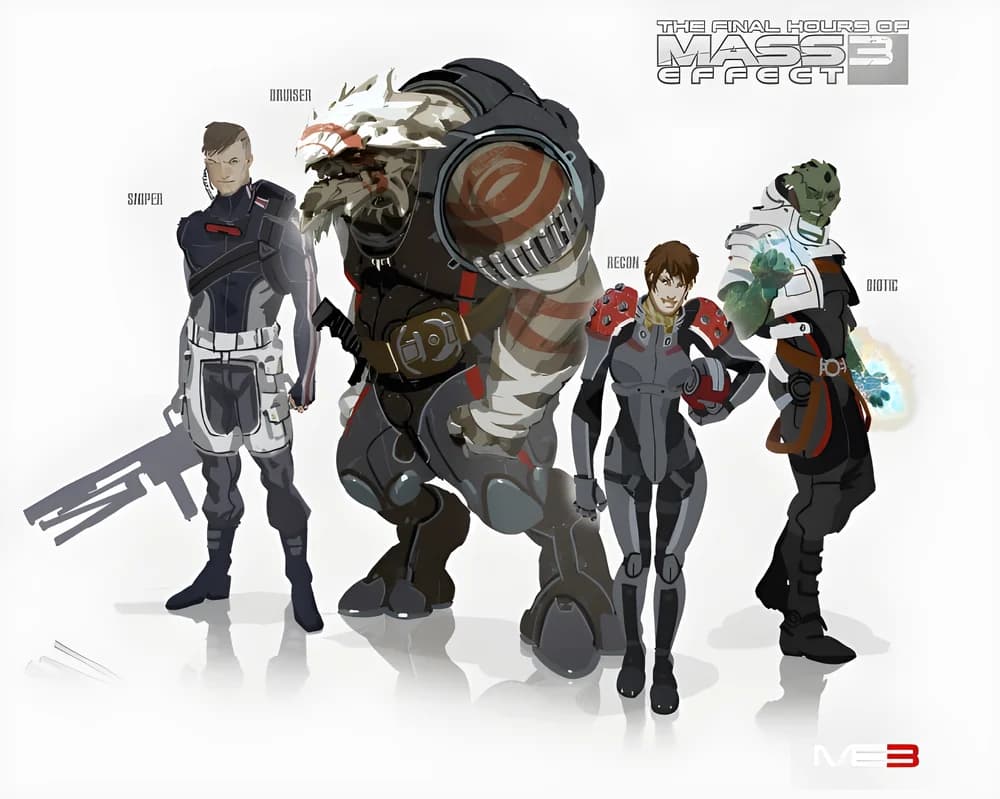
Krogan
The krogan were a hardy, long-lived reptilian species from the brutal world of Tuchanka, uplifted by the salarians to win the Rachni Wars before their explosive growth made them a threat in turn. The turian-deployed genophage crippled their fertility and left them a scattered, fatalistic people.
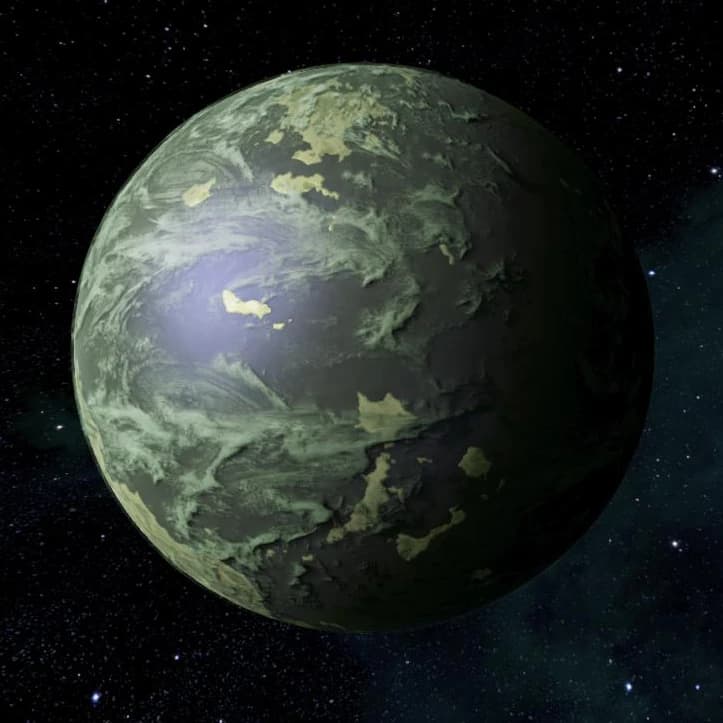
Palaven
Palaven was the homeworld of the turians, a silver-hued world whose martial culture shaped everything from its architecture to its politics. Long unconquered, it endured its first invasion when the Reapers brought overwhelming force against it in the war of 2186.
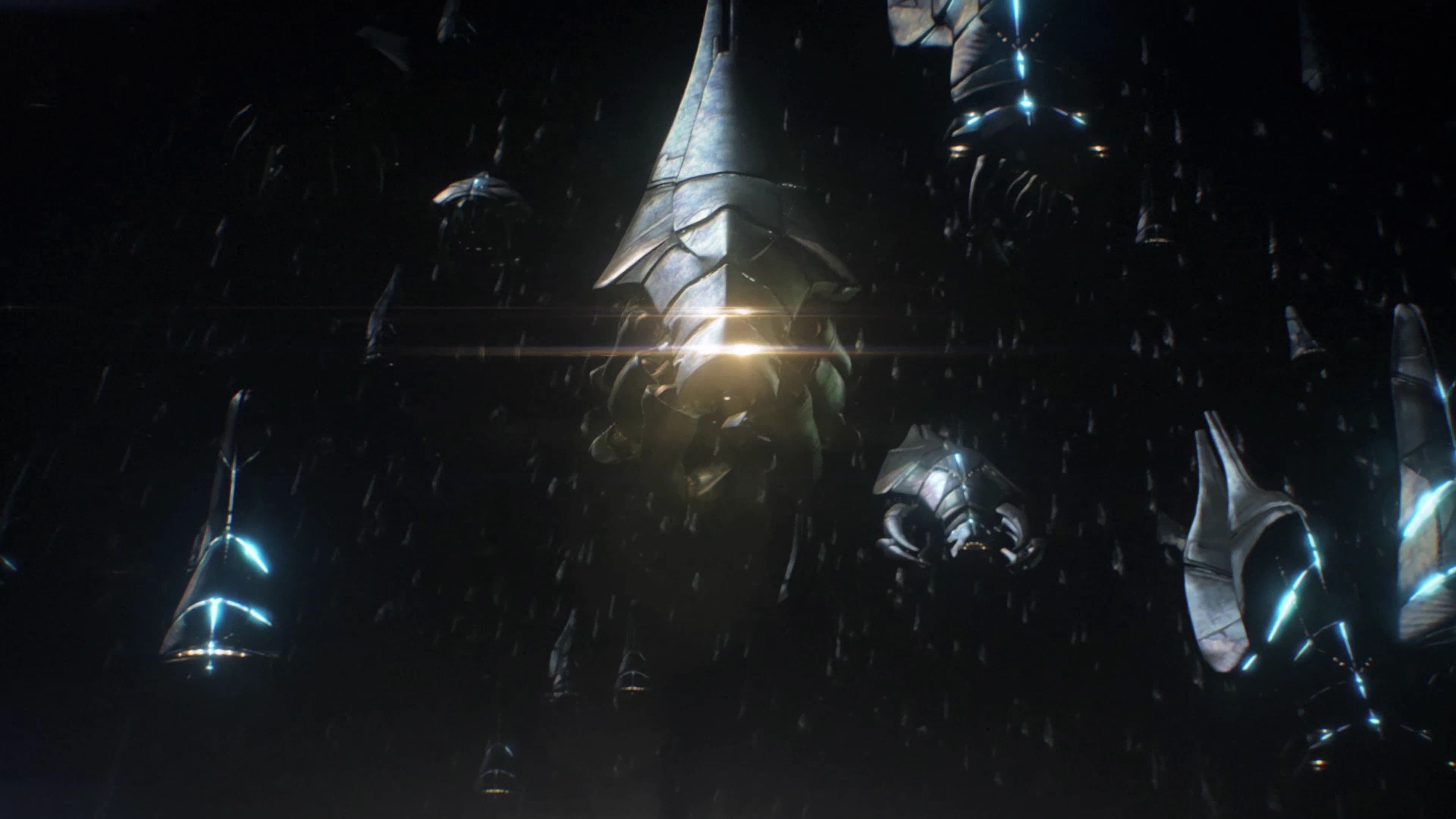
Reaper
The Reapers were an ancient race of synthetic-organic starships that hibernated in dark space and returned once every fifty thousand years to harvest the galaxy's advanced life. They built the Citadel and the mass relay network to guide civilization down a predictable path, then reaped it to preserve organic life from synthetic destruction.
Salarian
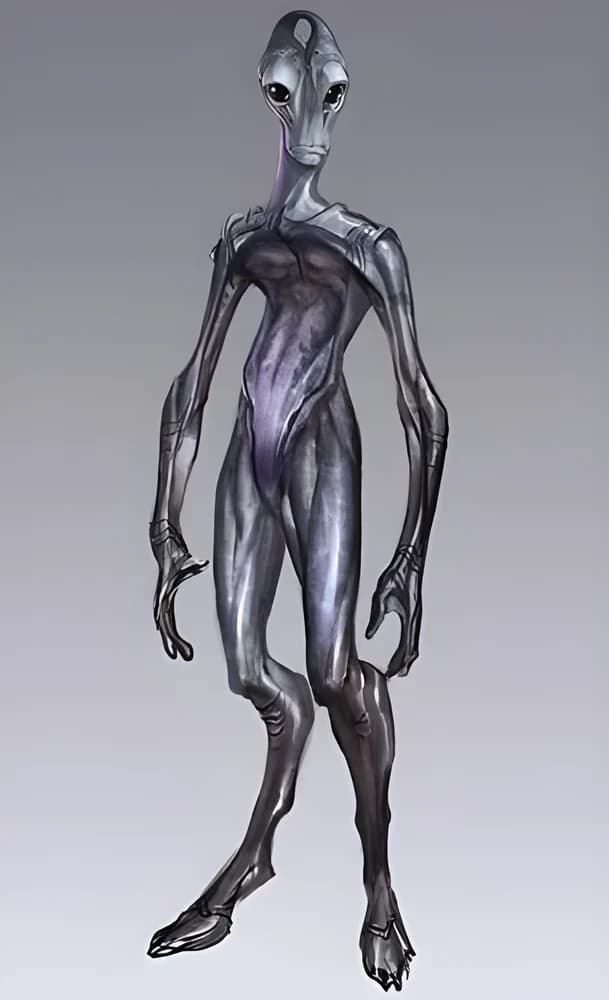
The salarians of Sur'Kesh were warm-blooded amphibians with a hyperactive metabolism, fast-thinking and short-lived, renowned for invention, espionage, and non-linear reasoning. The second species to join the Citadel, they uplifted the krogan and later engineered the genophage.
Turian Hierarchy
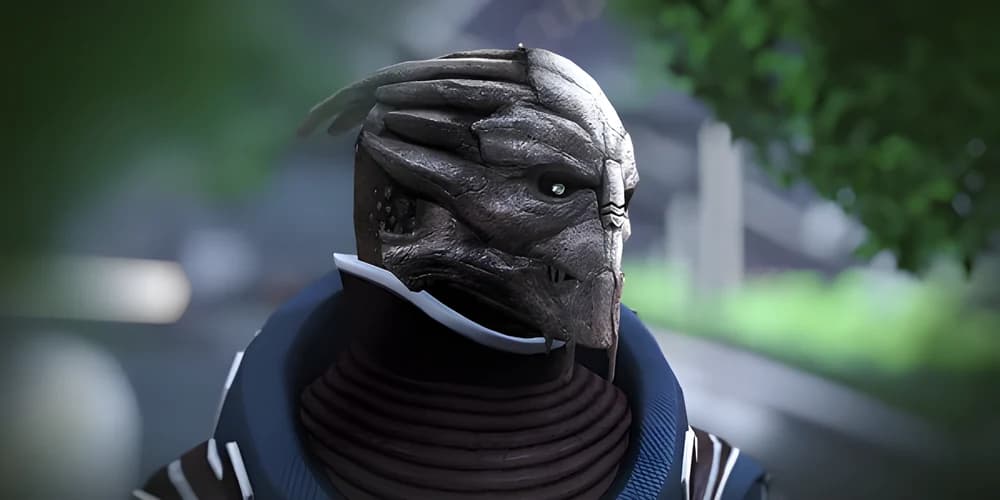
The Turian Hierarchy was the government of the turian people, a regimented meritocracy built around military and public service. It earned a Citadel Council seat for its role in the Krogan Rebellions and contributed the largest share of the Citadel Fleet.
Mentioned in32 entries
Adrien Victus: the general who became Primarch on a moon of Palaven
Adrien Victus was a turian general fighting on Menae in 2186 when Primarch Fedorian's shuttle was shot down and the succession rules made him Primarch of Palaven. He was out of contact and did not know it yet.
Armando-Owen Bailey
Armando-Owen Bailey was a human officer of Citadel Security stationed in the Zakera Ward, a no-nonsense lawman who rose from a neglected beat officer to a Commander overseeing security for the Citadel Embassies during the Reaper War.
Biotics
Biotics was the ability of certain lifeforms to generate mass effect fields using element zero nodules grown through their bodies. Channelled through surgical implants and physical gestures, it let a wielder lift, hurl, and crush objects at a distance or raise protective barriers.
Brute
Brutes were synthetic organic creatures the Reapers fashioned by fusing krogan and turian bodies and remaking them with their technology. Towering and heavily armored, they filled the heavy melee role in Reaper ground assaults, charging into the enemy line to crush smaller troops.
Citadel Fleet: the Council's defence force and what one battle cost it
The Citadel Fleet was the Council's main space defence force, mostly turian ships led by the asari dreadnought Destiny Ascension. Sovereign's attack in 2183 caught it scattered across the relays, and Shepard decides who survives.
Citadel Security Services: C-Sec
Citadel Security Services, known as C-Sec, was the volunteer police force responsible for law enforcement aboard the Citadel. Answering to the Citadel Council and led by an Executor, its constables kept order across the station's vast, crowded wards and the space around it.
Entertainment: Culture and amusement across the galaxy
The peoples of the Milky Way produced a vast and varied culture of films, plays, books, magazines, music, sports, and games for their own amusement. From an all-elcor staging of Hamlet to the hanar action hero Blasto and the beloved romance Fleet and Flotilla, entertainment crossed species lines and revealed how each race saw itself and its neighbors.
Every Mass Effect Romance Option, Game by Game
Every romance in Mass Effect, Mass Effect 2, Mass Effect 3 and Andromeda: who each character is, whether a male or female Shepard or Ryder can romance them, how the relationship plays out and what happens to it in the next game. Fates that depend on choices are given as choices.
Every Mass Effect Species and Race, With Lifespans
A field guide to every sapient species in Mass Effect, from the Council races and their clients to the krogan, the geth, the Protheans and the peoples of the Heleus Cluster. Each entry gives the homeworld, the lifespan where the games actually state one, and where the species stood with the Citadel.
Every Mass Effect Squadmate and Companion, Game by Game
Every squadmate in Mass Effect, Mass Effect 2, Mass Effect 3 and Andromeda, with their species, how they join, what their story is about and how they can die. Fates that depend on player choices are given as choices, because the series never picks one canon.
First Contact War
The First Contact War, known to the turians as the Relay 314 Incident, was a brief, low-intensity conflict between the human Systems Alliance and the Turian Hierarchy in 2157 CE. It began when turians fired on human ships reactivating a dormant mass relay, escalated into the occupation and liberation of the colony Shanxi, and ended with Council mediation that revealed the wider galaxy to humanity.
Genophage
The genophage was a genetic weapon deployed against the krogan during the Krogan Rebellions, drastically lowering the chance of viable births and consigning the species to a slow decline. Developed by the salarians and unleashed by the turians, it haunted galactic politics for over a thousand years.
+ 20 more
Get new articles in your inbox
No spam. New lore drops, canon conflicts, and deep dives only when they’re worth reading.
Some links on Lore Fortress are affiliate links. If you buy through them we earn a small commission at no extra cost to you.