Humans
The Newest Power on the Galactic Stage
Humans were the newest sentient species of note to enter galactic affairs, and also the most rapidly expanding. After discovering a Prothean data cache on Mars and unlocking the mass relay network, they rose within decades from isolated newcomers to a power whose ambition and military strength unsettled the older Council races.
Humans, originating on the planet Earth, were the newest sentient species of notable size to enter the galactic stage, and also the most rapidly expanding and developing. They independently discovered a Prothean data cache on Mars in 2148, and the mass relay network shortly thereafter, achievements that launched them from isolation into the wider galaxy. Within a single generation they had gained an embassy on the Citadel, an influence the older races had taken centuries to win, and their ambition and military strength made them both admired and feared. Their newfound prominence was bound up with the deeds of figures such as Commander Shepard and with the coming of the Reaper threat. (Mass Effect; Mass Effect 2; Mass Effect 3)
Biology#
Humans were physically hardy, with an internal makeup and reproductive process typical of bipedal mammals and proportions that lent them strength, speed, and agility. Against the Council races they were roughly on par with turians in raw physical capability, a human in peak condition able to match a similarly fit turian in close combat. They were less agile than the asari, whom they closely resembled, and on average stronger than salarians though not as fast, given the salarians' elevated metabolisms. (Mass Effect; Mass Effect: Revelation)
Like most organic races, humans could produce biotic individuals, though in their case natural biotics arose only from prenatal exposure to element zero, which carried a high risk of medical complications. Humans could live to about 150 years, with medical advances having eradicated nearly all the diseases that once afflicted them, and they reached physical maturity around the age of eighteen. They were noted within the galactic community for unusually high genetic diversity, with more pronounced variation than other species, which made human genetic material useful as a control group in biological research. (Mass Effect; Mass Effect 2)
The reach for the stars#
Human space exploration began in earnest in the late twenty-first century. The lunar settlement of Armstrong Outpost was founded in 2069, and the Martian city of Lowell City followed in 2103, opening the way for further outposts across the Sol system. (Mass Effect)
The decisive turn came in 2148, when explorers on Mars uncovered a long-ruined Prothean observation post and a surviving data cache, proof that the Protheans had studied early humans millennia before. A global effort to decipher the trove revealed a mass relay orbiting Pluto, and explorers opened the Charon Relay to find it led to Arcturus. With the aid of the fledgling Systems Alliance, humanity began opening every relay it could find and spreading into new systems. Each of those steps, from the Moon to Arcturus, is dated on the Mass Effect timeline. (Mass Effect; Mass Effect: Revelation)
First contact and expansion#
Humanity first drew the attention of the wider galaxy through a brief but intense conflict with the turians, known to humans as the First Contact War, which began in 2157 when turian forces attacked a human fleet activating a dormant relay, which was illegal under Council law, and occupied the colony of Shanxi. The Alliance's Second Fleet launched a counterattack that caught the turians by surprise and drove them from Shanxi, prompting the Citadel Council to broker a swift peace and bringing humans into the galactic community. The Alliance's decisive action established it as the governing body and representative of humanity. (Mass Effect; Mass Effect: Revelation)
In 2165, in recognition of their growing power, humans were granted an embassy on the Citadel, an honor that came less than a decade after first contact and caused friction with races who had waited far longer. Humanity continued to expand into unclaimed systems on the edge of Citadel space, which brought it into competition with the batarians; when the batarians failed to have the Skyllian Verge declared a zone of their interest, they withdrew from Citadel space and turned hostile, blaming humans for their decline. Relations between the two peoples remained tense for decades, marked by repeated conflict with batarian slavers along the frontier. (Mass Effect; Mass Effect: Revelation)
The Eden Prime War and rising prominence#
Humanity was caught off guard by a geth attack on Eden Prime, one of its most prosperous colonies, in 2183. Alliance forces, and Commander Shepard in particular, fought through a series of operations against geth incursions in the conflict that came to be called the Eden Prime War, which culminated in the Battle of the Citadel. There a massive invasion fleet led by the dreadnought Sovereign tore through the station's defenses before being defeated with the timely aid of the Alliance's fleet. The outcome of that battle, and the question of whether the Council survived it, turned on Shepard's decisions; in some accounts the Council was saved and humanity granted a seat upon it, while in others the Council perished and the Alliance raised a new one. Either way, humanity emerged from the battle at a new height of galactic prominence. (Mass Effect)
In the years that followed, contact was lost with several human colonies in the Terminus Systems, their populations vanishing without trace. The Alliance struggled to respond, and colonists on the fringe came to resent what they saw as abandonment, even as the Alliance tried to rebuild trust through measures such as new defense turrets on the colony of Horizon. The abductions proved to be the work of the Collectors, agents of the Reapers, and they ended when Shepard's team struck the Collector Base beyond the Omega 4 Relay. (Mass Effect 2)
The Reaper War#
In 2186 the Reapers invaded the galaxy through batarian space and swept into human territory. Colony after colony went dark, and the true nature of the threat became undeniable only when the Reapers reached Earth itself, where their assault swiftly overwhelmed the Alliance Navy and the planet's defenders. With Earth fallen, Admiral Steven Hackett ordered the surviving fleet to withdraw, and through much of the war the majority of human worlds lay under Reaper control as the harvest began, with millions of humans lost. (Mass Effect 2: Arrival; Mass Effect 3)
After Shepard worked to unite the galaxy and the great weapon known as the Crucible was built, the Alliance led the effort to retake Earth. As the allied fleet engaged the Reapers in orbit, ground forces landed to join the resistance under Admiral David Anderson, and at terrible cost they opened the way to the Citadel, which the Reapers had moved to Earth. There a final, fateful choice fell to Shepard, the resolution of which shaped the fate of the galaxy. (Mass Effect 3)
Culture and government#
Humans were widely regarded as intelligent, intensely ambitious, adaptable, and individualistic, with a powerful drive to improve themselves that the more measured Council races found unsettling. Their economy, though smaller than those of the Council powers, was potent for its size, and their military strength was among the greatest in the galaxy despite only a small fraction of humans volunteering for service. The discovery of the Martian ruins had helped crystallize a pan-global identity that had been forming since the twenty-first century, leading humans increasingly to see themselves as a single people set apart from other species. (Mass Effect)
Politically, much of humanity fell under the Systems Alliance, the representative body of Earth and its colonies in Citadel space, governed by a parliament based at Arcturus Station. Not all humans answered to it, however; some frontier colonies were founded on principles of independence, and Earth retained nation-states that administered their own territories. To the galaxy at large, though, humanity was generally regarded as a single political entity represented by the Alliance, a perception reinforced when Shepard was admitted to the ranks of the Council's elite operatives and, in some accounts, when humanity took its seat on the Council and gained at last a genuine voice in the governance of Citadel space. (Mass Effect)
Frequently asked questions
- Who are the humans in Mass Effect?
- Humans were the newest sentient species of notable size to join the galactic community and its fastest-expanding members. Originating on Earth, they discovered Prothean technology on Mars in 2148, unlocked the mass relay network, and rose rapidly in galactic prominence under the Systems Alliance.
- How did humans discover space travel and the mass relays?
- In 2148 explorers on Mars uncovered a ruined Prothean observation post and a surviving data cache. The data led them to a mass relay orbiting Pluto, the Charon Relay, which they opened to reach Arcturus, beginning humanity's rapid expansion into the wider galaxy.
- What was humanity's first contact with aliens?
- Humanity first met another species during the First Contact War of 2157, when the turians attacked a human fleet activating a dormant relay and occupied the colony of Shanxi. The Alliance counterattacked and retook Shanxi, after which the Citadel Council brokered peace and introduced humans to galactic society.
- Why are humans distrusted by the Council races?
- Humans rose to prominence in mere decades, far faster than older species had, and pressed aggressively to colonize and expand. Their swift ascent, ambition, and demonstrated military strength against the turians left many established races wary of them.
Sources
- GameMass Effect, BioWare, 2007
- GameMass Effect 2, BioWare, 2010
- GameMass Effect 2: Arrival, BioWare, 2011
- GameMass Effect 3, BioWare, 2012
- BookMass Effect: Revelation, Drew Karpyshyn, Del Rey, 2007
Spotted a factual error or a primary source we missed? Email a correction. Every flagged claim gets reviewed.
Followed from this entry
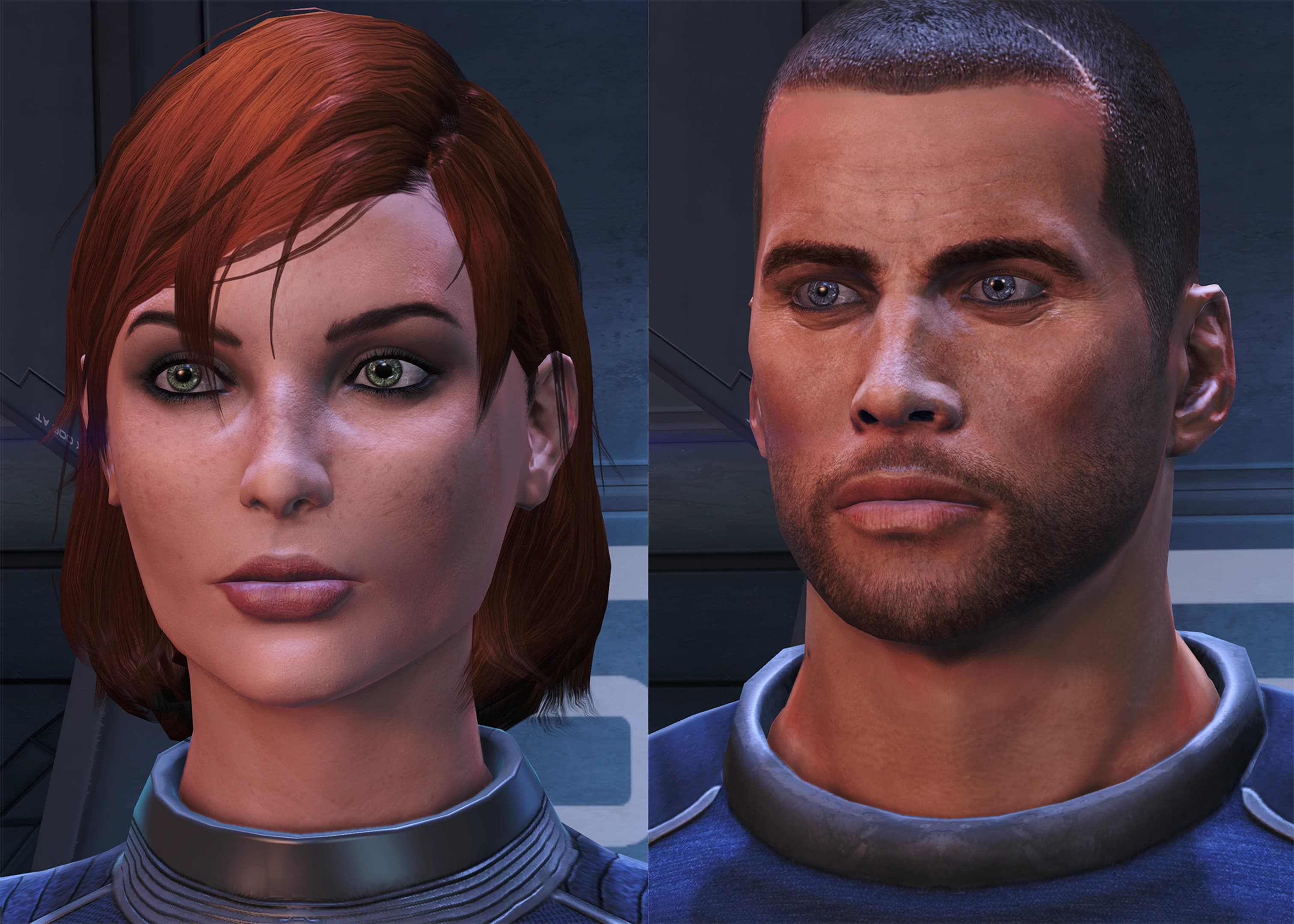
Commander Shepard
Commander Shepard was a Systems Alliance N7 marine who became the first human Spectre, exposed the rogue agent Saren Arterius, and led the galaxy's resistance against the Reapers. Shepard's gender, history, and many of the choices that shaped the war were never fixed, and the final fate of the cycle turned on the Commander's own decisions.
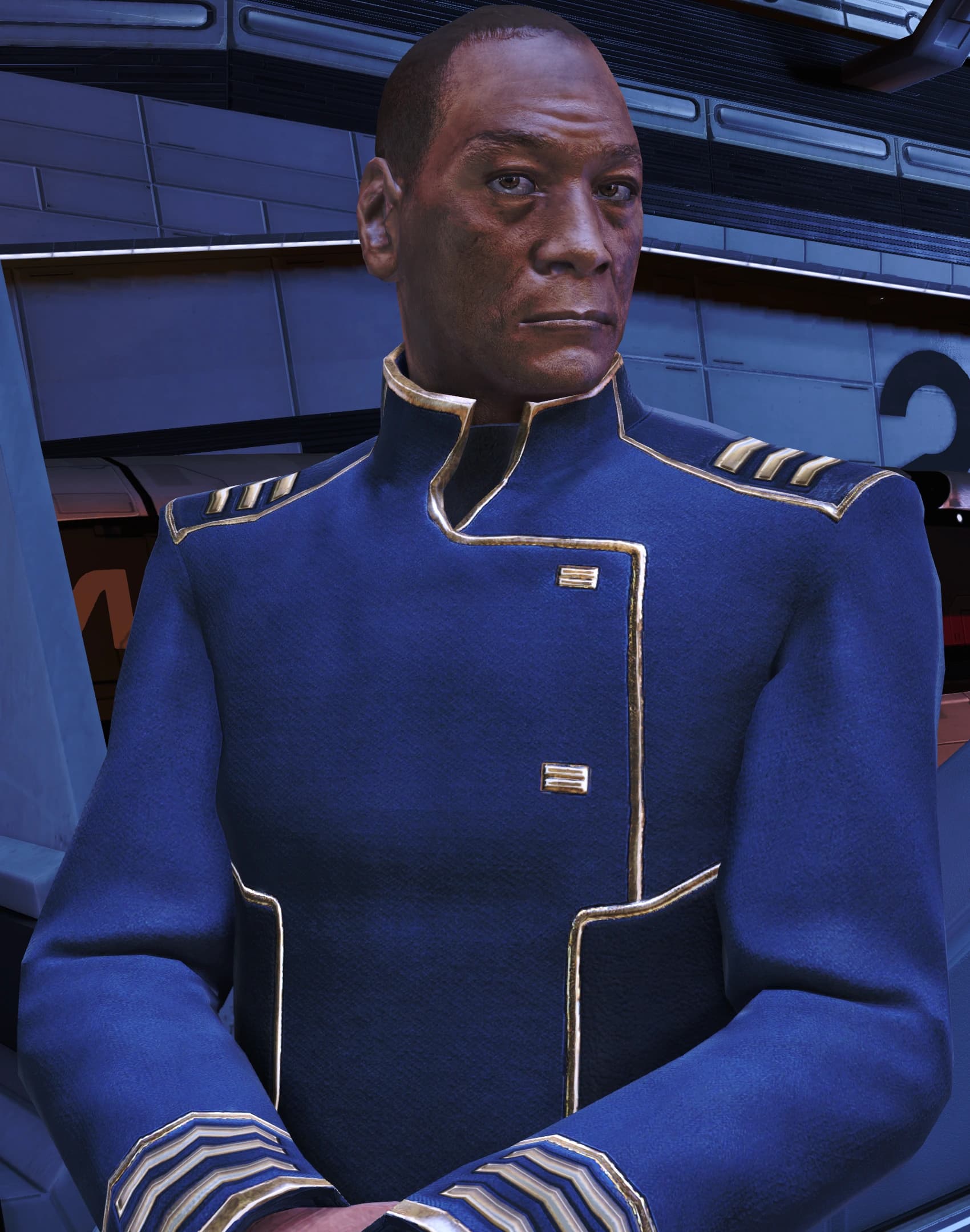
David Anderson
David Anderson was a decorated Systems Alliance officer, the first captain of the Normandy, and a mentor to Commander Shepard. When the Reapers invaded Earth, he stayed behind to lead its resistance, and he stood at Shepard's side in the final hours of the war.
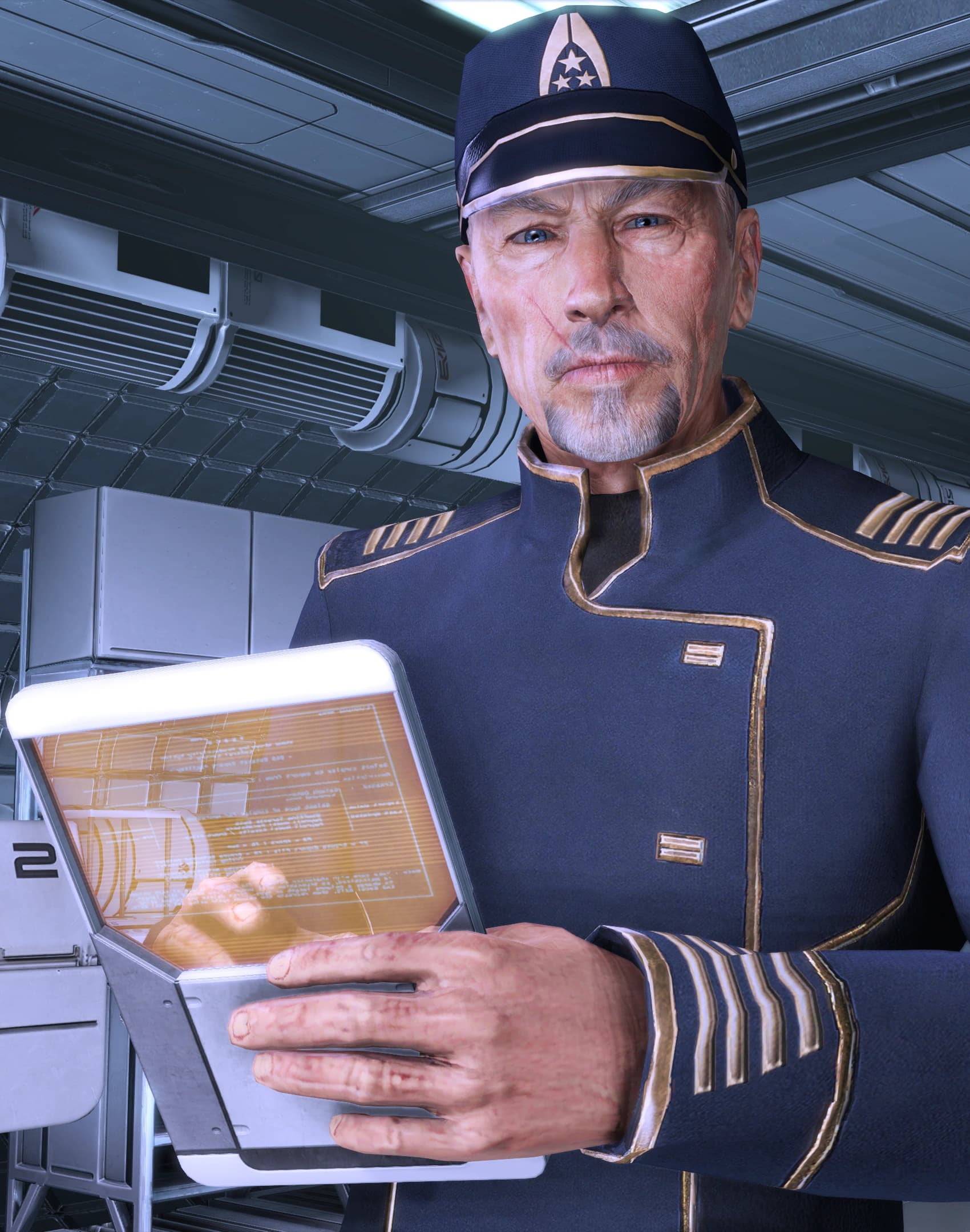
Steven Hackett
Steven Hackett was a top-ranking admiral of the Systems Alliance Navy who rose from enlisted man to commander of the Fifth Fleet. He helped make Commander Shepard the first human Spectre and led the assembled fleets in the final battle against the Reapers.
Every Mass Effect Species and Race, With Lifespans
A field guide to every sapient species in Mass Effect, from the Council races and their clients to the krogan, the geth, the Protheans and the peoples of the Heleus Cluster. Each entry gives the homeworld, the lifespan where the games actually state one, and where the species stood with the Citadel.
Alliance Navy: Humanity's Fleet
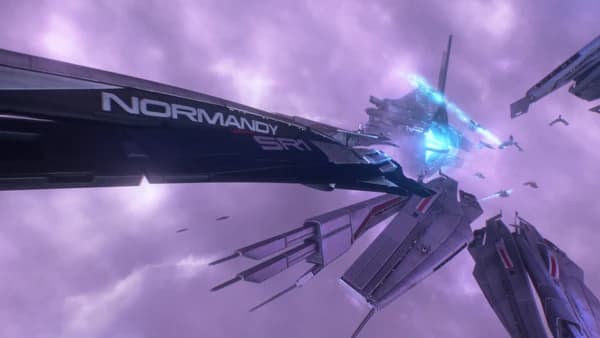
The Alliance Navy was the space combat branch of the Systems Alliance military, charged with defending Earth and its colonies. Numbering several thousand ships across multiple fleets, it was one of the greater naval forces in Citadel space and bore the brunt of the fighting during the Reaper War.

Arcturus Station
Arcturus Station was a five kilometer space station that served as the military and political capital of the Systems Alliance from the First Contact War onward, guarding the mass relay to Earth. During the Reaper War it was abandoned and destroyed, becoming a grave for the 45,000 people aboard.
Mentioned in8 entries
Amanda Kenson: Scientist of the Bahak System
Doctor Amanda Kenson was a human scientist whose research suggested the mass relays predated the Protheans. Investigating evidence of an imminent Reaper invasion in a batarian system, she was indoctrinated by a Reaper artifact and turned against the very Commander Shepard sent to rescue her.
Citadel Security Services: C-Sec
Citadel Security Services, known as C-Sec, was the volunteer police force responsible for law enforcement aboard the Citadel. Answering to the Citadel Council and led by an Executor, its constables kept order across the station's vast, crowded wards and the space around it.
Entertainment: Culture and amusement across the galaxy
The peoples of the Milky Way produced a vast and varied culture of films, plays, books, magazines, music, sports, and games for their own amusement. From an all-elcor staging of Hamlet to the hanar action hero Blasto and the beloved romance Fleet and Flotilla, entertainment crossed species lines and revealed how each race saw itself and its neighbors.
Every Mass Effect Romance Option, Game by Game
Every romance in Mass Effect, Mass Effect 2, Mass Effect 3 and Andromeda: who each character is, whether a male or female Shepard or Ryder can romance them, how the relationship plays out and what happens to it in the next game. Fates that depend on choices are given as choices.
Every Mass Effect Species and Race, With Lifespans
A field guide to every sapient species in Mass Effect, from the Council races and their clients to the krogan, the geth, the Protheans and the peoples of the Heleus Cluster. Each entry gives the homeworld, the lifespan where the games actually state one, and where the species stood with the Citadel.
Every Mass Effect Squadmate and Companion, Game by Game
Every squadmate in Mass Effect, Mass Effect 2, Mass Effect 3 and Andromeda, with their species, how they join, what their story is about and how they can die. Fates that depend on player choices are given as choices, because the series never picks one canon.
Palaven
Palaven was the homeworld of the turians, a silver-hued world whose martial culture shaped everything from its architecture to its politics. Long unconquered, it endured its first invasion when the Reapers brought overwhelming force against it in the war of 2186.
Terminus Systems
The Terminus Systems were a vast, ungoverned region beyond Citadel space, home to a loose affiliation of minor species united only in refusing the Council's authority. A haven for piracy, the slave trade, and mercenary gangs, the Terminus centered on the trade hub of Omega.
Get new articles in your inbox
No spam. New lore drops, canon conflicts, and deep dives only when they’re worth reading.
Some links on Lore Fortress are affiliate links. If you buy through them we earn a small commission at no extra cost to you.