Batarian
Four-Eyed Species of Khar'shan
The batarians were a four-eyed species native to Khar'shan whose insular government, the Batarian Hegemony, withdrew from the galactic community and became infamous for slavery, piracy, and hostility toward humanity before the Reapers overran their space.
The batarians were a species of four-eyed bipeds native to the world of Khar'shan, widely regarded across the galaxy as disreputable after their government chose to isolate them from the rest of galactic society. The Terminus Systems were rife with batarian pirate gangs and slaving rings, which fueled the stereotype of the batarian thug, though most batarians were ordinary citizens forbidden by their paranoid government from leaving batarian space. Their long-running grievances with the Citadel Council and simmering hostility toward humanity placed them in repeated conflict with the Systems Alliance, and they would later be among the first peoples overwhelmed by the Reapers. (Mass Effect; Mass Effect 3)
Biology#
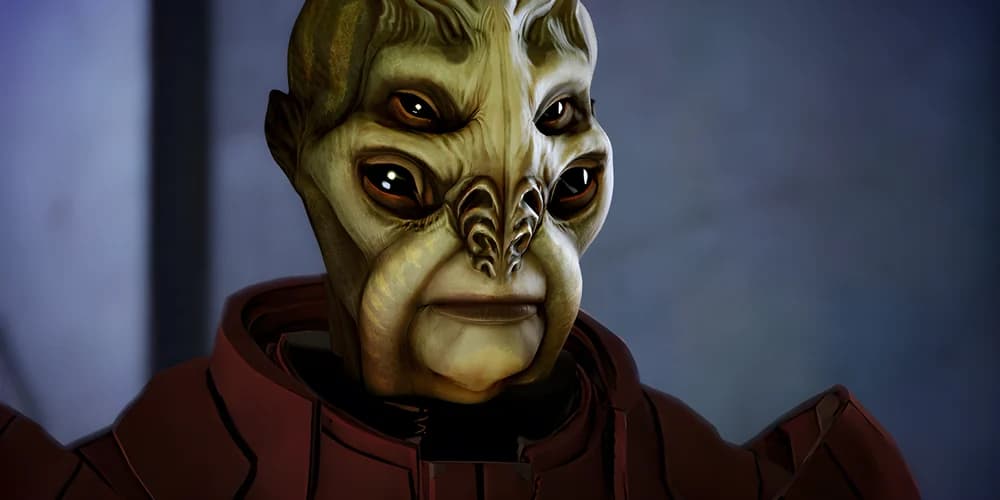
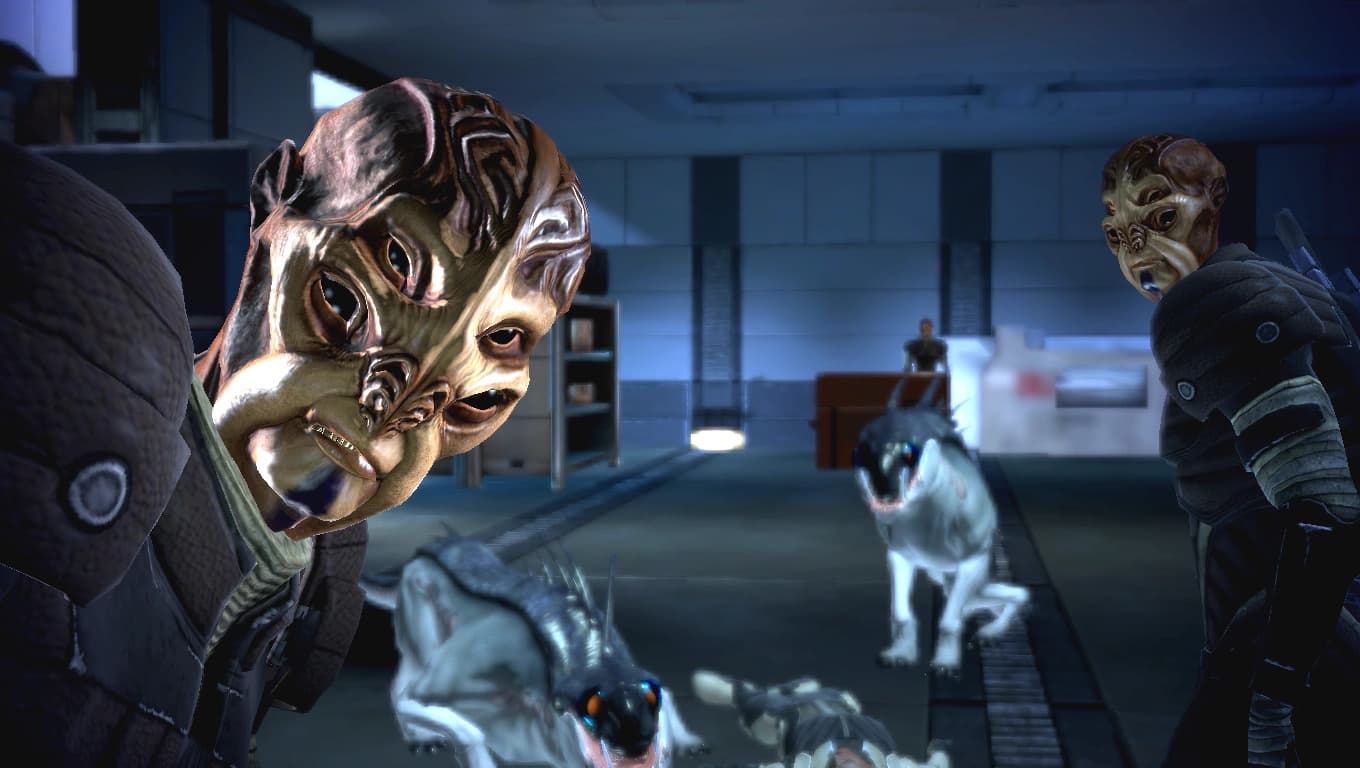
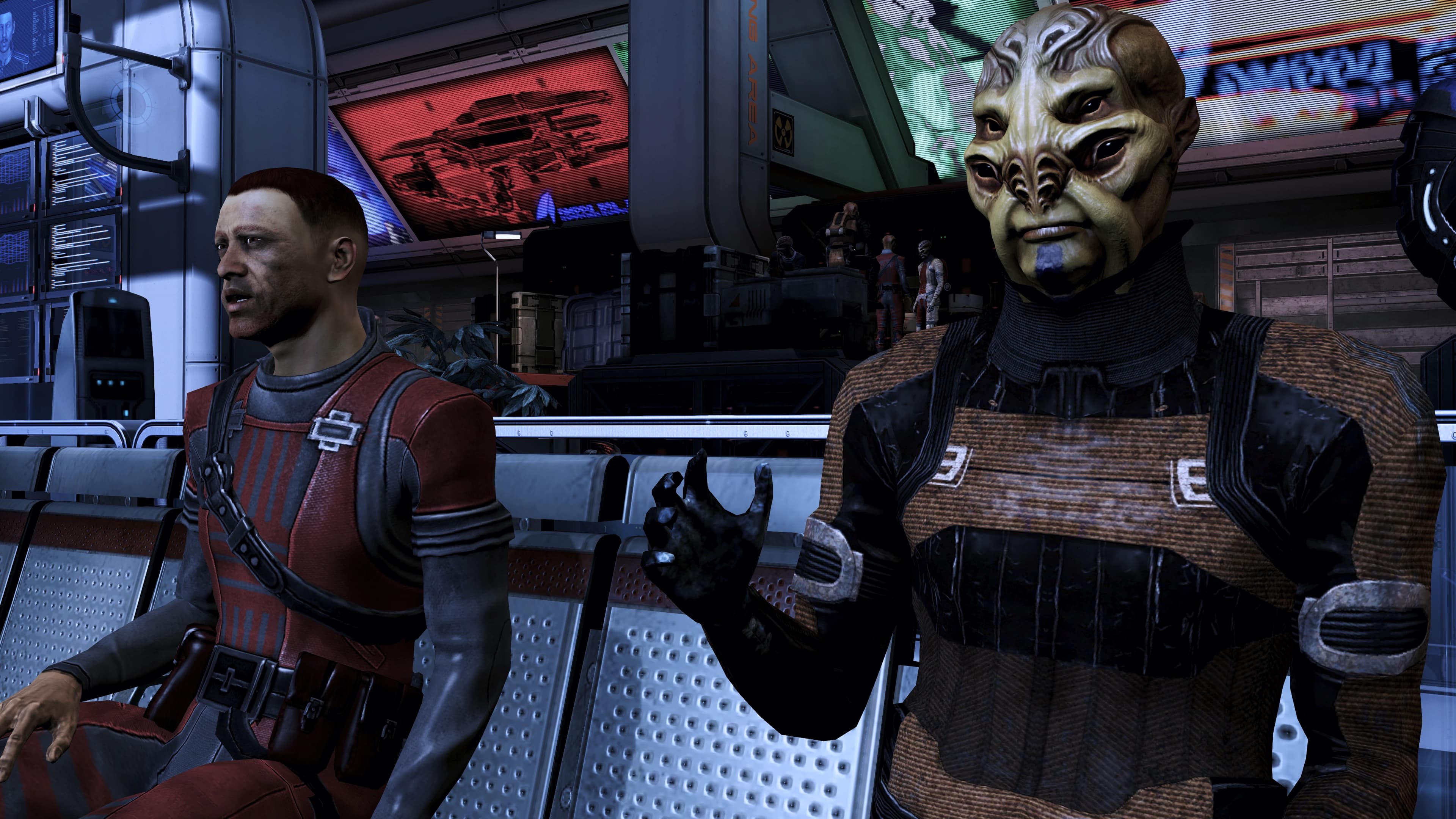
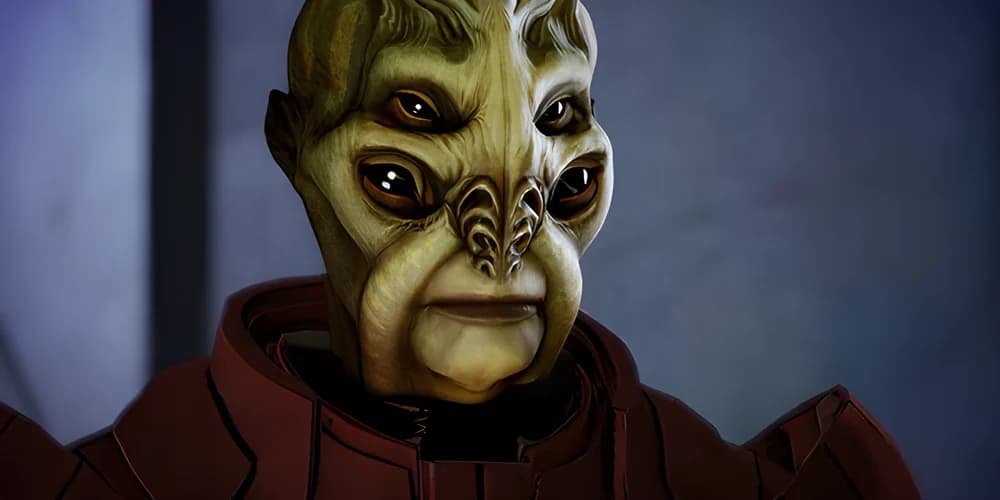
Batarians were an anthropoidal species comparable in build to humans and asari. Their faces were covered in short, fine hairs that grew longer and thicker around the mouth, and a flat stripe of ridged cartilage ran along the tops of their skulls and down the backs of their necks. Their voices were deep and guttural compared to a human's, and their mouths held dozens of sharp, needle-like teeth. (Mass Effect)
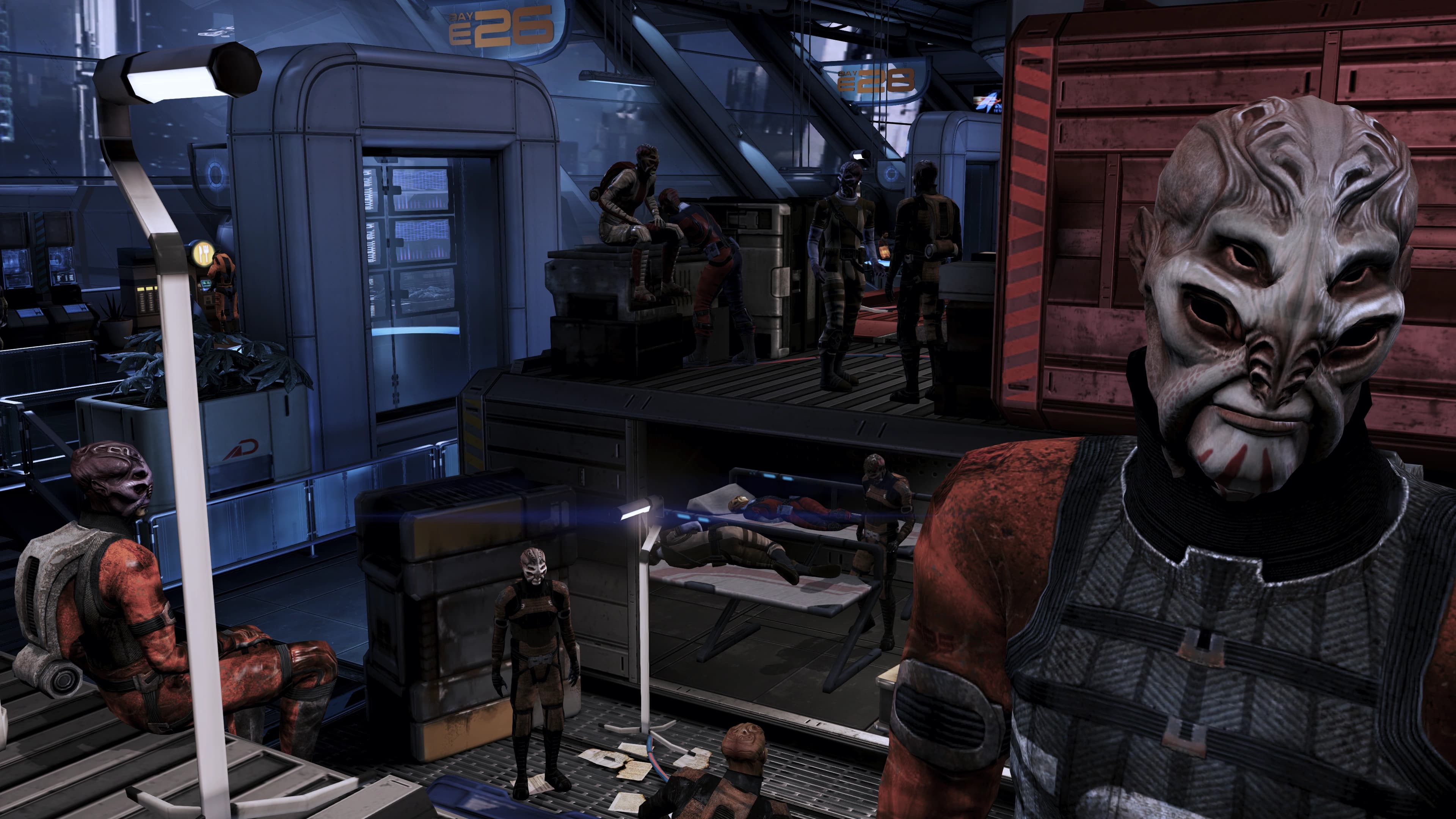
Their most distinctive feature was their four eyes. One pair was set wide in prominent bony sockets at the corners of the face, while a second, smaller pair sat closer together higher on the face, just below the middle of the forehead. The eyes were uniformly dark orbs without discernible irises or pupils. Batarians displayed a wide range of skin tones, from reddish-brown and greenish hues to light brown and teal, and some bore striped colorations on their heads. Batarian blood was red. (Mass Effect)
History and isolation#
Upon achieving spaceflight, the batarians discovered concealed Prothean ruins on Bira, a moon of Verush, which enabled them to develop faster-than-light travel. Because earthquakes had damaged those ruins, they took pride in having had less information to work with than other spacefaring races. The Citadel Council later granted them an embassy, roughly a century after first contact. (Mass Effect; Mass Effect 2)
Despite their welcome into the galactic community, batarian aggression caused several crises. A batarian fleet bombarded the salarian colony of Mannovai around 1785 CE, the Hegemony annexed the asari colony of Esan in 1913, and Citadel forces clashed with batarian forces on Enael in 2115. The decisive rupture came over the Skyllian Verge, which humans began colonizing in the mid-2160s in a region the batarians were already settling. When the Council refused in 2171 to declare the Verge an area of batarian interest, the Hegemony closed its Citadel embassy, severed diplomatic and economic relations, and became an inward-looking rogue state. Government money and weapons then flowed to criminal groups who raided human colonies such as Mindoir, culminating in the Skyllian Blitz of 2176, an attack on the colony of Elysium by batarian-funded pirates and slavers. In 2178 the Alliance retaliated with a crushing assault on the moon of Torfan, after which the batarians retreated into their own systems. (Mass Effect; Mass Effect 2)
Culture and religion#
Batarians placed extremely high value on social caste and appearance, and overstepping one's place was deeply frowned upon. Caste status could be purchased on an ongoing basis, allowing the wealthy to buy their way into elite circles, and casting aspersions on a social better's monetary worth was a serious insult. Batarians believed that species with fewer than four eyes were less intelligent, and they often gained an edge in interspecies arguments because others struggled to know which eyes to focus on. (Mass Effect; Mass Effect 2)
Slavery was an integral part of the batarian caste system, so deeply ingrained that batarians regarded the Council's anti-slavery stance as discriminatory even though the practice violated Council law. Rogue slave rings were feared throughout the galaxy, and abducted victims were often implanted with painful control devices in their skulls. Body language carried great weight as well, since tilting the head to the left signified admiration and respect while tilting it to the right signaled a sense of superiority. Batarian religious beliefs were little understood, though they held that a person's soul left the body through the eyes upon death, making the treatment of the corpse unimportant unless the eyes had been removed by an enemy. (Mass Effect; Mass Effect 2; Mass Effect 2: Lair of the Shadow Broker)
Government and military#
The Batarian Hegemony governed batarian space and remained hostile to the Systems Alliance while staying beneath the notice of the more powerful Council races. A Department of Information Control ensured that only government-approved news entered or left batarian space, and the homeworld of Khar'shan remained divided among competing nation-states. The Hegemony blamed humanity for its troubles, covertly supporting scams, slave raids, and terrorist attacks against human targets while publicly disavowing them. (Mass Effect; Mass Effect 2)
Citadel sanctions had reduced the batarian military to a paper tiger that fought rivals through deniable terrorism rather than open war. Most of its hardware was produced by Batarian State Arms, a vast nationalized corporation infamous for waste and corruption. The fleet operated at least one dreadnought and smaller vessels such as the Hensa class of cruisers, and as a non-Citadel race the batarians were not bound by the Treaty of Farixen limiting dreadnought numbers. A special forces division known as the Special Intervention Unit was notorious for its brutal training, and other branches such as the Batarian External Forces, in which Ka'hairal Balak held high rank, were believed to handle unconventional operations. (Mass Effect; Mass Effect 2; Mass Effect 3)
The Reaper War#
When the Alpha Relay was destroyed, the Reapers entered the galaxy through the Vular system near the heart of batarian space and quickly advanced on Khar'shan. The batarian response was uncoordinated, in part because the Hegemony had recovered the Leviathan of Dis, a billion-year-old Reaper corpse, from Jartar in 2163 and conducted secret studies of its technology. Those studies allowed the Leviathan to indoctrinate the science team and prominent officials, who sabotaged the Hegemony's defenses and broadcast misleading messages in 2186, allowing the Reapers to crush the batarian navy and conquer their systems with ease. (Mass Effect 3)
Captured batarians were converted into Reaper husks called Cannibals and dispatched to battlefields across the galaxy, while those who escaped became refugees on alien territory, some sheltering on the Citadel itself. The few ships that survived the fall of Khar'shan fled to Alliance space alongside thousands of refugees. Surviving batarian soldiers contributed to the war effort against the Reapers. (Mass Effect 3)
Earlier crises and the X57 plot#
Before the full Reaper invasion, batarian extremists figured in several incidents. In 2183, a group led by the ringleader Balak hijacked Asteroid X57, intending at first to enslave the human engineers stationed there but ultimately executing them and attempting to drop the asteroid on the human colony of Terra Nova. Some of Balak's underlings, including his second-in-command Charn, balked at the atrocity, having signed on expecting only a slave raid. The attempted asteroid drop, which would have devastated the colony, was thwarted by Commander Shepard, though whether Balak survived depended on Shepard's choices. If Balak escaped, he later claimed the Reaper invasion had left him the highest-ranking surviving officer of the Hegemony's military, and he made his way to the Citadel where he directed the remnants of the batarian fleet against the Reapers; Shepard could persuade him to lend that fleet to the war or kill him for his crimes against Terra Nova. (Mass Effect: Bring Down the Sky; Mass Effect 3)
Frequently asked questions
- What are the batarians in Mass Effect?
- The batarians were a species of four-eyed bipeds native to the world of Khar'shan, widely regarded across the galaxy as disreputable after their government chose to isolate them from galactic society. Their long-running grievances with the Citadel Council and hostility toward humanity placed them in repeated conflict with the Systems Alliance.
- What do batarians look like?
- Batarians were anthropoidal and comparable in build to humans and asari, with faces covered in short fine hairs and a stripe of ridged cartilage running along the tops of their skulls. Their most distinctive feature was their four eyes, set in two pairs, which were uniformly dark orbs without discernible irises or pupils.
- How does the batarian caste system work?
- Batarians placed extremely high value on social caste and appearance, and overstepping one's place was deeply frowned upon. Caste status could be purchased on an ongoing basis, allowing the wealthy to buy their way into elite circles, and casting aspersions on a social better's monetary worth was a serious insult.
- What do batarians believe about death?
- Batarian religious beliefs held that a person's soul left the body through the eyes upon death. This made the treatment of the corpse unimportant unless the eyes had been removed by an enemy.
- What happened to the batarians during the Reaper War?
- When the Reapers entered the galaxy through the Vular system near batarian space in 2186, indoctrinated officials corrupted by the Hegemony's secret study of the Leviathan of Dis sabotaged the defenses, allowing the Reapers to crush the batarian navy and conquer their systems. Captured batarians were converted into Reaper husks called Cannibals, while survivors fled as refugees into Alliance space.
Gallery
Images via Mass Effect Wiki
Sources
- GameMass Effect, BioWare, 2007
- GameMass Effect 2, BioWare, 2010
- GameMass Effect 2: Lair of the Shadow Broker, BioWare, 2010
- GameMass Effect 3, BioWare, 2012
- GameMass Effect: Bring Down the Sky, BioWare, 2008
Spotted a factual error or a primary source we missed? Email a correction. Every flagged claim gets reviewed.
Followed from this entry
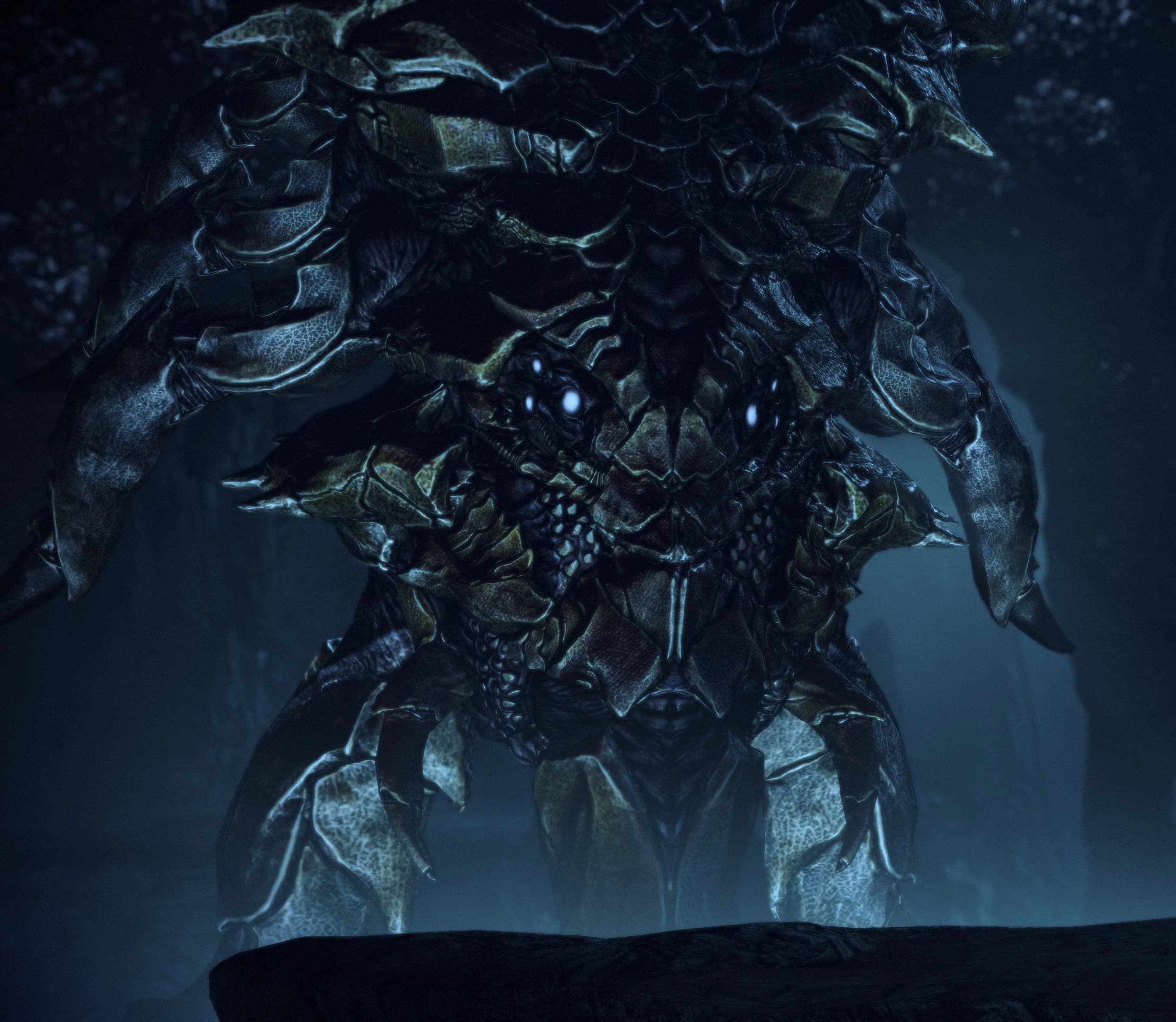
Leviathan
The Leviathans were an ancient aquatic species that ruled the galaxy before the Reapers, dominating lesser races through a power akin to indoctrination. After their own creation turned against them and built the first Reaper from their flesh, the survivors went into hiding through cycle after cycle.
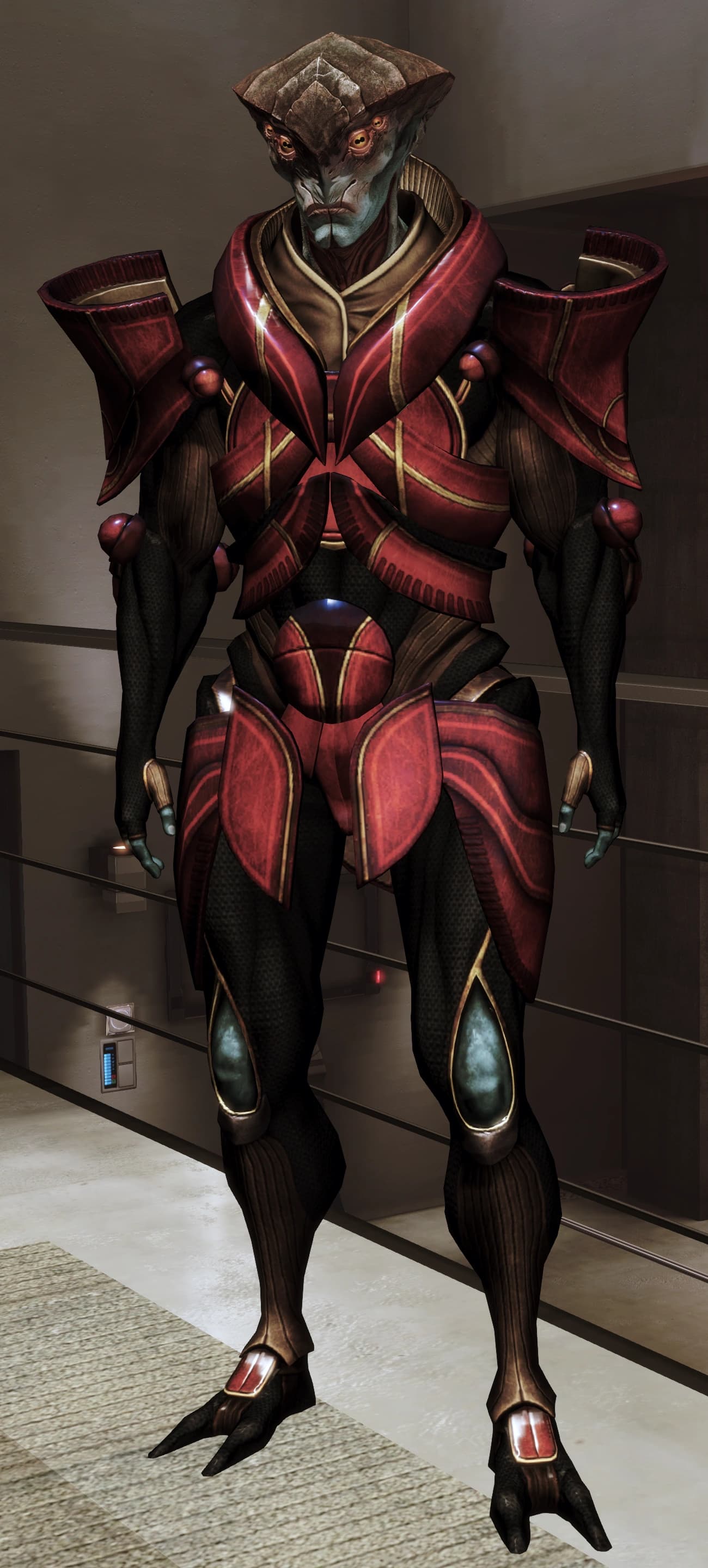
Prothean
The Protheans were an ancient race who ruled a galaxy-wide empire before mysteriously vanishing some fifty thousand years ago, harvested by the Reapers. Long credited with building the Citadel and mass relays, they secretly nurtured younger species, leaving ruins and technology that shaped the modern galaxy.
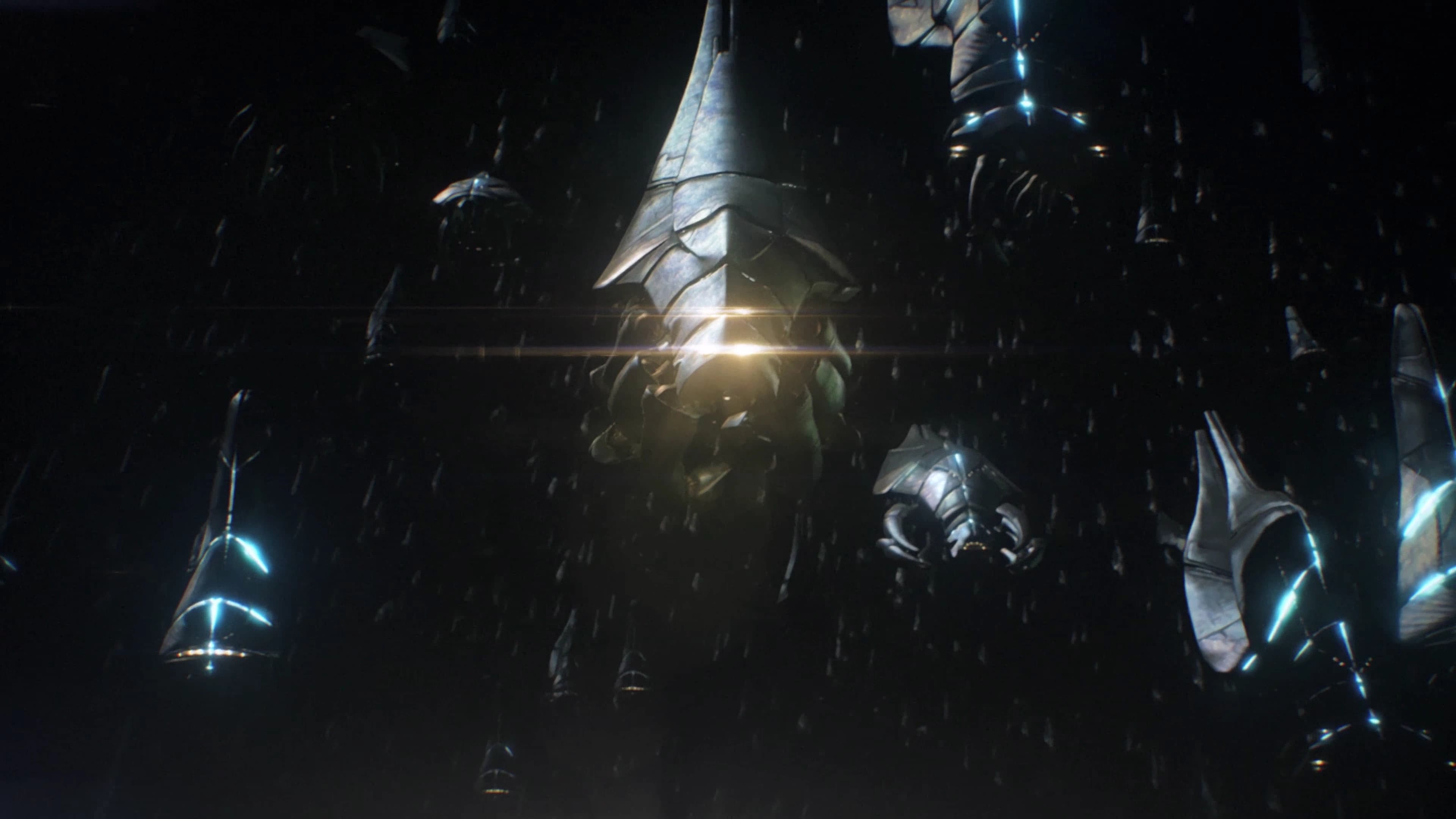
Reaper
The Reapers were an ancient race of synthetic-organic starships that hibernated in dark space and returned once every fifty thousand years to harvest the galaxy's advanced life. They built the Citadel and the mass relay network to guide civilization down a predictable path, then reaped it to preserve organic life from synthetic destruction.
Treaty of Farixen: the dreadnought ratio that held Citadel space
The Treaty of Farixen fixed how many dreadnoughts each Citadel power was permitted to build, placing the turian navy at the top of a five to three to one pyramid. Signing it was the price of an embassy on the Citadel, and the species who never signed, or who stopped caring, are the ones who reshaped the balance.
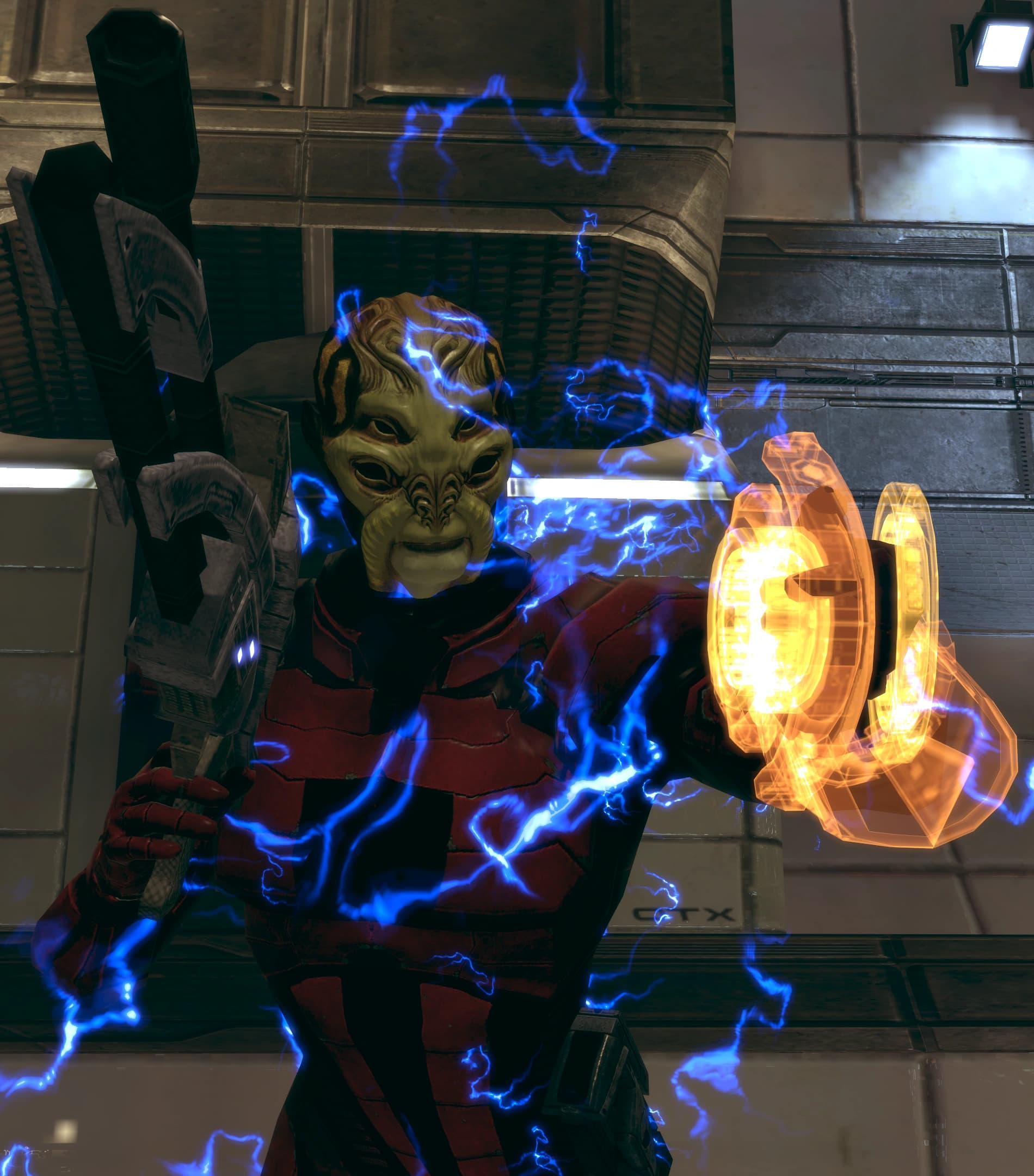
Ka'hairal Balak
Ka'hairal Balak was a batarian terrorist who attempted to crash Asteroid X57 into the human colony of Terra Nova in 2183. Driven by hatred of human expansion into the Skyllian Verge, he survived to resurface during the Reaper War, where his fate and allegiances hinged entirely on his earlier encounter with Commander Shepard.
Batarian Hegemony
The Batarian Hegemony was the oppressive, isolationist government of the batarians, native to Khar'shan. A rogue state hostile to the Systems Alliance, it sponsored deniable piracy and slaving across the Terminus Systems before the Reapers overran it.
Mentioned in25 entries
Amanda Kenson: Scientist of the Bahak System
Doctor Amanda Kenson was a human scientist whose research suggested the mass relays predated the Protheans. Investigating evidence of an imminent Reaper invasion in a batarian system, she was indoctrinated by a Reaper artifact and turned against the very Commander Shepard sent to rescue her.
Anax Therion: Drell Analyst of the Keelah Si'yah
Anax Therion was a drell analyst and former data dealer who travelled to Andromeda aboard the ark Keelah Si'yah. Clinical, guarded, and quietly lethal, she had spent her life trading in secrets, and when a plague began killing the ark's sleepers she turned her investigator's mind to uncovering the cause.
Batarian Hegemony
The Batarian Hegemony was the oppressive, isolationist government of the batarians, native to Khar'shan. A rogue state hostile to the Systems Alliance, it sponsored deniable piracy and slaving across the Terminus Systems before the Reapers overran it.
Borbala Ferank
Borbala Ferank was the retired matriarch of a powerful batarian crime family who joined the Andromeda Initiative and crossed to a new galaxy aboard the ark Keelah Si'yah. Listed as a former security officer, the old smuggler served on a maintenance crew that periodically woke during the long voyage to keep the ship running.
Donovan Hock: the arms dealer who stole Keiji Okuda's memories
Donovan Hock was a weapons dealer and art collector on Bekenstein who murdered Kasumi Goto's partner and ripped the graybox out of his skull. He kept it in a vault with Michelangelo's David and the head of the Statue of Liberty.
Drugs: the narcotics and medicines of the galaxy
Drugs were chemical substances that altered the normal bodily functions of an organism, and the galactic market for them was lucrative enough that criminal enterprises produced, sold, and smuggled them despite legal restrictions. They ranged from lifesaving antibiotics to red sand, a narcotic refined from element zero that granted brief biotic power, and to suppressants engineered to strip a biotic of that power entirely.
Every Mass Effect Species and Race, With Lifespans
A field guide to every sapient species in Mass Effect, from the Council races and their clients to the krogan, the geth, the Protheans and the peoples of the Heleus Cluster. Each entry gives the homeworld, the lifespan where the games actually state one, and where the species stood with the Citadel.
Humans
Humans were the newest sentient species of note to enter galactic affairs, and also the most rapidly expanding. After discovering a Prothean data cache on Mars and unlocking the mass relay network, they rose within decades from isolated newcomers to a power whose ambition and military strength unsettled the older Council races.
Irit Non: Volus Design Engineer of the Keelah Si'yah
Irit Non was a volus design engineer aboard the Andromeda Initiative ark Keelah Si'yah, a celebrated maker of custom environmental suits who left a thriving career in the Milky Way to follow her dissident father to a new galaxy. Quick to take offense yet a consummate professional, she served on the ark's Sleepwalker crew during the plague that swept its sleepers.
Jalosk Dal'Virra: Batarian Sleepwalker of the Keelah Si'yah
Jalosk Dal'Virra was a batarian weapons dealer and member of the Sleepwalker crew aboard the Andromeda Initiative ark Keelah Si'yah. Born into the lowest caste of batarian society and dismissed by his betters as a lout, he proved unexpectedly insightful even as he became one of the first victims of the plague that struck the ark.
Javelin: Geth Ferrofluid Sniper Rifle
The Javelin was the name Alliance marines gave to a geth sniper rifle that fired a jet of superheated ferrofluid capable of cutting through nearly anything it struck. The same name belonged to the Alliance Navy's own disruptor torpedo ordnance, from the ship mounted launchers carried by frigates to the Mk.II missiles that batarian radicals turned against the colony on Watson.
Ka'hairal Balak
Ka'hairal Balak was a batarian terrorist who attempted to crash Asteroid X57 into the human colony of Terra Nova in 2183. Driven by hatred of human expansion into the Skyllian Verge, he survived to resurface during the Reaper War, where his fate and allegiances hinged entirely on his earlier encounter with Commander Shepard.
+ 13 more
Get new articles in your inbox
No spam. New lore drops, canon conflicts, and deep dives only when they’re worth reading.
Some links on Lore Fortress are affiliate links. If you buy through them we earn a small commission at no extra cost to you.