The Crucible
The superweapon against the Reapers
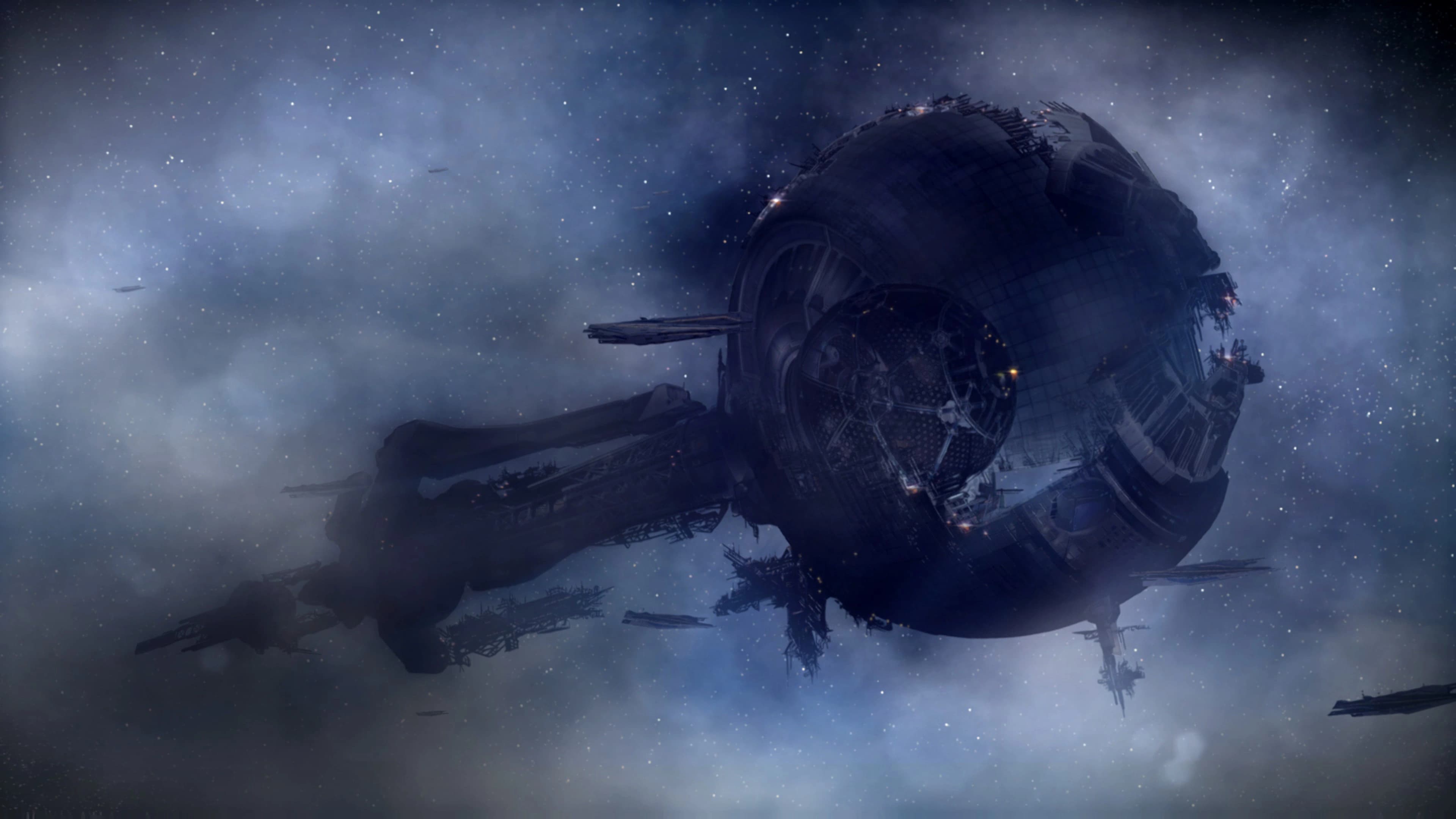
The Crucible was an ancient superweapon of unknown origin, refined across countless cycles by species hoping to stop the Reapers. Rediscovered during the Reaper invasion and built by a united galaxy, it became the last hope of organic life, completed only by joining it with the Citadel.
The Crucible was an ancient and highly complex device conceived as a superweapon to stop the Reapers, though no civilization that designed it ever managed to deploy it before extinction. Its plans were stored in a Prothean archive on Mars and later rediscovered by a Systems Alliance team. During the Reaper invasion of 2186, Commander Shepard recovered the designs on Admiral Steven Hackett's orders after the fall of Earth, and the device became the galaxy's last hope. (Mass Effect 3)
Origin across the cycles#
It was never known who first began the Crucible's development. Countless species obtained the design and contributed to it over the course of millions of years, yet none deployed it before being annihilated by the Reapers. The Reapers were led to believe that every trace of the design had been eradicated, but across the cycles the schematics were continuously preserved and passed forward. (Mass Effect 3)
The most recent species to attempt it, the Protheans, succeeded in building the Crucible but never activated it. Infighting broke out between those who wished to use the device to destroy the Reapers and a faction convinced it could be used to control them; this second group was later found to have been indoctrinated. The Protheans fell before the matter was resolved, and the Crucible's schematics lay in a Prothean archive on Mars for the next fifty thousand years. (Mass Effect 3)
Modern construction#
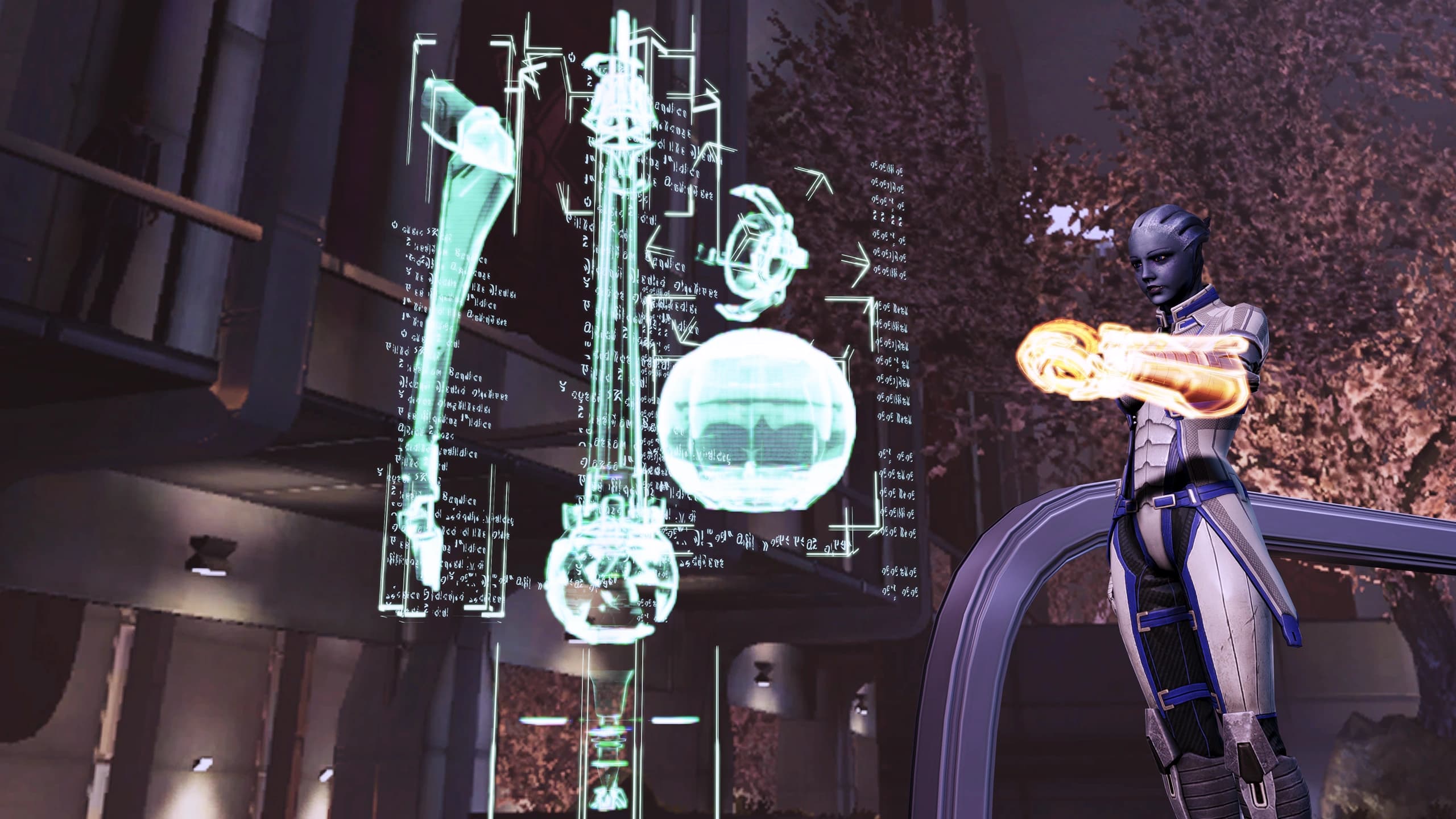
After recovering encryption keys from a Prothean shrine on Kahje, Liara T'Soni traveled to the Mars Archive in 2186 to learn what she could. There she found the Crucible's schematics and recognized their potential as a weapon against the Reapers. The Illusive Man, leader of Cerberus, sought the same prize and dispatched an agent named Dr. Eva Coré to seize it. The schematics were wiped from the archive and stolen, and after a chase across Mars the Cerberus agent, revealed to be an infiltration unit, was disabled, though one of Shepard's companions was gravely injured in the process. The plans passed to the Alliance, which began construction immediately, a colossal undertaking drawing on resources from across the galaxy as staggering financial costs were set aside in the desperate effort to build something that could stop the Reapers. (Mass Effect: Homeworlds; Mass Effect 3)
Despite the Crucible's elegant design, modern scientists could determine only that it exploited the technology of the mass relays, and they were left to speculate on how it would ultimately function. More critically, the device could not be activated without one final component, the Catalyst. As the Prothean virtual intelligence Vendetta revealed, the Catalyst was the Citadel, the central control hub of the entire mass relay network. At some point an earlier contributor to the design had realized the Crucible needed a means to massively boost its energy, and the Citadel possessed exactly that capability, so it was written into the schematics. (Mass Effect 3)
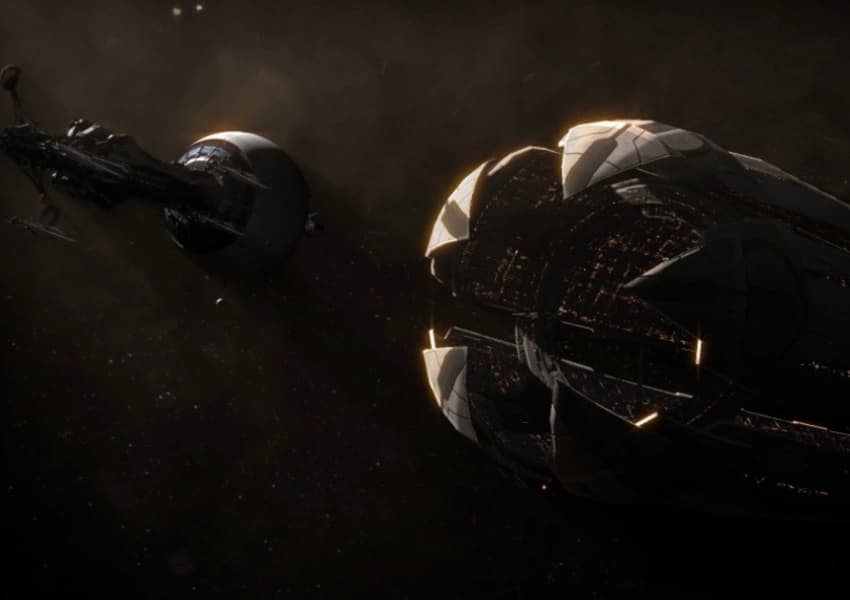
Before the galaxy could unite the Crucible with the Catalyst, the Illusive Man fled to the Citadel and alerted the Reapers to the plan. The Reapers seized the station and moved it into orbit around Earth, deep within their occupied territory. With no other option, Admiral Hackett marshaled the galaxy's fleets and sent them to Sol, where the Crucible joined the final battle behind a token defense force. (Mass Effect 3)
Activation and the final choice#
While the galaxy's forces waged the climactic battle, Commander Shepard infiltrated the Citadel and opened it to allow the Crucible to dock. There Shepard encountered the Catalyst itself, an intelligence that dwelt within the Citadel and appeared in the form of a young human boy whose death Shepard had witnessed during the escape from Earth. The Catalyst described the Crucible as little more than a crude but effective and adaptive power source; combined with the Citadel and the mass relays, it could release tremendous energy across the entire galaxy. Having concluded that the cycle of extinction no longer resolved the conflict between organic and synthetic life, the Catalyst left the new solution to Shepard. (Mass Effect 3)
The Catalyst laid out three ways to use the Crucible. Shepard could destroy the Reapers along with all synthetic life; control the Reapers, replacing the Catalyst at the cost of the Commander's physical form; or merge organic and synthetic life into a new shared existence. Alternatively, Shepard could refuse to choose, preventing the Crucible from firing and allowing the Reaper cycle to continue. In the accounts where Shepard chose to act, the Crucible's energy was transmitted through the Citadel and the mass relay network, fundamentally reshaping the galaxy: in some it destroyed the Reapers and synthetics, in others it brought the Reapers under Shepard's command, and in others still it wove organic and synthetic existence together. In every case the relays carried the device's power outward to every corner of settled space. (Mass Effect 3; Mass Effect 3: Extended Cut)
Frequently asked questions
- What is the Crucible in Mass Effect?
- The Crucible was an ancient and highly complex device conceived as a superweapon to stop the Reapers, though no civilization that designed it ever managed to deploy it before extinction. Its plans were stored in a Prothean archive on Mars and rediscovered during the Reaper invasion of 2186, becoming the galaxy's last hope.
- Who built the Crucible?
- No single species created the Crucible. Countless species obtained the design and contributed to it over the course of millions of years, with the Protheans being the last to build it before they fell, and during the Reaper War a united galaxy poured its resources into constructing the device.
- What is the Catalyst that the Crucible needs?
- The Crucible could not be activated without one final component called the Catalyst, which the Prothean virtual intelligence Vendetta revealed to be the Citadel itself. An earlier contributor had realized the Crucible needed a means to massively boost its energy, and the Citadel, the central hub of the mass relay network, possessed exactly that capability.
- How did the Protheans fail to use the Crucible?
- The Protheans succeeded in building the Crucible but never activated it because infighting broke out between those who wished to use it to destroy the Reapers and a faction convinced it could be used to control them. That second group was later found to have been indoctrinated, and the Protheans fell before the matter was resolved.
- What choices does the Crucible offer at the end of the war?
- When Shepard reached the Catalyst, it laid out three ways to use the Crucible: destroy the Reapers along with all synthetic life, control the Reapers at the cost of the Commander's physical form, or merge organic and synthetic life into a new shared existence. Shepard could alternatively refuse to choose, preventing the Crucible from firing and allowing the Reaper cycle to continue.
Gallery
Images via Mass Effect Wiki
Sources
- GameMass Effect 3, BioWare, 2012
- GameMass Effect 3: Extended Cut, BioWare, 2012
- ComicMass Effect: Homeworlds, Dark Horse Comics, 2012
Spotted a factual error or a primary source we missed? Email a correction. Every flagged claim gets reviewed.
Followed from this entry
Mass relay
Mass relays were colossal transit devices scattered across the Milky Way that flung starships across thousands of light years in moments. Long credited to the Protheans, they were in truth built by the Reapers as part of a trap meant to shape and harvest galactic civilization.
Reaper
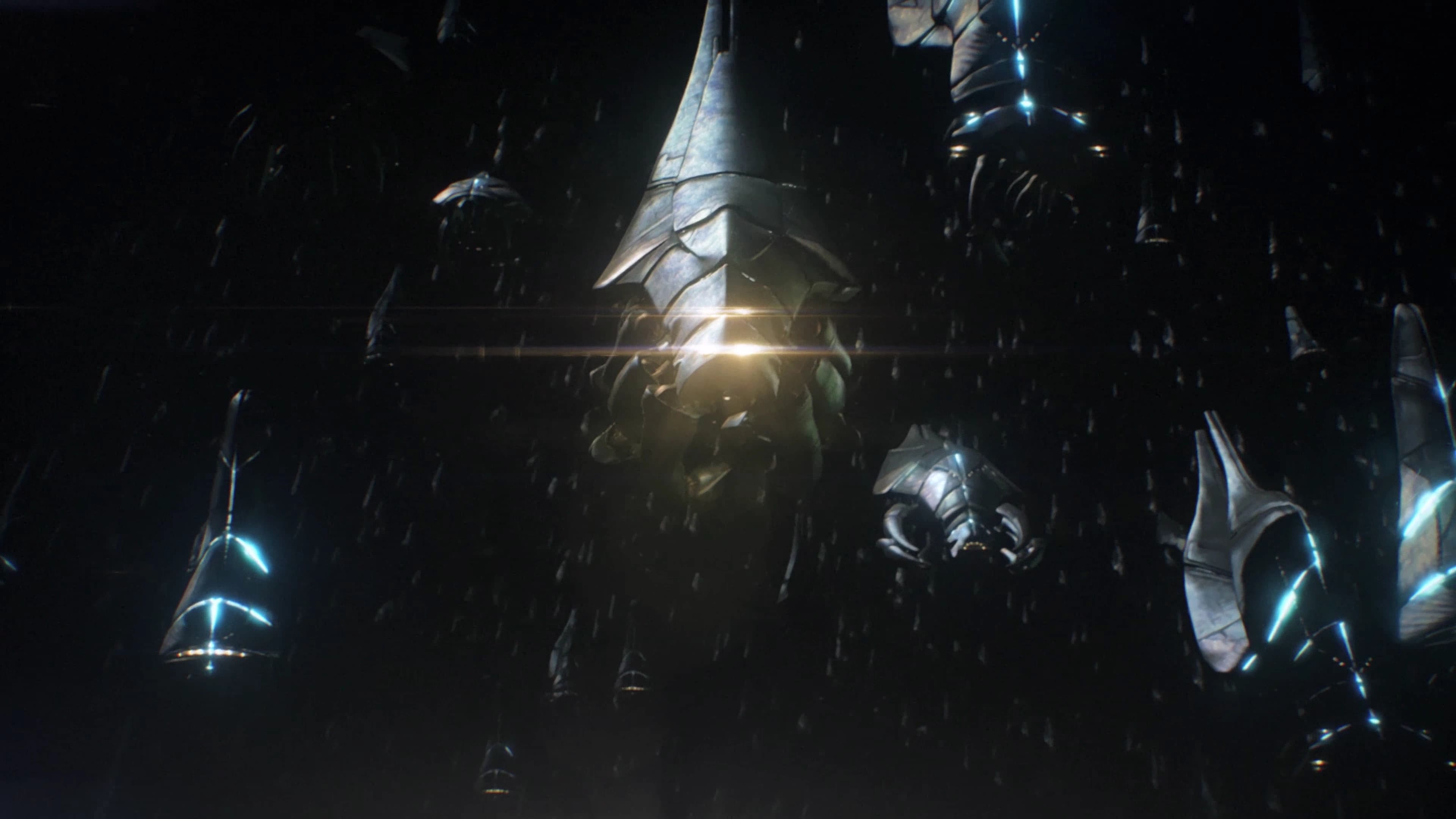
The Reapers were an ancient race of synthetic-organic starships that hibernated in dark space and returned once every fifty thousand years to harvest the galaxy's advanced life. They built the Citadel and the mass relay network to guide civilization down a predictable path, then reaped it to preserve organic life from synthetic destruction.
Mass Effect 3 Story and Ending Explained: Destroy, Control, Synthesis and Refuse
The Mass Effect 3 story in order and every ending explained: what the Catalyst is, what Destroy, Control, Synthesis and Refuse each do, and what the Extended Cut changed.

Cerberus
Cerberus was a clandestine, human-supremacist paramilitary organization led by the Illusive Man, willing to use any means to advance humanity's place in the galaxy. Branded a terrorist group by both the Systems Alliance and the Citadel Council, it was ultimately destroyed during the Reaper War.
Citadel
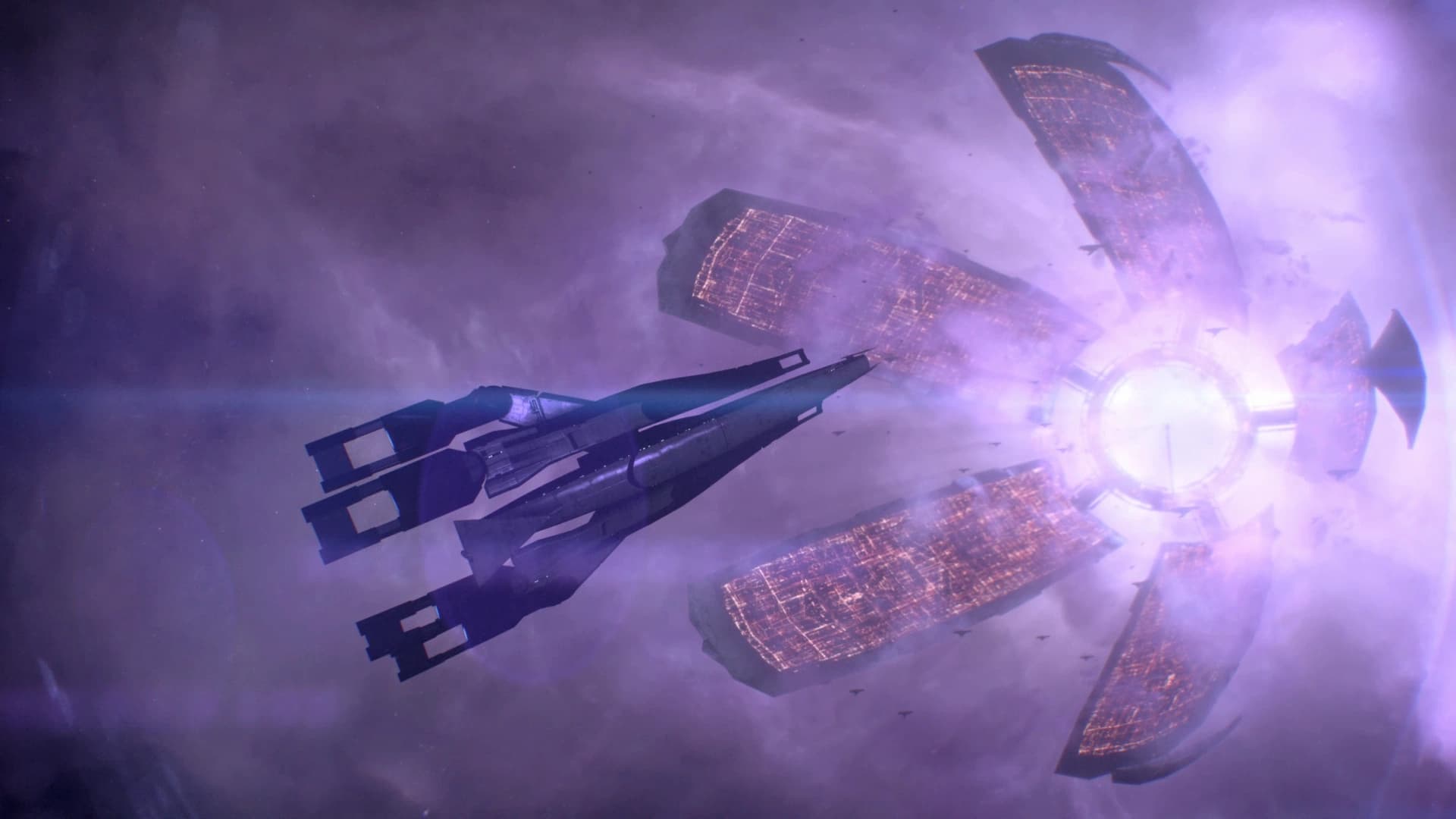
The Citadel was a colossal deep-space station in the Serpent Nebula that served as the political and cultural heart of Citadel space and the seat of the Council. Long believed to be a Prothean relic, it was in truth a Reaper construction and a dormant trap at the center of galactic civilization.
Commander Shepard
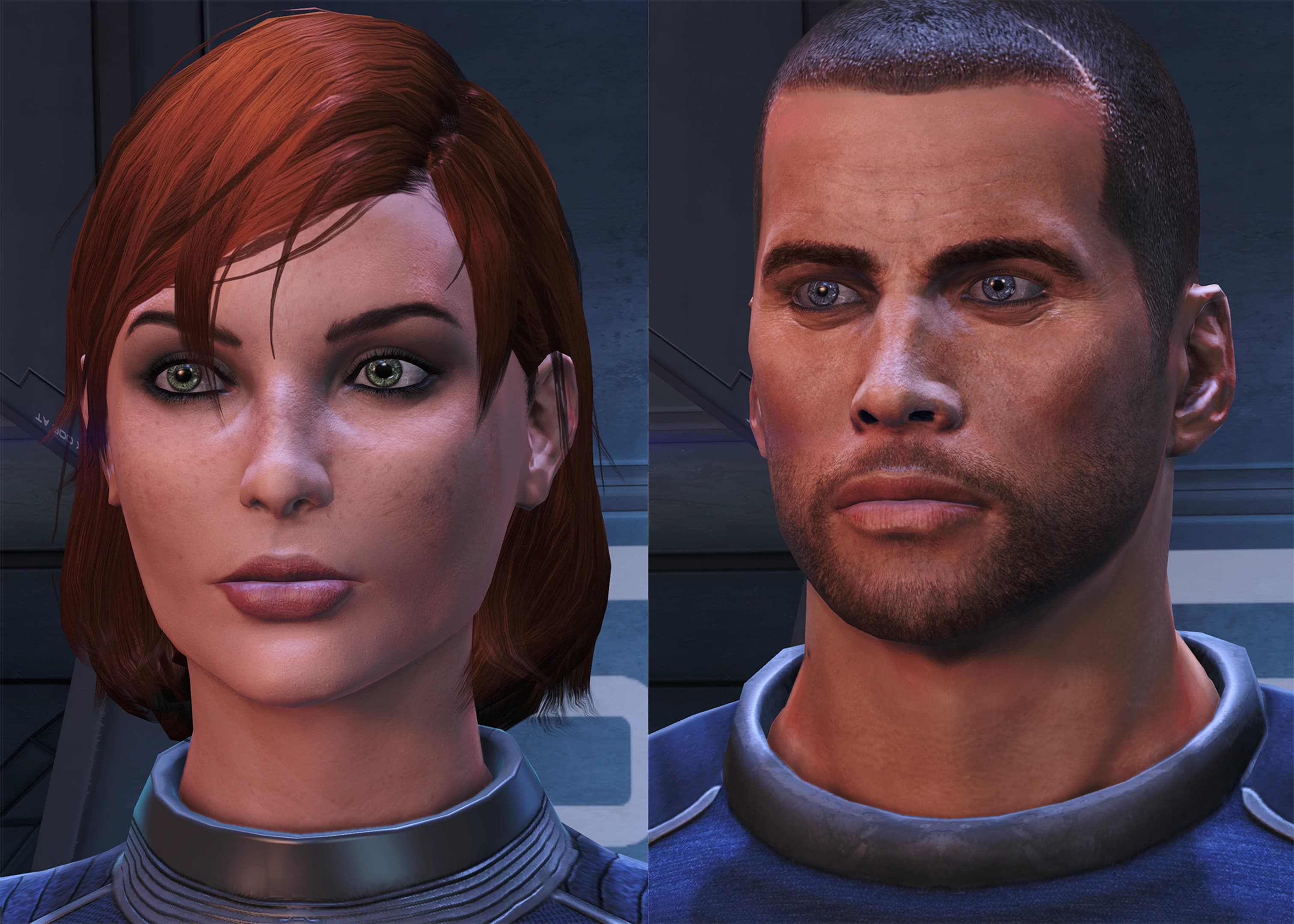
Commander Shepard was a Systems Alliance N7 marine who became the first human Spectre, exposed the rogue agent Saren Arterius, and led the galaxy's resistance against the Reapers. Shepard's gender, history, and many of the choices that shaped the war were never fixed, and the final fate of the cycle turned on the Commander's own decisions.
Mentioned in22 entries
Asari
The asari, native to Thessia, were among the most influential species in the galaxy, renowned for their elegance, biotic talent, and millennium-long lifespans. A mono-gender people able to reproduce with a partner of any species, they founded the Citadel Council and stood at the heart of galactic society for two thousand years.
Asari Republics
The Asari Republics were the loose, consensus-driven government of the asari, the most influential species in the galaxy. As the first contemporary race to settle the Citadel, the asari were instrumental in founding the Citadel Council and remained at the heart of galactic society.
Every Mass Effect Romance Option, Game by Game
Every romance in Mass Effect, Mass Effect 2, Mass Effect 3 and Andromeda: who each character is, whether a male or female Shepard or Ryder can romance them, how the relationship plays out and what happens to it in the next game. Fates that depend on choices are given as choices.
Every Mass Effect Squadmate and Companion, Game by Game
Every squadmate in Mass Effect, Mass Effect 2, Mass Effect 3 and Andromeda, with their species, how they join, what their story is about and how they can die. Fates that depend on player choices are given as choices, because the series never picks one canon.
Genophage
The genophage was a genetic weapon deployed against the krogan during the Krogan Rebellions, drastically lowering the chance of viable births and consigning the species to a slow decline. Developed by the salarians and unleashed by the turians, it haunted galactic politics for over a thousand years.
Human-Reaper: The Proto-Reaper of the Collector Base
The Human-Reaper was an incomplete Reaper under construction by the Collectors at their base beyond the Omega 4 Relay. Built from the liquefied remains of abducted human colonists, the larval being was meant to become a new Reaper in the image of humanity before Commander Shepard destroyed it.
James Vega
Lieutenant James Vega was a hardened Systems Alliance marine who joined Commander Shepard's crew during the Reaper War, a brave soldier haunted by a costly command decision who came to see Shepard as both mentor and role model.
Mass Effect 3 Quiz: Test Your Knowledge of the Story
Twelve questions on Mass Effect 3, from the fall of Earth and the Crucible to the Catalyst and the four endings. Every answer comes with a short explanation and a link to the page that covers it.
Mass Effect 3 Story and Ending Explained: Destroy, Control, Synthesis and Refuse
The Mass Effect 3 story in order and every ending explained: what the Catalyst is, what Destroy, Control, Synthesis and Refuse each do, and what the Extended Cut changed.
Mass Effect Story Explained: the Trilogy and Andromeda
The whole Mass Effect story in order, one game at a time. Shepard stops Saren, beats the Collectors and leads the galaxy against the Reapers, then Andromeda starts again 600 years later in another galaxy.
Mass Effect Timeline: every major event from the Leviathans to Andromeda
A dated history of the Mass Effect universe, from the Leviathans and the first Reaper harvests through the fall of the Protheans, the Council's wars, humanity's arrival and the Reaper War of 2186. It ends with the Andromeda Initiative reaching the Heleus Cluster in 2819, and runs oldest first in eras.
Mass relay
Mass relays were colossal transit devices scattered across the Milky Way that flung starships across thousands of light years in moments. Long credited to the Protheans, they were in truth built by the Reapers as part of a trap meant to shape and harvest galactic civilization.
+ 10 more
Get new articles in your inbox
No spam. New lore drops, canon conflicts, and deep dives only when they’re worth reading.
Some links on Lore Fortress are affiliate links. If you buy through them we earn a small commission at no extra cost to you.