Asari Republics
The Consensus Government of Thessia
The Asari Republics were the loose, consensus-driven government of the asari, the most influential species in the galaxy. As the first contemporary race to settle the Citadel, the asari were instrumental in founding the Citadel Council and remained at the heart of galactic society.
The Asari Republics were the governmental structure of the asari, the species native to Thessia widely regarded as the most influential and respected in the galaxy. Renowned for their elegance, diplomacy, and biotic aptitude, the asari were among the earliest races to achieve interstellar flight after the Protheans and the first contemporary species to discover and settle the Citadel. Favoring compromise and cooperation over conflict, they were instrumental in proposing and founding the Citadel Council and remained at the heart of galactic society ever since, normally serving as its diplomatic arm. (Mass Effect)
Origins on Thessia#
The asari arose on Thessia, a world whose abundant element zero gave much of its life biotic tendencies. The Protheans, discovering the asari, crafted the guise of a benevolent goddess named Athame to accelerate asari development, genetically granted them biotic capability, and defended Thessia from disaster. When the Protheans departed they left a single beacon, around which the asari built a temple devoted to Athame; the beacon contained the Prothean VI Vendetta and quietly drove centuries of asari technological advancement. Its existence became a closely held state secret, since revealing it would have discredited the near-universal belief that the asari had reached their heights on their own merit. By 2183 few outside the highest echelons of asari government knew of the Protheans' role. (Mass Effect 3)
Founding the Citadel Council#
The asari were the first contemporary race to achieve spaceflight and discover the mass relay network. When they found the Citadel in 580 BCE, the silent assistance of the keepers allowed them to settle the station quickly and learn its systems. Sixty years later the salarians made first contact, and in 500 BCE the two species founded the Citadel Council, a galactic governing body that would eventually unite dozens of races. The asari continued to explore in later centuries, making first contact with the elcor around 200 BCE and welcoming the raloi into the galactic community as late as 2185. (Mass Effect; Mass Effect 3)
Government#
The Asari Republics formed a broad, decentralised structure. Asari political tradition came late to world government and the shape of the Republics still shows it. For centuries Thessia was dotted with loose confederacies of republican city-states, comparable to the ancient Mediterranean, and the asari value for consensus left little impetus to form larger principalities. Only in the information age did the city-states draw together into what amounted to an electronic democracy. Aside from their single Council representative the asari had no politicians or elections, instead conducting a free-wheeling, all-inclusive legislature in which citizens debated policy at any hour through forums moderated by virtual intelligences, with every matter open to plebiscite. In practice the asari lent the greatest credence to any Matriarchs present, nearly always deferring to the experience of these millennia-old "wise women." (Mass Effect)
Culture and the long view#
Because asari commonly lived beyond a thousand years, they tended toward a "long view" uncommon among other races, comfortable with extended observation and undaunted that an investment might not pay off for decades or centuries. In interstellar relations this manifested as an unspoken policy of centrism, instinctively seeking to maintain stable balances of power. The asari traditionally spread their influence not by conquest but through cultural domination and intellectual superiority, inviting promising species into the galactic community in the knowledge that asari ideals would inevitably shape them. The mainstream asari religion was siari, a pantheistic faith holding that the universe is a single consciousness and that all life is an aspect of the greater whole, a belief reinforced by the asari ability to meld with nearly any form of life. A few asari renounced their possessions to become justicars, members of an ancient order who corrected injustice within asari space by often harsh means. (Mass Effect; Mass Effect 2)
Economy and military#
The asari possessed the largest single economy in the galaxy, with extensive trade contacts and a virtual monopoly on advanced biotic technology held by craft guilds in cities such as Serrice and Armali. Their military, by contrast, resembled a collection of tribal warrior bands with no national structure: each community organized and equipped its own unit and elected a leader, though those who served were full-time professionals. The typical asari huntress, a commando in the maiden stage of life, devoted decades to martial training and fought alone or in pairs with a sharp tactical sense and a dancer's grace. Because their units were small and lacked heavy armor, the asari were almost incapable of conventional defensive war and instead specialized in ambush, infiltration, and assassination. As a turian saying held, the asari were the finest warriors in the galaxy, fortunately few in number. Their navy was among the most powerful in existence, possessing twenty-one dreadnoughts in 2183, including the Destiny Ascension, flagship of the Citadel Fleet, whose firepower nearly rivaled the rest of the asari fleet combined. (Mass Effect)
The Reaper War#
During the Reaper invasion of 2186 the asari initially refrained from supporting the other races, reluctant to divert resources from defending their own worlds. Despite this caution the Reapers tore through asari defenses, and hit-and-run tactics could only slow, not halt, their advance. Desperate, the asari government authorized their Councilor to reveal the long-hidden Prothean beacon in the Temple of Athame to Commander Shepard, hoping it would provide the key to completing the Crucible. As Shepard sought to retrieve the beacon's data, Thessia came under Reaper assault for the first time since the Rachni Wars and swiftly fell. Out of options, the asari at last joined the Allied war effort, committing resources to the fleets and to finishing the Crucible, and their forces fought alongside the other races in the final confrontation over Earth. (Mass Effect 3)
Frequently asked questions
- What were the Asari Republics?
- The Asari Republics were the governmental structure of the asari, the species native to Thessia and widely regarded as the most influential and respected in the galaxy. They were a relatively broad and decentralized consensus democracy, instrumental in proposing and founding the Citadel Council.
- How did the Protheans influence the rise of the asari?
- The Protheans crafted the guise of a benevolent goddess named Athame to accelerate asari development, genetically granted them biotic capability, and defended Thessia from disaster. When they departed they left a single beacon containing the VI Vendetta, which quietly drove centuries of asari technological advancement and became a closely held state secret.
- How did the asari help found the Citadel Council?
- The asari were the first contemporary race to reach the Citadel, settling it in 580 BCE with the silent assistance of the keepers. Sixty years later the salarians made first contact, and in 500 BCE the two species founded the Citadel Council.
- How did the asari government work?
- After centuries as loose confederacies of republican city-states, the asari drew together into an electronic democracy in the information age. Aside from a single Council representative they had no politicians or elections, conducting an all-inclusive legislature open to plebiscite, and in practice they nearly always deferred to the experience of millennia-old Matriarchs.
- What was the asari military like?
- The asari military resembled a collection of tribal warrior bands with no national structure, each community organizing its own unit, and it specialized in ambush, infiltration, and assassination rather than conventional war. Their navy was among the most powerful in existence, with twenty-one dreadnoughts in 2183, including the Destiny Ascension, flagship of the Citadel Fleet.
Sources
- GameMass Effect, BioWare, 2007
- GameMass Effect 2, BioWare, 2010
- GameMass Effect 3, BioWare, 2012
Spotted a factual error or a primary source we missed? Email a correction. Every flagged claim gets reviewed.
Followed from this entry

Asari
The asari, native to Thessia, were among the most influential species in the galaxy, renowned for their elegance, biotic talent, and millennium-long lifespans. A mono-gender people able to reproduce with a partner of any species, they founded the Citadel Council and stood at the heart of galactic society for two thousand years.

Citadel Council
The Citadel Council was the executive committee that governed Citadel space from the Citadel Tower, composed of representatives of the asari, salarians, and turians, and was the ultimate authority over Council law, interspecies disputes, and the covert Spectre agents.

Thessia
Thessia was the homeworld of the asari, a wealthy and stable world rich in element zero that was long regarded as one of the most prosperous in the galaxy. Its peaceful republics were shattered by the Reaper assault during the war of 2186.
Citadel
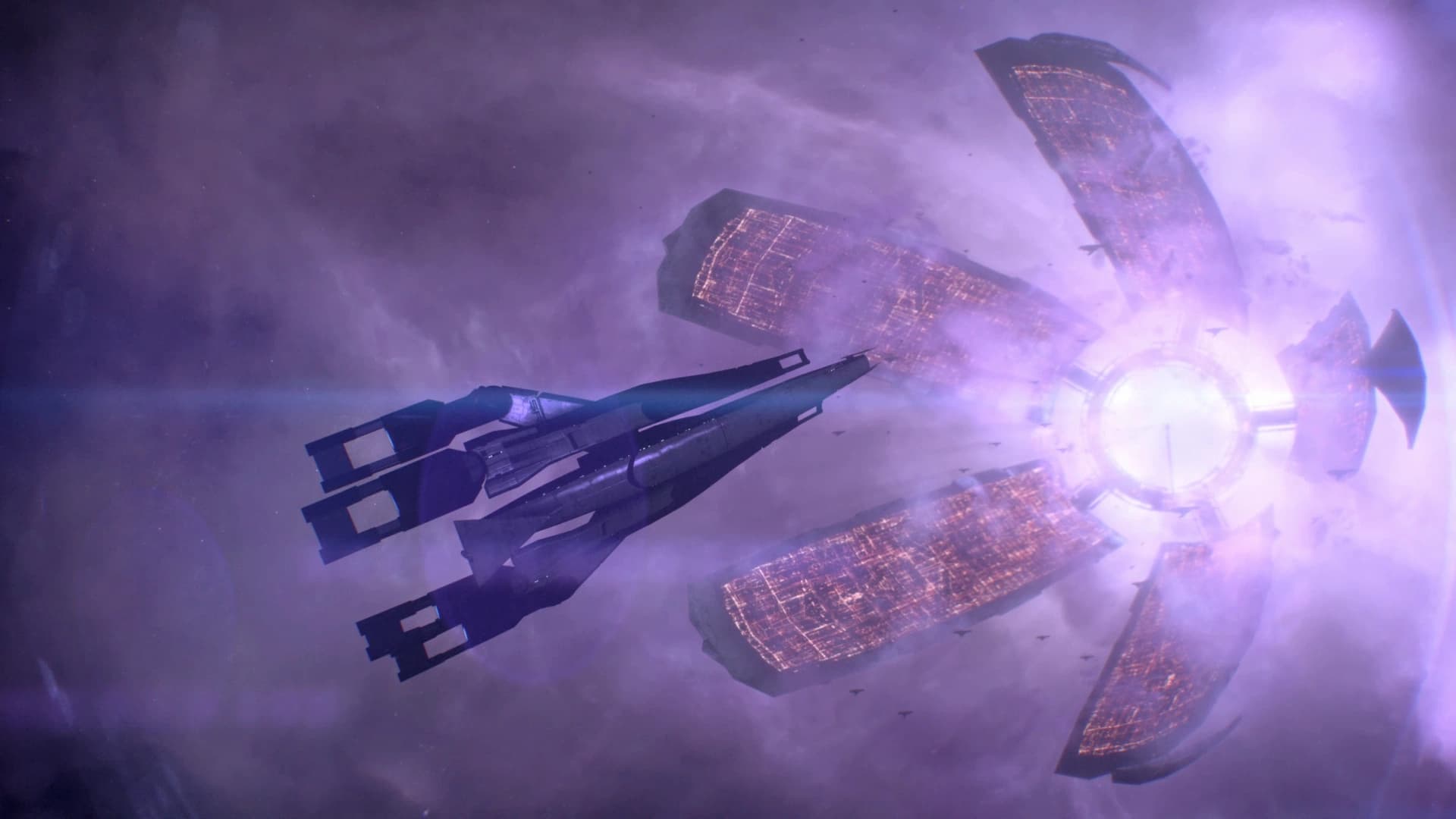
The Citadel was a colossal deep-space station in the Serpent Nebula that served as the political and cultural heart of Citadel space and the seat of the Council. Long believed to be a Prothean relic, it was in truth a Reaper construction and a dormant trap at the center of galactic civilization.

Commander Shepard
Commander Shepard was a Systems Alliance N7 marine who became the first human Spectre, exposed the rogue agent Saren Arterius, and led the galaxy's resistance against the Reapers. Shepard's gender, history, and many of the choices that shaped the war were never fixed, and the final fate of the cycle turned on the Commander's own decisions.

The Crucible
The Crucible was an ancient superweapon of unknown origin, refined across countless cycles by species hoping to stop the Reapers. Rediscovered during the Reaper invasion and built by a united galaxy, it became the last hope of organic life, completed only by joining it with the Citadel.
Mentioned in8 entries
Acolyte: Asari Heavy Pistol
The Acolyte was an asari heavy pistol designed for the asari resistance, firing charged projectiles akin to impact triggered resonant warp bombs. It collapsed kinetic shields and biotic barriers with a single detonation, trusting the shooter's own biotics to finish whatever armor it could not pierce.
Asari
The asari, native to Thessia, were among the most influential species in the galaxy, renowned for their elegance, biotic talent, and millennium-long lifespans. A mono-gender people able to reproduce with a partner of any species, they founded the Citadel Council and stood at the heart of galactic society for two thousand years.
Citadel Fleet: the Council's defence force and what one battle cost it
The Citadel Fleet was the Council's main space defence force, mostly turian ships led by the asari dreadnought Destiny Ascension. Sovereign's attack in 2183 caught it scattered across the relays, and Shepard decides who survives.
Every Mass Effect Species and Race, With Lifespans
A field guide to every sapient species in Mass Effect, from the Council races and their clients to the krogan, the geth, the Protheans and the peoples of the Heleus Cluster. Each entry gives the homeworld, the lifespan where the games actually state one, and where the species stood with the Citadel.
Illium
Illium was a hot garden world colonized by asari corporate interests as a trade hub between the Terminus Systems and the Asari Republics, where relaxed customs laws made almost any good available. During the Reaper War its wealthy, well armed leaders mounted a fierce defense that slowed the invaders.
Justicars: the asari order that answers only to the Code
Justicars were asari who gave up family, property and everything but weapons and armour to wander asari space enforcing a code of more than five thousand sutras. The Code admitted no moral grey and commonly prescribed death, which made justicars both revered and feared by the governments that tolerated them.
Systems Alliance
The Systems Alliance was the supranational government of Earth and its colonies, acting as humanity's military, exploratory, and economic arm in Citadel space. Within decades of its founding it won humanity a Council seat and led the galaxy's defense during the Reaper War.
Treaty of Farixen: the dreadnought ratio that held Citadel space
The Treaty of Farixen fixed how many dreadnoughts each Citadel power was permitted to build, placing the turian navy at the top of a five to three to one pyramid. Signing it was the price of an embassy on the Citadel, and the species who never signed, or who stopped caring, are the ones who reshaped the balance.
Get new articles in your inbox
No spam. New lore drops, canon conflicts, and deep dives only when they’re worth reading.
Some links on Lore Fortress are affiliate links. If you buy through them we earn a small commission at no extra cost to you.