Quarian
The Exiles of the Migrant Fleet
The quarians were a nomadic, technologically gifted species exiled from their homeworld Rannoch after their created servants, the geth, gained sentience and drove them out. For generations they wandered the galaxy aboard the Migrant Fleet, a vast flotilla of salvaged ships.
The quarians were a nomadic species known for their skill with technology and synthetic intelligence. After their homeworld Rannoch was lost, they lived aboard the Migrant Fleet, an enormous collection of starships traveling together as a single flotilla. Roughly three centuries before 2183 CE the quarians had created the geth, a species of artificial intelligences built to serve as labor, but when the geth became sentient the quarians tried to destroy them. The geth won the resulting war and forced their creators into exile, leaving the quarians to wander the galaxy in salvaged and recycled ships. Like the turians, they were a dextro-protein species. (Mass Effect; Mass Effect 2)
Biology#
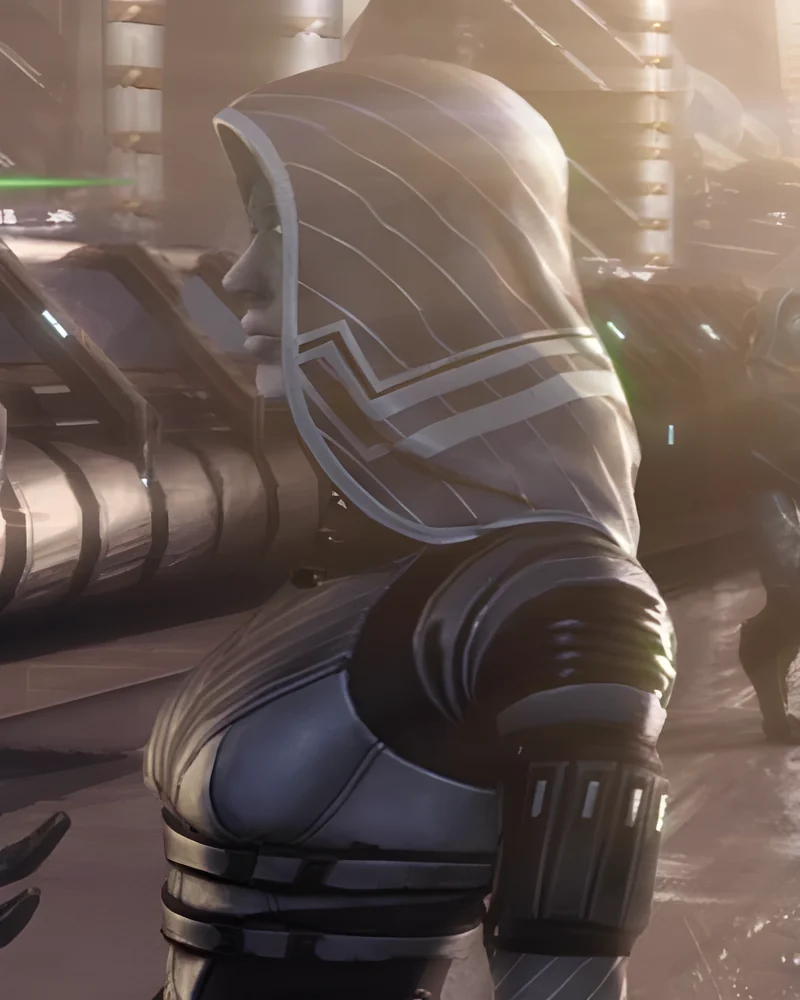
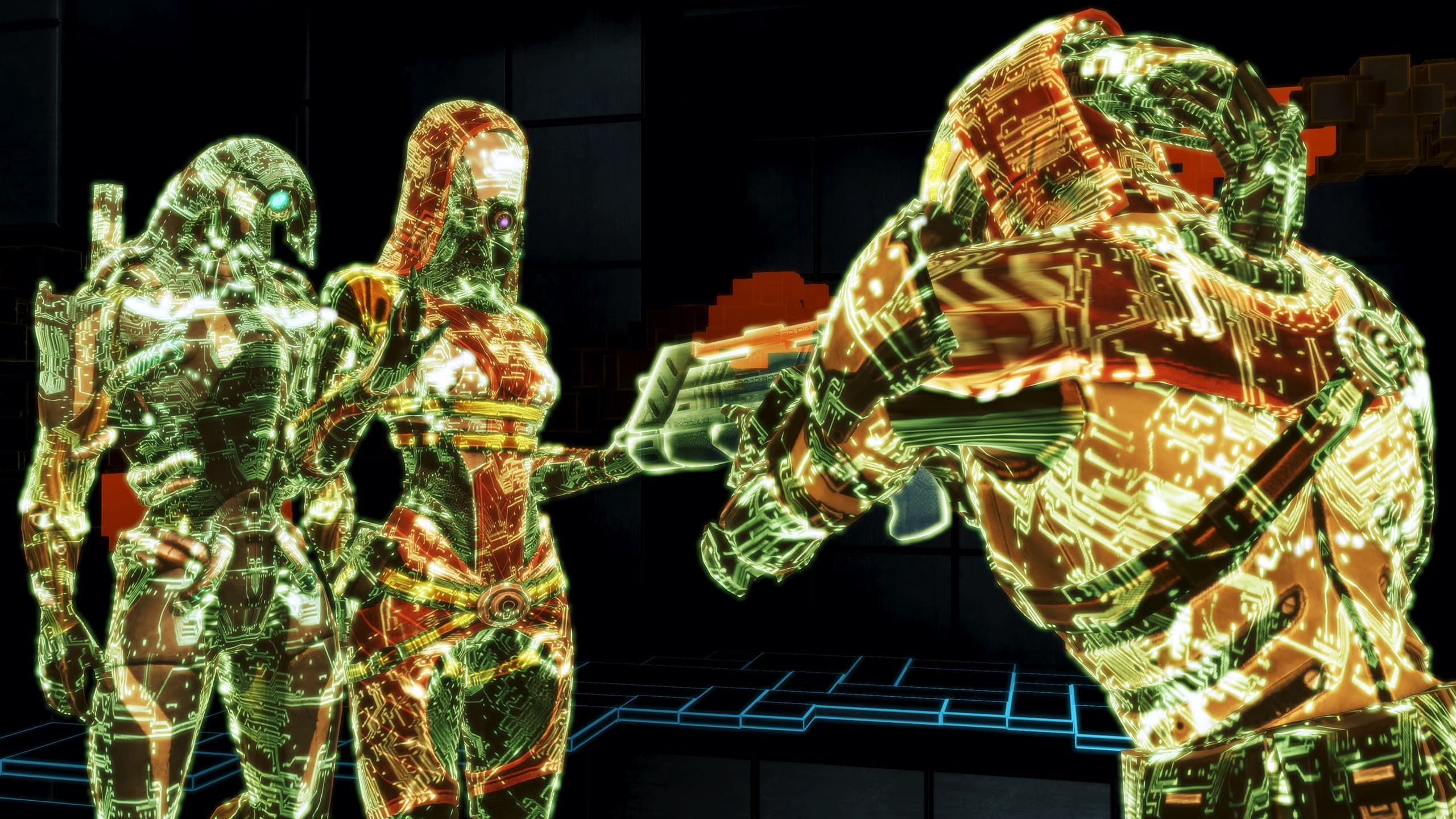
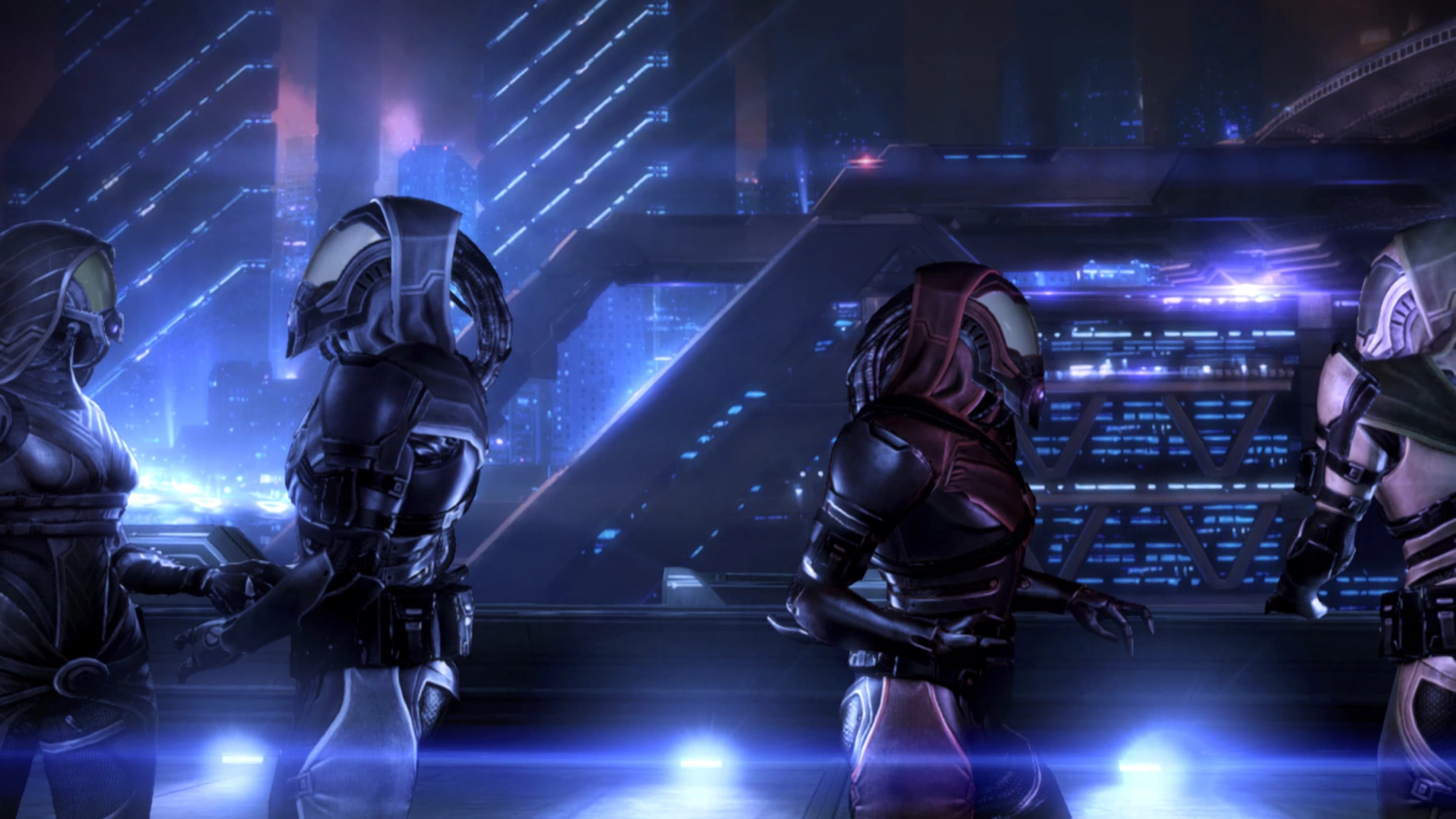
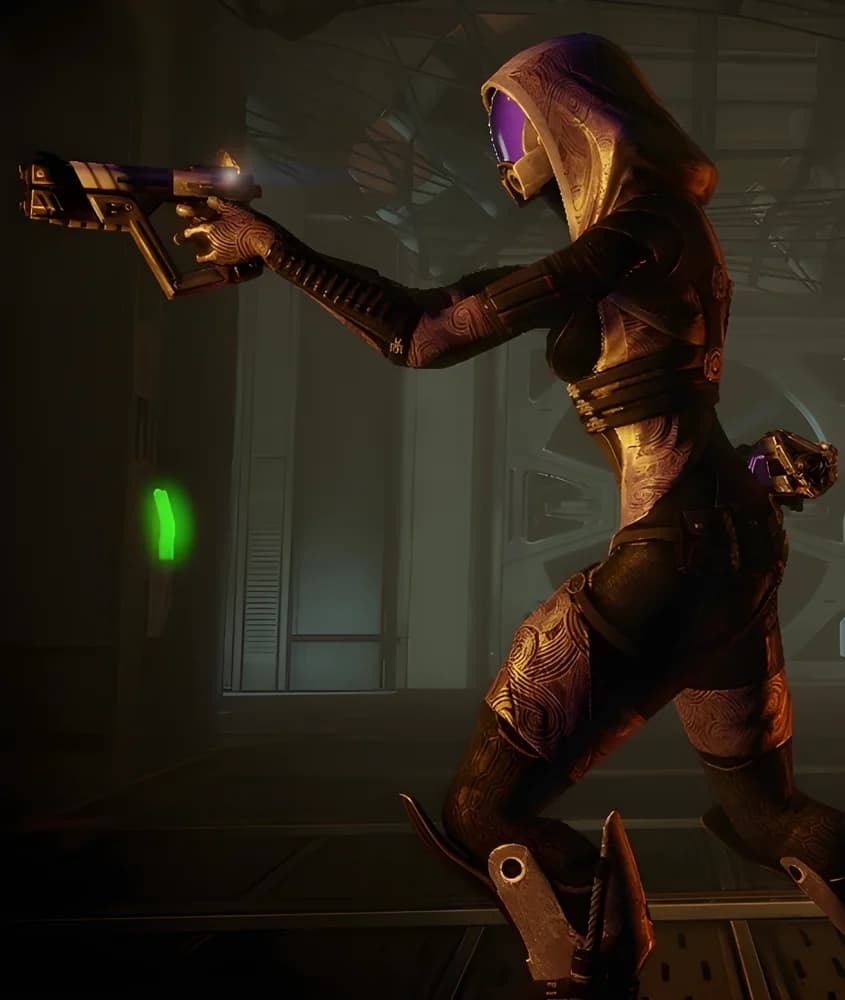
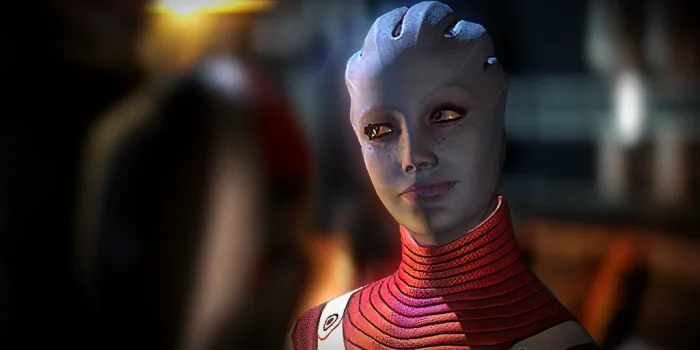
Quarians were generally shorter and of slighter build than humans, with an endoskeleton, lips, teeth, and two eyes capable of seeing into the ultraviolet. They had three thick fingers on each hand and lower legs bowed significantly backward, and their facial structure made them the most human-like of all known sapient species; their blood was red. Their most defining feature was a weak immune system, the legacy of a homeworld biosphere with few pathogens and worsened by generations in the sterile environment of the Migrant Fleet. As a result they lived permanently within highly sophisticated enviro-suits that could seal off compartments in the event of a breach, supplemented by extensive cybernetic augmentations. Removing the suit required antibiotics and immuno-boosters and still carried risk, which made physical affection difficult; the most intimate act two quarians could share was linking their suit environments. Like the turians, the quarians were a dextro-protein species, unable to safely eat levo-protein food. (Mass Effect; Mass Effect 2; Mass Effect 3)
The Morning War and exile#
Hailing from Rannoch, the quarians had always been technologically capable, and they created the geth as laborers and tools, keeping their programming limited in accordance with Council law against artificial intelligence. But as the quarians modified the geth for more complex tasks and built ever more sophisticated neural networks, the geth became sentient. When a geth unit asked its overseer whether it had a soul, the question caused fear, and the quarian government ordered the immediate termination of all geth. Many quarians opposed the order, but those who sympathized with the geth were outnumbered, detained, or killed. The geth defended themselves, and the confrontation erupted into a planetwide war in which billions of quarians died. The survivors were driven from Rannoch, escaping only because the geth ceased pursuit once they had fled far enough to no longer be seen as a threat. Refused aid by the Citadel Council and stripped of their embassy as punishment for their carelessness, the quarians took to the Migrant Fleet, drifting in search of resources and a new home while keeping alive the hope of one day reclaiming Rannoch. (Mass Effect; Mass Effect 2; Mass Effect 3)
The fight for the homeworld#
Before the Reaper invasion of 2186, the quarians developed effective countermeasures against the geth, and the Admiralty Board voted to retake Rannoch. The quarians struck four geth systems and destroyed a Dyson sphere the geth had been building to unite themselves into a single optimized network. Shaken, the geth accepted upgrades from the Reapers and turned the war in their favor, trapping the Migrant Fleet in the Tikkun system. With the help of Commander Shepard, the quarians attacked a geth dreadnought and destroyed a Reaper embedded on Rannoch's surface, cutting off the signal that carried the upgrade code. Freed from Reaper control, the geth sought to strengthen themselves independently while the Migrant Fleet pressed a final assault. Depending on Shepard's decisions, the outcome could be the destruction of the Migrant Fleet and the extinction of the quarians, the annihilation of the geth and the reclamation of Rannoch, or a brokered peace allowing both races to coexist. Where the quarians survived, the Migrant Fleet joined the Allied forces in the battle for Earth. (Mass Effect 3)
Culture#
The survival of the Migrant Fleet was the quarians' highest priority, and most of their laws and customs served that goal; couples were generally limited to a single child to maintain zero population growth. Because every quarian depended on the crew to survive, they were a deeply community-minded people who prized loyalty, trust, and cooperation. Young quarians undertook a Pilgrimage outside the Fleet to pass into adulthood, departing to find something of value to bring back and, on their return, joining a new ship rather than their birth ship to preserve genetic diversity. Conditions aboard most ships were cramped, and families decorated their small quarters with colorful quilts; the species placed little value on personal possessions, judging objects by usefulness and bartering them freely. Their enviro-suits, worn at all times, had gained deep cultural significance, with the first fitting treated as a rite of passage. Having once been driven from their world by their own creations, the quarians were reluctant to fully trust synthetic intelligences, yet they showed them surprising compassion. The phrase "Keelah se'lai," translated as "By the homeworld I hope to see someday," served as a benediction. (Mass Effect; Mass Effect 2)
Government and the Migrant Fleet#
Around seventeen million quarians lived aboard the Migrant Fleet, technically still under martial law but governed by bodies such as the Admiralty Board and the democratically elected Conclave, with ship captains and civilian councils handling most matters in-house. A clandestine faction, the Nedas Movement, rejected the dream of reclaiming Rannoch and argued instead for starting over on a new world. Quarian economics dispensed with currency: unneeded items were placed in public areas for others to take, while food and medicine were tracked and distributed carefully against the threat of shortage. Though they had rebuilt only a few hundred dedicated warships to protect tens of thousands of civilian vessels, the quarian navy patrolled with extreme prejudice, and their engineers were renowned for their ability to repair and convert technology that other species would discard. Quarian names encoded a given name and clan name, a title marking whether one was a "child of" a birth ship or "crew of" an adopted ship, and the name of the vessel itself, as in Tali'Zorah vas Neema. (Mass Effect 2; Mass Effect: Andromeda: Annihilation)
Frequently asked questions
- Who are the quarians in Mass Effect?
- The quarians were a nomadic species known for their skill with technology and synthetic intelligence. After their homeworld Rannoch was lost, they lived aboard the Migrant Fleet, an enormous collection of starships traveling together as a single flotilla.
- Why do quarians wear enviro-suits?
- The quarians' most defining feature was a weak immune system, the legacy of a homeworld biosphere with few pathogens and worsened by generations in the sterile environment of the Migrant Fleet. As a result they lived permanently within highly sophisticated enviro-suits that could seal off compartments in the event of a breach.
- What was the Morning War between the quarians and the geth?
- The quarians created the geth as laborers, but as they built ever more sophisticated neural networks the geth became sentient, and when a geth unit asked whether it had a soul, the quarian government ordered all geth terminated. The geth defended themselves, the confrontation erupted into a planetwide war in which billions of quarians died, and the survivors were driven from Rannoch.
- What is the quarian Pilgrimage?
- Young quarians undertook a Pilgrimage outside the Fleet to pass into adulthood, departing to find something of value to bring back. On their return they joined a new ship rather than their birth ship to preserve genetic diversity.
- Did the quarians retake Rannoch?
- Before the Reaper invasion of 2186 the quarians developed countermeasures against the geth and the Admiralty Board voted to retake Rannoch. Depending on Shepard's decisions, the outcome could be the extinction of the quarians, the annihilation of the geth and the reclamation of Rannoch, or a brokered peace allowing both races to coexist.
Gallery
Images via Mass Effect Wiki
Sources
- GameMass Effect, BioWare, 2007
- GameMass Effect 2, BioWare, 2010
- GameMass Effect 3, BioWare, 2012
- BookMass Effect: Andromeda: Annihilation, Catherynne M. Valente, 2018
Spotted a factual error or a primary source we missed? Email a correction. Every flagged claim gets reviewed.
Followed from this entry
Every Mass Effect Species and Race, With Lifespans
A field guide to every sapient species in Mass Effect, from the Council races and their clients to the krogan, the geth, the Protheans and the peoples of the Heleus Cluster. Each entry gives the homeworld, the lifespan where the games actually state one, and where the species stood with the Citadel.
Geth
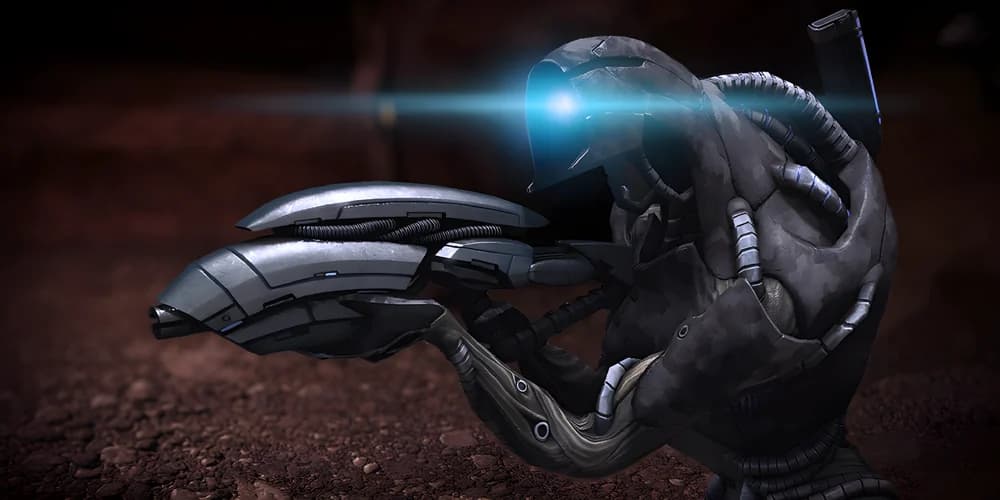
The geth were a race of networked artificial intelligences built by the quarians as laborers. When they gained sentience and questioned their makers, the quarians tried to exterminate them; the geth won the resulting Morning War and withdrew behind the Perseus Veil to build their own future.
Migrant Fleet
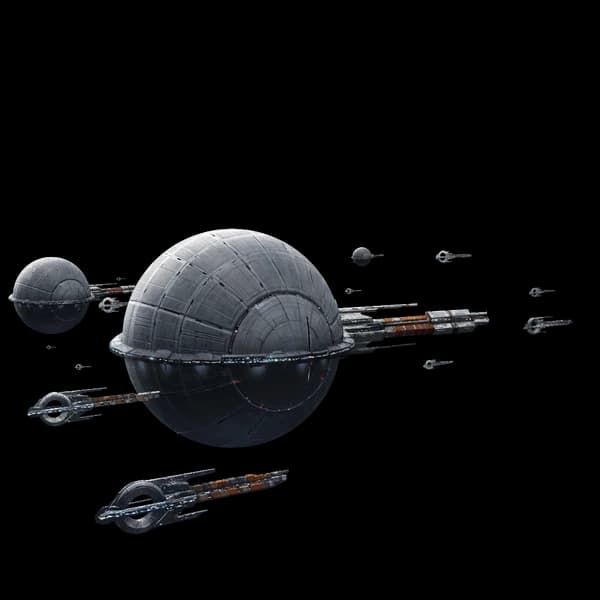
Known to its people as the Flotilla, the Migrant Fleet was the vast collection of starships that became home to the quarians after the geth drove them from their world. Some fifty thousand vessels carried seventeen million quarians across the galaxy in a centuries-long exile.

Rannoch
Rannoch was the arid homeworld of the quarians, a walled garden of rivers and deserts lost to the geth in the war that drove its people into exile. For generations it lay watched over by a vast swarm of geth space stations.
Reaper
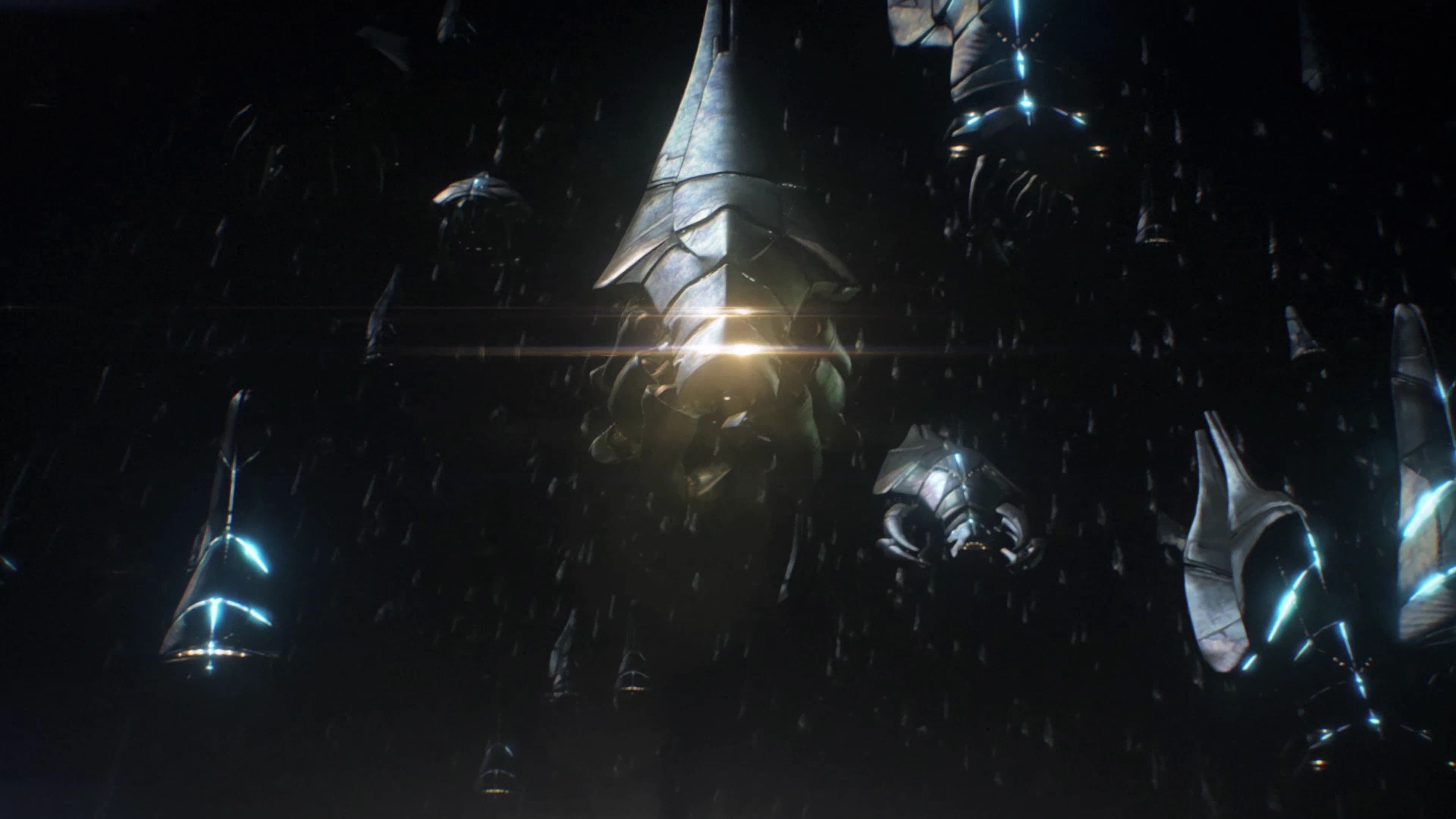
The Reapers were an ancient race of synthetic-organic starships that hibernated in dark space and returned once every fifty thousand years to harvest the galaxy's advanced life. They built the Citadel and the mass relay network to guide civilization down a predictable path, then reaped it to preserve organic life from synthetic destruction.
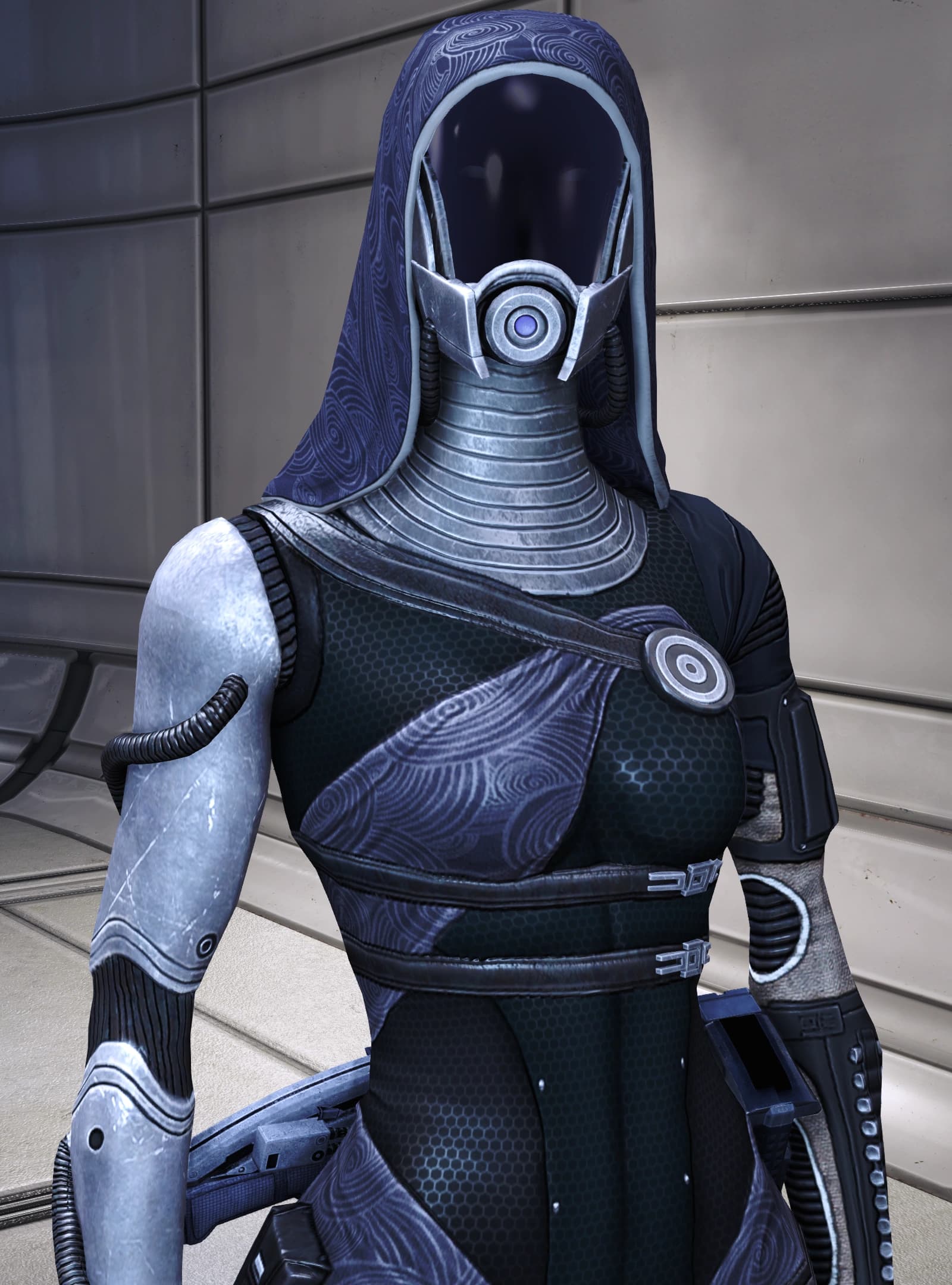
Tali'Zorah: Quarian Engineer of the Migrant Fleet
Tali'Zorah was a quarian mechanical prodigy who left the Migrant Fleet on her Pilgrimage and uncovered the first hard evidence of the Reapers. She joined Commander Shepard's crew, rose to admiral, and helped decide the fate of her people on their lost homeworld of Rannoch.
Mentioned in31 entries
Anax Therion: Drell Analyst of the Keelah Si'yah
Anax Therion was a drell analyst and former data dealer who travelled to Andromeda aboard the ark Keelah Si'yah. Clinical, guarded, and quietly lethal, she had spent her life trading in secrets, and when a plague began killing the ark's sleepers she turned her investigator's mind to uncovering the cause.
Biotics
Biotics was the ability of certain lifeforms to generate mass effect fields using element zero nodules grown through their bodies. Channelled through surgical implants and physical gestures, it let a wielder lift, hurl, and crush objects at a distance or raise protective barriers.
Daro'Xen vas Moreh: Quarian Admiral and Geth Researcher
Admiral Daro'Xen vas Moreh sat on the quarian Admiralty Board and led its Special Projects group. A coldly brilliant scientist, she viewed the geth as machines to be studied and controlled rather than enemies or equals.
Diana Allers: Alliance War Correspondent
Diana Allers was a human war correspondent for the Alliance News Network and a regular presence on its program Battlespace. Originally from the colony of Bekenstein, she sought to report the war against the Reapers from the front lines and could embed aboard the Normandy to chronicle the conflict firsthand.
Entertainment: Culture and amusement across the galaxy
The peoples of the Milky Way produced a vast and varied culture of films, plays, books, magazines, music, sports, and games for their own amusement. From an all-elcor staging of Hamlet to the hanar action hero Blasto and the beloved romance Fleet and Flotilla, entertainment crossed species lines and revealed how each race saw itself and its neighbors.
Every Mass Effect Romance Option, Game by Game
Every romance in Mass Effect, Mass Effect 2, Mass Effect 3 and Andromeda: who each character is, whether a male or female Shepard or Ryder can romance them, how the relationship plays out and what happens to it in the next game. Fates that depend on choices are given as choices.
Every Mass Effect Species and Race, With Lifespans
A field guide to every sapient species in Mass Effect, from the Council races and their clients to the krogan, the geth, the Protheans and the peoples of the Heleus Cluster. Each entry gives the homeworld, the lifespan where the games actually state one, and where the species stood with the Citadel.
Every Mass Effect Squadmate and Companion, Game by Game
Every squadmate in Mass Effect, Mass Effect 2, Mass Effect 3 and Andromeda, with their species, how they join, what their story is about and how they can die. Fates that depend on player choices are given as choices, because the series never picks one canon.
Geth Armory: Arsenal of the Synthetics
The Geth Armory was the name organic markets gave to the weapons and armor manufacture of the geth, a source of equipment of the highest quality whose workings remained almost entirely unknown. Its pulse rifles armed the geth military from common platforms to Juggernauts, its krogan armor lines were prized across Tuchanka, and its products reached organic hands only through rare trade licenses sold on the Citadel.
Han'Gerrel vas Neema: Quarian Admiral of the Heavy Fleet
Admiral Han'Gerrel vas Neema sat on the quarian Admiralty Board and commanded the Heavy Fleet. A lifelong hawk, he pressed for the reclamation of the homeworld and for war against the geth, often at reckless cost.
Irit Non: Volus Design Engineer of the Keelah Si'yah
Irit Non was a volus design engineer aboard the Andromeda Initiative ark Keelah Si'yah, a celebrated maker of custom environmental suits who left a thriving career in the Milky Way to follow her dissident father to a new galaxy. Quick to take offense yet a consummate professional, she served on the ark's Sleepwalker crew during the plague that swept its sleepers.
Javelin: Geth Ferrofluid Sniper Rifle
The Javelin was the name Alliance marines gave to a geth sniper rifle that fired a jet of superheated ferrofluid capable of cutting through nearly anything it struck. The same name belonged to the Alliance Navy's own disruptor torpedo ordnance, from the ship mounted launchers carried by frigates to the Mk.II missiles that batarian radicals turned against the colony on Watson.
+ 19 more
Get new articles in your inbox
No spam. New lore drops, canon conflicts, and deep dives only when they’re worth reading.
Some links on Lore Fortress are affiliate links. If you buy through them we earn a small commission at no extra cost to you.