Starships: the warships and vessels of galactic civilization
Starships were spacecraft capable of crossing the void between star systems on thrusters and faster-than-light drives. The navies of the galaxy sorted their warships into four weights, from nimble scouting frigates to kilometer-long dreadnoughts, with the count of dreadnoughts any fleet could build fixed by the Treaty of Farixen.
Starships were spacecraft capable of traveling between star systems, crossing interstellar space on thrusters and faster-than-light drives while the mass relay network carried them over the greater gulfs of the galaxy. Every spacefaring power of the Milky Way, from the Systems Alliance to the turian fleets, built its navy around a shared ladder of warship weights: frigates, cruisers, carriers, and dreadnoughts, each with a distinct role in fleet doctrine. Beneath the warships served a population of fighters, interceptors, shuttles, and corvettes, and above them all stood the Treaty of Farixen, the accord that fixed how many dreadnoughts any navy could lawfully possess. (Mass Effect)
Frigates: the eyes of the fleet#
Frigates were light escort and scouting vessels, the smallest of the recognized warship weights. They often carried extensive GARDIAN systems to screen capital ships against enemy fighters, and each shipped a squad of marines for security and groundside duty. Unlike every heavier class, frigates could land on planets, which made vessels like the Alliance frigate SSV Normandy capable of putting troops directly onto a world's surface. (Mass Effect)
The most important duty a frigate performed was reconnaissance. Sensors, unlike ships and communications employing the mass effect, were limited to the speed of light, so a stationary observer could only detect a vessel one light-year away when its light finally arrived, a full year after leaving the ship. Because faster-than-light attackers always arrived before defenders could detect them with luminal sensors, an attacking fleet could always achieve surprise. The defense was a screen of scouting frigates thrown out in a sphere around the main body, scanning for enemy ships and transmitting warnings inward. (Mass Effect)
Frigates achieved high FTL cruise speeds thanks to high-performance drives, and their proportionally larger thrusters and lighter design mass gave them a maneuverability no heavier vessel could match. In combat that speed rendered them effectively immune to the long-range fire of larger warships. Fleet doctrine organized them into "wolf pack" flotillas of four to six. The packs sped through enemy formations hunting vessels whose kinetic barriers had already been stripped by fighter-launched disruptor torpedoes, circle-strafing each vulnerable target while evading return fire. (Mass Effect)
The vanished destroyer class#
The destroyer was an older class of light escort vessel crewed by twenty, and it did not survive into the modern order of battle. The Systems Alliance still fielded destroyers as of 2157, but by the 2180s the class had disappeared from active service, its role absorbed by the frigate. The destroyers that remained spaceworthy in that later era commonly lived on as second-hand private possessions, such as the Audacity, the ship of Ygara Menoris. (Mass Effect: Revelation; Mass Effect: Andromeda: Initiation)
Cruisers: the poor bloody infantry#
Cruisers were middle-weight combatants, faster than dreadnoughts and more heavily armed than frigates, and they served as the standard patrol unit of every major navy. They could set down on low-gravity planets but not on medium or high-gravity worlds. Away from the great naval bases the cruiser was the standard combat unit a traveler was likely to meet, the "poor bloody infantry" of most fleets. Scouting frigates had neither the punch nor the stamina for serious combat, and dreadnoughts were a strategic resource, carefully hoarded and committed only to the most critical battles, which left the cruiser to carry the burden of routine war. (Mass Effect)
In peacetime, cruisers performed independent "show the flag" patrols through settled systems and led flotillas of frigates in small engagements such as pirate suppression campaigns. In major fleet actions, cruiser squadrons supported the dreadnought battle line by screening its flanks against enemies maneuvering for a main gun "bow shot" against the capital ships' vulnerable broadsides. Turian and human cruisers each carried a crew of about 300. (Mass Effect)
Carriers and the human way of war#
Carriers were dreadnought-sized vessels built to carry a large complement of fighters. Every fleet in the galaxy provided itself with organic fighter support in some form: cruisers tucked a handful of fighters into the space between their interior pressure hulls and exterior armor, and dreadnoughts kept a hangar deck within the hull. It was humanity, only recently "graduated" from surface warfare to space combat, that first built ships wielding fighters as their main armament. (Mass Effect)
In fleet combat a carrier stayed clear of the battle, launching fighters bearing disruptor torpedoes. The fighters were the ship's real weapon; if a carrier ever came within mass accelerator range of the enemy, things had gone very wrong. Fighters could be recovered and rearmed during combat, though most carriers sealed the flight deck and kept out of the way, for the flight deck was essentially a corridor cut through the armor into the heart of the vessel, and a single well-placed torpedo was enough to gut the ship. (Mass Effect)
Dreadnoughts and the Treaty of Farixen#
Dreadnoughts were kilometer-long capital ships mounting heavy, long-range firepower, deployed only for the most vital missions. A dreadnought's power lay in the length of its main gun. The hulls ran from 800 meters to a full kilometer, with a spinal mass accelerator of commensurate length: an 800-meter accelerator could drive a twenty-kilogram slug to 4025 kilometers per second, 1.3 percent of the speed of light, every two seconds, each slug hitting with the kinetic energy of roughly 38 kilotons of TNT. (Mass Effect)
Ships of such power were counted and rationed by law. The Treaty of Farixen stipulated how many dreadnoughts a navy might own, with the turian peacekeeping fleet allowed the most. As of 2183 the turians possessed 37, the asari 21, the salarians 16, and the Alliance 6 with a seventh under construction. By 2185 the count stood at 39 turian, 20 asari, 16 salarian, and 8 human, and by 2186 humanity had completed a ninth while the volus fielded a single dreadnought of their own. The geth, bound by no treaty, possessed almost as many dreadnoughts as the turians. The quarians, preparing to retake their homeworld, fitted the Liveships of the Migrant Fleet with dreadnought cannons, making them dreadnought-class vessels in firepower though with far weaker armor. The batarians were known to possess dreadnoughts, but their exact number was never established. (Mass Effect; Mass Effect 2; Mass Effect 3)
A dreadnought was too large ever to land safely on a planet, so it discharged its drive core into a world's magnetic field while holding orbit. Aboard these giants, as on all large vessels, the decks were arranged perpendicular to the axis of thrust, so that the "top" decks lay toward the bow and the "bottom" decks toward the stern. (Mass Effect)
Fighters, shuttles, and corvettes#
Below the warship weights served the small craft, used exclusively in support of the fleet. Fighters were one-man craft that pressed close-range attacks on enemy ships, while interceptors were one-man craft optimized for destroying opposing fighters. Shuttles carried personnel between large ships without the need to dock, and between ship and ground. Some models, such as the UT-47 Kodiak series, were capable of independent FTL travel, and the UT-47A variant carried both mass accelerator cannons and prototype stealth systems. Corvettes were small ten-man craft that flew combat and survey missions. In the distant Andromeda galaxy, the angara applied the name "cruisers" to their own shuttle-sized transport vessels, a usage at odds with the classification the Milky Way races observed. (Mass Effect; Mass Effect 3; Mass Effect: Andromeda)
Systems common to starships#
Whatever their weight, the starships of the galaxy drew on a common pool of technologies. Hulls were sheathed in ablative armor, with Silaris armor among the finest formulations, and protected by kinetic barriers, of which cyclonic barriers were an advanced refinement. Offensive fits centered on mass accelerator weapons, including the Thanix pattern, and on disruptor torpedoes delivered from Javelin mounts, while GARDIAN systems handled point defense against fighters and incoming ordnance. FTL drives, thrusters such as those fitted with the Helios module, sensor suites like the Argus grid, and heat dispersal systems rounded out the machinery that kept a vessel flying, fighting, and alive between the stars. (Mass Effect 2; Mass Effect 3)
Sources
- GameMass Effect, BioWare, 2007
- GameMass Effect 2, BioWare, 2010
- GameMass Effect 3, BioWare, 2012
- GameMass Effect: Andromeda, BioWare, 2017
- BookMass Effect: Revelation, Drew Karpyshyn, Del Rey, 2007
- BookMass Effect: Andromeda: Initiation, N. K. Jemisin and Mac Walters, Titan Books, 2017
Spotted a factual error or a primary source we missed? Email a correction. Every flagged claim gets reviewed.
Followed from this entry
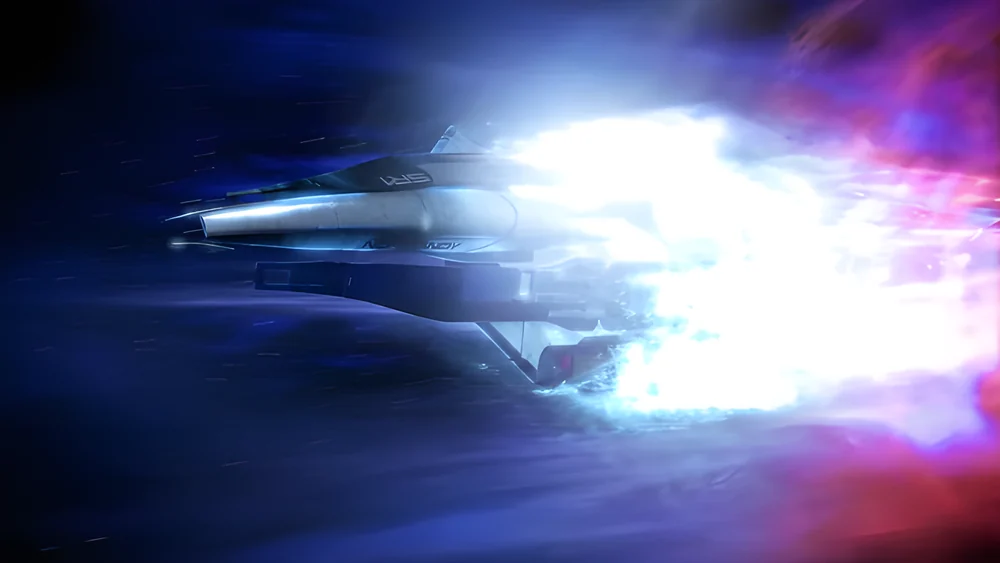
FTL travel
FTL travel was faster-than-light movement achieved without a mass relay, using a drive core to lower a starship's mass so it could exceed lightspeed. It let vessels cross local space at high speed but accumulated a dangerous static charge that had to be regularly discharged.
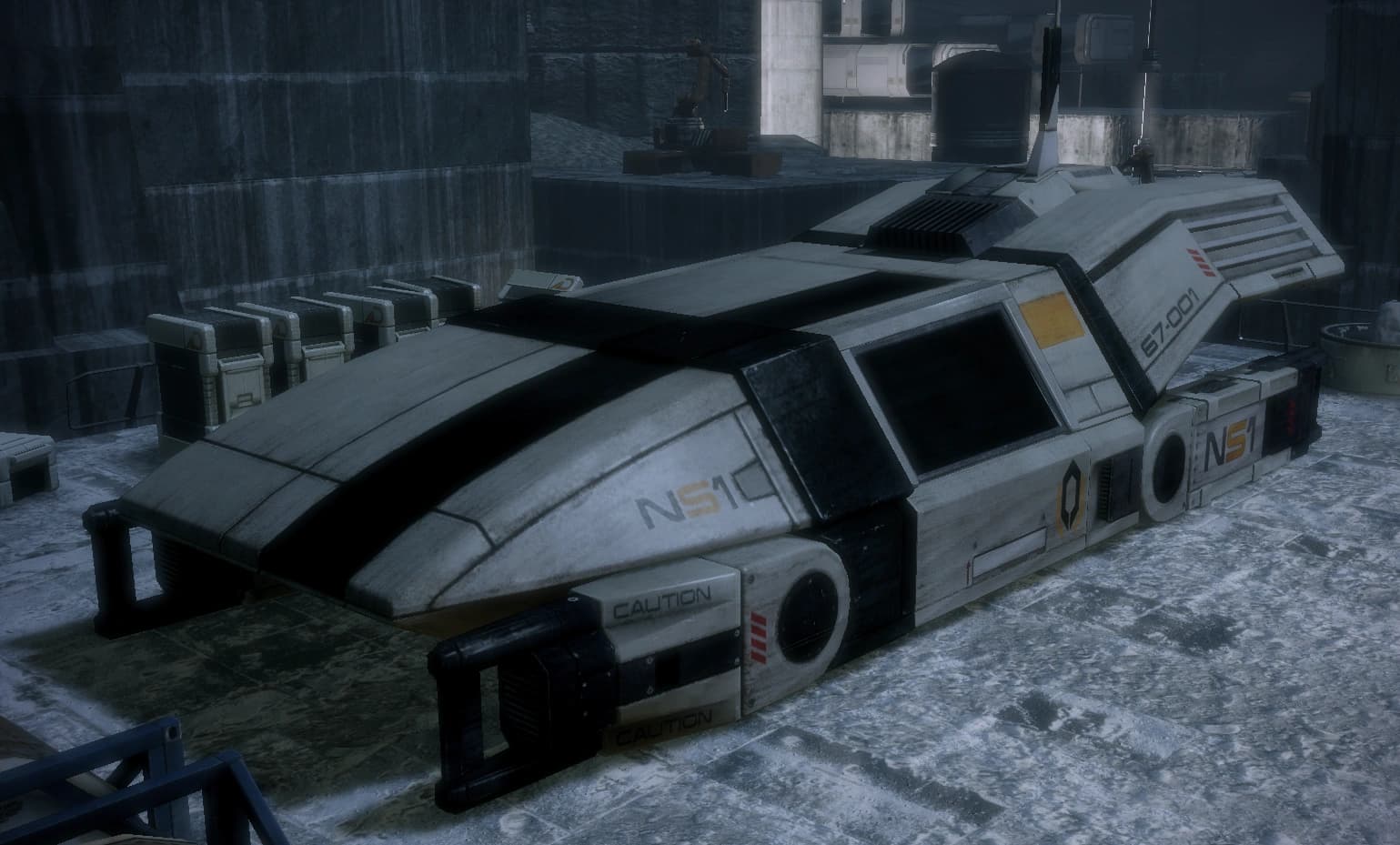
UT-47 Kodiak Drop Shuttle
The UT-47 Kodiak Drop Shuttle was a rugged personnel carrier capable of planetary flight and limited FTL travel. Nicknamed the Combat Cockroach for its durability, it ferried Commander Shepard's ground teams aboard the Normandy SR-2 throughout the campaigns of 2185 and 2186.
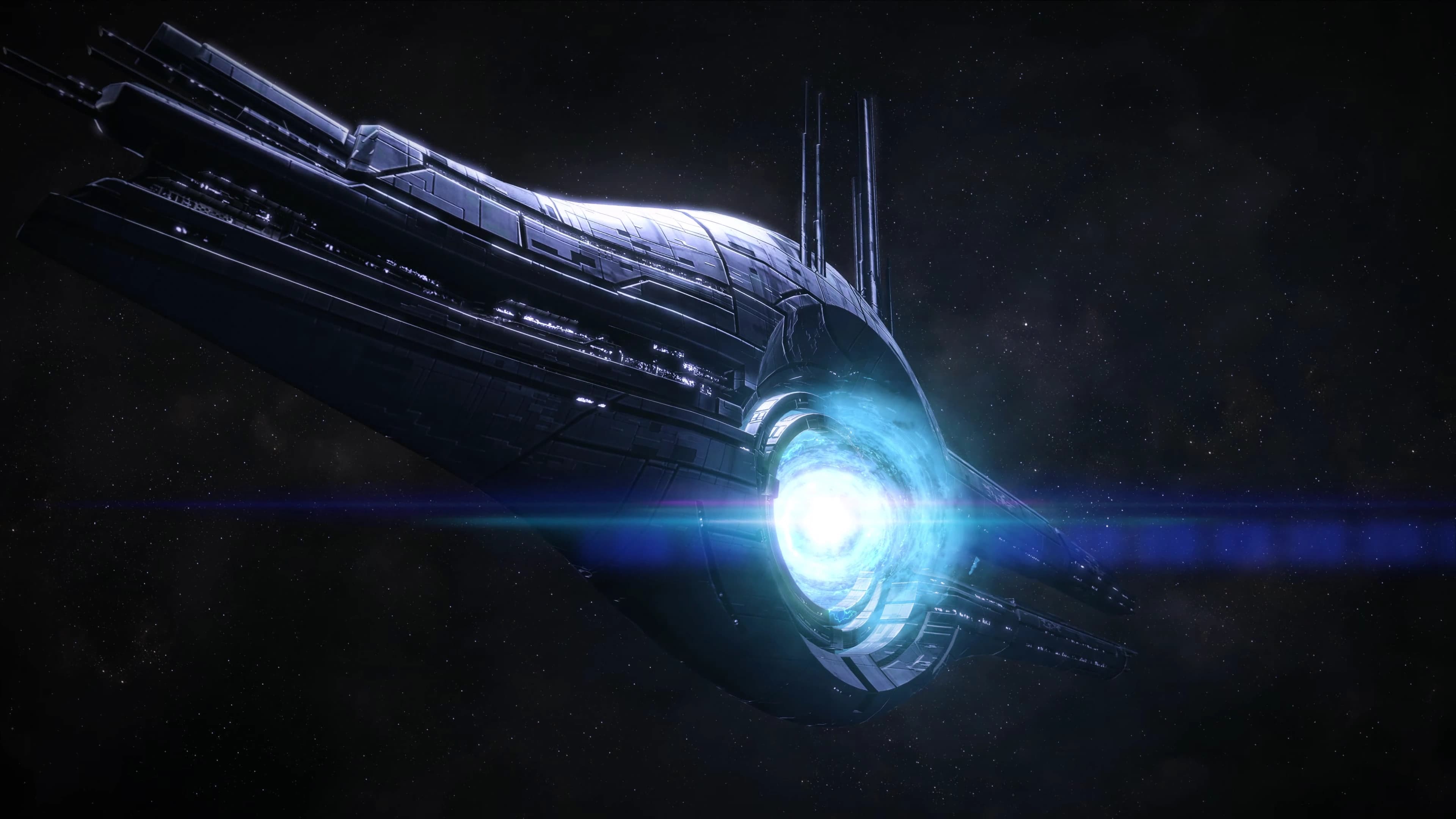
Mass relay
Mass relays were colossal transit devices scattered across the Milky Way that flung starships across thousands of light years in moments. Long credited to the Protheans, they were in truth built by the Reapers as part of a trap meant to shape and harvest galactic civilization.
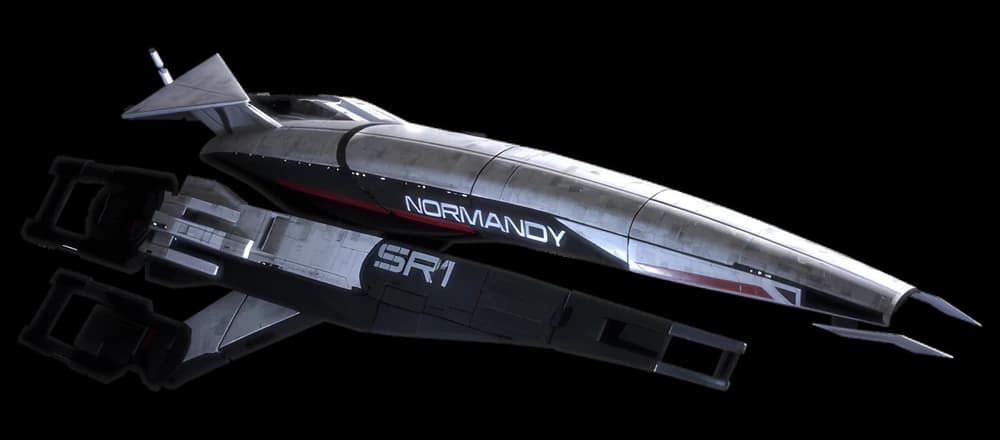
SSV Normandy SR-1
The SSV Normandy SR-1 was a Systems Alliance prototype deep-scout frigate, the first of the Normandy class, co-developed with the Turian Hierarchy under Council sponsorship. She served as Commander Shepard's flagship until her destruction in a surprise attack in 2183.
Treaty of Farixen: the dreadnought ratio that held Citadel space
The Treaty of Farixen fixed how many dreadnoughts each Citadel power was permitted to build, placing the turian navy at the top of a five to three to one pyramid. Signing it was the price of an embassy on the Citadel, and the species who never signed, or who stopped caring, are the ones who reshaped the balance.
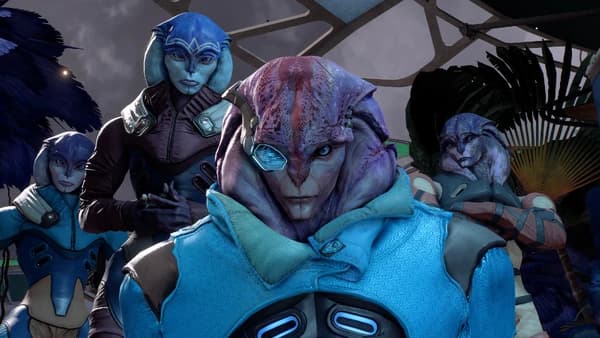
Angara
The angara were the only known living sapient race native to the Heleus Cluster of the Andromeda galaxy. After a catastrophe called the Scourge shattered their ancient civilization, they rebuilt only to face the invading kett, against whom they waged a decades-long resistance.
Get new articles in your inbox
No spam. New lore drops, canon conflicts, and deep dives only when they’re worth reading.
Some links on Lore Fortress are affiliate links. If you buy through them we earn a small commission at no extra cost to you.