Every Mass Effect Species and Race, With Lifespans
A field guide to every sapient species in Mass Effect, from the Council races and their clients to the krogan, the geth, the Protheans and the peoples of the Heleus Cluster. Each entry gives the homeworld, the lifespan where the games actually state one, and where the species stood with the Citadel.
The Mass Effect galaxy is crowded. The original trilogy (2007 to 2012) is set in the Milky Way between 2183 and 2186 CE, where dozens of species share the relay network under the loose authority of the Citadel Council, while Mass Effect: Andromeda (2017) moves to the Heleus Cluster in 2819. This guide covers every sapient species with a real presence in either setting, grouped by their standing with the Citadel, and gives a lifespan only where the codex or the story actually states one.
Species at a glance#
Lifespans below come from the codex or from the story itself. Where neither gives a figure, the table says so rather than guessing.
| Species | Homeworld | Typical lifespan | Citadel status |
|---|---|---|---|
| Asari | Thessia | Up to about 1,000 years | Council member |
| Salarians | Sur'Kesh | About 40 years | Council member |
| Turians | Palaven | Not stated | Council member |
| Humans | Earth | Not stated | Embassy from 2165, Council seat from 2183 |
| Volus | Irune | Not stated | Associate, turian client |
| Elcor | Dekuuna | Not stated | Associate |
| Hanar | Kahje | Not stated | Associate |
| Drell | Rakhana (now Kahje) | About 85 years | Hanar client |
| Krogan | Tuchanka | Centuries, sometimes over 1,000 years | No embassy |
| Quarians | Rannoch | Not stated | Embassy revoked after the Morning War |
| Geth | Rannoch | Synthetic, not applicable | Hostile, outside Council space |
| Batarians | Khar'shan | Not stated | Former associate, embassy closed |
| Vorcha | Heshtok | About 20 years | None |
| Rachni | Suen | Not stated | Declared extinct in 300 CE, then found alive (fate set by Shepard's choices) |
| Yahg | Parnack | Not stated | Quarantined since 2125 |
| Raloi | Turvess | Not stated | Welcomed in 2185 |
| Protheans | Not stated | Not stated | Extinct, built their empire around the Citadel |
| Collectors | Beyond the Omega 4 Relay | Not stated | Hostile |
| Inusannon | Not stated | Not stated | Extinct |
| Leviathans | Not stated | Not stated | Hidden |
| Angara | Havarl (believed) | Not stated | Andromeda, not applicable |
| Kett | Sarhesen (capital) | Not stated | Andromeda, not applicable |
| Jardaan | Not stated | Not stated | Andromeda, vanished |
Council races#
The Citadel Council was the closest thing the Milky Way had to a government. It had no power over member states' internal affairs, but its seats decided who set galactic law. (Mass Effect (codex))
Asari#
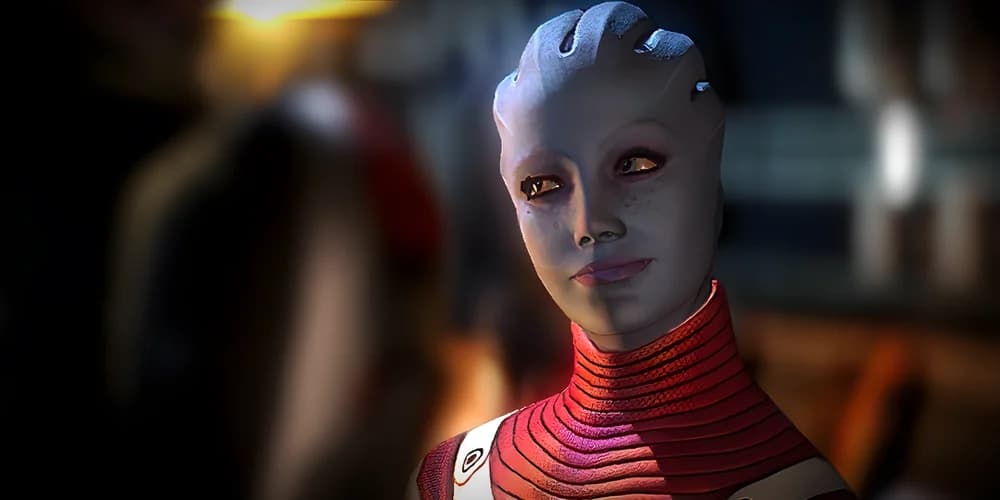
The asari were a mono-gender species from Thessia, feminine in appearance and biotic by nature. They reproduced by melding, attuning their nervous system to a partner of any gender or species, and the child was always asari. (Mass Effect (codex))
An asari could live up to about 1,000 years, the longest stated lifespan of any organic species in the galaxy. Life fell into three stages. The Maiden years were for wandering and experience, the Matron stage began around 350 with a turn towards settling and raising children, and the Matriarch stage began around 700, when asari became the sages and leaders of their people. That long span gave them a patient, consensus-minded outlook on galactic politics. (Mass Effect (codex))
The asari found the Citadel in 580 BCE and founded the Council with the salarians in 500 BCE. Their government, the Asari Republics, was a loose network of city-states run by open debate. In 2186 they admitted that a Prothean beacon hidden in the Temple of Athame on Thessia had guided their early rise, a secret kept for millennia. (Mass Effect (codex); Mass Effect 3)
Salarians#
The salarians were warm-blooded amphibians from Sur'Kesh. A hyperactive metabolism let them think and talk at speed and get by on an hour of sleep a day. The price was a short life: a salarian lived around 40 years, and one older than that was rare. (Mass Effect (codex))
They were the second species to reach the Citadel and co-founded the Council with the asari. Their strength lay in intelligence work rather than fleets, led by the Special Tasks Group. They also carried a heavy legacy. Salarians uplifted the krogan to fight the rachni, then engineered the genophage when the krogan turned on the Council. (Mass Effect (codex))
Dr. Mordin Solus, who had helped update the genophage, spent the later years of his life wrestling with that legacy. (Mass Effect 2; Mass Effect 3)
Turians#
The turians came from Palaven and wore a metallic carapace that protected them from their sun's radiation. Like the quarians, they were built on dextro-amino acids, so most food from other worlds was useless or poisonous to them. (Mass Effect (codex))
Their society was a disciplined meritocracy, the Turian Hierarchy, and their navy was the largest in Council space. The Council brought them in to fight the krogan, and after they deployed the genophage and ended the Krogan Rebellions they were given a Council seat. In 2157 a turian patrol fired on human ships at a relay, starting the First Contact War. (Mass Effect (codex))
No turian lifespan is given in the codex. Garrus Vakarian is the best-known turian of the era. (Mass Effect)
Humans#
Humans were the newcomers. They found a Prothean data cache on Mars in 2148, learned of mass effect physics, and the next year found that Pluto's moon Charon was a dormant mass relay. The Systems Alliance spread human colonies fast through the nearby clusters. (Mass Effect (codex))
First contact came as a war with the turians in 2157, ended by Council mediation. Humanity opened a Citadel embassy in 2165 and pushed hard into frontier space, which brought clashes with the batarians. After the Battle of the Citadel in 2183 humanity gained a Council seat, whichever way Commander Shepard handled the battle. The Reapers overran Earth in 2186. The codex gives no human lifespan. (Mass Effect (codex); Mass Effect; Mass Effect 3)
Associate and client races#
Associate races kept embassies on the Citadel and lived under Council law without a seat on the Council. Client races sat under the protection of a larger patron. (Mass Effect (codex))
Volus#
The volus came from Irune, a high-gravity world with a high-pressure, ammonia-based atmosphere. Normal air was poisonous to them and low pressure split their skin, so they always wore pressure suits and breathers among other species. (Mass Effect (codex))
They were the third race to post an embassy on the Citadel and became the galaxy's bankers and merchants. The volus wrote the Unified Banking Act that made the credit the standard currency of Council space. Being physically weak, they became a client race of the turians, paying tax in return for protection. Despite all that, they were never offered a Council seat, and many volus resented it. (Mass Effect (codex))
Elcor#
The elcor evolved on Dekuuna, a high-gravity world where a fall could kill. They walked on four thick legs, moved slowly and thought just as carefully, which made them cautious and conservative as a people. (Mass Effect (codex))
Among themselves elcor spoke through scent, tiny movements and infrasound. To everyone else they sounded like a flat monotone, so they opened their sentences with a plain statement of the emotion behind them. The asari made contact as the elcor took their first steps into space and helped them reach the relay network. The codex gives no elcor lifespan. (Mass Effect (codex))
Hanar#
The hanar were jellyfish-like invertebrates from Kahje, a world almost entirely covered by ocean. They could not hold their own weight in normal gravity and used levitation packs on land. They spoke to each other in patterns of bioluminescence and were famously, almost rigidly, polite. (Mass Effect (codex))
Prothean ruins on Kahje shaped hanar religion. They called the Protheans the Enkindlers and credited them with teaching the hanar language. A hanar kept two names: a face name for public use and a soul name shared only with close friends. (Mass Effect (codex); Mass Effect 2 (codex))
The hanar held a Citadel embassy and took the drell under their protection. (Mass Effect (codex); Mass Effect 2 (codex))
Drell#
The drell were reptile-like humanoids from Rakhana, a desert world their own industry had pushed towards death. With billions starving and no way off-world, they were saved by the hanar, who carried about 375,000 drell to Kahje over a decade. The rest died on Rakhana. (Mass Effect 2 (codex))
The average drell lifespan was about 85 galactic standard years. Kahje's humidity cut that short for many, because long exposure caused Kepral's Syndrome, an incurable lung disease. Drell had eidetic memory so sharp that a sound or smell could trigger a recall vivid enough to feel real. They repaid the hanar through the Compact, taking on work their hosts found hard, including combat. Thane Krios was a drell assassin raised under that tradition. (Mass Effect 2 (codex); Mass Effect 2)
Non-Council races#
These species had no voice on the Council. Some had been shut out, some had walked away and a few were simply too new. (Mass Effect (codex))
Krogan#
The krogan evolved on Tuchanka, a world of predators that gave them redundant organs, thick hides and huge resilience. Around 4,000 years ago they wrecked their own world in a nuclear war. The salarians found them in that ruin, uplifted them and set them loose against the rachni. (Mass Effect (codex))
Krogan could live for centuries. Warlord Okeer, who fought in the Krogan Rebellions, was still alive in 2185, well over a thousand years later. After the krogan won the Rachni Wars they spread across Council space and refused to stop, and the genophage was deployed to end the rebellions. It left about one pregnancy in a thousand carried to term. (Mass Effect (codex); Mass Effect 2)
If he survived Virmire, Urdnot Wrex became a leading voice for the species. Whether the genophage was cured during the Reaper War depended on the choices made around it. (Mass Effect 3)
Quarians#
The quarians came from Rannoch. Their weak immune systems meant they spent their lives in sealed enviro-suits once they left home. About three centuries before 2183 they built the geth as labour, and when the geth became self-aware the quarians tried to shut them down. The Morning War that followed killed billions and drove the survivors into space. (Mass Effect (codex))
The Council took away their embassy for creating the geth, and the quarians lived for generations aboard the Migrant Fleet. Young quarians left on a Pilgrimage and had to bring back something useful before they could return. Tali'Zorah met Shepard during hers. The codex gives no quarian lifespan. (Mass Effect (codex); Mass Effect)
In 2186 the quarians attacked the geth to take Rannoch back. Depending on Shepard's choices, the war could end with one people destroyed or with the two at peace. (Mass Effect 3)
Geth#
The geth were synthetic. Each geth was a program, and they grew smarter as more of them networked together. After winning their war with the quarians they withdrew behind the Perseus Veil and left the rest of the galaxy alone for nearly 300 years. (Mass Effect (codex))
In 2183 a splinter group, the heretics, followed the Reaper Sovereign and formed most of Saren's army. The main body of geth rejected the Reapers. Legion, a unique platform holding over a thousand programs, could later join Shepard's squad. (Mass Effect; Mass Effect 2)
Lifespan does not apply to the geth. Their fate on Rannoch in 2186 depended on Shepard's choices. (Mass Effect 3)
Batarians#
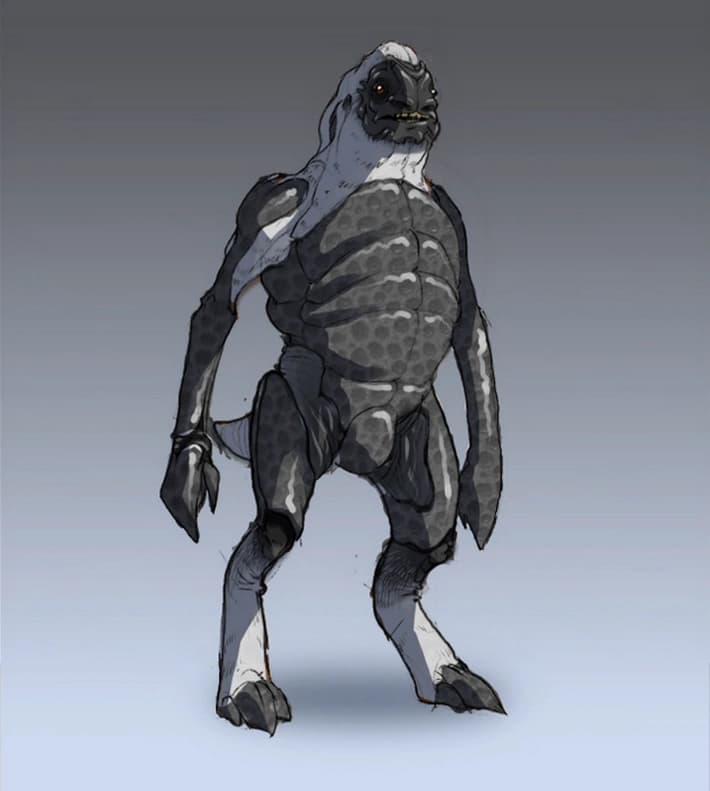
The batarians were a four-eyed species from Khar'shan, ruled by the secretive Batarian Hegemony. Their society ran on a rigid caste system and legal slavery, both of which clashed with Council law. (Mass Effect (codex); Mass Effect 2)
They once held a Citadel embassy. When the Council refused to back their claim to the Skyllian Verge against human colonists, they closed it and turned their backs on the Council. Batarian-backed raiders hit Elysium in the Skyllian Blitz of 2176. In 2185 the destruction of the Bahak system killed over 300,000 batarians, and in 2186 Khar'shan was among the first worlds the Reapers struck. (Mass Effect (codex); Mass Effect 2: Arrival; Mass Effect 3)
Vorcha#
The vorcha came from Heshtok, a small, crowded and stripped world. They were the shortest-lived sapient species known, with an average lifespan of only 20 years. (Mass Effect 2 (codex))
Clusters of undifferentiated cells let a vorcha adapt to injury or hostile surroundings, growing thicker skin after burns or stronger lungs in thin air. That made them hard to kill and almost immune to disease, but each vorcha could generally adapt to only one environment in its short life. The Blood Pack beat them into soldiers, and the rest of the galaxy treated them as vermin. (Mass Effect 2 (codex))
Rachni#
The rachni were an insectoid hive species led by queens, who communicated in a kind of song. Around 1 CE a salarian expedition opened a relay into their space, and the rachni swept outwards in a war no one could negotiate an end to. Only the krogan stopped them, and the rachni were declared extinct in 300 CE. Their homeworld was Suen. (Mass Effect (codex); Mass Effect 3)
In 2183 Shepard found a rachni queen hatched from a recovered egg on Noveria. Shepard could set her free or kill her, and the species' survival hinged on that choice and, if she lived, on a second one in 2186. (Mass Effect; Mass Effect 3)
Yahg#
The yahg were towering predators from Parnack with four pairs of eyes, able to read body language so well that lying to one was nearly impossible. Council surveyors found them in 2125, but the yahg slaughtered the diplomats who treated them as equals, and the Council sealed the world off. (Mass Effect 2: Lair of the Shadow Broker; Mass Effect 3)
One yahg was taken off Parnack by agents of the Shadow Broker. It killed the Broker and took over the network, running it until 2185. No yahg lifespan is given. (Mass Effect 2: Lair of the Shadow Broker)
Raloi#
The raloi were a feathered, bird-like species from Turvess. Their first space telescope spotted an asari cruiser in their system in 2184, and the Council welcomed them formally in 2185. An alien flu caught during the welcome ceremonies left them wearing environmental suits around other species. (Cerberus Daily News)
When the Reapers arrived in 2186 the raloi recalled their Citadel delegation, destroyed their own satellites and hoped to pass as a pre-spaceflight world. (Mass Effect 3)
Extinct and ancient species#
The galaxy was old long before the asari reached the Citadel. Every 50,000 years or so the Reapers wiped out the most advanced civilisations and left their ruins for the next cycle to find. (Mass Effect)
Protheans#
The Protheans ruled a galaxy-wide empire from the Citadel and were the last great civilisation before the trilogy era. Their ruins and technology were everywhere, and most species assumed they had built the Citadel and the relays. The Reapers wiped them out about 50,000 years ago. (Mass Effect (codex); Mass Effect)
A few survived the harvest. Scientists on Ilos slipped into the Citadel and sabotaged its signal, delaying the Reapers' return. (Mass Effect)
The soldier Javik, found in a stasis pod in 2186, could be woken. He showed that Protheans had four eyes and could read the memories held in living things by touch. Their empire had absorbed conquered species, which all called themselves Prothean. No Prothean lifespan is given. (Mass Effect 3: From Ashes)
Collectors#
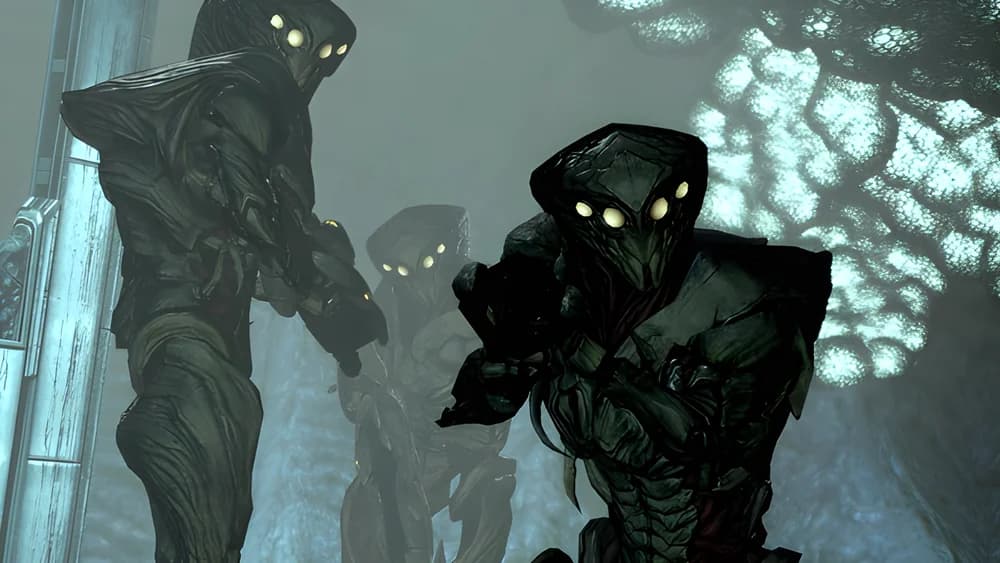
The Collectors were what the Reapers made of captured Protheans: drones rebuilt through genetic rewriting and cybernetics, serving the Reaper Harbinger. They lived beyond the Omega 4 Relay and traded with the galaxy only rarely. (Mass Effect 2)
In 2185 they began abducting entire human colonies to build a human Reaper. Shepard followed them through the relay and wrecked the operation at the Collector Base. (Mass Effect 2)
Inusannon#
The inusannon were a spacefaring race from a cycle before the Protheans. They fought another race, the thoi'han, over the world Eingana, where the wreckage of both fleets still lay. (Mass Effect)
Ilos had been an inusannon world before the Protheans found it and settled there themselves. (Mass Effect 3: From Ashes)
Leviathans#
The Leviathans were vast aquatic beings who could dominate the minds of other species and rule them as thralls. Their thralls kept building synthetics that rebelled and destroyed them, so the Leviathans created an Intelligence to solve the problem. (Mass Effect 3: Leviathan)
It turned on them and used their own bodies to make the first Reaper. A few survived in hiding. Found in 2186, they agreed to help against the Reapers. (Mass Effect 3: Leviathan)
Keepers#
The keepers were silent, insect-like caretakers found only on the Citadel. Any attempt to study one made it dissolve, so the Council banned interfering with them. (Mass Effect (codex))
The Prothean VI Vigil revealed what they were: a species the Reapers had altered long ago to maintain the station and trigger its hidden relay. (Mass Effect)
Other lost races#
Ruins across the galaxy record more vanished peoples, from the thoi'han to the zha'til who lived alongside the Protheans. Our guide to background races covers them. (Mass Effect; Mass Effect 3: From Ashes)
A note on the Reapers#
The Reapers were not a species in the usual sense. Each one was a vast synthetic-organic machine built from the harvested species of a past cycle, and they rested in dark space between harvests. Nothing in the trilogy suggests they aged. They are listed here because their cycle explains why the galaxy's history keeps resetting. (Mass Effect; Mass Effect 2; Mass Effect 3)
Andromeda species#
The Andromeda Initiative brought humans, asari, salarians, turians and krogan to the Heleus Cluster, arriving at the Nexus and on the arks in 2819. The cluster already had its own peoples, and its own war. (Mass Effect: Andromeda)
Angara#
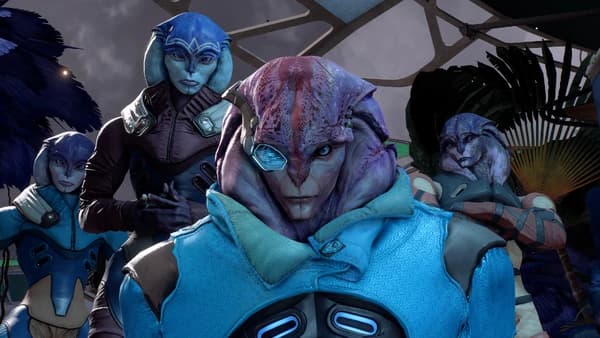
The angara were native to Heleus and believed they had first evolved on Havarl. They depended on sunlight for their health and carried a strong bioelectric field. Culturally they were open with their feelings, lived in big extended families and mostly believed in reincarnation. (Mass Effect: Andromeda)
A disaster called the Scourge broke their civilisation, and the kett invaded as they rebuilt. The Angaran Resistance fought back from Aya. Later they learned the truth: the angara had been engineered by the Jardaan. Jaal Ama Darav and Moshae Sjefa were among the angara who worked with the Pathfinder. No angaran lifespan is given. (Mass Effect: Andromeda)
Kett#
The kett were invaders from outside Heleus. Their bodies grew bone armour on the outside, and they had no way to reproduce. Instead they grew by exaltation, a genetic process that turned captured beings of other species into kett. (Mass Effect: Andromeda)
Their empire was ruled from Sarhesen, with star clusters run by Archons. The Archon of Heleus ran an exaltation campaign against the angara and hunted Remnant technology. No kett lifespan is given. (Mass Effect: Andromeda)
Remnant and the Jardaan#
The Remnant were the machines and vaults of the Jardaan, a vanished race who shaped the cluster and created the angara. Their vaults could make whole planets liveable again, which made them the prize of the Heleus conflict. (Mass Effect: Andromeda)
Their largest machines, the Architects, guarded vaults on worlds like Eos, Voeld and Elaaden. The Jardaan themselves were never seen. (Mass Effect: Andromeda)
Frequently asked questions
- How long do asari live?
- The codex in the first Mass Effect gives the asari a lifespan of up to about 1,000 years. They pass through three life stages: Maiden, Matron from around 350, and Matriarch from around 700.
- What is the longest-lived species in Mass Effect?
- Among living organic species it is a near tie between the asari, who can reach about 1,000 years, and the krogan, who live for centuries. Warlord Okeer was still alive in 2185 more than a thousand years after the Krogan Rebellions he fought in. The Reapers and Leviathans are far older, but they are not a normal case.
- How many species are on the Citadel Council?
- For most of its history the Council had three members: the asari, the salarians and the turians. Humanity gained a seat after the Battle of the Citadel in 2183, making four.
- Which species are in Mass Effect Andromeda?
- The two native peoples of the Heleus Cluster are the angara and the kett, alongside the Remnant machines built by the vanished Jardaan. The Andromeda Initiative brought humans, asari, salarians, turians and krogan from the Milky Way.
- Which Mass Effect species has the shortest lifespan?
- The vorcha, with an average lifespan of only 20 years according to the Mass Effect 2 codex. The salarians are next, rarely living much past 40.
Sources
- GameMass Effect, BioWare, 2007
- GameMass Effect 2, BioWare, 2010
- GameMass Effect 2: Lair of the Shadow Broker, BioWare, 2010
- GameMass Effect 2: Arrival, BioWare, 2011
- GameMass Effect 3, BioWare, 2012
- GameMass Effect 3: From Ashes, BioWare, 2012
- GameMass Effect 3: Leviathan, BioWare, 2012
- GameMass Effect: Andromeda, BioWare, 2017
- WebCerberus Daily News, In-universe news feed published by BioWare, 2010 to 2012
Spotted a factual error or a primary source we missed? Email a correction. Every flagged claim gets reviewed.
Followed from this entry
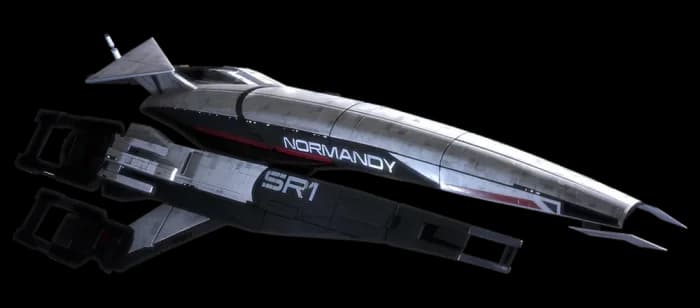
Every Mass Effect Squadmate and Companion, Game by Game
Every squadmate in Mass Effect, Mass Effect 2, Mass Effect 3 and Andromeda, with their species, how they join, what their story is about and how they can die. Fates that depend on player choices are given as choices, because the series never picks one canon.
Background Races: the vanished civilizations known only from ruins
Across billions of years, countless races rose to sentience in the Milky Way and Andromeda, forged civilizations, explored the depths of space, and became extinct. The contemporary galaxy knew most of them only through ruins, wreckage, and artifacts, from the crypt builders of Armeni to the nameless dead entombed in the clouds of Anjea.
Angara
The angara were the only known living sapient race native to the Heleus Cluster of the Andromeda galaxy. After a catastrophe called the Scourge shattered their ancient civilization, they rebuilt only to face the invading kett, against whom they waged a decades-long resistance.
Asari
The asari, native to Thessia, were among the most influential species in the galaxy, renowned for their elegance, biotic talent, and millennium-long lifespans. A mono-gender people able to reproduce with a partner of any species, they founded the Citadel Council and stood at the heart of galactic society for two thousand years.
Batarian
The batarians were a four-eyed species native to Khar'shan whose insular government, the Batarian Hegemony, withdrew from the galactic community and became infamous for slavery, piracy, and hostility toward humanity before the Reapers overran their space.
Collectors
The Collectors were an enigmatic insectoid race dwelling beyond the Omega 4 Relay, long dismissed as myth. In truth they were the last of the Protheans, genetically rewritten and cybernetically enslaved by the Reapers, who used them to abduct human colonies and build a Human-Reaper.
Mentioned in17 entries
Andromeda Initiative: the one-way voyage to the Heleus Cluster
The Andromeda Initiative was a privately funded, multi-species project to settle the Andromeda galaxy. Founded by Jien Garson in 2176, it sent the Nexus and its arks across dark space in 2185, and they reached the Heleus Cluster more than six centuries later to find almost nothing as promised.
Angara
The angara were the only known living sapient race native to the Heleus Cluster of the Andromeda galaxy. After a catastrophe called the Scourge shattered their ancient civilization, they rebuilt only to face the invading kett, against whom they waged a decades-long resistance.
Asari
The asari, native to Thessia, were among the most influential species in the galaxy, renowned for their elegance, biotic talent, and millennium-long lifespans. A mono-gender people able to reproduce with a partner of any species, they founded the Citadel Council and stood at the heart of galactic society for two thousand years.
Background Races: the vanished civilizations known only from ruins
Across billions of years, countless races rose to sentience in the Milky Way and Andromeda, forged civilizations, explored the depths of space, and became extinct. The contemporary galaxy knew most of them only through ruins, wreckage, and artifacts, from the crypt builders of Armeni to the nameless dead entombed in the clouds of Anjea.
Citadel Council
The Citadel Council was the executive committee that governed Citadel space from the Citadel Tower, composed of representatives of the asari, salarians, and turians, and was the ultimate authority over Council law, interspecies disputes, and the covert Spectre agents.
Drell
The drell were a reptile-like species rescued from their dying homeworld of Rakhana by the hanar, to whom they remained bound by a tradition of service called the Compact. They were known for their eidetic memory and deep religious belief in the separation of body and soul.
Elcor
The elcor were a massive, four-legged Citadel species from the high-gravity world of Dekuuna, whose cautious psychology and ponderous, emotionless speech reflected an environment where a single fall could be fatal. Slow but immensely strong, they were nicknamed living tanks by their enemies.
Every Mass Effect Squadmate and Companion, Game by Game
Every squadmate in Mass Effect, Mass Effect 2, Mass Effect 3 and Andromeda, with their species, how they join, what their story is about and how they can die. Fates that depend on player choices are given as choices, because the series never picks one canon.
Hanar
The hanar were a jellyfish-like Citadel species from the ocean world of Kahje, among the few non-bipedal races in galactic society. They were renowned for their scrupulous politeness, their two-name custom of face and soul names, and their fervent worship of the Protheans, whom they called the Enkindlers.
Humans
Humans were the newest sentient species of note to enter galactic affairs, and also the most rapidly expanding. After discovering a Prothean data cache on Mars and unlocking the mass relay network, they rose within decades from isolated newcomers to a power whose ambition and military strength unsettled the older Council races.
Krogan
The krogan were a hardy, long-lived reptilian species from the brutal world of Tuchanka, uplifted by the salarians to win the Rachni Wars before their explosive growth made them a threat in turn. The turian-deployed genophage crippled their fertility and left them a scattered, fatalistic people.
Quarian
The quarians were a nomadic, technologically gifted species exiled from their homeworld Rannoch after their created servants, the geth, gained sentience and drove them out. For generations they wandered the galaxy aboard the Migrant Fleet, a vast flotilla of salvaged ships.
+ 5 more
Get new articles in your inbox
No spam. New lore drops, canon conflicts, and deep dives only when they’re worth reading.
Some links on Lore Fortress are affiliate links. If you buy through them we earn a small commission at no extra cost to you.