Nexus: Heart of the Andromeda Initiative
Headquarters Station of the Andromeda Initiative
The Nexus was the headquarters of the Andromeda Initiative, a vast space station built to anchor the arriving arks, process resources, and shelter colonists in the Heleus Cluster. Modeled on the Citadel, it survived disaster and rebellion to become the seat of the colonization effort.
The Nexus was the headquarters of the Andromeda Initiative, a vast space station built to anchor the colony arks, process resources, and support colonists in the Heleus Cluster before they set out for new worlds. Modeled on the far larger Citadel of the Milky Way, it housed the command echelons of the entire venture and required every new arrival to pass through quarantine. It endured catastrophe and internal revolt in its first years in Andromeda before slowly becoming the working heart of the colonization effort. (Mass Effect: Andromeda)
Purpose and design#
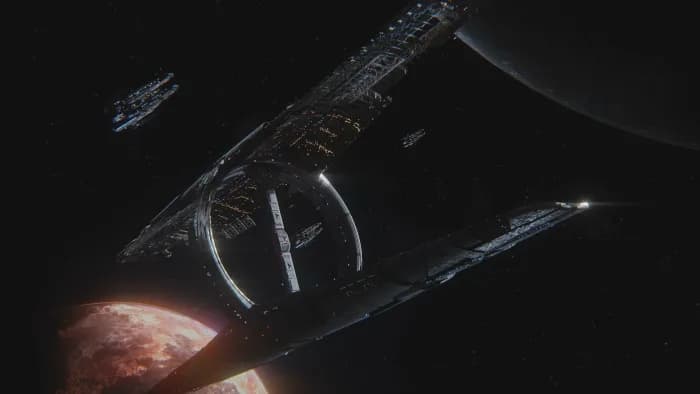
The Nexus was conceived as the hub of the Andromeda Initiative once the project reached its new galaxy, the place that would anchor the returning arks, process the resources the colonists needed, and shelter those colonists until they departed for habitable worlds. Every new arrival was required to pass through its quarantine. Taking inspiration from the much larger Citadel, the station reproduced features comparable in form and function to those of its Milky Way counterpart and housed the command echelons of the entire venture. (Mass Effect: Andromeda)
Completed, the station was to measure some 15.47 kilometers in length, with an anchorage wheel 5.3 kilometers across. At launch it resembled two of the Citadel's Wards joined together at the base, and once it reached Andromeda further construction was planned to give it a Presidium-like central torus and another ward-like superstructure. The arks were intended to dock with the station along its central support column, supplying it with additional power and storage. (Mass Effect: Andromeda)
Catastrophe and rebellion#
The Nexus was activated roughly a year before the ark Hyperion reached Andromeda. Soon after arrival the station was struck by the Scourge, a disaster that decimated its original leadership and left the survivors unable to make contact with any of the first wave of arks. Cut off and short of the resources and manpower the arks were meant to provide, the crew fell to quarreling, and the disputes eventually erupted into open rebellion against the station's new leaders. (Mass Effect: Andromeda; Mass Effect: Andromeda: Nexus Uprising)
When the uprising was put down, the crew members who had rebelled were banished from the Nexus and branded as Exiles, and there were further acts of sabotage and unrest from others who rejected the senior staff's plans for survival. The krogan who had been part of the Nexus team had been promised a greater say in the station's affairs if they helped end the rebellion, but when that promise went unhonored virtually all of them left to establish a colony of their own. The first two attempts to found outposts both ended in disaster, undone by attacks from the warlike kett, by the lack of expected support, and by food shortages, until the leadership was forced to halt all construction and stretch its dwindling stores through rationing. (Mass Effect: Andromeda: Nexus Uprising; Mass Effect: Andromeda)
Revival and the wider cluster#
About fourteen months after its arrival the people of the Nexus had begun to give up hope of ever finding the other arks, but everything changed when the Hyperion at last reached Andromeda and docked with the station. Despite the leadership's doubts in the success of the newly appointed Pathfinder, the station gradually set about reviving the Initiative, a turn that culminated in the successful settlement of Eos and in first contact with the angara. The angara had heard reports of the Nexus and its encounter with the Scourge beforehand, but their own disastrous first meeting with the kett left them unwilling to offer aid at once. (Mass Effect: Andromeda)
In time the Nexus came to function as a true colonial capital. Its Operations section oversaw security and management for the whole station and contained the offices of its leaders, while a sprawling common area served as docking point, immigration center, and social hub, housing temporary residential blocks, a cultural center that preserved the combined history of the Milky Way species, hydroponic gardens, research laboratories, and a bar. Survey and supply ships such as the Tempest put in at its docking bay to trade information, resources, and personnel as the cluster slowly opened to settlement. The station's years in Heleus, more than six centuries after it left the Milky Way, close out the Mass Effect timeline. (Mass Effect: Andromeda)
Frequently asked questions
- What was the Nexus?
- The Nexus was the headquarters of the Andromeda Initiative, a massive space station built to anchor the colony arks as they arrived in the Heleus Cluster, process resources, and house colonists before they departed for new worlds. It served as the command center of the entire effort, and all new arrivals had to pass through its quarantine.
- How was the Nexus modeled on the Citadel?
- The Nexus took direct inspiration from the far larger Citadel of the Milky Way, mirroring many of that station's features in form and function. At launch it resembled two of the Citadel's Wards joined at the base, with plans to add a Presidium-like central torus and a further ward-like superstructure once construction continued in Andromeda.
- What disasters struck the Nexus after it arrived?
- The Nexus was crippled by the Scourge soon after reaching Andromeda, an event that killed much of its original leadership. Cut off from the arks and starved of resources, the survivors fell into rebellion, leading to mass exiles, acts of sabotage, and the departure of nearly all the krogan to found their own colony before the arrival of the ark Hyperion offered renewed hope.
Sources
- GameMass Effect: Andromeda, BioWare, 2017
- BookMass Effect: Andromeda: Nexus Uprising, Jason M. Hough and K. C. Alexander, 2017
Spotted a factual error or a primary source we missed? Email a correction. Every flagged claim gets reviewed.
Followed from this entry
Heleus Cluster: The Initiative's New Frontier
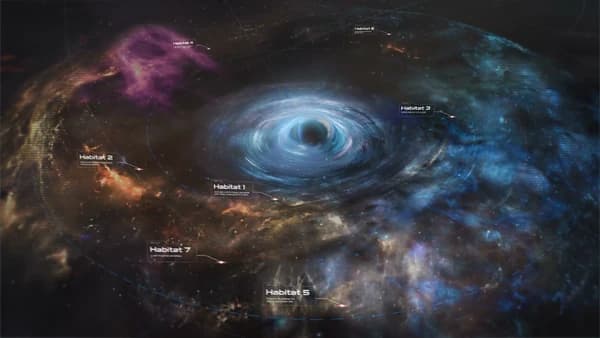
The Heleus Cluster was a resource-rich region of star systems on the outskirts of the Andromeda galaxy, chosen by the Andromeda Initiative as its foothold in the new galaxy. Centered on a massive black hole and seeded with abundant Element Zero, it held the worlds the Initiative hoped to settle.
Andromeda Initiative: the one-way voyage to the Heleus Cluster
The Andromeda Initiative was a privately funded, multi-species project to settle the Andromeda galaxy. Founded by Jien Garson in 2176, it sent the Nexus and its arks across dark space in 2185, and they reached the Heleus Cluster more than six centuries later to find almost nothing as promised.
Angara
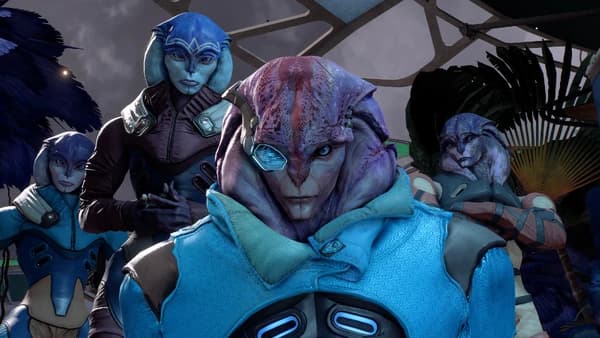
The angara were the only known living sapient race native to the Heleus Cluster of the Andromeda galaxy. After a catastrophe called the Scourge shattered their ancient civilization, they rebuilt only to face the invading kett, against whom they waged a decades-long resistance.
Citadel
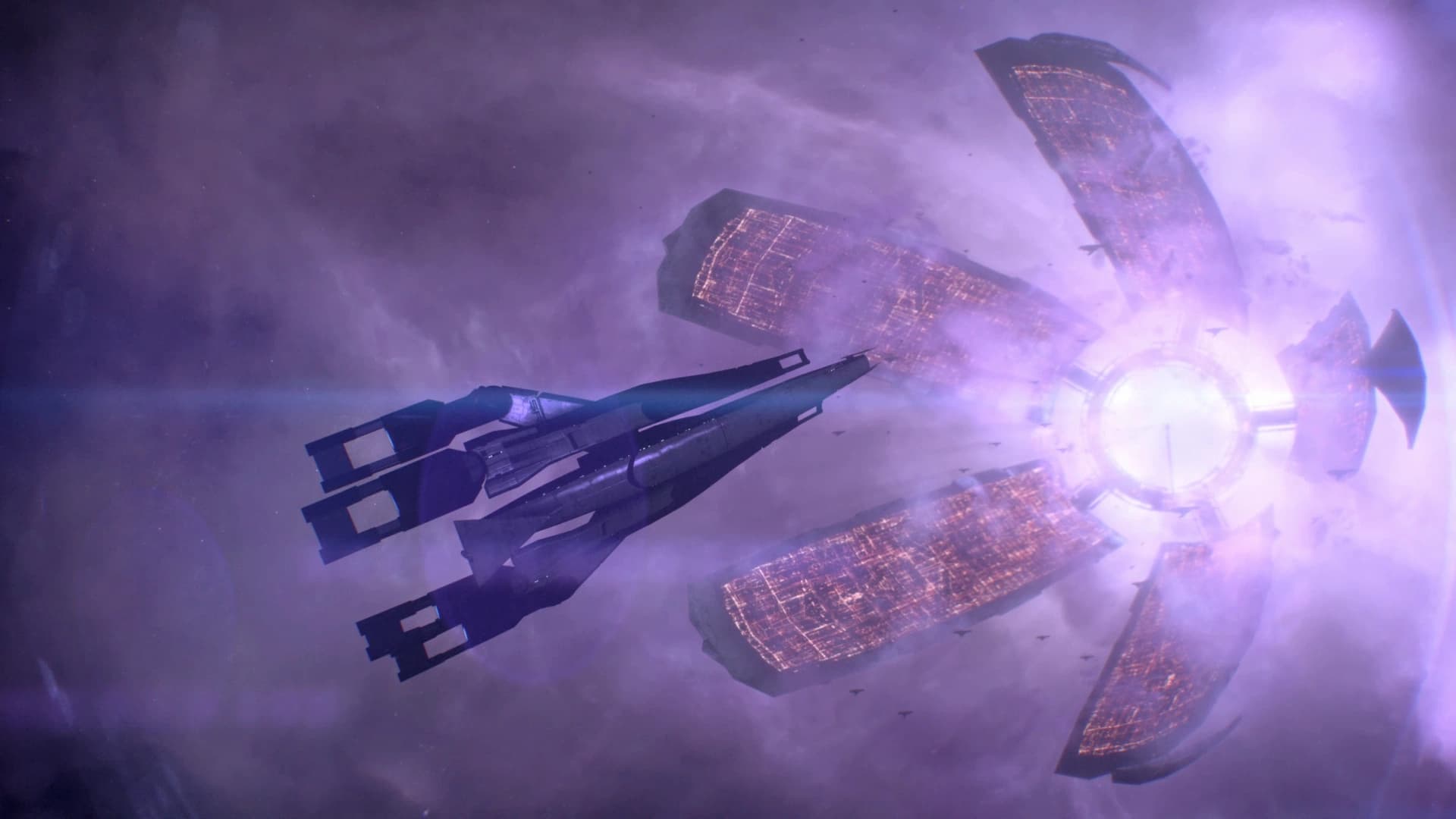
The Citadel was a colossal deep-space station in the Serpent Nebula that served as the political and cultural heart of Citadel space and the seat of the Council. Long believed to be a Prothean relic, it was in truth a Reaper construction and a dormant trap at the center of galactic civilization.
Kett: Conquerors of Heleus
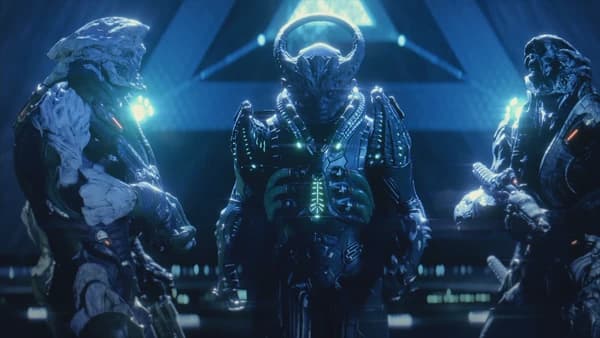
The kett were a hostile, militaristic species encountered by the Andromeda Initiative in the Heleus Cluster. Unable to breed by natural means, they expanded their ranks and their empire through exaltation, a process that converted captured members of other species into obedient kett.
Tempest: The Pathfinder's Scout Ship
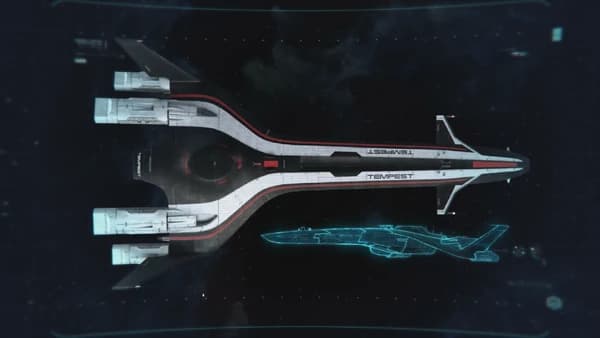
The Tempest was the survey ship of the Andromeda Initiative's Pathfinder team, a state of the art scout vessel used to explore the worlds of the Heleus Cluster in search of new homes for Milky Way colonists. After its sister ships were lost, it became the one of a kind home and base of the human Pathfinder.
Mentioned in25 entries
Andromeda Initiative: the one-way voyage to the Heleus Cluster
The Andromeda Initiative was a privately funded, multi-species project to settle the Andromeda galaxy. Founded by Jien Garson in 2176, it sent the Nexus and its arks across dark space in 2185, and they reached the Heleus Cluster more than six centuries later to find almost nothing as promised.
Calix Corvannis: Leader of the Nexus Uprising
Calix Corvannis was the turian chief life support technician of the Nexus and the reluctant leader of the mutiny that nearly tore the station apart in the Andromeda Initiative's first desperate months. Talented and fiercely loyal to his crew, he turned against a leadership he no longer trusted.
Crew Info Board: the Tempest's message wall
Mounted in the crew quarters of the Tempest, the Crew Info Board carried the daily traffic of the Pathfinder team. Its threads ran from fire drill reports and dinner rotations to lost property notices, angaran vocabulary lessons, and one carefully chilled toast to the victory at Meridian.
Elaaden: Desert Moon of the Heleus Cluster
Elaaden was a scorching desert moon of a gas giant in the Heleus Cluster of the Andromeda galaxy. Brutally hot and starved of water, it nonetheless became home to the krogan colony of New Tuchanka and to scavengers and exiles living on its sands.
Eos: Desert World of Radiation Storms
Eos was a resource-rich desert world in the Heleus Cluster, long catalogued as unsettleable because of the lethal radiation storms that scoured its surface. After two colonies failed, the reactivation of its Remnant vault drove back the radiation and allowed the Andromeda Initiative's first lasting outpost to take root there.
Every Mass Effect Book and Comic in Order
All seven Mass Effect novels and every Dark Horse comic, listed by publication date and then by where they fall in the story. Four novels belong to the Shepard era, three to Andromeda, and the comics fill in the gaps between the games.
Every Mass Effect Species and Race, With Lifespans
A field guide to every sapient species in Mass Effect, from the Council races and their clients to the krogan, the geth, the Protheans and the peoples of the Heleus Cluster. Each entry gives the homeworld, the lifespan where the games actually state one, and where the species stood with the Citadel.
Every Mass Effect Squadmate and Companion, Game by Game
Every squadmate in Mass Effect, Mass Effect 2, Mass Effect 3 and Andromeda, with their species, how they join, what their story is about and how they can die. Fates that depend on player choices are given as choices, because the series never picks one canon.
Heleus Cluster: The Initiative's New Frontier
The Heleus Cluster was a resource-rich region of star systems on the outskirts of the Andromeda galaxy, chosen by the Andromeda Initiative as its foothold in the new galaxy. Centered on a massive black hole and seeded with abundant Element Zero, it held the worlds the Initiative hoped to settle.
Jarun Tann: Director of the Andromeda Initiative
Jarun Tann was a salarian bureaucrat who became Director of the Andromeda Initiative after the deaths of every leader above him. Self-important and insecure yet broadly well-meaning, he steered the Nexus through famine, mutiny, and the search for a habitable home in the Heleus Cluster.
Kadara: Haven of Exiles and Pirates
Kadara was a mountainous world in the Heleus Cluster, first settled by the angara and later overrun by exiles and pirates who fled the Nexus. Its waters ran toxic with sulphides until a Remnant vault was reactivated, after which the Andromeda Initiative was able to plant an outpost there.
Keelah Si'yah
The Keelah Si'yah was an Andromeda Initiative ark, a quarian vessel uniquely engineered to carry six different species across the 600-year void between galaxies. Bearing some twenty thousand colonists in cryosleep, it survived a catastrophic plague during its long voyage toward a new home in the Heleus Cluster.
+ 13 more
Get new articles in your inbox
No spam. New lore drops, canon conflicts, and deep dives only when they’re worth reading.
Some links on Lore Fortress are affiliate links. If you buy through them we earn a small commission at no extra cost to you.