Spectre Terminal: the console where Council authority met a city at war
In the Spectre Office of the Citadel Embassies, a single secure terminal carried classified intelligence and requests for Spectre authorization through the Reaper War. Its entries ranged from quarian fleet movements and grim financial forecasts to pardons, commendations, and one asari huntress asking for a sidearm.
The Spectre Terminal was a secure message terminal housed in the Spectre Office of the Citadel Embassies on the Citadel. Styled by its own greeting as the Spectre Information Processing Center, it offered classified intelligence and formal support for the authorization of covert operations or requisitions, and it was restricted to operatives on active duty with Special Tactics and Reconnaissance, the Spectres who answered directly to the Citadel Council. During the Reaper War of 2186, Commander Shepard worked through its queue of dispatches, and the decisions rendered at that console reached from the engineering deck of the Normandy SR-2 to the refugee camps crowding the station's docks. (Mass Effect 3)
An office of Special Tactics and Reconnaissance#
The terminal's welcome message set its terms plainly. It existed to provide secure information access and to support the authorization of covert operations or requisitions, and only Spectres currently on active duty could use it. Operations that required payment were routed to a second terminal nearby, which supported secure and untraceable financial transactions, keeping the Council's agents at arm's length from any ledger. The arrangement reflected the nature of the Spectres themselves: operatives granted sweeping discretionary power, able to override civilian law, release funds, and set investigations in motion with a single approval. During the Reaper invasion, when the Citadel filled with refugees, wounded soldiers, and requests that no ordinary authority could grant, the terminal became the place where that power was exercised one entry at a time. (Mass Effect 3)
Intelligence for Council eyes only#
Among the terminal's standing briefings was a report on the quarian Migrant Fleet. A pilgrim on the Citadel, Jen'Volan nar Neema, had received a large credit transfer from the fleet and spent it on high end weapon mounts and kinetic barrier emitters from several ship service centers. On Illium, a second, unidentified pilgrim was observed searching for a ship traveling "close to the Perseus Veil" and was later heard saying his pilgrimage had been recalled. The analysis concluded that the Migrant Fleet was withdrawing its pilgrims and refitting its ships for combat somewhere near the Veil. The invasion of the galaxy made a defensive explanation possible, but no request for assistance had come, and the intelligence suggested the quarians were instead preparing for war with the geth. (Mass Effect 3)
A second briefing, marked for top level embassy access only, laid out the war's economics. Financial estimates from First Irune Investment Trusts, a division of Elkoss Combine, concluded that the Citadel races could not sustain the cost of the war effort for more than one year. Military spending had stimulated some market sectors, but shortages and rationing had depressed the wider financial system, and civilian discretionary spending had collapsed everywhere except escapist vids and drinking. First Irune was borrowing heavily to keep key functions running across the Citadel; if the war did not end within the year, the report judged galactic financial collapse inevitable. (Mass Effect 3)
Other entries were narrower. When a batarian named Ghorek lay gravely wounded in a makeshift clinic in the refugee camp at Docking Bay E24, the terminal recorded that staff from Huerta Memorial Hospital could offer painkillers but no viable long term treatment, and that the Batarian Hegemony's refusal to share records left his history before the Citadel a blank. (Mass Effect 3)
Pardons, transfers, and commendations#
Some of the terminal's most personal entries concerned the crew Shepard had commanded against the Collectors. Engineers Gabriella Daniels and Kenneth Donnelly were held in custody on the Citadel for working with Cerberus, having surrendered peacefully before the Normandy was turned over to the Alliance. Both maintained they had joined only to fight the Collectors and the Reapers. Spectre authorization could grant them full pardons and reinstate them aboard the Normandy's engineering deck. The entry's shape depended on who had survived the assault on the Collector base: in accounts where Daniels had died there, a grieving Donnelly faced the pardon alone, fully cooperative in giving evidence against Cerberus and insisting he had signed on purely to save endangered colonists. (Mass Effect 2; Mass Effect 3)
The terminal also handled the traffic of a military at full stretch. Private Talavi, described in a note from Sergeant Olembe as an exceptional engineer, had requested transfer to a unit actively engaged against Reaper hostiles, and Spectre approval could fast track her onto a team assigned to sabotage Reaper processing centers. An importer and exporter with past smuggling convictions offered to gather critical supplies for Alliance forces and civilian medical emergencies; C-Sec believed the offer genuine and refused to arrest her, but was legally barred from accepting it without a Spectre's signature. And after the fighting at Cyone, the terminal carried a commendation for valor nominated for Captain Riley of the N7. In accounts where she survived, a Spectre's approval hurried the award along; in those where she fell, the commendation became posthumous, to be presented to her family in lieu of a body that could not be retrieved. (Mass Effect 3)
Requests from a city under strain#
As the Citadel swelled with the displaced, C-Sec's requests stacked up in the terminal's queue. Commander Armando Owen Bailey sought help with a con man preying on refugees who had exploited legal loopholes to dodge arrest; Spectre authorization let C-Sec deport him from the station immediately. Officers who believed a civilian militia would improve the Citadel's readiness and morale lacked both funds and clearance, and an authorization allowed them to begin training volunteers using money normally reserved for executive bonuses. Another request asked for surveillance warrants against suspected Cerberus informants: C-Sec had tapped public feeds but held no legal access to private security systems, and Spectre authority allowed officers to monitor business feeds without informing civilian agencies. In the wake of the Cerberus attack on the station, a further entry noted that weapons dealers were selling to civilians without permits, that many C-Sec officials privately sympathized, and that an authorization would let officers turn a blind eye to sales they deemed harmless. (Mass Effect 3)
Not every request was a matter of policing. Medical supplies originally destined for occupied zones sat in lockdown on the docks, undeliverable because of the invasion, until Spectre authority could release them to Huerta Memorial Hospital. Reservists called up for the war were not drawing full pay, and a Spectre could mandate salary matching for all personnel with partners or dependents on the Citadel, at the cost of cuts to tax incentives and post war stimulus plans. After the evacuation of Grissom Academy, instructors asked for facilities to train the younger students who had escaped the attack on the school but were not ready for combat; Citadel authorities agreed to find room if a Spectre approved. (Mass Effect 3)
The heaviest entry may have been the smallest. Aeian T'Goni, an asari huntress recovering at Huerta Memorial after a mission on the human colony of Tiptree, where she had been forced to kill a human civilian to keep Reaper forces from discovering them both, had repeatedly requested a permit to carry a weapon on the Citadel. The request had been denied over her paranoia and the risk of self harm, but Spectre authority could override those safeguards. In accounts where the permit was granted, later records indicated that T'Goni took her own life. (Mass Effect 3)
Covert channels and quiet meetings#
The terminal could also open doors that no warrant reached. At the request of the salarian Spectre Jondum Bau, it activated Spectre level access codes that bypassed privacy protections for every employee of the hanar embassy, exposing financial data, transit records, and personal communications; to avoid triggering countermeasures, the files had to be read on site, with the relevant consoles tagged on the operative's omni-tool. A parallel authorization, sought by C-Sec officer Jordan Noles, tracked the illegal use of batarian diplomatic ciphers, uploading the location of any console accessed with a suspect code. When the volus ambassador Din Korlack vanished, the terminal reported that biometric analysis could not find him in any public space and gave his last known position as an office suite near the human embassy. (Mass Effect 3)
The console served subtler purposes as well. After the Cerberus attack on the Citadel, in accounts where Miranda Lawson still lived, the former Cerberus officer chose not to risk meeting Shepard in person and made contact instead by hologram through the Spectre Terminal, bringing confirmation that her father had abducted her sister. For agents and allies alike, the terminal in the Spectre Office remained what its welcome message promised: a secure channel in a station where, by 2186, very little else was. (Mass Effect 3)
Sources
- GameMass Effect 2, BioWare, 2010
- GameMass Effect 3, BioWare, 2012
Spotted a factual error or a primary source we missed? Email a correction. Every flagged claim gets reviewed.
Followed from this entry
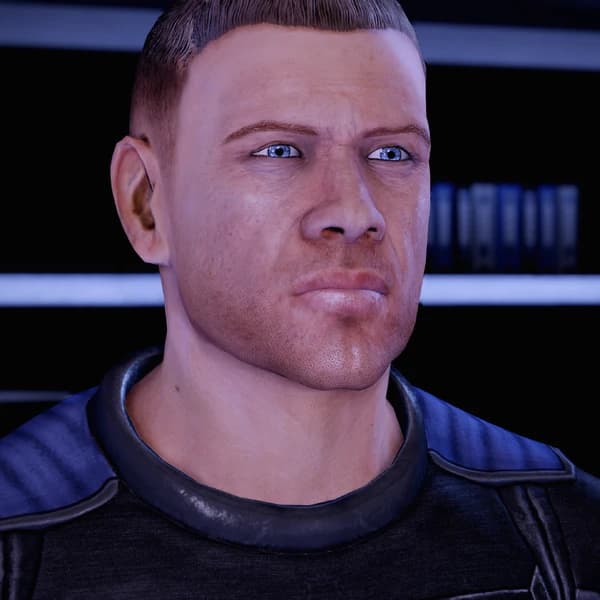
Armando-Owen Bailey
Armando-Owen Bailey was a human officer of Citadel Security stationed in the Zakera Ward, a no-nonsense lawman who rose from a neglected beat officer to a Commander overseeing security for the Citadel Embassies during the Reaper War.

Citadel
The Citadel was a colossal deep-space station in the Serpent Nebula that served as the political and cultural heart of Citadel space and the seat of the Council. Long believed to be a Prothean relic, it was in truth a Reaper construction and a dormant trap at the center of galactic civilization.

Omni-tool
The omni-tool was a forearm-mounted multipurpose device combining a computer, diagnostic scanner, and miniature fabricator. Projected as an orange hologram, it handled hacking, repair, medicine, and manufacturing, and could be reshaped into improvised weapons in the field.

Spectres
The Spectres were an elite corps of agents granted extraordinary authority by the Citadel Council, charged with preserving galactic stability by any means necessary. Officially above the law and answerable to no one but the Council, they were hand-picked for exceptional ability from across the species of the galaxy.
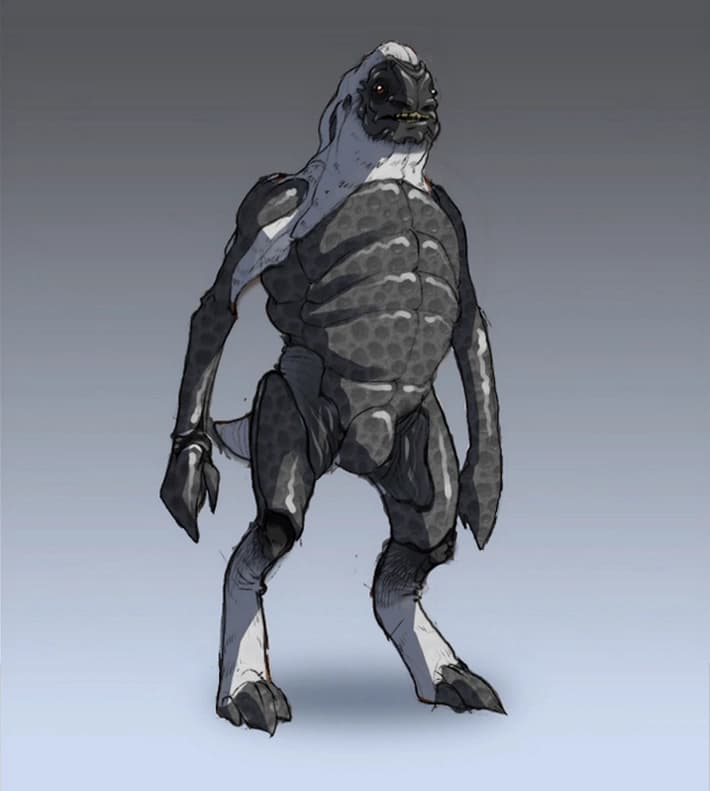
Batarian
The batarians were a four-eyed species native to Khar'shan whose insular government, the Batarian Hegemony, withdrew from the galactic community and became infamous for slavery, piracy, and hostility toward humanity before the Reapers overran their space.

Cerberus
Cerberus was a clandestine, human-supremacist paramilitary organization led by the Illusive Man, willing to use any means to advance humanity's place in the galaxy. Branded a terrorist group by both the Systems Alliance and the Citadel Council, it was ultimately destroyed during the Reaper War.
Mentioned in1 entry
Get new articles in your inbox
No spam. New lore drops, canon conflicts, and deep dives only when they’re worth reading.
Some links on Lore Fortress are affiliate links. If you buy through them we earn a small commission at no extra cost to you.