Spectre Requisitions: the Council's quiet quartermaster
Inside the Spectre Office of the Citadel Embassies, a requisitions kiosk sold Council agents the finest weapons in Citadel space. During the Reaper War it also brokered deniable purchases of stolen schematics, black market dog tags, and salarian secrets that no government could afford to be seen selling.
Spectre Requisitions was a procurement service located inside the Spectre Office in the Citadel Embassies on the Citadel, reserved for agents of Special Tactics and Reconnaissance, the Spectres who answered directly to the Citadel Council. The kiosk sold high end weaponry, upgrades, and materials that field operatives had failed to retrieve during their missions. During the Reaper War of 2186, with the galaxy's markets rationed and its militaries overstretched, the office became something stranger than an armory counter. Through it, a Spectre such as Commander Shepard could quietly buy encryption algorithms lifted from Cerberus corpses, jamming units salvaged from a geth station, and the dog tags of a dead soldier trafficked off an occupied colony, each sale wrapped in a cover story prepared in advance. (Mass Effect 3)
An arsenal behind Council doors#
The weapons rack at Spectre Requisitions justified the office's restricted door. Its centerpiece was the Black Widow, a heavy anti materiel sniper rifle whose firepower compensated for its considerable weight, sold for sums that ran to a quarter of a million credits. Beside it sat the M-11 Wraith shotgun and the M-77 Paladin, a compact and powerful sidearm, along with the Cerberus Harrier assault rifle and a run of arms developed for the Systems Alliance N7 program: the Valiant sniper rifle, the Typhoon light machine gun, the Crusader and Piranha shotguns, the Hurricane submachine gun, the Eagle pistol, the Valkyrie rifle, and the N7 Defender armor. The Chakram Launcher, an unusual weapon that fired explosive discs, appeared in the catalogue as well. Several of these, including the Harrier and the N7 series, were added to the kiosk in the Legendary Edition, while the Valkyrie and the Chakram Launcher came with the Omega add-on. (Mass Effect 3; Mass Effect Legendary Edition; Mass Effect 3: Omega)
The kiosk also stocked the unglamorous margins of a professional's kit. Precision and thermal scopes for assault rifles, concentration mods and extended or high velocity barrels for sniper rifles, and high caliber shotgun barrels sat alongside armor components from the galaxy's major manufacturers: greaves from Rosenkov Materials, gauntlets from Armax Arsenal, a Delumcore visor overlay, and a Kassa Fabrication chestplate that the catalogue, through some persistent clerical error, listed under the Rosenkov Materials name. For a nominal fee, the office would also supply duplicates or equivalents of materials that operatives had left behind in the field, a service that made it the quiet safety net of Spectre fieldwork. (Mass Effect 3)
Deniability as a line item#
What set Spectre Requisitions apart from every gun counter on the Presidium was its second catalogue, a list of purchases that existed because governments at war needed things they could not be seen to buy. Each entry came with its cover story already drafted. (Mass Effect 3)
The salarian Special Tasks Group appeared twice as a seller. Alliance code breakers struggling against Cerberus encryption could purchase algorithms that STG operatives had recovered from Cerberus engineers during the attack on Sur'Kesh; because the sale violated protocol and risked political fallout inside the salarian government, the data was to be recorded as found on the body of a Cerberus engineer whose equipment had failed to self destruct. STG likewise offered burn treatment research from a Sur'Kesh facility for patients at Huerta Memorial Hospital dying of unfamiliar chemical burns, on condition that the information be attributed to other sources. (Mass Effect 3)
The mercenaries of Eclipse sold through the office as well. One of their covert operations teams offered jamming technology recovered from a geth station, intended for deployment on the Presidium to hinder any future assault on the Citadel. Since the Alliance could not formally underwrite mercenary work, the units were to be treated as discoveries made during the fighting on Rannoch. A disgraced instructor from Grissom Academy, fired for theft, sold schematics for improved biotic amps after asari commandos reported burning out their implants faster than human biotics did; the technology, adapted for asari physiology, was to be credited to the Academy itself. A former Alliance researcher offered data on a toxin engineered against turian physiology, developed in case of a war with Palaven, to help doctors treat a turian general poisoned during the Cerberus assault on the station. To spare the Alliance diplomatic embarrassment, that file was to be marked as recovered from a Cerberus facility. (Mass Effect 3)
The most personal listing concerned Bilal Osoba, an Alliance soldier missing in action on the occupied colony of Benning and presumed dead. His father, Ambassador Dominic Osoba, wanted certainty. Civilians trading on the black market with the occupying Cerberus garrison had obtained the dog tags of fallen soldiers, and the office could procure Bilal's. The condition was characteristic: to conceal the black market trafficking, the tags were to be presented as though the Spectre had personally retrieved them from the young man's body. (Mass Effect 3)
Small purchases in a besieged city#
Not every entry in the catalogue was cloaked in secrecy. Some were simply the Citadel's needs, priced. After Cerberus forces fled the station following their failed coup, they left automated turrets and proximity charges behind them, and C-Sec sought funding so that Alliance operatives familiar with Cerberus technology could obtain control schematics and clear the devices before more civilians died. Huerta Memorial Hospital, flooded with wounded of every species, needed an improved medi gel formula suited to non human patients. The salarian colony of Senoquol faced evacuation when a power shortage threatened its egg incubators, unless hanar heating stabilizer technology could be bought and delivered; with salarian support for the war effort already uncertain, the loss of a colony carried a price beyond its population. Even Purgatory, the nightclub whose noise kept the station's morale from collapsing entirely, appeared in the ledger, its failing power grid to be shored up with schematics for an older krogan power system. (Mass Effect 3)
One listing reached further back into the Citadel's history. A scavenger offered a Reaper processor he had pulled from the debris left by Sovereign's attack on the station years earlier, during the Battle of the Citadel. Asari war strategists, unable to predict Reaper movements because they could not model Reaper thought, judged that even a fragment of working code might sharpen the projections that their fleets depended on. (Mass Effect 3)
The kiosk and its counterpart#
Spectre Requisitions did not stand alone. The Spectre Office paired it with the Spectre Terminal, the secure console through which active Spectres reviewed classified intelligence and authorized covert operations, with payment for such operations handled through a nearby console that supported untraceable financial transactions. Together the three systems made the small office in the Embassies a complete instrument of Council power: the terminal decided, the payments console settled, and the requisitions kiosk delivered. (Mass Effect 3)
The arrangement lasted only as long as the Citadel itself remained in reach. In the final days of the Reaper War, when the station could no longer be visited, the office's catalogue went with it, and a missed Delumcore visor overlay could be obtained only through the Alliance Requisitions procurement terminal in the shuttle bay of the Normandy SR-2. Until that moment, however, the kiosk in the Spectre Office remained what it had always been: the place where the Council's most trusted agents bought what could not be bought anywhere else, and where the galaxy's secrets changed hands with the paperwork already forged. (Mass Effect 3)
Sources
- GameMass Effect 3, BioWare, 2012
- GameMass Effect 3: Omega, BioWare, 2012
- GameMass Effect Legendary Edition, BioWare, 2021 (remastered trilogy)
Spotted a factual error or a primary source we missed? Email a correction. Every flagged claim gets reviewed.
Followed from this entry
Citadel
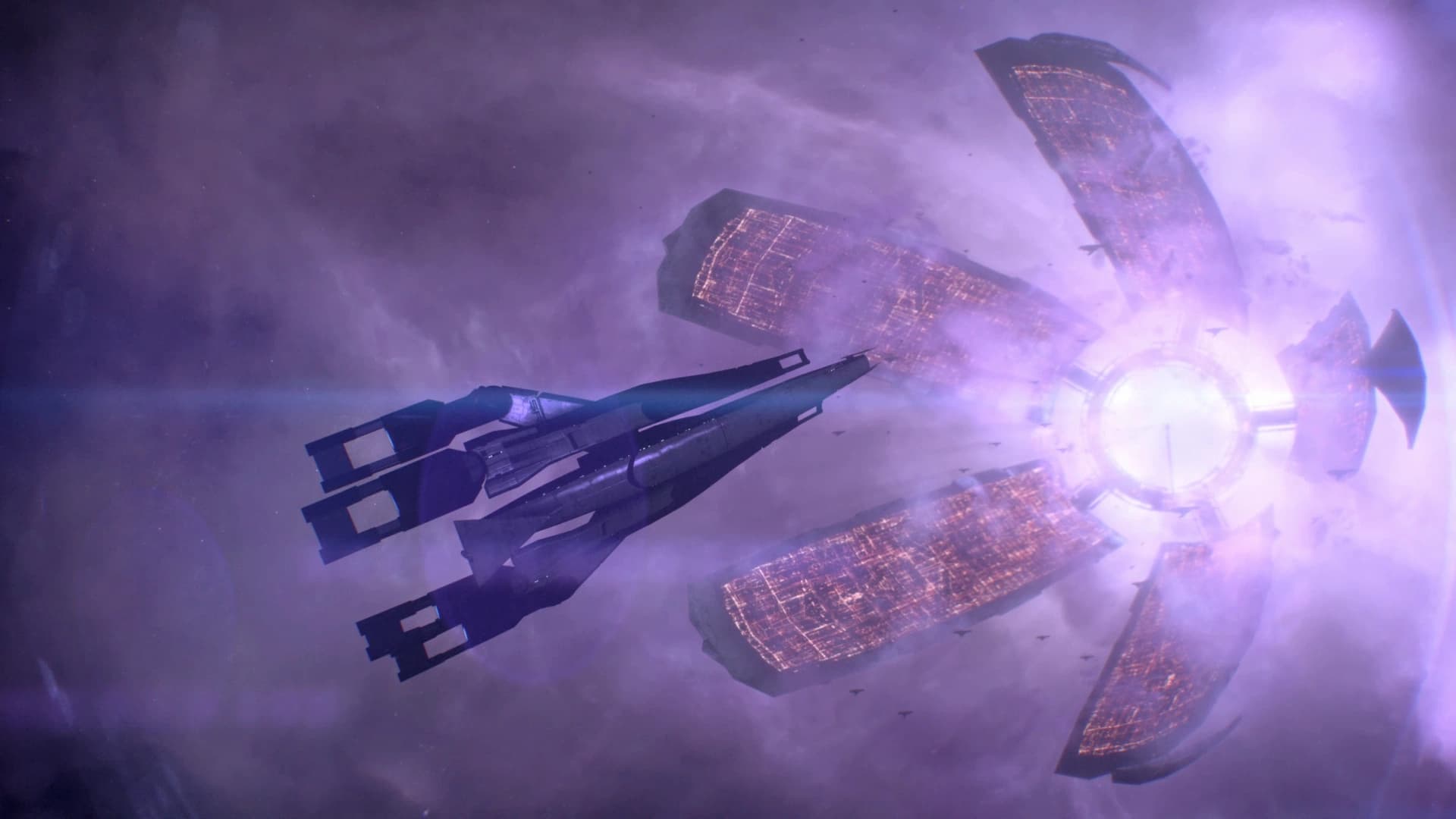
The Citadel was a colossal deep-space station in the Serpent Nebula that served as the political and cultural heart of Citadel space and the seat of the Council. Long believed to be a Prothean relic, it was in truth a Reaper construction and a dormant trap at the center of galactic civilization.
Spectre Terminal: the console where Council authority met a city at war
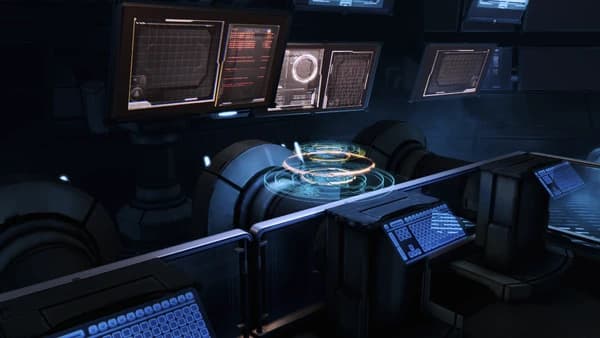
In the Spectre Office of the Citadel Embassies, a single secure terminal carried classified intelligence and requests for Spectre authorization through the Reaper War. Its entries ranged from quarian fleet movements and grim financial forecasts to pardons, commendations, and one asari huntress asking for a sidearm.
Battle of the Citadel
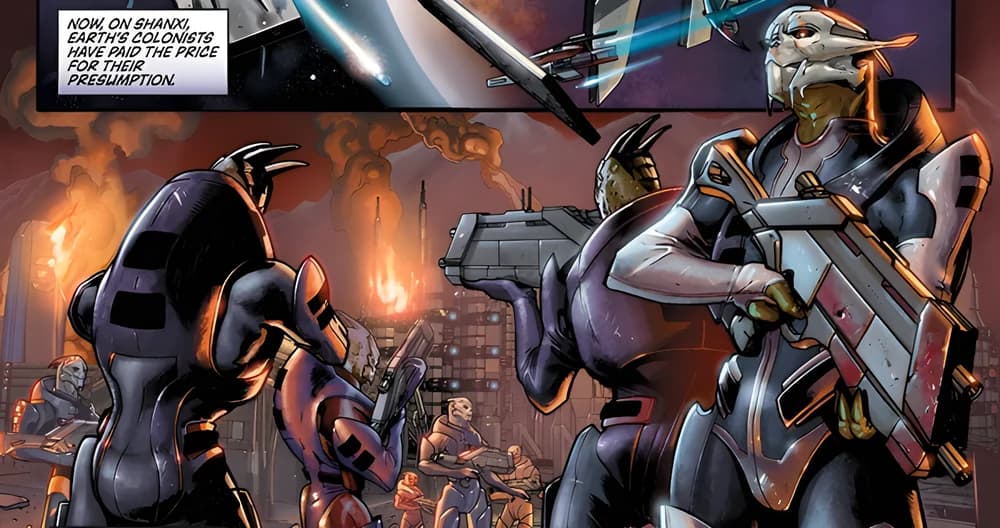
The Battle of the Citadel was the climactic engagement of 2183 in which the rogue Spectre Saren Arterius, guided by the Reaper Sovereign, attempted to seize the Citadel and open a path for the Reaper invasion. Commander Shepard and the Citadel and Alliance fleets stopped the attack at great cost, and its outcome shaped galactic politics for years afterward.
Grissom Academy
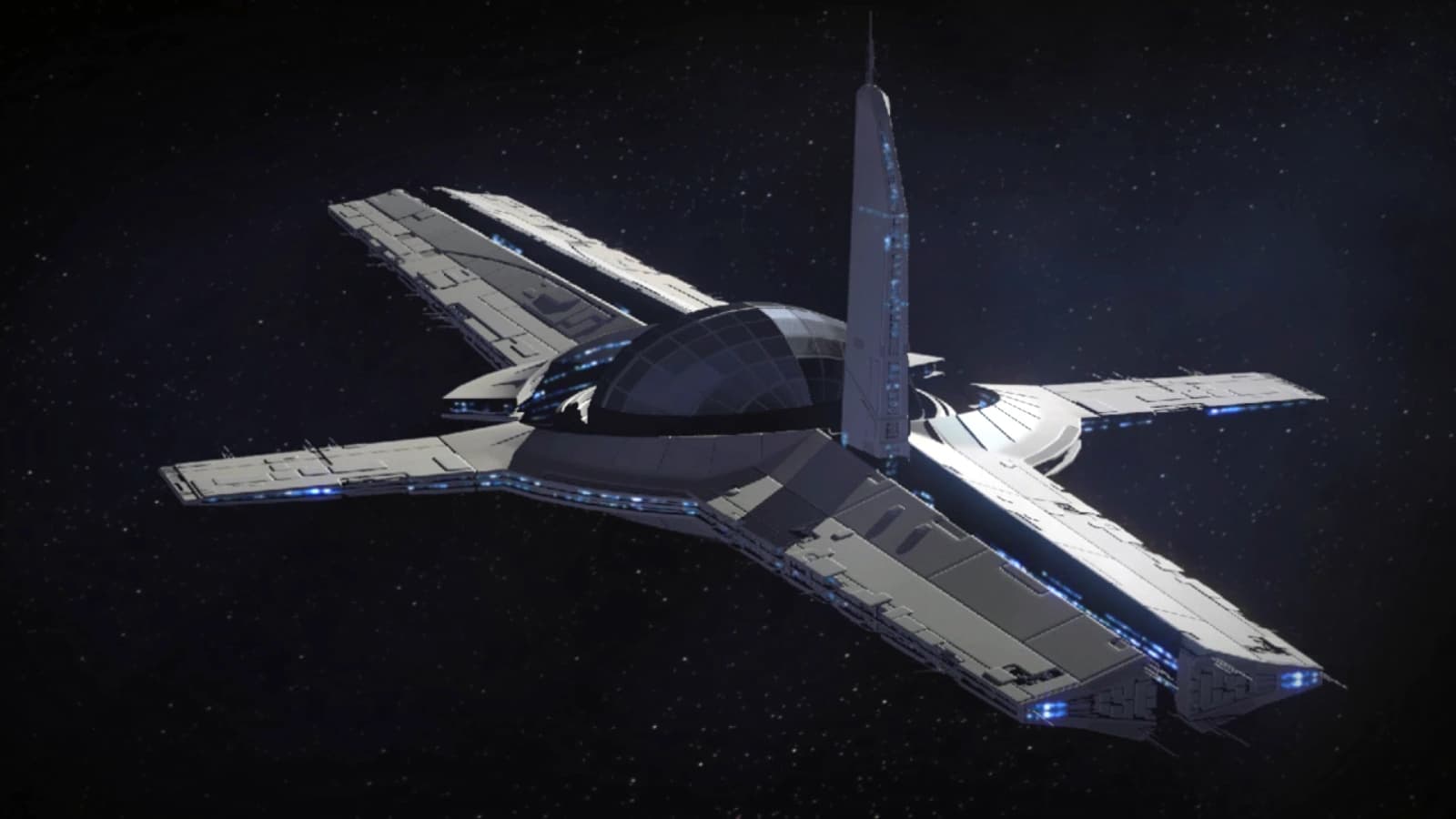
The Jon Grissom Academy was a Systems Alliance space station and elite school for gifted human students, best known for the Ascension Project that trained young biotics. During the Reaper War it became the target of a Cerberus raid to capture its biotic students.

Palaven
Palaven was the homeworld of the turians, a silver-hued world whose martial culture shaped everything from its architecture to its politics. Long unconquered, it endured its first invasion when the Reapers brought overwhelming force against it in the war of 2186.

Rannoch
Rannoch was the arid homeworld of the quarians, a walled garden of rivers and deserts lost to the geth in the war that drove its people into exile. For generations it lay watched over by a vast swarm of geth space stations.
Get new articles in your inbox
No spam. New lore drops, canon conflicts, and deep dives only when they’re worth reading.
Some links on Lore Fortress are affiliate links. If you buy through them we earn a small commission at no extra cost to you.