Spectre
The Council's Special Tactics and Reconnaissance Agents
Spectres were agents entrusted by the Citadel Council with extraordinary authority, including the power of life and death over the galaxy's people. Operating outside the law to preserve galactic stability, they were drawn from the finest operatives of the Council races and answered to no one but the Council itself.
Spectres, formally the Special Tactics and Reconnaissance branch and abbreviated ST&R, were agents entrusted by the Citadel Council with extraordinary authority, including the power of life and death over the inhabitants of the galaxy. They formed an elite group drawn from many species, charged above all with preserving galactic stability by whatever means necessary. Generally held to be above the law and given complete discretion over their methods, Spectres answered only to the Council, which could revoke an agent's status for gross misconduct. The most famous of their number was Commander Shepard, inducted in 2183 after exposing the rogue agent Saren Arterius. (Mass Effect)
Origins#
The Special Tactics and Reconnaissance branch was founded in 693 CE, shortly before the Krogan Rebellions began, at a time when the Council was uneasy about the unchecked expansion of the krogan into Citadel space. The first Spectres were chosen from the finest salarian Special Tasks Group operatives and asari huntresses, intended partly to function in an observational capacity and partly to serve as the Council's first line of defense. When the krogan turned against the Citadel, the Spectres were ready, slowing the krogan advance with guerrilla tactics such as computer viruses and devastating sabotage until the turians joined the conflict. For years their activities were a Council secret, and their existence was made public only after the rebellions had ended. The first Spectre, Beelo Gurji, was a salarian operative who had been accused of using thirty civilians as bait to flush out a target; rather than imprison him, the Council released him and asked him to establish the branch. (Mass Effect: Revelation; Mass Effect 3: Citadel)
Authority and method#
All records of the Spectres were sealed, accessible only by permission of the Council, and even their total number was unclear; Alliance intelligence estimated there were fewer than a hundred. Spectres had no command structure and answered only to the Council. In some cases the Council preferred not to know the exact details of how a mission was carried out. An agent could act in any way they saw fit, whether through careful diplomacy or ruthless force, being officially above any law. To some, such as the C-Sec executor Pallin, this made them a potential danger, free of the constraints that bound everyone else; to others they were figures of awe, portrayed in popular vids as super-agents forever saving the galaxy. The assignment of a Spectre to a situation was often less contentious than a military deployment, yet it signaled that the Council was aware of and concerned about a problem. (Mass Effect)
Selection#
Each Spectre was hand-picked by the Council after proving themselves an individual of exceptional ability and self-reliance. In theory a Spectre could be chosen from any race, but in practice they were usually selected from the Council races, and having one chosen from a given people often raised that species' profile on the Citadel. Many races had belonged to Citadel society for centuries without ever producing a Spectre. Candidates typically had years of military or law enforcement experience before they were even considered, and the screening process involved background checks, psychological evaluations, and a long period of field training under an experienced mentor. The rigor of this process meant that, while Spectres might use unorthodox methods, they rarely went rogue; when one did, the only remedy was to revoke their status and send another Spectre after them, since no one else would be equal to the task. (Mass Effect; Mass Effect: Revelation)
The Spectres had much in common with the salarian Special Tasks Group, but they stood above the law rather than beneath it and outside any command structure. Unlike the STG, which was funded by the salarian government, Spectres were expected to pay their own way, a contrast Mordin Solus draws when he notes that in the STG he never had to buy his own weapons. (Mass Effect; Mass Effect 2)
Human candidates#
The drive to place a human among the Spectres became a matter of galactic politics, since it was widely seen as the first step toward humanity gaining a seat on the Council. Ambassador Anita Goyle and her successor Donnel Udina both pressed the case. The first candidate was Captain David Anderson, whose evaluation was sabotaged by his observer, Saren Arterius; Saren falsified his report to make Anderson appear responsible for casualties that Saren's own ruthless tactics had caused, and the Council refused Anderson entry. The second candidate, Commander Shepard, secured induction by exposing Saren as a renegade Spectre. Shepard became the first human Spectre in 2183, an appointment that came before humanity attained its Council seat following Saren's attack on the Citadel a short while later. (Mass Effect: Revelation; Mass Effect)
Notable agents#
Among the Spectres named in galactic record were Nihlus Kryik, one of the most decorated turian agents, killed by Saren during the attack on Eden Prime in 2183; and Saren Arterius himself, the youngest turian ever appointed and once called the Council's top agent, whose status was revoked in 2183 after his rogue activities were confirmed. The asari Tela Vasir was renowned for breaking up a slave-trading ring and investigating thefts from the Council's Ministry of Finance, but was later exposed as an agent of the Shadow Broker. A Spectre's status appeared to lapse once they were declared legally deceased, requiring reinstatement upon proof of living through measures such as biometric verification. In the last thousand years only two people were known to have turned the honor down, both of them asari matriarchs. (Mass Effect; Mass Effect 2; Mass Effect 2: Lair of the Shadow Broker)
Frequently asked questions
- What is a Spectre in Mass Effect?
- A Spectre, short for Special Tactics and Reconnaissance, was an elite agent entrusted by the Citadel Council with extraordinary authority, including the power of life and death over the galaxy's inhabitants. Spectres were tasked with preserving galactic stability by any means necessary and were considered above the law, with complete discretion as to the methods they used.
- Who controls the Spectres?
- Spectres answered only to the Citadel Council. They had no command structure and no oversight, and in some cases the Council preferred not to know the exact details of how a Spectre completed a mission. The Council could revoke an agent's Spectre status in cases of gross misconduct, after which another Spectre would be sent to bring the rogue agent down.
- When were the Spectres founded?
- The Special Tactics and Reconnaissance branch was founded in 693 CE, shortly before the Krogan Rebellions, when the Council was uneasy about the krogan's unchecked expansion into Citadel space. The first Spectres were drawn from salarian Special Tasks Group operatives and asari huntresses and served as both observers and the Council's first line of defense.
- How did Commander Shepard become a Spectre?
- Commander Shepard was appointed the first human Spectre in 2183 after exposing Saren Arterius as a renegade agent. An earlier human candidate, David Anderson, had been denied entry years before when Saren, his evaluating officer, sabotaged the assessment with a falsified report. Shepard's induction came before humanity gained its seat on the Council.
Sources
- GameMass Effect, BioWare, 2007
- GameMass Effect 2, BioWare, 2010
- GameMass Effect 2: Lair of the Shadow Broker, BioWare, 2010
- GameMass Effect 3: Citadel, BioWare, 2013
- BookMass Effect: Revelation, Drew Karpyshyn, Del Rey, 2007
Spotted a factual error or a primary source we missed? Email a correction. Every flagged claim gets reviewed.
Followed from this entry

Citadel Council
The Citadel Council was the executive committee that governed Citadel space from the Citadel Tower, composed of representatives of the asari, salarians, and turians, and was the ultimate authority over Council law, interspecies disputes, and the covert Spectre agents.
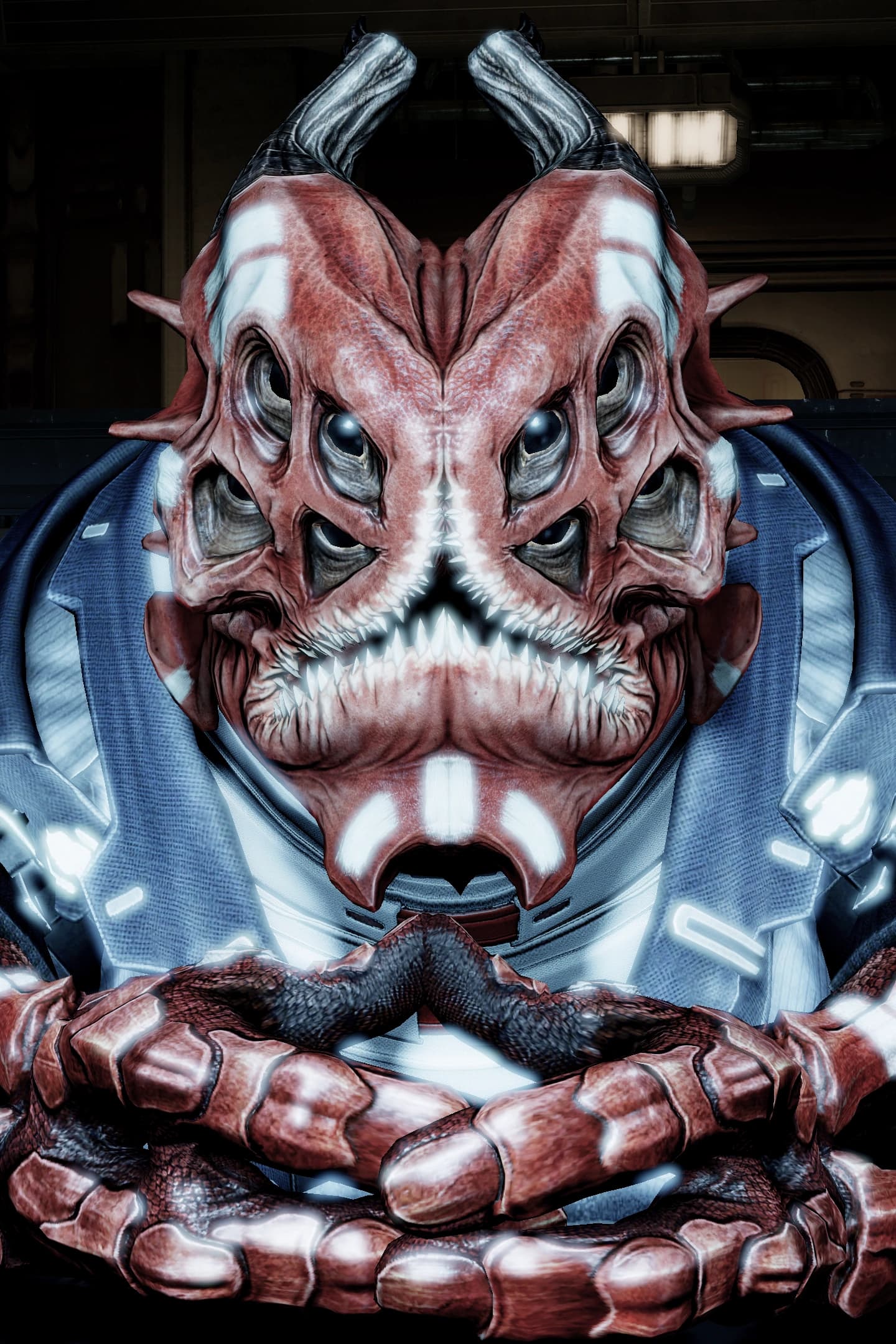
Shadow Broker
The Shadow Broker was an enigmatic figure at the head of a vast organization that trafficked in information, always selling to the highest bidder. By ensuring no client ever gained a lasting advantage, the Broker kept the galaxy trading secrets and itself in business, its true identity hidden for decades.

Spectres
The Spectres were an elite corps of agents granted extraordinary authority by the Citadel Council, charged with preserving galactic stability by any means necessary. Officially above the law and answerable to no one but the Council, they were hand-picked for exceptional ability from across the species of the galaxy.
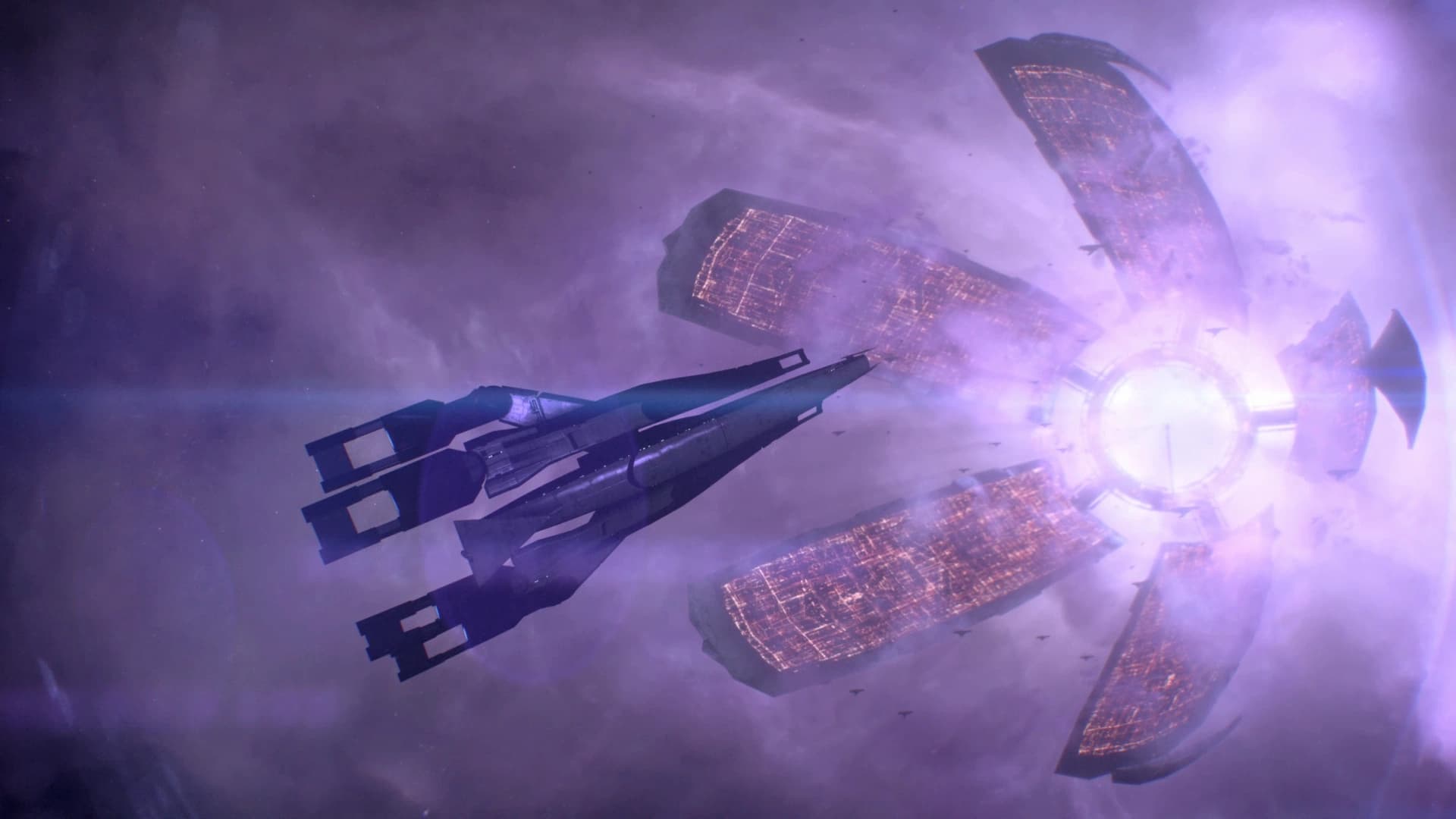
Citadel
The Citadel was a colossal deep-space station in the Serpent Nebula that served as the political and cultural heart of Citadel space and the seat of the Council. Long believed to be a Prothean relic, it was in truth a Reaper construction and a dormant trap at the center of galactic civilization.
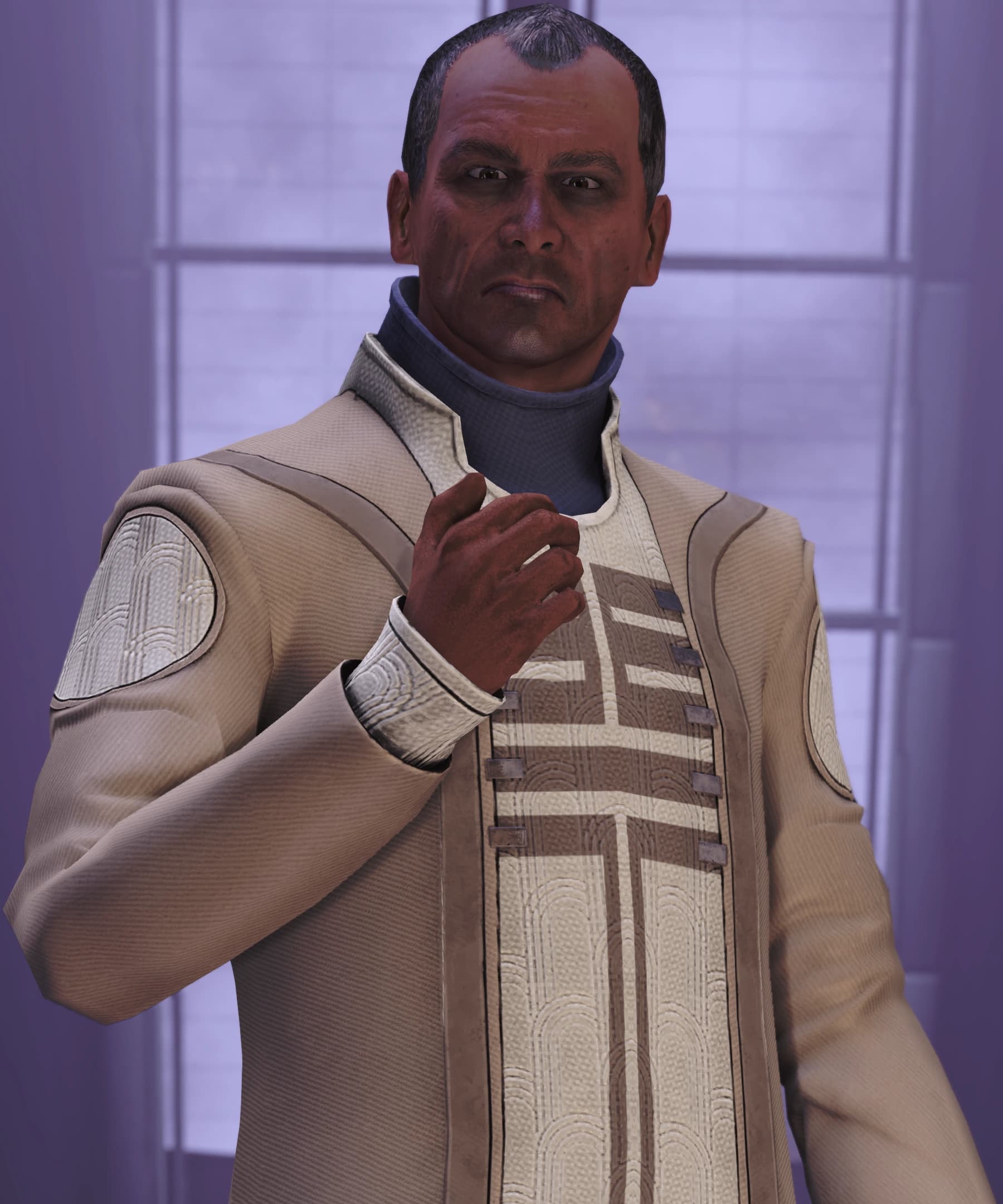
Donnel Udina
Donnel Udina was humanity's ambassador to the Citadel Council and, in some accounts, its first Councilor. A cautious political operator obsessed with human advancement, he ended his career as a traitor in a Cerberus coup.

Krogan Rebellions
The Krogan Rebellions were a decades-long war between the krogan and the Citadel Council that began around 700 CE, sparked by unchecked krogan expansion onto worlds claimed by other races. The conflict ended with the deployment of the salarian-engineered genophage, the surrender of the krogan, and a Council seat awarded to the turians.
Mentioned in49 entries
Ashley Williams
Ashley Williams was a human Systems Alliance soldier and the sole survivor of her unit on Eden Prime, who went on to serve aboard the Normandy under Commander Shepard and later rose to become one of the first human Spectres.
Battle of the Citadel
The Battle of the Citadel was the climactic engagement of 2183 in which the rogue Spectre Saren Arterius, guided by the Reaper Sovereign, attempted to seize the Citadel and open a path for the Reaper invasion. Commander Shepard and the Citadel and Alliance fleets stopped the attack at great cost, and its outcome shaped galactic politics for years afterward.
Blasto: The First Hanar Spectre
Blasto was a fictional action hero who starred in a long run of popular films across the galaxy, billed as the Milky Way's first hanar Spectre. A gun-toting jellyfish with a lover in every port, he became a cultural fixture whose movies ran from the 2180s into the era of the Andromeda settlements.
Citadel Council
The Citadel Council was the executive committee that governed Citadel space from the Citadel Tower, composed of representatives of the asari, salarians, and turians, and was the ultimate authority over Council law, interspecies disputes, and the covert Spectre agents.
Citadel Security Services: C-Sec
Citadel Security Services, known as C-Sec, was the volunteer police force responsible for law enforcement aboard the Citadel. Answering to the Citadel Council and led by an Executor, its constables kept order across the station's vast, crowded wards and the space around it.
Commander Shepard
Commander Shepard was a Systems Alliance N7 marine who became the first human Spectre, exposed the rogue agent Saren Arterius, and led the galaxy's resistance against the Reapers. Shepard's gender, history, and many of the choices that shaped the war were never fixed, and the final fate of the cycle turned on the Commander's own decisions.
Conrad Verner
Conrad Verner was an enthusiastic, self-proclaimed admirer of Commander Shepard whose hapless attempts to follow in the Commander's footsteps recurred across the galaxy, from the Citadel to Illium and back again.
David Anderson
David Anderson was a decorated Systems Alliance officer, the first captain of the Normandy, and a mentor to Commander Shepard. When the Reapers invaded Earth, he stayed behind to lead its resistance, and he stood at Shepard's side in the final hours of the war.
Donnel Udina
Donnel Udina was humanity's ambassador to the Citadel Council and, in some accounts, its first Councilor. A cautious political operator obsessed with human advancement, he ended his career as a traitor in a Cerberus coup.
Eden Prime
Eden Prime was one of the first human colonies founded beyond the Charon mass relay, an idyllic agrarian paradise whose Prothean ruins made it the opening battleground of the war against the Reapers.
Eden Prime War
The Eden Prime War was the conflict between the Systems Alliance and the geth that began with a surprise attack on the human colony of Eden Prime in 2183 CE. Secretly directed by the rogue Spectre Saren Arterius and the Reaper Sovereign, the war ranged across the galaxy before culminating in the Battle of the Citadel.
Entertainment: Culture and amusement across the galaxy
The peoples of the Milky Way produced a vast and varied culture of films, plays, books, magazines, music, sports, and games for their own amusement. From an all-elcor staging of Hamlet to the hanar action hero Blasto and the beloved romance Fleet and Flotilla, entertainment crossed species lines and revealed how each race saw itself and its neighbors.
+ 37 more
Get new articles in your inbox
No spam. New lore drops, canon conflicts, and deep dives only when they’re worth reading.
Some links on Lore Fortress are affiliate links. If you buy through them we earn a small commission at no extra cost to you.